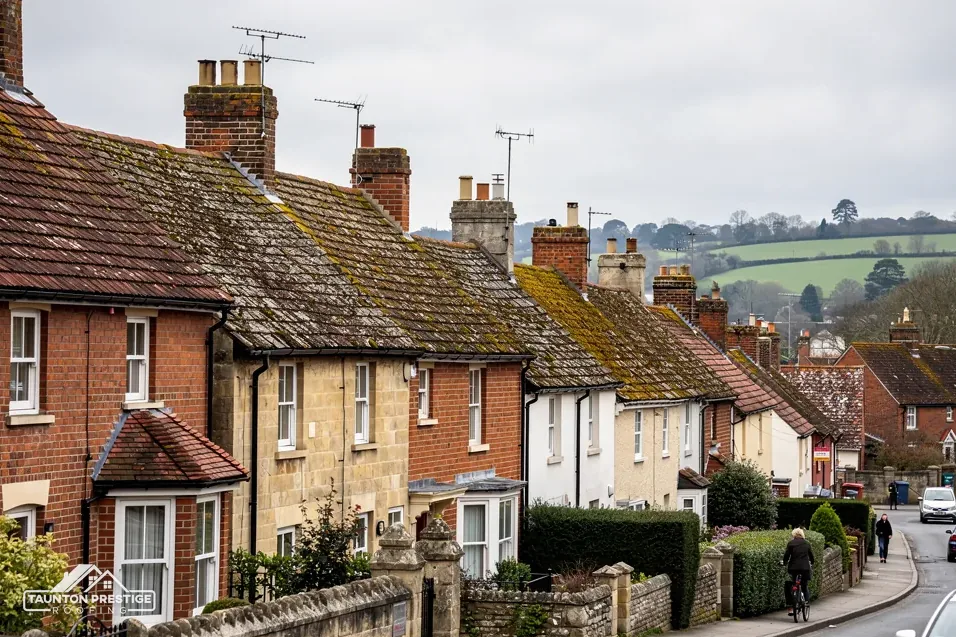
St Mary's, Grade II*
Built across the 13th to 16th centuries and heavily restored in 1861; listed Grade II* on 25 February 1955.
A Grade II* church, a 1977 conservation area and Hestercombe nearby
Cheddon Fitzpaine has a Grade II* church, a conservation area designated in 1977 and eleven list entries within 500 metres of its centre. We read the roof first.
Built across the 13th to 16th centuries and heavily restored in 1861; listed Grade II* on 25 February 1955.
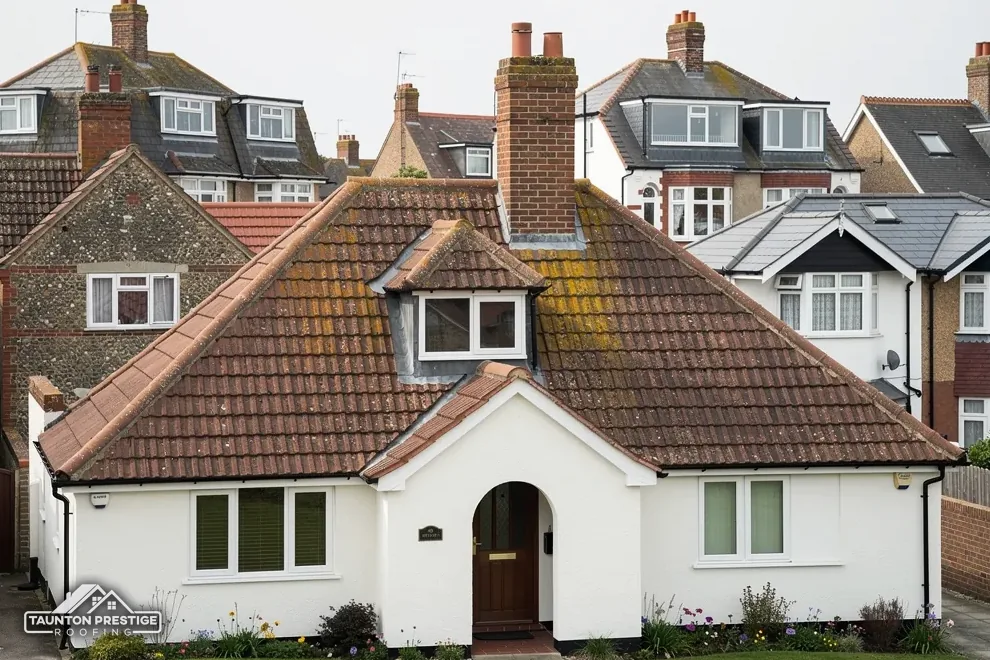
Nos 97 and 98 are listed Grade II, as is Cheddon House, among eleven entries near the centre.
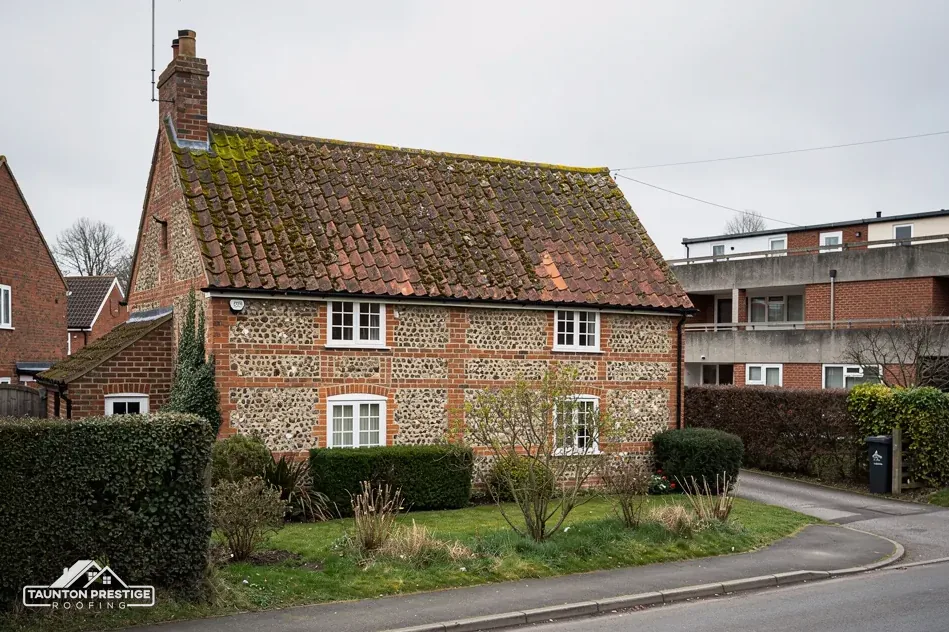
Listed Grade II with the barn in the same entry, so its roof needs the same care as the cottage.
Street map of Cheddon Fitzpaine with Priorswood, Monkton Heathfield, Upper Cheddon, Bathpool marked around it, and Taunton.
Upper Cheddon lies to the north-west, Priorswood and Lyngford to the south-west, Monkton Heathfield and Bathpool to the south-east, and West Monkton to the north-east.
About 2 miles north-east of Taunton, Somerset Council (unitary).
A walk round the parish church
Four stops on a walk through this parish, covering a house, a barn and the church, with a note on how each can change the work.
Cheddon Fitzpaine's conservation area was designated on 13 July 1977 and revised on 12 November 1998. Its edge reaches within about 750 metres of the village centre, and the same boundary query touches Hestercombe. Before we put a figure on any roof, we ask whether your address sits inside the line, because the answer decides whether a different tile, a new style of ridge or a roof window needs a conversation with Somerset Council's planning team first.
The simple case is a repair that restores the roof as it stands, with the same material laid the same way. Complications come when its appearance shifts: another colour of tile, a different ridge, a roof window facing the road, a dormer. Our page on conservation areas around Taunton explains how designation shapes roof work, so this page leaves the rules to it.
A direction withdraws chosen permitted development rights across a defined area, so work that would normally need no application may need one. Somerset Council's list includes a direction for Cheddon Fitzpaine, confirmed in 1977. The list does not spell out what each direction covers, so ask Somerset Council's planners whether it reaches your address, and do it before anything visible from the road is altered.
At the survey we mark on the photos which slopes can be seen from the lane, since a change there would show most. Anything that has to stay as it is gets written down before a quote is drawn up, and the same notes travel with you if the council needs to see them. If your address turns out to sit inside the boundary, the survey takes a little longer, since each slope is photographed from the road side as well as from above.
Look for
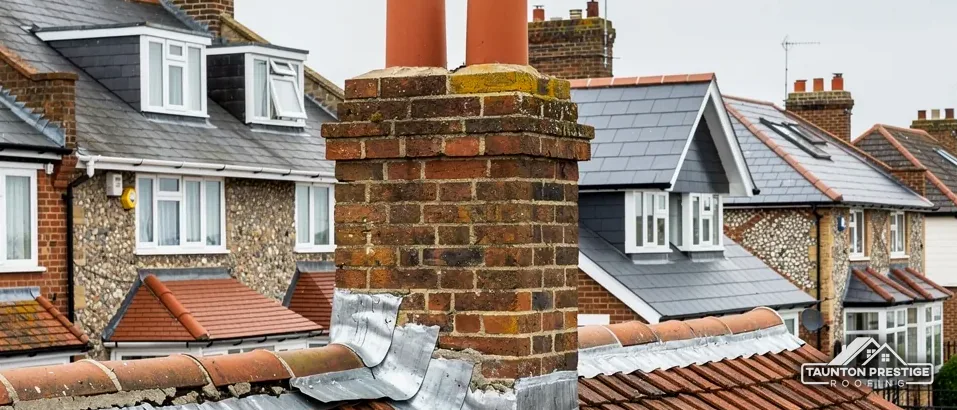
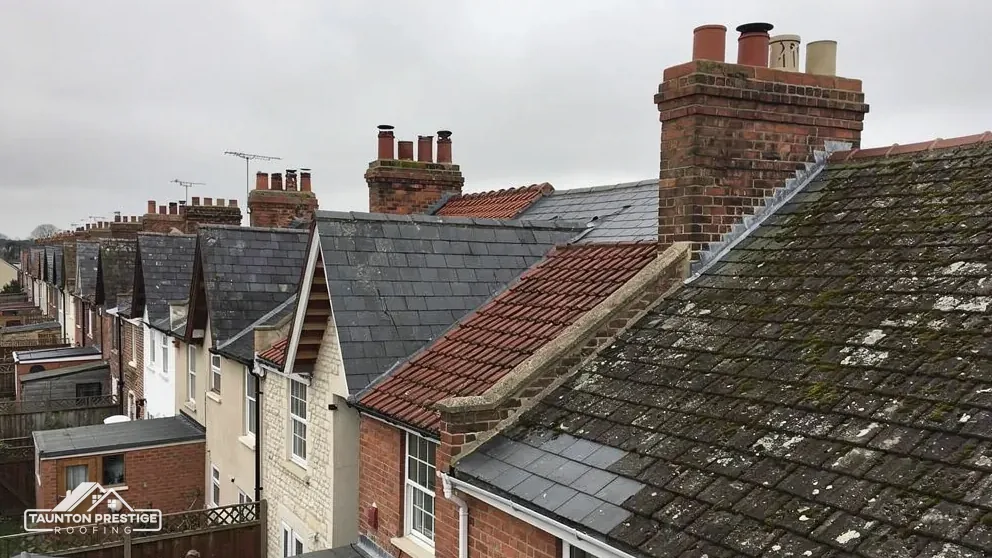
St Mary's church dates from the 13th to the 16th centuries and was heavily restored in 1861. Historic England gives its first listing as 25 February 1955, at Grade II*. A building altered over that many generations has roofs at different heights and pitches, joined by valleys, parapets and abutments, the junctions at which roof and masonry meet. A survey reads each section on its own, because the covering and the fixings on one part need not match those on the next.
What decides the price
The church still serves as an Anglican place of worship, so roof work goes through the faculty system and not through listed building consent from the council. The parish makes that application. A roofer's part is to survey, describe the work in plain terms and then carry out what the faculty approves, no more and no less. Scaffold on the churchyard side and on the road side are separate questions, and the survey sorts out which is which. The tower, the porch and any parapet gutters are looked at in the same visit, so the parish receives one set of photographs covering every part of the roof.
The junction. Lead flashings can lift at a joint or crack along a fold, and cement fillets, the sloping mortar bands sometimes used in place of lead, can split where wall and roof move at different rates. A hairline gap lets water run behind the covering and soak the timber long before a stain appears indoors. Lead itself can last for over 80 years, so a sound sheet is worth keeping and a split fillet is worth cutting out. The same junctions turn up around chimneys, which is why our chimney repairs page is a useful companion read.
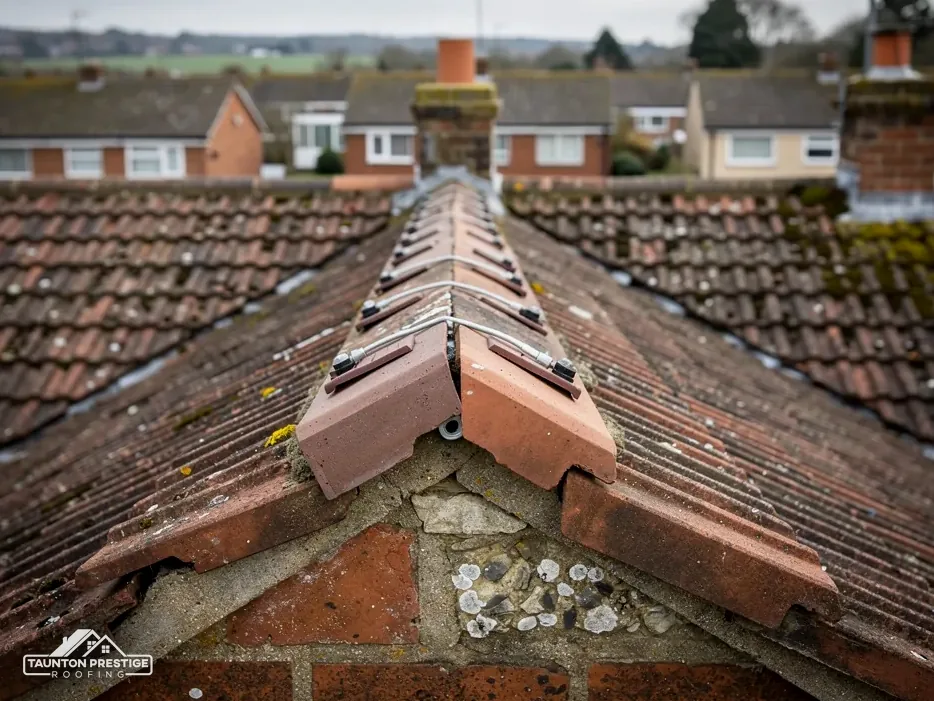
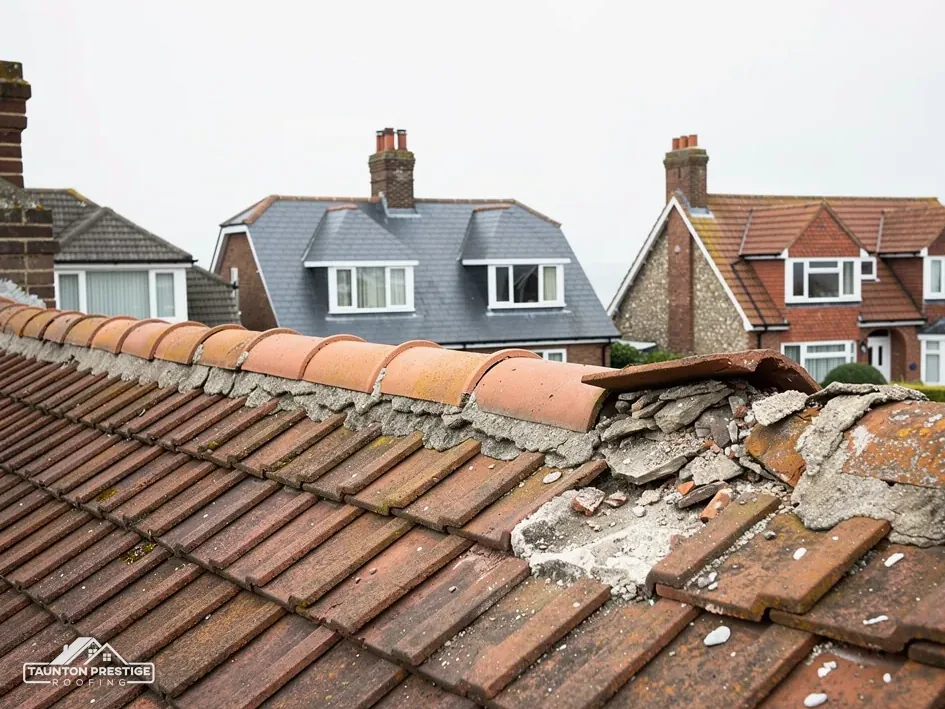
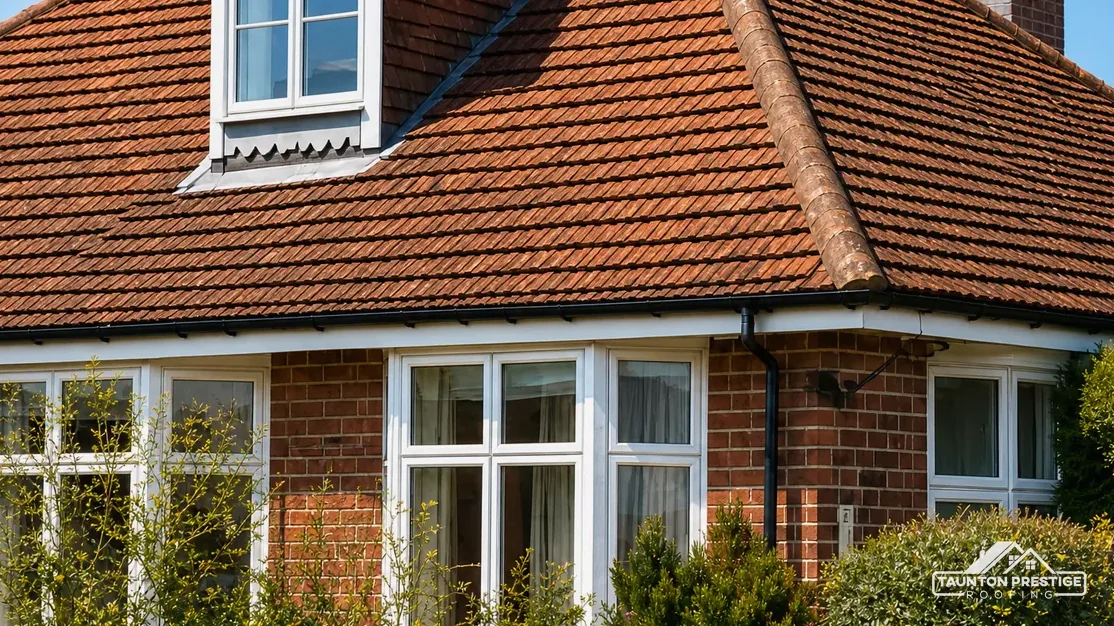
Eleven list entries lie within 500 metres of the middle of Cheddon Fitzpaine. Among them are Nos 97 and 98, Cheddon House, and Glebe Cottage and Attached Barn, all Grade II. The last of those names matters for a roofer, because it shows that a barn can be listed together with the house beside it.
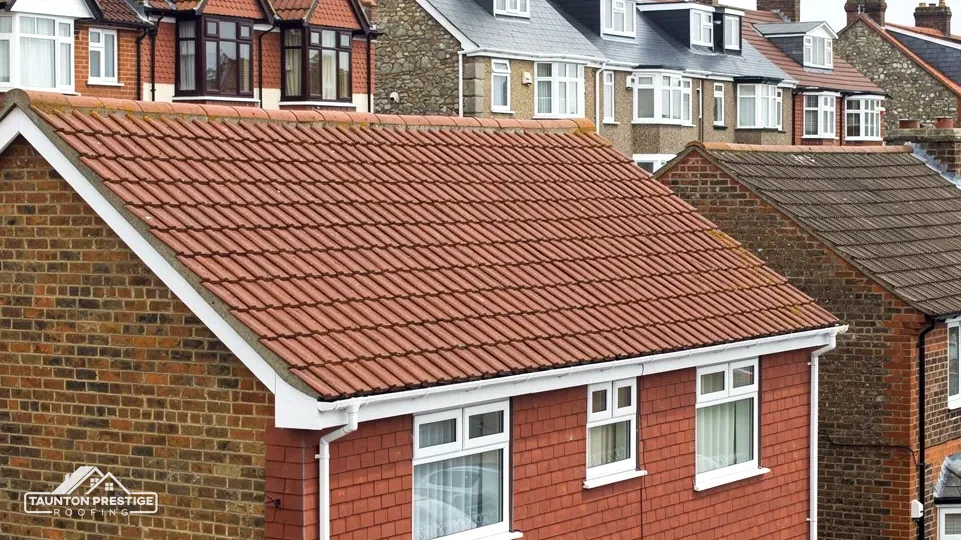
When the barn is named in the same entry as the cottage, as at Glebe Cottage, it forms part of the listed building, and its roof needs the same thought about consent as the house roof. Anything that would alter the barn's character, such as a new covering, brings listed building consent into play. A shed that stands on its own is a separate question, and Somerset Council's planning team answers it for your address, not us. Our roof inspections page describes what a survey records on a building like this.
Barns have long ridges and long slopes, so a dip along the ridge is usually the first thing the eye catches. A ridge line that sags between its ends points to timbers or supports that have shifted, and no amount of new tile will straighten it. We look along the roof from the ground first, then at the battens, the strips of timber that carry the tiles, from the loft or a ladder. Light showing through, rotten batten ends and tiles held by a single rusted nail all go into the photo set as findings.
High, wide barn roofs also drive the access bill. Reaching a ridge safely can call for scaffold on a scale that a house does not, and we tell you that up front. If only one slope has failed, the survey says whether repairing that slope alone is sensible or whether the whole roof is close behind it.
Green and grey growth makes a roof look tired, but the cause deserves a closer look before anyone reaches for a lance. Moss holds moisture against the covering, and its roots can lift the edges of tiles and clog the gutters below. It is also a symptom: it settles where a slope stays damp, so a heavily mossed patch is worth surveying for the reason it stays wet. Shade, a low pitch and a blocked gutter can each be behind it.
What decides the price
Look for
Marley's guidance is that the blast from a high-powered washer can scar the face of slate or tile and shorten its life, so hand methods come first. Cleaning done with care uses hand brushing or scraping and, where a treatment is needed, a product approved for the purpose. HSE's advice is that the public should steer clear of biocides sold only to professionals, and it treats use of a non-approved product as an offence. Treat any product bought from a shop with that in mind, and read what the label allows. Moss that has been scraped off and left on the roof tends to wash down into the gutters, so the clear-up includes the gutters, not just the slopes.
Hand cleaning is priced from what the survey finds: the pitch and area of each slope, how thick the growth is, and what access the roof allows. The written quote fixes the figure. Our roof cleaning and moss removal page covers the methods.
Cleaning often shows that a roof also needs repair, such as a worn tile face or a failed mortar joint under the ridge. For that reason the photos are taken before and after, so you can see what changed. Tell us your Cheddon Fitzpaine address and how long the growth has been building, and we will book a survey that looks at the cause as well as the green.
Walked the roof?
When you have read the checks, we walk the roof and show you the photos.
It means the roof may carry coverings and fixings of different ages. The work of 1861 sits beside parts from the 13th to 16th centuries, so we read each section separately and photograph the junctions. The parish then takes those findings into the faculty process that applies to an Anglican church in use.
Somerset Council lists a direction for Cheddon Fitzpaine, confirmed in 1977. A direction withdraws specified permitted development rights in an area, so work that normally needs no application may need one. What it covers for your address is a question for the council's planning team, so ask before you change anything visible from the road.
Lifespan figures in the trade are typical ranges, not promises. CORC says slate that is well maintained can last 100+ years, and Marley cites the BRE minimum of 60 years for clay tiles only. Fixings, battens and flashings can fail sooner than the covering, so the survey looks at them before anyone advises a full re-roof.
Somerset Council's table lists Hestercombe as a conservation area in its own right, designated 12 November 1998. The boundary query around the centre of Cheddon Fitzpaine touches both it and the village area. Ask the planning team which boundary your address falls inside, since the answer can change what you need to apply for.
Message us your address and the slope you are worried about, and we will agree a survey day with you.