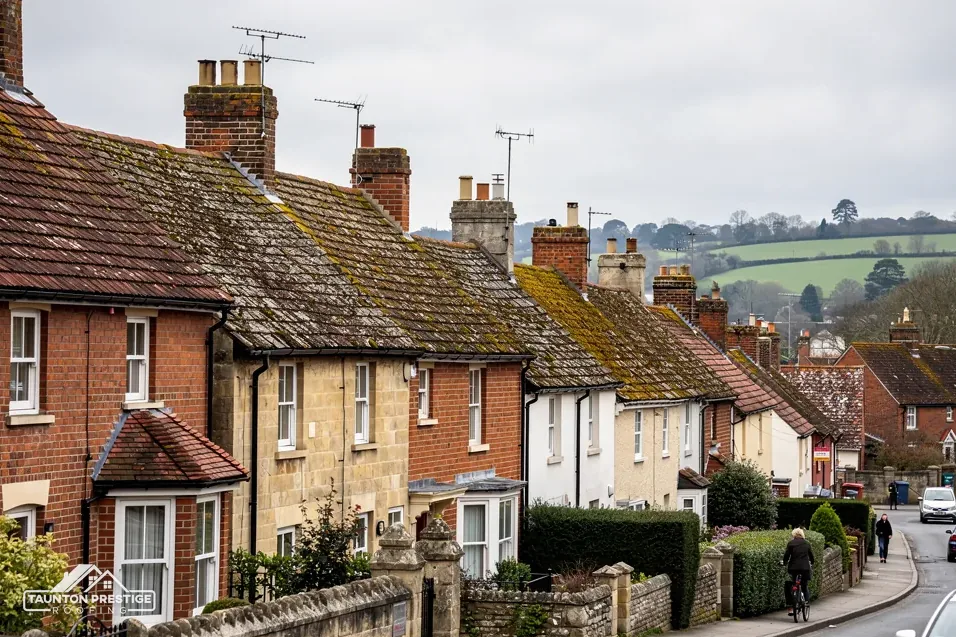
Duddlestone Farmhouse
Listed Grade II in August 1986, so changes to its covering, ridge or chimneys need consent thinking first.
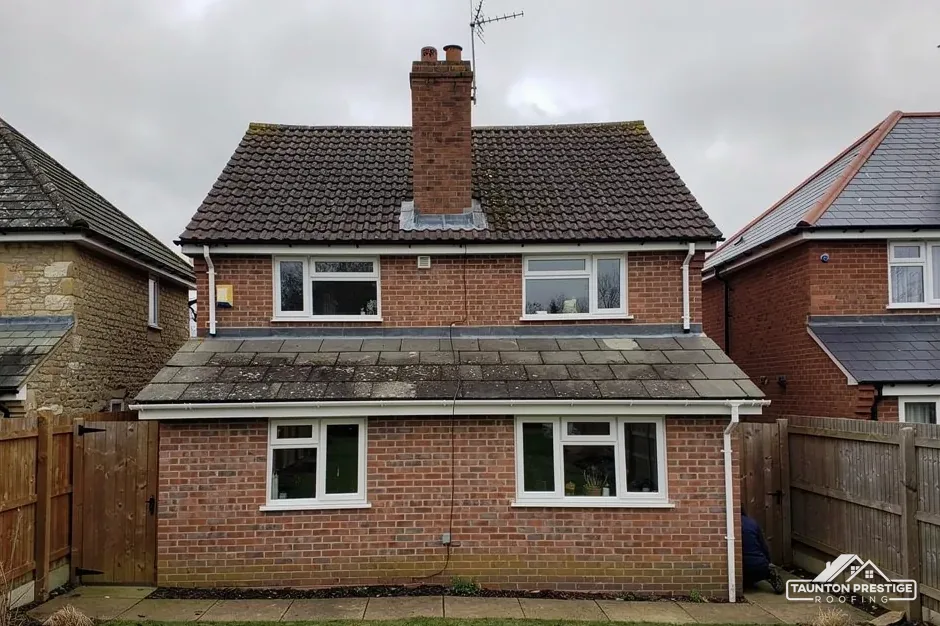
Duddlestone Farmhouse, Duddlestone House and the lanes of Pitminster parish
Duddlestone is a hamlet in Pitminster parish with two Grade II houses of its own. We survey the roof and show you photos of it before any price is set.
Listed Grade II in August 1986, so changes to its covering, ridge or chimneys need consent thinking first.
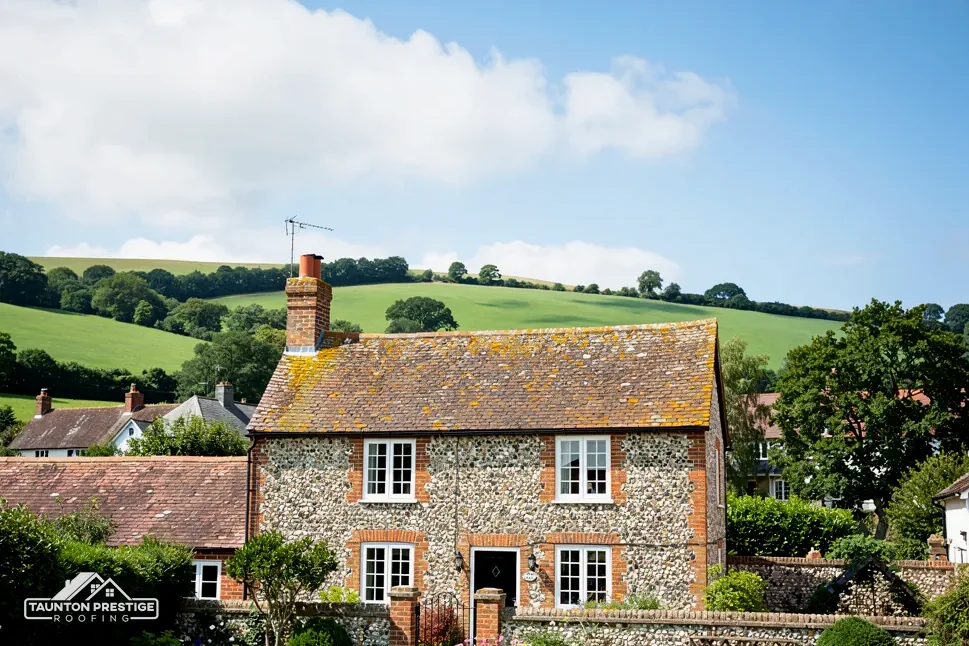
Grade II as well, and one of just two list entries inside 500 metres of the hamlet centre.
Duddlestone lies in a parish of 1,008 residents at the 2021 Census, with its own conservation area nearby.
Street map of Duddlestone with Corfe, Pitminster, Trull, Thurlbear marked around it, and Taunton.
Haydon lies north-east of Duddlestone, Holway north and Trull north-west, while Pitminster sits south-west and Corfe, the closest, is about a mile away.
About 2 miles south of Taunton, Somerset Council (unitary).
Four checks south of Trull
Four checks for a farmhouse or cottage in Duddlestone, from the nearest conservation areas to what to do when weather gets in.
Two Grade II houses give Duddlestone its place on the National Heritage List: Duddlestone Farmhouse, listed on 7 August 1986, and Duddlestone House. The conservation areas in the national dataset that come closest, within about 2.5 km, are Corfe, Haines Hill and Trull Road, and Pitminster. Haines Hill and Trull Road was designated on 14 March 2023, and the boundary of any conservation area is a line on a map, not a landmark you can see from the lane.
Only if your address is inside it, and the council's map settles that. We check before the survey, because a conservation area rules out permitted development dormers, and the planning team can say what else needs an application. Our guide to planning permission for roof work covers what each designation means.
Listing does not take away the right to re-roof. It adds a second step: works that would alter the character of the house need listed building consent from Somerset Council, which weighs how the change affects what makes the house special. Matching the existing covering, ridge and detail is the straightforward case. Putting back something slightly different is where consent questions begin: another tile colour, another ridge style, a roof window where there was none, or a chimney lowered for convenience.
On an older farmhouse, much of the roof's history sits in its repairs, and one slope can carry far more patching than another. We photograph each slope, mark the patches, and note which parts look original. That record helps with any application and gives a future owner a map of the roof as it stood on the day we saw it. It also lets you set our findings beside any older survey you hold.
Look for
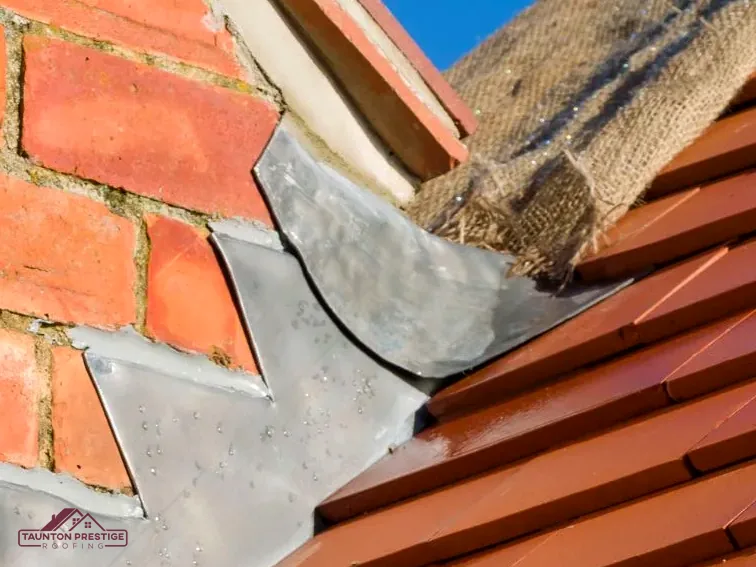
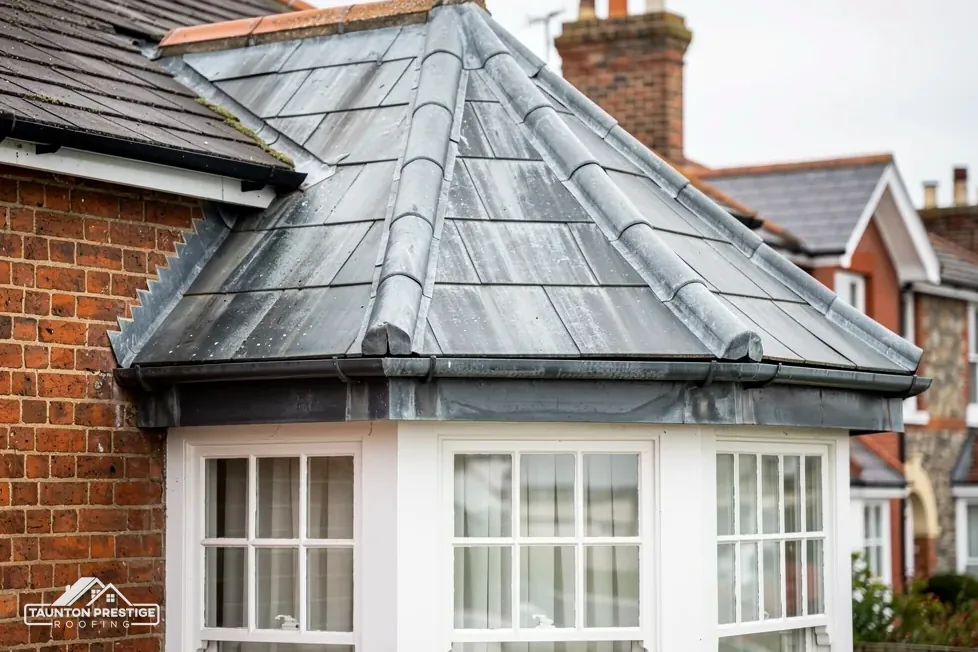
On a house with an extension, a dormer or an L-shaped plan, two roof slopes meet at an internal angle, and that angle is a valley. All the rain from both slopes funnels down it, which is why valleys are among the first places a leak shows. MyJobQuote's guide (Sep 2026) puts most full valley replacements at around £540, as a typical UK figure, but your own valley sets your own price.
A valley may be lined with lead, or with a purpose-made trough of other material set under the edge of each slope. Sheet lead is graded by thickness into numbered codes, and the Royston Lead brochure shows codes 4 to 8 as suitable for a pitched valley gutter, so the choice depends on the length of the valley and the load it carries. A short valley on a small extension can take a lighter code than a long one that drains a whole main slope, and that difference shows up in the price. A soaker, a small folded piece of lead laid in with each course of slate or tile, keeps the edges of the covering watertight where they run into the valley.
Sound or needs work
What decides the price
From inside, a stain on a ceiling that matches the line of a valley above. Outside, lead that has split along a fold, moss that has built up along the edges or tiles cut raggedly where they meet the metal. Debris is a common cause: leaves and moss dam the flow, and water backs up under the tiles.
No. Clearing it, re-dressing the edges and renewing a few soakers can give a sound valley years more. If the lead has split along its length, a new lining is the better buy. Our pitched roofing page shows how valleys fit into the wider roof.
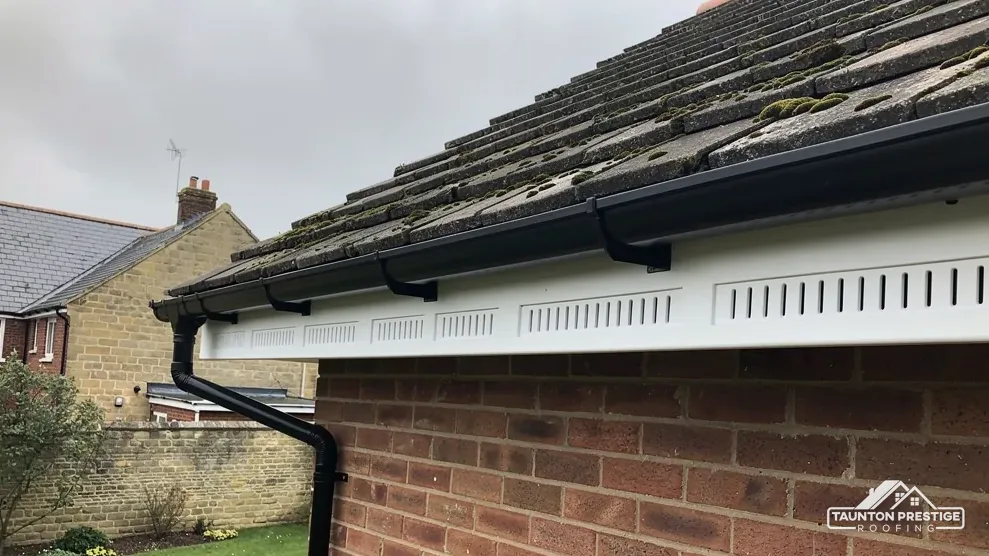
Farmhouse lofts are often upgraded with insulation, and a roof that was once draughty can become a damp one if the airflow is lost. BS 5250:2021 is the current code for managing moisture in buildings. Where the underlay is the non-breathable kind, called HR, Marley says a cold roof wants a 25mm vent strip at the eaves if the pitch is 15 degrees or less, and 10mm if it is steeper.
A warm loft still needs air moving through it, whatever sits in the rafters.
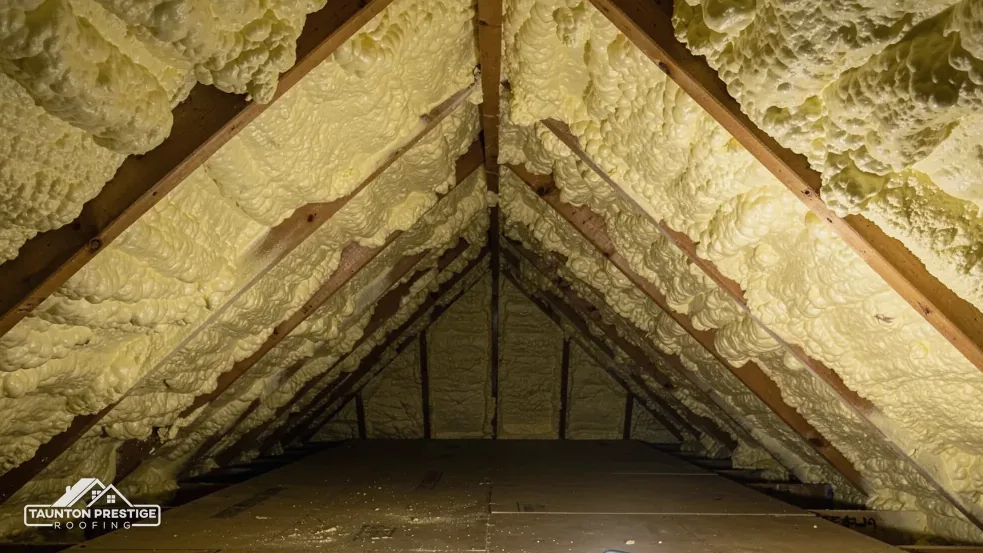
Foam sprayed between the rafters can mask a leak and hold damp against the timbers. On foam used to cure a leaking roof, the Energy Saving Trust's advice is plain: "We don't recommend doing this." A leak sealed in behind foam is also harder to trace later. The RICS consumer guide points out that lenders have policies on foam, so a call to your mortgage provider comes before any installation. If foam is already up there, a survey can tell you what condition the timbers are in. Our spray foam removal page covers the stripping-out process.
No. A breather, or low-resistance, underlay lets moisture pass through, and with a well-sealed ceiling the eaves need only the ventilation that normal construction gives, subject to the maker's certification. HR underlay does not breathe, so it relies on the gaps at the eaves and ridge to carry moist air out.
We check which underlay you have, whether the eaves are clear and whether any insulation has been pushed hard against the roof edge. Those three answers often explain a damp patch better than the tiles do. If the cause is condensation, a new covering will not cure it, and we tell you that before any money is spent. If it is a leak, the stain usually lines up with a joint, a valley or a stack.
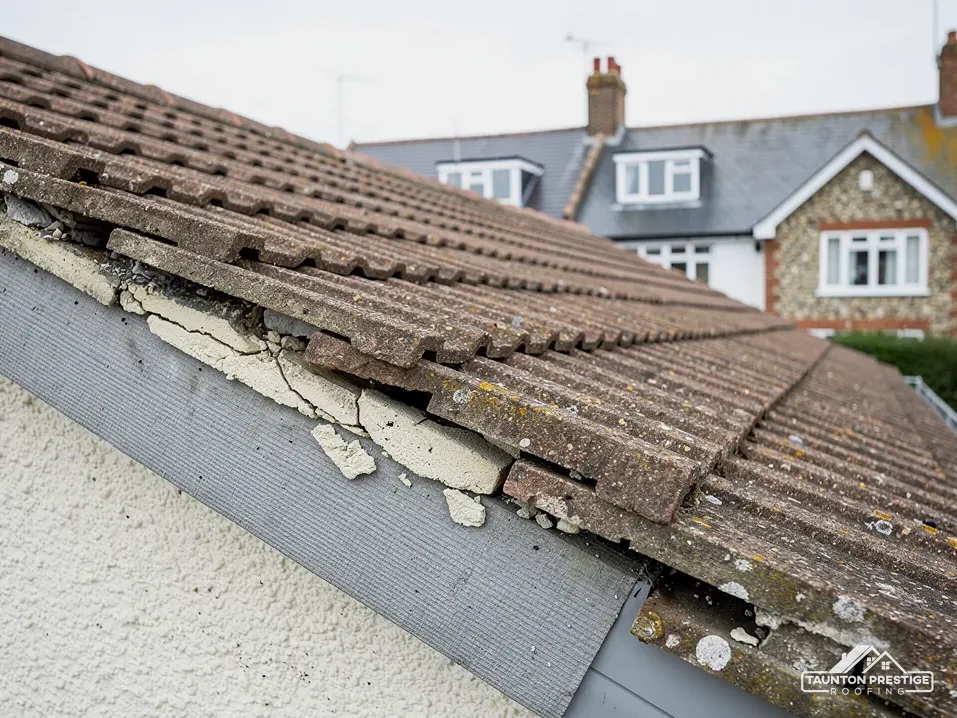
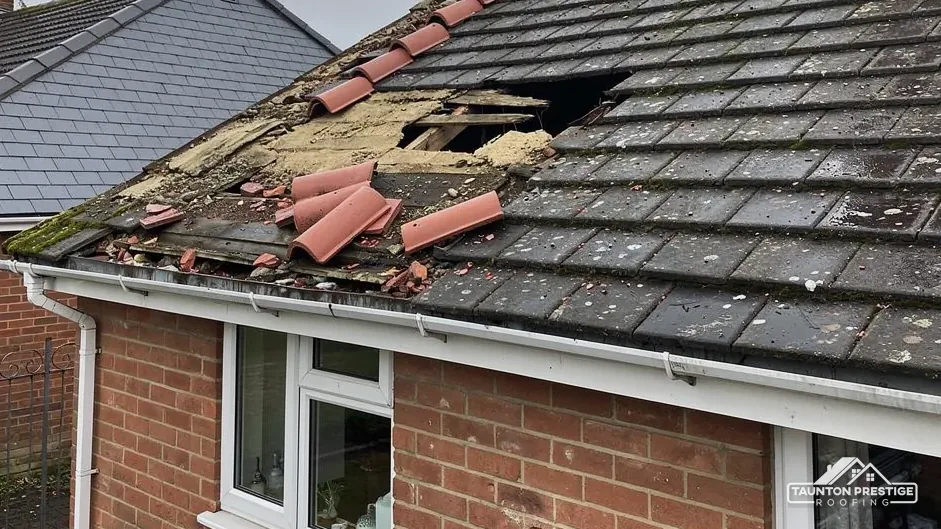
A gale that lifts tiles or opens a joint sets the first job in plain terms: stop more water getting in. We put a temporary repair over the damage, and it holds until the lasting work has been planned. Your own first steps matter as much. Contact your insurer before any lasting repair goes ahead, take dated photographs of the damage, and keep every receipt for what you spend on emergency cover.
What decides the price
Pictures are the evidence that ties a gale to the damage. In its storm advice, the Institution of Structural Engineers treats them as vital evidence for an insurance claim. Ours are taken before and after the temporary repair, and you receive copies, which also helps if a neighbour's tree or a shared gutter turns out to be involved. Claims stay between you and your insurer, and whether anything is paid is the insurer's decision alone.
The Financial Ombudsman Service takes insurance complaints. You wait for the insurer's final response letter, and if none arrives within 8 weeks you may go to the Ombudsman. From the date of a final response you have 6 months to do so. The service costs you nothing. Its working idea of a storm involves violent winds, so a damp patch after a drizzly week is a different matter from a gale.
Emergency visits are covered by our emergency roof repairs page. A visit you ask for specifically to deal with an urgent repair is excluded from the 14-day cancellation right under regulation 28(1)(e). With the roof made safe, a full survey follows, the pictures from it come to you, and the lasting repair gets a single written price. A temporary fix is not a finished job, and we say how long it can be expected to hold. Send us your Duddlestone address and a note of what the weather has done.
Walked the roof?
When you have read the checks, we walk the roof and show you the photos.
Renewing valley lead in the same material and layout is a repair, and is the simplest route on a Grade II house. Changing the material, the layout or the look of the roof may need listed building consent, so confirm with Somerset Council's planning team before ordering. We record the valley at the survey so you have photos to show them.
It can raise questions. The RICS consumer guide says to check with your lender that its policy allows foam of this kind at all. A buyer's surveyor may ask about it too. A roof survey can show what the foam is covering and what condition the timbers are in, which helps whoever has to decide what happens next.
Your insurer, before any permanent repair. Put a temporary fix over the damage, and keep dated photos and receipts for what you spend. Then arrange a proper survey. Whether anything is paid is the insurer's decision, and the Financial Ombudsman Service deals with complaints if you and the insurer cannot agree.
A valley takes the rain from two slopes at once. Leaves and moss can dam it so that water backs up under the tiles, and lead that has split along a fold lets it through. Clearing the channel and renewing a few soakers is sometimes enough. A split lining needs replacing, and the survey shows which.
Give us the address and what the weather has done, and we will book a visit.