St Michael's church, Grade II*
Listed Grade II* in April 1961; which consent route applies depends on how the church is used.
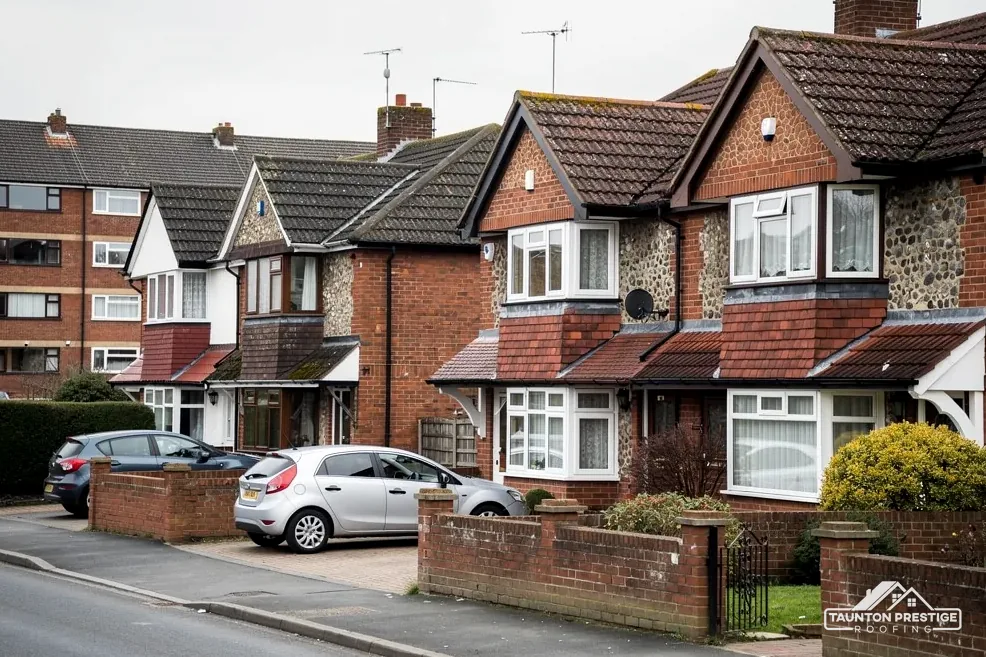
A conservation area village with a Grade II* church and listed neighbours
Haselbury Plucknett has a conservation area, a Grade II* church and 34 listed entries within 500 metres of its centre, so consent comes up early in any roof conversation.
Listed Grade II* in April 1961; which consent route applies depends on how the church is used.
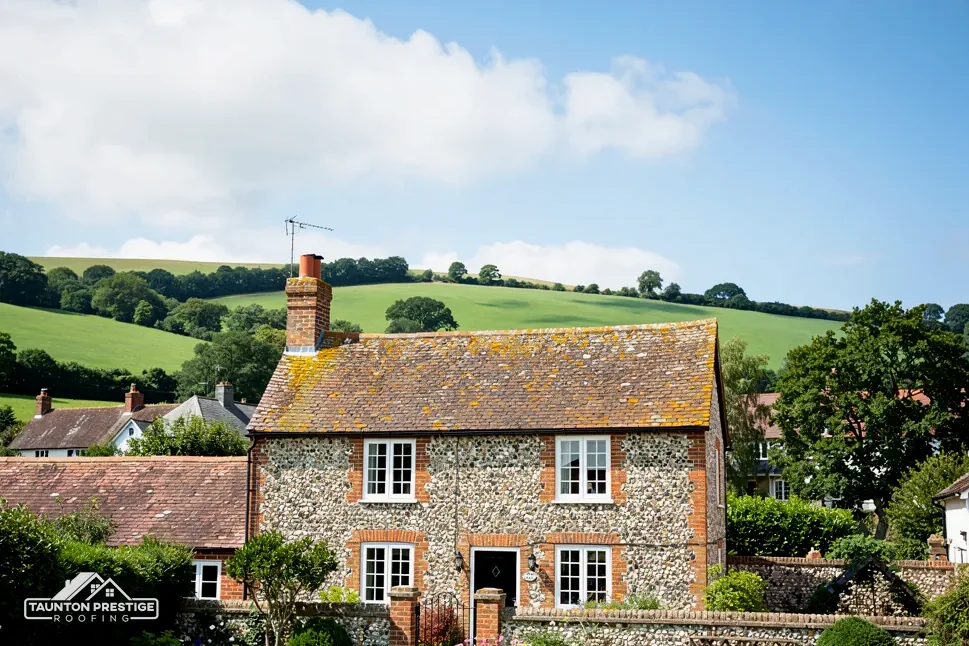
Three houses listed together at Grade II, where one roof repair can reach a neighbour's.
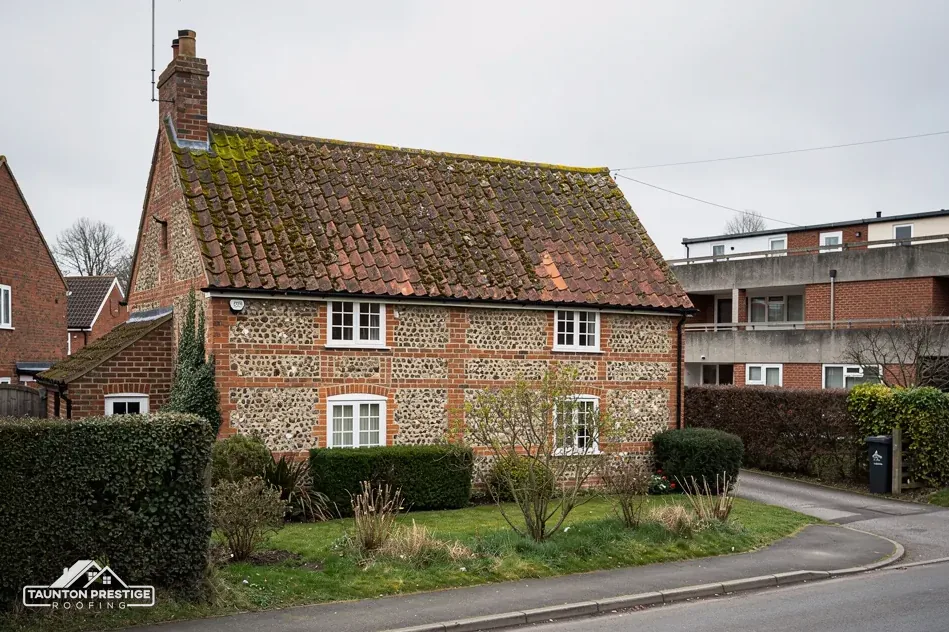
Both Grade II listed, which puts their roofs under listed building rules.
Street map of Haselbury Plucknett with Misterton, Crewkerne, Merriott, Norton-sub-Hamdon marked around it, and Taunton.
Misterton lies south-west of Haselbury Plucknett and Crewkerne to the west, with Merriott to the north-west, Norton-sub-Hamdon to the north and Mosterton to the south.
About 17 miles south-east of Taunton, Somerset Council (unitary).
Roof checks for a village of 719 residents
Four checks on a roof in or near the conservation area, with what each one means for permissions, access and what the job will cost.
Haselbury Plucknett's conservation area lies within about 0.75 km of the centre, while the National Heritage List records 34 entries inside a 500 metre radius. With that many protected buildings about, the first job on any roof is to establish what your address is: listed, inside the boundary, both, or neither. Each answer sends the work down a different road, and each changes who has to be asked.
Somerset Council holds the boundary map and is the planning authority, so ask its planning team to confirm where the line falls. The boundary map, not the distance from the church, decides the answer. What matters on the roof is what the boundary does to your choices. Replacing like with like, in the same pattern, is the simple case. Switching material, adding roof windows to a slope that faces the lane, or building a dormer is where an application, or a refusal, can enter. Our planning permission for roof work guide explains where those lines fall.
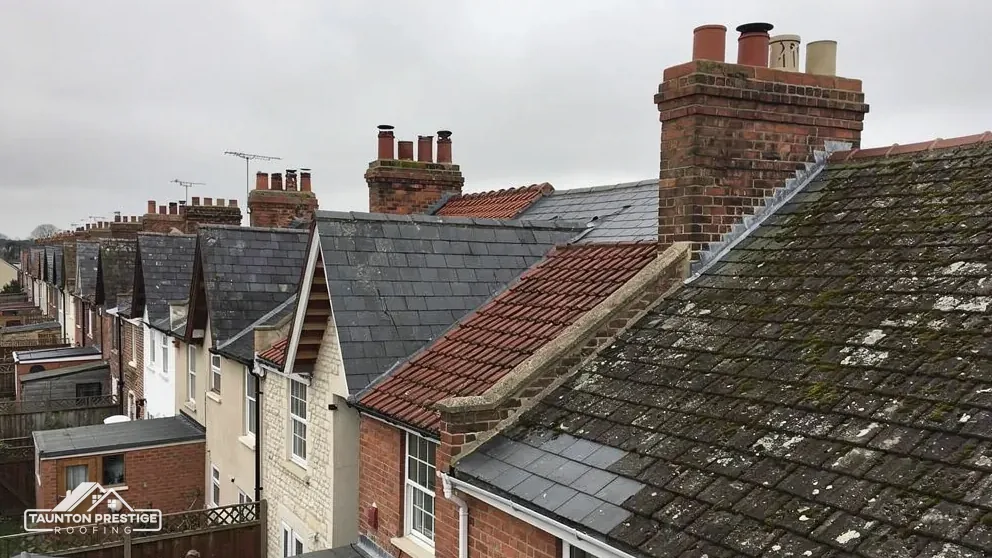
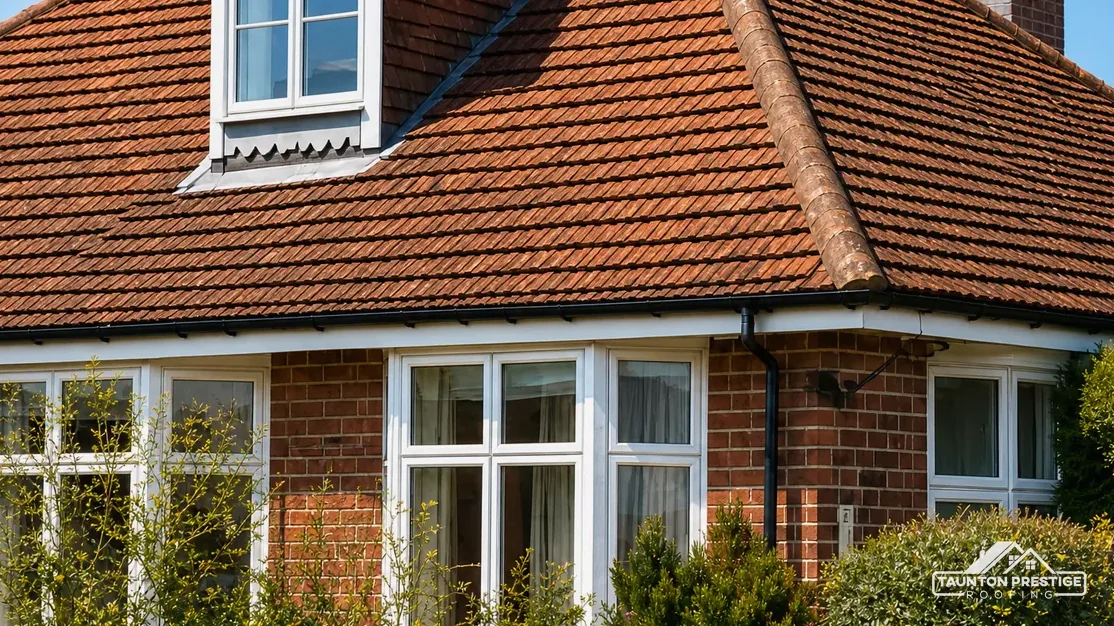
Brook Farm House and 557 Giffords Lane are both Grade II listed. Listed building consent is the route for anything that changes how the house reads as a historic building, and a mismatched ridge or the wrong tile colour can count as exactly that. Each slope is photographed at the survey and what covers it today is written down, so any consent application starts from what is really on the roof. Matching size, colour and texture matters as much as the material itself.
Not every old roof wants replacing. Where the covering is sound, a careful repair costs less and keeps the building as it is; where it is tired, you hear that as well. Our slate roofing page shows how we judge that.
Look for
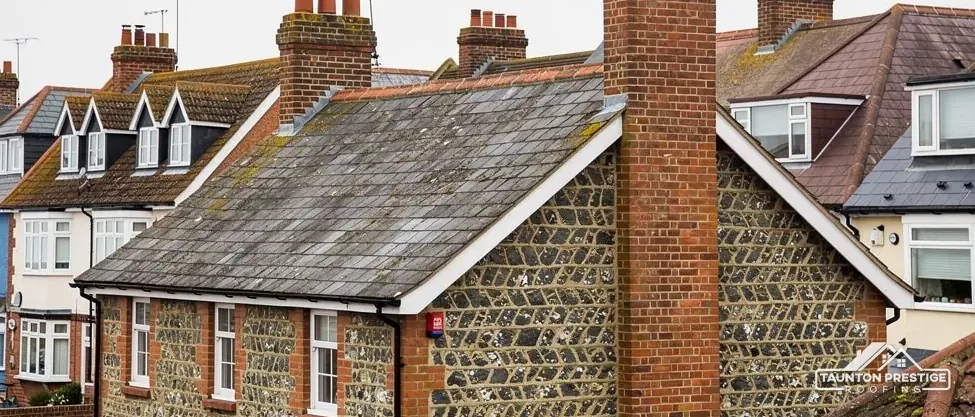
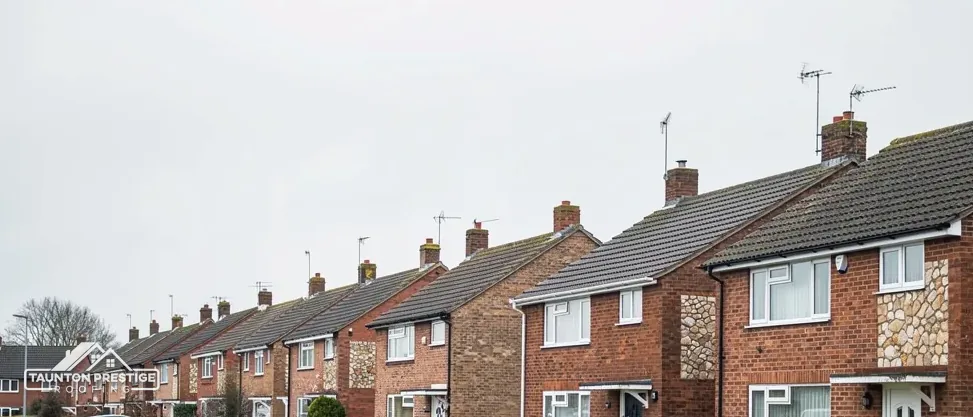
1, 2 and 3, Gentlemans Row are listed together at Grade II. Any group of houses under a single listing raises a point that detached homes never meet: a roof is rarely one household's alone, and a leak in one can show up in the next. A shared ridge line, a chimney stack that serves two houses, or a valley (the gutter formed where two slopes meet at an inside angle) can run across the boundary between properties. Work on yours then lands on someone else's side.
On a shared roof, a repair is only as good as the join with your neighbour's.
A stack that sits on the dividing wall belongs to the structure both owners rely on. Cutting into it, or taking a chimney off a party wall, can fall under the Party Wall etc. Act 1996, which sets a two-month lead time for the notice served on the neighbour. A surveyor, not the council, settles any dispute. Questions about that Act go to a party wall surveyor, not to building control. For plain repairs, such as new flashing or fresh pointing, we still tell the neighbour what is going on, since scaffolding and ladders will cross their view.
Often, yes, but the join needs thought. A new section of covering beside an old one must be stepped and flashed so water cannot slip under the seam. Where the two sides use different slates or different ages of tile, the repair should look intentional and not patchy. The survey photographs show both sides of the line, and we explain where the old roof stops and the new work begins.
Agreeing the scaffold position with the neighbour early saves a delayed start, and a neighbour who has been told what to expect is usually relaxed about ladders in the garden.
Grade II* is the listing grade of the Church of St Michael and All Angels, first listed on 19 April 1961. How the church is used today matters, because the consent route for a church roof depends on it, so the parish or the owner confirms that first. A Church of England church that is in use takes its roof plans through a faculty. Roman Catholic, Methodist and URC churches look to their own denominations, as do Baptist churches held by a Schedule 1 trust corporation. Anything else, including a closed church, needs listed building consent from the council.
What decides the price
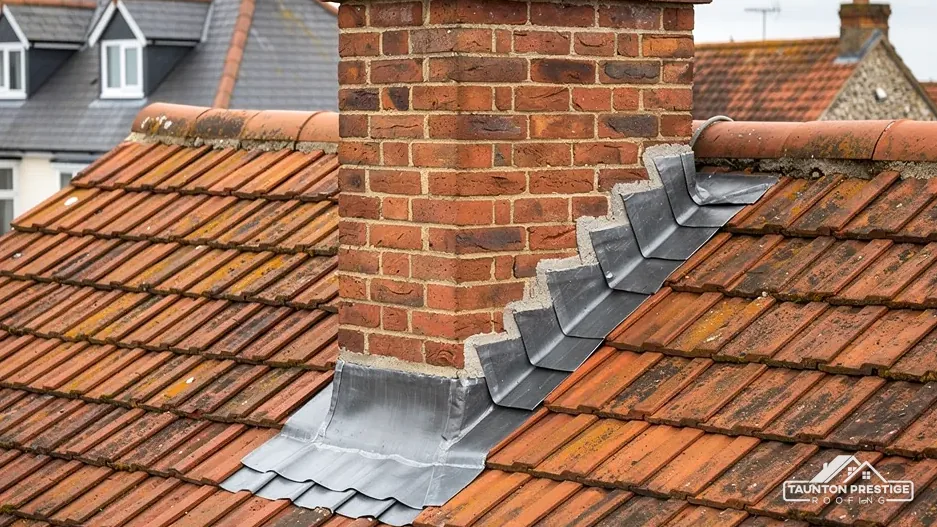
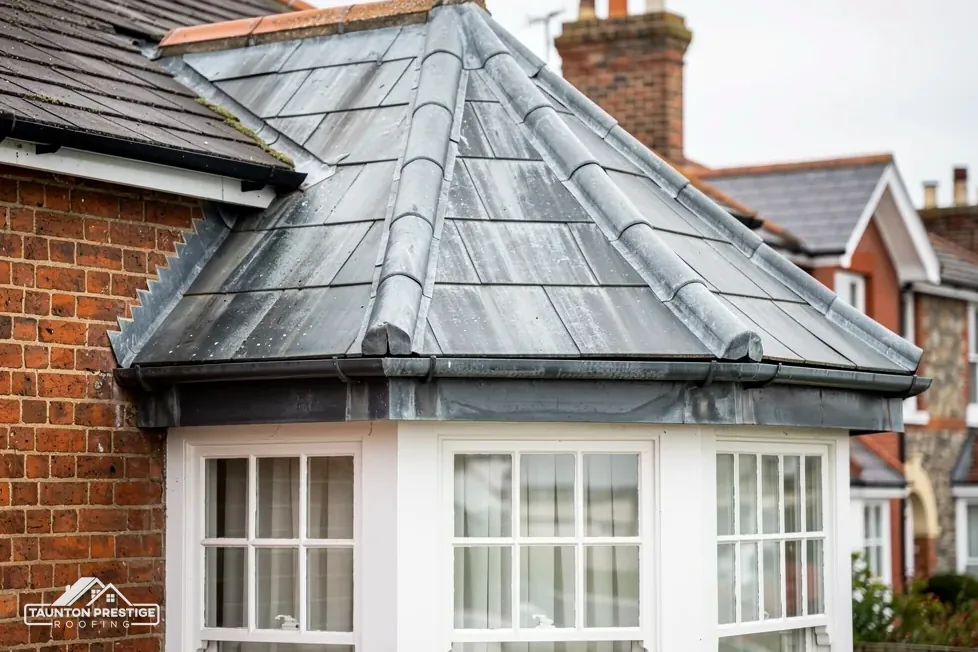
Lead is the metal that seals the awkward places: the line at a wall, the foot of a chimney, a gutter between two slopes. Its life is long. MyJobQuote puts lead flashing at over 80 years as a lower bound, with no promise implied. When it fails it is usually at the joints and fixings, or because temperature swings have stretched it until it splits along a fold.
Lead sheet comes in numbered codes, each a different thickness and weight. In Royston Lead's brochure, codes 4 to 6 appear against flashings, and codes 5 to 8 against the heavier work in parapet and box gutters. The right code depends on the job. We write the code into the survey notes, so the quote never rests on a vague promise of lead. Our lead work page goes further into where each code fits, and into how bay roofs, abutments and chimney stacks are weathered.
On any listed building the lead should match what was there in size and finish, because new bright lead beside weathered stone looks wrong for a few years.
Sound or needs work
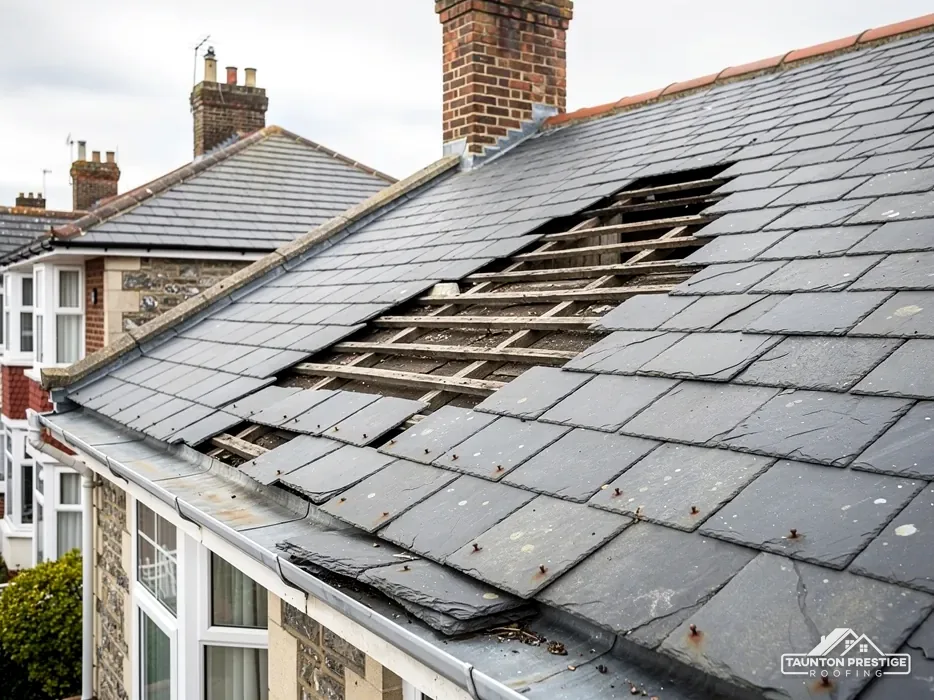
Where the covering is slate, the first sign of age is usually a slate that has dropped from its place, or a patch of dark moisture under the eaves. Each slate hangs from a batten, a timber strip nailed across the rafters, and is secured by a nail or hook. Under the battens sits the underlay, the sheet that catches whatever slips past. When nails corrode, slates slide, and the underlay meets the weather for the first time.
What decides the price
A single slipped slate can be refixed or swapped. A run of failures calls for a different answer: strip the slope, check the battens, lay fresh underlay and put the slates back, reusing the good ones. For natural slate that is looked after, CORC cites 100+ years, so an old roof with failing fixings can still be worth keeping. The fixings fail first, as a rule, long before the stone does. Marley's own guidance on clay tiles cites a 60-year BRE minimum, a figure for clay only.
Yes. If the new covering weighs 15 per cent or more above the old, Building Regulations approval and a structural check follow. Somerset Building Control, on 0300 303 7790, covers Haselbury Plucknett. For smaller jobs the Planning Portal's test is the guide, and it looks at two measures together: under 25 per cent of the building envelope and under 50 per cent of the roof.
Where the frame must stand on the highway, Somerset Council hands scaffold permits to accredited contractors alone, so the contractor on your job is the one who applies. Expect to allow 10 working days or more, and a fee of £124.60 for every 28-day period (April 2026).
You get photographs of your slopes and one written price when the survey is done, and the waste goes with us. Send over your Haselbury Plucknett address and the slope you are watching, and we will book the visit.
Walked the roof?
When you have read the checks, we walk the roof and show you the photos.
Yes, if the join with the neighbour is handled properly, with new covering stepped and flashed so water cannot creep under the seam. Both sides of the line are photographed at the survey. Shared stacks and valleys are the exception, and those need a word with the neighbour before anything starts.
They can change when and how the work is done. Bats, and the roosts where they breed and rest, are protected by law, and GOV.UK names roof repair and roof replacement as activities that can affect bats. A roost found at the survey, whether from droppings or sightings, means we stop and recommend that you talk to a bat specialist first.
It changes how the ridge looks, so ask Somerset Council's planning team before you commit. Where a bedded ridge relies on mortar, a dry-fix ridge relies on clips and screws, and BS 8612 is the test specification for it. A bedded ridge and a dry one are not identical to the eye, which is the question that counts here.
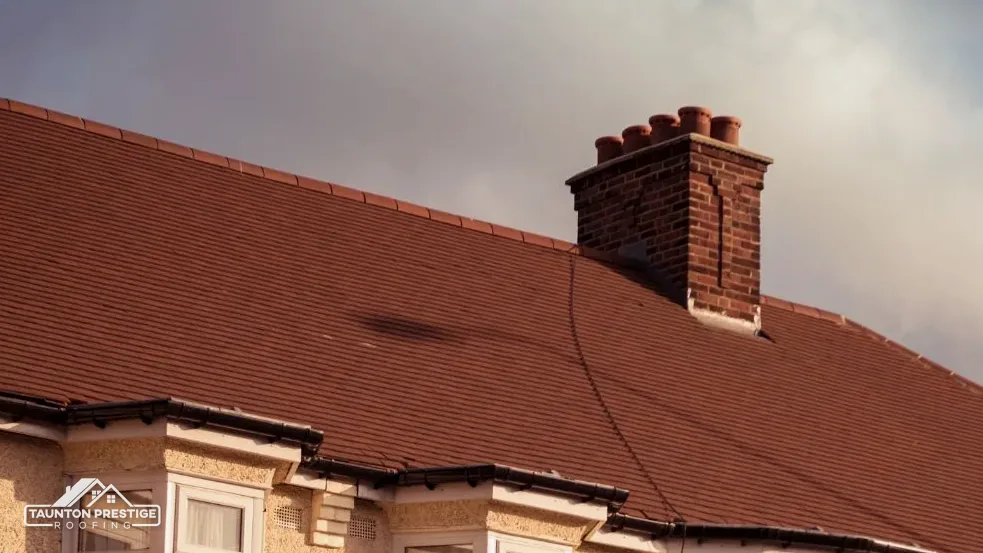
Often fresh pointing, new flaunching (the mortar bed that holds the pots in place) and renewed lead where the stack leaves the slope. Rebuilding or taking down a stack is a larger step, and taking out a chimney breast is something the Planning Portal says always brings Building Regulations approval. The survey tells you which of these your stack needs.
Tell us which Haselbury Plucknett slope is troubling you, and we will book a time for a proper look.