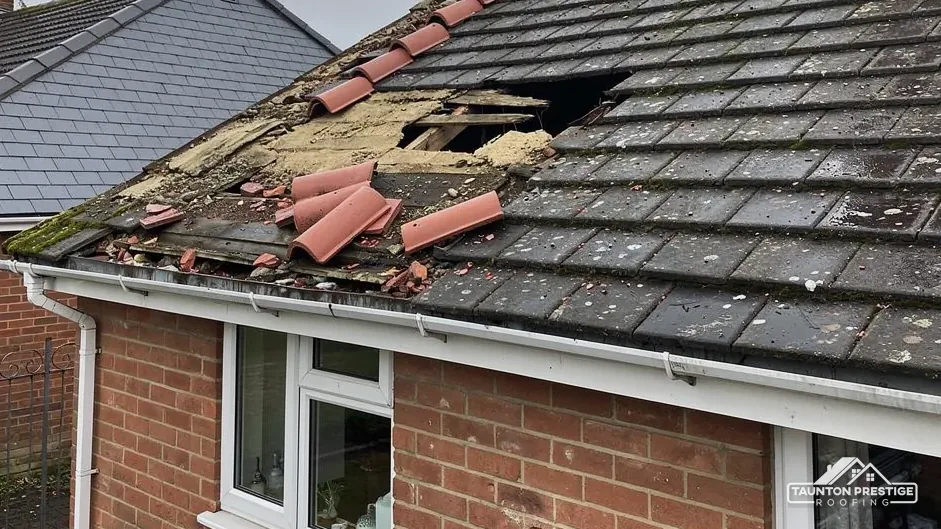
Bartletts, listed Grade II
Listed on 4 May 1984, so any change to its character on the roof needs listed building consent.
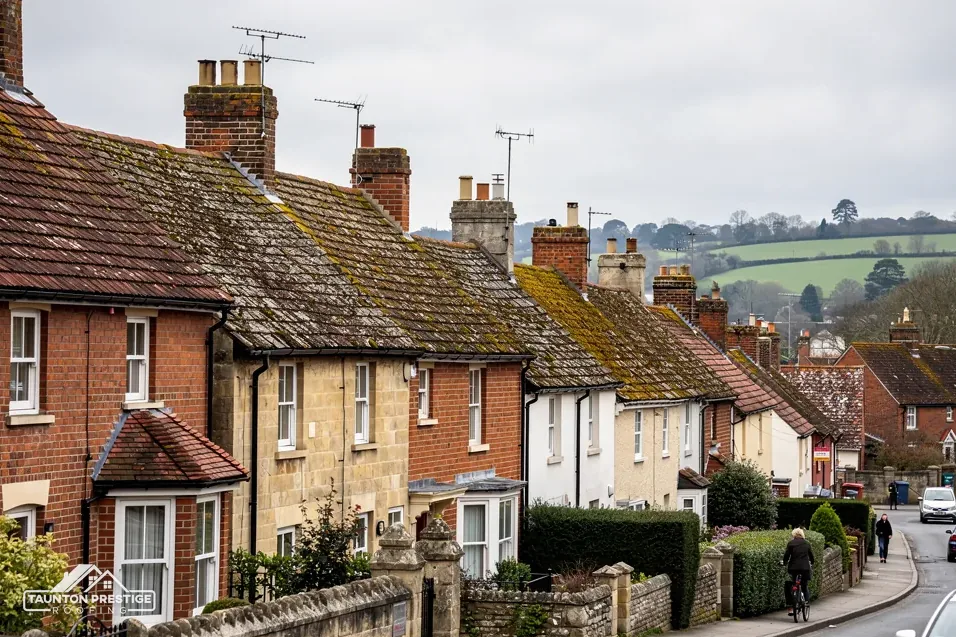
Grade II houses in a hamlet beside the Milverton conservation area
Houndsmoor is a hamlet in Milverton parish, close to the Milverton conservation area and home to Bartletts, a Grade II listed house. A survey comes before any price.
Listed on 4 May 1984, so any change to its character on the roof needs listed building consent.
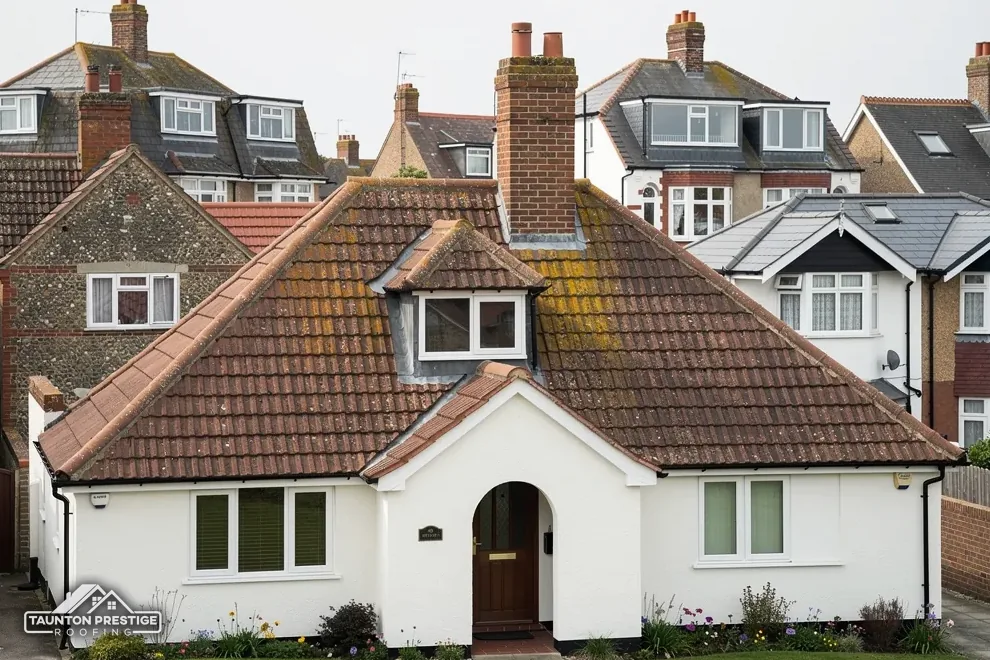
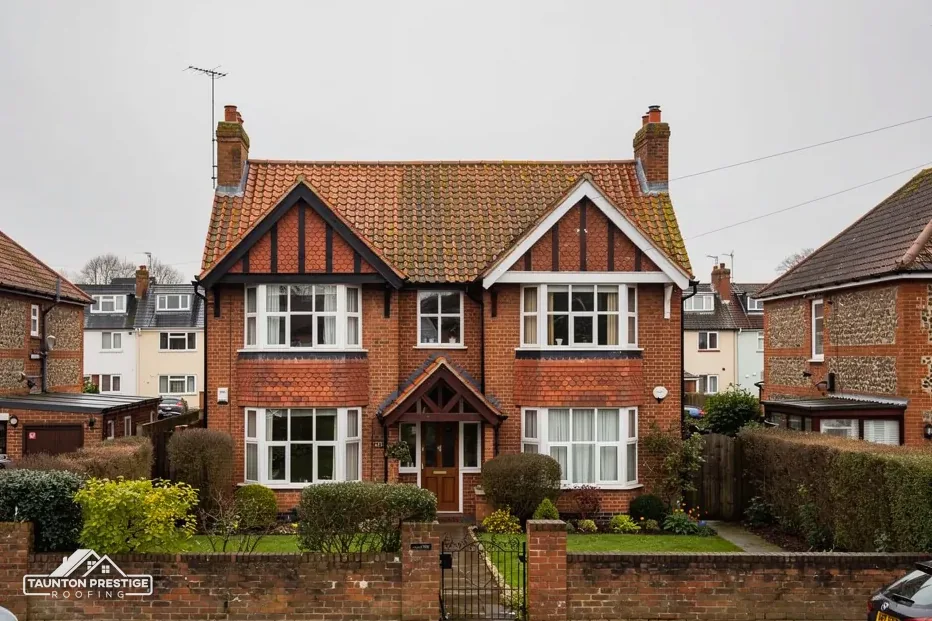
Both carry a Grade II listing, so a repair on either should match what is already overhead.
Milverton's conservation area begins within about 0.75 km of Houndsmoor's centre, so an address needs checking.
Street map of Houndsmoor with Milverton, Preston Bowyer, Hillcommon, Oake marked around it, and Taunton.
Milverton lies just north-west of Houndsmoor and Preston Bowyer to the north-east, while Langford Budville sits to the south-west and Hillcommon and Oake lie to the east.
About 6 miles west of Taunton, Somerset Council (unitary).
Four checks beside Milverton
Four points to weigh up on a hamlet house, and how each one moves the job and the final bill.
Milverton has a conservation area, and Somerset Council's published table gives it as designated on 5 February 1975 and revised on 25 September 2008. The mapped edge sits within about 0.75 km of the middle of Houndsmoor, close enough that an address here has to be set against it. Nobody should guess. A house inside the line is judged by one set of expectations and a house outside it by a looser set, and a roofer who skips the check can leave you paying to undo a covering that should never have gone on.
If the slates or tiles that go back match the ones that came off, laid in the same pattern, the answer is usually no. Questions arise once a change shows from the lane: a new covering, a heavier ridge line, a window cut into the slope that faces the road. Our page on planning permission for roof work covers the rules, and Somerset Council's planning team will answer for a single address. It is better to ask before materials are ordered than after they are on the scaffold.
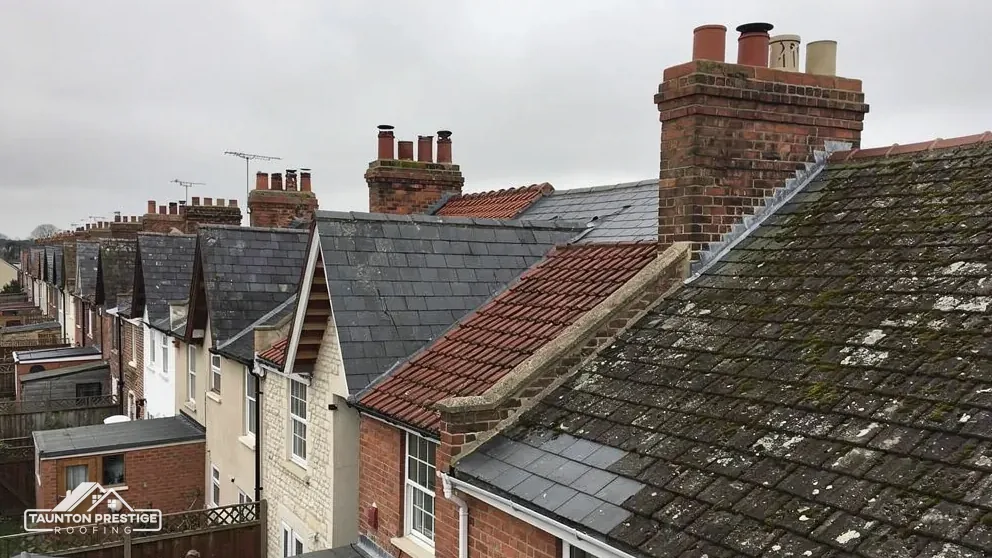
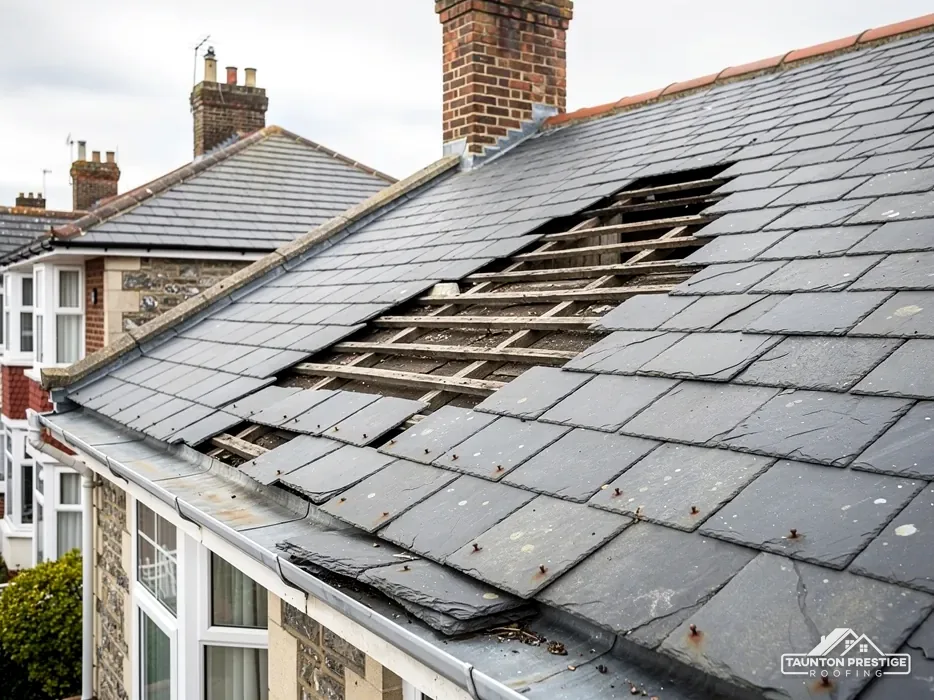
Every slope is examined in turn: the covering, the way the courses are lapped, the battens (the thin timber laths under the slates or tiles) and the verge, which is the sloping edge of the roof where it meets a gable wall. Pictures of each slope come with the survey. If an application is ever needed, it begins from a true record of the roof and never from a rough sketch. Where earlier owners patched the roof with whatever was to hand, we lay out two options side by side: keep the best of the old covering, or strip the slope and lay it afresh as a single piece.
Look for
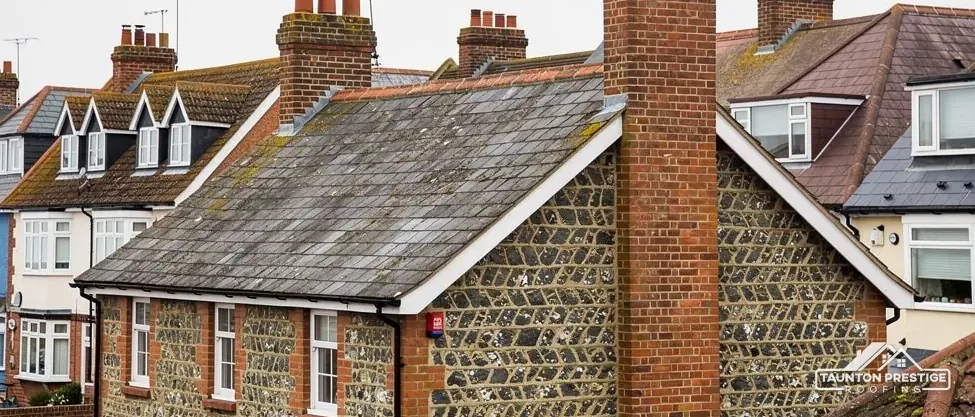
Bartletts went on the National Heritage List at Grade II on 4 May 1984, and Chapel House and Grateful Cottage share that grade. The List records 13 entries within 500 metres of the centre of Houndsmoor, a lot of protected building for a hamlet. Listing does not mean a roof can never be touched, and a straight like-for-like mend is everyday work. Listed building consent comes into play when work alters what makes the building historic, and the test is character, not the size of the job.
What decides the price
Size, thickness, colour, surface texture and the depth of overlap between courses. A single slate that has slipped can often be slid home and clipped, or swapped for a twin, but we read the whole slope first, because a lone failure and a row of failing nails call for different remedies. Cupa's advice is to keep hook fixings off any slope pitched under 25 degrees, so the pitch gets measured, not guessed. Our slate roofing page explains how slate ages and where a repair stops being worth the visit.
Often it can. Reclaimed pieces already carry the weathering of their neighbours and do not stand out from the road the way new slate can for a few seasons. During the survey we count what is needed against what the salvage yard can supply. If the supply runs thin, re-laying one slope in new material may be the wiser spend, and you would see that choice with the pictures next to it.
Lead sits behind many of these decisions, in the valleys and round the stacks, and its sheet is sold in numbered codes, each tied to a thickness and a weight per square metre. The survey notes the code already on the roof, so any new lead is chosen with that in front of us.
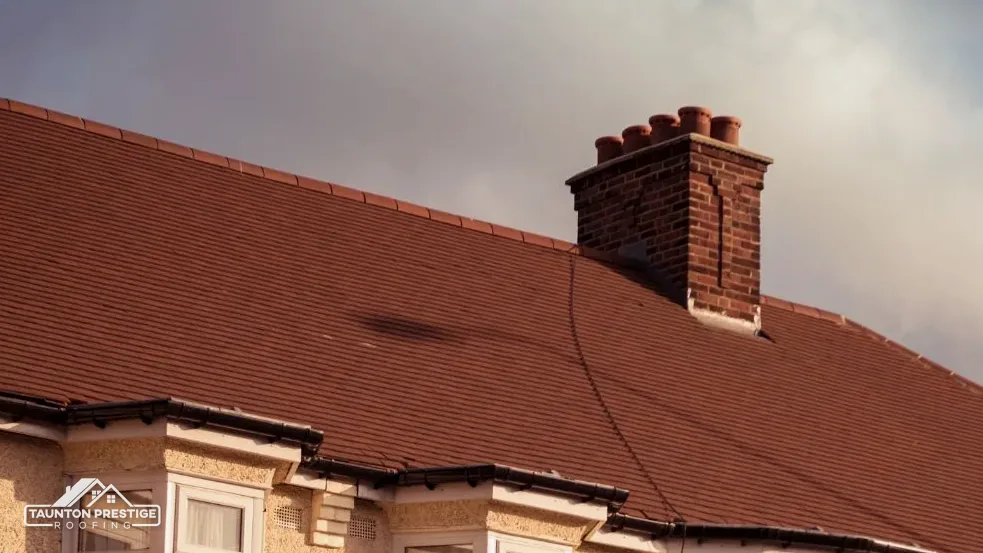
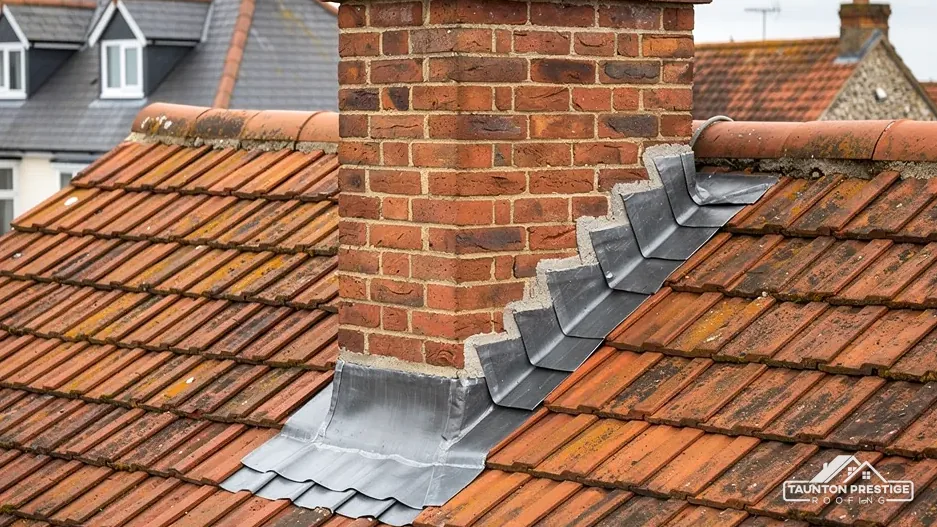
An older house in a hamlet will often carry a stack, and the stack is where a roof meets the weather head on. Three parts share the load. Flaunching is the sloped mortar collar the pots stand in, shaped to throw rain clear of the flue. Flashing means the strips of lead, or a cheaper stand-in, bent into the joint where chimney meets slope so water runs over it and not behind it. The brick or stone between needs sound pointing. When one of the three fails, the first sign is usually a patch of damp on a bedroom wall, weeks before anything looks wrong from the garden.
A stack announces its trouble from inside the house long before it shows it outside.
It might be. Damp near a stack can come from tired flaunching, from a flashing that has lifted, or from the flue itself, and a proper survey separates the three before anyone mixes mortar. Lead flashing can last for over 80 years, which is a reason to repair a lifted section rather than rip out the lot. Our chimney repairs page walks through the repairs one at a time.
Somerset Building Control's page on dangerous structures names loose roof tiles and unstable chimneys, and it leaves the bill for making a dangerous building safe with its owner. A stack with leaning pots, open joints or crumbling brick gets a temporary fix at once, and the lasting repair follows. On a listed house the rebuilt stack is laid to match the old one, because a brick stack is part of the street picture for everyone who walks past it.
A stack is also where a wildlife question can turn up, since birds sometimes build in flue tops. The Wildlife and Countryside Act 1981 makes intentional damage to a nest that is in use an offence, so an occupied stack is left until the birds have finished and the date for the work moves.
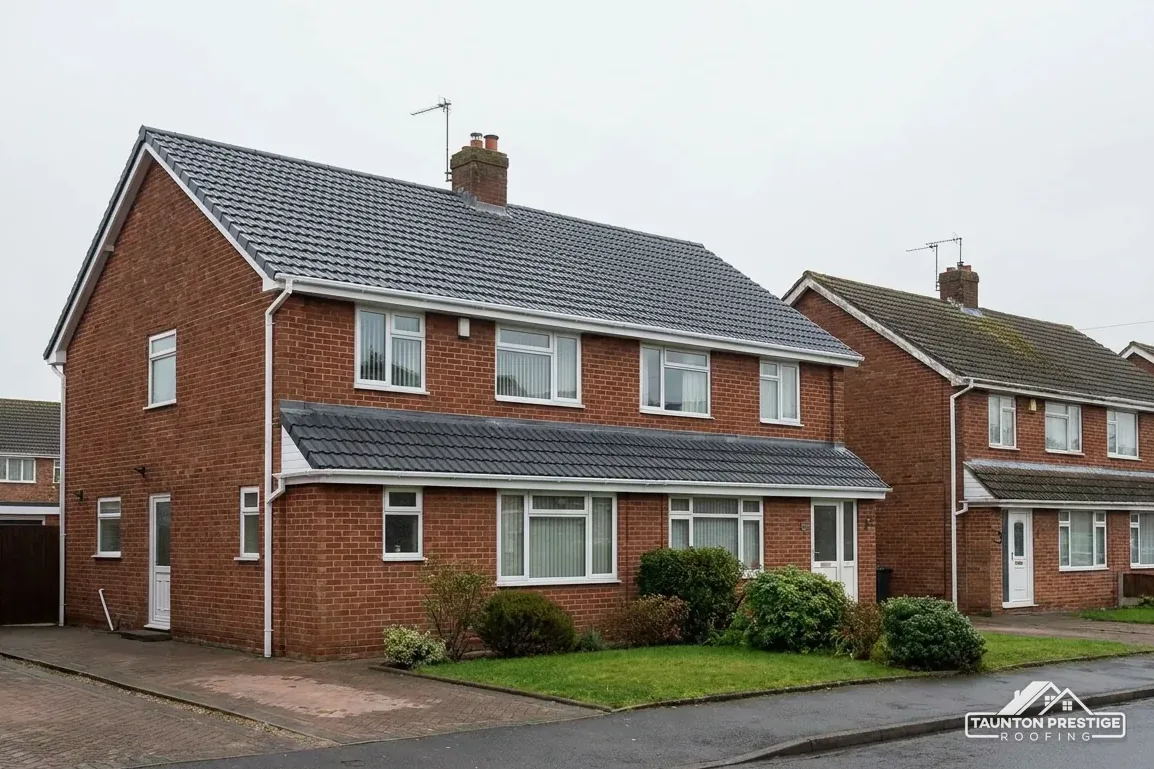
How we reach your roof depends on the work. A handful of slates can be dealt with by ladder or from a low tower, while a stack, a long slope or a whole re-roof needs full scaffold, with edge protection and a safe place to stack materials. Scaffold inside your own garden or drive stands on your land and needs no licence. Poles and boards on the public footway or carriageway do need one under section 169 of the Highways Act 1980, and for Houndsmoor the highway authority is Somerset Council, which hands a highway scaffold permit to accredited contractors alone: it is the appointed contractor who applies.
What decides the price
Ten working days is the minimum notice the council asks for, and the fee is £124.60 for each 28-day period (April 2026). If the job runs past its dates the permit has to be extended. Our proposed start leaves room for that wait, so a half-stripped roof is never left standing while paperwork catches up.
It can. The Planning Portal puts the line where less than 25 per cent of the building envelope and less than 50 per cent of the roof is affected; work that stays under both normally goes ahead without one. A covering that is 15 per cent or more heavier needs Building Regulations approval, and the Portal advises a structural check first. Somerset Building Control answers on 0300 303 7790 for addresses in this area.
Once we have looked, you hold pictures of your slopes and a single written price covering the whole job, and the site is cleared of waste before we leave. Give us your Houndsmoor address with a note on what is wrong, and name the weekday that works for you.
Walked the roof?
When you have read the checks, we walk the roof and show you the photos.
Only once the address has been checked. A house outside the conservation area and not listed is a matter between you and the surveyor. Inside either, a different slate, size or colour can bring Somerset Council into it. We take pictures of the existing courses so a matching piece, or an application, rests on what is really there.
A listing does not stop repairs. Replacing like with like is routine, whereas work that changes how the house looks historically needs listed building consent. The National Heritage List shows 13 entries within 500 metres of the hamlet centre, so it is worth checking the address before a covering is chosen. We can run that check at the survey.
They can. GOV.UK guidance gives every bat species and its roosts full legal protection, and counts repairing or replacing a roof among the activities that can disturb them. We look into the roof space and along the eaves for signs of use before any slate is lifted, and if we find some, the plan changes to suit the animals.
Somerset Council. Since 1 April 2023 it has stood in for the old district council, which means one authority covers the whole area. Building control sits with Somerset Building Control, whose service covers the former districts. For a plain repair, a short call to the planning team usually settles the question before any materials are ordered.
Name the slope, stack or gutter that bothers you in Houndsmoor and book the survey.