St Bartholomew's, Grade II*
On the list since January 1956 and still a parish church, so roof work follows the faculty route.
A Grade II* church and three conservation areas nearby
Oake is a village of 725 residents west of Taunton, where St Bartholomew's church is Grade II* listed and its chancel and lower tower are probably 13th-century.
On the list since January 1956 and still a parish church, so roof work follows the faculty route.
A north window, reputedly from Taunton Priory, was reset inside-out, a sign of how old fabric gets reused.
Bradford-on-Tone, Halse and Hillfarrance lie within about 2.5 km, and an Article 4 direction is listed for Halse.
Street map of Oake with Hillcommon, Heathfield, Hillfarrance, Preston Bowyer marked around it, and Taunton.
Hillcommon lies just north-west of Oake and Heathfield to the north-east, while Hillfarrance sits to the south-east, Preston Bowyer to the west and East Nynehead to the south.
About 4 miles west of Taunton, Somerset Council (unitary).
Under the tower at Oake
Four checks for a house or building here, with what each means for consent, repairs and the final price.
St Bartholomew's has been Grade II* listed since 25 January 1956. The Somerset Historic Environment Record says its chancel, the north walls of the nave and the lower half of the tower are probably 13th-century. It remains a working Anglican church, and that points roof work towards the Church of England's faculty process. The parish applies, a faculty sets out what may be done, and the roofer follows it. A parish church of that kind is handled through the faculty process rather than through the council's listed building consent system, and the parish office is the first point of contact for any roofer.
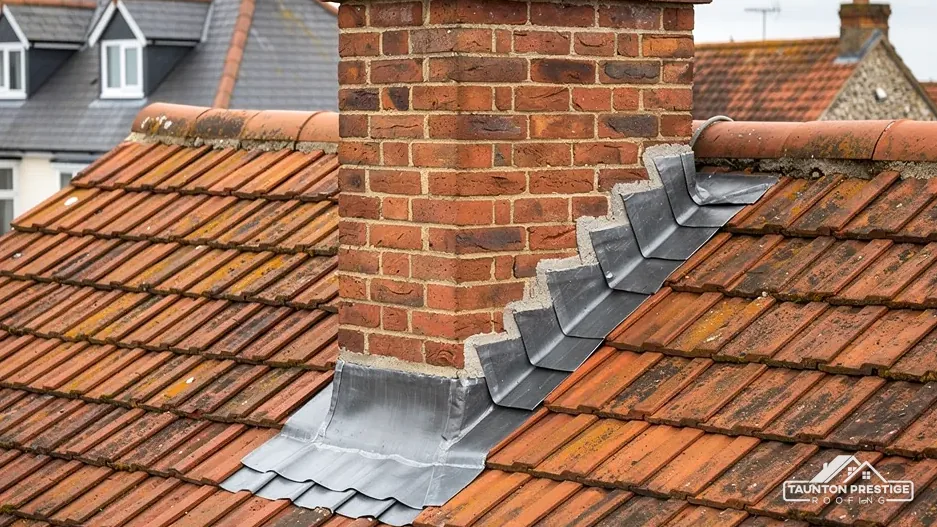
First, read the roof. That means a safe way up and a record of every slope, valley and gutter, not a guess from the ground. Church roofs gather faults at their joints, where the nave meets the tower, where a parapet gutter runs, where lead turns up a wall. Lead flashing closes the joint between roof and wall, while a soaker is a small bent piece of lead that sits under the covering beside it. When either fails, water runs down the inside face of the masonry, and the damage shows long after the leak began.
A tower is tall, narrow and exposed. Scaffold has to be put up safely before anyone can read the stonework above, and it can be a large share of the cost. We plan that early so the parish is not surprised. A tower roof may also need bird and bat checks, because nests in use and bat roosts are protected.
Where lead is part of the roof, MyJobQuote says lead flashing can outlast 80 years as a minimum, so we look at splits, thinning and fixings rather than age. Our lead work page explains the thicknesses, called codes, that suit each job.
Look for
Three conservation areas sit within about 2.5 km of Oake on the national planning dataset: Bradford-on-Tone, Halse and Hillfarrance. Somerset Council's page on Article 4 directions also lists one for Halse, confirmed in 1977. The council's planning team can explain what that direction covers. In general terms, an Article 4 direction removes named permitted development rights in one place, so a job that is usually exempt from an application can need one inside it.
What decides the price
Only the council can say for your address, and the answer can be requested in writing, which is worth doing before a covering is ordered. Being near an area is not the same as being in one, and the question matters because the rules change at the line. Plans for a dormer, another kind of covering or a window cut into the front slope belong with the council before you commit to anything.
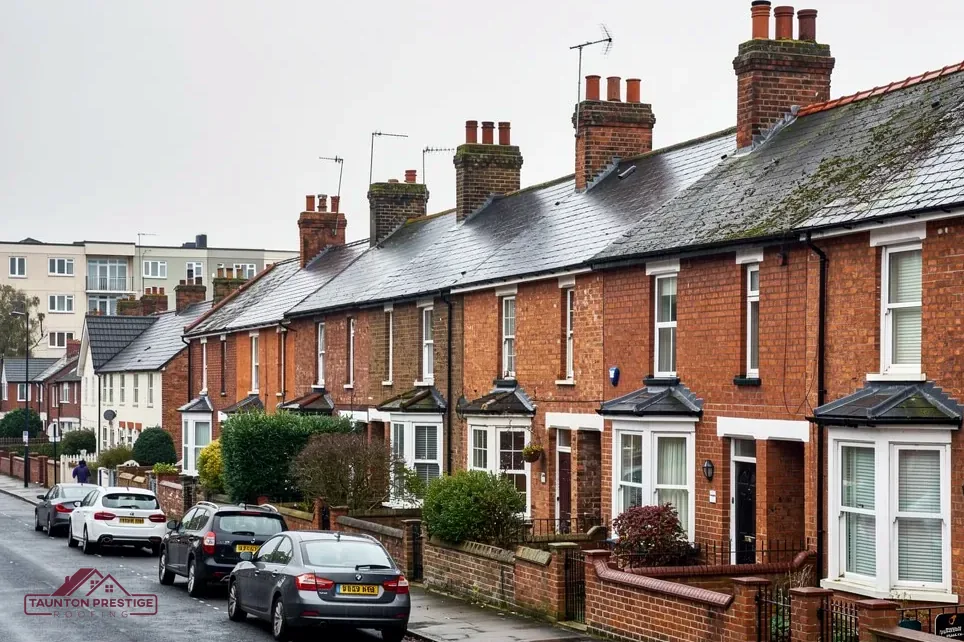
Usually, yes. One slate can be eased back and pinned, or swapped for a match, without stripping the slope. Our rule is to look along the whole course before touching anything, since a lone fault and a row of them mean different jobs, with different costs and different timescales. CORC gives well-maintained slate a life of 100+ years, a typical figure and not a promise, and an old slate roof can still fail at its fixings.
Every slope is photographed at the survey, so you can see whether the roof wants patching or laying afresh, and the photographs also show anyone checking the work later what the roof looked like before. Our pitched roofing page explains when each is the better buy.
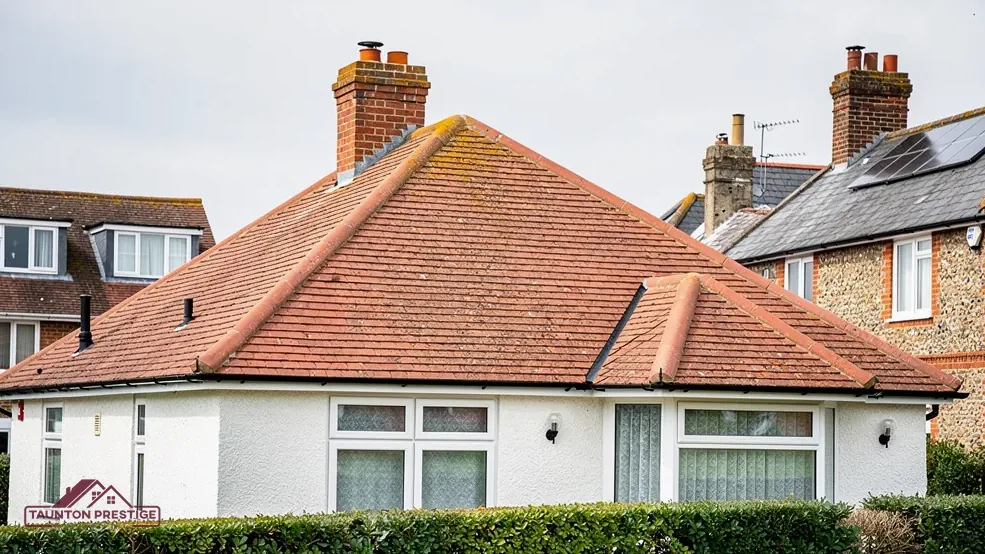
Three lines of any roof take the worst of the wind. The ridge is the crest, finished with capping tiles. A hip is the angled line where slopes turn an outside corner, capped like the ridge. The verge is where the roof stops short beside a gable wall. When one fails, water finds the gap quickly.
Marley's reading of the 2014 BS 5534 revision is that mortar on its own should not be relied on for ridge or hip tiles, and that bedded tiles also need mechanical fixings. BS 5534 guides good practice without being statute, so read it as advice. Mortar is not banned, and plenty of sound ridges are still bedded. What fails is mortar that has cracked and let a tile shift, usually on the side that gets the most sun and frost.
A ridge that looks fine from the lane may still rock, so every tile gets checked by hand.
Dry-fix secures ridge, hip or verge tiles using clips, screws and a ventilated roll in place of wet mortar. Products of that type are tested to BS 8612. They suit roofs where mortar repairs keep recurring, and they need no time to cure. They are not right for every roof, and a listed or conservation-area house may want the traditional look kept.
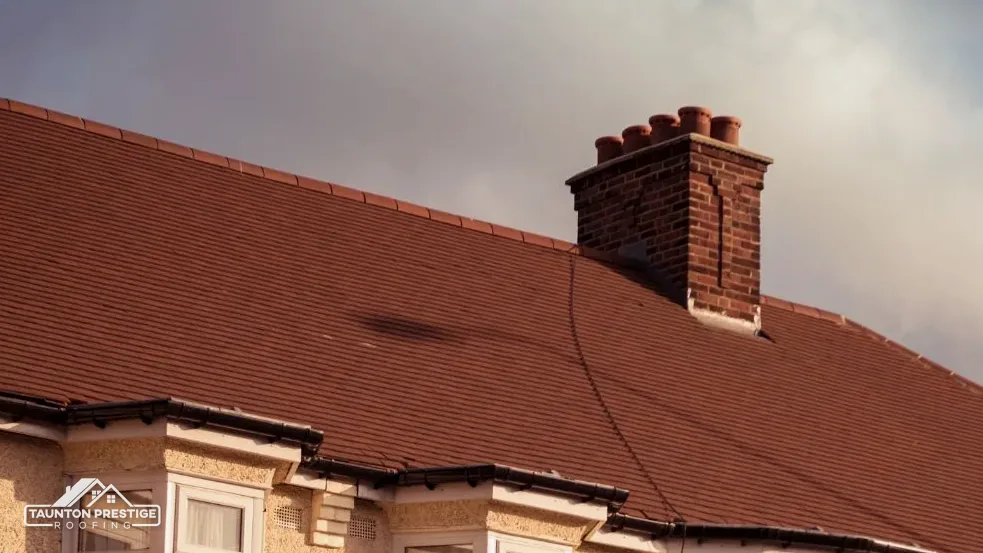
Often. The flaunching, the mortar cap that beds the pots, can crack and open a route for rain, and the lead at the base of the stack can lift. Our chimney repairs page covers the work.
From the ground you cannot tell whether a ridge tile is rocking or merely dirty, so we check by hand at the survey, and you see a photograph of every length we recommend.
Verges deserve the same attention. A verge tile that has lifted lets wind under the roof edge, and the next gale takes a whole course with it. Where a gable faces the prevailing weather, the edge fixings are worth strengthening whichever system is chosen.
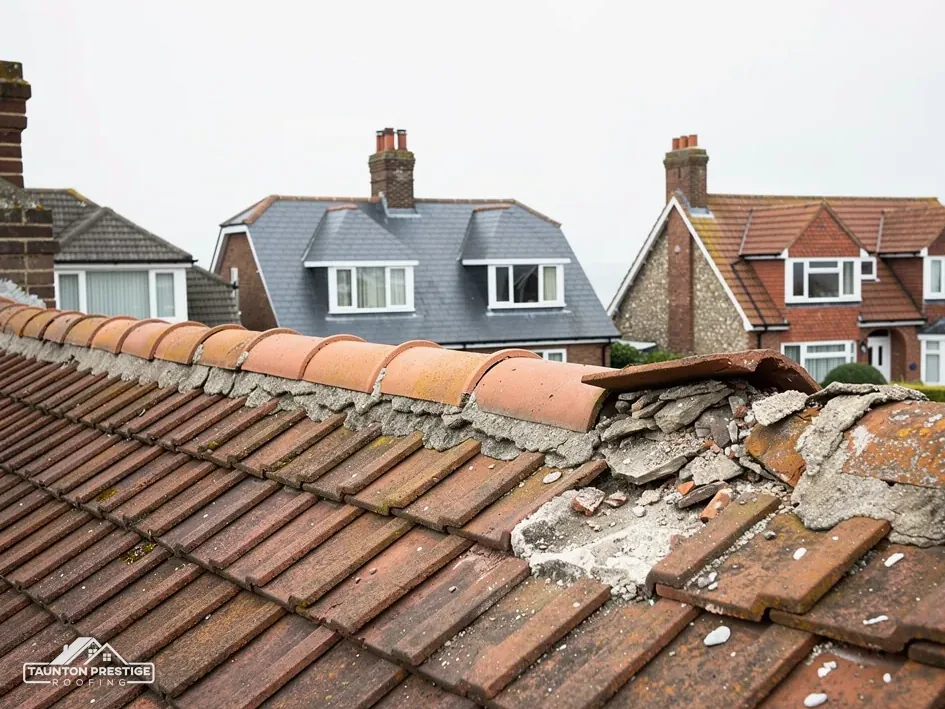
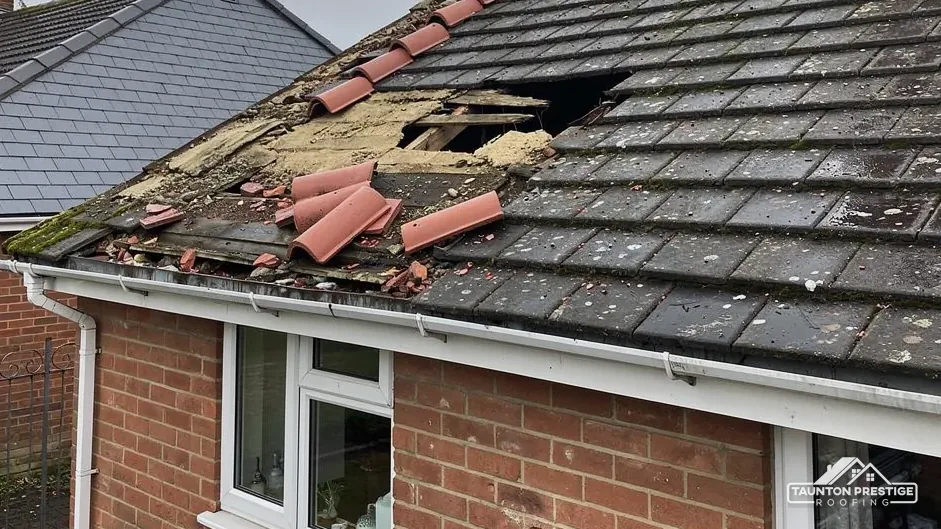
When a gale lifts a ridge or drops a chimney pot, the first job is to make the house safe, and that may mean tarpaulin, a tile clipped back or a pot lifted down before anything else. Stopping the leak comes before any talk of a lasting repair. If the loss may be insured, contact your insurer before anything permanent is done, take photographs, keep receipts, and arrange a temporary repair that stops water getting in.
What decides the price
Nothing is guaranteed, and the wording of your policy decides what is covered. Which? reported that only 32% of storm-related claims made in 2024 resulted in a payout. The Financial Ombudsman sets a 6-month limit for a complaint, counted from the insurer's final response, and its idea of a storm is violent wind, usually with rain, hail or snow. A payout is never certain, and the claim itself is between you and your insurer.
Access, the area of covering, the pieces that need matching and what the survey finds beneath the covering. A quick repair with a clipped ridge end is a different order of job from a re-laid slope, and the written price says which one you are paying for. Scaffold on the highway in Somerset is licensed by the council for accredited contractors, and whoever is named as contractor for the work submits the form (Somerset Council, £124.60 per 28-day period, April 2026, at least 10 working days' notice, though emergency applications can be handled in less).
Our survey leaves you with a photographic record of the roof, and the written price that follows covers the whole job, with the waste carried off at the end. Send your Oake address and a picture of the damage, and we will propose a day to call.
Walked the roof?
When you have read the checks, we walk the roof and show you the photos.
Where the sheet is thick enough and the split is local, a repair can be sound. If the lead has thinned along a valley or the fixings have failed, a patch just repeats the visit. The parish decides through the faculty process, and our survey photographs give the decision a clear footing.
Only the planning team can say. Somerset Council lists an Article 4 direction for Halse, confirmed in 1977. Before any change of covering or new roof window, find out from the planning team whether your address falls within it and what it covers. A short email with your address and a photo of the roof is usually enough to start.
Either can work. Marley says mortar alone is no longer relied upon for ridge tiles, so bedded tiles get mechanical fixings, while BS 8612 covers dry-fix systems. A conservation-area house may want the traditional look kept, and a listed one may need consent. The survey shows which method suits your roof.
Make the house safe, then tell your insurer, take photographs and keep receipts. We stop the leak first with a temporary repair that keeps water out, and the lasting repair follows once the survey is done. The Financial Ombudsman handles complaints, but no payout is guaranteed, so keep the evidence tidy and dated.
Send your Oake address and a photograph of what worries you, and we will fix a visit.