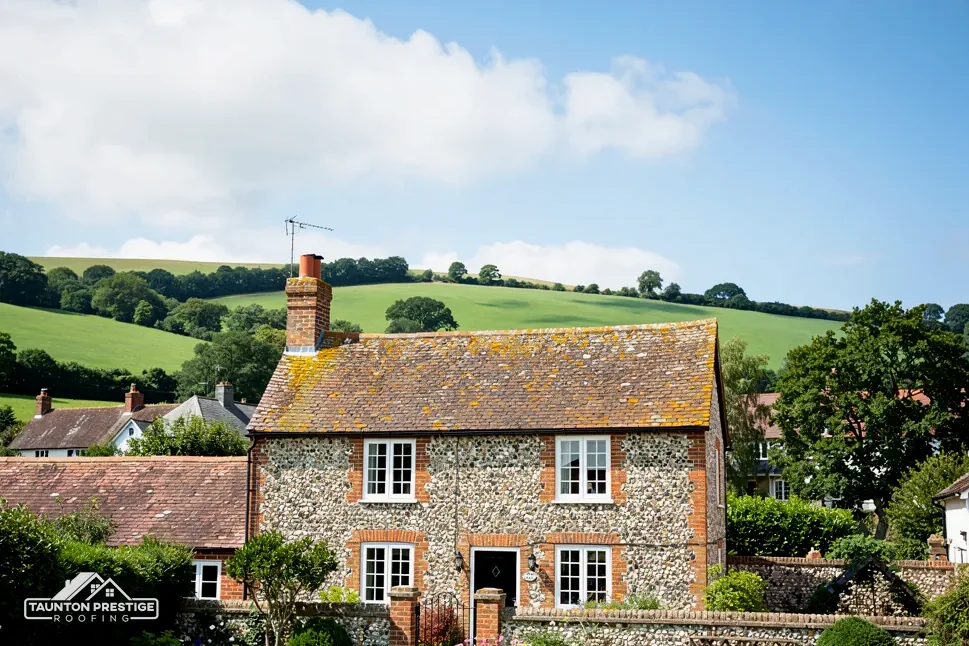
St Peter's Grade I church
Its tower is 16th century and of Devon type; the north aisle and arcade are modern.
A Grade I church, Grade II* Langford Court and a conservation area
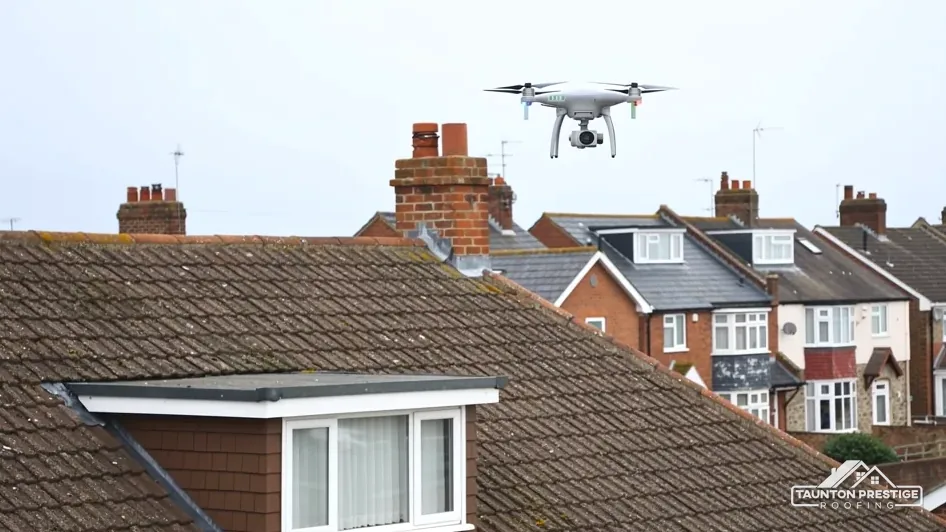
Langford Budville has a 16th-century church tower, a Grade II* court and seven listed buildings within 500 metres of its centre. We survey and photograph a roof before pricing it.
Its tower is 16th century and of Devon type; the north aisle and arcade are modern.
Listed Grade II* on 25 January 1956, the date St Peter's church was listed Grade I.
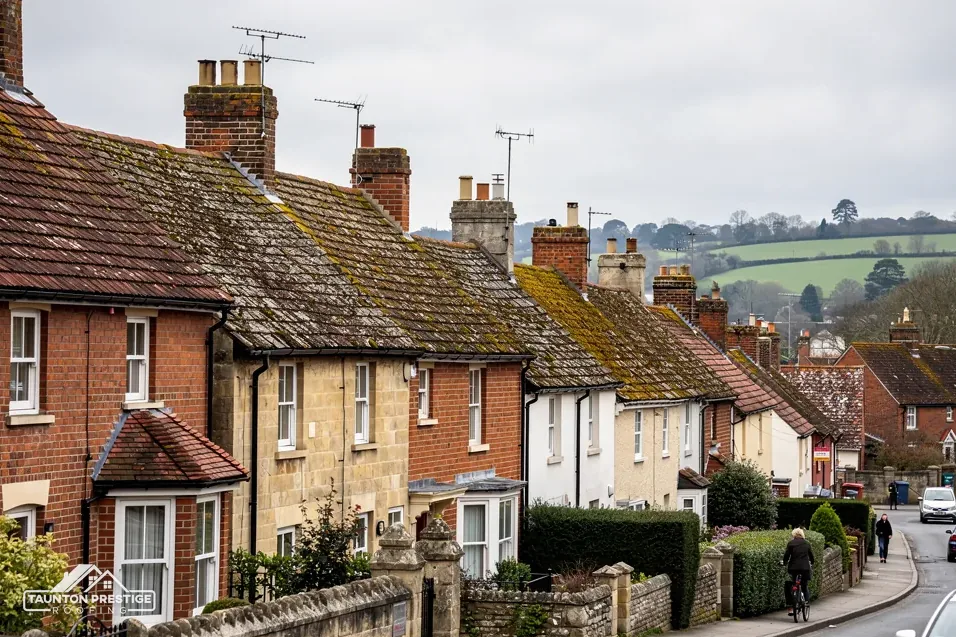
Listed Grade II, one of seven list entries within 500 metres of the village centre.
Street map of Langford Budville with Houndsmoor, Milverton, Rockwell Green, Wellington marked around it, and Taunton.
Milverton lies to the north, with Houndsmoor to the north-east beyond it, East Nynehead to the east, and Rockwell Green and Wellington south-east of the village.
About 7 miles west of Taunton, Somerset Council (unitary).
A village walk from the churchyard cross
Four stops for a cottage, farmhouse or village house, and how each finding moves the consent route, the repair and the price.
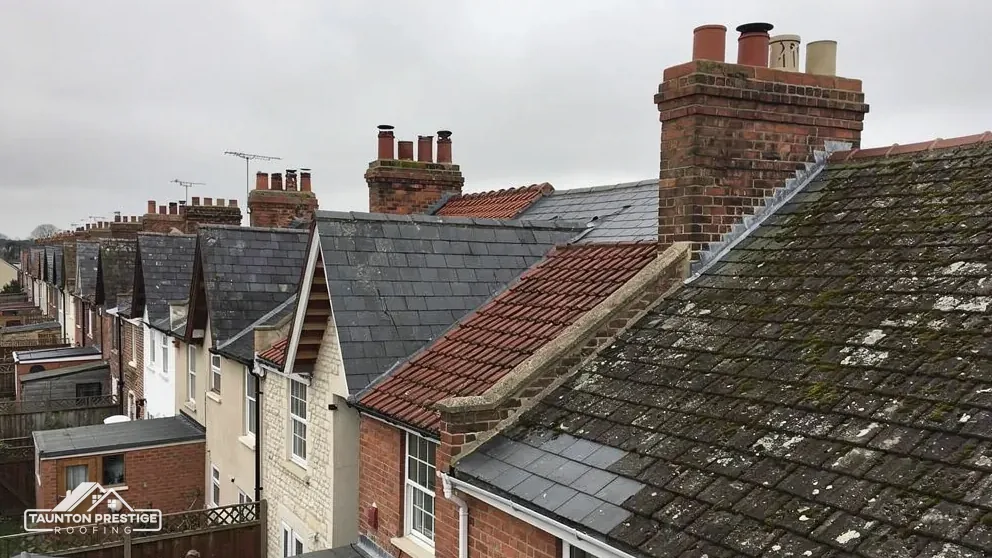
The conservation area here lies within about 0.75 km of the centre, and the National Heritage List shows seven entries within 500 metres of it. Langford Court is listed Grade II*, and the Old Vicarage is Grade II. Both the court and the church were listed on 25 January 1956. In a village this size, a good share of the older houses will sit inside the conservation area, beside a listed building or both, and before pricing a roof we look up which applies, because the answer settles whose permission is needed and how long that will take.
The easy case is a repair that puts the old covering back exactly as it was laid. Complications start when the roof changes appearance: a different covering, a different ridge, a roof window on a slope facing the lane, or a dormer. Somerset Council's planning team is the authority to ask, because a conservation area narrows the choices and the council knows whether any condition or direction applies to your address. Our listed building roof consent guide sets out the route for the listed houses.
Yes, in one way. Listing is building by building, so it does not extend to your roof, but a listed neighbour is a good indication of the kind of care the street expects. If you are in the conservation area, we match the colour, size and texture of any new pieces to the old ones, and you see samples before they are ordered.
The survey records what each slope is covered in, with photographs, so there is a precise starting point for any conversation with the council. A clear record also helps a future buyer, a mortgage valuer or a surveyor reading the house for the first time.
Look for
St Peter's has a 16th-century tower of Devon type. The body of the church, the chancel and the south aisle are ancient, while the north aisle and the arcade are modern. The churchyard still holds part of the large octagonal base of an old cross, two octagonal steps topped by a modern ashlar block. A church built across several centuries has many roofs, and the junctions between them are where water finds its way in. Old and new masonry can move differently, so the join between them is rarely fully at rest. A modern aisle roof may be easier to reach and to repair than the ancient ones, but it still needs the same care at its edges.
Sound or needs work
What decides the price
Listed Grade I, St Peter's is a working Church of England church, with Communion and Morning Worship held there each month. The Church of England is an exempt denomination, so work goes through a faculty obtained by the parish, and council listed building consent does not apply. A closure would change that route. The roofer builds to whatever the faculty approves, and we price to that specification.
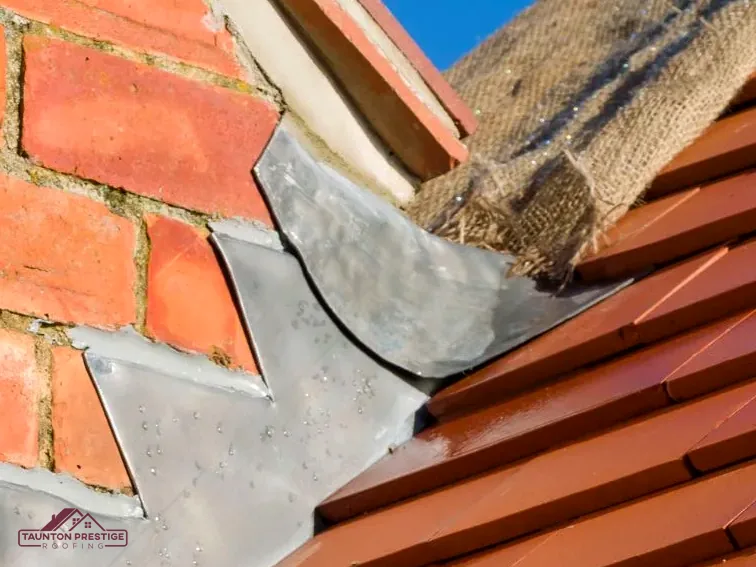
Where an aisle roof runs into a nave wall, the join is normally sealed with lead flashing, and where two slopes drain together a lead-lined valley carries the water. Lead flashing can last for over 80 years, so a leak at a join usually points to a lifted edge, a poor fixing or movement in the wall behind. Our lead work page explains how these details are renewed.
For any church roof, we photograph the junctions from a tower or ladder at the survey, and the parish keeps those pictures for its records, along with a short written note of what was seen and where.
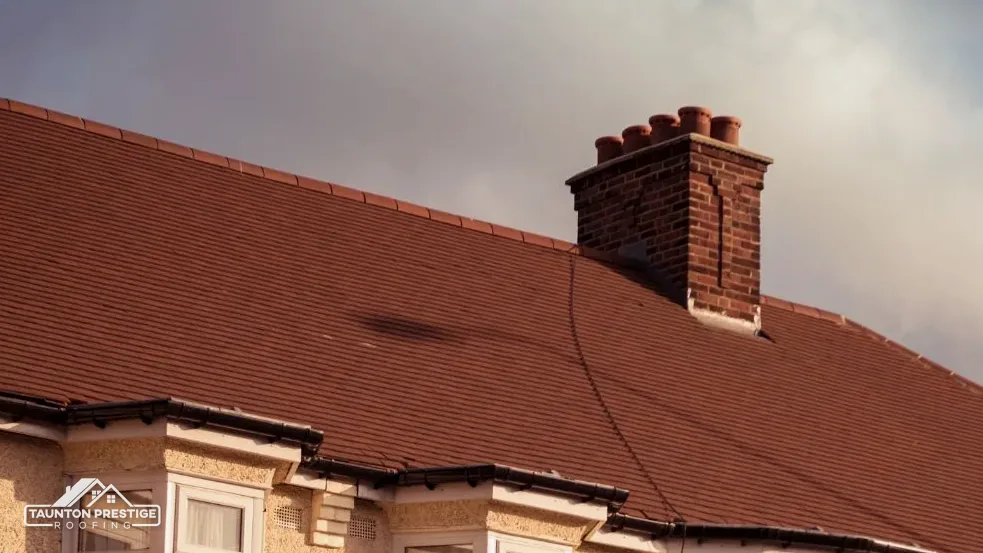
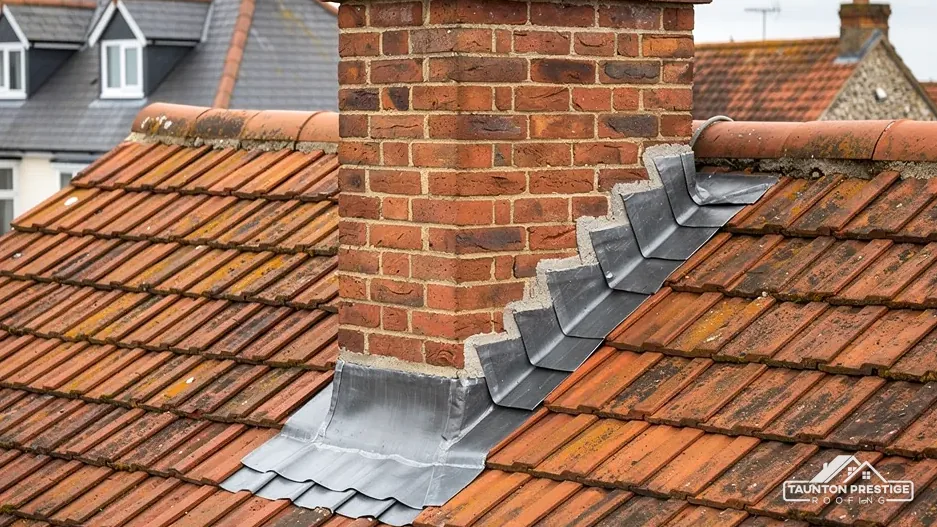
A village of older houses has chimney stacks of many ages. Each stack stands higher than anything else on its roof and takes the full force of rain and frost, so it comes early in any survey, and a village house can have more than one, each in a different state. Mortar goes from the brickwork first, then the flaunching, a cement collar bedding the pots, then the lead where the stack joins the slope.
The tallest part of the house takes the most weather, and a stack shows it first.
A brown mark on the chimney breast, or a wet patch in a bedroom beside the stack, shows that water is getting into the brickwork. It may come in at the top through cracked flaunching, at the sides through a lifted flashing, or through the pointing, and the survey traces which. If a stack is no longer used, a cap or a vented cowl keeps the rain out while letting air through the flue, which stops the breast from turning damp. Whether the pots stay or go on a house in the conservation area is another question for the planning team.
Sometimes, but taking a breast out is structural work, so Building Regulations approval is always required. If the chimney is shared with next door, party wall rules can apply, and a party wall surveyor is the right person to ask. Chimney breast work on a party wall needs two months' notice to the neighbour. Rebuilding a stack from the roof line is a smaller job than taking out the breast inside, and in many cases it is all that is needed. The old bricks can often be cleaned and reused, which keeps the stack looking as it always has. Our chimney repairs page describes how we judge repair against rebuild.
We photograph every stack from above, working off a ladder or a tower, and the pictures go to you with the quote.
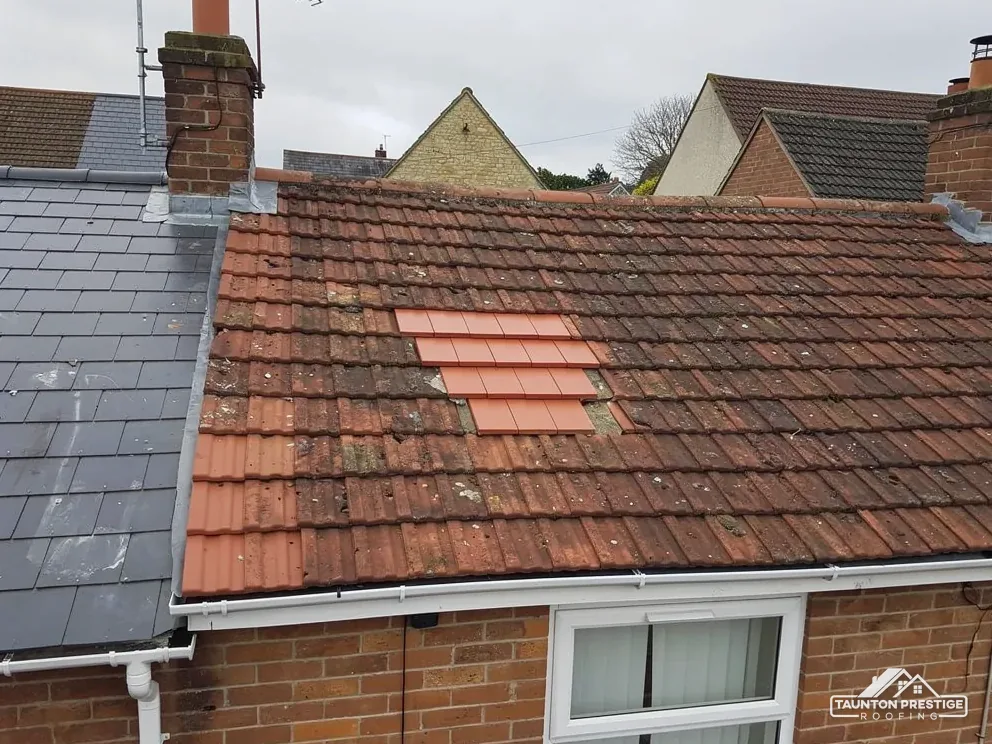
When a gale lifts slates, the roof has to be made safe, and a temporary repair is fine for that. Your insurer should hear about it before any permanent repair, and dated photographs and receipts will back up the claim. If the insurer and you cannot agree, the Financial Ombudsman is where a complaint goes. Our first step is to stop the leak, and a full survey follows, so the insurer has evidence in front of it.
What decides the price
Consumer law provides a 14-day cancellation right for contracts made at home after a survey. A customer-requested urgent repair visit is excluded under regulation 28(1)(e), so a leak you ask us to attend is treated separately. For advice, the Citizens Advice consumer helpline is 0808 223 1133.
Until April 2023 Langford Budville belonged to Somerset West and Taunton; since then the highway authority has been Somerset Council. A scaffold blocking the highway must be licensed under section 169 of the Highways Act 1980, and Somerset Council issues those licences only to accredited contractors, with the application coming from the contractor appointed for the job. The fee is £124.60 per 28-day period (April 2026), and the council wants 10 working days' notice.
Somerset Building Control, on 0300 303 7790, covers the area. The Planning Portal's test sets two limits, under 25 per cent of the building envelope and under 50 per cent of the roof, and a job inside both is usually free of any application. A covering 15 per cent or more heavier brings approval regardless.
When the survey is finished, you receive the written price, one total, alongside pictures of your roof. Give us your Langford Budville address and a photo of the worst slope, and a visit is arranged.
Walked the roof?
When you have read the checks, we walk the roof and show you the photos.
Only through the conservation area and your own address. Listing is building by building, so the court's entry does not cover your roof. Search the heritage list for your own house, and ask Somerset Council's planning team whether the conservation area affects a change of covering, roof window or dormer.
Not by consent, because the whole building is listed Grade I and the faculty system covers works. The practical point is the joins: wherever a newer roof meets an older wall, lead flashing and valleys are the likeliest places for a leak. We photograph those joins at the survey for the parish.
Stay clear of the damage, put buckets under any drips and take dated photographs from the ground. Tell your insurer before permanent repairs, and keep receipts for a temporary fix. Then send us the pictures and your address. Making the roof safe is the first step, and the survey that follows shows what the storm really did.
Usually, yes. The 14-day cancellation right covers contracts made at home after a survey. A repair visit you ask for in an emergency is excluded under regulation 28(1)(e). Read the paperwork you are given, and call the Citizens Advice consumer helpline on 0808 223 1133 if you are unsure where you stand.
Give us the address and a photo of the worst slope, and a survey date follows.