St Dubricius church
Listed Grade I on 22 May 1969; Church of England worship there means roof work needs a faculty.
Inside Exmoor National Park, among Grade I and Grade II* listed buildings
Porlock sits inside Exmoor National Park, so Exmoor National Park Authority, not Somerset Council, decides planning applications for roofs here.
Listed Grade I on 22 May 1969; Church of England worship there means roof work needs a faculty.
Listed Grade II* with the cottage abutting its north end, so work affecting their character needs consent from the Park Authority.
The Lodge and Cape's Stores, the Old Rose and Crown, are both listed Grade II.
Street map of Porlock with Minehead, Dunster, Carhampton, Old Cleeve marked around it, and Taunton.
Minehead lies east of the village, with Dunster, Carhampton, Old Cleeve, Washford and Watchet following along the same bearing.
About 25 miles north-west of Taunton, Somerset Council (unitary).
Four checks inside the Park boundary
Four checks on a roof inside the National Park: who decides, what the work involves and how the price is set.
Porlock lies inside Exmoor National Park, and that changes who you write to. Section 4A of the Town and Country Planning Act 1990 makes the National Park authority the sole local planning authority for the area of the Park, so for Porlock that is Exmoor National Park Authority, and listed building consent in the Park goes to it as well. Somerset Council remains the highway authority and the building control body. A planning question about your roof, though, goes to the Park. Ask the right body first and an application goes through once; ask the wrong one and you lose time.
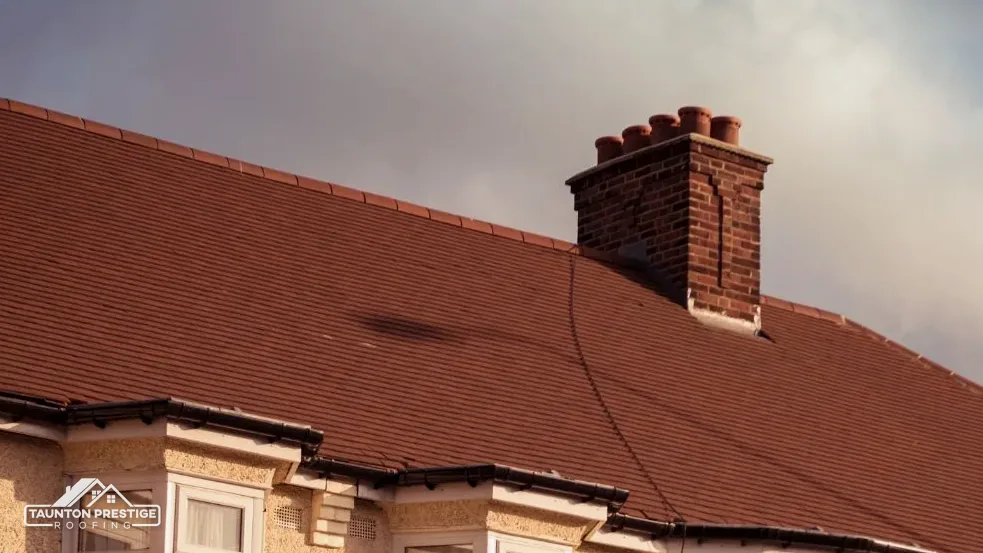
Replacing like with like sits at the easy end, and changes to how the roof looks are where applications begin. Colour, texture and ridge style count as appearance, not only the material. A National Park is protected land under the planning rules, so dormers, roof windows and new coverings are all worth raising with the Authority first. Our short answer on roof planning in Exmoor lists the questions to ask before you order anything.
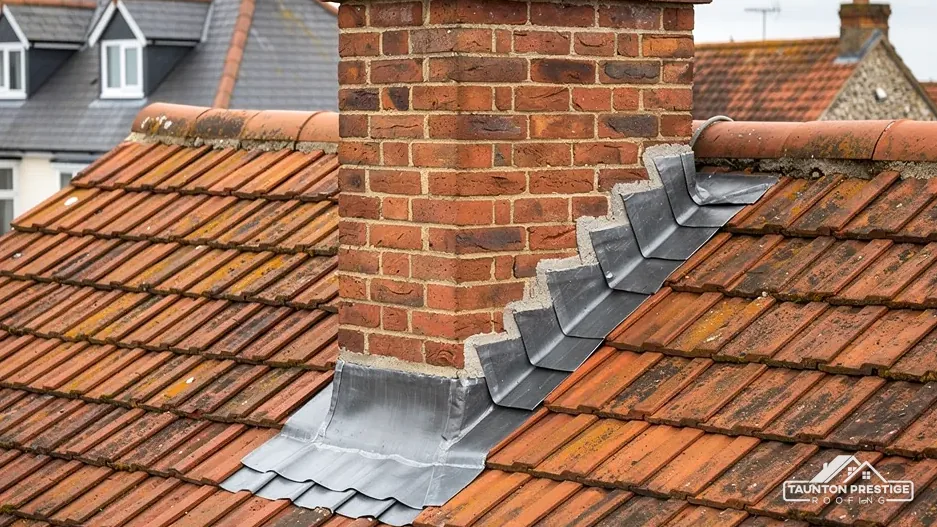
The National Heritage List records 12 entries within 500 metres of the village centre, and Porlock's conservation area lies within about 0.75 km of it. The listings run through the grades: St Dubricius is Grade I, the Doverhay Reading Room and its cottage Grade II*, Bossington Place Lodge and Cape's Stores Grade II. Work that would alter a listed building's character needs listed building consent, and in the Park the Authority grants it.
St Dubricius is in active Church of England use, so a roof repair there is authorised by faculty, arranged by the parish, and not by the Authority's consent.
Look for
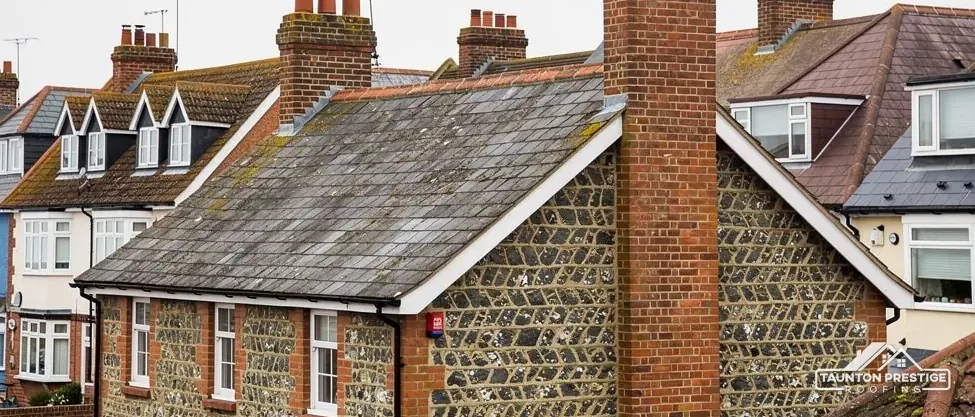
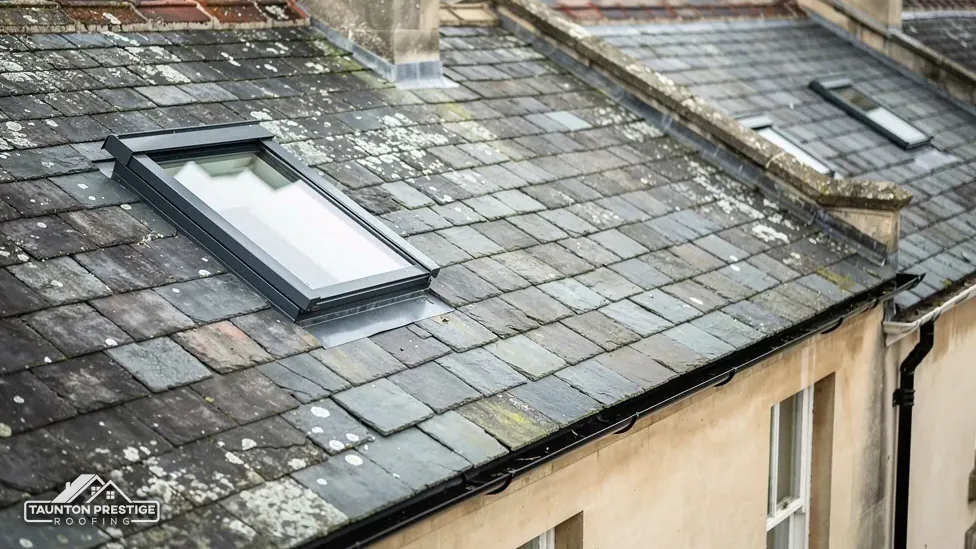
A roof window is fitted flush with the slope, level with the slates or tiles around it. A rooflight is the domed or flat type, usually set into a flat roof. The two get muddled, and the difference carries into the energy rules. Approved Document L treats a roof window like any other window, at 1.4 or WER Band B, and holds a rooflight to 2.2. A supplier's data sheet should say which kind you are being sold, and it is worth reading before you pay a deposit.
What decides the price
Often it can, but the slope and the building decide. Where the house is listed, sits in the conservation area or faces the road, a roof window changes how the roof looks, so ask Exmoor National Park Authority before ordering. A dormer is a bigger change again, so raise it with the Authority at the outset. Our survey records the pitch, the rafter spacing and the covering, which gives the Authority real figures to look at. From the loft hatch we also check the condition of the timbers, since a new opening only works if the rafters around it are sound.
The opening is cut between the rafters, which are the sloping beams under the covering. Slates or tiles around it are trimmed back and sealed with a flashing kit, so water runs round the frame and not into it. If a loft is being converted, the renovated roof also falls under the insulation rules. Approved Document L sets a threshold of 0.35 and an upgraded figure of 0.16 W/m2K, and where that is not feasible the upgrade is limited to what is feasible and pays back within 15 years. Our roof window and skylight installation page covers the work in detail, including what the loft needs before a window goes in.
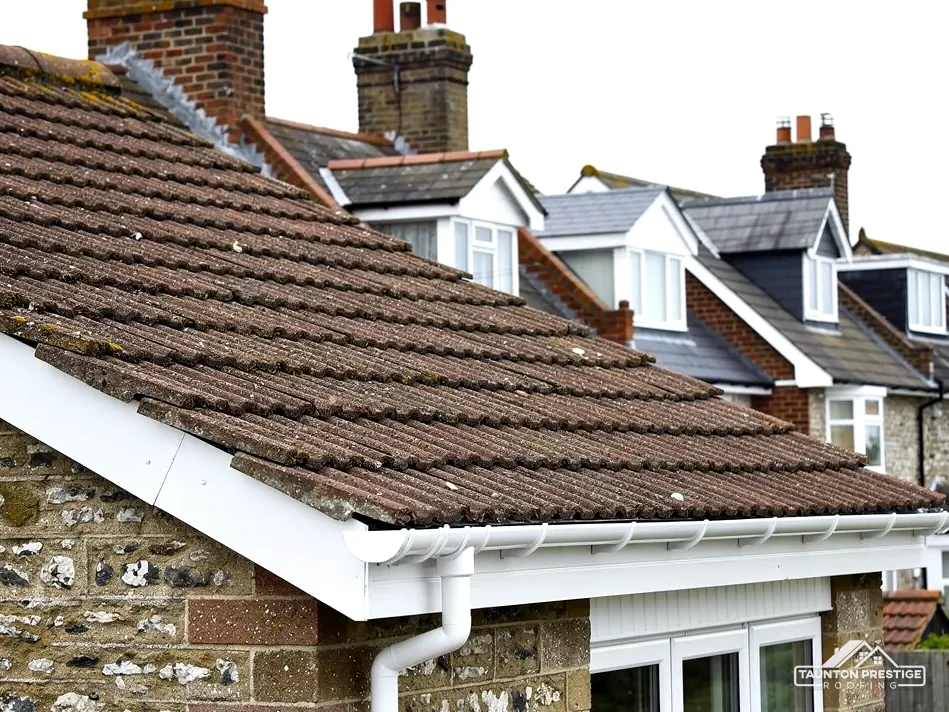
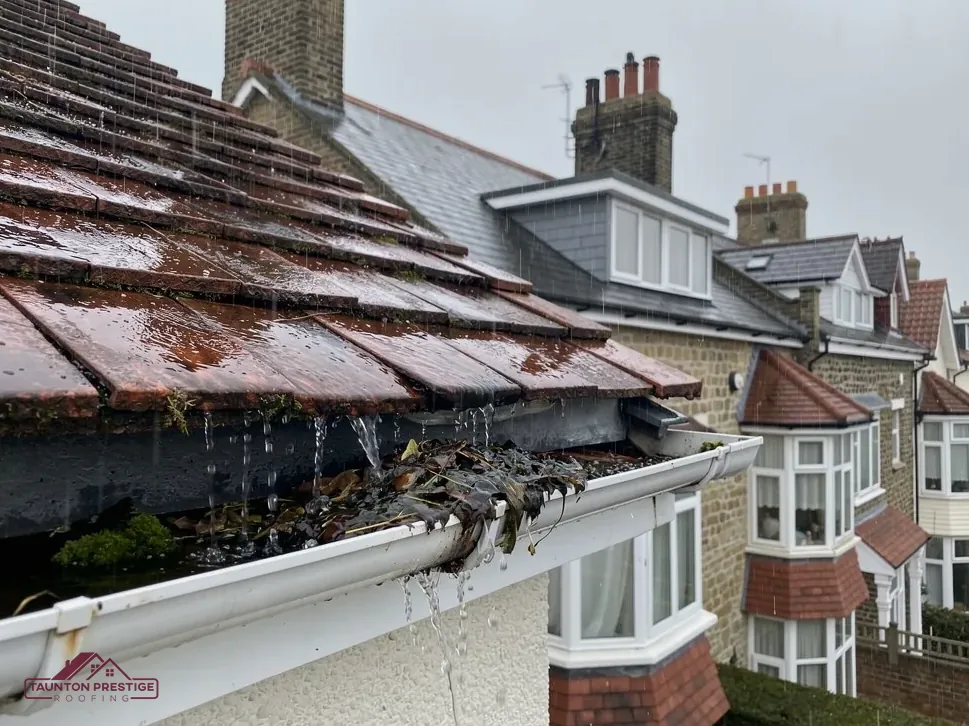
The Environment Agency's Flood Map for Planning places Porlock's mapped centre point in Flood Zone 2. This is a statement about the land, not about any one roof, and GOV.UK has a flood-risk checker for individual addresses. What a roof contributes is easier to describe: it catches rain across a wide area and has to pass it down cleanly. The roofline decides whether it does, and it is the part of the house that gets looked at least.
Three parts make it up: the fascia, a board the gutters are hung from; the soffit, a panel that boxes in the overhang from below; and the gutter itself. A gutter that sags holds water, which then spills over the front or soaks the fascia, and a softened board lets the brackets pull away. Brett Martin's fitting guidance sets the fall at 1mm for every 600mm, a very gentle slope that one dropped bracket can undo.
Keep a gutter level and clear, and it protects the fascia, the wall and the ceilings.
That depends on the house. One retailer, which has an interest in the answer, puts uPVC fascia at between 20 and 40 years, so treat it as a rough guide rather than a promise. If the property is listed or lies within the conservation area, timber or a profile matching the original may be the right choice, and a change of material is another conversation with the Park Authority. Our gutters, soffits and fascias page compares the options.
Blocked outlets and cracked joints are common causes of overflow, and a clear-out with a close look often costs less than replacing the whole run. A downpipe that empties against a wall can soak the masonry as easily as a broken gutter, so we follow the water down the house as well as along the eaves. We tell you at the survey which of those you have.
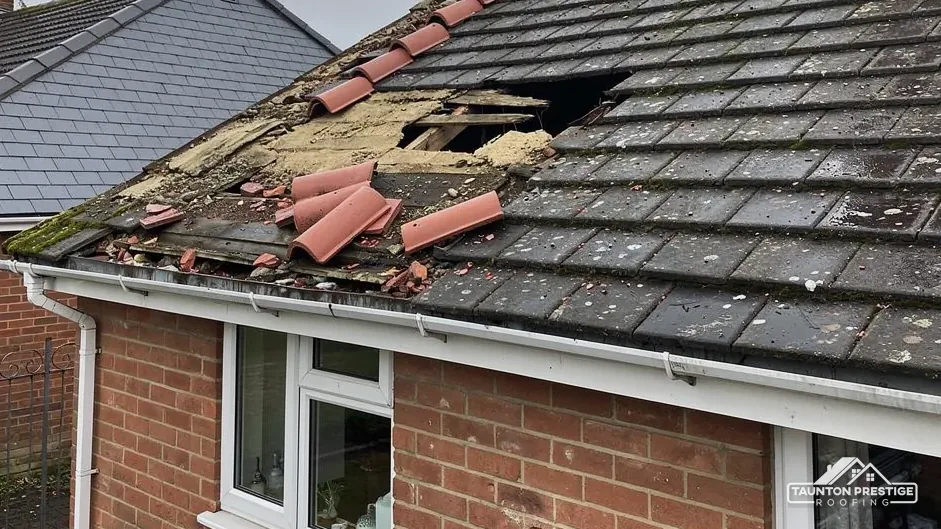
Plenty of Porlock jobs never see scaffolding. Slipped tiles and gutter work are often done from ladders or a rolling tower, and the survey decides which. Poles and boards on the road or the pavement are different: the highway authority must licence them under section 169 of the Highways Act 1980, and for Porlock that is Somerset Council. Its published rule gives scaffold licences to accredited contractors alone, with the appointed contractor filling in the application, so you are not left with the forms. Scaffold erected only on your own garden or drive does not stand on the highway.
What decides the price
Somerset Council wants ten working days' notice, and each 28-day period costs £124.60 (April 2026); only emergency cases move faster. We set the start date with that wait in mind.
Somerset Building Control, on 0300 303 7790, deals with Somerset addresses in the Park. By the Planning Portal's test, a re-roof that touches under 25 per cent of the building envelope and under 50 per cent of the roof is not expected to need a building control application. Approval is required once a new covering is 15 per cent or more heavier. Where the work is notifiable, the Somerset Building Control fee scale has a line for single-dwelling thermal element renovation, which is where a re-roof falls.
The Wildlife and Countryside Act 1981 protects a bat sheltering in a building from being intentionally or recklessly disturbed, and protects its way in from being blocked. We look for droppings and gaps when we survey, and we plan around what we find.
Your survey leaves you with pictures of the roof and a single written price, and the site is left clear. To begin, send your Porlock address and mention any listing.
Walked the roof?
When you have read the checks, we walk the roof and show you the photos.
Porlock is inside Exmoor National Park, so Exmoor National Park Authority takes the planning application and any listed building consent. Somerset Building Control remains the building control body. A like-for-like repair may need no application, but ask the Authority before the covering or the appearance of the roof changes. Our survey photos give them what they need to see.
Ask Exmoor National Park Authority before any drawings are made, since it is the planning authority here, and a listed house needs listed building consent too. Our planning guide sets out how dormers and roof windows are treated nationally. The survey shows which of the two suits your roof.
Listed Grade I, St Dubricius is in regular parish use for Anglican worship, so its repairs follow the faculty system rather than consent from the Authority. The parish arranges the faculty. Changes visible from outside can still need planning permission, so the parish asks first, and the roofer follows whatever scheme is signed off.
The Reading Room and the cottage abutting its north end share one Grade II* listing, so work that would affect their character needs listed building consent from Exmoor National Park Authority. Repair in matching materials is treated differently from alteration, and the Authority can say where your job falls. Our survey notes the present covering to help.
Give us the Porlock address and tell us if the house is listed, then we will fix the survey.