St Andrew's church
Listed Grade I, and the Victoria County History records part of its roof still thatched in 1765 or later.
A Grade I church, a slate-quarrying past and old cottages
Old Cleeve has a Grade I church, and slate was being quarried in the parish by 1851. Every roof is surveyed and photographed before any figure is put to it.
Listed Grade I, and the Victoria County History records part of its roof still thatched in 1765 or later.
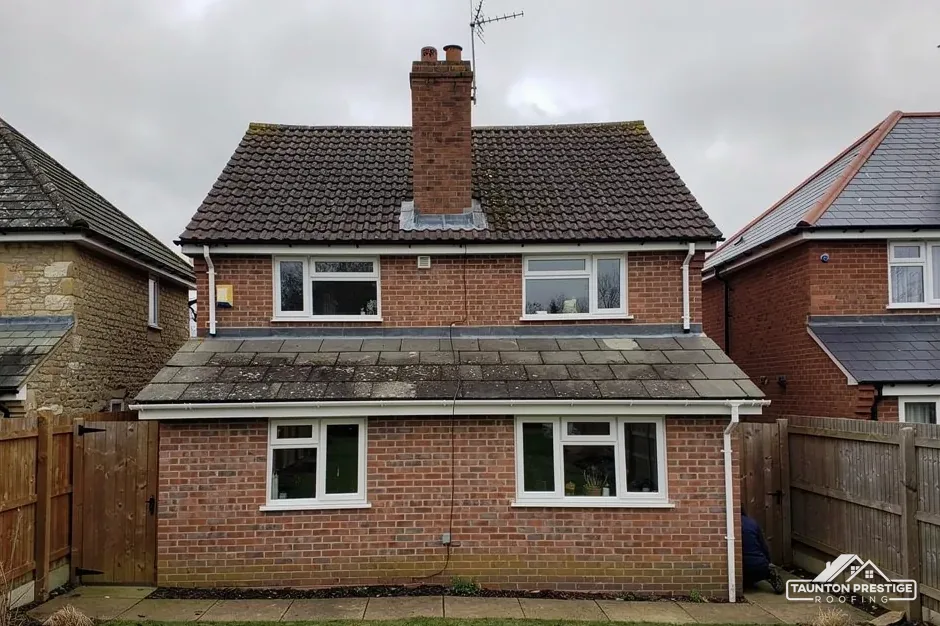
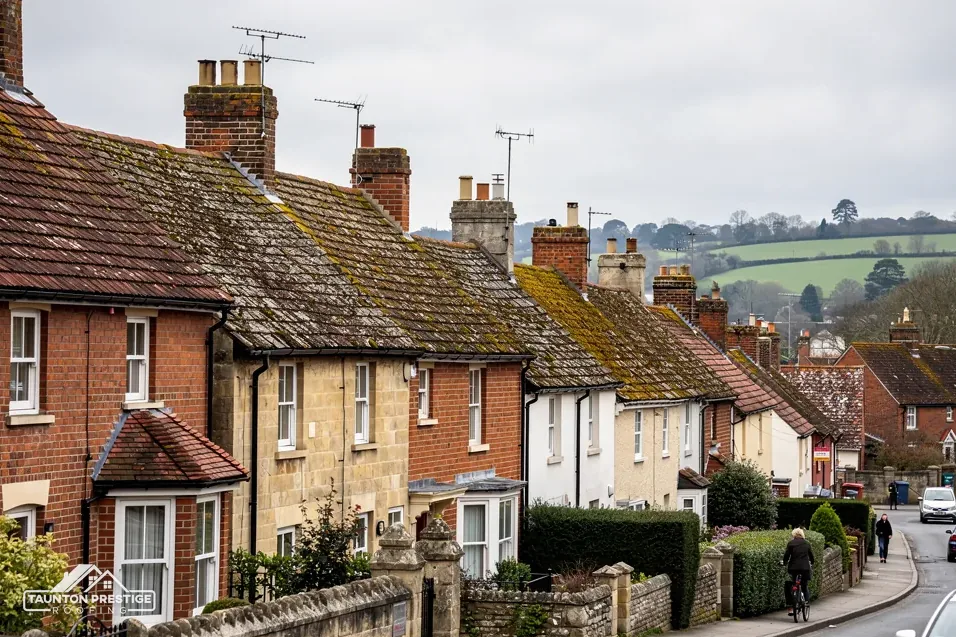
In 1985 the Victoria County History described a cluster of cottages, many thatched, mostly from the 18th and 19th centuries.
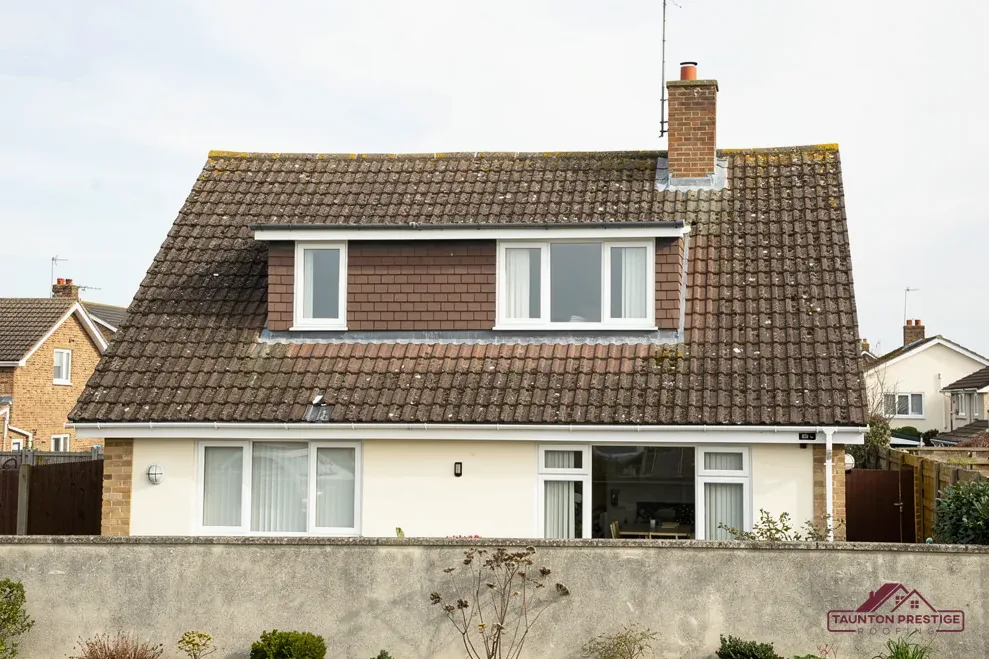
A slate quarry at Glasses was working by 1851, and tile stones came from near Leighland earlier that century.
Street map of Old Cleeve with Washford, Carhampton, Watchet, Williton marked around it, and Taunton.
Washford lies just south-east, Watchet north-east and Williton east, while Carhampton and Dunster sit to the west and Minehead to the north-west.
About 16 miles north-west of Taunton, Somerset Council (unitary).
Four checks in the parish of Old Cleeve
Four points to weigh before anyone prices a roof in the village, and how each one pushes the job one way or the other.
The church of St Andrew in Old Cleeve is listed Grade I, and Historic England also lists the remains of a roadside cross in the parish at Grade II*. Those entries say something about the place: a good deal of it is old, and old buildings often come with paperwork attached. In 1985 the Victoria County History described an irregular cluster of cottages lying west and south-west of the church, and the village has a conservation area, designated on 14 November 1990 according to Somerset Council's table. Whether one particular cottage is listed is a fact you can look up, and finding it out is the first job we do before suggesting what should go back on a roof.
Type your address into the heritage list kept by Historic England, or ask Somerset Council's planning team. If an entry exists, changes that alter what makes the building special need listed building consent on top of the ordinary planning position. Matching repairs sit on one side of the line; changing the covering or the ridge sits on the other. Where exactly the line falls is the council's call, not ours. Our guide to planning permission for roof work covers the permitted development side.
A building the Church of England still uses is repaired under a faculty, the church's own permission system, and not council consent. The Victoria County History notes that part of this roof stayed thatched until 1765 or later, a reminder that a roof can wear several different coverings over the centuries.
Thatch is a thatcher's craft. Where a cottage has a thatched main roof, we are the people to call for the slate, lead, gutters and chimney around it, and we say plainly when part of a job belongs with another trade.
Look for
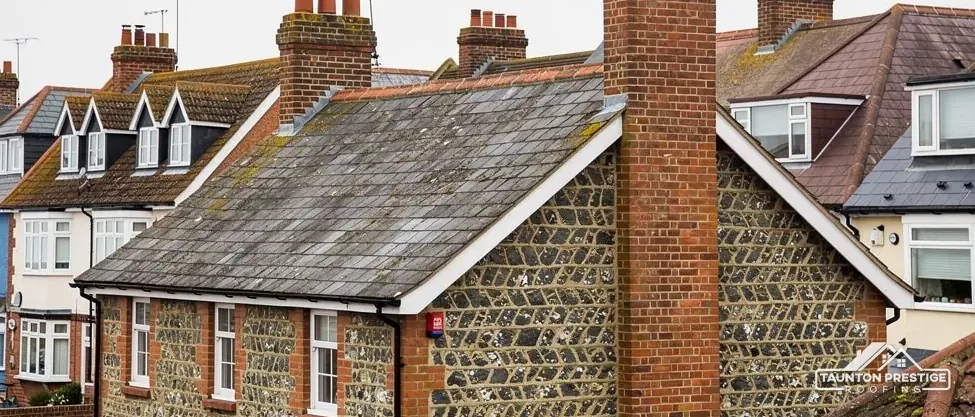
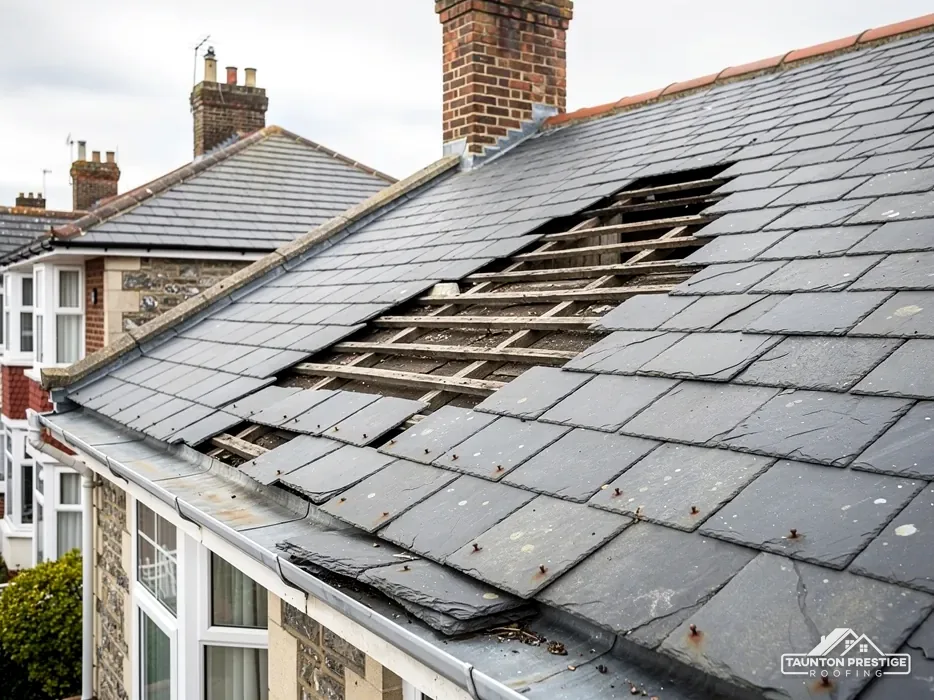
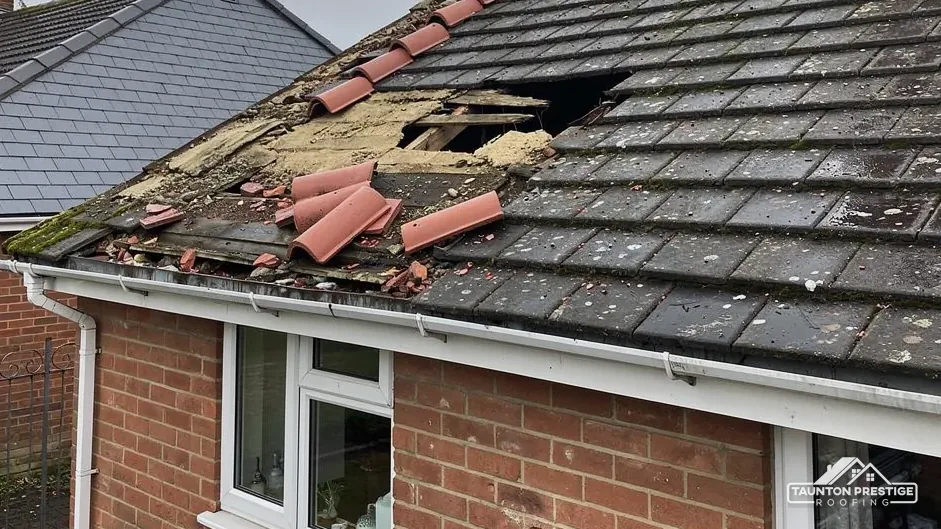
A slate quarry was working at Glasses by 1851, so slate has a long local history here. That says nothing about what covers your own roof, which is why we read each roof for what it really is. Slate hangs on timber battens, held by nails or hooks, and the fixings are what fail first. A corroded nail lets a slate slide down, and the gap exposes the underlay, the sheet beneath the slates, to the weather. Water then runs onto the battens and the rafters, and by the time a stain shows on a ceiling the damage is already well along.
What decides the price
Often. A single slate can be held with a repair clip, or exchanged for a matching one, without opening up the whole slope. We run an eye along the course first. One slipped slate beside several more points to ageing fixings and not bad luck, and in that case a string of patch visits costs more than re-laying the slope on new battens. We say which situation you are in, and we show you the evidence.
The Confederation of Roofing Contractors puts natural slate that is looked after at 100+ years. That describes the stone, not the nails. BS 5534 indicates a 20 degree minimum pitch for natural slate, while the slate supplier Cupa says hooks are not for pitches under 25 degrees, so a shallow slope needs another method of fixing. Ask us for pictures of the battens as well as the slates, since the timber underneath decides how far a repair can go. MyJobQuote (Oct 2026) gives around £7,800 as a typical UK average for a new slate roof, and the real figure moves with size and access. Our slate roofing page covers repair, part renewal and full re-slating.
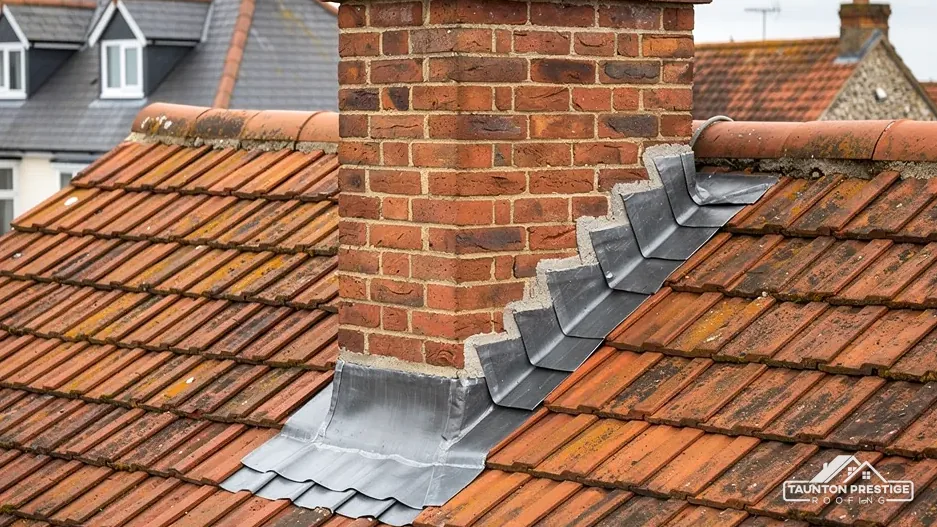
Bricks and tiles were made at Blue Anchor, at the western edge of the parish, and brickmaking is recorded there by the 1830s. Clay therefore has a long record in the area, but your own roof still has to be read for what it is. What matters is the covering you actually have. A valley is the inside corner between two slopes. It is a channel lined with lead or finished with special valley tiles, taking the water of both slopes in one stream. That makes it the first place a tired roof tends to leak, and the place a surveyor looks before almost anywhere else.
A valley carries the rain of two slopes, so a small fault there does big damage.
Lead lining splits where it was folded too tightly, moss packs the channel and holds water against the tile edges, and old mortar bedding crumbles away. MyJobQuote (Sep 2026) says a full valley replacement usually comes to around £540, a typical UK figure. The cost rises when the tiles either side have to be lifted and relaid, and it falls when the fault is only moss and a sound lining beneath.
The BRE gives a minimum life expectancy of 60 years, and Marley restricts that figure to clay tile. For old peg tile, one building conservation writer cautions against applying the 60-year figure at all, which is why each roof is judged on its condition and not its age. Concrete tile is a separate matter: Marley's own estimate is around 60 years, and it says that is no warranty. In a hipped or L-shaped roof there may be more than one valley, and each gets checked on its own.
The pitched roofing page explains how we decide between repair and renewal for tile and slate together. If a valley turns out to be the cause, we show you its condition before we suggest a fix.
Section 169 of the Highways Act 1980 brings scaffolding that blocks a footway or carriageway under the highway authority's licensing. For Old Cleeve that body is Somerset Council, and Somerset Council states that only accredited contractors are licensed and that the contractor appointed for the job applies. Scaffold kept entirely on your own ground does not touch the highway. We tell you at the survey whether your job needs a licence at all. Older roofs sometimes shelter nesting birds or bats under the eaves. Both are protected by law, so signs of either at the survey can move the start date.
What decides the price
Somerset Council charges £124.60 for each 28-day period (April 2026) and asks for at least 10 working days' notice, plus a £40 fee for an extra site visit if the scaffold does not comply. A job that overruns needs its permit extended, so the schedule we give you leaves room for that.
Citizens Advice suggests gathering at least 3 written quotes, from different traders, before deciding. When you compare them, check that each one covers the same area of roof, that VAT is included and that the scaffold is allowed for.
Under the Planning Portal's rule of thumb, building control is normally not required when less than 25 per cent of the building envelope and less than 50 per cent of the roof is affected. Old Cleeve falls to Somerset Building Control, on 0300 303 7790.
Once we have surveyed, a single written total covers the whole job. Tell us which slope worries you, then pick a day for us to call.
Walked the roof?
When you have read the checks, we walk the roof and show you the photos.
Often, yes. A single slate can usually be got at by ladder or a low tower and held with a repair clip, or swapped for a matching piece. Scaffold earns its place where the slope is high, the repair stretches across several courses or the work needs both hands free and a safe platform to stand on.
Ask who will do the thatch itself, because that is a thatcher's craft, and ask which other trades touch the roof, such as lead flashings, the chimney and the gutters. We handle those parts, and we check whether the cottage is listed so that the right consent is in place before anyone starts.
It can be. The BRE gives a minimum life expectancy of 60 years, and Marley applies that to clay tile only. Old peg tile does not always follow it, so we judge by condition: sound tile on good battens can stay up while a failed fixing, or a worn valley, is repaired around it.
Not always. Moss grows where water lingers, and a valley holds more of it than most places, so growth often shows before any leak does. Treat it as a prompt to inspect. If the lead beneath is sound, clearing the channel may be enough, but a split or lifted lining has to be renewed.
Tell us your road in Old Cleeve and what is wrong, then choose a date for the visit.