Bank House
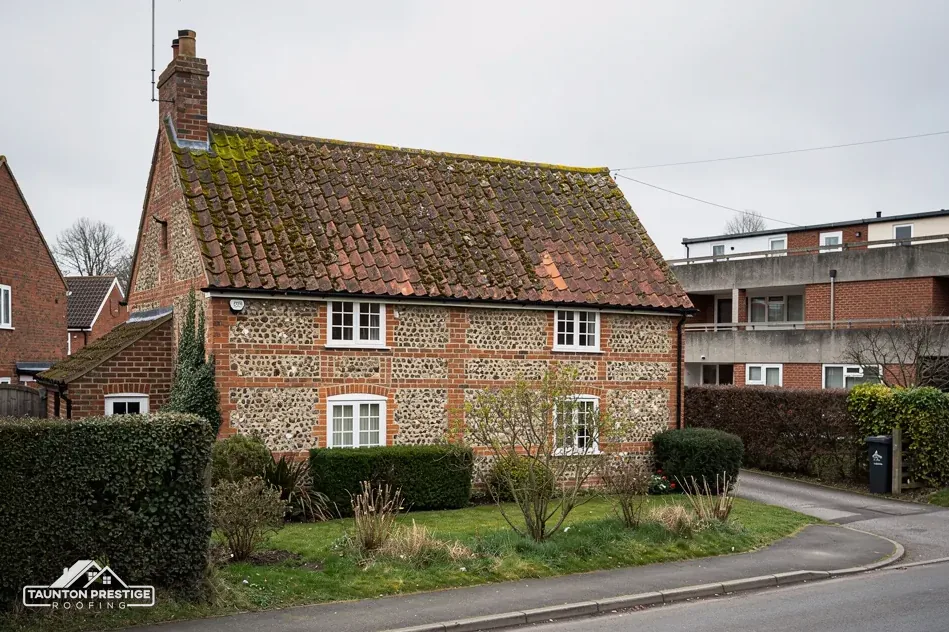
Built about 1735 in brick with stone dressings, among the earliest surviving buildings in Market and Swain streets.
A harbour town with Market Street listings and a Grade I church
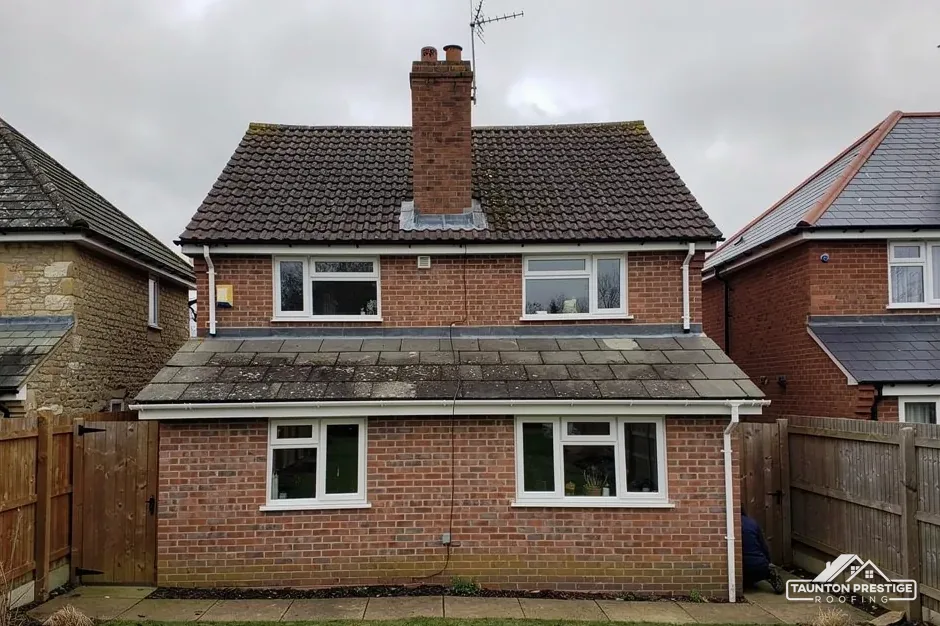
Watchet has a conservation area, 27 listed buildings near the centre and a harbour rebuilt in 1861-2 after earlier storm damage. Every roof is surveyed first.
Built about 1735 in brick with stone dressings, among the earliest surviving buildings in Market and Swain streets.
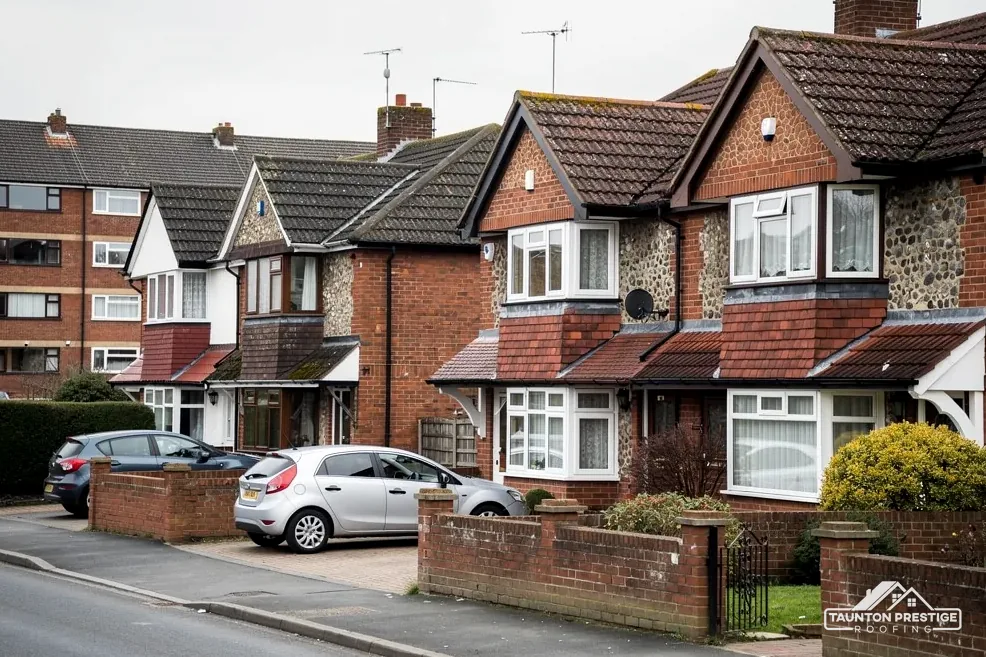
1 and 9 Market Street and 7 to 10 Swain Street are each listed Grade II.
Listed Grade I on 12 June 1950, so roof work follows the church's own consent route.
Street map of Watchet with Williton, Washford, Old Cleeve, Carhampton marked around it, and Taunton.
Williton lies just south of Watchet, with Washford and Old Cleeve to the south-west. Carhampton and Dunster are to the west, and Stogumber to the south-east.
About 15 miles north-west of Taunton, Somerset Council (unitary).
Watchet roof notes, quay to church
Listings and consent, the imported roofing trade, storms and the flood map, and the church and the scaffold licence: four checks for a harbour-town roof.
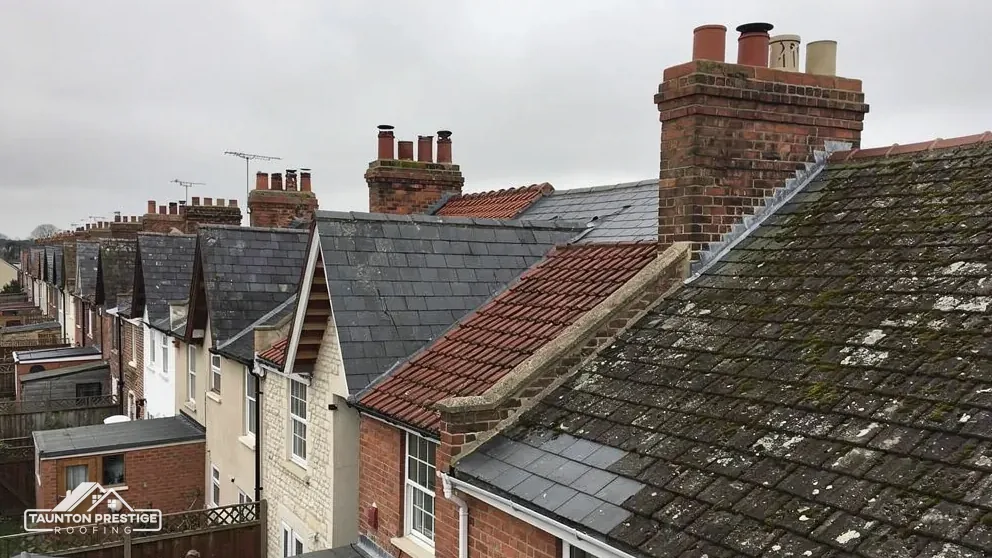
Watchet has a conservation area, designated on 19 August 1975 and revised on 24 October 2002 according to Somerset Council's table. The National Heritage List shows 27 listed buildings within 900 metres of the centre, among them 1 Market Street (entry 1345583, first listed 29 December 1982), 9 Market Street and 7 to 10 Swain Street, all Grade II. The Victoria County History places most of the earliest surviving buildings in those two streets, including 29 Swain Street of the later 17th century and Bank House, built about 1735 in brick with stone dressings, the stone trims at corners and openings. Old streets mean old roofs and tight consent questions.
Not for planning. The law's definition of a dwellinghouse leaves out a building containing one or more flats, and a flat within one. A flat above a Market Street shop may therefore need an application where a house would not. Our guide to planning permission for roof work explains the questions, and Somerset Council's planning team settles your case.
Anything that alters what makes a listed building special calls for listed building consent, and the roof is part of that. A like-for-like re-cover is the easier case to argue, and a new material is the harder one. We photograph each slope, ridge and chimney before anything is ordered, so you and the council start from the same pictures. Roofs tucked behind a parapet or between two neighbours cannot be seen from the pavement, so we shoot from an upper window or from the roof itself. Eaves and gable ends get their own pictures too, because the details that date a building often sit at its edges.
Somerset Council also lists an Article 4 direction for the Watchet Queen Bee site, dated 1983. Only the notice itself shows what it covers, so a Watchet owner near that site should ask Somerset Council's planning team for it before work is booked.
Look for
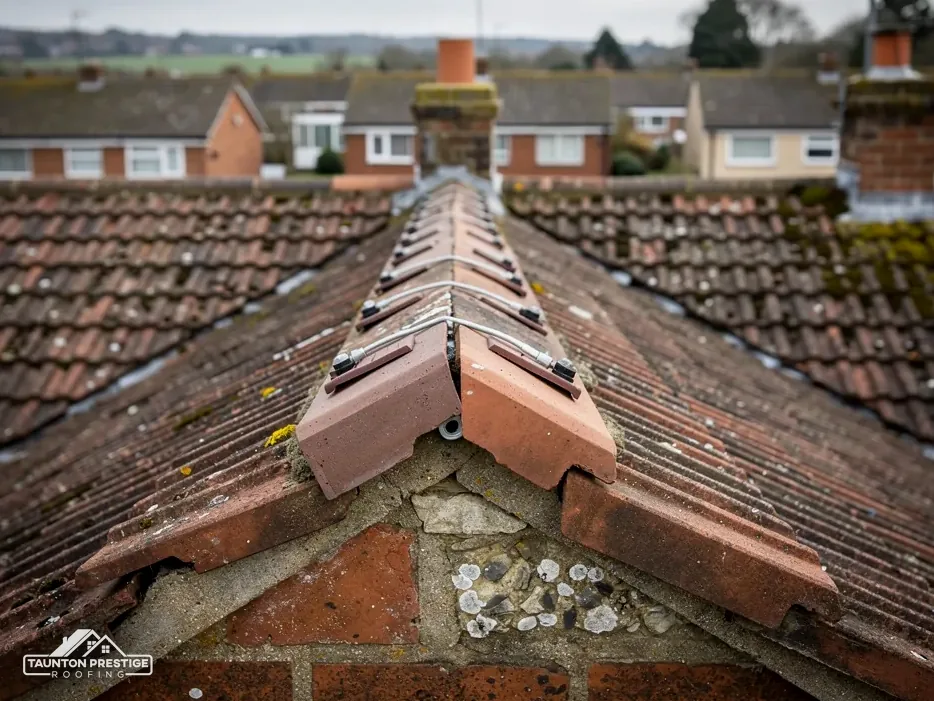
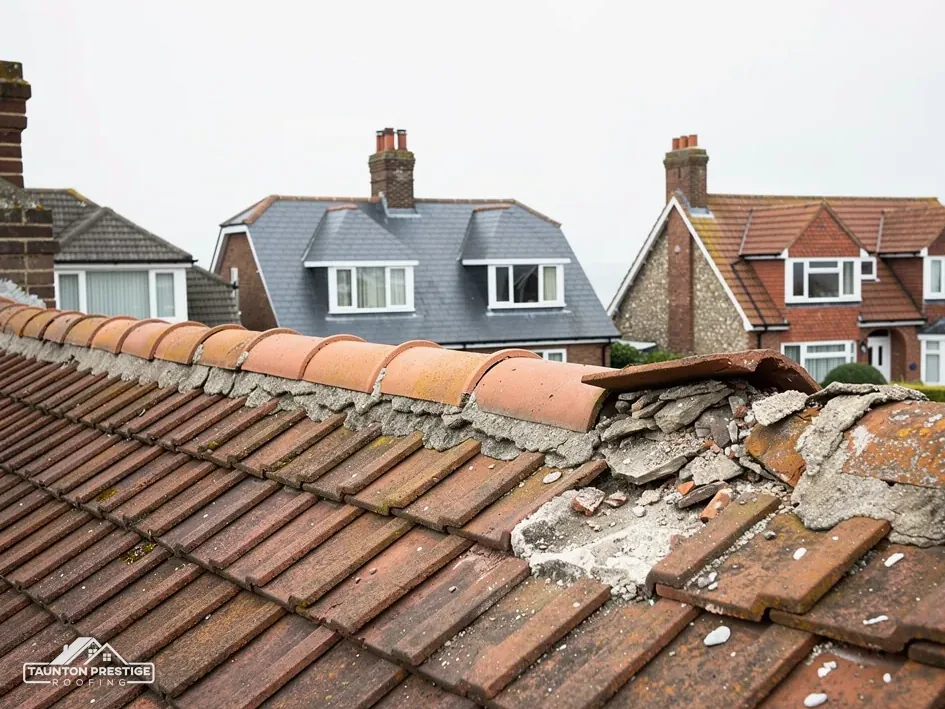
Watchet was a trading port, and the Victoria County History lists what came in. Imports in the early 18th century included roofing stones from Padstow in Cornwall, and in 1749-50 bricks from Bridgwater. A South West Heritage Trust kiln at Bridgwater, last fired in 1965, is a Scheduled Ancient Monument, a reminder of how large that brick and tile trade was. Only a survey can say what covers your roof now, but the trade explains why slate and clay both feel at home here.
What decides the price
100+ years is the Confederation of Roofing Contractors' figure for slate that is maintained. For clay tile the BRE sets a minimum life expectancy of 60 years, Marley notes, and the figure covers clay alone. On old hand-made peg tile an article on buildingconservation.com treats 60 years as a poor guide. Our slate roofing page covers repairs and re-laying.
They can, if size and thickness agree, and a reclaimed tile from a similar roof is often the closest match. New clay looks bright beside weathered neighbours, and a few winters take the edge off. A Bridgwater heritage leaflet adds that the popular Double Roman tile joined the local list of products many years after plain tiles. Modern concrete Double Roman tiles from Marley need a minimum pitch of 22.5 degrees, so pitch is checked before any like-for-like swap.
In old Bridgwater records the ridge tile appears as a crease tile, made by hand alongside pan tiles. The ridge is the top line of the roof, and since the 2014 revision of BS 5534 mortar alone is no longer trusted with it, so a re-bedded ridge now carries clips or screws too.
Storms are in the town's records. The Victoria County History says Watchet's port was said in 1458 to have been utterly destroyed by storms, and its quay was damaged in the 1640s before James Abernethy rebuilt the harbour in 1861-2. A roof has to cope with the same weather. The Environment Agency's flood map puts Flood Zone 3 within about 250 metres of the centre, and GOV.UK gives address-level checks for long-term risk and live flooding.
After a gale, the roof's weak point is whatever the wind found first.
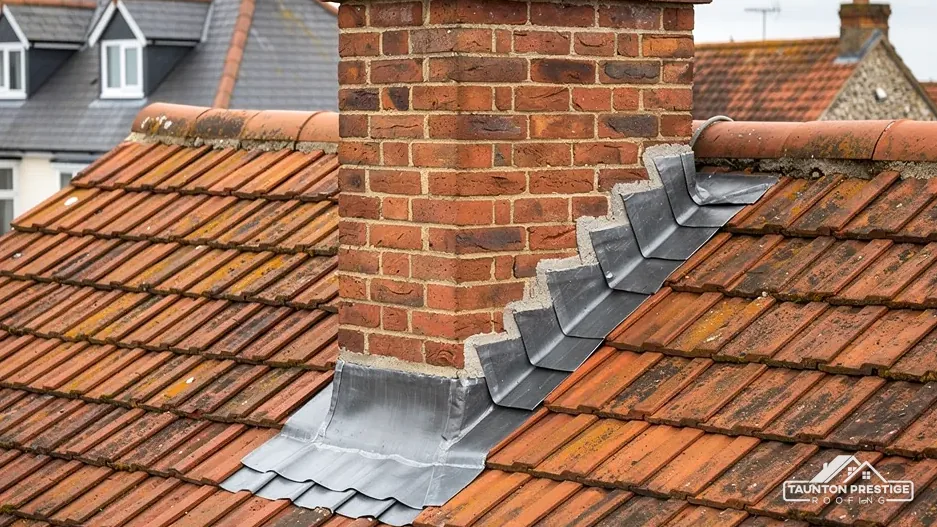
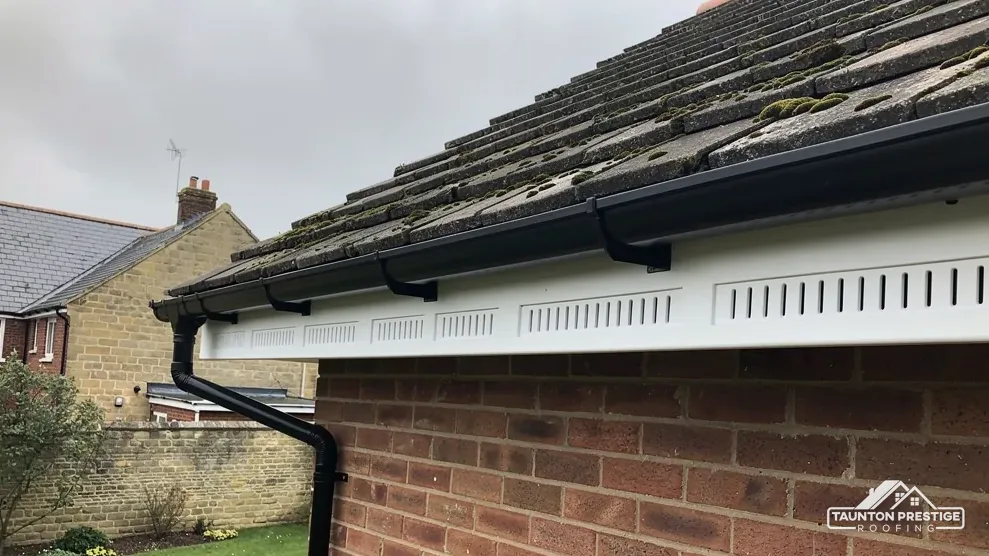
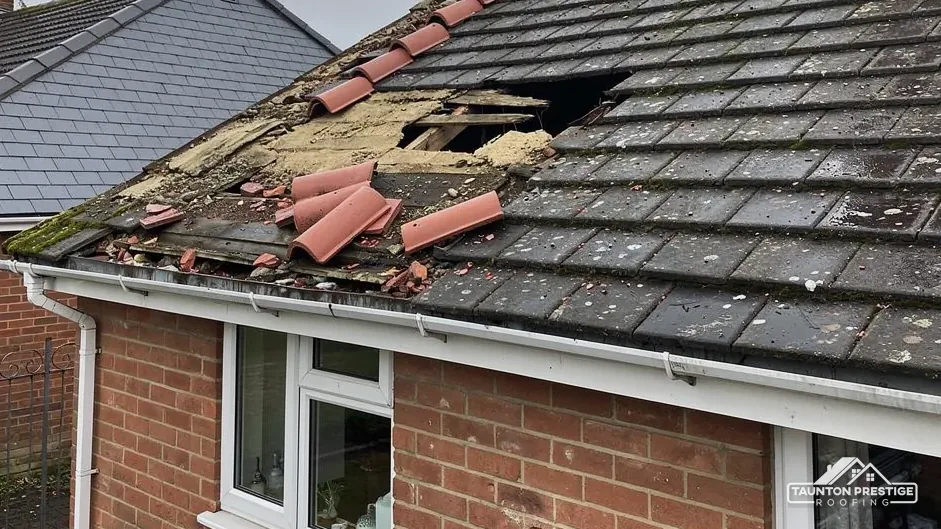
Start from the ground, with binoculars if you have them. Look for slates or tiles out of line, a ridge that looks uneven, flashing lifted at a chimney, and gutters that have pulled away or hold debris. Brett Martin's guide asks for 1mm of fall for every 600mm. One shifted bracket spoils that, and the water spills down the wall. Over 80 years is MyJobQuote's figure for lead flashing (Sep 2026), so one that lifts early points to a fixing problem rather than age.
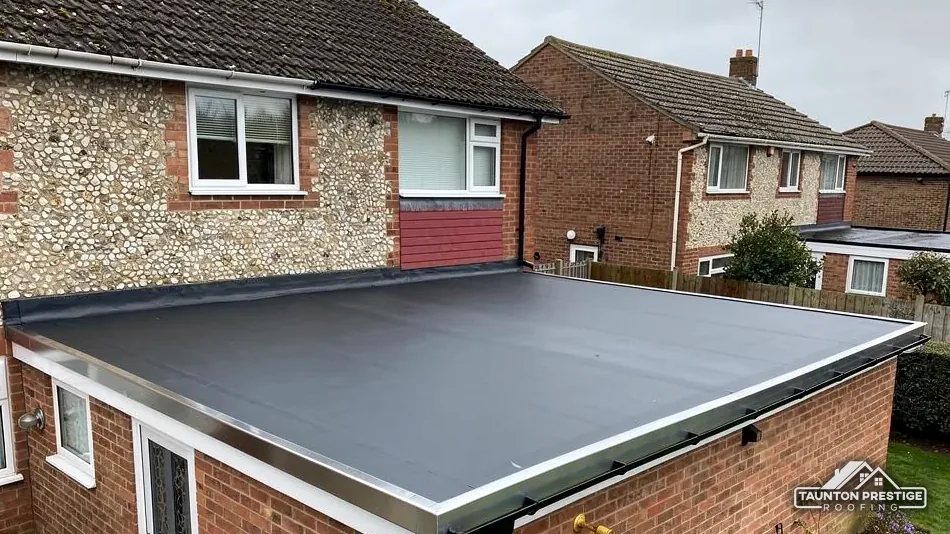
Probably not the weather alone. Ponding comes from a worn-out fall, an outlet choked with debris or a dipped deck, and BS 6229:2025 keeps a finished minimum fall of 1:80. Less puts torch-on felt at 10 to 20 years and GRP at 25 to 40, and GreenSpec puts EPDM at 20 to 30. See our emergency and general roof repairs page for what a make-safe visit involves.
The verge, the trimmed edge of a Watchet gable, is another place where wind-driven rain gets in, and a dry-fix verge tested to BS 8612 clips the edge tiles down instead of relying on mortar. Leave anything at the roof edge to a roofer with proper access. Send us your photographs and the date of the gale, and we can match the damage to the weather.
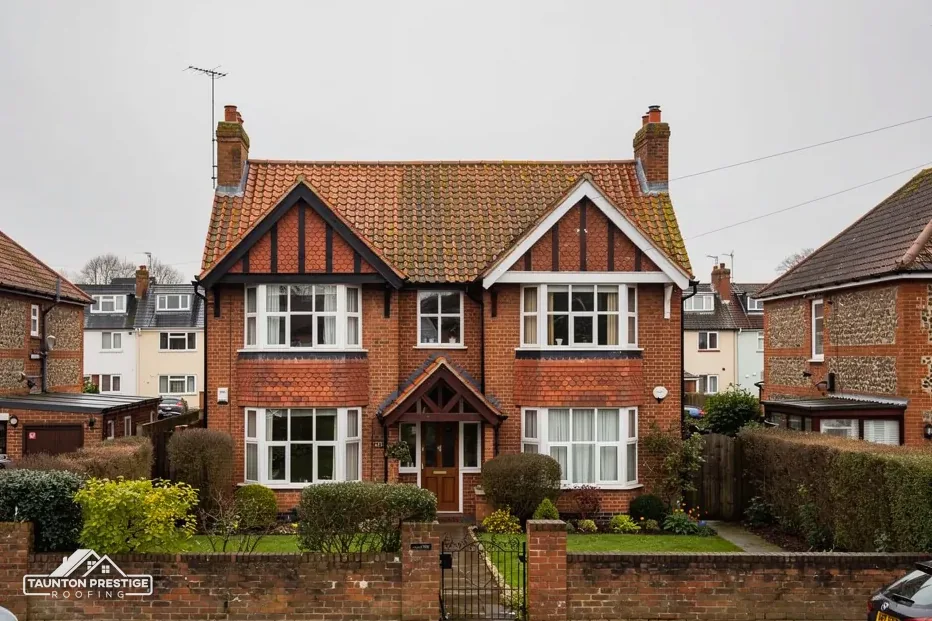
St Decuman's Parish Church is listed Grade I (entry 1057662, first listed 12 June 1950). Where Church of England worship continues, the diocese's faculty system governs roof work and the council's listed building consent does not. The parish applies, and we price once the route is clear.
What decides the price
Scaffold on a street falls under section 169 of the Highways Act 1980, and in Watchet the highway authority is Somerset Council. Somerset Council issues these permits only to accredited contractors, so in Watchet the contractor named for the job applies. The fee is £124.60 for each 28-day period (April 2026), and the council asks for at least 10 working days' notice. Emergency cases alone are handled faster. A scaffold inside your own yard needs none. A narrow street may leave no room except the road, and then the licence, dates and fee depend on that, so we measure the width at the survey.
It can. A covering 15 per cent or more heavier needs approval under the Building Regulations, plus a structural check. For lighter jobs the Planning Portal's tests are under 25 per cent of the building envelope and under 50 per cent of the roof. Somerset Building Control covers Watchet and can be reached on 0300 303 7790.
Photographs and a total in writing close the survey, and the site is left clear.
Each morning you are told what the day holds: which slope is open, where the skip stands and when the roof will be covered again. At night the roof is left weathertight. Waste is bagged and taken away, not left in the yard, and the neighbours are warned before any noisy work. Tell us the Watchet street and what has gone wrong up top, and we will call to arrange a visit.
Walked the roof?
When you have read the checks, we walk the roof and show you the photos.
No. The legal meaning of a dwellinghouse leaves out a building containing one or more flats, and a flat within one, so a Watchet flat cannot lean on the rules written for houses. A re-roof that changes the look could need an application. Ask Somerset Council's planning team before ordering, and keep the reply.
In Financial Ombudsman Service terms a storm is a spell of violent wind, often bringing rain, hail or snow. Report it to the insurer before repairs, protect the damaged area, and file photos and receipts. Which? reports that only 32% of storm-related claims made in 2024 resulted in a payout, so a good record matters to your case.
Somerset Council's list of Article 4 directions includes a Watchet entry for the Queen Bee site, dated 1983. An Article 4 direction removes specified permitted development rights across a defined area, but which ones depends on the notice. Ask the planning team for the notice and read it before work starts.
Stop work and take advice. Section 9(4) of the Wildlife and Countryside Act 1981 makes a person guilty if, intentionally or recklessly, they disturb a Watchet bat in its shelter or obstruct the way in, and the Habitats Regulations protect breeding sites and resting places. GOV.UK names roof repair as a job that can affect bats.
Send your Watchet address with a line about the leak or loose slate, and a survey slot comes back.