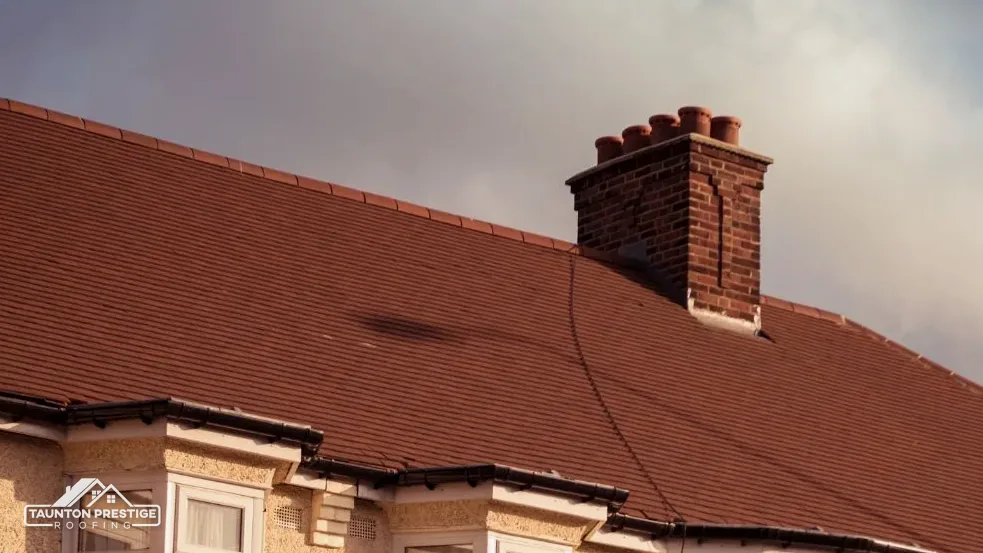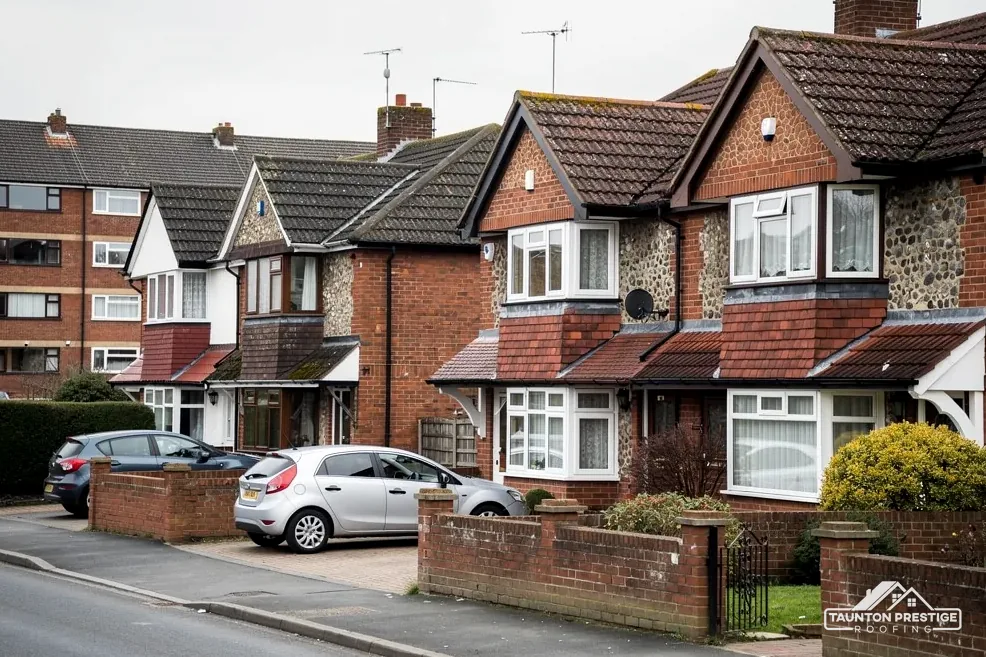
The Tidmas main office
The Tidmas Limited main office is listed Grade II, from 1 November 1973.
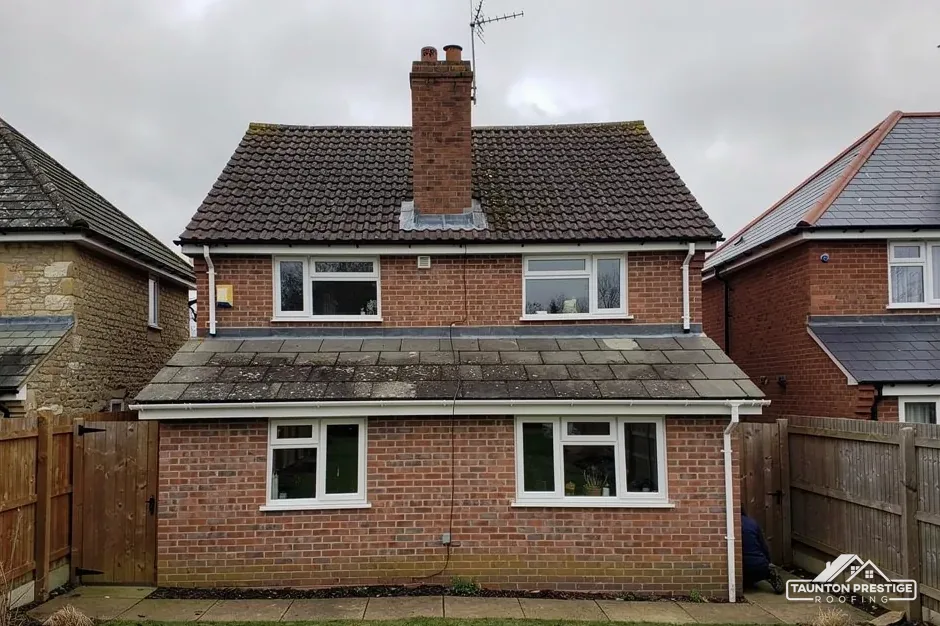
A listed office, an old chapel and the edge of Dorset's landscape
South Chard lies in Tatworth and Forton parish, with a conservation area close by and four list entries within 500 metres of the centre. Every roof is surveyed first.
The Tidmas Limited main office is listed Grade II, from 1 November 1973.
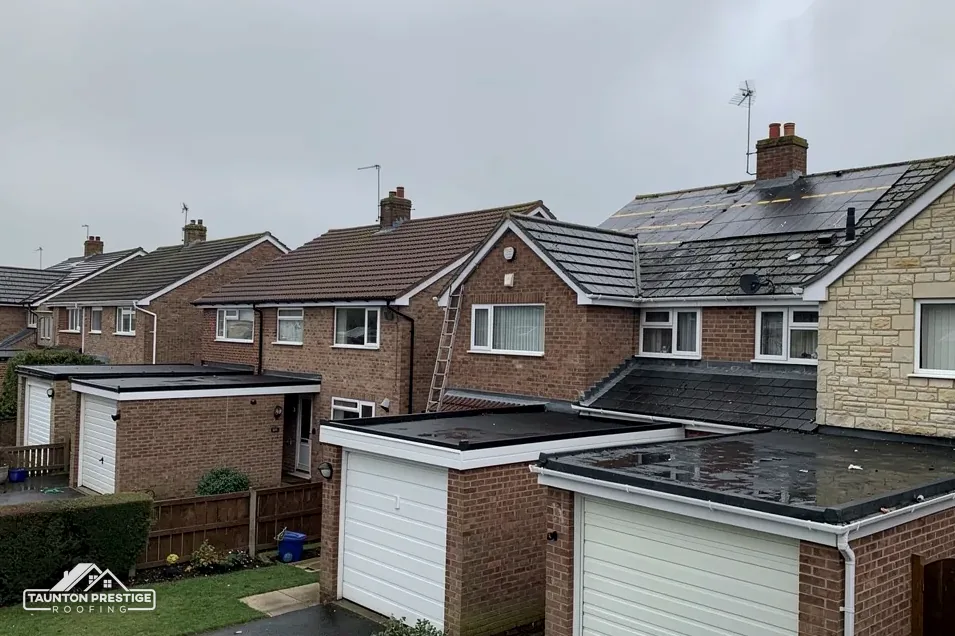
The Old Chapel and the two cottages adjoining it to the east share a Grade II listing; changes to their character need consent.
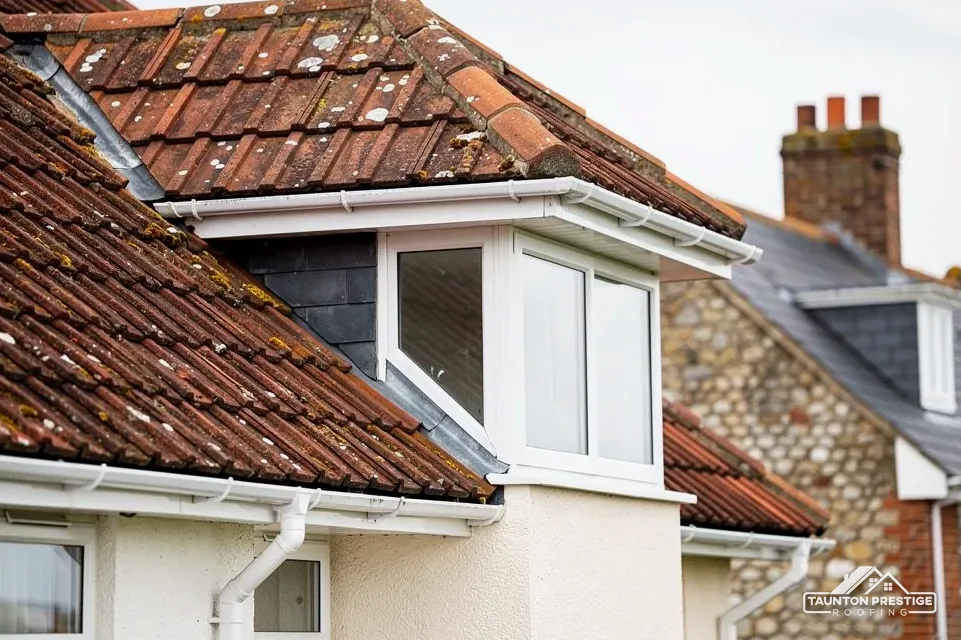
Springfield is listed Grade II, one of just four list entries within 500 metres of the centre of South Chard.
Street map of South Chard with Tatworth, Chardstock, Chard, Winsham marked around it, and Taunton.
Tatworth lies just to the north-west and Chardstock to the west, with Chard to the north and Winsham to the east of South Chard.
About 14 miles south-east of Taunton, Somerset Council (unitary).
Four checks on the Somerset edge
Four checks for a place where working buildings and old ones stand side by side: asbestos, consent, concrete gutters and shared walls.
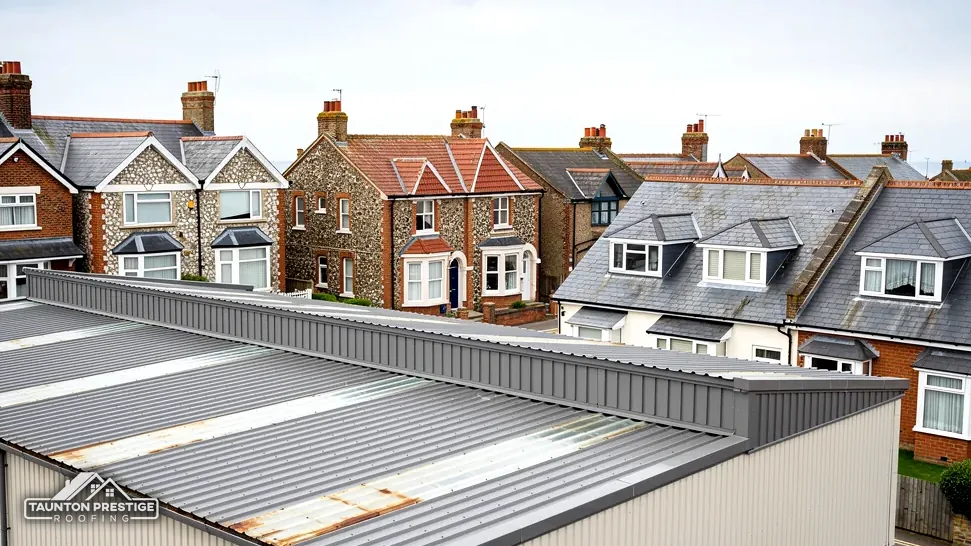
The main office of John C Small and Tidmas Limited is listed Grade II. It stands among buildings that have to earn their keep: offices, stores, garages and outbuildings, whose roofs behave nothing like a house roof. They can be big and plain, flat or only gently pitched, and an older one may be sheeted in asbestos cement. That last detail changes how a job has to be run, so it is the first thing a survey tries to settle.
Not every old shed roof is asbestos. Profiled metal, fibre-cement sheets without asbestos and felt-covered boards all turn up on outbuildings, and the only dependable way to know which you have is a proper survey with a sample where needed. Until then the roof is left undisturbed, and nobody climbs on it without a plan. Small outbuildings and lean-to garages get the same careful look as the main buildings, because a sheet that breaks underfoot is a worse day for everyone than a survey that takes an extra hour.
What decides the price
Look for
Looking will not settle it. HSE advises that if a building was built or refurbished before 2000, you should assume asbestos is present until a survey shows otherwise. Asbestos cement sheeting is classed as fragile, whatever its age. Lifting sheets out whole, handled with care and not broken, is non-licensed work. Smashing or dropping a roof is a different job, notifiable non-licensed work with extra rules attached. Asbestos insulating board, sometimes used for soffits, is another case again, often licensed work, so those are checked before anyone touches them.
Not in a skip. Wrap asbestos waste twice, label it, and send it by registered carrier under a hazardous waste consignment note. MyJobQuote's typical UK average for taking an asbestos roof off is around £2,750, and a survey runs to about £325 (MyJobQuote, Sep 2026). Our garage and asbestos-cement roofs page covers the process, and our commercial roofing page deals with larger buildings.
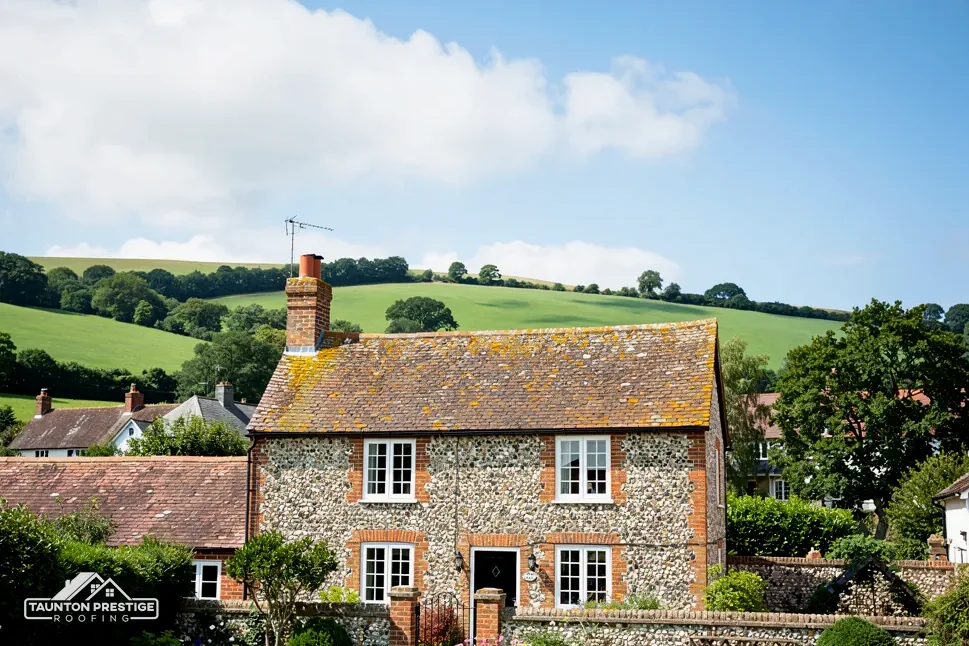
The Old Chapel and the two cottages adjoining it to the east are listed Grade II, and Springfield nearby has the same grade. A conservation area boundary falls within about 0.75 km of the middle of South Chard (planning.data.gov.uk), and the National Heritage List has four entries inside 500 metres. Whatever sits above a listed house or a former chapel, the opening question is who has to agree, and the answer turns on what the building is used for today.
Before choosing a covering for a chapel, find out what the building is now.
Only if it is still a place of worship for a denomination with a system of its own. The Church of England uses the faculty system. Churches in Catholic, Methodist or United Reformed use keep separate approval routes, and a Baptist church shares that arrangement only when a trust corporation listed in the regulations holds the building. A chapel converted into a home, or a Unitarian or Quaker building, falls back on the council: listed building consent from Somerset Council, if the building is listed.
A listed house keeps the ordinary permitted development rights, then adds a second requirement: consent for any alteration that changes its special interest. Matching the existing covering is the safe road, and a change of material is the moment to ask. Our guide to planning permission for roof work sets out the detail. Photographs of every slope, taken at the survey, give the planning team the facts, and your one written price follows once the route is clear.
Where the roof of one cottage meets the wall of the next, a lead flashing, a strip of lead tucked into the masonry, seals the joint. It is the first place water finds when the lead has aged, and the survey photos show its state close up.
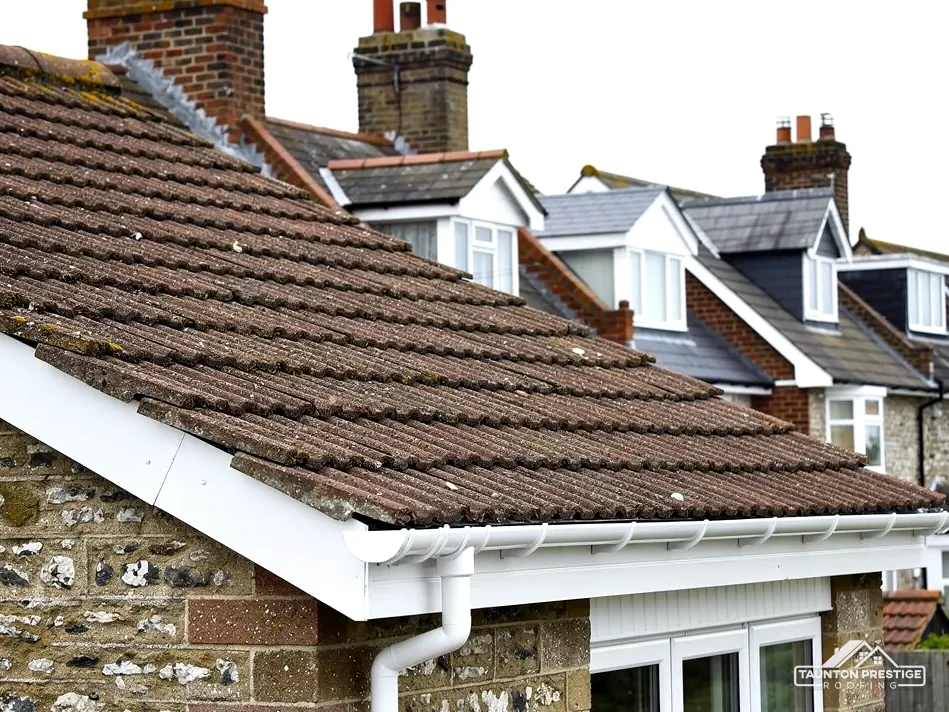
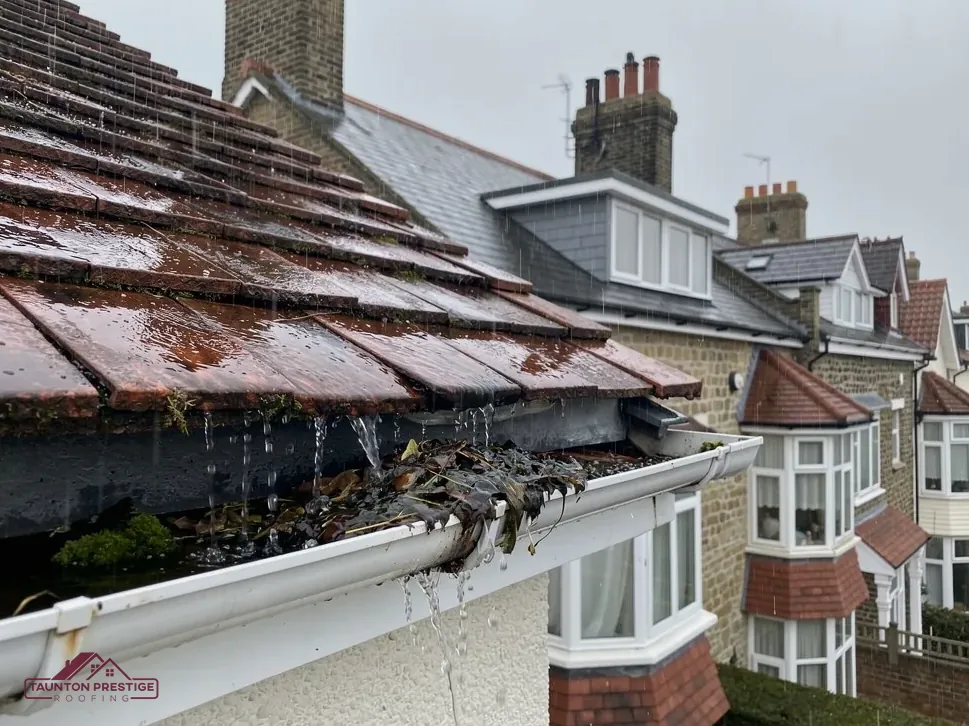
On the Environment Agency layer at planning.data.gov.uk, Flood Zone 2 reaches to within about 250 metres of the centre of South Chard. That is a layer about land, not about one roof; for a particular address, GOV.UK's flood risk checker gives a better answer. Whatever the map shows, a roof has to move water to the drains without letting it linger, and older buildings sometimes manage that with something heavier than plastic.
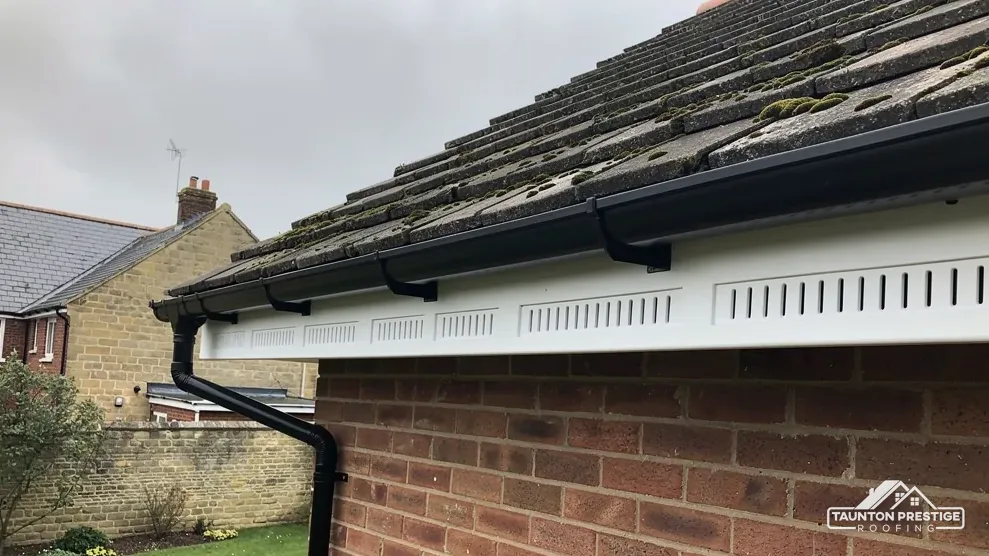
Some older buildings carry their gutters in cast or precast concrete, the Finlock type, built into the eaves. When the lining splits, water works into the wall below. A patch can buy time, but a gutter that has failed along its length is a replacement job. MyJobQuote puts the average replacement at £2,400 (Jan 2026), which swings with length and access, as any typical range does. Our gutters, soffits and fascias page shows the other options.
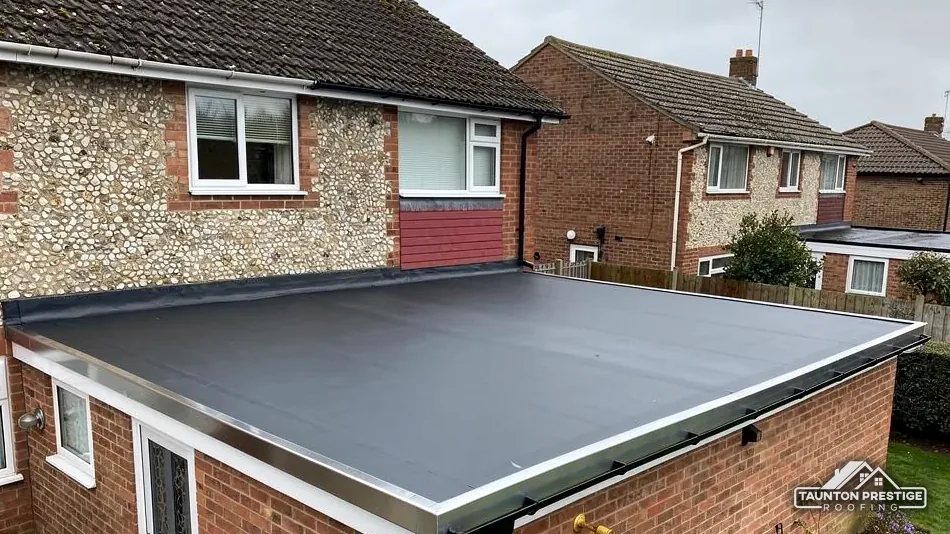
BS 6229:2025 expects a flat roof to finish with a fall of 1:80 at the minimum, so a roof that ponds has lost slope. We examine the deck, the outlets and the edge. A fresh covering over a roof that still holds water would give out in the same spot, so the cause is dealt with first, and the cost depends on what the survey finds. Clearing leaves from an outlet may improve the picture, though not always, and the ladder photos show the difference.
If a concrete gutter does have to go, the choices include a new concrete section, a lined trough, or a fascia-mounted system on a rebuilt eaves. The right one depends on the wall behind, the roof edge and, for a listed building, on consent. Weight matters too, because a heavy gutter sits on the wall and a light one hangs from the roof.
Two cottages adjoining the Old Chapel are a reminder that roofs can share a wall. Under the Party Wall etc. Act 1996, removing a chimney from a party wall is notifiable, and the neighbour must receive a full two months' notice first. GOV.UK stresses that silence is not agreement. If you and the neighbour cannot settle it, a party wall surveyor is appointed; building control does not decide it. A chimney breast is part of the structure, so taking one out always needs Building Regulations approval.
What decides the price
Putting scaffold on the highway brings in section 169 of the Highways Act 1980, which requires a licence. Under Somerset Council's rules, only accredited contractors hold such licences, and the contractor you appoint files the application. The charge is £124.60 per 28-day period (April 2026). The usual lead time is 10 working days, so a narrow lane or a shared yard gets raised on survey day.
Only a small part of the area, about 4 per cent of a 1.5 km box around the village centre, overlaps the Dorset National Landscape, formerly an AONB, and the centre itself is outside it. Whether your address is in or out is something Somerset Council's planning team will confirm. The survey gives you photos of your roof and one written price, and we keep the site tidy. Ask what the figure covers, including VAT, which GOV.UK puts at 20% as the standard rate for work on an existing home, and any scaffold. A quote that answers those questions plainly is easier to trust than one that leaves them open. Give us your South Chard address and describe the damp patch, slipped sheet or leaking gutter, and the visit is arranged.
Walked the roof?
When you have read the checks, we walk the roof and show you the photos.
Appearance will not tell you, and neither will the age of the building alone. HSE says pre-2000 buildings, built or refurbished, should be presumed to contain asbestos, and calls asbestos cement roofs always fragile. A survey confirms the material. Careful removal without breakage is non-licensed, while substantial breakage makes the job notifiable, with its own rules.
The Old Chapel holds a Grade II listing, so altering its character needs listed building consent from Somerset Council. If it is now a house, that is the route. A chapel still used by a denomination with its own approval system follows that system instead. Ask the planning team before ordering slates.
Yes, if the chimney is built into a party wall. The Party Wall etc. Act 1996 makes that notifiable work, with two clear months' notice required, and silence from next door is not agreement. Taking out the chimney breast itself is a separate step that needs Building Regulations approval, and it is a separate application.
The village centre is outside it, but a small part of the area around South Chard, about 4 per cent of a 1.5 km box, overlaps the Dorset National Landscape. Which side of the line your house sits on is for Somerset Council's planning team to confirm. Rules for roof alterations differ inside a protected landscape.
Tell us what your South Chard roof is doing, and the survey date comes back to you.