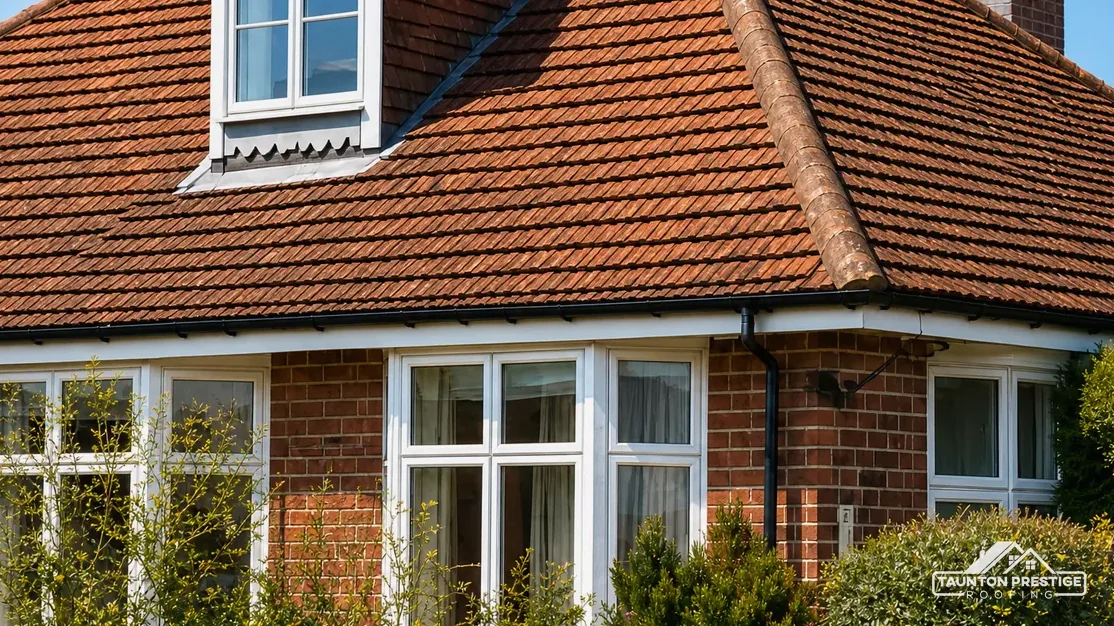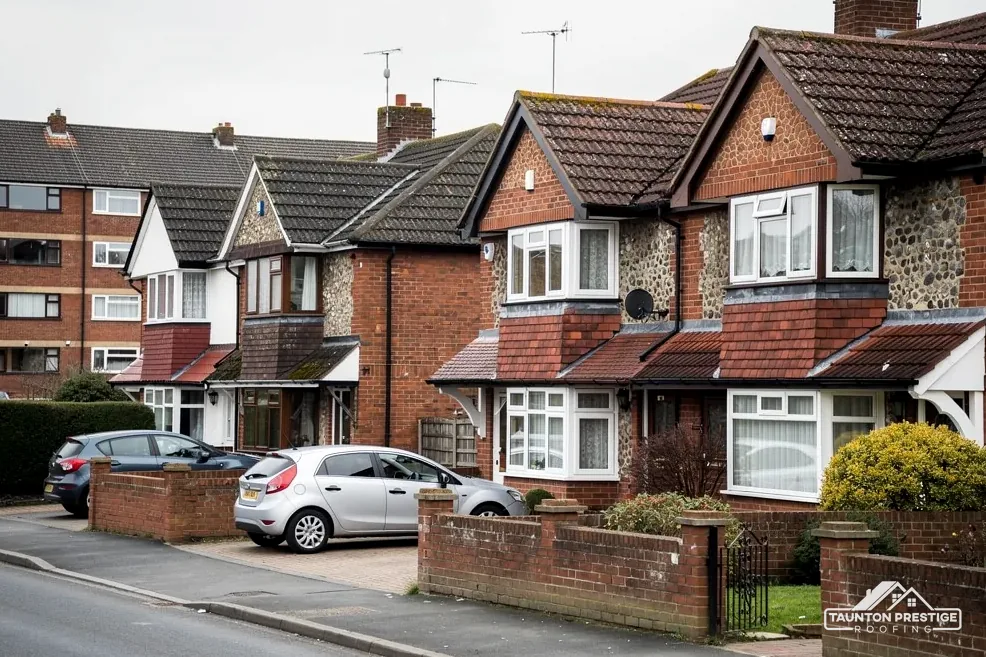
St Stephen's, Grade II*
Listed in February 1958, with Anglican services continuing, so its roof repairs go the faculty way.
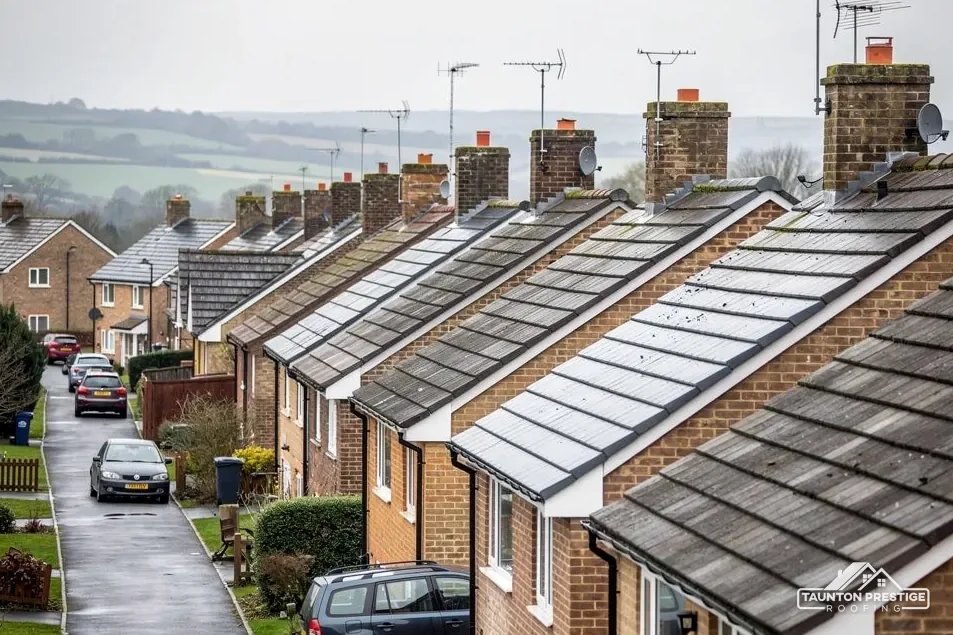
Two Grade II* landmarks and a conservation area near Chard
St Stephen's church and Lullingstone, both Grade II*, stand among 26 list entries within 500 metres of Winsham's centre, near a conservation area.
Listed in February 1958, with Anglican services continuing, so its roof repairs go the faculty way.
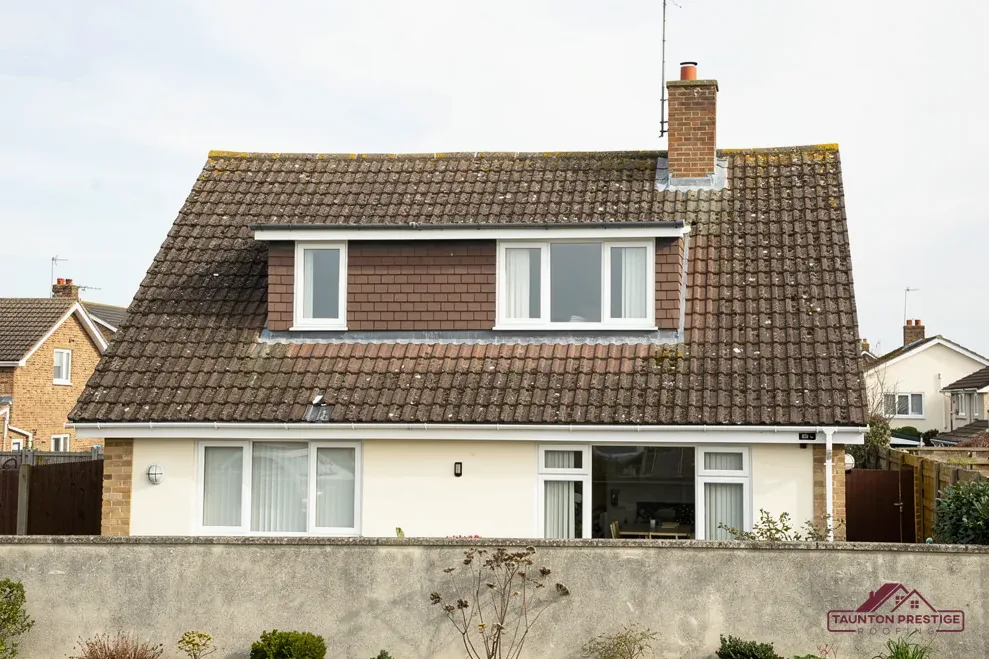
Listed in November 1987; changes to its roof are weighed against its special interest.
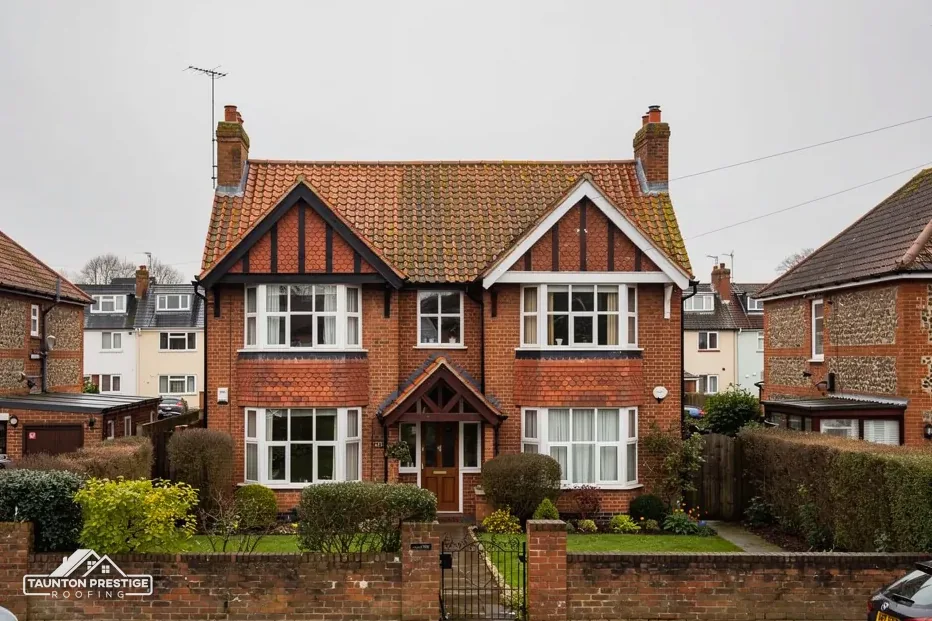
17 and 19 Church Street and 1 to 5 Western Way are each listed Grade II.
Street map of Winsham with Thorncombe, South Chard, Tatworth, Chard marked around it, and Taunton.
Thorncombe lies to the south, with South Chard and Tatworth to the west, Chard to the north-west, Crewkerne to the north-east and Broadwindsor to the south-east.
About 14 miles south-east of Taunton, Somerset Council (unitary).
Four checks near Chard
A village with a conservation area and two Grade II* buildings: four checks, and what each adds to the job and the final price.
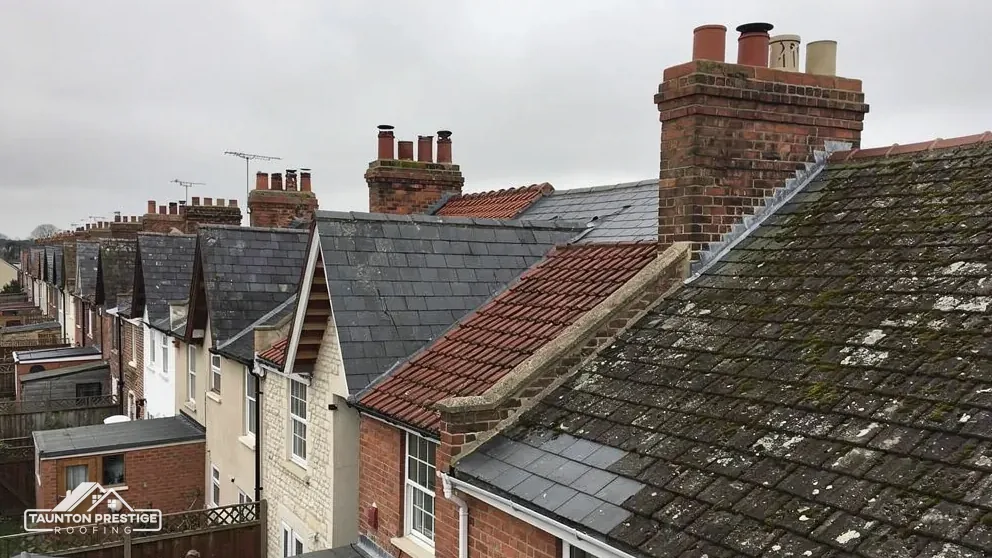
Winsham has a conservation area lying within about 0.75 km of the centre, and the edge of the Dorset National Landscape (formerly an AONB) reaches the ground around the village. Before quoting we check three things for every address: whether the house has a list entry, whether the conservation area boundary takes it in, and whether the National Landscape reaches its plot. Each yes adds a step, and Somerset Council can answer all three.
Not when the roof goes back as it was, with the same material, pattern and colour. Trouble starts with change: another kind of covering, a different ridge, a dormer, or a rooflight on the lane side of the house. Somerset Council's planning team confirms what each of those needs at your address, so ask before anything is ordered. A conservation area is no reason to leave a failing roof alone, since water inside costs more to put right than the paperwork to stop it.
The National Heritage List holds 26 entries within 500 metres of the centre, including 17 and 19 Church Street and 1 to 5 Western Way, all Grade II. Work that touches the character of any of them needs listed building consent from Somerset Council.
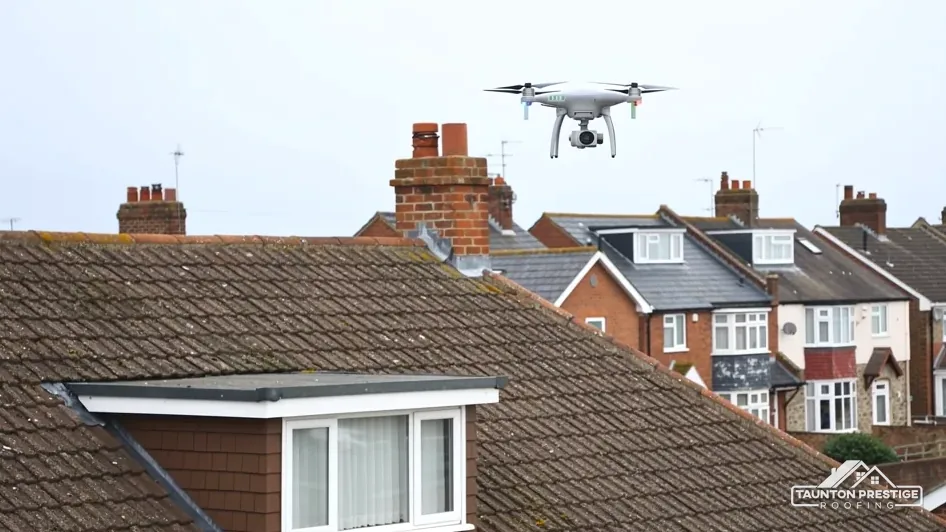
Our survey logs the covering, ridge, verge (the sloping edge at a gable wall), valleys and flashings slope by slope, and the photos come to you. When the planners ask what is up there, those notes already hold the answer.
Where a house is unlisted and outside both protected areas, a like-for-like repair is as simple as anywhere else, and nobody has to be waited on. The three questions only matter when the work would change how the roof looks, so a straight repair rarely waits on anyone's answer.
Look for
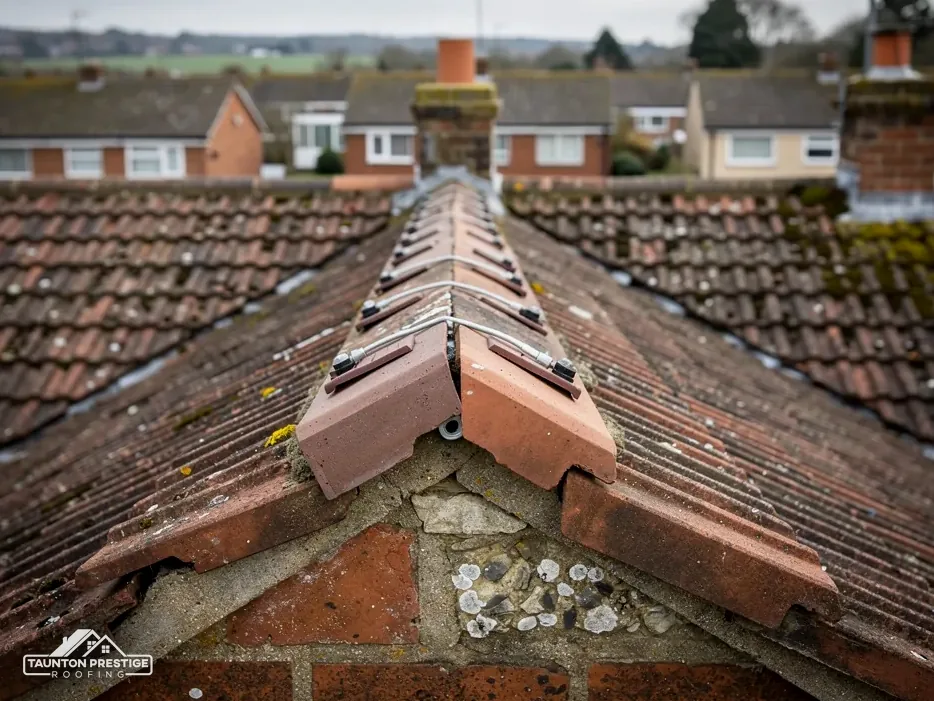
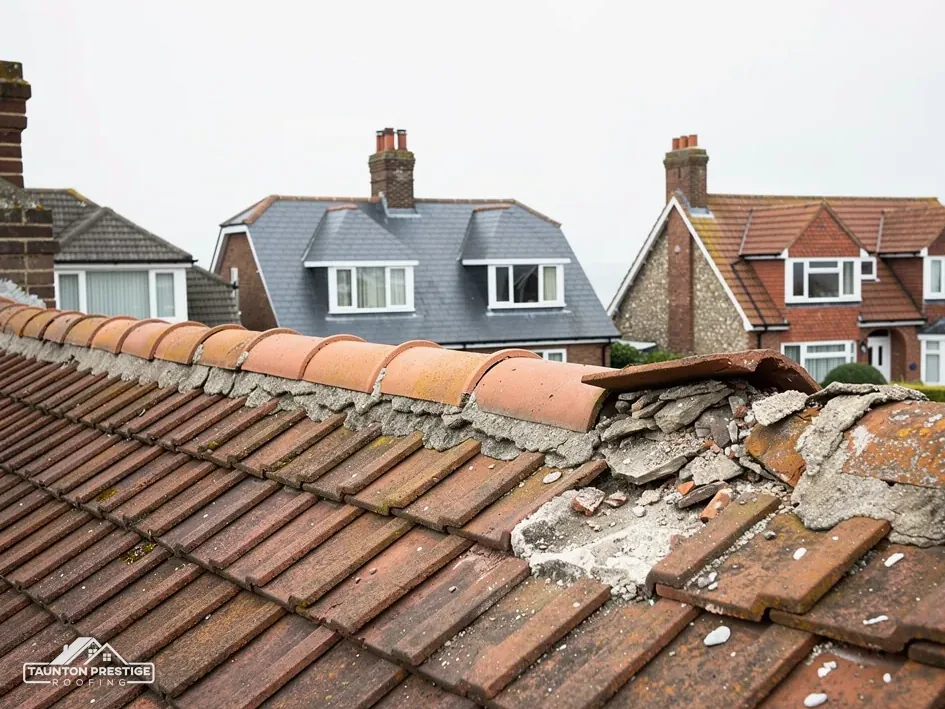
Winsham has two Grade II* buildings, and they follow different routes. St Stephen's was first listed on 4 February 1958 and Anglican worship continues there, so work goes through the faculty system. Lullingstone, a house, was listed on 30 November 1987; altering its character calls for listed building consent from Somerset Council. Our guide to listed building roof consent explains the difference in plain terms, and our survey photographs serve either route.
What decides the price
Published figures are ranges. Marley cites a BRE minimum life expectancy of 60 years for clay tiles, and says that figure belongs to clay alone. Building Conservation's article on old peg tiles calls the 60-year number clearly not a reliable guide, which fits what we see: age tells you little, and the fixings tell you more. For concrete tiles Marley gives around 60 years and adds that it is not a guarantee or warranty. We judge a roof by its battens, nails and tile condition, not its date.
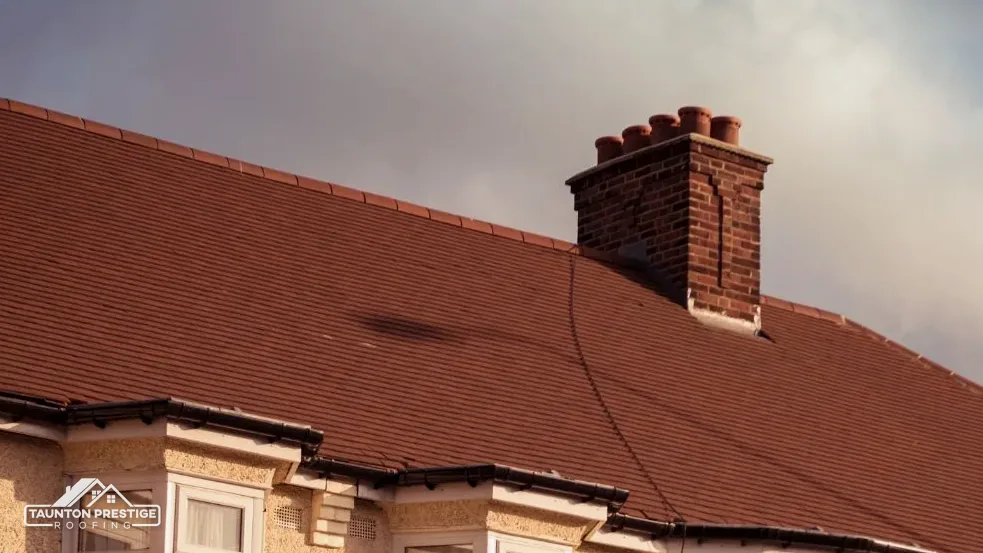
Often, if the tiles are sound. We refix good ones, swap broken ones for reclaimed or matching pieces and check the ridge bedding. A tile that passes from the road but differs in size or colour shows for decades, so matching comes before speed. On a narrow lane, tiles arrive in small loads and by hand, which suits repair work, while a whole-slope relay is planned with the neighbours in mind. Where tiles are reused, we sort them on the ground into sound, doubtful and broken piles and give you the count before any replacements are ordered. Leadwork and chimney flashings on an older house are separate repairs from the tiles, and they can be dealt with separately. Our pitched roofing page covers the wider picture.
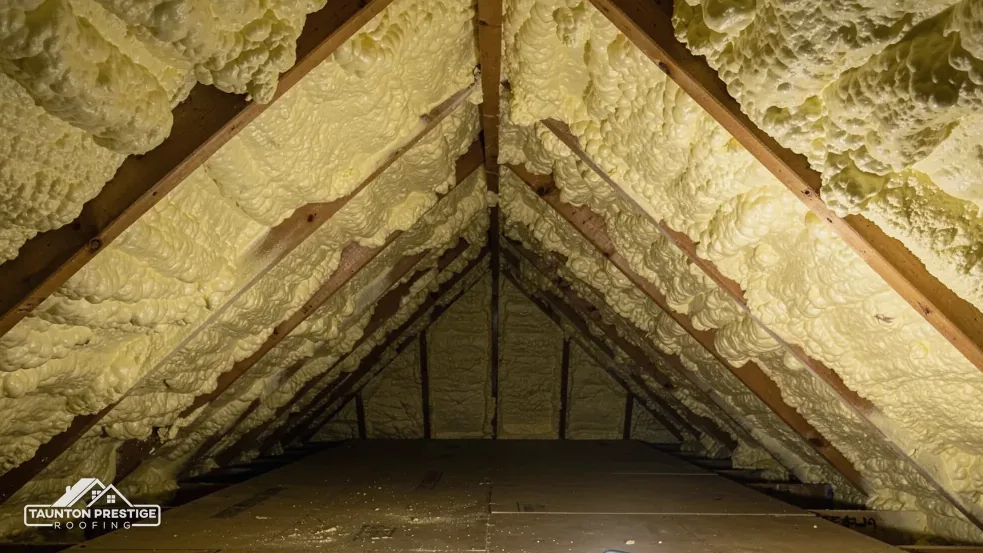
A roof that leaks is not always a roof with a hole in it. Condensation in a loft can drip and stain in the same way, and old spray foam hides the evidence. The code of practice on moisture in buildings, BS 5250:2021, sets the frame. For a cold roof lined with HR underlay (the non-breathable kind), Marley's figures are eaves ventilation of 25mm along the length for pitches of 15° or less, and 10mm above 15°. Where a breathable LR underlay is paired with a ceiling sealed against warm air, ordinary eaves detailing can provide ventilation of about 3mm by chance, provided third-party certification backs it.
Moisture in a loft often looks like a leak; the cause is usually airflow, not rain.
It can hide timber and make later repairs harder. Asked about foaming a leaking roof, the Energy Saving Trust answers, "We don't recommend doing this." The RICS consumer guide says to check whether your lender's policy allows such products, which matters before a sale or purchase of a home with foam under the roof. What removal costs depends on how much foam there is, how it was applied and how easy the roof space is to reach. Our spray foam removal page explains the process.
Look for dark patches on rafters, a musty smell and wet insulation, then notice whether they follow the weather or the heating. In the loft we look for daylight at the eaves, stains on the underside of the boards, rusting nails and the state of the insulation, and take photos of each. If ventilation is the problem, the fix is often small: a blocked eaves gap cleared, or vents fitted that suit the underlay, before anyone talks about re-roofing. Insulation pushed hard against the eaves can choke the gap that ventilation needs, which is an easy mistake and an easy fix. Taking foam out, if it comes to that, is slow, careful work, and the price depends on its thickness, the area covered and the access.
Scaffold on a public road needs a licence under section 169 of the Highways Act 1980. In Winsham that means Somerset Council, which issues permits to accredited contractors alone, leaving the appointed contractor to apply: £124.60 for each 28-day period (April 2026) and at least 10 working days' notice. A tower or ladder can do for a single repair, and we decide which at the survey.
What decides the price
Government money does not buy a new roof: no national grant exists for that. Some schemes touch the roof space. ECO4, the Energy Company Obligation, runs until 31 December 2026, the Great British Insulation Scheme ended with installations due by 31 March 2026, and the Warm Homes Local Grant, aimed at insulation, asks that household income is usually £36,000 a year or less. Up to £30,000 is available in England through a Disabled Facilities Grant, which pays for adaptations rather than roofs. Eligibility depends on you, and nothing here promises it.
A roof repair or re-roof on a home that already exists carries the standard 20% rate of VAT. A zero rate for certain energy-saving materials applies to installations made between 1 May 2023 and 31 March 2027, so ask each quote to say whether VAT and scaffold are in the total. Our roof replacement page covers the wider question of repairing or re-roofing.
A leak that cannot wait gets made safe before anything else. A visit you request for an urgent repair is outside the 14-day cancellation right, and Citizens Advice's consumer helpline, 0808 223 1133, can explain where you stand. Tell us your Winsham lane and what you have seen, and the survey comes first, then photos of your own roof, then a total price in writing.
Walked the roof?
When you have read the checks, we walk the roof and show you the photos.
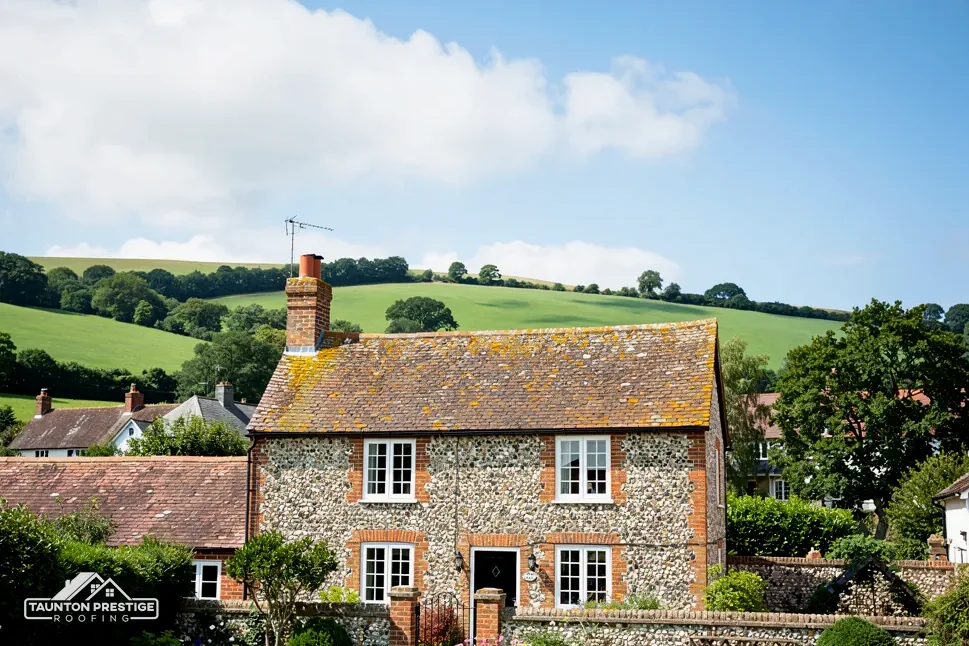
Yes, and on a listed cottage it is the simplest route. Sound tiles are refixed, broken ones are swapped for pieces that match in size, shade and finish, and the ridge bedding is checked. A different covering would need listed building consent from Somerset Council first, and the survey photos show the planners what is there now.
It matters only if the boundary takes in your plot, and then for changes to how the roof looks, such as a dormer. The National Landscape covers part of the ground around Winsham, not every address, so ask Somerset Council's planning team where your house stands before planning any alteration. Like-for-like repairs are the simple case.
Not always, but it deserves a look. The Energy Saving Trust does not back foaming a leaking roof, and the RICS guide asks owners to check their lender's policy before a sale. We examine the timber behind the foam when we survey, and say whether taking it out is worth doing before you re-roof.
Yes. We agree the dates with you, allow 10 working days for the council's permit and explain each day's work in advance. If neighbours need to get past, we plan the poles and the deliveries around them. The permit runs for 28 days at a time, so the schedule is kept tight.
Name the lane and the problem, and a survey slot is yours to pick.