St John's Grade II church
Listed on 30 November 1987 and used for worship, so roof repairs take the faculty route.
A Grade II church, Dairs Barton and a conservation area nearby
Tatworth has a conservation area within 0.75 km of its centre and a group of Grade II buildings. Your roof is surveyed and photographed before anyone names a price.
Listed on 30 November 1987 and used for worship, so roof repairs take the faculty route.
Dairs Barton was listed Grade II on 30 November 1987, so changes to its roof need listed building consent.
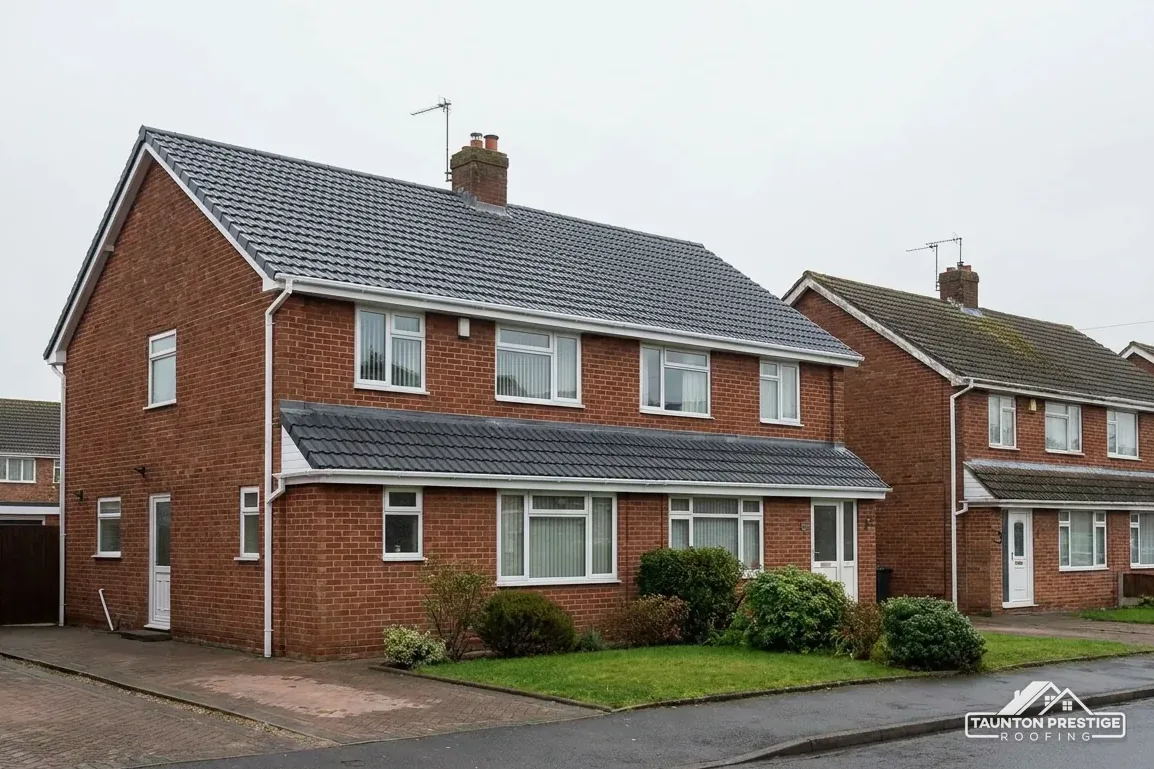
Downings Farmhouse, Gulwell House and Gulwell Cottage are all listed Grade II, so any new covering needs thought.
Street map of Tatworth with South Chard, Chardstock, Chard, Winsham marked around it, and Taunton.
South Chard adjoins Tatworth and Chardstock lies south-west, while Winsham is east and Chard sits north of the village.
About 13 miles south-east of Taunton, Somerset Council (unitary).
Four checks between Tatworth and the Chards
Consent, ridges, flat roofs and a roof already letting water in: the four checks that matter most on a Tatworth house.
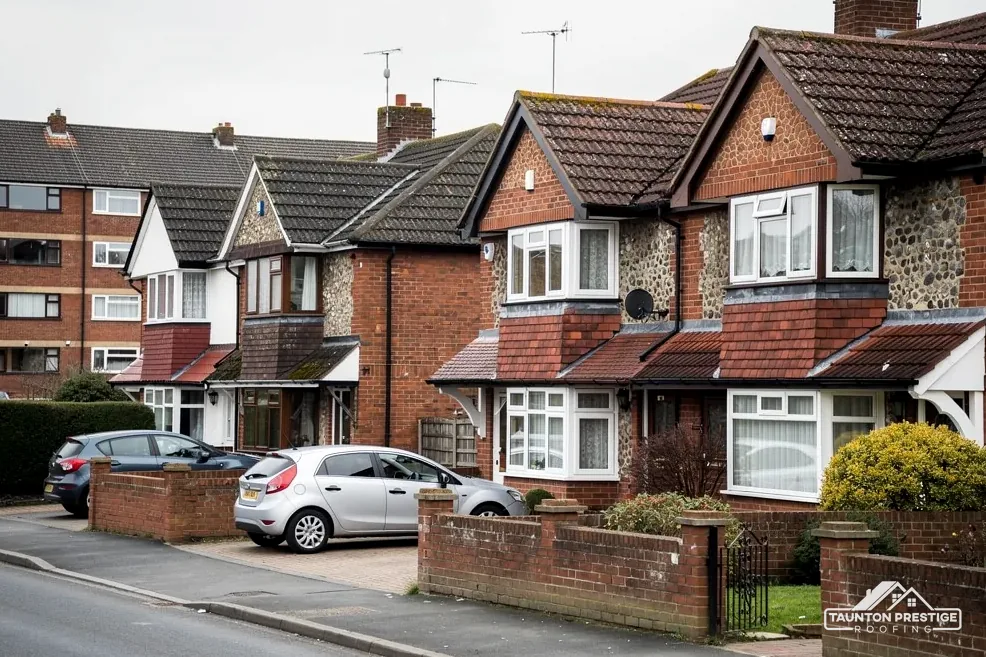
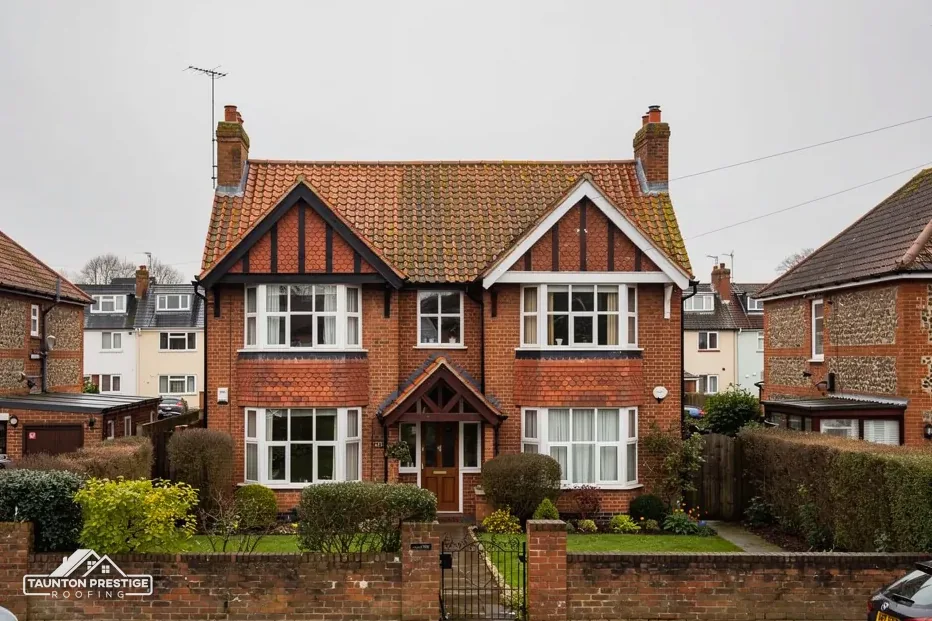
A roof in Tatworth sits among protected neighbours. A conservation area boundary falls within about 0.75 km of the middle of the village (planning.data.gov.uk), and the National Heritage List includes several buildings in the parish. St John's church, Dairs Barton, Downings Farmhouse and the Gulwell pair are all Grade II. Your own house may be in none of these groups, or in more than one, and the quickest way to find out is to ask before anything is ordered. We check the address during the survey and report what we found, so the finding is written down well ahead of the first slate coming off. Where the house turns out to be listed, that single fact can change the whole programme, the choice of materials and the order in which jobs are booked.
Yes, though not in the way people expect. Matching what is already there is the ordinary case, and the planning guide explains where the general rules sit. What listing adds is a second layer: where the work would alter the building's special character, you also need listed building consent from Somerset Council. Swapping natural slate for a cheaper tile is the classic case. Even a ridge can count, because a dry-fix ridge sits differently on the skyline from a mortared one. Our guide to planning permission for roof work covers the rules in full.
No. St John's holds Church of England worship, which puts roof repairs inside the faculty system. The parish applies, and the resulting specification is what a roofer prices. Churches that have shut, and chapels turned into homes, lose that route and come back to the council.
Everything we find goes into a photo record of the roof, so a planning officer or a church architect can see the facts on the slope.
Look for
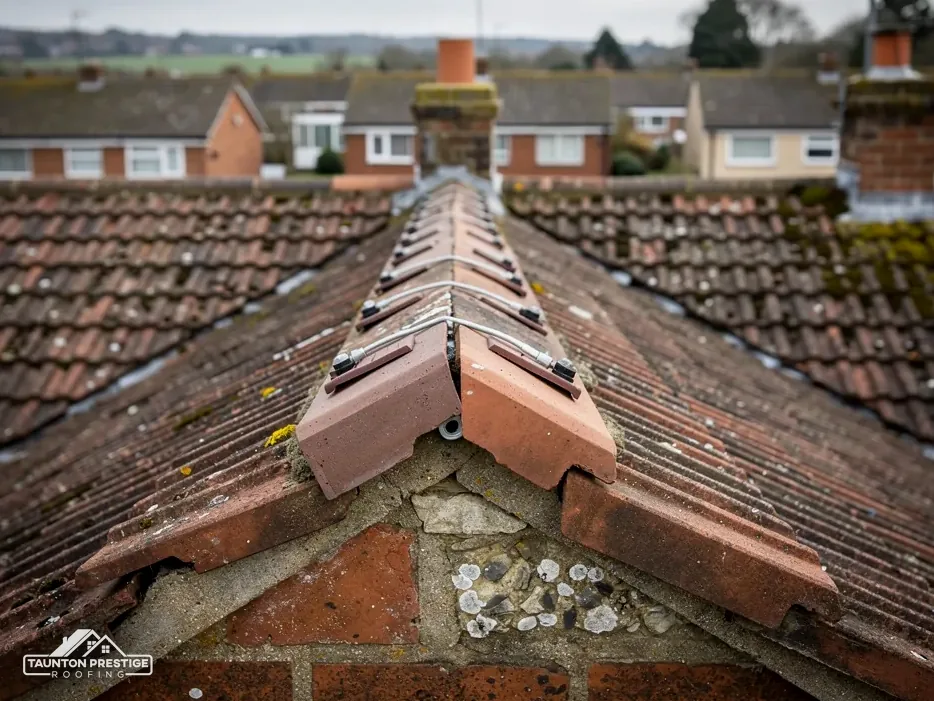
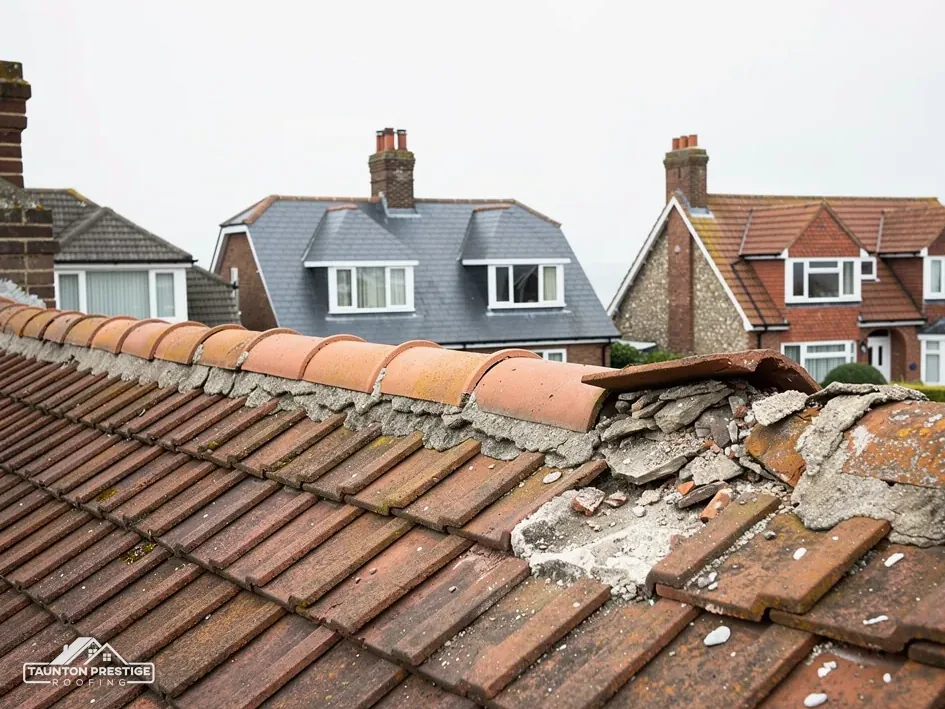
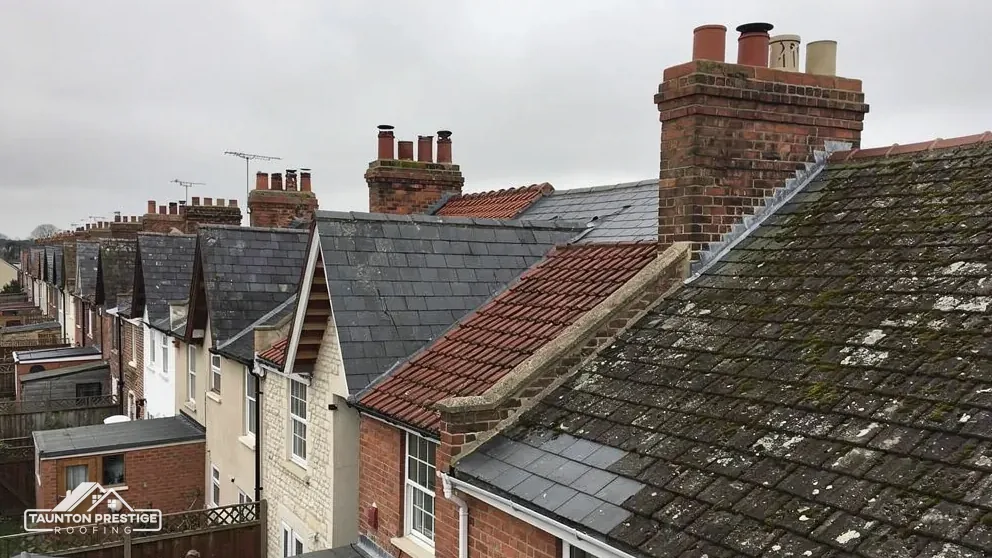
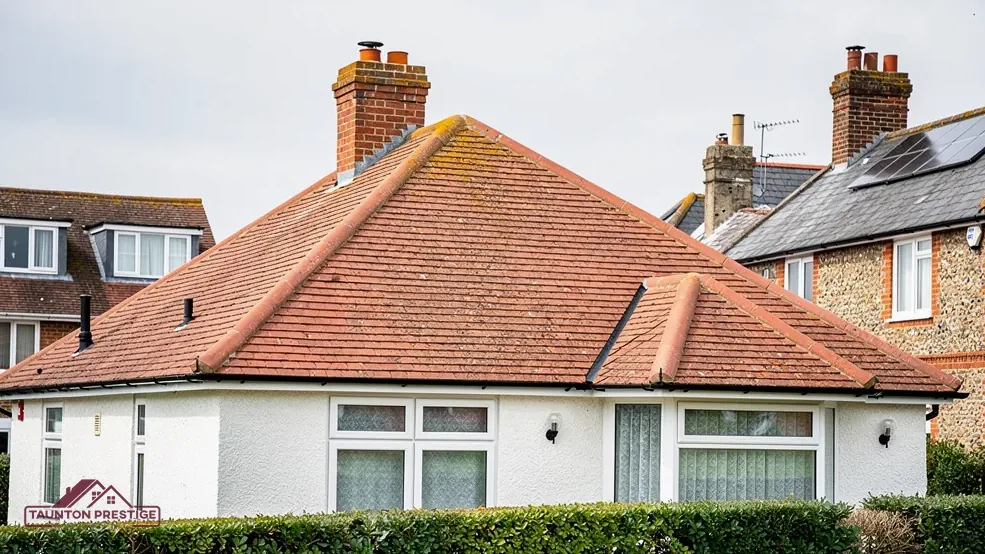
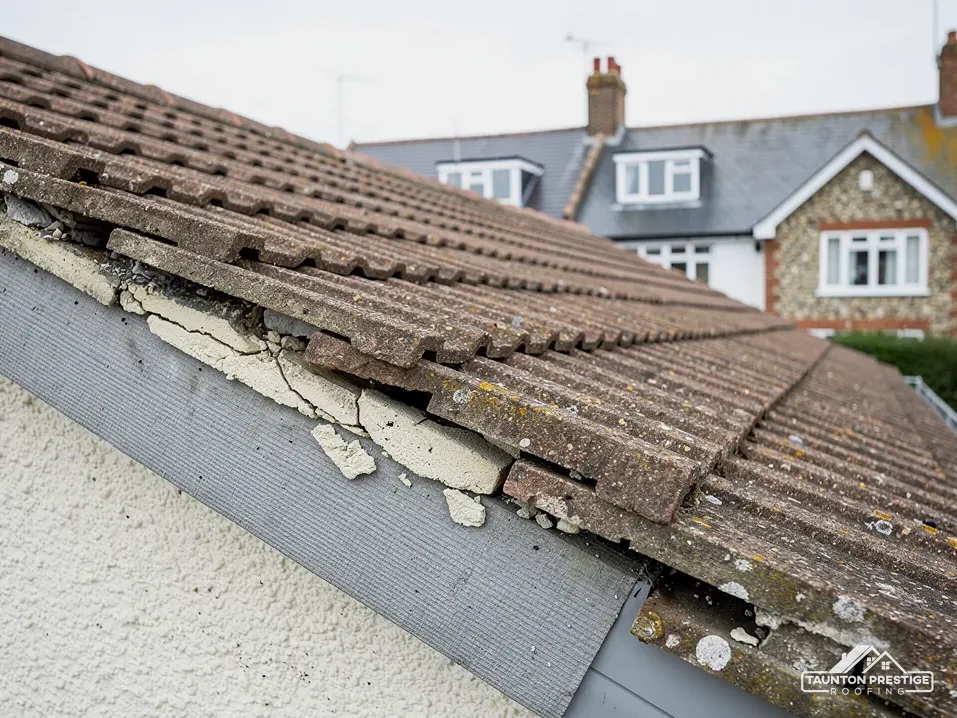
The ridge is the topmost line of the roof, formed by two slopes meeting. Each hip runs down from it at a corner of the house that sticks out, where two further slopes join. Both are capped with ridge tiles, and both face the weather first. On older houses those caps were bedded in mortar. Over the decades the mortar cracks, drops out and lets a tile rock, and each gust then works the loose cap a little further. You may spot it first as pale crumbs in the gutter, or as a gap against the sky.
What decides the price
Marley explains that the 2014 revision of BS 5534 stopped counting on mortar's tensile strength for ridges and hips, so bedded caps now need mechanical fixings too. Mortar is not banned, and BS 5534 is a code of practice rather than law. Dry-fix is the alternative: the caps are held by clips and screws, and BS 8612 is the test standard behind dry-fixed ridge, hip and verge kits. Which suits your house depends on the roof and, if it is listed, on consent. At the survey we tell you which we would choose, and why. Read more on our dry ridge and verge page.
Look for the pattern. One failed cap points to a local fault. A whole run that rocks, or caps missing at the same height on both sides, points to mortar that has given up along its length. Slates or tiles creeping down the slope away from the ridge are a different job. We separate the two, so you are never charged for a re-bed when the real fault lies lower down.
A ridge repair can often be reached from a roof ladder or a short scaffold lift, which keeps the visit short once the weather allows it.
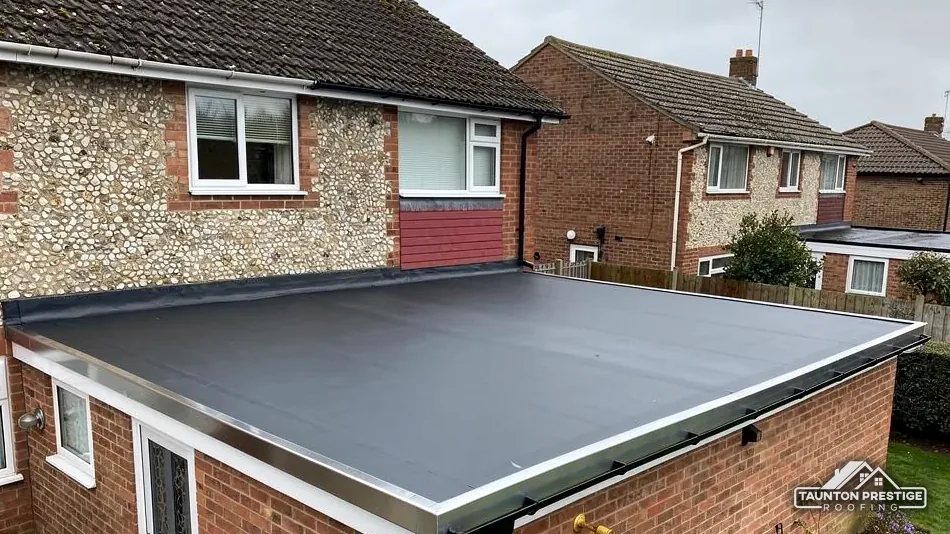
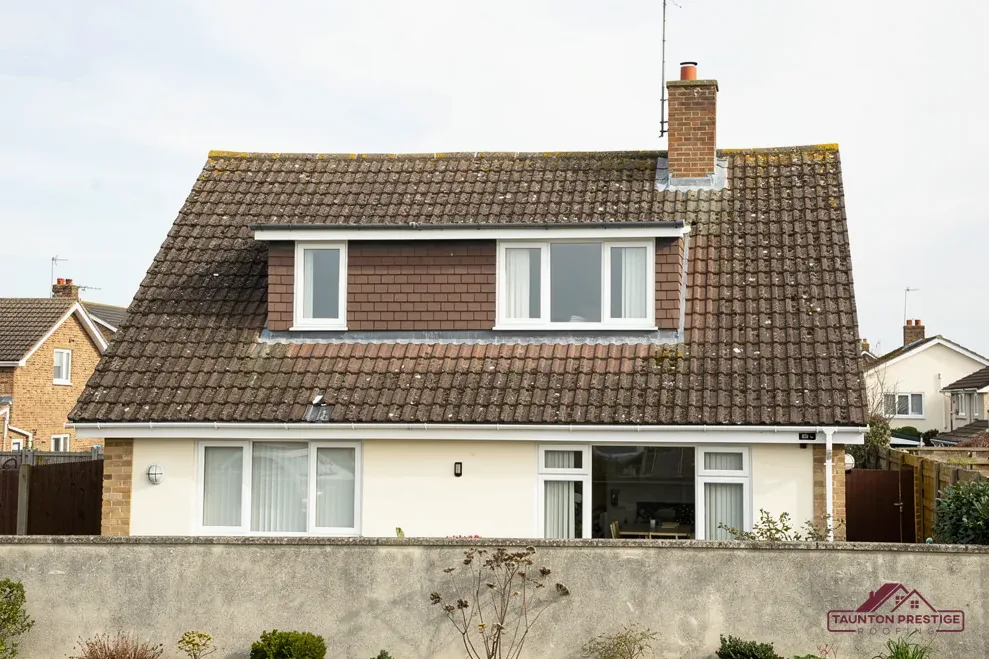
A flat-roofed kitchen, porch or garage at the back of a Tatworth house does a lot of work for its size, and it fails quietly. A stain spreads across a ceiling, a patch of the roof sags, a line of damp creeps along a wall. The covering decides how much life the roof has left. Three coverings turn up again and again on small flat roofs: felt, EPDM and GRP, and each ages differently.
A flat roof that ponds has lost its fall somewhere, and finding where decides the repair.
Less puts felt at 10 to 20 years, adding that a good job can reach 20 while a poor one may fail inside 10. EPDM is rubber sheeting laid in one piece, and sources disagree on its life: GreenSpec gives 20 to 30 years, Less gives 30 to 50. GRP stands for glass-reinforced plastic, spread wet over matting and left to harden, and Less gives it 25 to 40 years. Those are typical lives for each material, never a promise about your roof, and workmanship counts for as much as the material.
Sometimes. A split seam, a lifted edge or a failed joint round a vent can be repaired while the remaining covering is healthy. A roof that holds water, or has been patched again and again, is another story. BS 6229:2025 sets the finished minimum fall at 1:80, so ponding is a sign of lost slope, whether through a sagging deck, a blocked outlet or an edge that has dropped. We find the cause before suggesting a cure, because laying new membrane over a basin that still holds water just moves the failure. Our flat roofing page shows how the options compare, and our photos from the survey show what we saw.
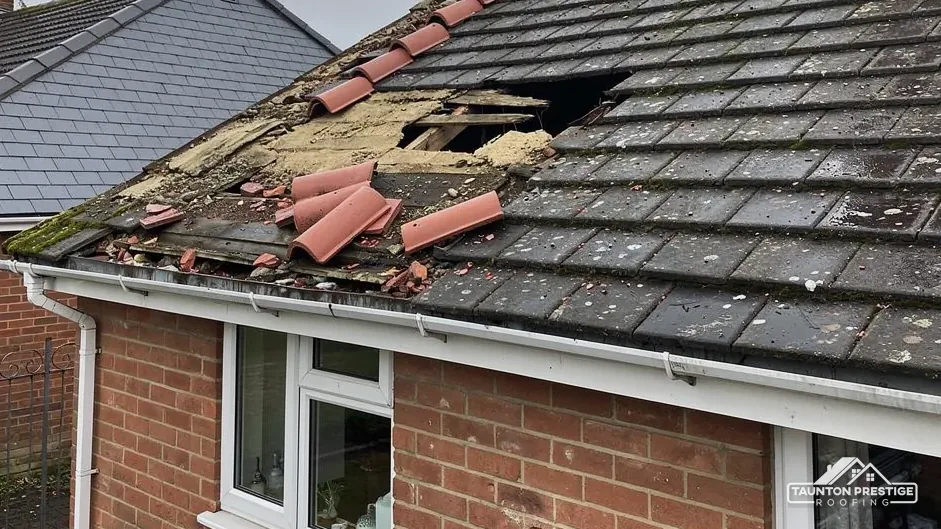
Water coming through a Tatworth ceiling is stressful, and the first job is to stop it getting worse. Move belongings, set a bucket under the drip, and photograph the stain and anything that has fallen from the roof. On the first visit we make the roof safe, which can mean a temporary cover or a quick repair to the worst spot. A full survey and a written price follow once the water has stopped.
A temporary cover might be a tarpaulin battened down, or a patch of fresh flashing over the worst gap. It buys time and keeps the ceiling dry, but it is not the cure, and we make that clear when the roof is handed back to you.
What decides the price
Tell the insurer first. The Institution of Structural Engineers advises that photographs are vital to a claim, because they give visual evidence of the damage. Make the building safe with a temporary repair, and save the photos and every receipt. If a claim is turned down and you disagree, the Financial Ombudsman Service handles complaints once the insurer has sent its final response, or after eight weeks without one. Whether a claim succeeds is for the insurer to decide, and we would not guess at it.
An agreement signed at your kitchen table after a survey carries a 14-day cancellation right. The rules leave out an attendance you have specifically requested for urgent repairs, so an emergency make-safe sits outside that cooling-off period. For general consumer advice, the Citizens Advice helpline is 0808 223 1133. Our emergency and general roof repairs page explains how this kind of job runs from the first visit.
When the leak is under control, send us your Tatworth address and where the water showed, and we will fix the survey date that leads to your one written price.
Walked the roof?
When you have read the checks, we walk the roof and show you the photos.
Both are used. Mortar bedding is not banned, but it is not relied on by itself, so a re-bed needs mechanical fixings too. Dry-fix holds the caps with clips and screws. On a listed farmhouse the look of the ridge can matter, so check with Somerset Council's planning team before the style changes.
Dairs Barton has Grade II listing, which brings listed building consent from Somerset Council into play for anything that alters its character, on top of any planning permission. Matching the old covering in colour, size and pattern is the easy case. A different material, or new openings in the slope, belong in a conversation with the planning team beforehand.
Tell your insurer, then call us. Photograph the stain from inside, catch the drip, and hold on to receipts. On the first visit the leak is made safe, and the full survey follows, so photos of your roof reach you before you agree to a repair. Nobody can promise an insurer will pay out.
St John's is listed Grade II and hosts Church of England worship, so the faculty system governs its roof repairs, not listed building consent. The faculty application comes from the parish. A roofer then prices the approved specification, which is a different order of events from an ordinary house job, and one that rewards patience.
Send your Tatworth address with a note on the problem, and we set the date.