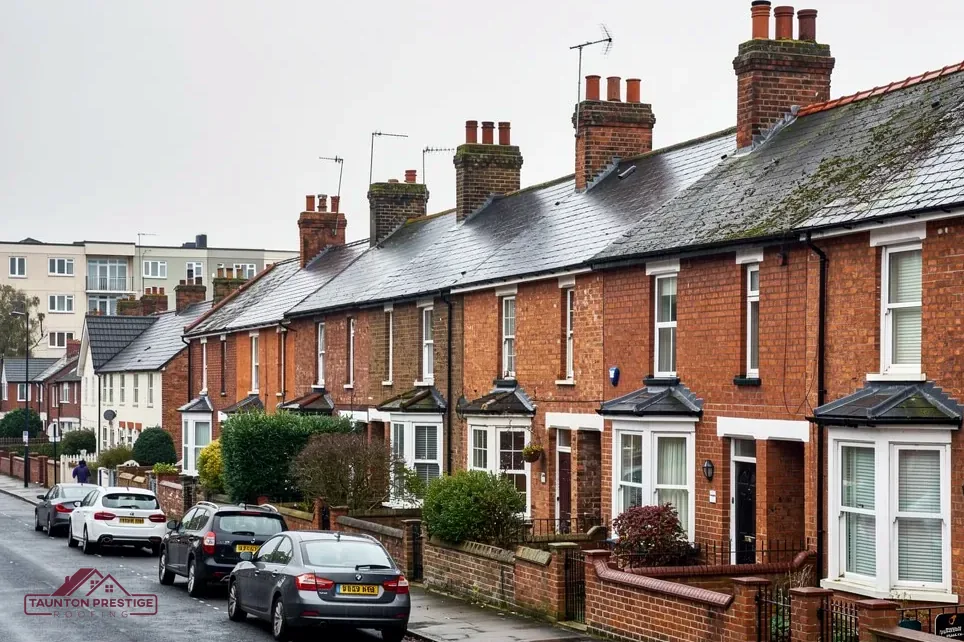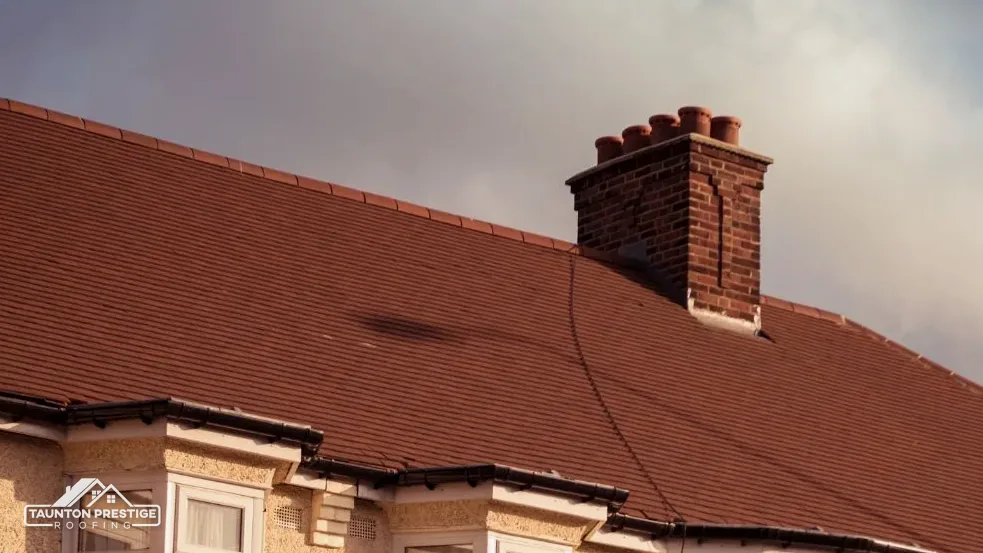
Detached houses on Wembdon Rise
The first houses built beyond the old ridge village, from the 1840s, were detached ones along what became Wembdon Rise.
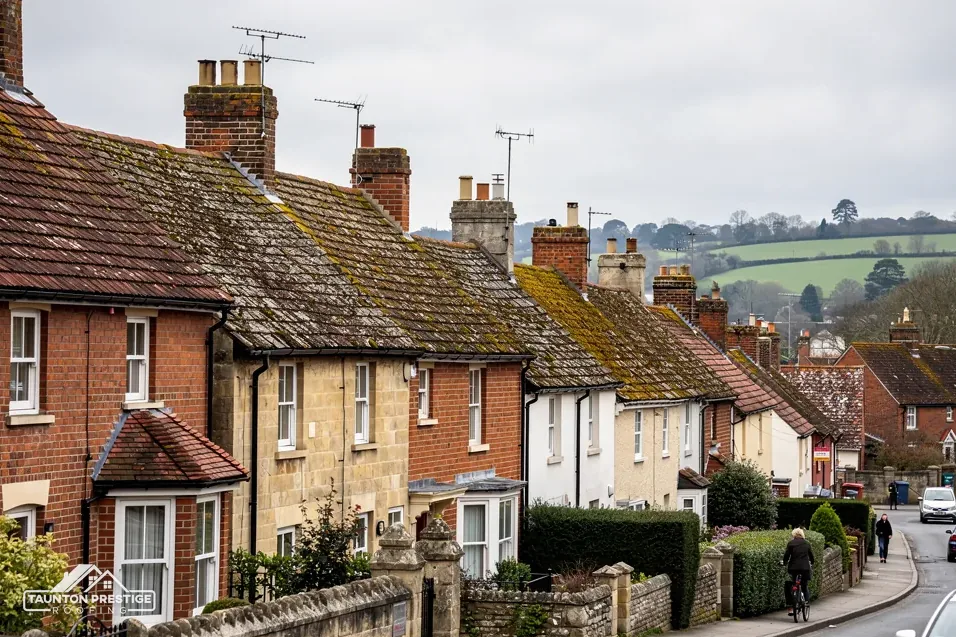
A ridge village above Bridgwater, built out since the 1840s
Wembdon stayed small until the 1840s and has grown ever since, so roofs on one street can be decades apart. Each gets read slope by slope before it is priced.
The first houses built beyond the old ridge village, from the 1840s, were detached ones along what became Wembdon Rise.
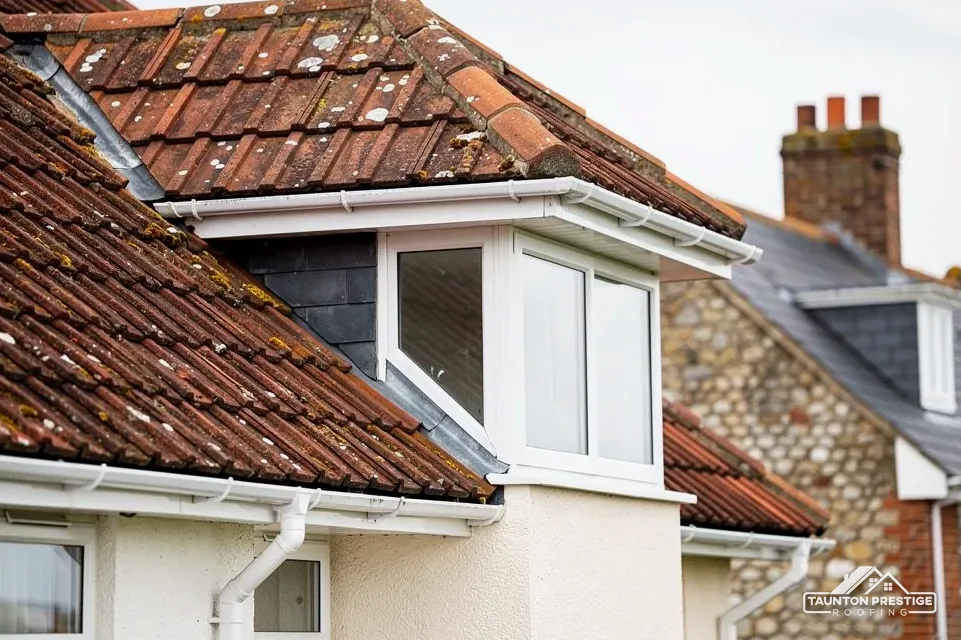
Terraces and semi-detached houses came next, so a repair at the edge of one roof often reaches the neighbour's side.
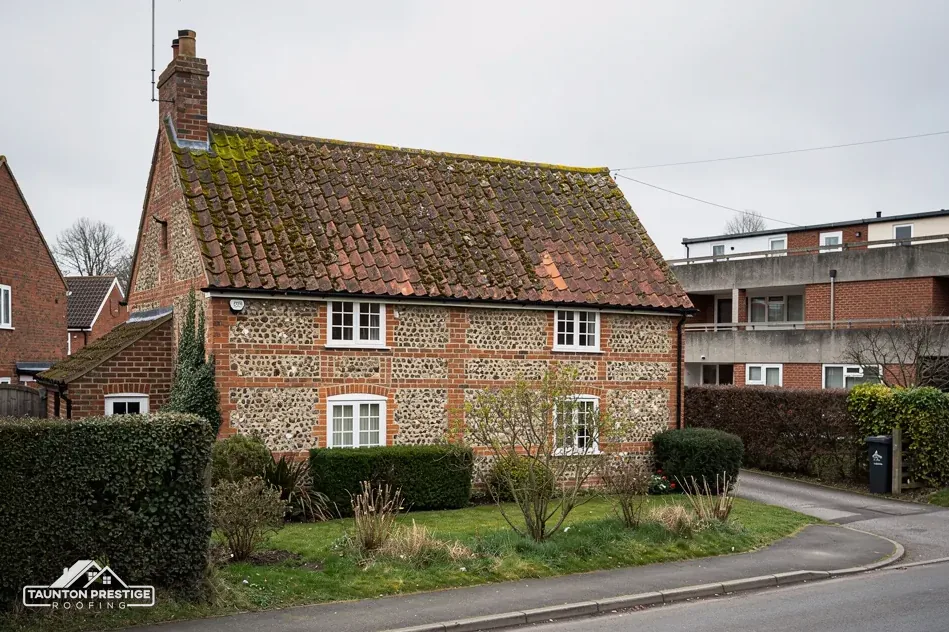
Hillgrove and Orchard lanes, Wembdon Hill, Church Road and the valley west of Wembdon Road filled in across those decades.
Street map of Wembdon with Bridgwater, Cannington, Rhode, Huntworth marked around it, and Taunton.
Bridgwater lies just to the south-east of the village and Cannington to the north-west, with Rhode to the south and Goathurst to the south-west.
About 9 miles north-east of Taunton, Somerset Council (unitary).
Four checks on a growing ridge village
A walk through the parts of a Wembdon roof that steer the work, from its age to the way in.
Building in Wembdon came in waves. Detached houses arrived first on what became Wembdon Rise, terraces and semis went up along Wembdon Road, and the lanes behind filled in during the 1920s, 1930s, 1950s, 1970s and 1980s. Two neighbours can end up with roofs of very different ages, laid to different habits and patched by different hands. A pavement glance tells nobody what is underneath, so our survey starts on the slopes and in the loft.
What decides the price
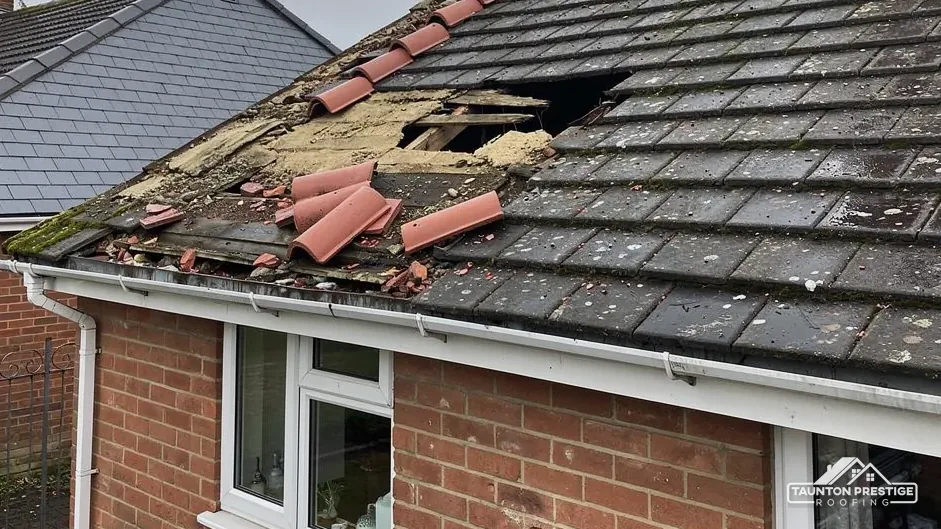
Slope by slope. We note the covering, then what carries it: battens are narrow timber strips running across the rafters, the sloping beams, and each slate or tile hangs from one. The underlay is the membrane beneath, there to catch whatever blows past. On an older house the underlay may be torn or gone, and battens can turn brittle where a slate slipped years back. On a newer one the trouble tends to sit at the ridge along the top, or the verge, where the roof stops at the end wall. Each fault is photographed, so you see your roof on screen before a figure appears.
It changes what we reach for first. A single slipped tile on a healthy slope is a short visit. The same tile where the battens have softened tells us the slope is giving up, and a patch then only delays things. We say which situation you are in. Where a repair is the better buy we price the repair, and where a slope has run its course we explain why a fresh covering works out cheaper than repeated call-outs. A Wembdon extension built decades after the house may carry another tile or a flat membrane altogether, so each roof gets its own entry in the survey notes.
Look for
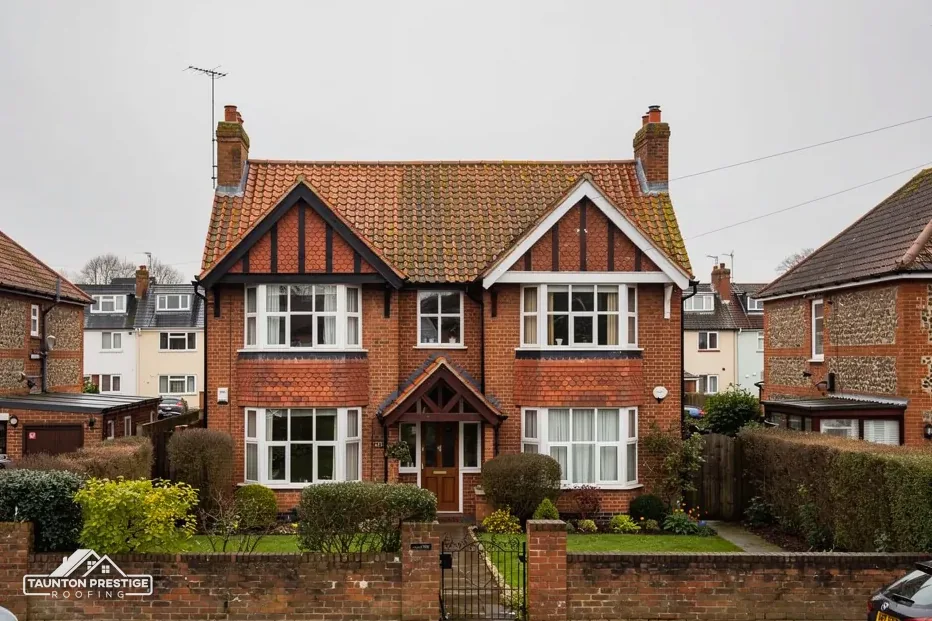
The Bridgwater Northfield conservation area lies within about 0.75 km of the centre of Wembdon. Somerset Council plans for the whole village, so it can say whether a given address lies inside the boundary. A boundary line can split one street, and we would rather check than guess; the answer decides which route a repair takes. The reason it matters is simple: a conservation area tightens what may change on the outside of a house, and the roof is the largest part of the outside. Even the colour of a new ridge forms part of how a street looks.
Laying matching slates or tiles back as they were counts as repair on a house, and our guide to planning permission for roof work has the detail. Questions begin once the roof starts to look different, through another material or a new ridge style, and the guide covers the national rules for dormers and roof windows. For a Wembdon house near the Northfield edge, Somerset Council's planning team can settle it for that one address while the job is still being priced.
Holy Well in Wembdon is listed at Grade II, as entry 1264039 on the National Heritage List dated 24 June 1985, and three entries in all fall within 500 metres of the centre. A listing adds a second layer of consent, listed building consent, for anything that alters the special character of the building, and that can reach a swap which looks trivial from the road, like changing how the ridge is held on.
If your house is anywhere near the Northfield edge, say so when you book. We record which slopes face the street and photograph the existing ridge, hips and chimney, so that any change you want to make reaches the planning team with the facts already collected. Often no consent is needed at all, and the survey moves on to price.
A village that grew in bursts has been extended in bursts as well. Rear kitchens, garages turned into rooms and loft conversions each leave a join where a new roof meets an old one, and a join is where rain finds a way in. When we trace a leak to its source, it turns up at a valley, a flashing or an abutment more often than anywhere else we look.
A leak at an extension is usually a join that has moved, not a worn covering.
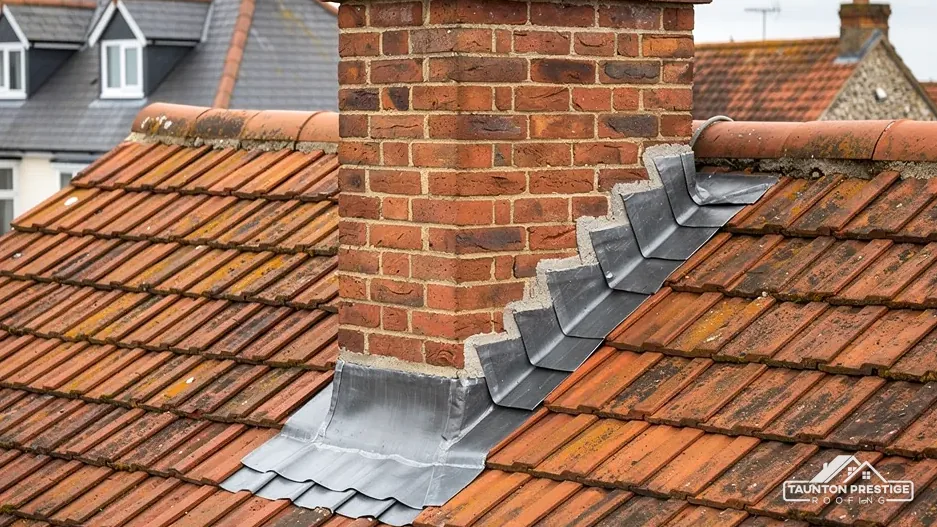
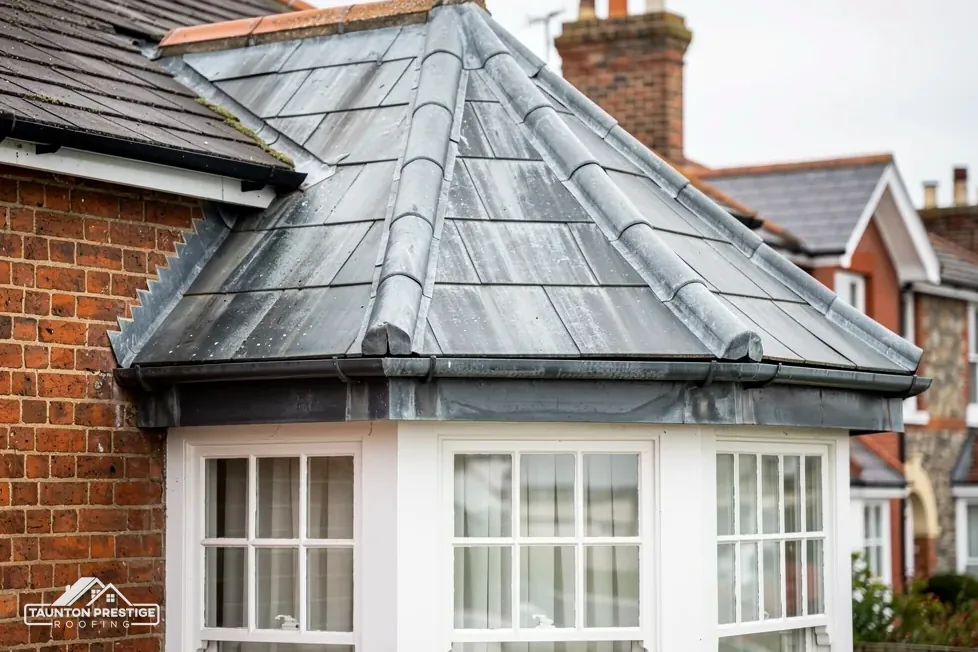
A valley is the inside corner where two slopes meet. Both slopes pour their rain into it, so it works harder than any other stretch of roof. Wembdon valleys are usually dressed in lead, sometimes in another metal, or closed with mitred tiles. Because it sits low and out of sight from the road, a failing valley can leak for a winter before anyone looks up. A split, a lifted edge or a clog of moss and leaves can push water sideways beneath the covering and into the ceiling.
Flashing seals the line where a roof butts against a wall or stack. Soakers are small bent sheets of metal, one under each course of tiles or slates beside the wall, steering water back onto the roof rather than behind the brickwork. Lead suits the job because it can be dressed into any corner. Sealant smeared over a failed flashing usually cracks within a season, so we check whether the lead has split, lifted or pulled from the wall, and whether the mortar line it is tucked into has crumbled. Where it has, the wall needs raking out and re-pointing before new lead goes in. According to MyJobQuote, lead flashing can last for over 80 years, a floor and not an average, so a piece that fails much younger usually points to something moving at the join.
Our lead work page explains the sheet weights, and pitched roofing covers repairs to the slope itself.
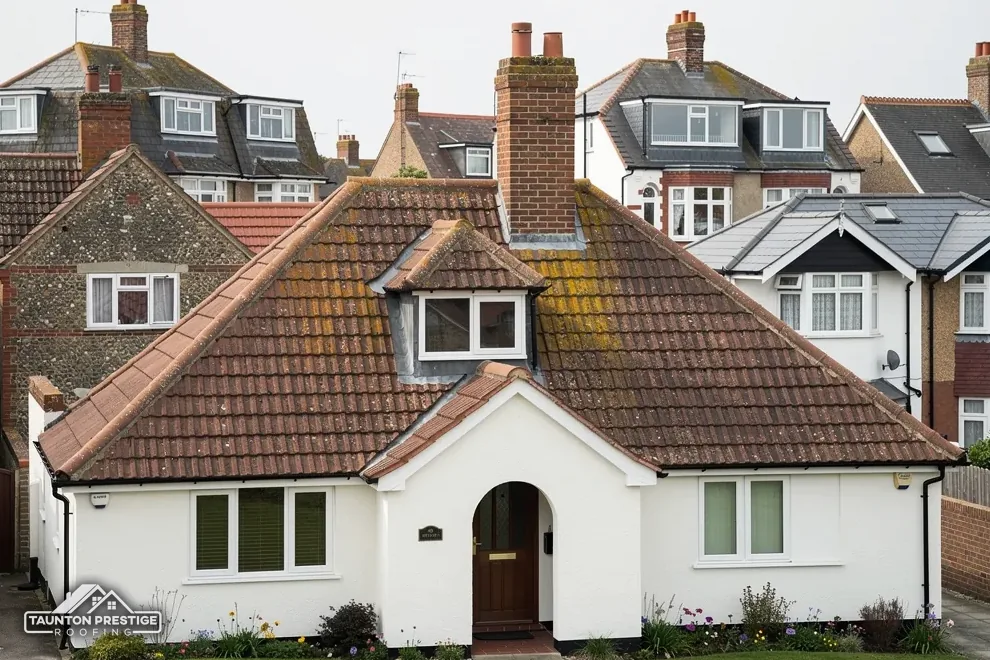
Wembdon Road and Church Road carry traffic, and plenty of houses stand close to the pavement. Scaffolding there may have to take up pavement or part of the carriageway, which brings in section 169 of the Highways Act 1980. On Wembdon's roads, Somerset Council gives scaffold licences to accredited firms only, and the contractor appointed to your job lodges the form. Poles and boards kept wholly within your own plot are not on the highway at all, which is common where a house sits back behind a front garden or a drive. Ladder or mobile tower will often do for a modest Wembdon repair, and the survey settles which. Narrow pavements, parked cars and bus stops all feed into that choice, so we look at the frontage as well as the slope.
Somerset Council asks for at least 10 working days before erection and charges £124.60 for each 28-day period (April 2026). A licence can be extended if the work overruns. Our proposed start dates leave room for the wait, so no roof sits open while forms are processed.
For a full re-roof it can. The Planning Portal puts the line here: below 25 per cent of the building envelope and below 50 per cent of the roof, building control is not normally involved. Where a replacement covering weighs 15 per cent or more above the old, Building Regulations approval follows, and the rafters want an engineer's or surveyor's eye first. Somerset Building Control handles this on 0300 303 7790.
After the visit you get photos taken on your own slopes and a written price as one total. Rubbish leaves with us. Your next step is to give us the Wembdon address and the symptom, whether a stain, a slipped tile or a drip, so the survey can be booked.
What decides the price
Walked the roof?
When you have read the checks, we walk the roof and show you the photos.
Often, yes, but the weight and the look both count. If the new covering adds 15 per cent or more to the weight, the job needs Building Regulations approval, and the timbers should be checked first. A different material close to the Northfield conservation area edge is worth raising with Somerset Council's planning team first, and our survey notes what the house wears now.
Tell the neighbour first, because work at the join of semi-detached or terraced roofs often involves a shared verge or flashing. Cutting into a party wall, for example to take out a chimney breast, can fall under the Party Wall etc. Act 1996, so ask your surveyor or the neighbour's about timing; the notice period alone is two months.
Holy Well is listed Grade II (entry 1264039, 24 June 1985), which is the cue to ask before any work, whatever shape its fabric is in. Anything touching the structure's special character needs listed building consent from Somerset Council. Matching what was already there is the simplest case to argue.
Clear belongings from beneath it, stand a bucket beneath the drip and take a picture of the stain. If it is safe, peer into the loft for the point where water enters. Then ring us. The first visit is about stopping the water, and tracing the cause comes after. Hold on to every photo, because an insurer will ask for them.
Describe the Wembdon roof problem you have noticed, and a ladder visit gets pencilled in.