St Mary's Grade I church
Its lias tower with Ham stone dressings is from about 1500 to 1510; battlements were added in 1704.
A Grade I church tower and houses from three centuries
North Petherton grew round its church on sloping ground above a stream, between the Parrett and the lower Quantocks. Each roof is surveyed and photographed first.
Its lias tower with Ham stone dressings is from about 1500 to 1510; battlements were added in 1704.
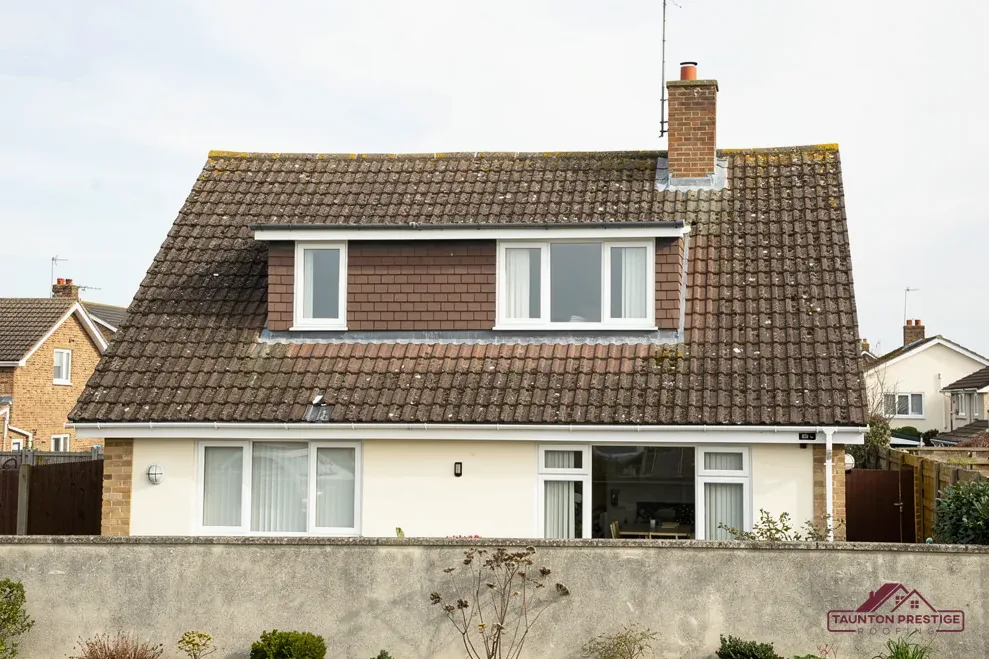
1 Church Walk is Grade II, listed in January 1987, and so is 1 to 7 St Mary's Court.
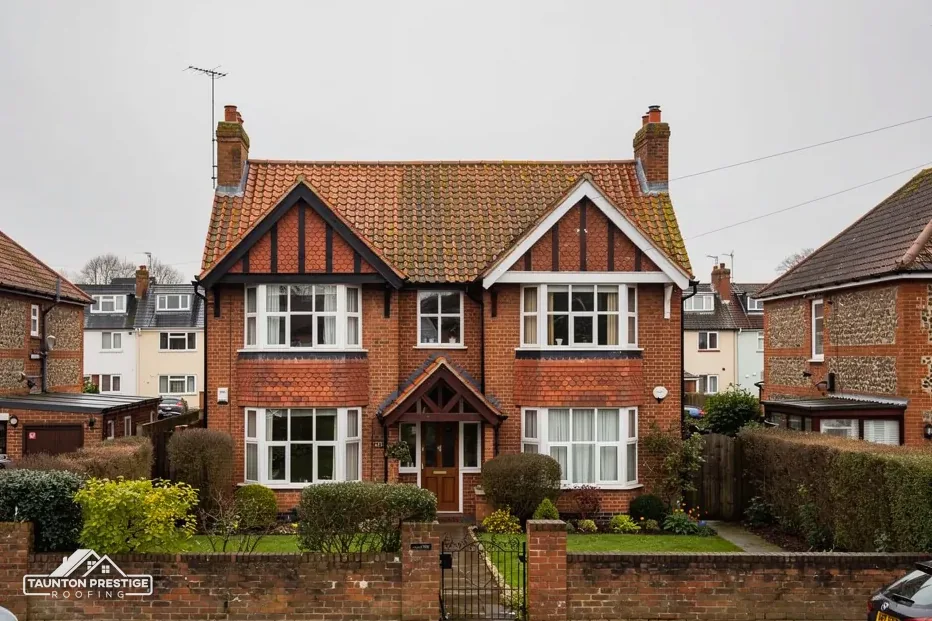
In 1992 the county history dated houses in the centre to the 18th and 19th centuries, with 20th-century building beyond. Quarrying of Morte slates at King's Cliff had begun by the 14th century (British History Online, county history, volume 6).
Street map of North Petherton with Rhode, North Newton, Huntworth, Thurloxton marked around it, and Taunton.
Rhode lies to the north-west and Huntworth to the north-east, North Newton and St Michael Church to the south-east, Thurloxton to the south-west and Goathurst to the west.
About 7 miles north-east of Taunton, Somerset Council (unitary).
Roof checks on the Bridgwater road
Four checks for a town house, a cottage by the church or a newer home, and how each result steers the job and its cost.
The county history suggests that North Petherton was probably the main settlement in the area in 1066, as the site of a minster church, and that the village developed around the church on sloping ground above a stream. The present church of St Mary has been listed Grade I since 29 March 1963. The tower is lias with Ham stone dressings, dated to the first decade of the 16th century, and its battlements are an addition of 1704. A roof close to a tower like that shares its weather, and its rules. Stone, lead and old pointing all take a beating from rain driven off the slopes, so the joints are what we examine first, with the lead, the coping stones and the gutters behind the parapet.
It does. Anglican worship continues at St Mary's. Because that denomination is exempt from listed building control while a church is in use, the work is authorised by faculty, not by the council. The parish arranges it, and a roofer builds to the specification that comes out of it. Houses are different. A listed house here needs listed building consent from Somerset Council before work that changes its special character, and the National Heritage List shows 24 entries within 900 metres of the town centre.
North Petherton has a conservation area, and only Somerset Council's planners can confirm whether your address falls inside it. Ask before changing a covering, adding a roof window or building a dormer, and keep the council's answer on file. Our guide to conservation areas around Taunton lists what to put to the council.
Every slope is photographed at the survey before anything is priced, so that any application begins with a proper record. If the church council or a neighbour needs a copy, we supply it.
Look for
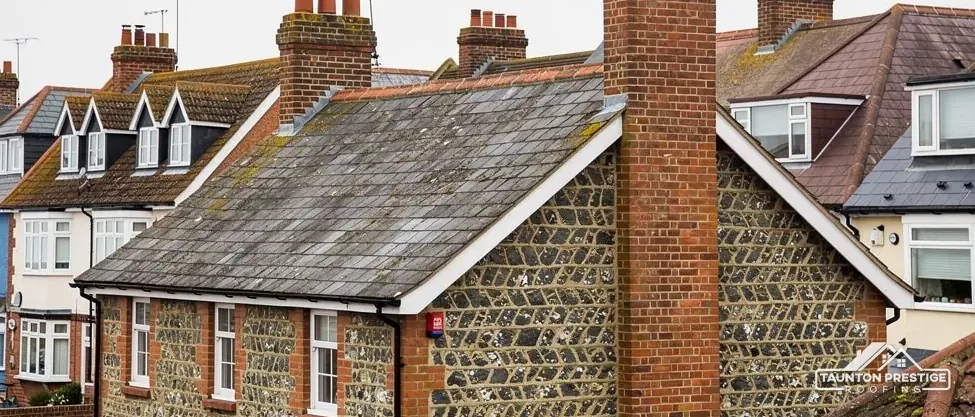
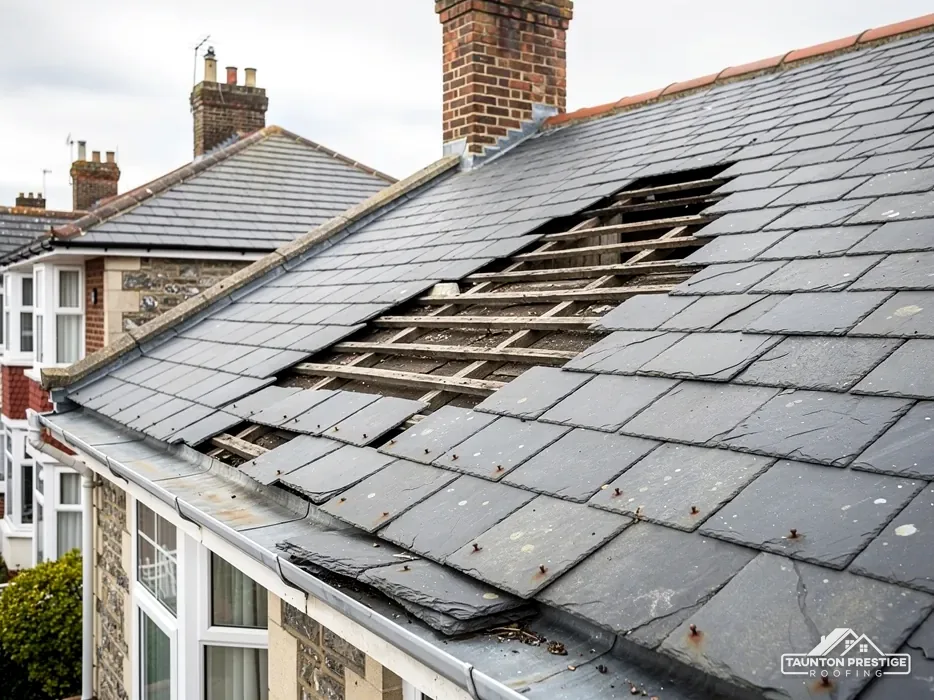
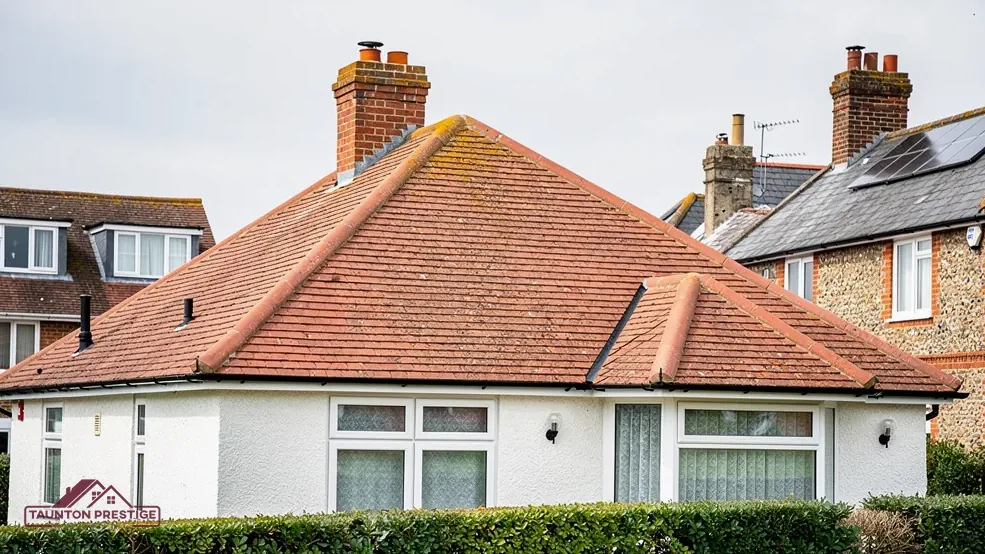
Quarrying of the Morte slates at King's Cliff had begun by the 14th century, when a Langport slater worked there, and the quarry was in regular use in the 18th and 19th centuries. That is a point of local pride, yet a quarry says nothing about what is on your own roof. Some North Petherton houses carry slate, others clay or concrete tile, and the covering can only be read from the roof itself.
What decides the price
CORC says natural slate, kept in good order, can see out a century or more. Age alone seldom decides the matter. The nails or hooks that hold each slate fail long before the slate does, and a roof can go on shedding pieces for years after it was last looked at. Cupa sets natural slate at a 20 degree minimum pitch and warns against hook fixings on slopes under 25 degrees, so natural slate does not suit a slope below 20 degrees.
A scatter of slipped slates on an otherwise tight slope is a repair job. A slope on which slates slide out week after week has failed at the fixings, and stripping it and laying it again on sound battens, the timber strips across the rafters, is the cheaper path over a few years. Our slate roofing page explains the decision, and our roof replacement page covers a full re-roof.
The survey photographs show which of the two your roof needs, slope by slope. If the answer is a re-lay, we explain what that involves, how long the roof is open and what happens to the old slates.
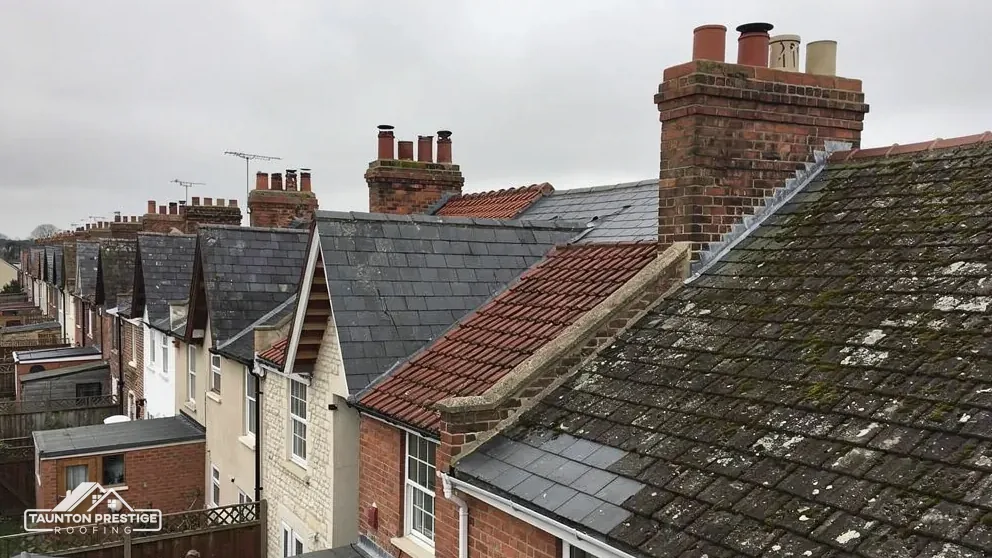
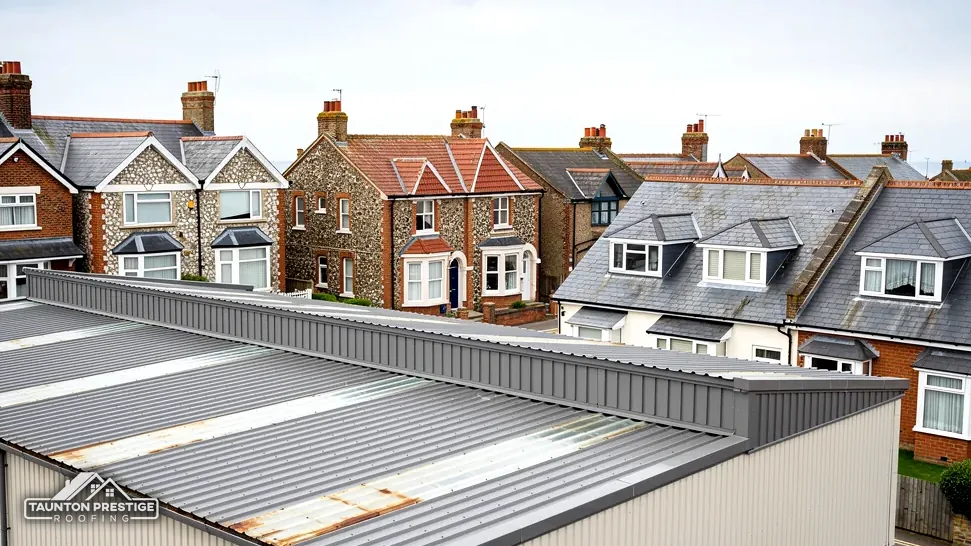
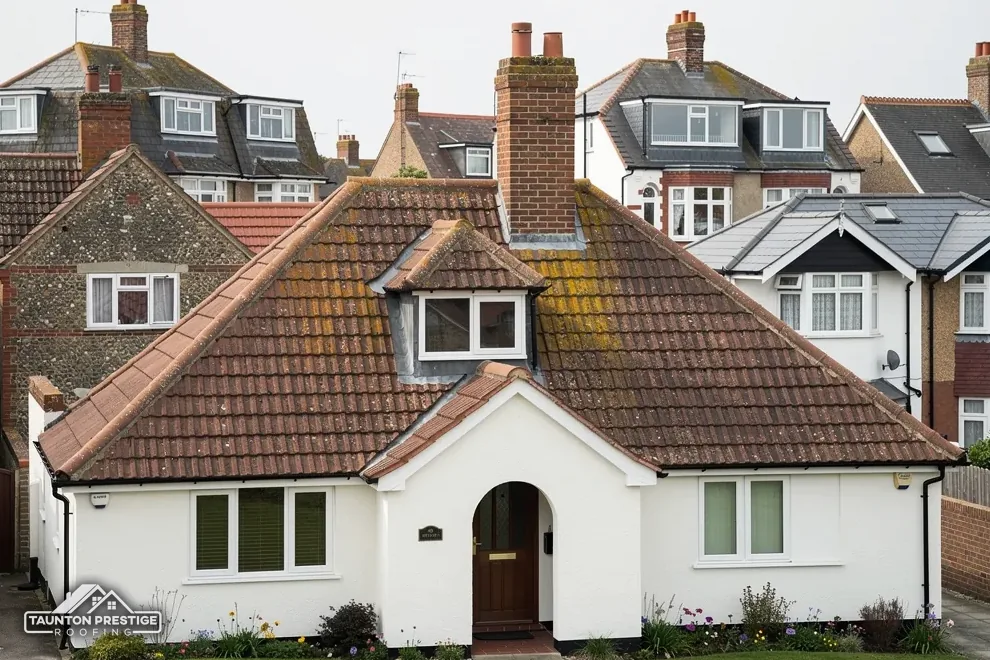
In 1992 the county history noted that houses in the town centre appeared to date from the 18th and 19th centuries, and that houses had been built in the 20th century to the north, south and east. A town that has grown in layers has roofs of different ages, and each age brings its own questions. We work from the roof itself and assume nothing from the street name.
Water enters at one point and shows itself at another, so we trace it before we price it.
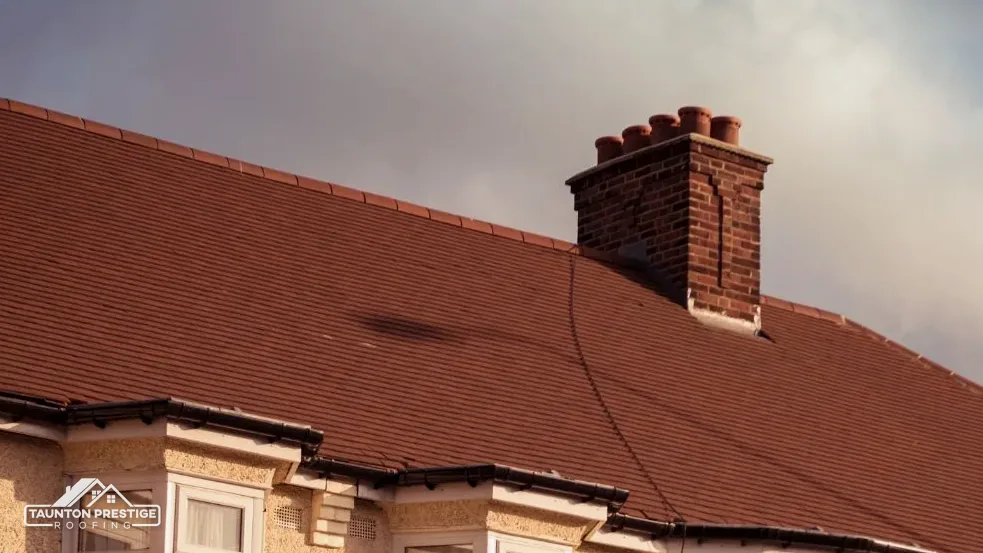
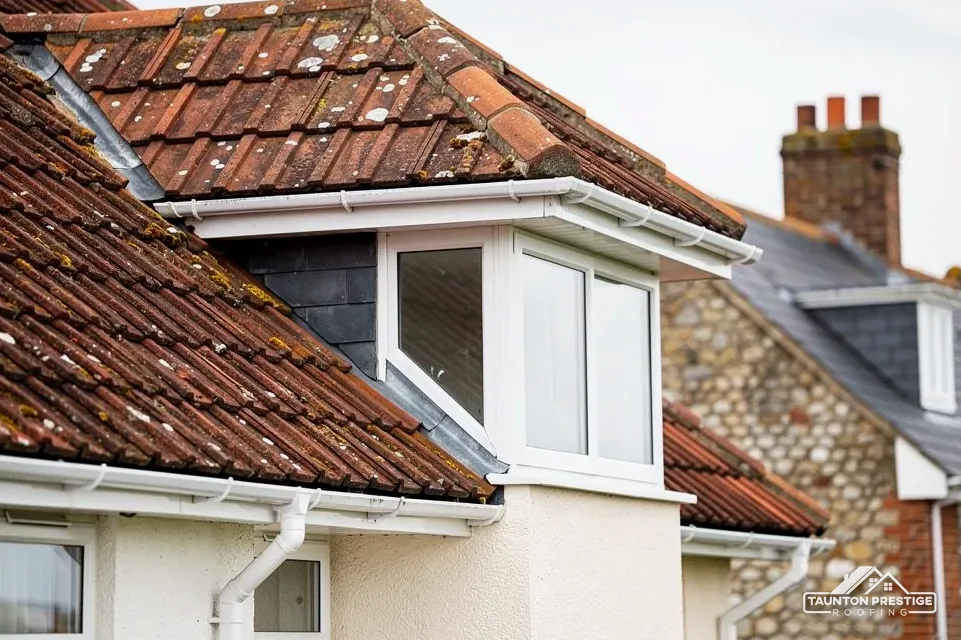
Mortar goes first. Old chimney stacks, wall-top pointing and bedded ridges lose their mortar, and water follows it in. The timbers underneath may be fine, since dry timber lasts, so the job is to find the point where water entered and stop it. Flashing, the lead strip sealing a stack to the slope, is the first thing we lift on an older house, followed by the flaunching, which is the cement fillet bedding the chimney pots at the top.
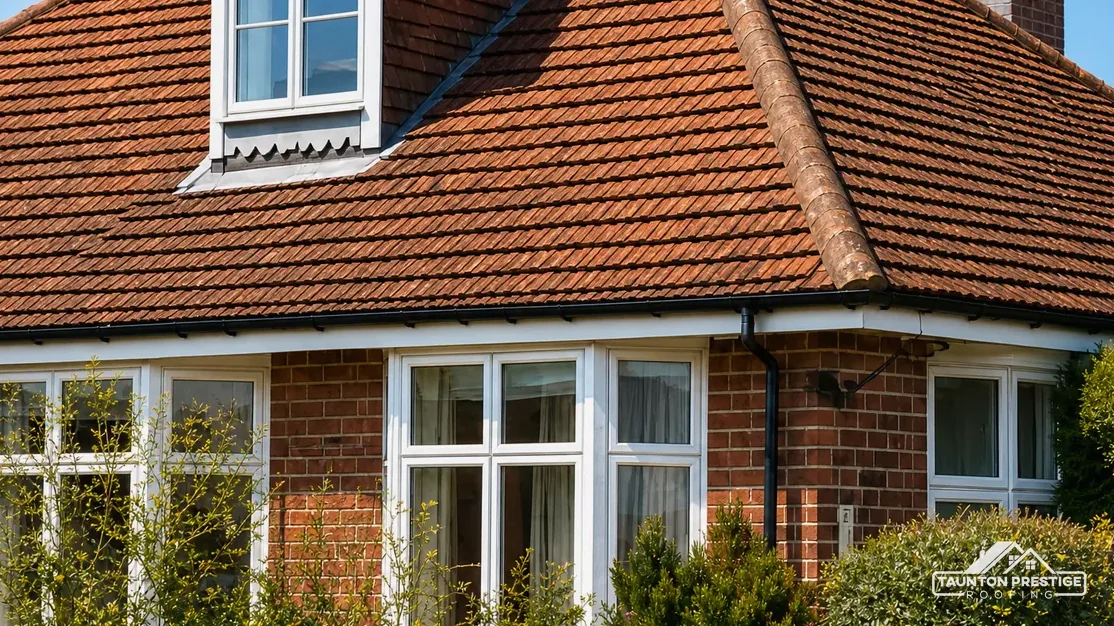
If the verge or ridge on a newer roof is dry-fixed, metal clips and screws hold the tiles where mortar once did. BS 8612 is what dry-fixed verge, hip and ridge kits are tested against, and Marley points out that following BS 5534 is not a legal requirement. A clip that has worked loose, or a ridge end cap that has gone, can be put right without touching the main slope, which keeps a small repair small. Our dry ridge and verge page explains the system in more detail.
Wherever your house sits in that run of centuries, the survey records the age of the covering, the state of the joints and the fixings, then tells you which work can wait and which cannot. That ordering often lets a household spread the cost over more than one season, with the urgent repairs first and the rest planned.
The Environment Agency's data shows Flood Zone 3 within about 250 metres of the town point, which is unsurprising for a place between the Parrett and the lower Quantock slopes on the Bridgwater to Taunton road. The zone describes the land. For one specific address, GOV.UK's long-term flood risk check gives the answer. A roof's part is simple: shed rain fast to gutters and downpipes that can take it.
What decides the price
The town belonged to the former Sedgemoor district, and Somerset Council now looks after its roads. Under section 169 of the Highways Act 1980, scaffold on the highway is licensed. Somerset Council issues licences to accredited firms, and the appointed contractor sends in the application. It charges £124.60 for each 28-day period (April 2026) and wants 10 working days' notice, so a terrace job needs planning ahead. A job on a house with a drive or garden to the front may avoid the question altogether. Poles on your own land need no such licence, and a front garden or a drive often gives enough room.
Somerset Building Control, whose office is at Bridgwater House, King Square, Bridgwater, and whose number is 0300 303 7790, covers the former Sedgemoor district. The Planning Portal reckons that a job touching less than 25 per cent of the building envelope and less than 50 per cent of the roof normally sits outside the process, whereas a covering 15 per cent or more heavier brings approval into play.
You get one written total once the survey is done, along with photographs of your roof. Name the North Petherton street, say what looks wrong, and a survey will be booked.
Walked the roof?
When you have read the checks, we walk the roof and show you the photos.
Listed Grade I and still used for Anglican services, St Mary's goes through the faculty system, arranged by the parish. Listed building consent from Somerset Council covers listed houses, closed churches and non-exempt chapels. The roofer works to the specification the faculty approves, and no covering or lead changes without it.
One slipped slate can be refixed or replaced with a matching piece. If several are slipping, the nails or hooks are failing across the slope, and repeated patching costs more than re-laying it. The survey photographs show how widespread the problem is, so the decision rests on what is on the roof.
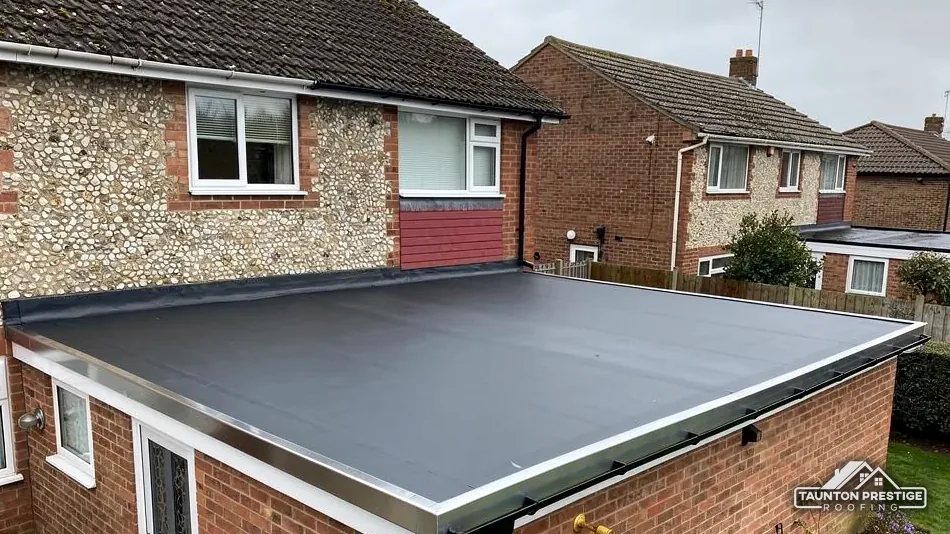
Sometimes. If the boards are dry and firm, a new covering can go over them. BS 6229:2025 sets a minimum finished fall of 1:80, so a deck that ponds may need its slope corrected first. Soft or stained boards come out. We press the deck at the survey before suggesting a route.
The zone maps the land for planning purposes, and it does not govern what covering a roof can have. Report storm damage to your insurer before any lasting repair; a temporary fix is fine, and dated photographs and receipts should be kept. Complaints about how a claim is handled go to the Financial Ombudsman, free of charge.
Send the address with a picture of the sorriest-looking slope, and a survey follows.