The hours after a storm matter for two reasons. Water is still getting in, and the evidence of what happened is still fresh. Get the order wrong and you can lose either the dry ceiling or the insurance claim. Get it right and the roof can be made safe, the claim started and the permanent repair planned without panic.
This post sets out that order for a house in Taunton or the villages around it. It covers who to ring and in what order, how to photograph damage so it can be relied on, what a temporary repair actually is, and what Somerset Building Control does when roof material becomes a danger to the public. It also looks at the wording insurers use for storms, and at the local things worth knowing, from the low-lying Levels to listed homes where the usual repair needs a second thought. Nothing here is a promise about how fast anyone can attend. Wind, road conditions and the queue of damaged roofs after a big storm decide that, and a roofer who quotes you a time before seeing the weather is guessing.
People first, then the insurer
Before you think about the roof, check that everyone in the house is safe. Keep them out of any room where the ceiling is bowing or water is near wiring, and stay away from windows and walls that sit under a chimney, a gable or a hanging section of roof. If anything is falling, leave the building and keep the pavement clear. Switch off the supply at the consumer unit if water is near lights or sockets, and keep it off until an electrician has looked over the wiring.
Who should you ring first?
If there is a risk to life, ring 999. Otherwise, ring your insurer. Insurers generally run a helpline for urgent claims, and the number sits in your policy pack, the insurer's app or your latest renewal letter. Ring first, before booking anything past the emergency make-safe, because the policy may set out what the insurer needs and which contractors it works with.
What does the insurer need to hear?
The date and time, the weather at the time, what you can see, and what you have done to limit the damage. Ask for a claim reference, note who dealt with you, and find out whether the insurer wants to inspect before permanent work starts. Keep it short and the notes factual. If the policy has an excess, ask what it is now, because that number shapes how you weigh a small repair against a claim.
Should you ring a roofer too?
Yes, once the insurer has been told. A roofer can make the roof safe and explain what has happened. What we can offer is photos of the roof and a written price once it has been surveyed; the claim itself is a matter for you and the insurer. Our emergency roof repairs page describes how a make-safe visit runs.
Photographs that hold up later
The Institution of Structural Engineers, IStructE, advises that photographs are vital to an insurance claim, because they are the visual evidence of the damage. It is advice worth following to the letter. Insurers may send a loss adjuster, but the first account of the damage is yours, and photos are what it rests on.
What should the set of photos include?
Aim for a sequence that runs from wide to close. Open with the front of the house taken from the road, so there is no doubt which roof is meant. Follow with each damaged slope from the garden, then the wet rooms, then tight shots of the damage. Include fallen tiles, broken fencing, a tree that has come down, and any belongings that have been wet. Where you can, photograph a measuring tape or a coin beside small damage, so the size is clear.
How do you record the timing?
Your phone stamps each image with a date and time, but a note helps. Write down when the storm hit, when you first saw the leak and what you did next. Receipts for temporary repairs, towels, a dehumidifier or a night in a hotel go in the same folder, and the insurer may want them.
Why does it matter before a roofer touches anything?
Once tiles are cleared and the roof is covered, the damage cannot be seen again. A roofer who understands claims will photograph the damage before moving anything, and will give you copies. If an insurer wants to see the roof first, say so at the start. Never throw away broken pieces until the insurer has said that is fine.
Taking them never justifies climbing a ladder. A zoomed phone from the garden is enough to show a slipped ridge or missing slates.
What a temporary make-safe involves
A make-safe is the work needed to stop further damage until a permanent repair can be done. It is not a repair, and it should not be described as one on your claim.
What can a roofer do that you cannot?
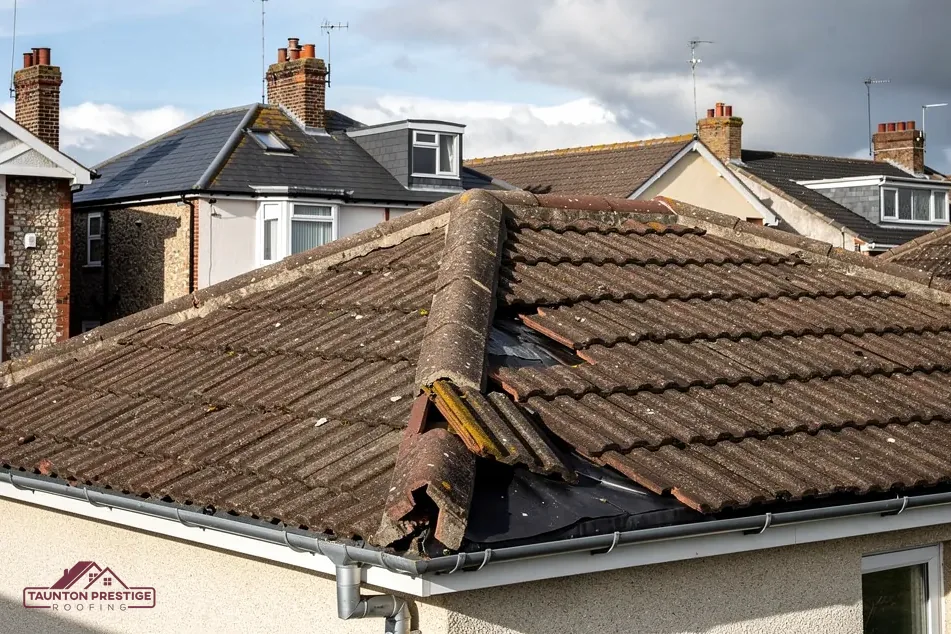
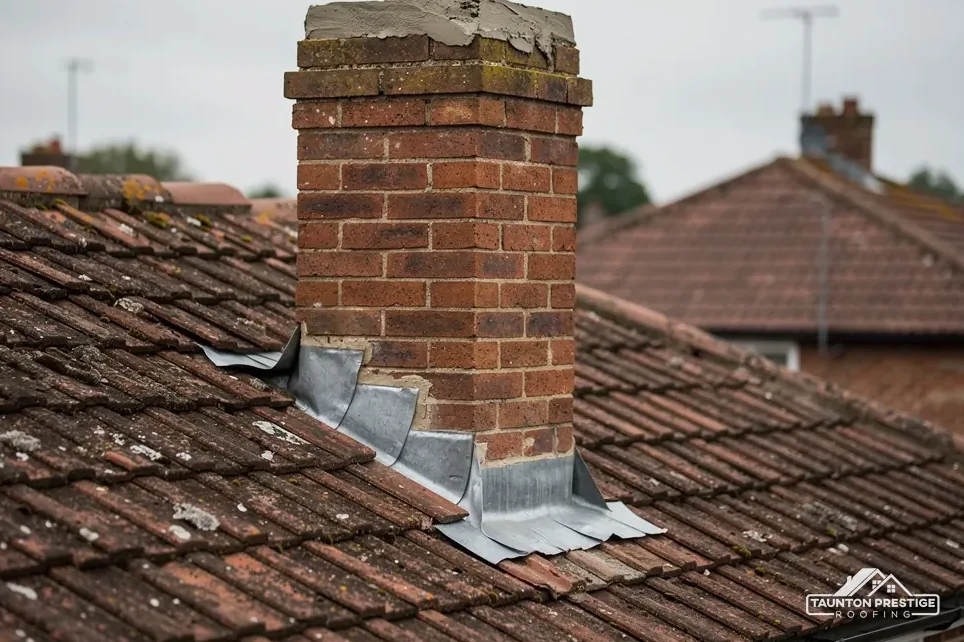
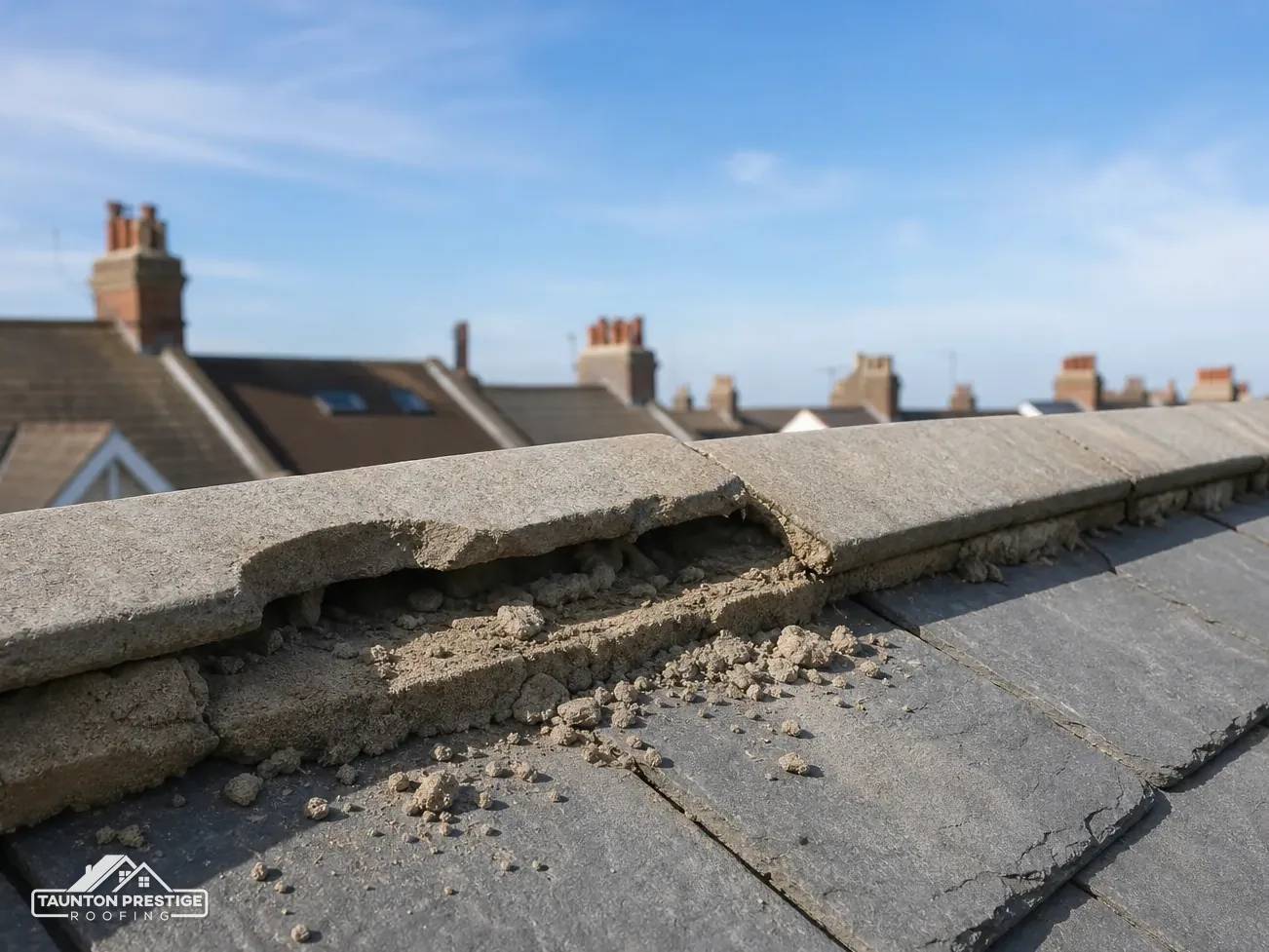
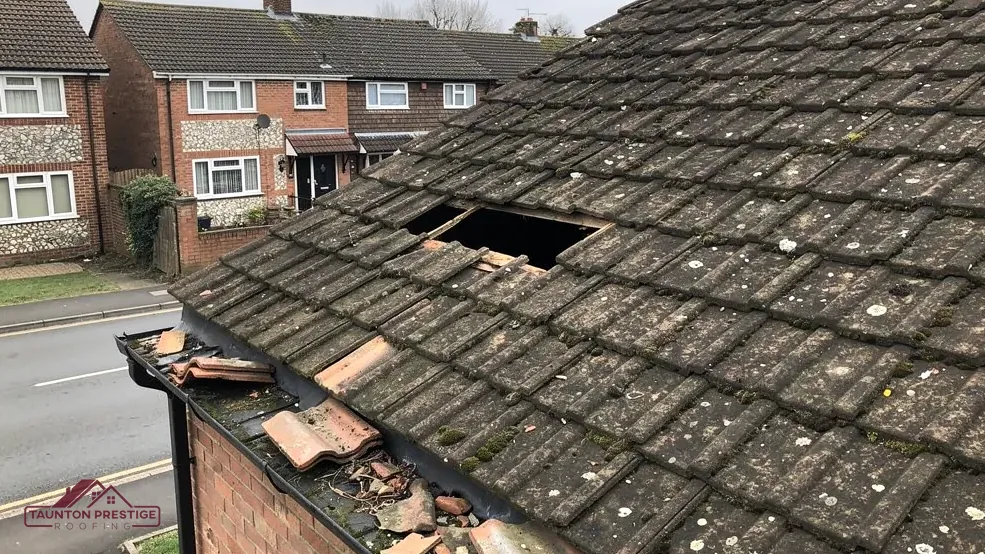
A roofer can work safely at height, with ladders, scaffold, or roof access equipment. Make-safe work can mean covering a damaged area with heavy-duty sheeting or boards, securing loose ridge tiles, removing loose material that could fall, fixing a gutter that has dropped, and propping or capping a damaged chimney stack. Sheeting must be fixed to something sound, since a flapping sheet in the wind can cause more damage than it prevents. For a larger hole, boarding fixed to the rafters may be the better temporary answer, and a roofer will say which suits the roof in front of them.
Why does the weather matter?
On a wet or windy roof the safest answer can be to wait. A roofer who tells you that is giving you good advice. In that time, keep the water contained inside and keep photographing.
What does it cost?
The MyJobQuote guide (October 2026) lists emergency call-outs at £150 to £300 and storm repairs at £1,200 or more, as typical UK figures. The same guide gave a front-elevation scaffold at £550 to £750 for a week-long hire, which can be the largest single item when a roof is high or steep. Our written quote follows the survey as one total. Whoever you hire, check that the figure covers VAT and scaffold.
What happens afterwards?
A permanent repair starts with a survey of the whole roof, not just the damaged corner. Wind often shakes loose tiles around the visible damage, and the survey pictures show what has shifted. Keep the insurer in the loop throughout.
When loose roofing becomes a public danger
Sometimes the problem is not your ceiling but the street. A chimney that is leaning, a ridge that is shifting or tiles hanging over a pavement can hurt someone, and the responsibility lies with the owner of the building.
What does Somerset Building Control do?
Somerset Building Control covers the former district council areas, including Taunton and West Somerset, and deals with dangerous structures. On its dangerous structures page, the examples include loose or falling tiles and unstable chimneys, and it treats high-risk buildings as the urgent cases. The contact number is 0300 303 7790.
Who pays?
On the same page, the owner is the one who pays to have a dangerous building made safe, and a neighbour's damaged roof is their responsibility in the same way. It is one more reason to tell your insurer early, as the policy may cover the make-safe.
What should you do while you wait?
Cordon off the area if you can do so without going near the danger, for instance by placing a chair or bin across the path, and ask neighbours to keep clear. If the house is a terrace or semi, tell the people next door at once, because a shared roof line and a shared chimney stack mean their safety is tied to yours. Do not stand under the damaged section. Then ring a roofer to deal with the cause.
If a tree has come down on the roof, its weight is the worry, and the structure below may be unstable even where it looks sound. Keep everyone out of the rooms beneath until the roof has been assessed.
How insurers read the word storm
Home insurance may pay for storm damage and may not pay for wear and tear. Where the line falls settles a lot of claims, so it helps to know how the wording is read.
Does the policy define a storm?
The Financial Ombudsman Service, which settles complaints about insurers, describes a storm as wind of real violence, typically accompanied by rain, hail or snow. The roof that fails on a still, dry day may be put down to wear and tear, so your photos and the date of the weather become evidence.
What if the insurer says no?
Ask for the reasons in writing. If you disagree, you can complain to the insurer. The Ombudsman's published rule is that if eight weeks pass without a final response from the insurer, you may refer the complaint to the Ombudsman, and once a final response arrives you have six months. There is no charge to use the service. Our page about an insurer rejecting a roof claim goes through the steps.
What do the numbers say?
Which? reported that only 32% of storm-related claims made in 2024 resulted in a payout. That is a reason to keep your paperwork tidy, and no cause for despair. Acceptance of a claim rests with the insurer.
If the roof was already worn, the insurer may pay for the storm damage and not for the repair of the ageing roof beside it. A roofer's written report that explains which parts are new damage and which are old wear is useful evidence, and so is any earlier survey, invoice or photo that shows the roof's condition before the storm. Dig those out and add them to the folder. A receipt for the last gutter clear or ridge repair is proof that the roof was maintained.
Somerset points: Levels, listed homes and consents
Somerset adds a few local points to the national advice. Some matter for flooding, some for older houses, and some for where the planning authority is.
Is the water from the roof or from the ground?
GOV.UK, for the Environment Agency, says 18% of the county sits under average tide level, and records that major incidents were declared in the county over flooding in 2023 and 2026. A storm that drops rain from above can coincide with water rising at ground level, and GOV.UK has a Check for flooding service for the current picture, and a separate tool covers long-term risk for a given postcode. This post is about the roof, and flood damage to the ground floor is a separate claim and a separate problem.
Does a listed home change the repair?
A make-safe is one thing, but a permanent repair to a listed house can need listed building consent too. Before changing the material or detail of the roof, ask Somerset Council's planning team; inside Exmoor National Park, Exmoor National Park Authority is the body to ask. Our page on emergency repairs to a listed building covers the question.
What about scaffold on the street?
A scaffold across the pavement needs a highway authority licence (Highways Act 1980 s169). Somerset Council deals only with accredited contractors and it is the appointed firm that submits the application; the fee is £124.60 for each 28-day period (April 2026).
For the first walk-round, the signs of storm damage make a handy checklist.
Storm-damaged roof: Somerset questions
Do I need the insurer's permission to cover a damaged roof?
Policies differ, so read yours and ring the helpline. The sensible order is to tell the insurer first, then make the property safe, and keep both photos and receipts. Bigger or permanent work is better held back until the insurer has replied or sent someone.
Can the council make me repair a dangerous chimney?
Somerset Building Control handles dangerous structures and counts unstable chimneys among them; the owner pays for the work that makes the building safe. Ring 0300 303 7790 if loose material endangers the public, and book a roofer for the cause. Photograph the hazard from a safe distance first, because the council and your insurer may both ask for the picture. Note which pavement or road it overhangs, so the report is precise.
Is a Somerset storm claim different from one elsewhere?
The rules are shared across England, but local points differ. Before permanent work, find out whether your home is listed or lies in a conservation area, and use the GOV.UK flooding service if the ground is wet. Policy wording and the Ombudsman's view of a storm apply wherever you live.
More on this subject: Emergency and general roof repairs in Taunton