A listed building is one the law protects for its special architectural or historic interest. That protection reaches the whole structure, roof included, so a tarpaulin and a few weights are one thing and stripping the slope is quite another. Nobody expects a leaking listed roof to stay open while the paperwork is sorted. Water in an old timber frame does lasting harm, and sensible temporary cover is normal practice.
The hard part is knowing where temporary ends and permanent begins. A sheet tied over a hole is clearly temporary. New battens, a different slate, a re-pointed stack or a changed ridge line are changes, and changes to a listed building usually need consent. This guide sets out what a make-safe on a listed roof should involve, who to ask before permanent work, how the consent route differs for churches and scheduled monuments, and what to record for your insurer. It sits under our emergency roof repairs work around Taunton and Somerset.
What make-safe means on a listed roof
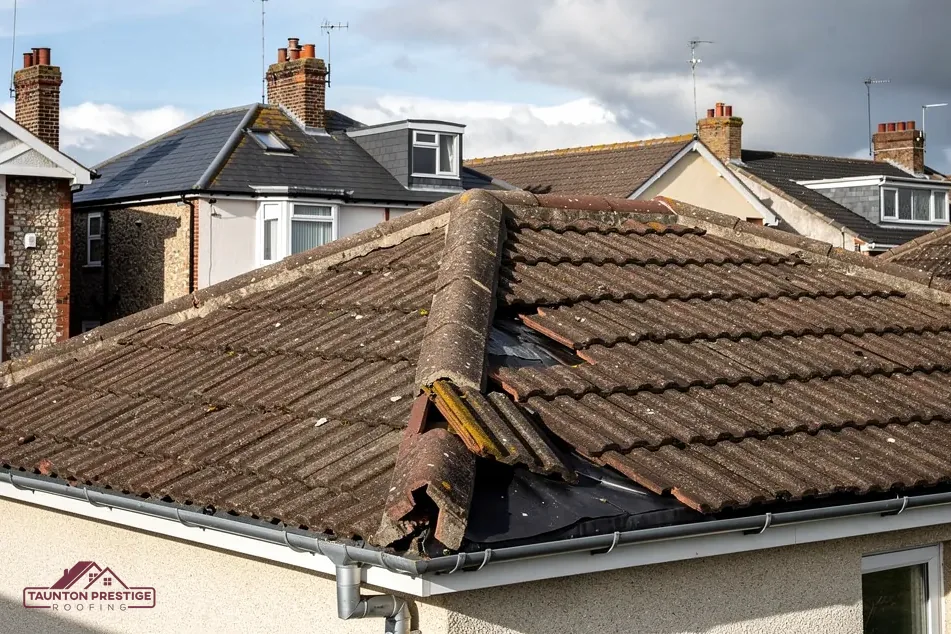
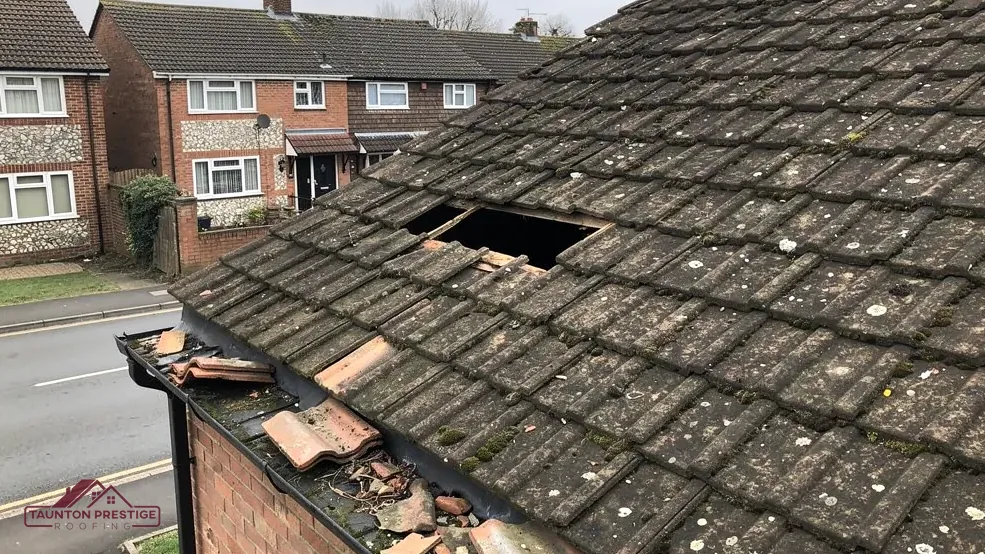
Make-safe means stopping further damage with the lightest touch that works. On a listed roof that usually means a covering held down in a way that leaves old fabric alone: weighted or strapped sheeting rather than screws driven into aged rafters, props or boards inside the loft to spread a load, and loose slates or tiles lifted down and stored, not thrown in a skip. Those slates are evidence of what the roof was made of, and a conservation officer will want them kept.
What does a good make-safe leave untouched?
It leaves the pattern of the roof, the ridge line, the chimney and the lead details exactly as they were. Nothing is cut out, swapped for a modern look-alike or fixed for good. The sheeting goes on so that it can come off in an afternoon without a mark. We photograph the damage before anything is covered, because the council and your insurer will both want to see it.
If a chimney is leaning or slates are sliding towards a pavement, risk to people comes first. Somerset Building Control names loose tiles and wobbling chimneys on its dangerous-structures page, and making such a building safe is the owner's expense. That is reason enough to act fast on public safety while you plan the longer repair. Cordoning off the ground below with a few stakes and tape costs nothing and protects passers-by while the sheeting goes on.
Our page on temporary roof repairs goes through the options for sheeting and boards on any roof, listed or not.
Does an emergency excuse work without consent?
This is where owners get caught out. Section 7 of the Planning (Listed Buildings and Conservation Areas) Act 1990 forbids works to demolish, alter or extend a listed building in a way that changes its character as a place of special interest, unless they are authorised. The test is whether character is affected, and nothing we have read offers a general defence because there was a leak, a storm or a rush. That is why a quick, quiet fix is the wrong instinct, even when the weather is bad and the ceiling is wet.
That is why we offer no assurance that an emergency makes permanent work lawful. Temporary cover that changes nothing is a different matter from rebuilding a gable, and the line between them is a judgement for the council, not for the roofer or the owner.
Who decides what counts as affecting character?
The local planning authority. For most of Taunton and Somerset that is Somerset Council. From 1 April 2023 one unitary body, Somerset Council, does the work the county and district councils once shared. Inside Exmoor National Park the planning authority, and the body that handles listed building consent, is Exmoor National Park Authority instead. If you are not sure which applies, the postcode checker on the council website will settle it.
The practical advice is short. Ring the conservation team before permanent work starts, describe what has happened, send your photographs and ask what they want to see. A call made within a day or two of the damage is far better received than a request made after a new roof has gone on, and the reply is worth having in writing.
Permitted development and listed buildings
Class B covers roof extensions such as dormers, and Class C takes in other roof alterations to a house, re-roofing included. Neither class carves out listed houses, so those permitted development rights stay in place on paper. Listed building consent is a separate permission, and it is still required for works that affect the building's character.
The effect is that a like-for-like change of covering on an ordinary house may need no planning application, while the same job on a listed house can still need listed building consent. The two systems run side by side, and clearing one does not clear the other.
Is a like-for-like repair always safe to start?
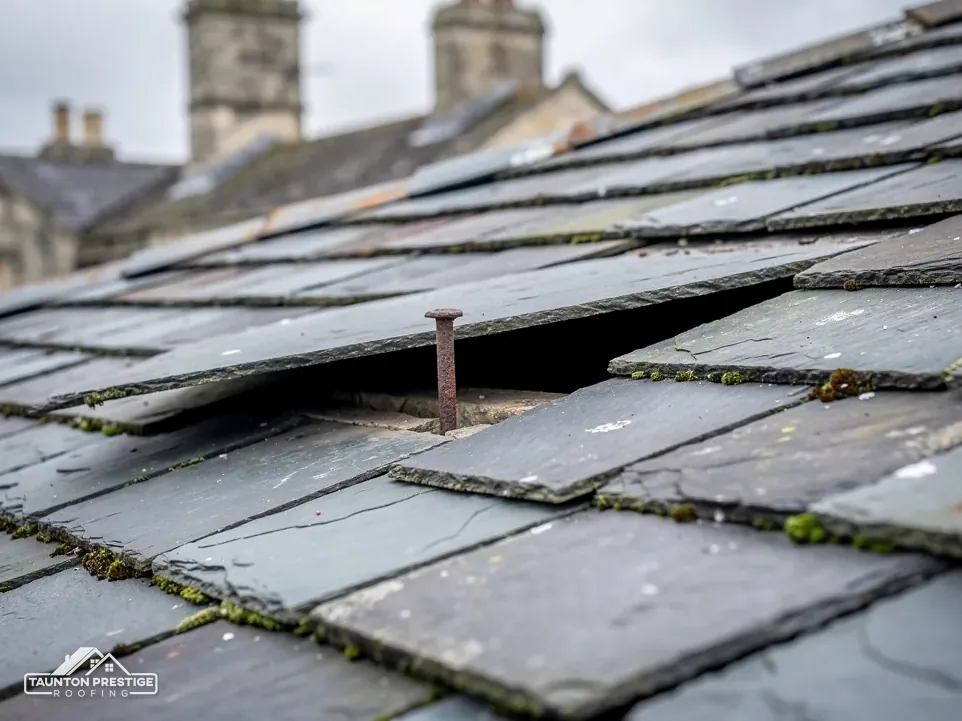
Not automatically. Putting a missing slate back in the same natural slate, the same size, fixed the same way, is the kind of repair a conservation officer usually welcomes. Swapping the slate for a concrete tile, or replacing lime pointing with cement mortar, is a change of material, and a change of material can affect character. Slate staying slate and clay staying clay is the principle we work to, and on a listed roof it carries real weight.
Our guide to dry ridge in conservation areas and on listed homes shows how one common repair, the ridge, raises these questions. Dry-fix systems are mechanical, so how they sit along the ridge line is something the conservation team will want to judge for themselves.
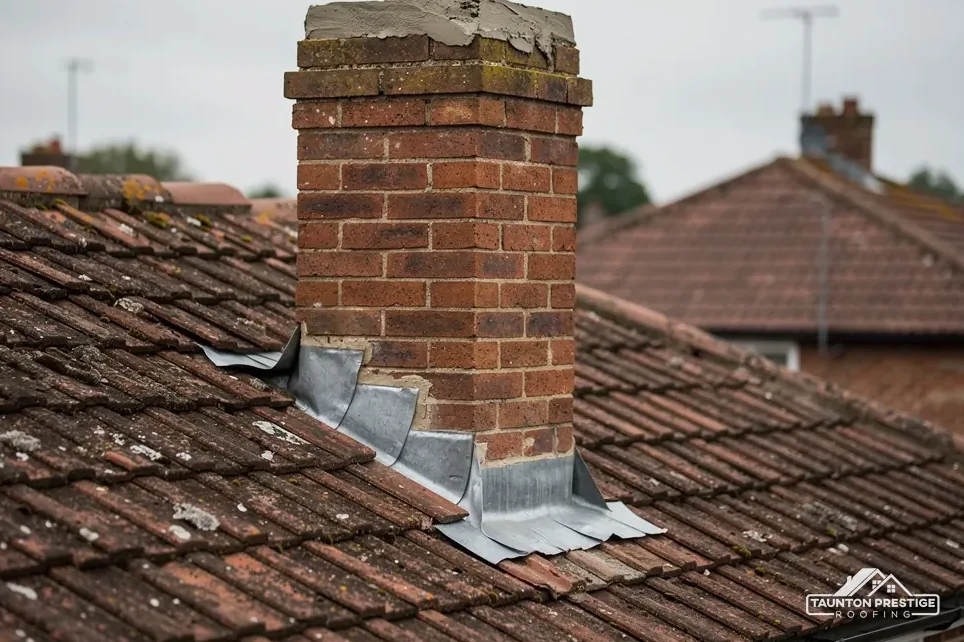
The same sorting applies to chimneys, lead flashings and rainwater goods on a listed house. Each can be a quick make-safe today and a consent question tomorrow, so we describe every item separately when we write up the survey for the council. It also helps to ask early who signed off the last repair, since an earlier consent may set the pattern for this one.
Churches, chapels and scheduled monuments
A different set of routes applies to church roofs, and choosing the wrong one wastes weeks. The ecclesiastical exemption puts some church buildings in use outside the normal listed building consent system. It does not reach every faith or every building.
- Church of England: the faculty system, for a church still in use.
- Roman Catholic, Methodist and United Reformed: each denomination's own approval route while the church is in use.
- Baptist: its own route only where a Schedule 1 trust corporation holds the building.
- Unitarian and Quaker buildings need listed building consent from the council, as do closed churches and those vested in the Churches Conservation Trust.
- A chapel converted into a house needs listed building consent if it is listed.
What about scheduled monuments?
A scheduled monument needs scheduled monument consent, a separate regime decided by the Secretary of State and not by the council. Section 2 of the Ancient Monuments and Archaeological Areas Act 1979 makes unauthorised works to a scheduled monument an offence, so the question is asked before any scaffold goes up.
The exemption also leaves planning permission for outside development in place. If you are a churchwarden or trustee with a leaking roof, the order of calls is your denomination's adviser first for consent, your insurer for the claim, and us in between making the building safe.
Each denomination sets its own internal rules, so ask the church officers about any one's internal rules. Your church's own advisers are the people to ask, and a make-safe photographed from the ground, the tower and the roof space gives them what they need to decide quickly.
Bats, birds and old roofs
Old roofs are often where wildlife has settled. Bats and their roosts are legally protected, and lifting a roof covering can disturb them. The offences turn on intent and recklessness in some cases and not in others, so the safe habit is simply to look before disturbing anything. Nesting birds are protected too: damaging an occupied nest on purpose is an offence.
On a listed roof the chance of finding either is real, because the structure is old, the gaps are many and the slates are often hung over deep voids. Lime-pointed gables, lead-lined gutters and timber boarding under the eaves all make good cover.
Does this stop an emergency make-safe?
It means we look first. Sheeting laid over the outside of a slope generally leaves the space underneath undisturbed, whereas lifting slates to fix from beneath may expose a roost. If we see droppings, staining or any sign of animals under the covering, we stop and tell you, because the next step is advice from a qualified ecologist, not a quick repair.
The same caution applies to permanent work. Raising it with the conservation officer at the outset, including a bat survey where one is asked for, avoids an expensive stop in the middle of a job. A survey carried out in the wrong season can also delay a start, so ask what the ecologist advises and how long it takes.
For the owner this is mostly a matter of timing. Make-safe goes ahead on the outside of the roof, and anything that opens up the roof space waits for the answer.
Records, insurance and the longer repair
The paperwork you build in the first two days saves most of the argument later. Take photographs of the damage from the ground, from the loft and of the water inside. Keep every receipt. Write down the date and time you noticed, and what you did next. For insurance the order is simple: ring the insurer first, then protect the building with a temporary repair, and keep what proves it. Structural engineers' own storm guidance stresses that dated pictures are the evidence a claim leans on. Our page on home insurance and a leaking roof goes further into the claim.
What goes in the write-up for the council?
A short, plain description helps the conservation team decide quickly: the roof covering and where it is damaged, what has been done to make it safe, what you propose for the permanent repair and which materials will be used. Photographs of the original covering, the fixings and any lead details belong with it. We are happy to set that out after the survey, with the slate type, the extent of the damage and the method proposed.
Does the 14-day cancellation right apply?
The 14-day right to cancel applies where a contract is signed at home after a survey. Regulation 28(1)(e) of the 2013 Regulations carves out a visit you request yourself to carry out urgent repairs, and a make-safe call-out sits on that side of the line. A permanent re-roof agreed later is a separate contract. If you want to check where you stand, the Citizens Advice consumer helpline is 0808 223 1133.
For the longer repair the sequence is survey, photographs, a conversation with the conservation team, listed building consent where needed, and a quote that is a single written total for the agreed work.
Listed roof questions
Can I put a tarpaulin on a listed roof without permission?
A sheet fixed so that it takes nothing from the historic fabric and can come off without a mark is protection, not alteration. Do not drive screws into old timbers or lift original slates away. Photograph everything first and tell the conservation team the same week.
Do I need consent to replace slates blown off a listed house?
Possibly. Works that affect the building's character need listed building consent, though a replacement slate of the same size and fixing may be judged differently from a change of material. The council's conservation team can say, so ask with photographs in hand before any work begins, and make sure their reply is in writing.
Which council deals with a listed roof near Exmoor?
Inside Exmoor National Park, Exmoor National Park Authority acts as planning authority and handles listed building control. Outside the Park, Somerset Council does for Somerset addresses. Check the postcode with the council before you apply, because an application sent to the wrong body costs time.
More on this subject: Emergency and general roof repairs in Taunton