People usually ask how to spot a dodgy roofer after something has gone wrong, when a ridge has been left half finished or a deposit has gone and nobody answers the phone. The better time to ask is before a pound changes hands. The signs are rarely dramatic. They are gaps: a quote with nothing written down, a roof that was never shown to you, a reason why you must decide today.
This guide works through those gaps one at a time. It covers what a written scope should say, why a demand for cash only is a problem for you and not for the roofer, how pressure to sign on the day works, what proof of a fault looks like, the answer a roofer should give on building control when a whole roof is being replaced, and what you are entitled to know about cancelling. It also gives the Citizens Advice advice on comparing quotes. Nothing here depends on logos or badges. It is a list of questions you can put to anyone, including us, and our homepage shows how we go about a survey.
What the first call tells you
The first call or visit tells you more than the quote does. A roofer who intends to do the job properly wants to see the roof before naming a figure, because a roof cannot be priced from a postcode. A roofer who intends to rush you will often name a price from the doorstep or the phone, then ask for a start date.
How can you tell a dodgy roofer from the first call?
Listen for what is missing. There is no question about the age of the roof, no wish to see the loft, no mention of a survey, and no name or landline you could call back. A genuine caller expects you to check.
Did they show you the fault?
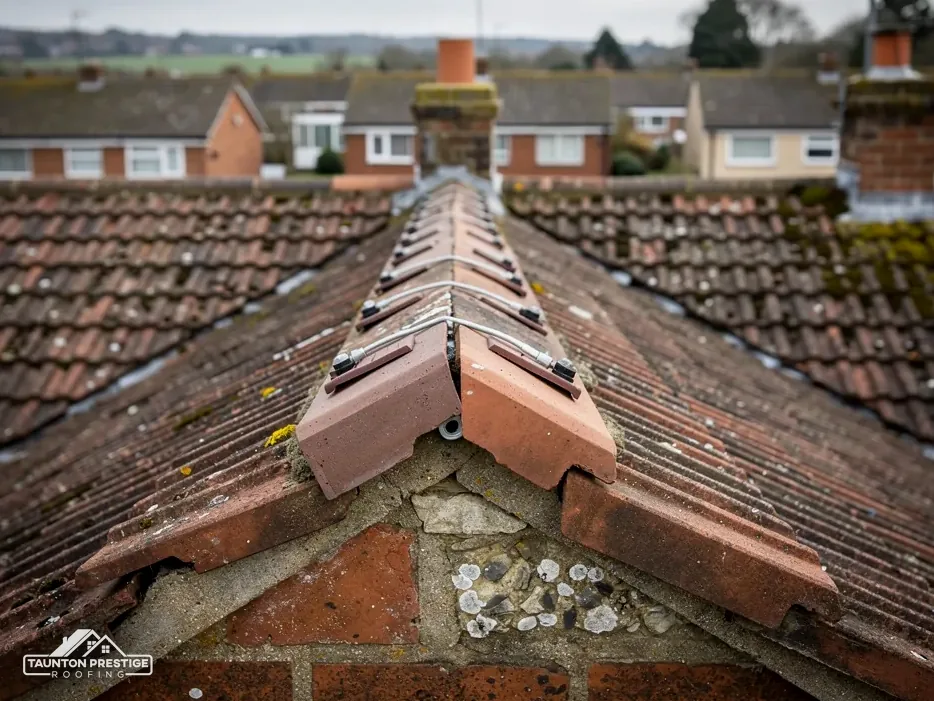
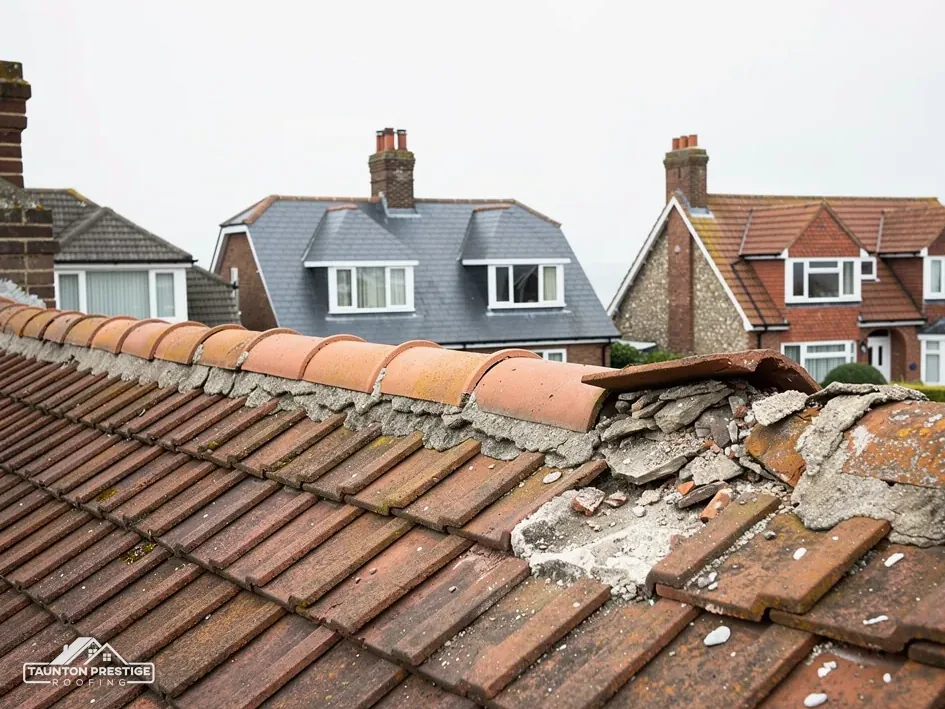
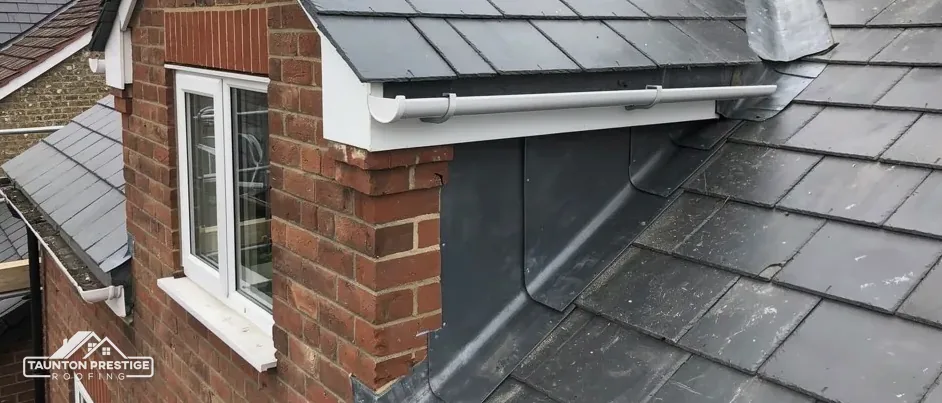
The most useful single test is whether you have seen the problem with your own eyes. A slipped slate, a cracked ridge tile, a failed flashing and a blocked valley can all be photographed from a ladder or a drone. If someone says your roof is dangerous and cannot show a picture of the fault, treat that as a red light. Ask for photos of the exact spot, taken that day, with the location explained. A roofer who cannot give you one has not looked properly or has nothing to show.
How to tell a dodgy roofer from a busy one?
Busy tradespeople run late, rearrange days and sometimes cannot start for weeks. That is not the warning sign. The warning sign is vagueness about what is being done, who is doing it and when the money is due. A busy roofer still writes it down.
- You are given a price but no description of the work.
- The roofer will not put a name, an address or a phone number on paper.
- The answer to "when can you start?" is "today, while we are in the area".
- You are told the roof is urgent but offered no pictures.
One of these might be an awkward person. Two or three together are a pattern.
A written scope and one total price
A quote is worth having only if it says what will be done. Scope is the word for that list: which slope, which covering, what happens to the old materials, what is replaced and what is left alone. A quote that says only "re-roof, one price" gives you a figure with nothing behind it. When a dispute starts, there is nothing to point at.
What should a written quote include?
It should name the address and the work in plain words, show a single total price, say whether VAT and scaffolding are inside that price, give a start window and say who is responsible for removing waste. On a job we price, the survey comes first and the single written total follows it. Check whether VAT is in any quote you receive, since the standard rate of 20 per cent is a large amount on a roofing job and some quotes leave it out until the end.
Should you compare several quotes?
Citizens Advice advises getting written quotes from at least 3 traders before choosing one. The point is not to find the lowest figure. It is to see whether the three quotes describe the same job. If two of them mention a new underlay and one does not, the cheap one may be quoting for less. Compare what each quote says will be done, not just the final figure. Our roofing quote checklist lists the questions to put to each firm.
Cash-only demands and pressure to sign today
Neither of these proves bad intent alone. Both are good reasons to slow down.
Why does cash-only matter to you?
A bank transfer or a card leaves a record. Cash leaves only whatever the roofer chooses to give you. If the roof leaks again, if the work needs to be shown to an insurer, or if a buyer's solicitor asks in future what was done and when, a receipt and a written scope are the evidence. A roofer who will take only cash and offers neither has left you with nothing to show. Ask for an invoice with the address, the work and the date, whatever the payment method.
How do you handle a deposit?
Deposits for materials are common, but the amount and the reason should be written down, and a large deposit before any work or delivery is a reason to ask why. Our pay a roofer upfront answer goes through the stages. Paying in full before the work starts removes your leverage if the finish is poor.
What about pressure to sign today?
A good price on the day only is a sales technique. A genuine price survives a night's sleep. Messages such as "the materials are on the van", "the price goes up tomorrow" or "we can start this afternoon" are designed to stop you comparing a second quote. A roof that has leaked for months will survive until you have read the scope twice. If it will not, a temporary make-safe is the right answer, and a full replacement is not.
A roofer worth hiring is comfortable with you saying you need to think it over.
Building control on a re-roof: the vague answer
Re-roofing is one of the few jobs where a roofer should be able to answer a regulation question in a sentence. Building Regulations apply to some re-roofs and not others, and the roofer is the person most likely to know which.
When is building control involved?
The Planning Portal sets a two-part test for skipping building control: under 25 per cent of the building envelope touched, and under 50 per cent of the roof. Approval comes into it when the new covering makes the roof 15 per cent or more heavier, or would perform quite differently if there were a fire. Under Part L, putting a fresh membrane over a flat roof counts as renovation as well. A whole-roof replacement on a house often crosses these lines, so ask the plain question: who is notifying building control, and will I receive a completion certificate?
What does a vague answer sound like?
"You don't need that for a roof" or "we sort all that" are the usual forms. A reasonable answer names who applies, which route they use and what you will receive at the end. Somerset Building Control covers the former district councils, Taunton's among them, and answers on 0300 303 7790. It says regularisation is possible for work done since 11 November 1985, so unapproved work can sometimes be put right later, though that route is slower than getting it right first time.
A building control body can be a local authority or a registered building control approver. Ask which one, and ask for the reference number.
Cancellation information and your rights
If you sign a contract at home after a survey, the Consumer Contracts Regulations 2013 treat it as an off-premises contract, which means any contract agreed away from the trader's own business address. That gives you a right to cancel without giving a reason.
How long do I have to cancel?
For services the cancellation period ends at the end of 14 days after the day on which the contract is entered into. The trader must tell you about the right before you are bound. If they do not, the period can stretch by up to 12 months beyond the date it would otherwise have closed. A roofer who hands you no cancellation notice, or hurries past the subject, has told you something about how they run their paperwork.
Can I cancel if work has already started?
Early starts need care. For an off-premises contract the consumer must have asked for work to begin inside the 14 days in a lasting written form, for example an email or a signed form. A repair you have specifically asked a trader to visit and carry out urgently is outside these rules, because regulation 28(1)(e) takes the rights away when the consumer has asked specifically for an urgent repair or maintenance call.
The Consumer Rights Act 2015 also says the work itself has to be done with reasonable care and skill, whatever the cancellation position. If a job goes wrong, the Citizens Advice consumer helpline on 0808 223 1133 gives advice to individuals, and our cancel a roofing contract answer covers the steps.
A short test before you pay
Pulling this together, six questions cover most of what goes wrong. Put them to every roofer, including us, and put them in writing where you can.
- Have I seen photos of the fault on my own roof?
- Is the scope written down, with one total price and a note on VAT and scaffolding?
- Is the payment method one that leaves a record, with an invoice at the end?
- Have I been left free to think it over?
- Has the roofer said who deals with building control and what I receive afterwards?
- Have I been told in writing about cancelling?
What if the answers are mixed?
A roofer may pass four and stumble on two, perhaps because the paperwork is thin rather than because anything is hidden. Ask for the missing items. A good roofer can supply them the same week, and the way they respond is itself useful information.
Where can I read about a suspicious inspection offer?
Some offers come as a free roof check that finds an immediate fault. Our guide to the roof inspection scam goes through how those visits work and what to ask for.
When your quotes are in front of you, hold each one up against the six questions and write down the gaps. That list is also the best thing to bring to our survey.
Checking a roofer before you commit
Is a roofer who asks for a deposit always a worry?
No. Deposits for materials are normal on larger jobs. The worry is a large deposit with no written scope, no reason given and no date for delivery or start. Ask what it pays for, get the amount and purpose written down, and avoid paying everything before work begins.
What can I do if I have already paid and the work is poor?
Write down what is wrong, keep photos, the quote and any receipts, and ask the roofer in writing to put it right. The Citizens Advice consumer helpline, 0808 223 1133, gives advice to individuals, and the Consumer Rights Act 2015 says services must use reasonable care and skill.
Do I need a quote in writing for a small repair?
It helps even then. A short written note of the address, the repair, the price and whether VAT is included takes a minute and settles later arguments. For urgent make-safe work you may have to accept less paperwork, but the invoice afterwards should still say what was done.
More on this subject: Roofers in Taunton