Dry ridge was meant to end the cracked mortar line. Fitted with a decent kit by a careful hand, it does. But sometimes the replacement goes wrong, and an owner is left with ridge tiles that shift in the wind, a drip near a junction or a plastic piece that has split. The cause is rarely the idea of dry-fix itself. It is a weak part, a missed fixing or a kit that was never tested.
This guide walks through the places a dry ridge fails, explains in plain words what each part does, shows the signs visible from the ground, and sets out how a failed system is repaired or replaced. It also says what to ask for if you are having a dry ridge fitted now, so the problem does not start. It forms part of our dry ridge and verge work, with pointers to separate pages on unions, the roll and the standards.
How a dry ridge is meant to hold together
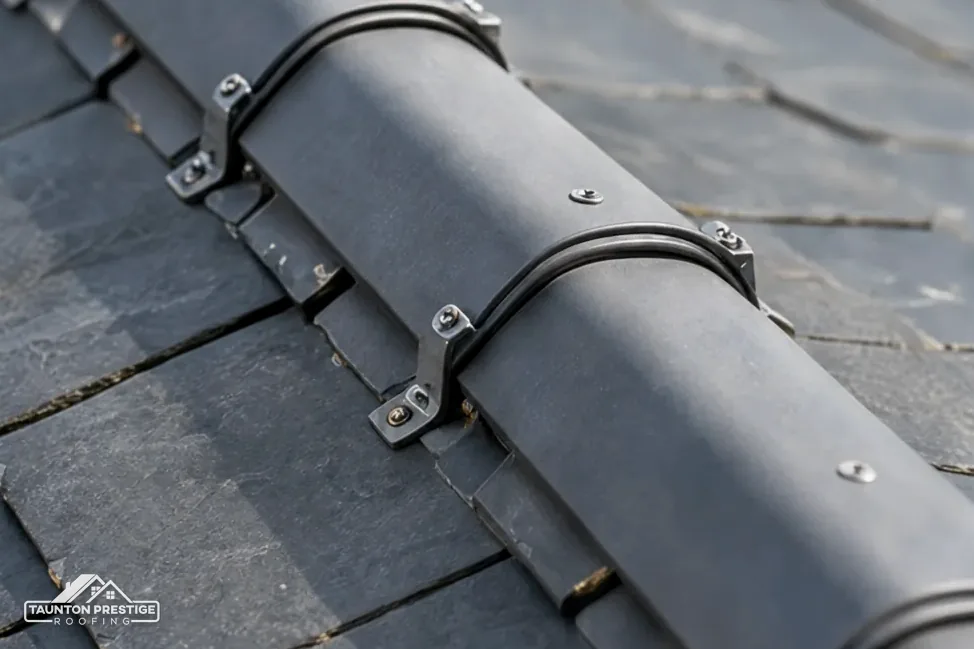
Think of a dry ridge as a small mechanism and not as a line of tiles. At the apex, a horizontal timber called the ridge board ties the two slopes together, and the rafters meet it from either side. A batten or set of brackets is fixed so it can carry the ridge tiles. The tiles sit on that support and are clipped or screwed down, with each tile fixed to the one before. Mortar plays no part in holding them.
Between the tiles and the roof sits a ventilated roll, a strip of material that is run out along the ridge and stuck down on each side. It stops rain and wind-blown dust getting in while allowing air to move at the top of the roof space. At the gable ends and where a ridge meets a hip, plastic or metal pieces close and join the gaps. The union is the piece that connects ridge and hip tiles at a junction, and the end cap seals the open end of the ridge.
What do the standards say a kit should do?
BS 8612 is the document dry kits are tested against, and BS 5534 is the standard for slating and tiling that expects ridge tiles to be fixed mechanically. A kit that has been through the test has a record of how its parts perform together. One that has not is working on trust. Our guide on BS 5534 and BS 8612 sets both out.
Each part exists because something would otherwise go wrong at that spot. When a part is thin, loose or the wrong fit, the fault shows at that spot first.
Unions: where ridge meets hip
A union is a small piece with a big job. It sits where several lines of tile come together, and it has to take water from three directions, hold the tiles on each side, and stay put in the wind. That is a lot to ask of a moulded piece of plastic.
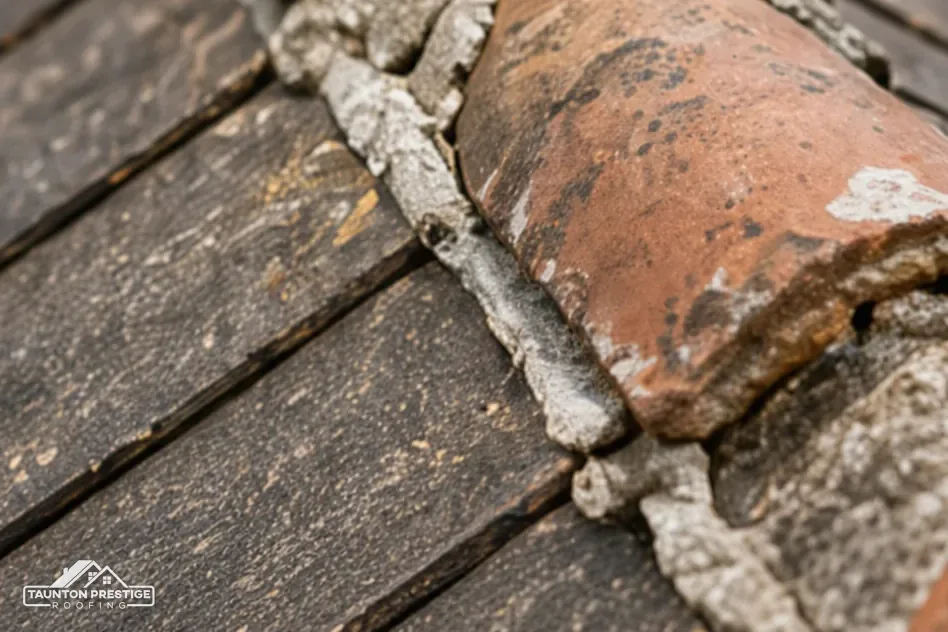
Cheaper unions tend to fail in recognisable ways. The plastic can be thin, so it flexes and cracks at the edges where it is clipped or screwed. It can sit loosely against a tile it was not designed for, leaving a gap that rain blows through. The fixings may be too few, or the screw may be driven too tight so the plastic splits around the head. In sun and frost over several seasons, a weak moulding can crack where a good one would not.
What does a leaking union look like?
The giveaway is a stain on the ceiling or the loft timbers just below a junction, usually after wind-driven rain and not after gentle showers. From the ground, you may see a tile at the junction sitting slightly proud, a visible crack, or a gap of daylight. Our page on dry ridge unions leaking goes through the causes one by one.
A cracked union can sometimes be replaced alone, but only when the rest of the system is sound and the replacement piece is made for that kit. Fitting a union from another maker is a gamble. Where several unions have failed along a roof, it points to a kit problem and not to a single bad piece.
The roll and the way it is laid out
The ridge roll is the part most owners never see, and its faults only come to light once the tiles are lifted. It is unrolled along the ridge and pressed or stuck down on either side of the apex. If it is laid in a hurry, the edges are not stuck properly, the laps between lengths are too small, or it is stretched tight so it pulls away when the roof moves with temperature.
Once the roll lifts, two things go wrong. Wind blows rain under the edge, and dust, leaves and sometimes insects get into the roof space. Where the roll meets the ends and the unions, any gap becomes a path for water. A roll that was never made for the pitch or the tile profile in use gives the same result, because it sits at the wrong angle.
Can the roll be replaced without lifting the ridge?
Rarely. The roll sits under the tiles, so replacing it means taking the ridge tiles off, cleaning the surface, laying a new roll with proper laps, and refitting. That is the same work as a full replacement, apart from the saved cost of materials, so it often makes sense to refit the whole system at the same visit and fix everything at once. The page on the roll in a dry ridge kit covers its job in more detail.
Ask any roofer who fits a dry ridge how the roll is stuck down and how long the laps are, and expect a clear answer.
Fixing to the ridge board
The ridge board and rafters are what the whole system hangs from. Marley notes that the 2014 revision of BS 5534 stopped treating mortar as enough on its own for ridge and hip tiles, which is exactly why mechanical fixing exists. But a mechanical fixing can only hold as well as the timber it bites into. A screw that misses the timber, a bracket held by one thin nail, or a batten fixed to rotten wood will hold for a calm summer and let go in the first autumn gale.
Ridge tiles are lifted by wind suction as much as pushed by it, so they need a grip that resists pulling, not only the weight of the tile pressing down. If the batten is not fastened straight and square, or the tiles are fixed at the wrong spacing, the load goes to a few fixings and not all of them. Those fixings then work loose.
How can a roofer be sure the fixings are in sound timber?
By looking before building. Before a new system goes on, the old ridge is lifted and the board and rafter ends are checked for rot, splits and movement. Where the timber is poor, it is repaired first, or the fixings are moved to better wood. A kit that is fitted onto soft timber will fail even if the kit itself is excellent, so no amount of money spent on the kit will cure a weak support.
Where a ridge is shallow in pitch, long in run, or on a roof that moves, the roofer should also consider how the system takes up movement. Ask the question at the survey and expect the answer to refer to the kit's own instructions.
Signs your dry ridge is failing
The signs show from the ground, which is where you should stay. Look along the ridge from across the road or the garden, and use binoculars or a phone with a zoom if you have one.
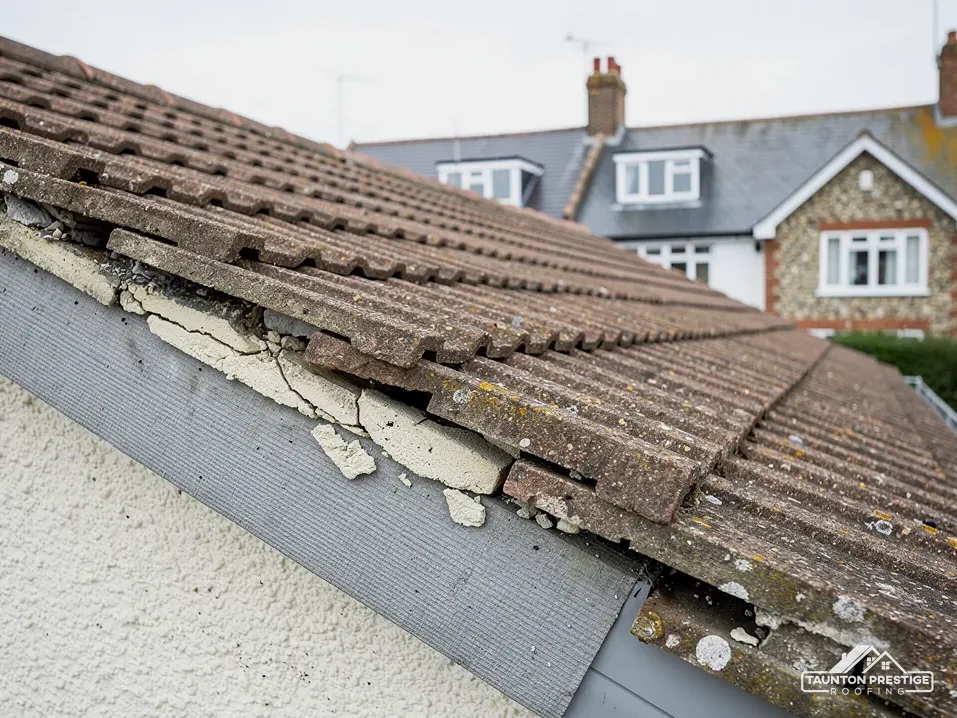
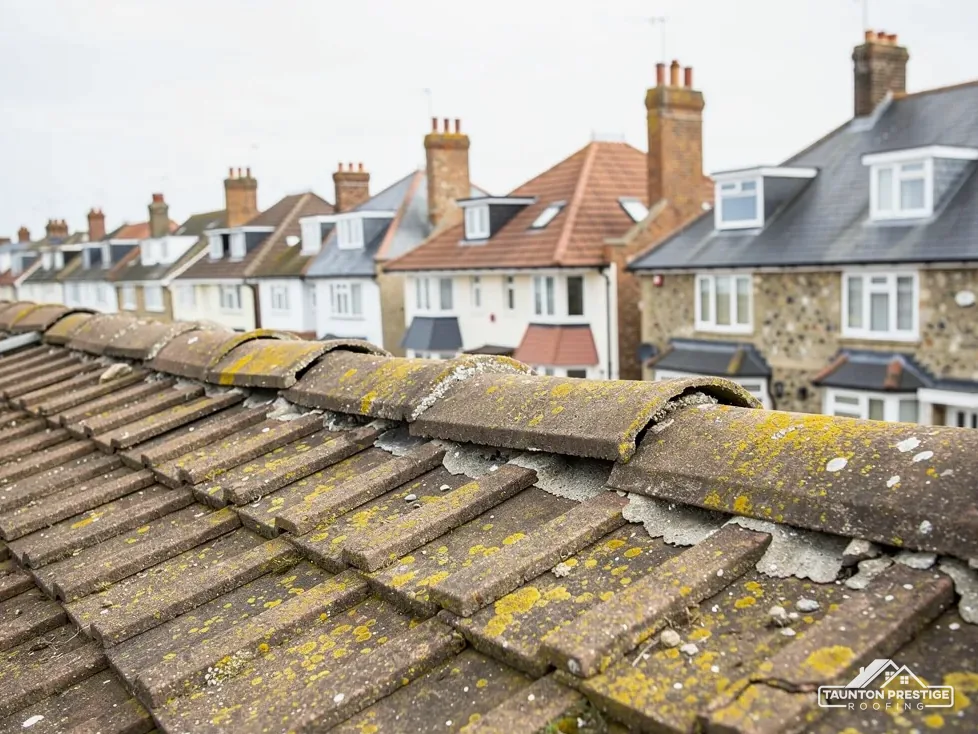
- Ridge tiles out of line, with a visible step or gap between two of them.
- A tile that stands higher than the ones beside it, or tilts.
- Rattling or tapping in wind, heard from inside the house.
- Cracked or missing plastic pieces at the ends and at hip junctions.
- A strip of dark material hanging or flapping where the roll has lifted.
- Stains on the ceiling or the loft timber under the ridge after wind-driven rain.
Is a loose ridge tile an emergency?
It can be, because a tile that comes off can fall on a path, a car or a person. Keep people clear of the ground beneath, and take photographs from a safe distance. Somerset Building Control names loose or falling roof tiles in its examples of dangerous structures, so the matter deserves attention. We make a leaking or unsafe roof safe first, then plan the repair properly.
Do not climb up to look. The ridge is the highest, most windswept line on the roof, and a ladder placed against a gutter can slip. If you have the loft hatch, a torch and a calm day, you can look at the underside for stains, daylight and damp timber, and photographs of what you find help any roofer to judge the job before the visit.
Repair, refit or start again
What happens next depends on how far the fault has spread. A single cracked union or end cap on an otherwise sound system can be replaced with a matching part. A lifted section of roll with sound tiles above it can be re-laid. These are repairs, and they are worth doing where the kit is good and the failure is local.
Where several parts have failed, the kit is the wrong fit, or the timber is poor, a repair only delays the problem. Stripping the system, correcting the timber, and refitting a kit tested to BS 8612 is the lasting answer. Some owners prefer to go back to a bedded ridge with mechanical fixings, which BS 5534 allows, and that is a fair choice on a traditional roof. Our guide to dry ridge cost sets out the published prices.
What does it cost to fix a failed ridge?
MyJobQuote gives a typical UK range of £225 to £550 for ridge tile replacement (MyJobQuote, Oct 2026). Your own price turns on how long the ridge is, the hips, the scaffold, the state of the timber beneath, and the kit you choose. Ask whether the quote includes VAT and scaffolding.
Our survey looks at the ridge board, the fixings and the roll, with photographs sent to you, and we tell you whether mending it or fitting a new system is the better buy. The written price follows that survey, and the kit is named before you agree to it.
Failed ridge questions
Why is my new dry ridge already leaking at a junction?
The union is the usual suspect, where ridge meets hip or a gable. A cracked or loose-fitting piece lets wind-driven rain past the tiles, and the stain shows below it. A roofer lifts the nearby tiles to see if the roll and fixings are sound before deciding whether to replace one part or the whole line.
Can a failed dry ridge simply be re-fixed?
Sometimes, if the kit is good and the fault is one loose or cracked part. If the roll has lifted, the timber is soft or several unions have split, refixing only delays the problem. A strip and refit with a tested kit, or a bedded ridge with fixings, lasts longer.
How do I stop a dry ridge failing in the first place?
Ask which kit is going on and whether it is tested to BS 8612, and ask how the batten is fixed to the ridge board and rafters. Check the written price names the system. A roofer who can answer clearly, with a data sheet, is working to a plan.
More on this subject: Dry ridge and verge repairs in Taunton