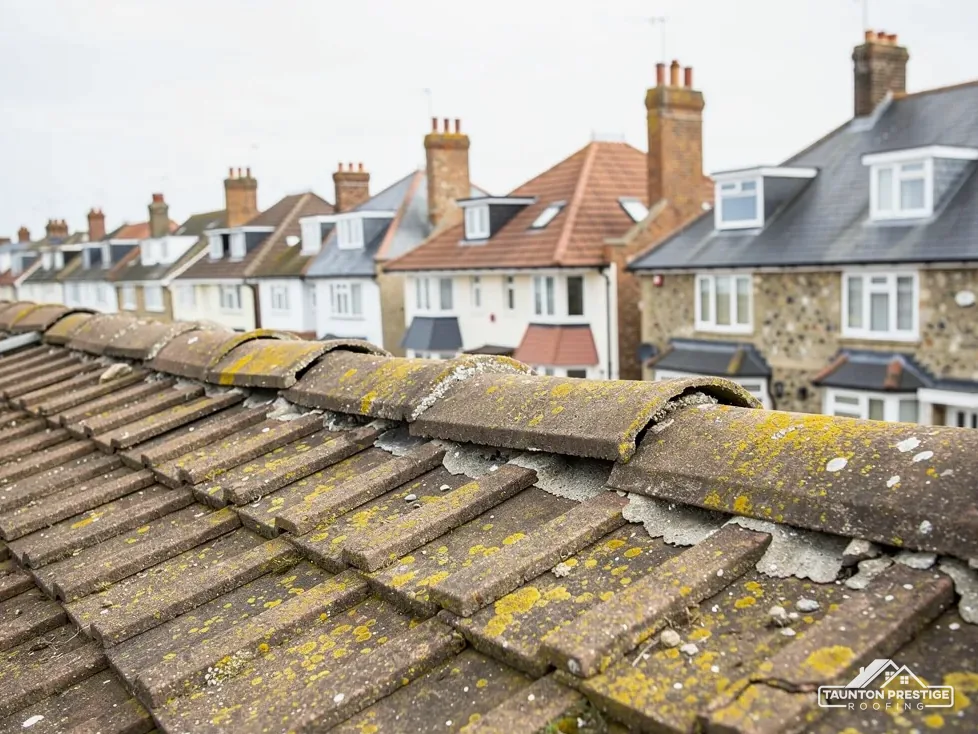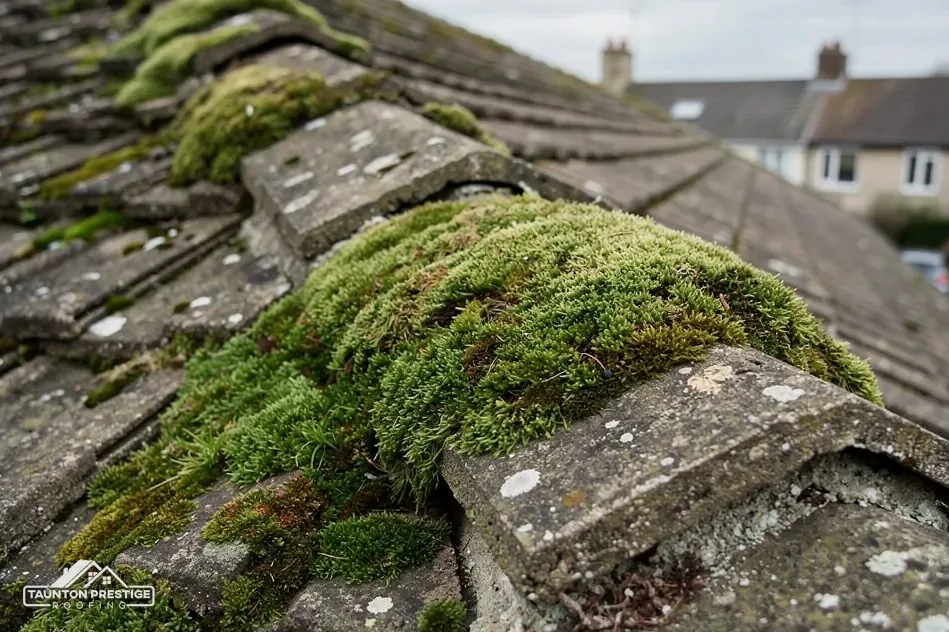
Re-bedding means lifting the ridge tiles off a roof and laying them again on fresh mortar. It is among the oldest repairs in roofing, and the talk around dry-fix kits has led some owners to think it is now improper. It is not. Mortar remains a lawful, proper way to hold a ridge, and on some buildings it is the better way.
What has changed is the standard of the job. Since the 2014 revision of BS 5534, mortar is no longer expected to work alone, and a re-bedded ridge now carries mechanical fixings as well. For an owner, the practical questions are when to choose this route, what it involves, and whether anyone has to give consent first, especially on a clay ridge, an older house or a home in a conservation area.
This guide takes those in turn. It sits within our dry ridge and verge work, and it is straight about the cases where a dry system is the better answer instead.
What re-bedding involves, step by step
The work begins at the top of the roof and ends there, but most of the effort goes into what lies underneath the tiles. A ridge is the crest line of the roof, and the ridge tiles are the curved or angled pieces that cap it.
- The ridge tiles are lifted off one by one and set aside. Sound ones are kept for reuse, and cracked ones are put on one side for replacement.
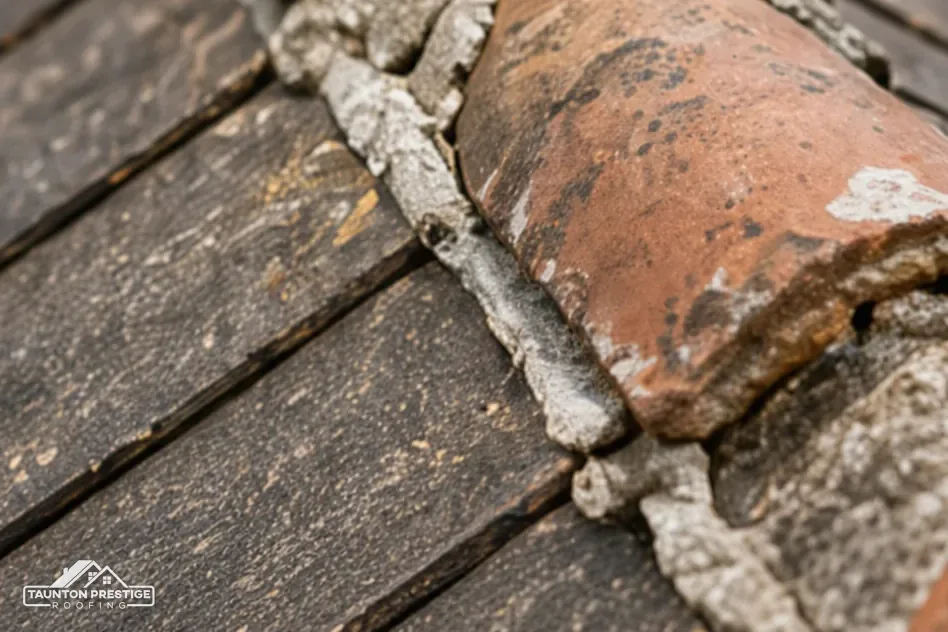
- The old mortar bed is chipped away and cleared, together with any loose debris that has collected beneath.
- The timber at the top is looked at. The ridge board, which runs along the apex of the frame, and the rafter ends either side are checked for rot or movement.
- A fresh mortar bed is laid, and each tile is seated on it and levelled to the line.
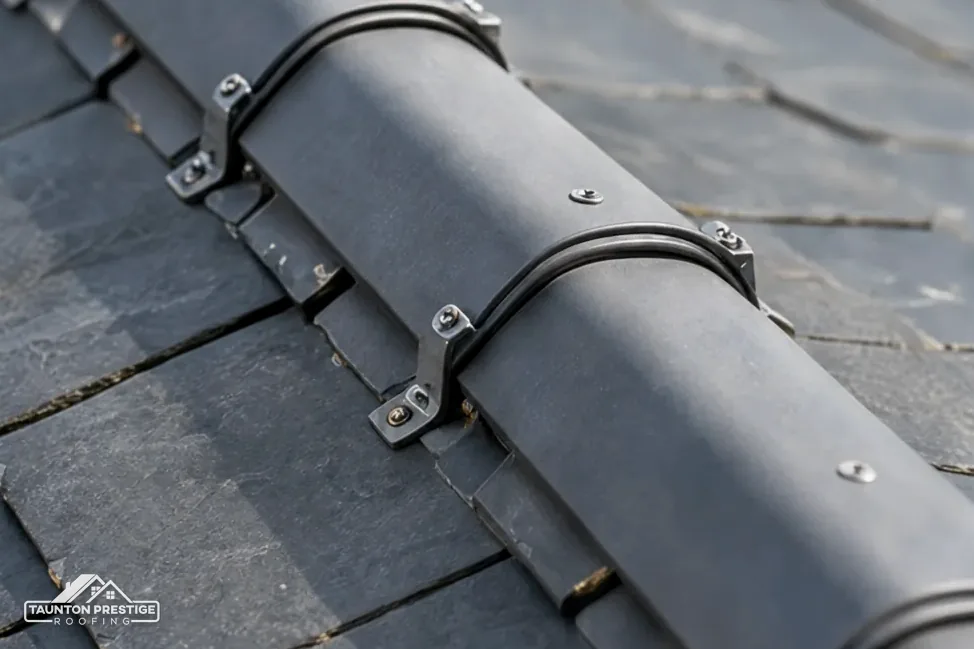
- Mechanical fixings go in as well, whether clips, screws or nails to suit the tile and the batten below.
- The joints are pointed and the line is checked from the ground.
How long does a re-bedded ridge hold up?
That depends on the mix, the weather on the day, how well the tiles were seated and how exposed the roof is. A bed laid in cold or wet conditions may not cure properly, so the weather forecast matters. No one can give an honest figure of years, and a roofer who does should be asked what it rests on.
A well-seated bed with fixings added tends to need pointing now and then rather than relaying. A look from the ground every year or so, and after storms, catches the first crumbling early.
Mortar plus fixings: what the standard asks
BSI lists BS 5534:2014+A2:2018, the slating and tiling code, as current, and the code asks for more than a bed of sand and cement. Marley says the 2014 revision recognised that mortar's tensile strength on its own was not enough to keep ridge and hip tiles up, so a bedded tile also wants a mechanical fixing. Tensile strength is a material's resistance to being pulled apart, which is what a wind does to a ridge tile.
Does the standard make mortar ridges illegal?
No. Marley states that installing to BS 5534 is not required by law, and the standard does not ban mortar. It changes the expectation about what holds the tile. Where a tile is mortared and also screwed or clipped, the mortar seals the joint and keeps rain out, and the fixing does the gripping. The two do different jobs.
The same code sits behind the dry-fix route, which is tested against a separate specification, BS 8612:2018, listed by BSI as current. A re-bedded ridge is not tested to BS 8612, because that test applies to manufactured dry systems. What it can do is follow BS 5534 on fixings, and a good quote says it does.
When you read a quote for re-bedding, look for the words "mechanical fixings", or something plainer such as "each tile screwed down". A quote that says only "rebed ridge" leaves open whether anything beyond mortar is going on. If the wording is vague, ask for it in writing before agreeing.
A mortar ridge is lawful; what matters is that mortar is not the only thing holding each tile.
When mortar is still the better choice
There are real cases where re-bedding beats a dry kit, and they share a theme: the look and the material of the original matter.
Is mortar better on a clay ridge?
Often it is. Traditional clay ridge tiles, and the half-round and angled shapes that go with them, have their own character. A dry kit has to be made for the tile profile, and clay shapes can fall outside what a kit covers. Per Marley, the BRE sets a 60-year minimum life for clay tiles, and for clay alone. An article on building conservation warns that old peg tile cannot be given a dependable figure, so aged clay is judged one roof at a time.
Clay has a local history too. The South West Heritage Trust credits Bridgwater's brick, tile and terracotta works with shaping how Somerset towns look, and a heritage leaflet from the town adds that ridge tiles were once known as crease tiles. When the ridge on an older Somerset house is that sort of tile, keeping it and re-seating it is often the way to keep the roof looking as it should.
Re-bedding also suits a short repair. If a handful of tiles have loosened and the rest of the ridge is sound, lifting and relaying that stretch costs less than replacing the run.
Finally, it suits a roof where a consent officer has asked for like-for-like work, as the next section explains. Clay ridges carry another practical benefit: a roofer can often keep and reuse the existing pieces, which preserves the weathered colour that new tiles take a season or two to match.
Consent: who needs to say yes
This section describes the general position and not legal advice. Your planning team or building control body is the place to confirm it for your address.
Under section 55(2)(a) of the 1990 planning Act, works that leave a building's outward appearance materially unchanged are not development. Re-bedding the same tiles where they sit is the plainest case. Where tiles are replaced on a house, Class C of the permitted development rules, which covers alterations to a roof, normally applies.
What changes in a conservation area or on a listed house?
Listed houses keep Class B and Class C, yet section 7 of the Planning (Listed Buildings and Conservation Areas) Act 1990 also bars alterations that would affect their character unless the works are authorised. The ridge can be part of that character, so ask before changing a tile.
Taunton has several conservation areas. Somerset Council's table gives 15 January 1975 as the designation date for Castle Green and Bath Place, with a revision on 26 April 2007, and 14 March 2023 for Haines Hill and Trull Road. The same table also names St Mary and St James, then Park Street with Wellington Road, then Staplegrove Road, and finally The Crescent with South Road. Another designated conservation area covers Mount Street and Vivary Park. For work in any of these, ask Somerset Council's planning team what applies to your property.
An Article 4 direction is listed by Somerset Council for Taunton, Staplegrove Road (1977). Put the roof question to the planners directly, since roof work may or may not be exempt. Within Exmoor National Park, planning decisions rest with Exmoor National Park Authority, not Somerset Council.
When re-bedding is the wrong job
Re-bedding is a repair, and a repair is the wrong answer when the thing being repaired keeps failing. Three situations point away from it.
The first is widespread failure. Where mortar has crumbled for the full length of the ridge, tiles are loose in many places and the line has dropped, doing the same job again only brings back the same result, and a mechanically fixed dry system is likely to serve better. Our guide to dry ridge versus mortar compares the two for a typical house.
The second is bad timber. If the ridge board or the rafter ends have rotted, no bed of any kind will hold, and the wood needs mending first. That repair is part of the job, and the roofer should show you photographs of what was found before adding it to the price.
What if the same ridge keeps cracking?
Repeated cracking in the same place points to movement, such as a roof slope that is shifting, a frame that has settled, or an old repair that is stiffer than the tiles around it. Pointing it again treats the symptom. Our page on cracking ridge mortar covers how to read the pattern from the ground.
The third situation is a listed or conservation-area roof where the dry kit would be refused. Then re-bedding with discreet fixings may be the only acceptable route, and the survey notes should say so.
None of these is a case against mortar. They are cases for choosing on the facts of the roof, with photographs on the table, and a quote that explains the reasoning.
Price, access and what to ask for
The typical UK range MyJobQuote publishes for replacing ridge tiles is £225 to £550 (MyJobQuote, Oct 2026). Re-bedding sits near it. Your own figure turns on ridge length, any hips, the route up to the roof and the state of the timber. Where scaffold is needed, it can shift the total more than the tiles do. HomeBuilding (Sep 2025) quotes, for a three-bed semi's scaffolding, "approximately £1,000", with permits within the sum.
What should a re-bedding quote say?
It should say whether the existing tiles are being reused, how many are expected to need replacing and whether matching ones are available, which matters on clay. It should say what fixes the tiles besides mortar. It should also confirm what the price includes: scaffold, VAT and taking the rubble away.
Mortar mixes matter too. A mix that is too strong can crack the clay beside it, and one that is too weak washes out, so ask what is going in the bucket and why. On clay ridges, ask the roofer to show you a sample of any replacement tile against the old ones in daylight. A new tile can look bright beside weathered neighbours, and the colour settles over a season or two.
Where the cost decision is between re-bedding and a dry kit, ask for both to be priced from the same survey, so the difference is plain to see. Our price follows a survey, with photographs of your ridge as found, and comes as one written total. If the survey finds the ridge board in good order and the tiles sound, the sensible plan is often the simplest, and you will see the evidence for it.
Questions on mortar ridges
Can my ridge be re-bedded if the tiles are old clay ones?
Yes, and it is often the preferred route. Sound clay tiles are lifted, cleaned and seated again, with a few replaced where cracked. The match for any new tile is the thing to ask about, because clay weathers and a fresh tile can stand out beside old ones for a season.
Is it worth adding fixings if the mortar bed is sound?
Yes. A sound bed can still lose its grip in a hard winter, and the standard now expects a mechanical fixing in addition to mortar. The fixing costs little compared with scaffold, and it keeps a tile on the roof if the bond lets go.
Does re-bedding need building control approval?
Not normally for a like-for-like repair. The Planning Portal's test for re-roofing is less than 25 per cent of the building envelope and less than 50 per cent of the roof, and ridge work falls well below it. Where you are unsure, put the question to your building control body, and in Somerset that body is Somerset Building Control.
More on this subject: Dry ridge and verge repairs in Taunton