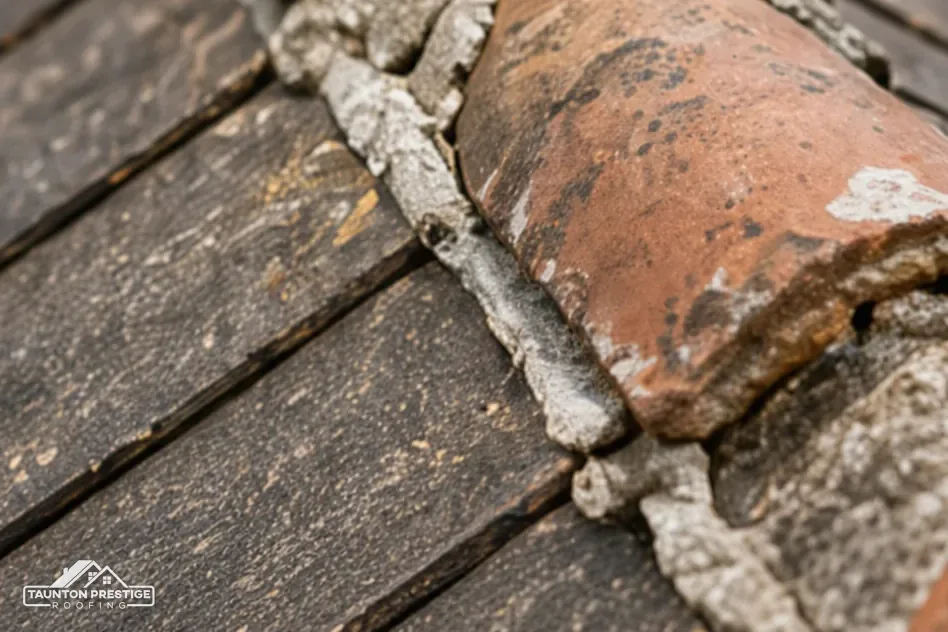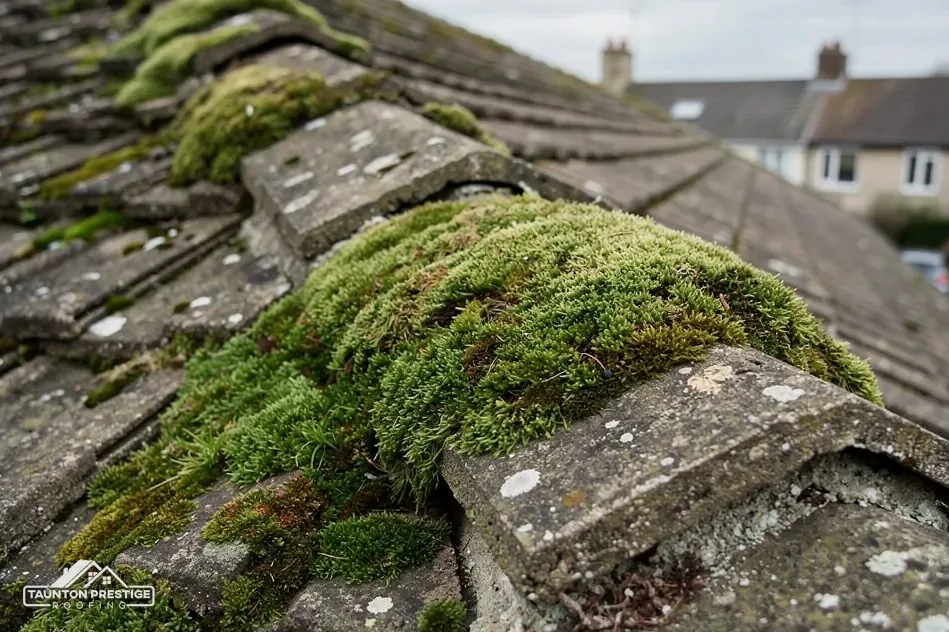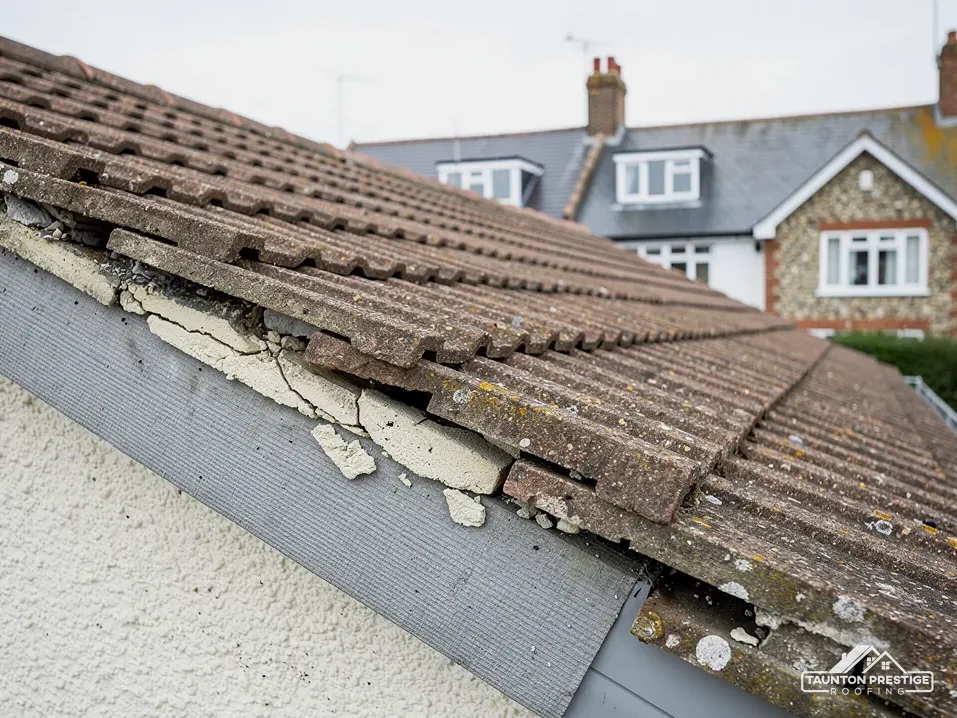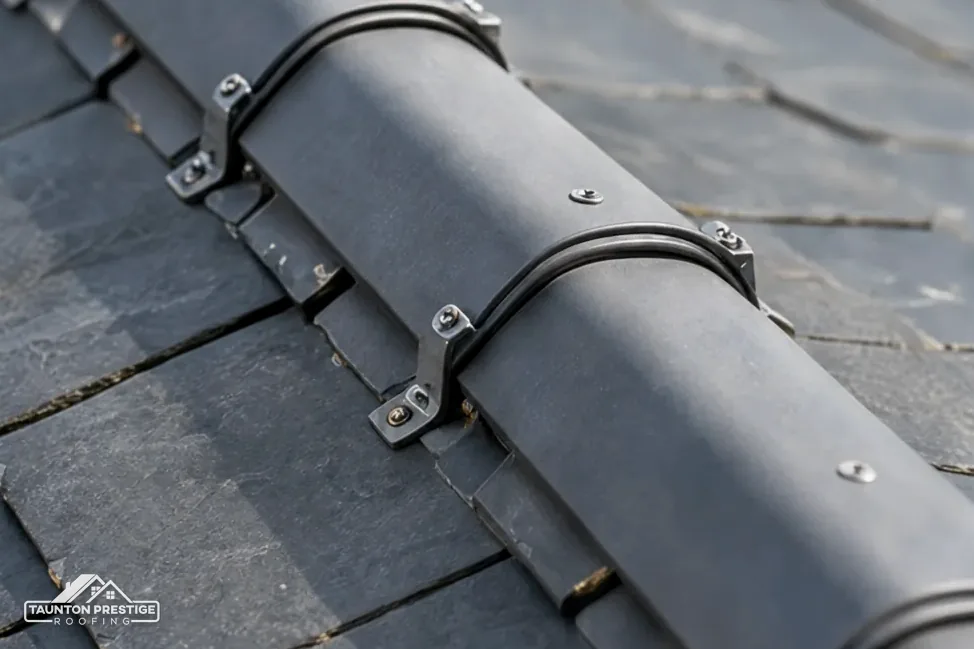
The ridge runs along the very top of a roof, where two slopes meet, and it takes the worst of the wind. When the mortar under the ridge tiles has cracked or the tiles have started to shift, a dry ridge system is one of the ways to put it right. People ask what it costs, and the honest answer starts with how little a single national figure can tell you about one house.
Here are the typical UK ranges that cost guides publish for ridge tile replacement and dry verge work, each with its source and month. It then explains the things that change the figure on a particular roof: the length and shape of the ridge, the scaffold, the condition of what is underneath, and the kit itself. It sits within our dry ridge and verge work, with pointers to the guides on verge cost and failed systems for detail that does not fit here.
What the published range covers
MyJobQuote's cost guide for ridge tiles says "the average ridge tile replacement costs between £225 and £550" (MyJobQuote, Oct 2026). Read that as the typical UK range for a ridge-tile replacement, and as the closest published marker for a ridge repair on an ordinary house.
It helps to be clear about the limits of what that range can tell you. It is a national average drawn from many jobs on many kinds of roof. It does not know whether your ridge is eight metres long or fifteen, whether the roof has hips as well, or whether scaffold is needed. It is a place to begin the conversation and not a figure to hold a roofer to.
The survey is where a national range becomes a price for your house. A roofer looks along the ridge from the ground and the roof edge, checks how the existing tiles are bedded, and notes anything that changes the work, such as a chimney stack breaking the line or a hip that has dropped. Photographs of what was found go to you, so the number rests on something you have seen.
Does dry ridge cost more than bedding the tiles again in mortar?
It can be, and it can also work out cheaper over time. A dry system uses a manufactured kit of caps, unions, rolls and fixings, so the materials cost more than a bag of sand and cement. In return, the work can be quicker on a long, straight ridge, and the result does not need repointing the way a mortar bed does. Which comes out ahead depends on the roof. Our guide on dry ridge versus mortar weighs the two over the life of the roof.
MyJobQuote also gives an average of around £650 for general roof repair in 2026, a reminder that ridge work is one of the smaller jobs on a roof, unless the ridge is the first sign of wider trouble.
Length, hips and the shape of the roof
The biggest single factor is how much ridge there is. A short ridge on a small semi involves a handful of tiles and a few metres of kit. A long ridge on a detached house, or a roof with several gables, needs far more. Hips add to the total. A hip is the sloping line formed where two roof planes join round an outside corner, and each one needs its own run of tiles and its own junction pieces at the top.
Roof shape also changes how the work is done. A plain gable roof has one ridge and two verges. A hipped roof has a ridge shorter than the roof is long, plus four hips, and each junction where hips meet the ridge needs a union. A roof with chimney stacks, dormers or a long run broken by a step in the roofline has more places where the system has to be cut and finished by hand.
Does the type of tile change the price?
It can. A kit has to suit the tile profile on the roof, and the common profiles have kits made for them. Unusual or older tiles may need parts to be adapted or a different method altogether.
The pitch of the roof matters too. A steep roof takes more care and more time to work on, and the manufacturer's data sheet sets out which pitches a kit is meant for. Ask the roofer to name the kit before the price is fixed, so you know what the figure is for.
Access and scaffold
Reaching the ridge safely is a cost in its own right. For a three-bed semi, HomeBuilding (Sep 2025) gives scaffold as "approximately £1,000" including permits, and MyJobQuote (Oct 2026) puts a front-elevation scaffold at "£550 to £750 for a week-long hire". Both are typical UK figures for scaffold on a whole project, and they show why a small ridge job can cost more than the tiles suggest if scaffold has to go up.
Not every ridge job needs full scaffold. A low single-storey roof may be reached from a tower or a platform, and a few jobs call for nothing more than ladders with edge protection. A roofer decides on the survey, based on the height, the ground and the roof edge. Work at height has to be done safely, and the price reflects that.
Access also covers the ground below. A narrow side passage, a steep drive or a conservatory under the eaves restricts the spot for a tower or scaffold, and the extra time to carry materials past those obstacles lands in the total. Tell the roofer about parked cars, shared drives and neighbours' boundaries at the survey, so they are in the plan from the start. Waste matters too: old ridge tiles and crumbled mortar are heavy, and getting them down and away is part of a tidy job.
What if the scaffold has to go out into the road?
Poles set up over the public highway require a licence under the Highways Act 1980, which the scaffolder and we sort out between us. Councils ask for notice before the scaffold goes up, so a start date can depend on that paperwork, and it is worth asking early when work is likely to begin.
Ask any roofer whether scaffold is in the quote and who arranges the licence. The answer tells you whether a gap is waiting to turn up later.
What sits under the ridge
A ridge line can only be as sound as the timber under it. Beneath the tiles, the rafters meet at the ridge board, the horizontal timber at the very top of the frame, and a dry system is fixed to that structure. If the board is split, rotten or loose, new tiles on top will not hold. A roofer who lifts the old ridge and finds sound timber beneath has an easy job. One who finds decayed wood has repairs to make first.
That is why a quote made before anyone has looked cannot be trusted to the pound. Water that has been getting in around a failed ridge may have damaged the timber and the underlay below, and the extent only shows when the tiles come off. A good survey reduces the uncertainty, and photographs taken during the job show you what was found.
Should the whole ridge be replaced, or only part of it?
Where only a short section has failed, a repair to that section can be enough, and it costs less. Where the mortar is crumbling along the whole ridge, or the tiles are loose in many places, a full replacement tends to be the better buy, because patching a tired line means returning to it in a year or two. A dry system also needs a full run of fixings to work as a set, so it is not usually fitted to half a ridge.
Our page on dry verge cost covers the matching edge of a gable. For that edge, MyJobQuote's guide to dry verge installation quotes a range of £500 to £2,000, with an average near £1,000 (MyJobQuote, Oct 2026).
Kit quality and why price is not everything
A dry ridge kit is a set of parts, and the parts vary. Some are tested to BS 8612, the specification for dry-fixed systems, and come with a manufacturer's data sheet. Others are cheaper kits with no test evidence, thinner plastic and fewer fixings. A kit can look fine on the day it goes on and show its weakness only after a few winters.
That does not mean the dearest kit is always the right one. It means the price of the kit should be understood. If one quote is far lower than another, ask what it is made of and what fixes each tile. A saving of a few hundred pounds on a kit is a poor trade if the ridge has to be redone in five years, with scaffold up again. Our guide on why cheap dry ridge systems fail shows what goes wrong.
What should a quote say about the system?
It should name the manufacturer and the kit, say whether it is tested to BS 8612, state how the ridge board and tiles are fixed, and give the work as one total price. If it says only "dry ridge supplied and fitted", ask for more detail before you agree.
Mortar still has a place. BS 5534 expects bedded ridge tiles to be fixed mechanically too, so a re-bedded ridge with clips is not a cheap shortcut either. Whichever method is chosen, the fixings are what you are paying for, as much as the tiles on top.
Reading one total price
A roofer who has looked at the roof can give you a single price for the whole job. What you want to see is that price in writing, along with a plain statement of what it includes.
Put these three questions to any quote, ours included. Does the price include VAT? The standard rate is 20 per cent, which is a big difference on a large job if it turns up later. Does it include scaffold, or is that extra? And does it include taking away the old ridge tiles and mortar, or will the heap be left on your drive?
How do I compare two dry ridge quotes?
Start by checking that both quotes name the same system and describe the same fixings and access. Two totals are only comparable when they cover the same kit, the same extent of ridge, the same scaffold position and the same VAT treatment. A lower figure that leaves out scaffold is not lower at all once it is added.
Do not be pushed into a decision on the doorstep. A genuine roofer will let you think it over, and a cold caller who finds a loose ridge tile from the pavement is a reason to ask for the survey in your own time. A contract signed in your home once the survey is done brings the 14-day cancellation right. For advice, the Citizens Advice consumer helpline is 0808 223 1133.
The next step for a price on your own roof is a survey. You see the ridge in photographs of your own roof, then receive the price in writing.
Dry ridge price questions
What does swapping old ridge tiles for a dry ridge system cost?
MyJobQuote gives a typical UK range of £225 to £550 for ridge tile replacement (Oct 2026). A dry system, the length of ridge, hips, scaffold and the state of the timber below all move your own figure, so a survey is what turns the range into a price.
Does a dry ridge price include scaffold?
Not always. Scaffold is a real cost on a ridge job, and it can be missing from a low quote. HomeBuilding (Sep 2025) gives scaffolding on a three-bed semi as near £1,000, so ask whether the total includes it, and who arranges any licence that is needed.
Is a cheaper dry ridge kit worth the saving?
Only if it is tested to BS 8612 and fixed properly. A kit with no test evidence and thin fixings can fail within a few winters, and the second job means paying for access again. Ask which kit is named, who makes it, and what the data sheet says.
More on this subject: Dry ridge and verge repairs in Taunton