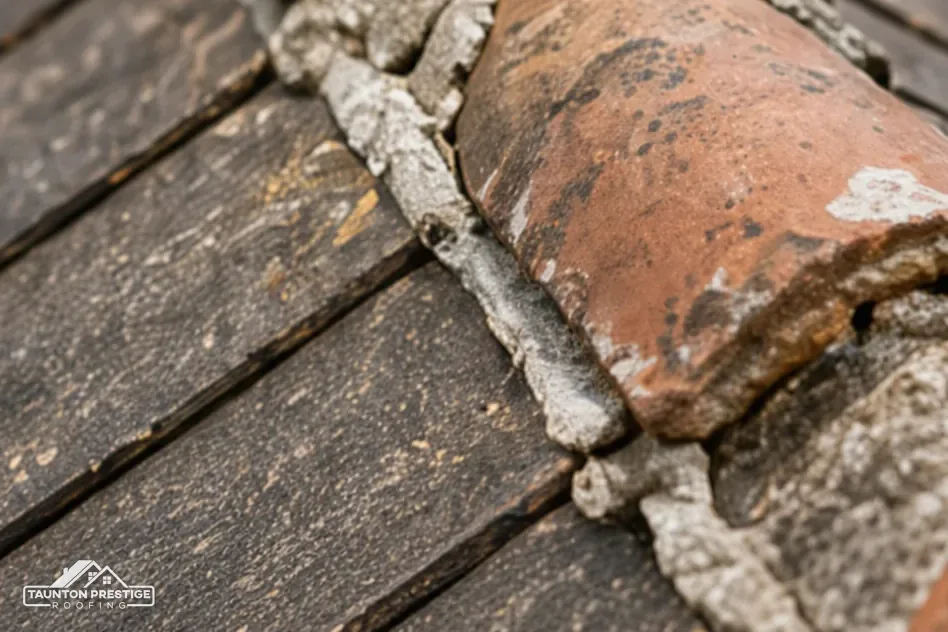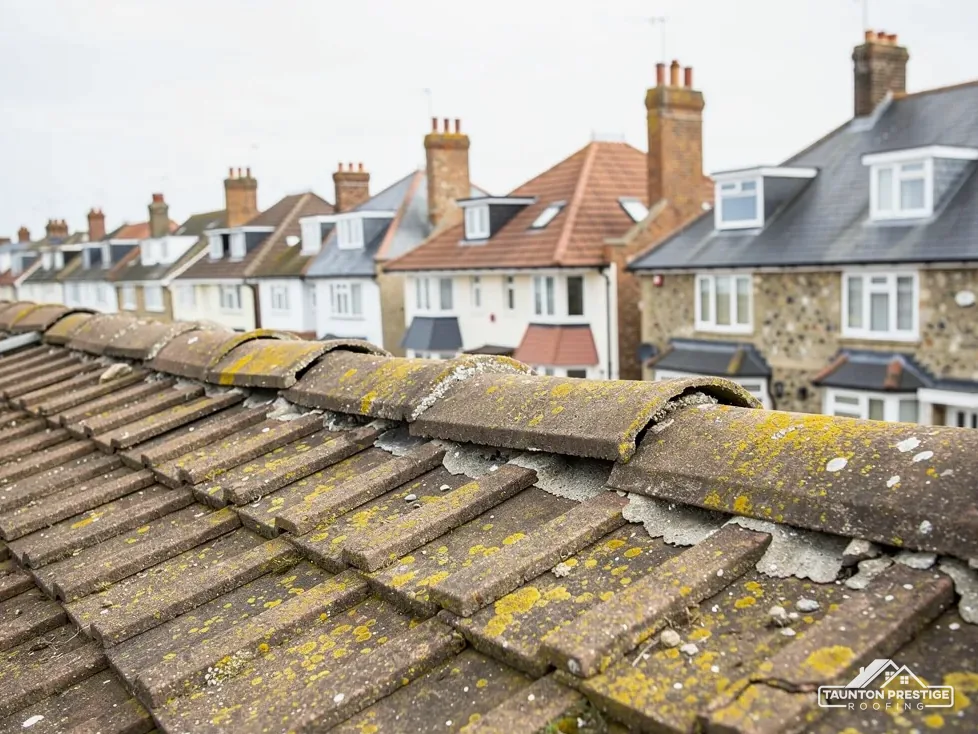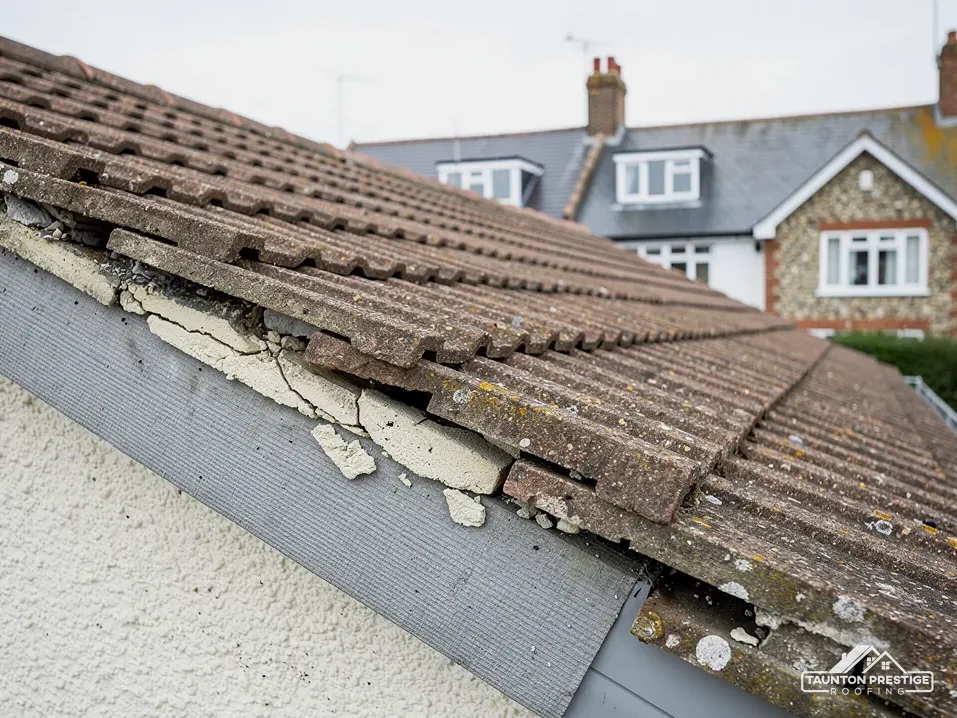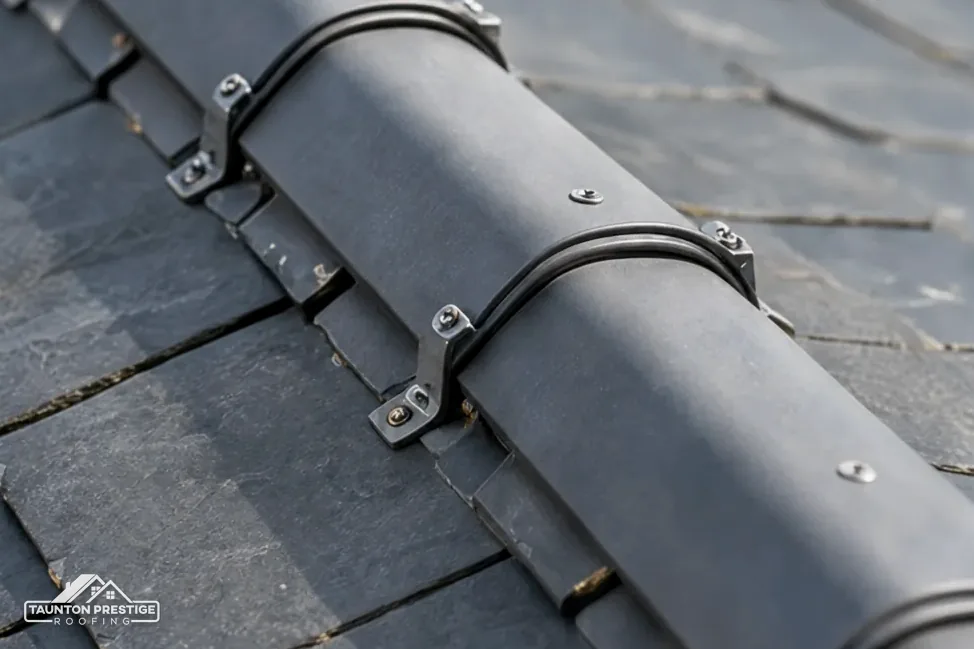
At the end of a gabled house, the roof stops short of the wall, and the sloping rake that closes it off is called the verge, beside the triangle of brickwork known as the gable. On many homes that edge was once sealed with a line of mortar, and over time the mortar cracks, drops out in pieces and leaves the tiles beneath it unsupported. A dry verge takes the mortar out of the picture. Instead, a trim is screwed or clipped along the edge and capped at the ends.
Once the decision is made, the next question is always money. This guide gives the typical UK range that a cost guide publishes for dry verge work, with its source and month, and then walks through what moves a gable job towards one end of that range or the other. That means how long the verge is, how many gables the house has, how the roof is reached, and what turns up when the old edge comes off. It sits within our dry ridge and verge work, and points to the guide on how a dry verge system works for the method itself.
The published range for dry verge work
MyJobQuote's cost guide for dry verge installation says the price "usually falls between £500 and £2,000", with an average of around £1,000 (MyJobQuote, Oct 2026). That is a typical UK range, drawn from jobs of many sizes on many kinds of house, and it is the closest published guide to what a gable edge costs to put right. A range like this is where a sensible conversation starts, and it is a long way from a promise about your own house.
It is worth reading the range for what it is. The gap between its two ends is a factor of four, and that gap exists because verge jobs differ so much. A single short gable on a bungalow sits at one end. A detached house with two long gables and a tall wall to reach sits towards the other. The average is a midpoint of many different jobs and tells you little about yours.
What does a dry verge cost to put in?
On your own house, the figure comes from a survey, not from a national table. Someone has to look at each gable, measure the run along the tiles, note the height of the wall and check what the old edge is made of. Photographs of the findings come back to you, so the price rests on what has been seen. We then write it up as a single total.
Owners sometimes find that two neighbouring houses of the same age sit at opposite ends of the range, simply because one has a third gable and a tall side wall. A national range is a fair thing to carry into the conversation. It helps you notice a quote that sits far outside it and ask why, without turning it into a fixed price for your roof.
Length of verge and number of gables
Verges are priced by how much edge there is. Each gable has two sloping sides, one on each side of the ridge, and each side has to be stripped, rebuilt and finished. A house with a single gable has two runs. A house with a rear extension, a side gable and a main gable can have six, and the total length climbs quickly.
The length also depends on the pitch. A steeper roof has a longer sloping edge for the same width of house, and the work at the top, where the verge meets the ridge, takes extra care. Each run ends in two details: a cap at the bottom, where the verge meets the eaves, and a junction at the top, where it meets the ridge. More gables mean more of both.
Why do small extra gables add so much?
A bay with its own little gable, a dormer or a porch roof can each add a verge of their own, and these short runs take almost as long to set up as a long one. The roofer has to move access, cut the trim to fit, and deal with a junction at each end. When a quote seems high for a small house, count the gables, including any tucked round the back, before assuming the figure is out of line.
Tell the roofer at the survey about any extension built after the house, because extra gables often hide behind garages and lean-tos where they are easy to forget.
Scaffold, licences and reaching the gable
A gable wall is often the tallest part of a house, and the verge sits at its edge, so access is a real part of the cost. On a three-bed semi, HomeBuilding (Sep 2025) gives "approximately £1,000" for scaffolding with permits included, and MyJobQuote (Oct 2026) gives £550 to £750 for a week of hire on a front elevation. Both are typical UK figures for whole projects, and they show why a short verge can cost more than the trim and caps would suggest if a tower is needed.
Some gables need no full scaffold at all. A low single-storey one can be done from a tower or a working platform, and the roofer decides at the survey based on height, ground and the roof edge. Whatever the method, the work is done safely, and the price reflects it.
Who arranges a scaffold licence for a gable?
Under s169 of the Highways Act 1980, scaffold that obstructs the road or footway needs a scaffold licence from the highway authority before it is erected. That licence carries a fee, and Somerset Council lists £124.60 for each 28-day period (April 2026), with at least 10 working days' notice. The scaffolder and we sort that licence out together. Where the house is outside Somerset, ask who applies, since each authority sets its own rules. A gable that faces a side passage may need no licence at all if the scaffold stays on private land.
Timing matters as well, because the notice period means a start date can hang on the paperwork, and wet weather can push a week of hire into a second one. When you read a quote, ask whether scaffold is included, and who arranges the licence if one is needed. A gap in the answer is a gap in the price.
What lies under the old edge
The cost of a verge job can change the moment the old mortar comes off. The tiles along the edge are held by the roof timbers beneath them, and those timbers sit on the top of the gable wall. If the wall top is cracked, crumbling or damp, a new trim has nothing sound to sit on.
Water that has got in through a failed verge for several winters may have damaged the end of the battens, the strips of timber the tiles hang from. Where these ends are soft, the roofer has to cut them back and fix new lengths before the trim goes on. In the worse cases, the barge board, the timber fixed along the gable edge, has rotted too, and the repair spreads to a carpenter's job.
Can a dry verge go over rotten timber?
No. The trim is screwed to something, and if that something crumbles, the trim loosens in the next gale. A roofer who lifts the old edge and finds sound timber has a quick job. One who finds decay has repairs to do first, and they should show you what they found.
That uncertainty is why a quote given without anyone looking is unreliable. A proper survey reduces it, and our practice of showing you photographs from the job means you see the condition for yourself. If the discovery changes the work, the conversation about it happens before extra work starts.
The guide to a dry verge that has fallen off explains how fixing problems show up after the event, which is a useful picture of why this stage matters.
Dry or mortar: cost now against cost later
Re-pointing a verge in mortar is the cheaper job at the moment of doing it, because the materials are modest. It is also a job that has to be repeated, since mortar on an exposed edge cracks again. A dry verge costs more in parts and tends to ask for less attention afterwards. Which is the better buy depends on how long you plan to stay and how exposed the gable is.
Exposure matters in Somerset. Gables on the Quantock and Blackdown Hills edges, and on the open ground of the Levels, take wind and driving rain from directions a sheltered street never sees. A verge that holds well in a town can loosen on a hilltop farmhouse.
Does a dry verge cost less over the years?
It can, but no one can promise it. A kit that is well made, correctly fixed and fitted to sound timber needs little attention. A cheap kit on a poor base can need redoing, and a second round of scaffold wipes out any early saving.
For comparison, the same cost guide quotes a range for ridge tile replacement of £225 to £550 (MyJobQuote, Oct 2026), and our guide on the cost of a dry ridge system explains why ridge and verge work are often priced together when both are tired. Doing both in one visit shares the access cost and can save a return trip.
Reading a quote for a gable job
A good written quote for verge work says what is being done to each gable, names the system and the manufacturer, and states one total price. It also confirms that scaffold, VAT and the removal of waste sit inside that price. Check whether the total includes VAT, which is 20% at the standard rate, since a figure with VAT left out looks cheaper than it is once you set it beside another.
How many quotes should you collect?
Citizens Advice recommends asking at least 3 different traders for written quotes before choosing one. Once they are in, set the totals side by side and ask what each one covers. If one is far lower, check whether it names a tested kit and whether the scaffold is in it. If one is far higher, ask what extra work it assumes.
Ask whether the work comes with the old trim and mortar taken away and the ground below left clear, since broken mortar and cut offcuts are heavy. Ask, too, whether the verge trim is made for the tile profile on your roof, since a mismatched trim leaves gaps that let in wind. The data sheet for the kit sets out which tiles it suits and what fixings it needs.
Our own price follows a survey of the gable ends and arrives as one written figure. If you are weighing a verge job against other work on the roof, the survey photographs help you decide what to do first and what can wait a season.
Gable edge price questions
Is a dry verge worth paying for if the mortar only looks tired?
Often, if the mortar is cracked along its length or pieces have fallen out, because patching a tired edge means returning to it. If only one short section has gone, a local repair may be enough. Photographs, or a look from a ladder, show which of the two you have.
Will a dry verge change how my gable looks?
A little. Mortar gives a hand-finished line that follows the tiles, and a dry trim gives a regular line with a cap at each end. On a newer house it can look tidier. On an older or listed home, ask about colour and profile first, and about consent.
Can verge and ridge work be done in one visit?
Often they can, and it saves putting up access twice. If both edges are tired, the survey can price them as one job. If only the verge needs work, nobody should add the ridge just to fill a quote, and the photographs show the reason either way.
More on this subject: Dry ridge and verge repairs in Taunton