Nobody puts a date in the diary for the day their garage roof gives out. Most of us notice it only when a drip lands on the car. The question "how long should it last?" is still worth asking, because it tells you when to budget for a new roof and when to stop paying for repairs on an old one.
There is no single answer, because a garage can be roofed in felt, rubber, fibreglass, sheeting, slate or tile, and each ages differently. Published lives are typical figures for a well-made roof in ordinary conditions, not promises. A roof laid on a sagging deck with no fall will fail well before the published range, and a carefully built one may outlast it. This guide sets out the published figures by material, shows what shortens a garage roof's life, lists the warning signs, and says what a warranty does and does not tell you. It belongs with our garage and asbestos roofs advice for Taunton and Somerset.
Typical lives by covering
Cost guides and manufacturers publish expected lives for common roof coverings, and they are the only sensible place to start. They are a sound starting point as long as you remember that they are typical figures, not guarantees.
| Covering | Typical life as published | Source |
|---|---|---|
| Torch-on felt | 10 to 20 years | Less, Oct 2026 |
| EPDM rubber | 20 to 30 years, or 30 to 50 years | GreenSpec; Less, Oct 2026 |
| GRP fibreglass | 25 to 40 years | Less, Oct 2026 |
| Natural slate | 100+ years if well maintained | CORC |
| Concrete tile | Around 60 years, not a guarantee | Marley |
| Clay tile | Minimum life expectancy of 60 years, clay only | BRE, via Marley |
Why do the sources differ on rubber?
GreenSpec expects an EPDM service life of 20 to 30 years, and Less says 30 to 50. The honest reading is that the membrane itself can last a long time and that the figure you get depends on how well it is installed, how it is bonded at the edges and whether anything damages it. When two reputable sources disagree, treat the lower figure as a safe planning number and the higher as what good care might deliver.
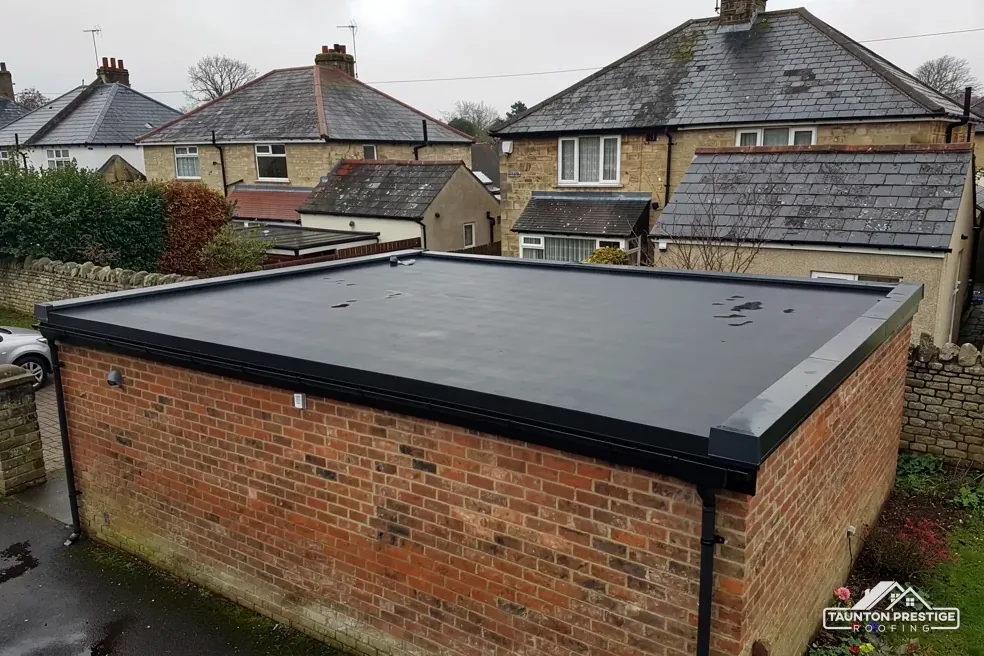
Flat roof coverings dominate on garages, which is why the first three rows matter most. The lives in the table also assume the roof drains, the edges are sound and nobody is dragging ladders across the surface. Pitched garages with slate or tile live on a different scale altogether, as the last rows show.
What shortens a garage roof's life
The published range is for a roof that has been built properly and looked after, in ordinary weather and with the gutters kept clear. Real garage roofs often miss on both counts, because garages get less attention than the house. A handful of faults account for most early failures.
Which faults do the damage?
- Poor falls. Water that cannot drain sits on seams and edges and wears them out. BS 6229:2025 sets a minimum 1:80 finished fall, and IKO advises designing for 1:40.
- A weak deck. Soft boards, sagging joists and gaps in the boarding make a bumpy base that cracks the covering.
- Poor edges. Missing drip edges and loose trims let water back under the covering.
- Blocked gutters and outlets, which flood the edges.
- Foot traffic. Roofs not built to be walked on suffer when people climb up to clear leaves or fit aerials.
- Overhanging trees, which drop debris, shade the roof and keep it damp.
Less gives felt a range of 10 to 20 years, so the gap between a roof at each end of it has little to do with the felt itself. What separates them is the base, the fall, the laps and the details.
For a sheet roof, the equivalent faults are corroded fixings, cracked or slipped sheets, and open laps. A sheet roof does not wear out evenly. It tends to fail at the fixings and joints first, and the sheets can outlast their bolts. Our guide to the best garage roof material compares the choices when you are planning a replacement.
Warning signs a garage roof is nearly done
Age matters less than condition. A ten-year-old roof that was badly laid may be finished, while a thirty-year-old one that was well laid may have years left. Look for the signs that tell you where yours stands.
How can I tell it is time?
On a felt roof, watch for a surface that has gone dull and crazed, with the mineral grit worn away. Look for cracks, especially at seams and edges and along any step in the deck, and for patches where an earlier repair has already failed, blisters that have split, and felt that has lifted or slid away from the wall. Puddles that linger for days are a sign of poor falls or a sagging deck. Moss and weeds growing in the surface show water is staying put.
On a rubber or fibreglass roof, look for tears, punctures, lifting at the edges and joins that have opened, and for hairline cracks in a fibreglass skin. On a sheet roof, look for cracks, brittle or crumbling edges, slipped panels, bolt heads rusted through and daylight inside.
Indoors, brown stains, dark patches and a smell of damp all point the same way. Several small repairs within a short time, or one that fails after a season, show that the roof as a whole is giving up.
Where the sheets could be asbestos cement, inspect from a window or from a ladder footed at the eaves, and never from the roof surface, because HSE counts every such roof as fragile.
None of these signs alone means the roof must go, but a cluster of them does. A survey tells you where your roof stands, and our guide to repairing or replacing a garage roof takes the decision further.
Sheets, asbestos cement and old roofs
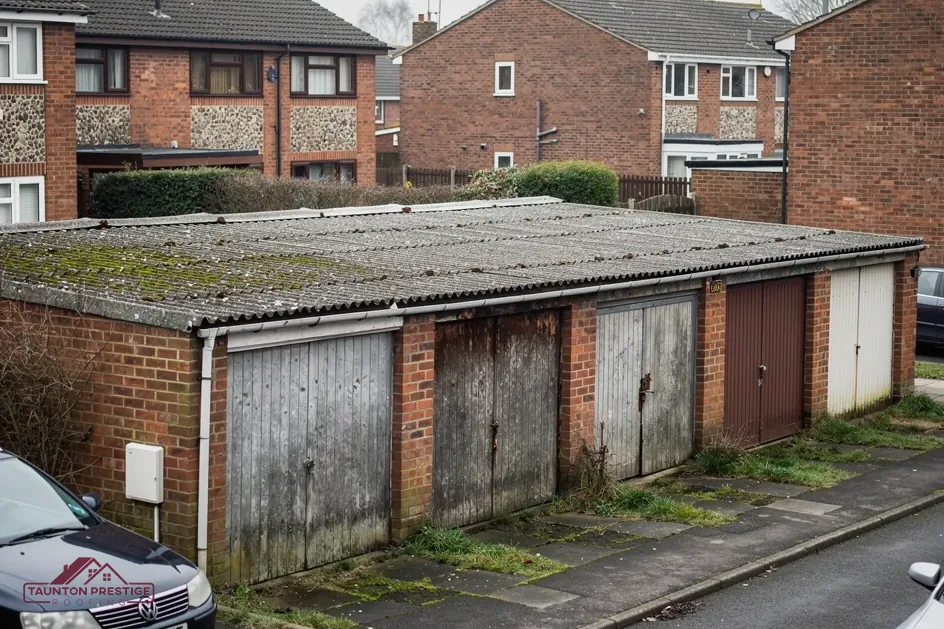
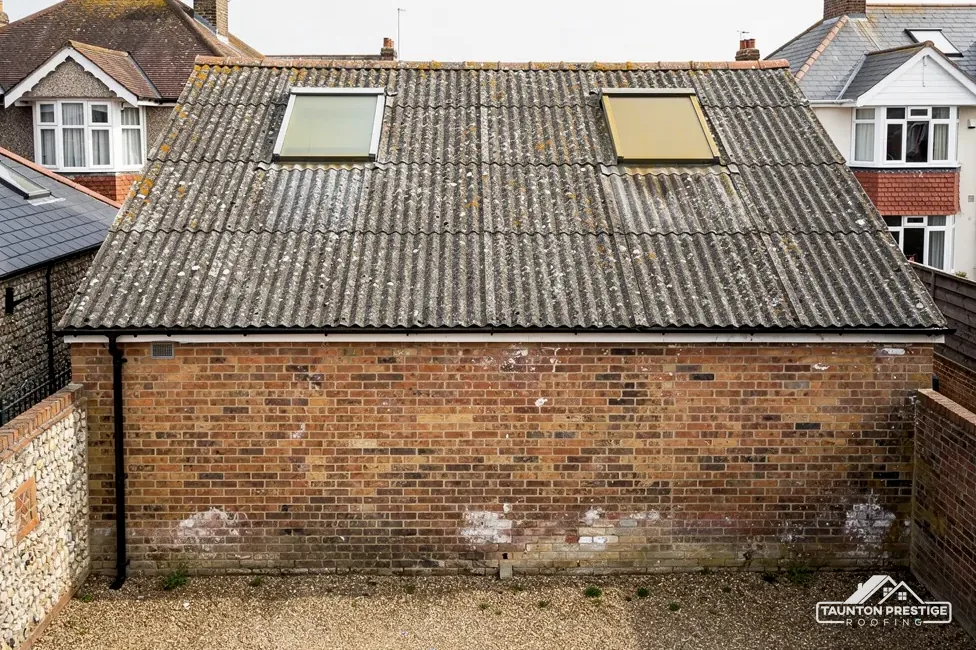
Corrugated roofing is a special case, because many older sheets were made from asbestos cement and have been up for decades. No lifespan figure for sheets appears in the guides we rely on, so judge them by condition. Look at the fixings, the laps and the surface, not at a date.
Does an old sheet roof need to come off?
Not automatically. Asbestos cement is stable if left undisturbed, and many sheets stay in place for years without trouble, so long as nobody drills, scrubs or breaks them. HSE suggests presuming asbestos in anything dating from before 2000, and only a test confirms what the sheets really are. The risk comes when the material is broken, drilled, scrubbed or dropped. HSE's rules treat careful, whole-sheet removal as non-licensed work, while smashing the sheets into pieces makes the job notifiable.
That is why a roof that is sound but ageing can sometimes be left alone, with the fixings and gutters maintained, until the day it needs replacing. Where the sheets are cracked, the bolts have rusted or the leaks are frequent, removal or overcladding is the next step. Removal means lifting the sheets whole, double-wrapping and labelling them, and moving the waste on a hazardous waste consignment note. It never goes in an ordinary skip.
If you are weighing the options, a survey will say which is feasible for your garage: removal, overcladding or a continued watch. The choices are listed in the hub for garage and asbestos roofs, and the cost guide puts published figures against them.
Pitched and tiled garage roofs
Some garages, particularly detached ones in older gardens or those built to match the house, have a pitched roof in slate or tile. These live on a longer timescale than flat coverings, and the published figures reflect that.
How long do slate and tile last?
CORC writes that slate which is well maintained can last 100+ years. For clay tiles, the BRE sets a minimum life expectancy of 60 years, a figure that belongs to clay alone, and one that old peg tile does not follow.
Concrete tiles are a separate case. Marley expects around 60 years from them and stresses that this promises nothing.
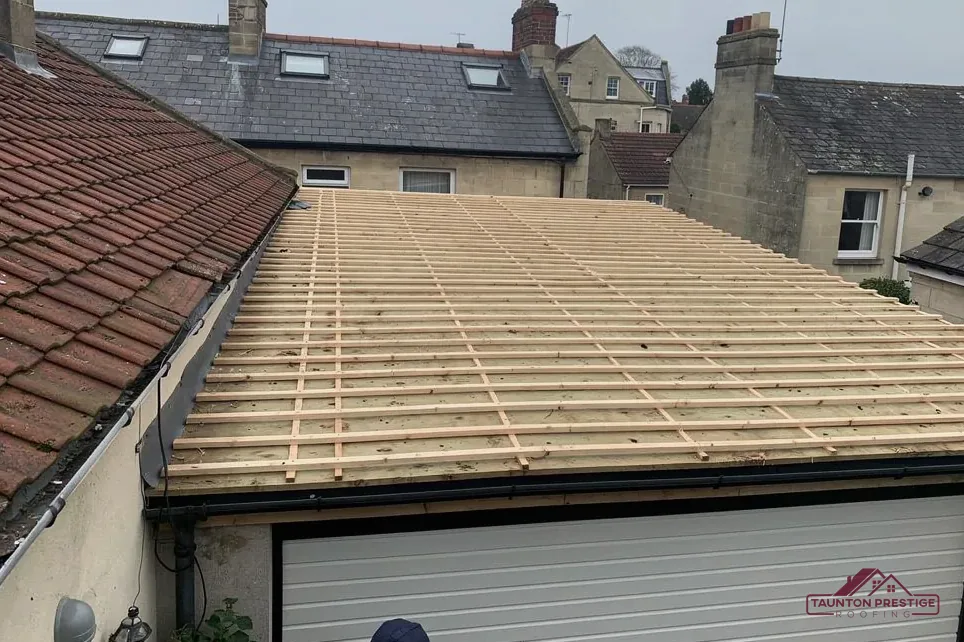
The covering is rarely the weak point on a pitched garage. The battens, the nails and the junctions give out first. Battens, the timber strips each tile or slate hangs from, can rot, and the nails holding slates can rust through. Lead flashing at a wall can last for over 80 years, MyJobQuote notes, but a mortar fillet or an old gutter may fail in a fraction of that time.
So a tiled garage roof often needs partial repair during its life: a few slipped slates, a repaired ridge, new gutters, fresh flashing. That is normal maintenance and no sign the whole roof is finished. Our page on a pitched roof on a garage covers the choice between flat and pitched when you are rebuilding.
Keep an eye on slipped or cracked pieces after winter storms, because a missing slate lets water reach the battens quickly, and battens that stay wet rot from the inside while the roof still looks sound from the drive.
Warranties, maintenance and planning ahead
Cover from a company and the working life of a material are different things. Cover spells out what a firm will put right, for how long and on which conditions. Working life is the period a material is expected to keep doing its job. A roof can outlast its cover, and cover can run longer than a product lasts in practice. Marley itself says its concrete tile figure promises nothing, and the same applies to every number on this page.
How do I get the most from a garage roof?
A little attention goes a long way, and none of it needs a specialist, only a ladder footed safely at the eaves and a free half hour each season.
- Clear the gutters and outlets in autumn and spring.
- Keep overhanging branches cut back and clear leaves from the surface.
- Check the edges and trims after stormy weather, from the ground.
- Look inside on a bright day for daylight and stains, using a torch in the corners.
- Keep off the roof, and keep ladders from leaning on the covering.
- Deal with a small split or loose trim before winter.
Thinking ahead matters too. If your roof is in the last third of its published range, start gathering information now rather than waiting for the first leak. Get a survey, learn what shape the deck is in and what your options are, and pick a time of year that suits you. A repair made in a panic during a storm is rarely the best way to end up with a new roof.
The cost guide on our site gives published ranges, and the survey gives you a figure for your own roof. We show you photos of the deck and the covering, say what remains, and set out one written price for what we recommend.
Garage roof lifespan questions
How many years will felt on a garage roof last?
Less gives torch-on felt a typical life of 10 to 20 years. Good work can reach the top of that range and poor work may fail in under 10. The deck, the fall and the edge details count for more than the felt itself, so condition is a better guide than age.
Which flat garage roof covering lasts longest?
Published figures put EPDM rubber and GRP fibreglass ahead of felt: GRP at 25 to 40 years (Less), and EPDM at 20 to 30 (GreenSpec) or 30 to 50 (Less). Treat them as typical lives, and remember that a poor deck or a weak edge can shorten any of them.
Can I extend the life of an old garage roof?
Often, yes. Clearing gutters, resealing a loose trim, patching a split and curing ponding can add years if the base is sound, and none of it costs much compared with a new roof. When the deck is soft, the fixings are rusted through or leaks keep returning, replacement is the better buy than repeated repairs.
More on this subject: Garage and asbestos roof replacement in Taunton