People ask what leadwork costs in the way they would ask the price of a loaf, and it is a fair thing to want to know. The honest answer is a range, and it stretches because the metal is rarely the biggest cost. The bigger variables are how high the work is, whether a ladder reaches the work or a scaffold tower is needed, how much old lead has to come off and what is found underneath. A lead job that looks small from the pavement can turn out larger once the roof is open, so ranges are a starting point.
This guide gives the figures published by national cost guides for chimney leadwork and roof valleys, names the guide and the month, and explains what each figure covers. These are national figures, useful as reference points for judging a quote when it lands, and they sit beside the other pages in our lead work section, including the explainer on lead codes, which says what thickness of sheet the job needs.
Typical UK figures for chimney leadwork
Chimney leadwork is the lead that seals the joint between the stack and the roof: the flashings around its base, the back gutter behind it and the soakers under the slates. It is the most common reason a householder asks about lead at all.
MyJobQuote publishes two ranges for it. A patch repair, where a single flashing is lifted and refixed, comes to £150 to £250. A full replacement of the chimney's leadwork is "between £350 and £920", and the guide notes the figure depends on the scaffold (MyJobQuote, Sep 2026). Treat both as typical UK ranges and not as predictions for a Somerset house.
Why is the gap between a patch and a full job so big?
A patch repair means the existing lead is sound enough to reuse and only one stretch has lifted. A full replacement means stripping the old lead, checking the stack and mortar joints, cutting new chases and fitting every flashing again. The second job also needs a safe working platform for longer, and that is where the money goes.
Rain finds the weak joint, so a patch makes sense where the remaining lead is in good order. If the lead has split in several places, or the mortar around it has gone, patching is money spent twice. That judgement is made at survey, with photos in your hand, so you are not left to guess.
For the reasons a flashing fails in the first place, see our guide to signs of failed flashing.
Chimney leadwork often travels with other chimney jobs. If the stack needs repointing, or the flaunching, the sloping mortar bed on top that holds the pots, has cracked, the same access serves for all of it. That is one reason to look at the whole stack before settling on a patch.
What a roof valley costs
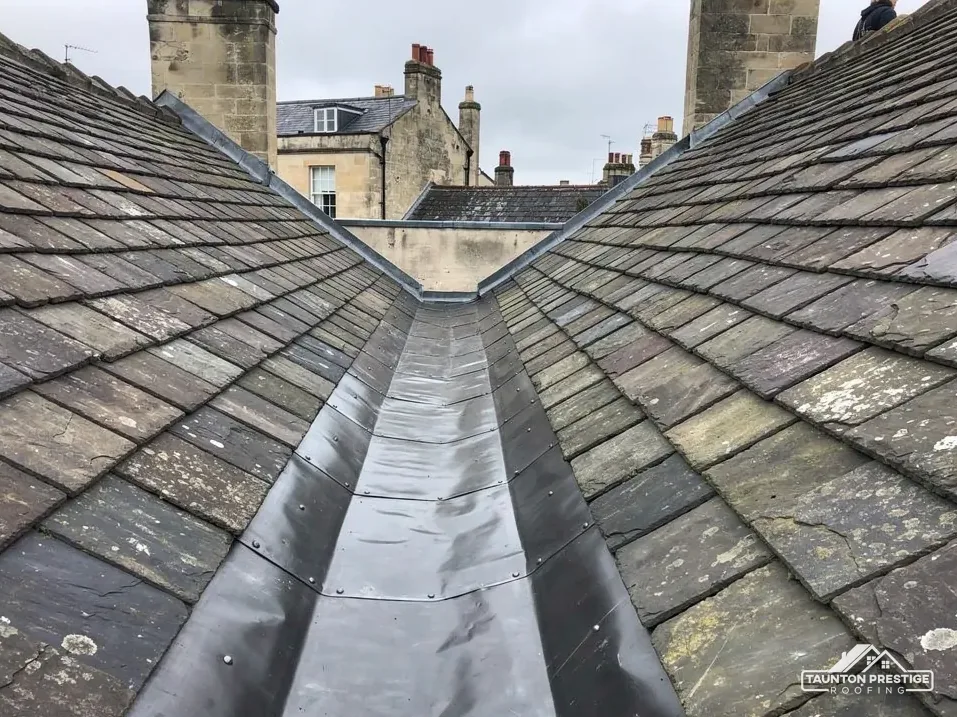
A valley is the point at which two roof slopes join, and the lead-lined gutter in it carries all the water from both. For a complete valley replacement the same guide quotes "around £540" (MyJobQuote, Sep 2026). That is an average for a typical job, not a range, so some will cost less and some a good deal more.
A valley job is different from a chimney job in one important way: the slates or tiles alongside the gutter have to be lifted and relaid to let the new lead in. That is slow, careful work, and a damaged slate on the way in adds to the repair. The width of the valley, the pitch of the roof and the code of lead all affect how much sheet goes in.
Is it cheaper to patch a leaking valley?
Sometimes. If the leak is at one split or one lifted joint and the lead around it is in good order, a local repair is a fair answer. If the gutter has creased along its length, a patch will only move the leak further down. Old lead that has thinned over many winters is better replaced in full.
It is worth asking your roofer to show you the underside of the lead and the state of the boards beneath, because soft or stained boarding changes the plan. Photos taken from underneath make that decision straightforward.
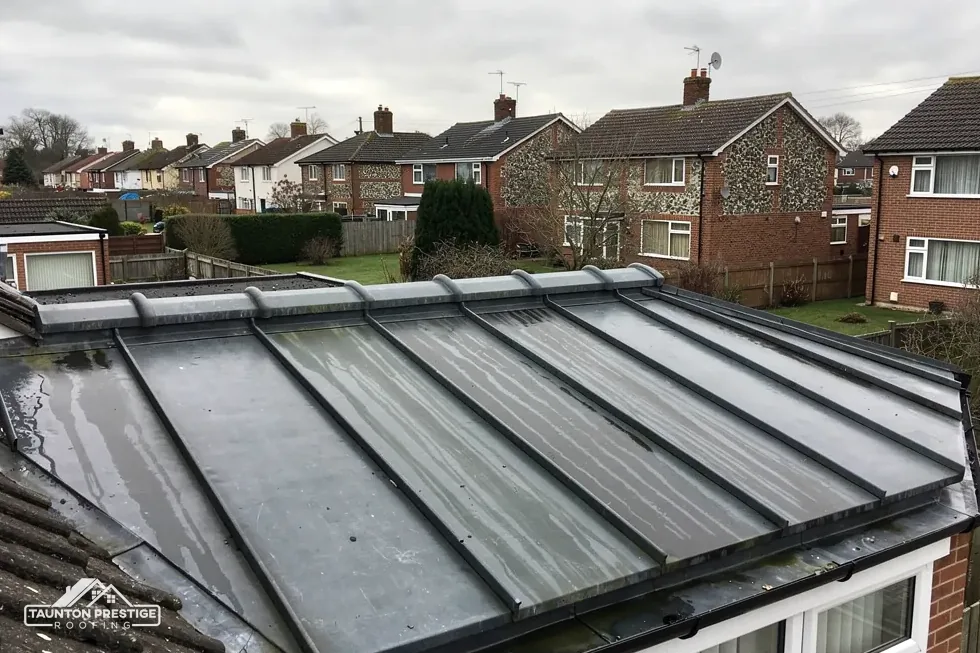
Valleys behind a parapet or between a bay and the main roof are a different shape of job, and they are priced by their own length and width. A short valley on an extension is a smaller task than a long one running between two main slopes, and the lead sheet needed grows with it.
Scaffold: the swing factor
On many leadwork jobs the scaffold outweighs the lead. Chimneys sit at the top of the house, and working safely on a stack above a pitched roof usually means a platform that reaches the base of it with edge protection. Two published figures help to frame it. HomeBuilding (Sep 2025) allows approximately £1,000 for a three-bed semi's scaffolding, permits included. MyJobQuote's replacing-roof-tiles guide gives front-elevation scaffold at £550 to £750 for a week-long hire (MyJobQuote, Oct 2026).
Those figures do not belong to any one house. A narrow terrace in a Taunton street, a semi with a side passage and a farmhouse with a high stack all need different set-ups, and the result moves the total by hundreds of pounds.
Does the scaffold need a licence?
Poles or boards that sit over a public footway or carriageway need a licence under the Highways Act 1980 s169, and the highway authority issues it. Somerset Council gives these to accredited contractors only, so the contractor it appoints is the one who applies; the fee is £124.60 per 28-day period (April 2026) and 10 working days' notice is asked. Elsewhere, ask who applies, because the scaffolder and we settle the licence between us.
Leadwork can sometimes share a scaffold with other work on the same elevation. If you are also having gutters, fascias or a re-roof done, say so at survey so one set-up can serve the lot.
Whoever puts the scaffold up, the cost of it lands in your total, so it is fair to ask how long it will stand and whether other work can share it.
What else moves the price?
After access, five things decide where in the range a leadwork job lands. We list them so you can see why two chimneys on the same street can be priced differently.
- How much lead is being replaced, and how much of the old can stay.
- The lead code, since thicker sheet means more weight of metal. Our lead codes guide lists the weights.
- The condition of the mortar joints the lead is tucked into, because loose or crumbling joints need repointing first.
- What is found under the old lead: rotten boards, damp timber or a failed tray behind the stack.
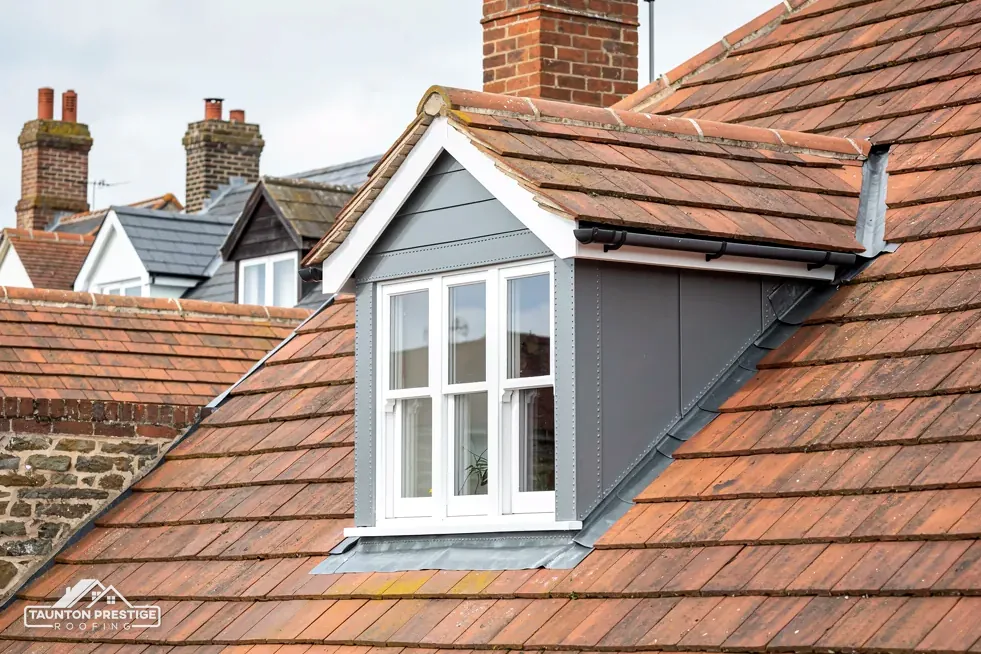
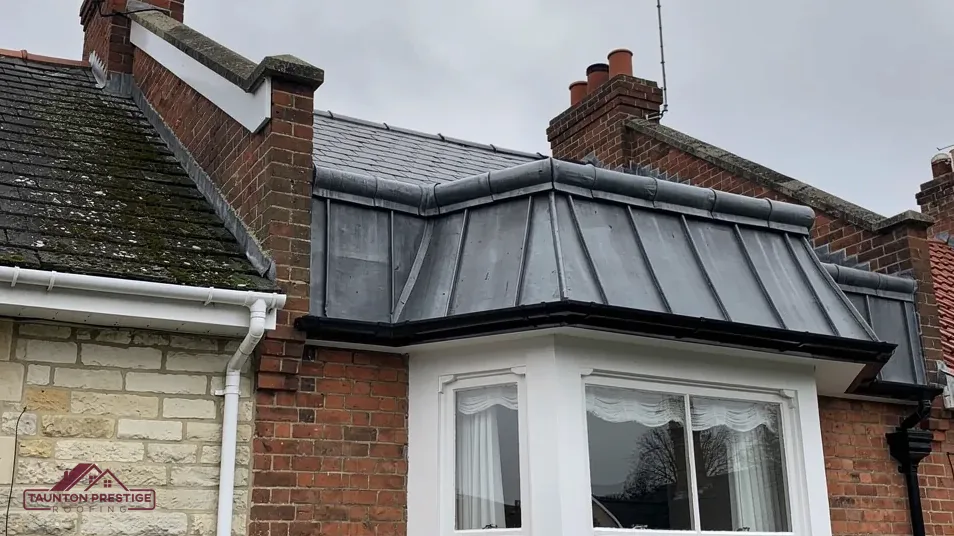
- The number of separate elements, such as chimney, valley and bay roof, on one visit.
Does repointing add to the bill?
It can. MyJobQuote gives chimney repointing as a typical UK range of £450 to £1,200 (MyJobQuote, Oct 2026). Lead is chased into the mortar joint and held there, so a stack with crumbling joints needs sorting before new flashings will stay put.
A sealant bead is sometimes offered as a cheap alternative to doing the joint properly. We explain why that rarely works in why sealant will not fix failed flashing.
Before you accept any quote, check that VAT and scaffold are counted in the figure. Two prices are only comparable when both cover the same things.
Time on site counts as well. A job that needs the old lead stripped, boards repaired and new lead dressed in two stages takes longer than a straight swap, and a longer scaffold hire follows. Wet days can push the work out, and an extra week of hire adds to the total.
Repair or replace: what pays back
Lead is one of the longer-lived roofing metals, and MyJobQuote says it "can last for over 80 years". That is a lower bound for well-fitted lead, and it tells you why replacing old leadwork properly tends to be a better long-term buy than repeated patching. It is not a promise about any single roof.
When is a patch the better buy?
When the lead is mostly sound, the mortar is firm and a single flashing has lifted or split. A repair costs a fraction of a full job and you keep the rest of the lead. The weakness is that a patch has only as long a life as the lead and the joint around it.
When is replacement the better buy?
When the lead has split in several places, has thinned or has been patched before, or when the mortar is failing. Doing the whole run once usually costs less over time than returning to a leaking stack each winter. If a scaffold is going up anyway, doing the whole run at once also spreads the cost of that access.
Leadwork during a bigger job is a common case. If you are already re-roofing, the lead around chimneys and valleys is renewed while the slates are off. Our page on leadwork during a re-roof explains how the two fit together.
Emergency leaks are different. If water is coming in tonight, a make-safe visit comes first and the lasting repair follows.
If the roof is old and the covering is tired as well, ask whether the leadwork should wait for a bigger job. Replacing lead now and the slates in a year or two means paying for access twice, so the timing is worth thinking through with your roofer.
How we price leadwork in Taunton
We look at the lead before we price it. At survey we check the flashings, the back gutter and the mortar, and photograph each area, which lets you judge the problem with your own eyes. That is the part national cost guides cannot do: they average thousands of different roofs, and yours is one of them.
What does the finished quote look like?
The price comes as a single written total for the roof as we surveyed it. It reflects the access, the area of lead, the code and the condition of what lies beneath. If something unexpected turns up when the old lead comes off, we show you a photo and talk it through before any extra work starts.
The prices on this page come from national guides, and ours may sit above or below them, depending on what your roof needs. The guides are useful as a sense check, nothing more. If a quote is far outside the range, ask what it covers, and check that scaffold and VAT are counted in the figure.
What should you have ready for the survey?
- Where the stain or leak shows inside, and when it appears.
- Photos from the ground if you have them.
- Any earlier repair, and who did it.
- Whether the house is protected by listing or conservation status.
With that, we can plan the access properly and give a price that does not change halfway through the job.
Expect the survey to take time on the roof, and expect your roofer to explain what they find in plain words. That conversation is where a fair price is made, and it is why we would sooner look first than guess from a phone call.
Leadwork cost questions
How much does chimney leadwork cost in Somerset?
MyJobQuote's typical UK range is £150 to £250 for a patch and £350 to £920 for a full replacement (MyJobQuote, Sep 2026). Where in that range a Taunton chimney falls depends on the scaffold, the condition of the mortar and how much lead is renewed.
Why is the scaffold such a big part of a lead job?
Chimneys and valleys sit high on the roof, so the work needs a safe platform with edge protection. HomeBuilding (Sep 2025) puts scaffolding at approximately £1,000 for a three-bed semi, and the cost to you depends on the house, the street and how long the work takes.
Is it worth paying for a full replacement instead of a patch?
If the lead has cracked in more than one spot or has been repaired before, yes. Lead can last for over 80 years (MyJobQuote), so one proper job tends to beat repeat visits. If one flashing has lifted and the rest is sound, a patch is the better buy.
More on this subject: Lead work in Taunton