The pitch is attractive. A faded, streaky roof is cleaned, sprayed with a coloured coating, and looks new in an afternoon. No scaffold for a re-roof, no stripping, no new tiles. For some roofs that sounds like a sensible shortcut, and it is easy to see why the offer lands on doorsteps and in leaflets.
The difficulty is that a coating is a skin on the surface, and most roof problems are not on the surface. They sit in the fixings, the laps, the underlay, the battens and the flashings, none of which a coat of paint reaches. A surface that looks fresh can also hide the faults that a surveyor, a buyer or a lender will want to see. This guide sets out the honest case against most coatings on pitched roofs, the narrow cases where something applied to the surface is reasonable, and what to check before agreeing to any sprayed product. It sits within our roof cleaning and moss removal advice for Taunton and Somerset.
What a roof coating actually is
Roof coatings are liquids applied over an existing covering. Some are thin paints for concrete tiles. Some are thicker sprayed finishes sold as a sealer, and a different family of liquid-applied waterproofing is used on certain flat roofs. These products differ in kind, so the claims made for one do not carry over to another. Read each sales line for what the product is meant to sit on, how thick it goes on and what happens to the surface beneath.
On a pitched roof of slate or tile, the covering already does the waterproofing job. Water runs off the surface, and what gets past the surface is caught by the underlay and led down to the gutter. A coat on top does not replace either of those. At best it changes the colour and the feel of the surface. At worst it changes how the surface sheds or holds water.
Is a coating the same as a new roof covering?
It can be treated as one. The Planning Portal sets two triggers for Building Regulations approval: a new covering material that makes the roof covering 15 per cent or more heavier, and a new covering whose fire performance will differ significantly from the old. A thin tint is unlikely to raise that question. A thick applied layer is the kind of product to ask about before it goes on, because the weight and the fire rating of what you add are the supplier's to state.
If the supplier says the product is not a covering and needs no consent, ask for that in writing, and keep the product data sheet. Ask building control if the answer is not clear.
What a coating cannot fix
Look at the faults that bring people to a roofer, and check how many a coating reaches. The answer is very few, and none of the expensive ones.
- Slipped or cracked slates and tiles: a coating cannot hold a slate in place.
- Rusted nails, which let slates drift, and soft or undersized battens: both are hidden beneath the covering.
- Failed ridge mortar or loose ridge tiles.
- Worn flashings, cracked flaunching on the chimney and gaps around lead.
- Torn or perished underlay.
- Blocked valleys and gutters.
Each of those needs a repair, and each is easier to see on a clean, uncoated surface. A fresh coat can seal over a hairline crack for a while without addressing why it cracked, and the same crack tends to reopen through the film when the tile moves with the weather. A slipped slate under a coloured skin is still a slipped slate, only harder to spot from the ground.
Will a coating stop moss coming back?
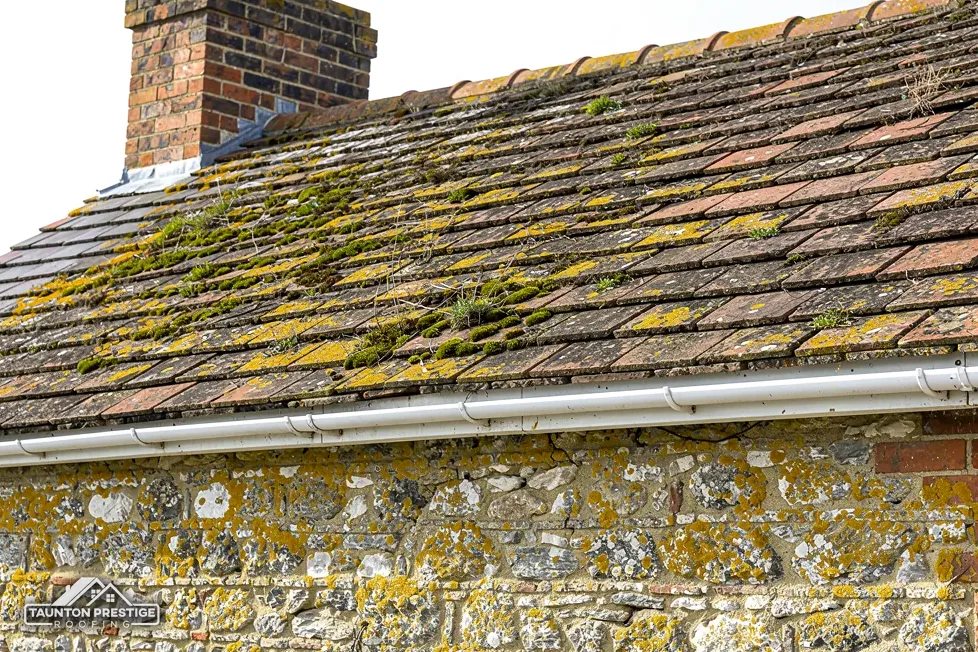
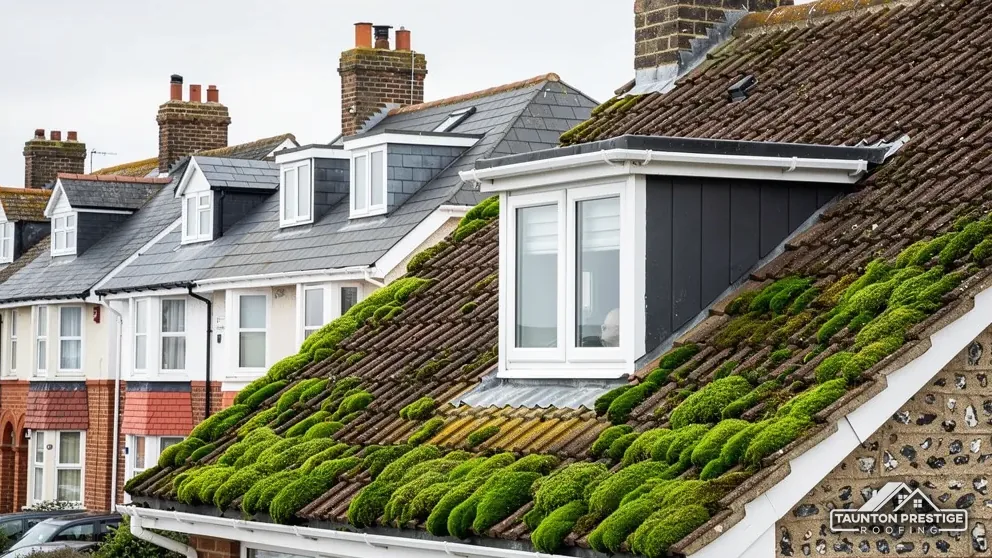
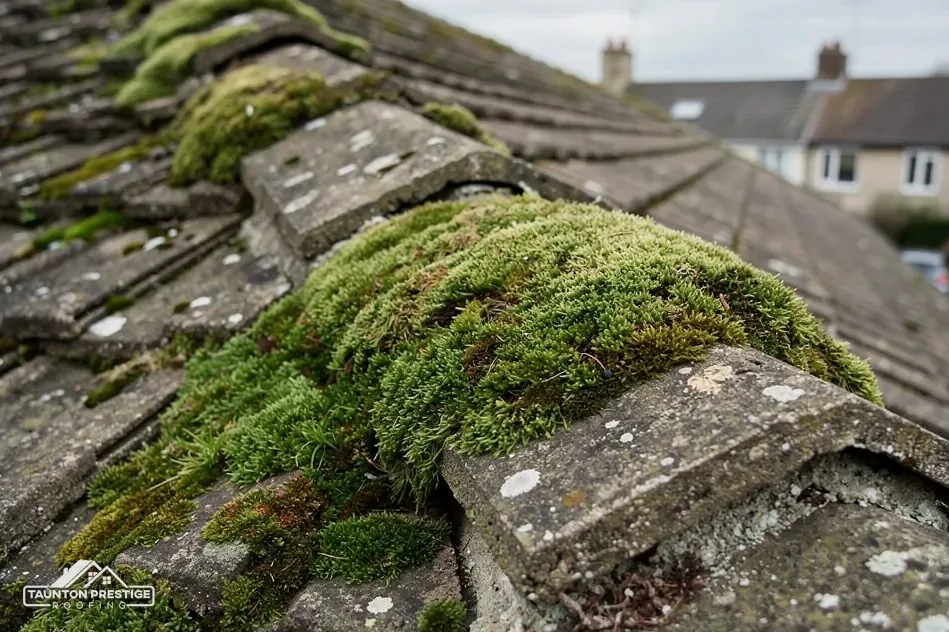
Do not rely on it. Moss and algae grow where the roof is shaded, damp and slow to dry, and a coating does not change the orientation of the slope or the tree beside it. Some products carry an added biocide, which brings the rules on authorisation and professional-only use into play, set out in our guide to soft washing and biocide treatments. A treated roof is not a protected roof, and any regrowth will be on the new surface.
If moss keeps coming back, the better questions are about light, air and drainage. Our notes on moss growing back after cleaning cover them.
Preparation, and the cleaning that comes first
A coating can only grip a surface that is clean, dry and sound. That means the roof is cleaned before it is coated, and how it is cleaned matters. Marley does not recommend jet washing slate or tile at high power, because the water can harm the face of the covering and shorten its working life. A coating job that starts with a hard blast of water starts by risking the covering it claims to protect.
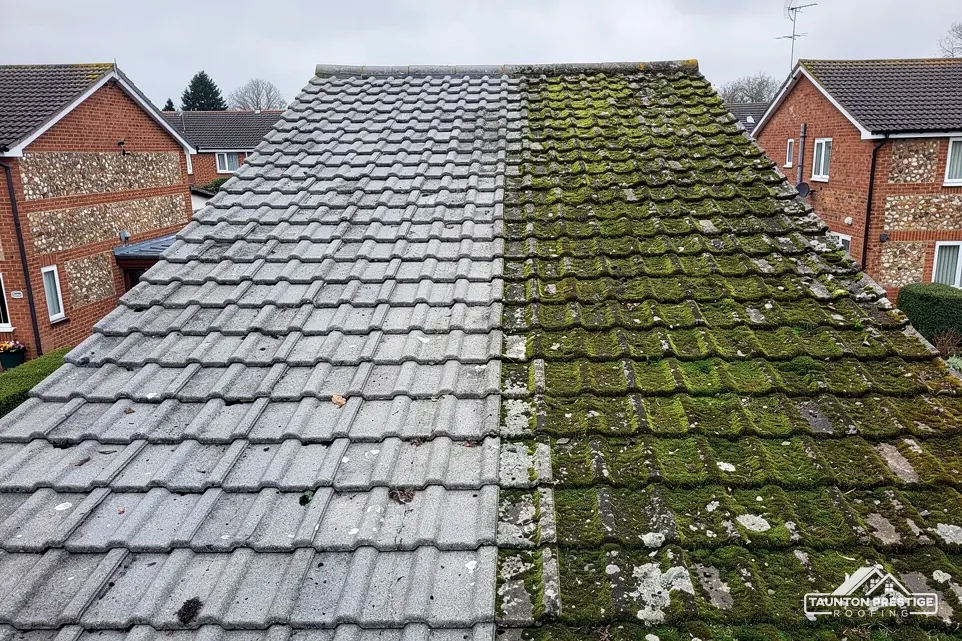
Old concrete tiles lose some of their surface colour with weathering, and that is the usual reason people consider a coating in the first place. Our page on faded concrete roof tiles explains what is happening on the surface and whether it matters.
What should I ask before a coating goes on?
Ask which product it is and for its data sheet. Ask what the surface preparation is, and what is done about moss, lichen and loose granules. Ask who applies it and whether the product has a stated lifespan. A stated lifespan or warranty on a coating speaks for the coating, not for the roof underneath it, and a warranty period tells you nothing about how long the roof will really last.
Ask, too, what happens at the end of the coating's life, and who is responsible for the stripping. A coat that has started to peel or flake needs stripping before anything else is applied, and stripping a bonded finish from tiles is harder than cleaning them. Get the answer in writing, because it is the part of the cost that nobody mentions at the door.
Lenders, surveyors and your own paperwork
When you sell, remortgage or insure the house, the roof is looked at, and a surveyor can only report on what they can see. A coated surface can make it harder to judge the covering and the fixings, and a buyer's surveyor may recommend further investigation, which can slow a sale.
Before any sprayed or painted product goes on, speak to your mortgage provider and your insurer, and ask your surveyor what they would want to see. The RICS consumer guide makes this point about spray foam insulation, a different product with the same kind of question: it advises owners to put that question to the mortgage provider before the installation, since the lender's policy may not allow it. The principle holds for anything bonded to the roof, and the same call is worth making before a sprayed finish. We are not saying that any lender refuses a coated roof. We are saying that the answer should come from them, in writing, before the work, not after.
Does a coating affect a tile maker's guidance?
It might, and the person to ask is the maker. Check the manufacturer's advice on the tile you have, because many specify cleaning and maintenance methods that a coating can cut across. Marley, for one, publishes advice on cleaning and maintenance for its products, and it is sensible to read the page for your own tile before agreeing to anything that bonds to the surface. If the answer is unclear, ask the supplier of the coating to put its position on your tile in writing.
Keep a record of the work too. A coating that goes on over unrepaired faults also leaves you with a trail of paperwork that says the roof was sound when it was not. If a coating is ever stripped or the roof is inspected, photos of the roof before the work, the product name, the data sheet and the invoice save a great deal of guesswork. Our guide to roof inspection reports shows what a useful record contains.
Where a coating is reasonable
There are cases where a surface treatment makes sense, and they are narrower than the leaflets suggest. Some flat roofs use liquid-applied waterproofing as a system, designed, specified and laid as the covering, with its own data sheet and detailing at upstands and outlets. That is a roofing system, and a different job from tinting a tiled slope.
On a small outbuilding or a garage with a worn but sound sheet roof, a maintenance coat can extend the useful life while you plan a proper replacement. The key words are worn but sound. A roof that already leaks, or has failed fixings, is not a coating job.
When is a coating the wrong choice?
It is the wrong choice whenever it is being used to avoid a repair that the roof needs. If slates are slipping, if you can see daylight in the loft, if there are stains on the ceiling below, or if the ridge is moving, the money is better spent on fixing the cause. A coated roof that still leaks has cost you twice.
It is also the wrong choice when it is sold as a way to skip a survey. The signs that should make you pause include pressure to decide on the day, a price for a roof nobody has climbed onto, and a promise that the roof will never need attention again. Our guide to spotting a worthwhile roof clean sets out how to weigh those offers. Any firm that is confident in its product will leave you with the paperwork, the data sheet and time to think it over.
A sounder route for most pitched roofs
For a pitched roof of slate or clay or concrete tile, the sequence that holds up is plain. Look at the roof. Clean it using a method the covering can take. Repair what the clean shows up. Then leave it alone, with a regular look from the ground and the loft.
That sequence costs less than it sounds, because each step either solves a problem or tells you there is none. Our roof clean and repairs page shows how cleaning and repair fit into a single visit when they should.
What if the colour is the only problem?
Then the question is whether it matters. Faded or streaked tiles are a cosmetic issue, not a failure, and plenty of sound roofs look weathered. If it bothers you, ask for a clean first and judge the result. If a coating is still on your mind, take the questions in this guide to the supplier and see how they answer.
If the roof is old enough that coating is being considered as a last resort, a survey may show that targeted repairs, or replacing a slope, would give a better return. We would rather show you the photos of your roof and let you decide than sell you a finish. A survey is the way to find out which route suits your house.
Coating questions
Can I paint or spray my roof tiles to make them look new?
You can, but it changes the surface only. It will not fix slipped tiles, rusted nails, soft battens or worn flashings. Ask for the product data sheet, tell your mortgage provider and insurer first, and have the roof surveyed beforehand so any repairs are done before the coat goes on.
Does a roof coating need Building Regulations approval?
Possibly, if it works as a new covering. The Planning Portal names two triggers: a covering that makes the roof 15 per cent or more heavier, and one with a significantly different fire performance. Ask the supplier for the answer in writing, then check with your building control body.
Will a coating make my roof last longer?
Not as a rule. Slate, clay and concrete tile are already durable, and a coating cannot reach the battens, underlay or fixings that tend to fail first. Any lifespan quoted speaks for the coating, not for the roof beneath it.
More on this subject: Roof cleaning and moss removal in Taunton