Spray foam was usually sold as an upgrade that would make a house warmer. When damp, staining or soft timber later turns up under it, the next worry is money, and the first question is whether the home insurance will help. Only the insurer can answer that, because only the insurer can read your policy against the facts of your roof. A roofer cannot decide a claim, and neither can a website.
What a roofer can do is give you clear evidence and plain advice on the order of events. This guide explains why policy wording matters so much, why slow damage is treated differently from a sudden event, what to say to the insurer and when, and which records are worth keeping. It also covers what to do if you disagree with an answer and why the mortgage lender is a separate conversation. It sits within our spray foam insulation removal work across Taunton and Somerset, where every job starts with a survey of the roof under the foam.
Why the policy wording decides everything
Home insurance is a contract. The contract is the booklet and schedule sent to you at each renewal, not a general idea of what insurance is for. Two neighbours with similar houses can hold policies that treat the same roof problem differently. One may list the cause as covered and the other may list it as an exclusion, which is a thing the policy will not pay for. That is why nobody can promise you a payout, however obvious the damage looks from the landing.
Which parts of the policy should you read?
Look first at the buildings section, since the roof is part of the structure. Then find the exclusions. Pay particular attention to any wording about wear and tear, gradual damage, faulty workmanship, and damage caused by building work or materials added to the house. Spray foam sits awkwardly between those headings, because the foam is an addition to the building and the damage linked to it usually builds slowly.
Read the excess as well. That is the first slice of any claim that you pay yourself, and it can decide whether a small claim is worth making at all.
If a clause is unclear, put your question to the insurer by email so the reply is on paper. Describe the situation in neutral terms: foam covers the underside of the roof, and you want to know how the policy treats damage to the roof timbers and covering that might be linked to it. File the answer with your other house papers. A vague phone call is hard to rely on a year later.
Sudden events and slow damage are not the same
Insurers draw a line between an event that happens on a particular day and damage that creeps up over seasons. A gale that lifts a ridge tile is an event. Timber that slowly darkens and softens in the roof space over several winters is not, and a policy may treat the two quite differently.
Is a storm the same as slow damage?
No. The Financial Ombudsman Service describes how it thinks about storms: strong gusts, normally bringing rain, hail or snow with them. An insurer deciding a claim will ask whether the damage fits an event of that sort, so a dated gale on the weather record counts for something. If your roof lost slates overnight in a gale, that is one conversation. If the problem is damp behind the foam, the insurer is likely to ask when the damage began, and a clear answer may be hard to give.
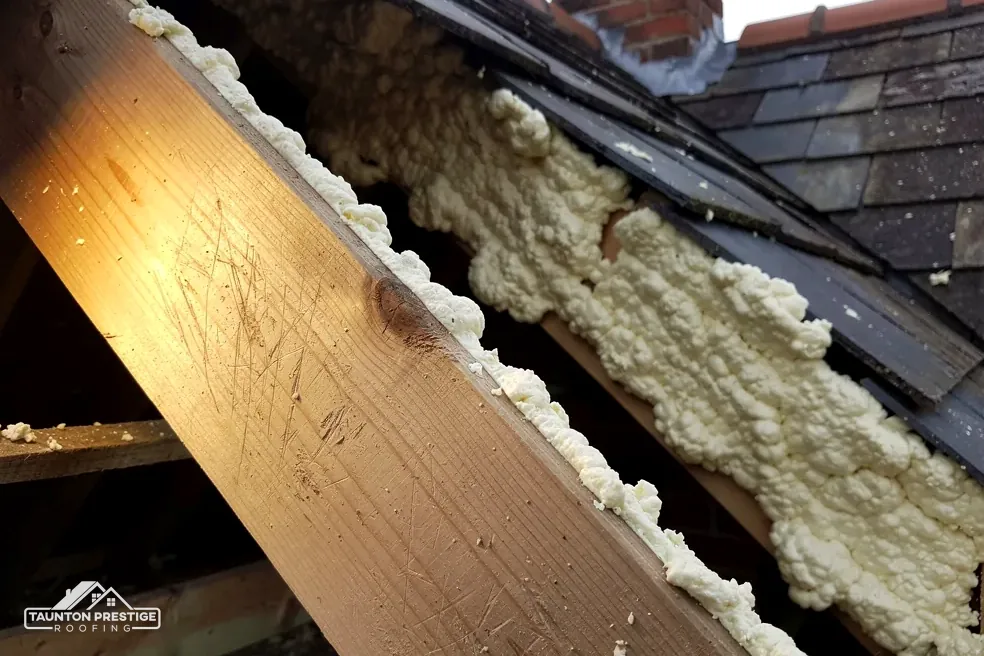
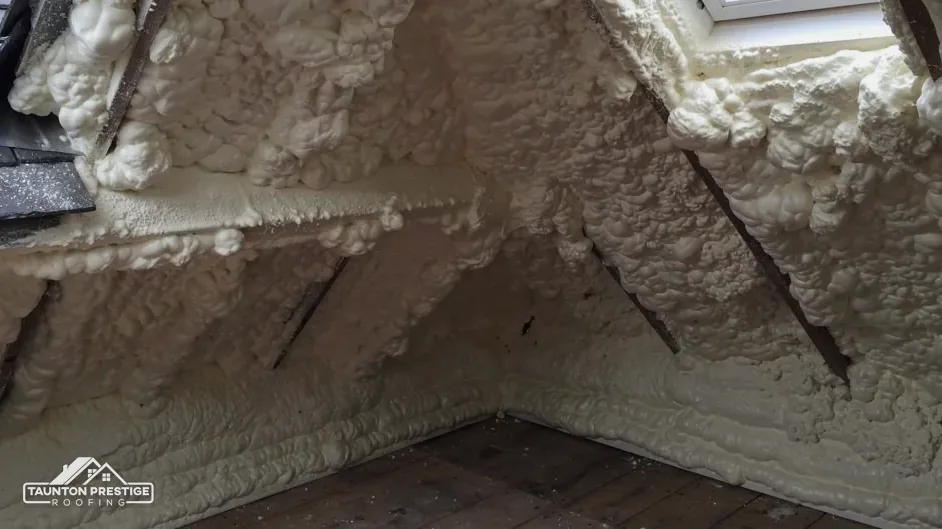
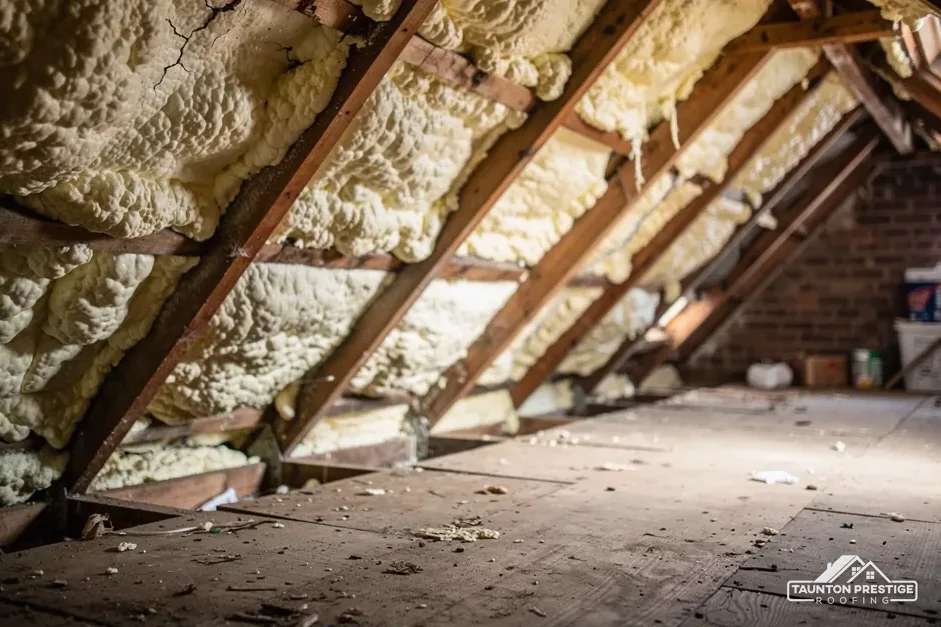
This is where the foam makes things awkward. A roof space filled with foam cannot be checked by eye, so rot or a slow leak can go unseen for a long time. By the time a mark shows on a bedroom ceiling, the cause may have been working through several winters. Our guide to spray foam and timber rot explains how that happens and how it is found.
Do not guess at the cause when you contact the insurer. Say what you can see, say when you first noticed it, and say that foam covers the underside of the roof. Then leave the insurer to decide how the policy applies. A guess that turns out wrong can be quoted back at you later, while a plain description cannot.
What to tell your insurer, and when
If you think a claim may be possible, tell the insurer first, before any work starts. The reason is practical. The insurer may want to see the damage as it stands, send its own assessor, or set conditions on who carries out the repair. Work done before that call can make it harder to show what was there.
What if water is coming in right now?
Make the house safe, but keep it simple. Sheeting over a wet patch, or a quick fix that keeps the rain out, is sensible and normally expected. A full removal of the foam is a far bigger step, and you can usually pause it while the insurer replies. Photograph the area before and after any temporary work, and hold on to each receipt, including those for sheeting, ladder hire or a call-out. If a roofer makes the roof safe for you, ask for the pictures of what was done as well.
Photographs matter more than you might expect, because they show the insurer what you saw without relying on your memory. Take wide shots that show the whole room or roof slope, then close shots of each mark or stain with something in the frame for scale, such as a tape measure laid beside it. The Institution of Structural Engineers describes pictures as vital to a claim for exactly this reason.
Write down dates as you go: when you first saw the stain, when it grew, when you rang the insurer and who you spoke to. A dated list is easier to rely on than your recollection of a wet winter, and it takes ten minutes to keep up.
Evidence a roofer can give you
A roofer cannot decide your claim, and a survey report is not a verdict. It is a record of what can be seen: the foam, the condition of the felt or tiles where they show, and the state of any exposed timber. That record is useful because it replaces vague descriptions with pictures that anyone can look at.
What does a good roof record include?
Ask for dated photographs of the foam from the loft hatch and from further into the roof space, close shots of any stained or soft timber, and pictures of the outside slopes. A short written note should say what was seen and where on the roof, using plain terms such as rafters, the sloped timbers the tiles ultimately rest on, and underlay, the membrane that sits under the tiles or slates. Keep claims about cause out of the note unless the roofer has opened the area up and seen it for real, because a guess written down becomes evidence of its own.
Our survey works this way as standard. Photographs of your own roof come to you, so you hold the same evidence we do, and you decide who else reads it. The claim is yours and the insurer's to settle.
One more document is worth keeping. If a surveyor's report from a house purchase mentions foam, put it with the rest. Such reports are covered in the guide on a surveyor flagging spray foam, which sits alongside this one. Dated paperwork from before the problem began can matter as much as pictures taken after it.
When the insurer turns you down
One refusal need not close the matter. First request the reason on paper, together with the clause relied on. If you think the insurer has misread the facts, you can ask it to look again and send fresh evidence, such as photographs of the timber after the foam has been taken off. A second look at better pictures sometimes changes the picture entirely.
Can you complain if you disagree?
Yes. Start with the insurer's own complaints procedure. The Financial Ombudsman Service explains the timing: eight weeks without a final response from the firm opens the door to the Ombudsman. When a final response does arrive, you have six months from its date to bring your complaint, and the Ombudsman describes its service as free to use. Keep that letter safe, because the six months are counted from its date.
It helps to know how often claims fall short, so that a refusal does not feel personal. Which? reported that only 32% of storm-related claims made in 2024 resulted in a payout. That figure is about storms, not foam, but it shows why reading the wording and keeping evidence matter from the first day.
None of this means a claim will succeed. It means the process stays open to you, you can use it without paying, and the evidence you gathered early is what a complaint will be judged on. Work through it calmly, one letter at a time, and keep copies of everything you send.
Lenders, removal costs and the next step
The insurer is one conversation. The mortgage provider is another. The RICS consumer guide on spray foam tells owners to ask the mortgage provider whether its own lending rules permit foam insulation in the first place. If you are selling or remortgaging, ask early and in writing, and do not assume that the answer given to a neighbour applies to your house. Lenders word these rules in their own ways, and the answer can change between one application and the next.
Who pays for the removal itself?
Usually that is a separate question from the damage. If the foam was sold to you with promises that did not hold, you may have rights against the seller, and our guide to spray foam mis-selling and your rights sets out the consumer rules. If you simply want the foam out, the price depends on the type of foam, the area, access and what the roof needs afterwards. What spray foam removal costs explains those drivers one by one.
Whatever you decide, keep three things together in one folder: the policy documents, the dated photographs, and every letter or email exchanged with the insurer and the lender. When a conversation goes cold, that folder is what lets you pick it up again without starting over.
When you are ready to see what lies under your foam, the survey is where we start. We lift what is safe to lift, photograph the timber and the felt beneath, and tell you what we find in plain words.
Spray foam and insurance questions
Will my insurer pay to remove spray foam?
The answer lies in your policy wording and in what the insurer decides caused any damage. Taking out foam you chose to have fitted is often treated differently from mending damage it is linked to. Ask the insurer by email how your wording treats each, and file the reply.
Should I tell the insurer before the foam comes out?
If you may want to claim, yes. The insurer may wish to see the damage as it stands or to set conditions on the repair. Tell it first, take dated photographs, keep receipts for any temporary repair, and wait for its answer before starting larger work if you can.
Can roof photographs help with a claim?
They help you describe what happened, and structural engineers call them vital for a claim. They do not decide it. The insurer reads the policy against the facts, so send clear, dated pictures plus a brief note of what you saw, where on the roof, and when you first noticed it.
More on this subject: Spray foam insulation removal in Taunton