St Pancras's church tower
A Perpendicular west tower with diagonal buttresses, a high stair turret and battlements.
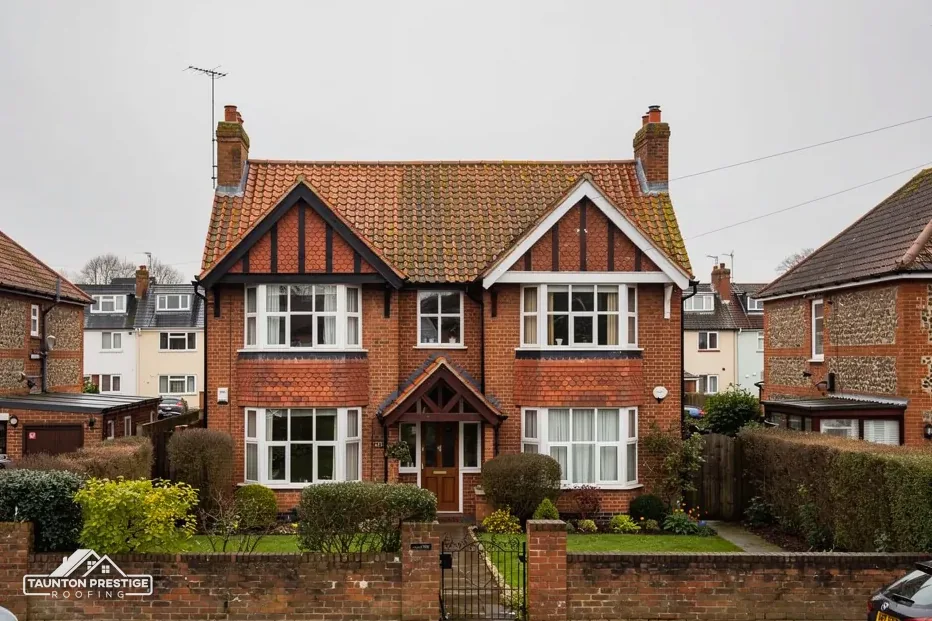
Below Bagborough Hill, in a conservation area and a National Landscape
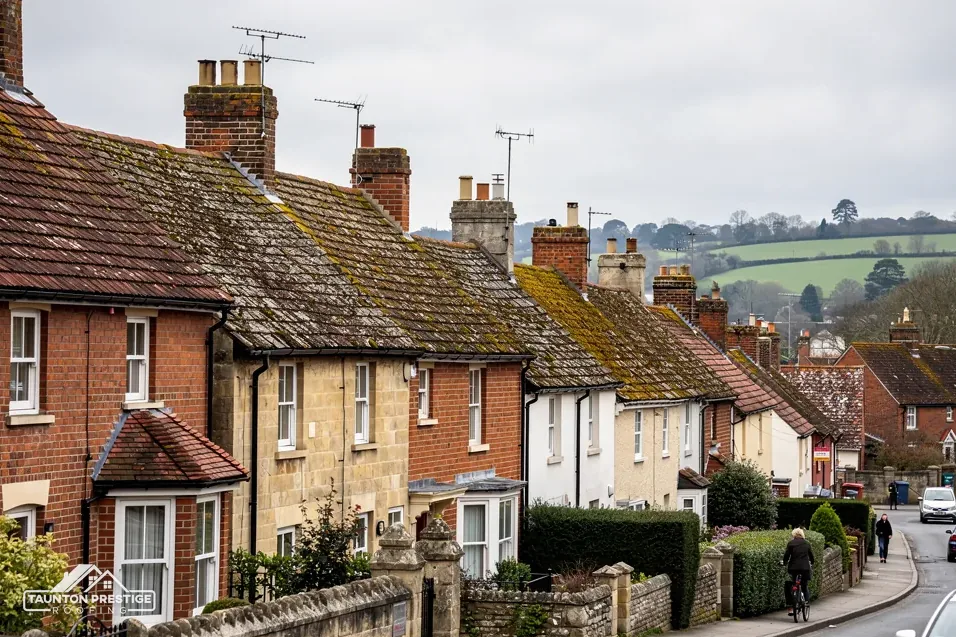
West Bagborough is a village on the south-western slopes of the Quantock Hills, inside both a conservation area and the National Landscape. Every roof is surveyed first.
A Perpendicular west tower with diagonal buttresses, a high stair turret and battlements.
The church was heavily restored, yet it keeps its original wagon roofs overhead.
The West Bagborough conservation area lies within about 0.75 km of the village centre.
Street map of West Bagborough with Treble's Holford, Rich's Holford, Eastcombe, Cothelstone marked around it, and Taunton.
Treble's Holford and Rich's Holford lie to the west, Eastcombe to the south, Cothelstone and Toulton to the south-east, and Bishops Lydeard further south.
About 7 miles north-west of Taunton, Somerset Council (unitary).
Roof checks below Wills Neck
Four things to examine on a hillside cottage, farmhouse or barn, and how each finding changes the work, the consent and the price.
West Bagborough is covered by two layers of protection. Its conservation area, designated on 21 April 1993 according to Somerset Council's table, lies within about 0.75 km of the village centre, and the village sits inside the Quantock Hills National Landscape, formerly an Area of Outstanding Natural Beauty. The Quantock designation was made in 1956, and a Somerset Heritage publication on the AONB describes its survey area as covering approximately 100 square kilometres. In November 2023 every AONB in England and Wales took the National Landscape name, a rebranding that is not statutory, so planning law still speaks of areas of outstanding natural beauty.
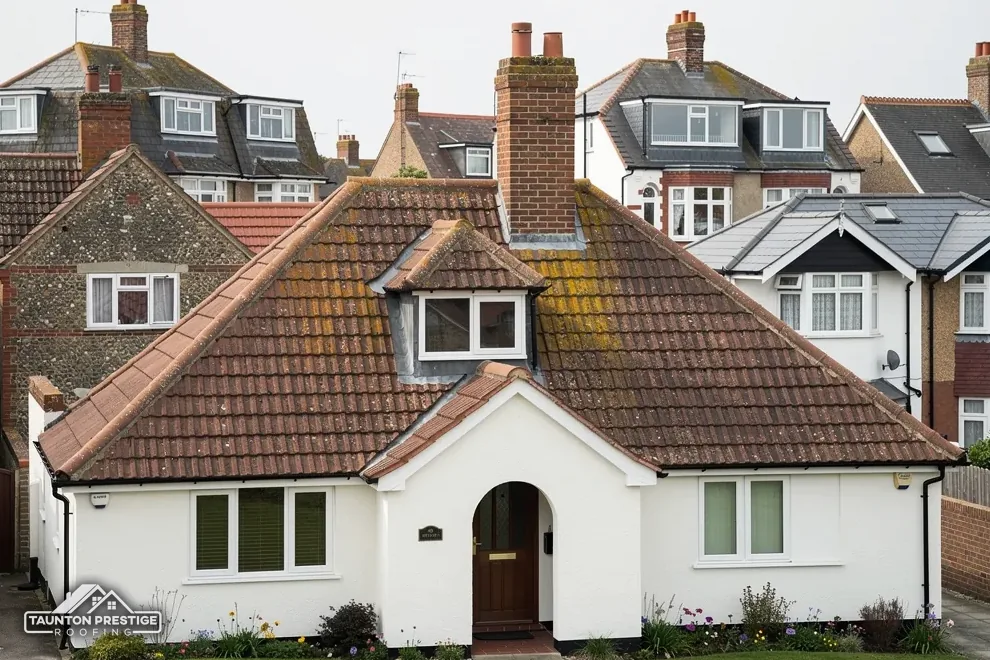
In a conservation area or the Quantock Hills National Landscape, a new dormer needs a planning application, whichever designation catches it. Our short guide to dormers in a National Landscape explains what to expect. A like-for-like repair of the covering is a separate matter, and the council's planning team is the place to confirm it, since an Article 4 direction or a condition on your house may change the position.
It depends on the address, the slope and the size of the opening. Because two designations overlap, a front slope is where we advise asking first. Somerset Council is the planning authority, and its team can tell you whether an application is needed. If you intend to fit more than one, ask about all of them in the same question, and ask whether a condition on the house, a past planning decision or an Article 4 direction might apply to the roof.
We photograph each slope at the survey and mark which face the road, because those are the slopes that planners care about most. The survey report you receive lists them first, so you can take it straight into a conversation with the council.
Look for
St Pancras's church has a Perpendicular west tower with diagonal buttresses, a high stair turret and battlements. The body of the church was heavily restored, but it kept its original wagon roofs. Inside hangs a rood beam, a First World War memorial to five men of the parish, designed by Sir John Ninian Comper. Water that gets past a tower roof or a turret does damage in an old building, which is why the high joints deserve regular looks. A pair of binoculars from the churchyard shows lifted lead and loose pointing long before a stain appears inside.
The route depends on the denomination and on whether the building is in use. Anglican worship in a church that is open brings the faculty system into play. Some other denominations have their own systems, and a closed or converted building needs listed building consent from Somerset Council. The parish or church council should confirm which route applies at St Pancras before a roofer is booked.
In an old church the damage shows inside, long after the leak began on the tower.
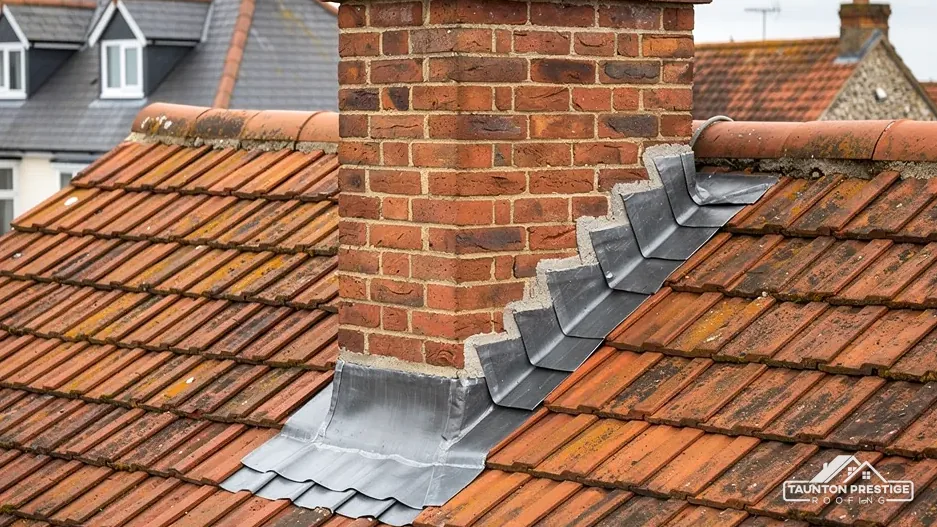
It is a small roof in a hard place. Battlements hold water in their gutters, a turret has joints at awkward angles, and each of those is normally sealed with lead flashing. Reaching it usually means a tower, a roof ladder or a safe access line, and where the stonework itself is in doubt, scaffold. Our lead work page describes how such details are renewed.
Because the building is old and the access is difficult, we plan the survey as a visit in its own right, with time to photograph each joint before a specification is drawn up. Church councils can then compare any quotes against the same set of photographs.
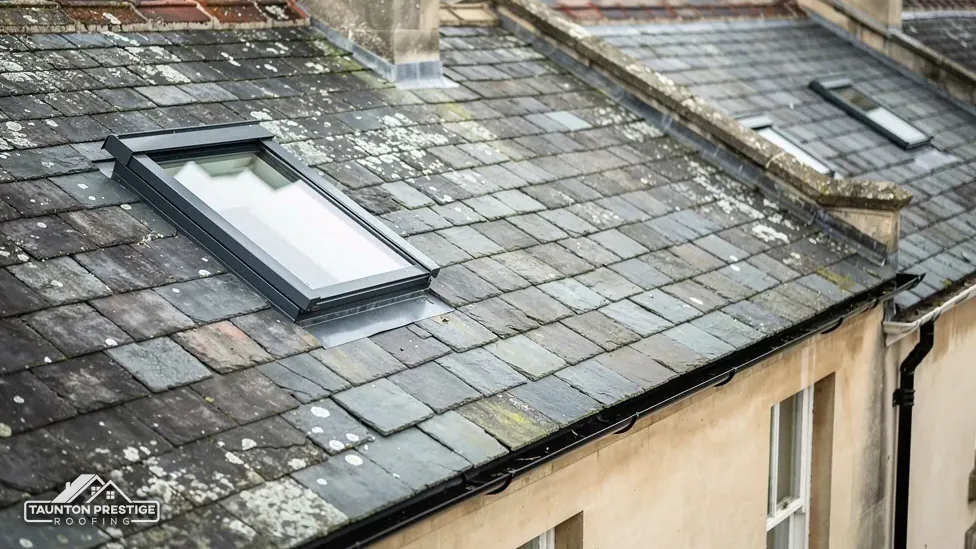
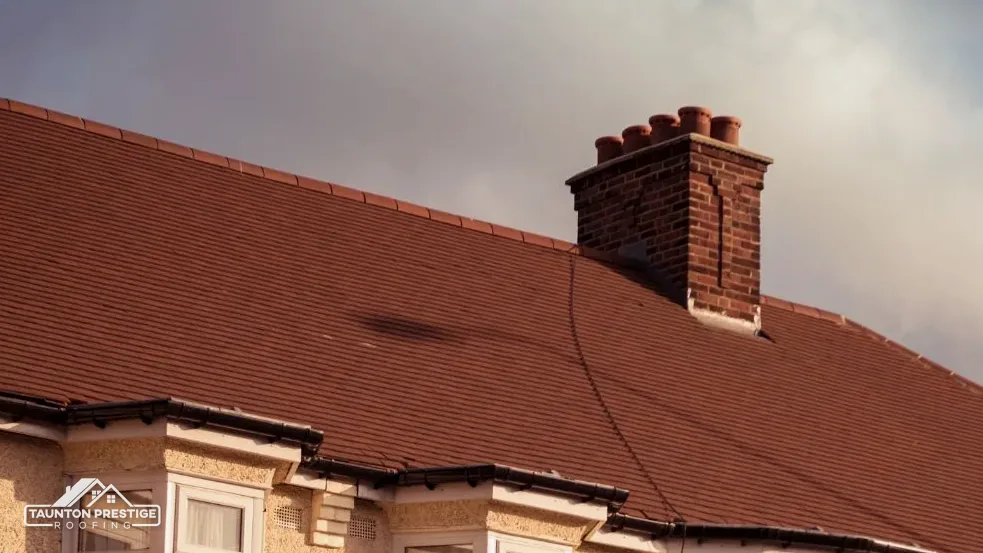
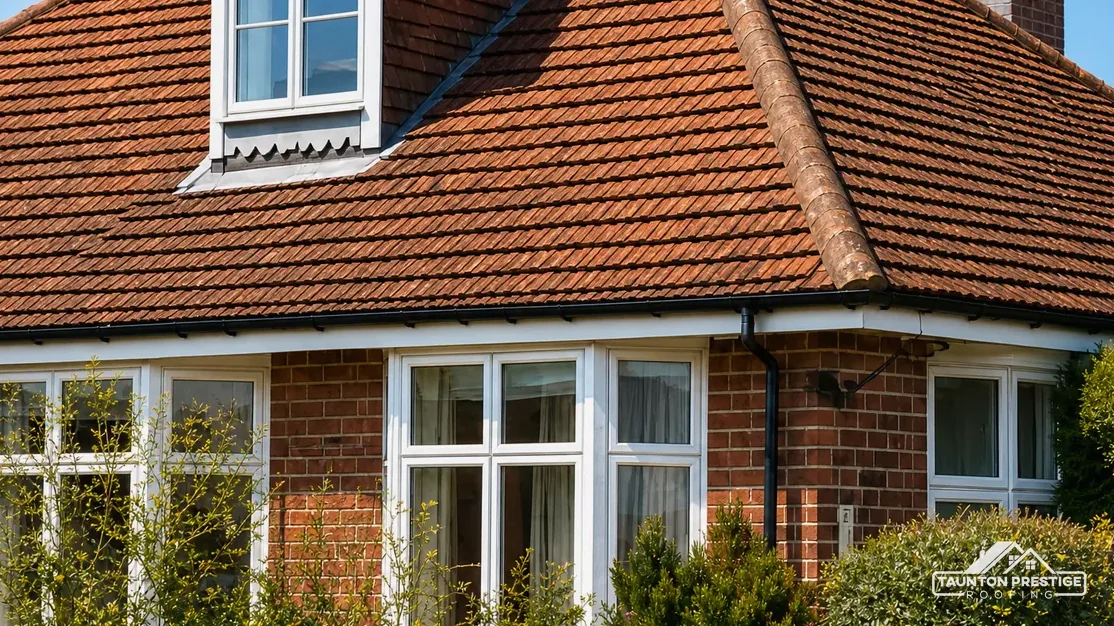
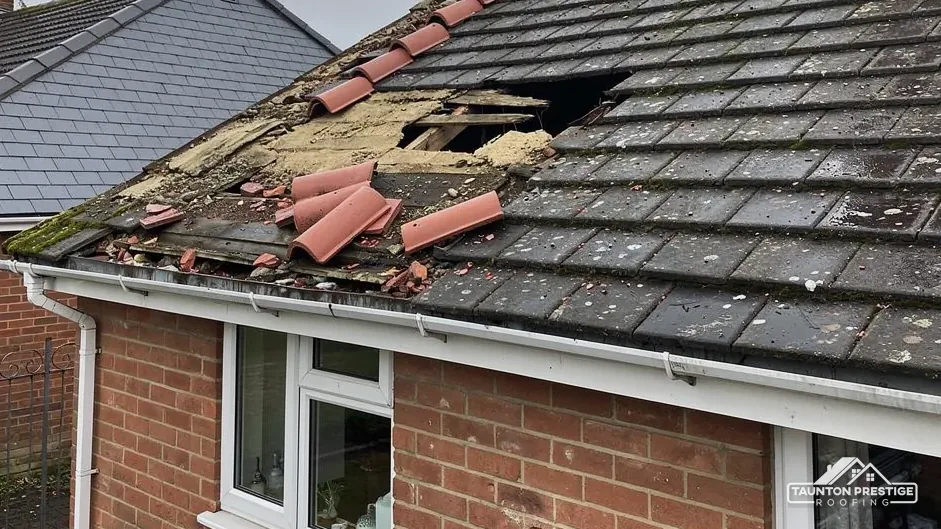
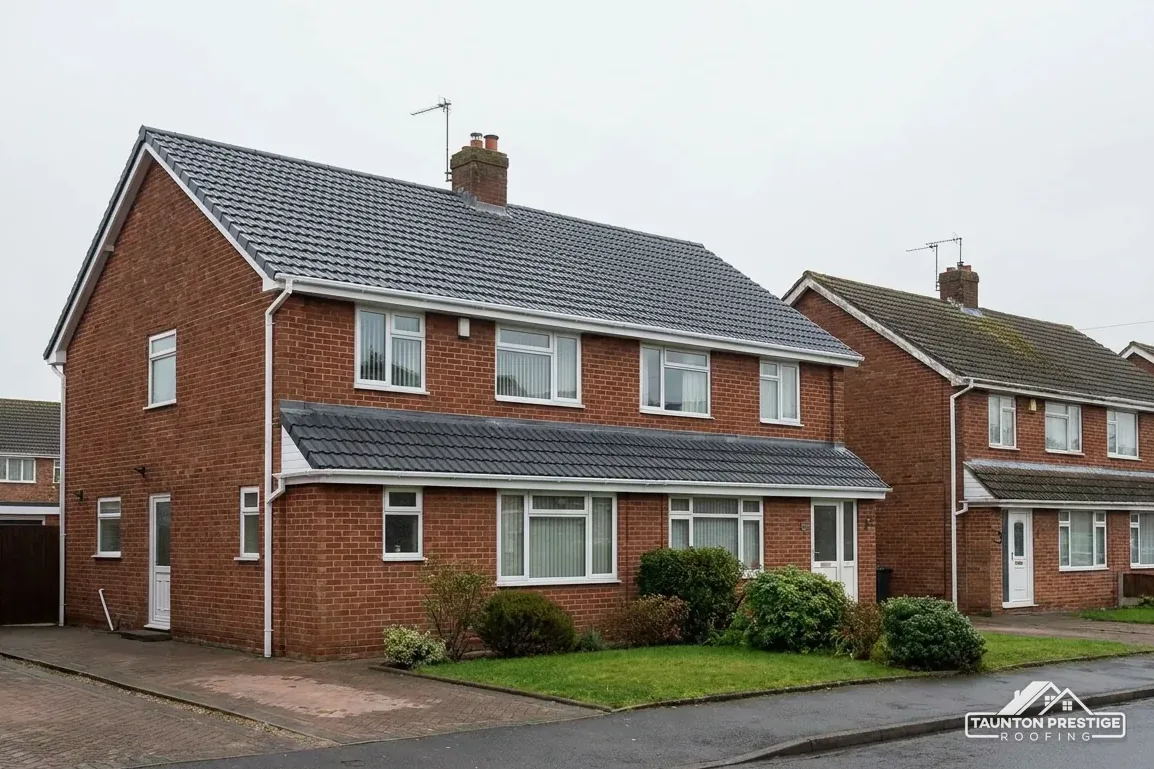
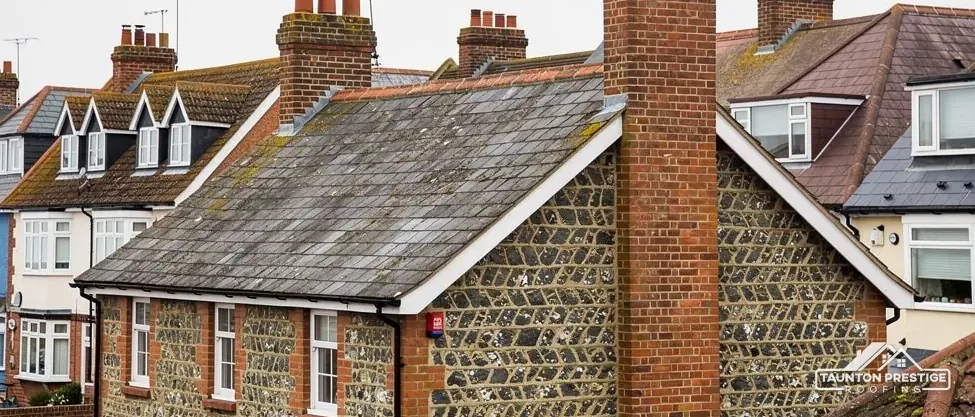
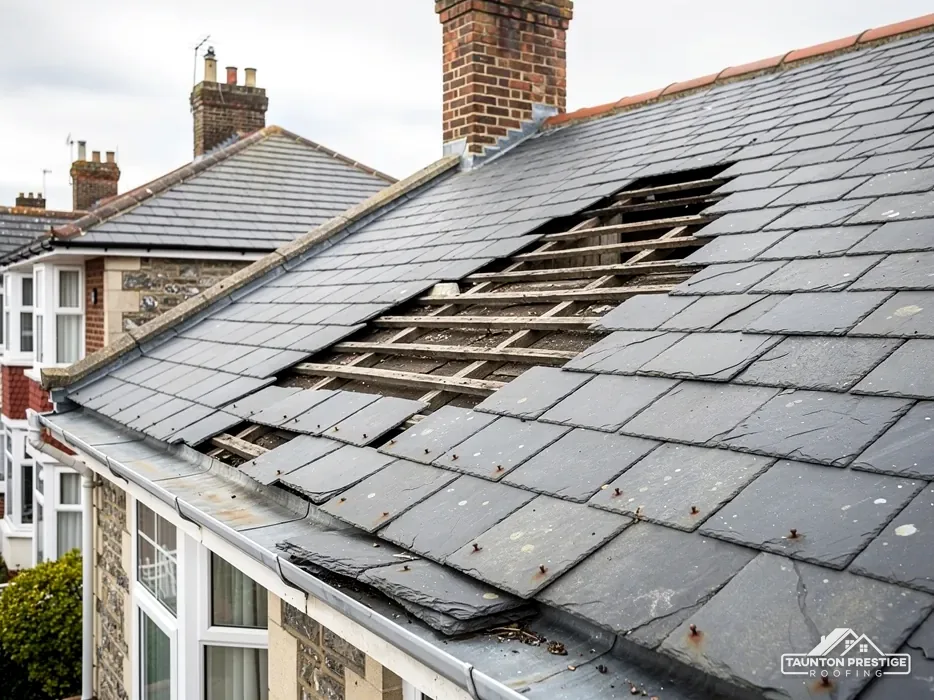
West Bagborough stands on the south-western slopes below Bagborough Hill and Wills Neck. A hillside village is exposed to weather coming off the high ground, and the places where a roof gives way are the places where the covering is held: the nails and hooks under the slates, the clips on a verge, the bedding on the ridge. Whatever covers your house, its fixings are the thing to check, and a look up from the loft on a bright day can show daylight coming through the covering, which is the first sign of trouble.
What decides the price
Cupa puts the minimum pitch for natural slate at 20 degrees and rules out hook fixings on anything shallower than 25 degrees. Where an old roof has hooks on a gentle pitch, we look at them hard. For tiles, BS 5534 sets out the fixing code for slating and tiling, but Marley notes that installing to it is not required by law. A roofer still follows it, because a tile that comes off a hillside house lands on a neighbour's drive, or on the lane below it.
A single failed fixing can be put right in one visit, with a clip, a new nail or a replacement piece. A slope whose fixings are failing along a whole course is another matter, since repeated patching just spreads the cost over several call-outs. The survey photographs show which case you have. Our pitched roofing page explains how we work on tile and slate, from a few replacements to a full re-lay.
When a roof does need re-laying, the underlay and battens beneath the covering are checked as well, because new slates on old battens defeat the point of the job. Battens are the strips of timber the covering hangs from, and underlay is the waterproof layer below them that deals with whatever the covering lets through.
Sound or needs work
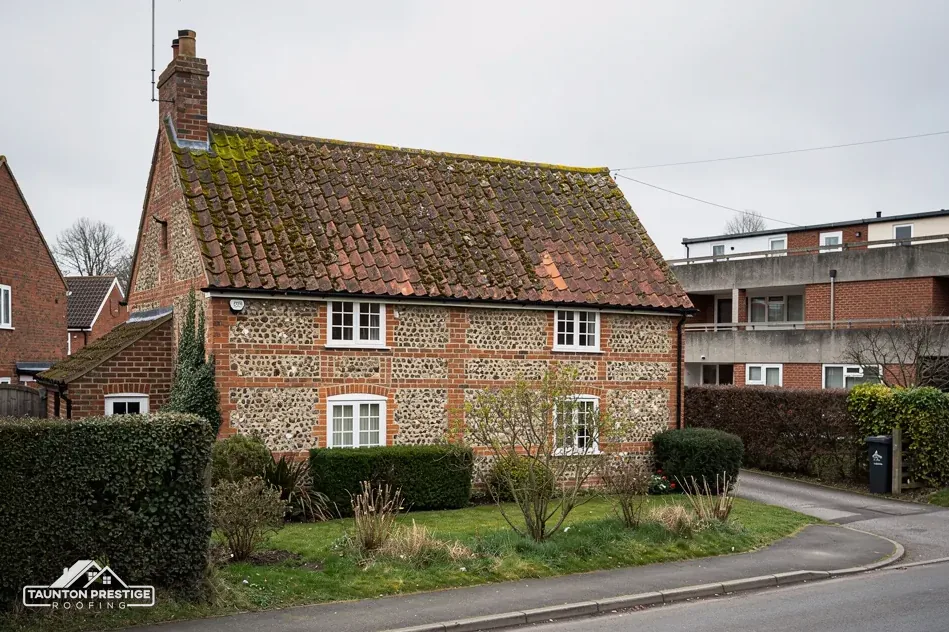
West Bagborough lay in the former Somerset West and Taunton area and is now in Somerset Council's hands for highways, planning and building control. If scaffold must stand on a public road, a licence from the highway authority is needed under section 169 of the Highways Act 1980. Somerset Council grants them to accredited firms, with the application made by the contractor appointed to the job. Your own drive or garden is private ground.
What decides the price
The fee is £124.60 per 28-day period (April 2026), with 10 working days' notice. In a village where the lane may be the only way past, that lead time is worth planning around, and we fold it into the dates we offer so a neighbour is never surprised by a lorry and a stack of poles.
It can, and it is better found early than late. The law protects bats and the places they breed and rest, and GOV.UK names roof work as something that can affect them. Section 9(4) of the Wildlife and Countryside Act 1981 covers disturbing a bat or blocking its access when it is done intentionally or recklessly. We look along eaves, ridges and gable ends before stripping, and if there is evidence of bats the job pauses for advice, and a bat worker is brought in if one is needed.
Somerset Building Control, on 0300 303 7790, covers the area. Under the Planning Portal's guidance, a re-roof touching under 25 per cent of the building envelope and under 50 per cent of the roof is normally outside the application process.
After the survey, a single price in writing arrives with photographs of your own roof. Send us your address, the lane and what you can see, and we will arrange the survey.
Walked the roof?
When you have read the checks, we walk the roof and show you the photos.
Because the village lies in a conservation area and in the Quantock Hills National Landscape, a new dormer needs a planning application to Somerset Council, which decides it. Ask the planning team first; the loft may be improved another way, such as roof windows, which need their own check, or by a different arrangement of the space.
Both names are in use. The designation was made in 1956 as an Area of Outstanding Natural Beauty. In November 2023 AONBs in England and Wales were renamed National Landscapes, but that change is not statutory, so planning law still refers to areas of outstanding natural beauty. For roof work the rules are the same.
By ladder or tower where the repair is small, and by scaffold when a slope needs working on properly. If scaffold must stand on the lane, a licence from the highway authority comes first, with at least 10 working days of notice. If the work can be reached from your own land, no licence is needed.
Not necessarily. Where an Anglican church is open for worship, a faculty is the route; other denominations may have their own, and a closed or converted building needs listed building consent from Somerset Council. A house is different again. Check the National Heritage List for your address and ask the council if you are unsure.
Tell us your address, the lane and the problem, and we will arrange a survey.