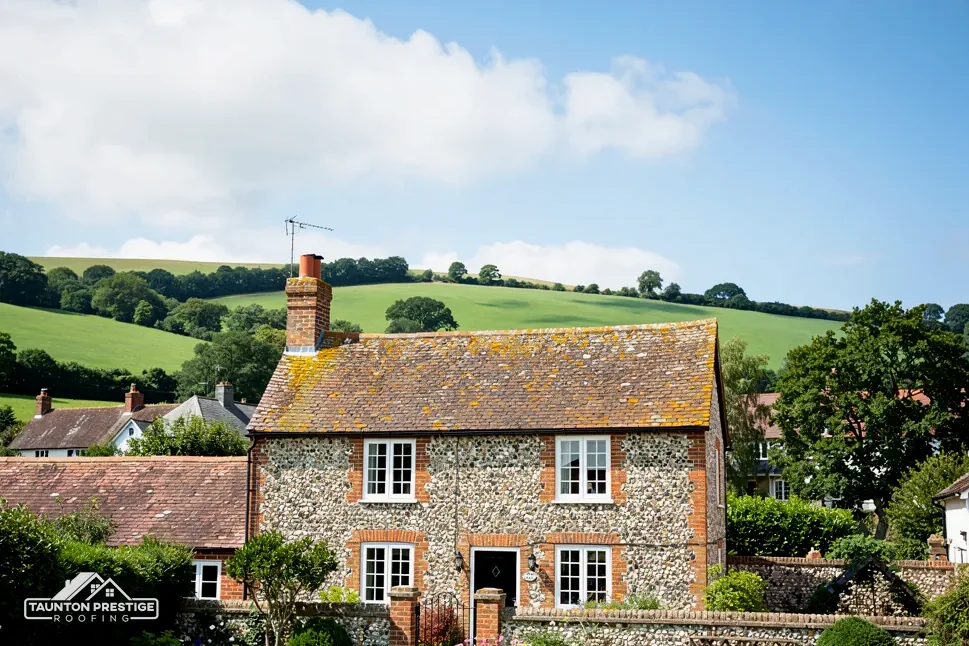
St Thomas of Canterbury church
Grade I listed since 25 February 1955; as an Anglican church in use, it follows the faculty route.
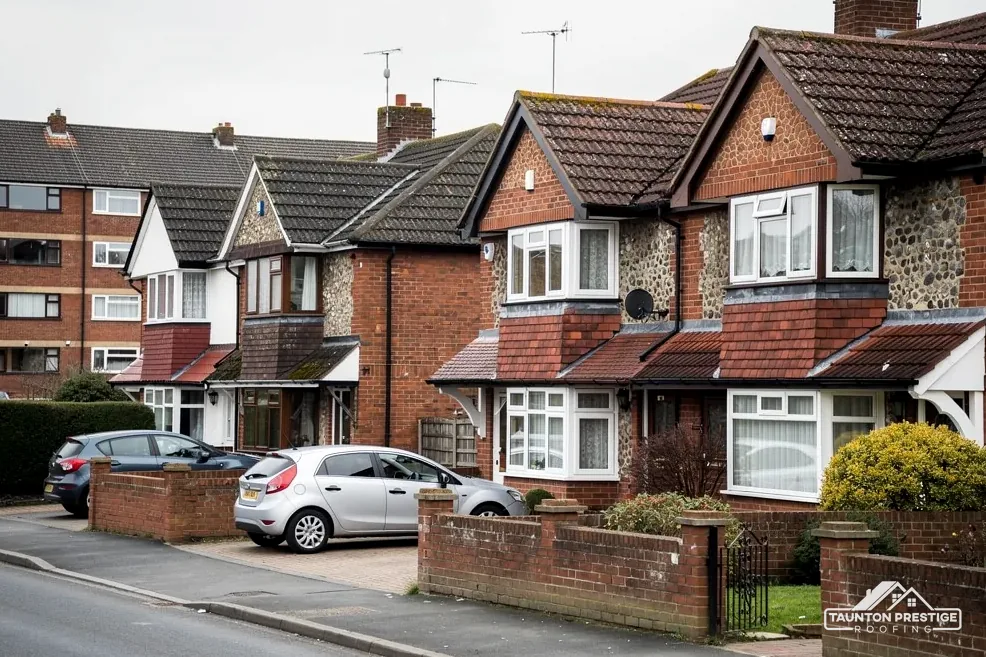
A Grade I church, a manor gatehouse and listed farm buildings
Cothelstone is a hamlet of 111 residents inside the Quantock Hills National Landscape, with a Grade I church and manor gatehouse. Every roof is surveyed before pricing.
Grade I listed since 25 February 1955; as an Anglican church in use, it follows the faculty route.
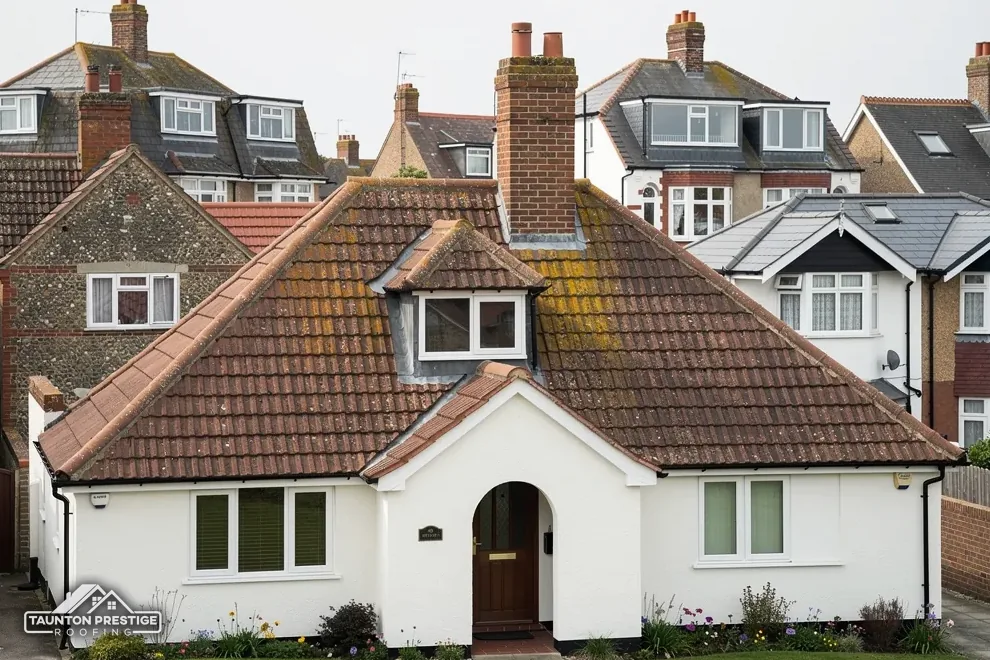
Also Grade I from 25 February 1955, with the manor at Grade II* and a farm group at Grade II.
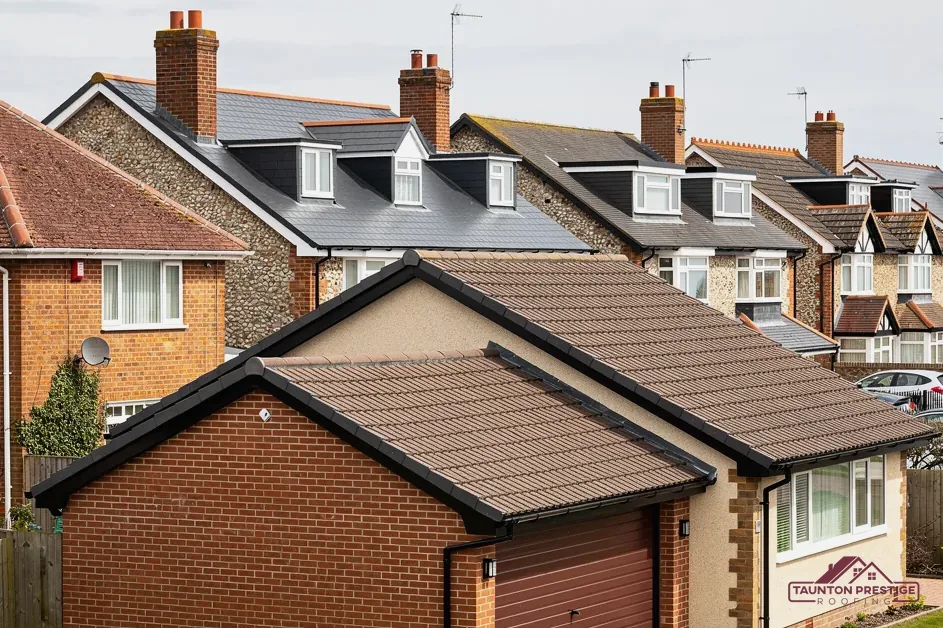
A conservation area lies within about 0.75 km of the centre, inside the Quantock Hills National Landscape.
Street map of Cothelstone with Toulton, Eastcombe, Yarford, West Bagborough marked around it, and Taunton.
Toulton lies to the south-east with Yarford beyond it, West Bagborough to the north-west, Eastcombe to the west, Courtway to the north-east and Bishops Lydeard to the south-west.
About 5 miles north-west of Taunton, Somerset Council (unitary).
Four checks beside the manor
What a parish should ask a roofer for, how one consent rule spans three listing grades, what old sheeting may contain and how two designations stack.
The Church of St Thomas of Canterbury carries a Grade I listing dated 25 February 1955. It still serves an Anglican congregation, so its roof work sits with the Church's own consent system, the faculty, and not with the council's listed building consent process. The parish applies for the faculty. A contractor's job is to give the parish what it needs to apply, then to build exactly what is approved.
Four things make an application much easier to write, and each is something a survey produces anyway. First, photographs of every slope, the gutters, the valleys and each flashing, taken on the day of the survey. Second, a written account of the condition of what can be reached, with a note of what cannot. Third, a specification of the covering, fixings and lead proposed, in terms the approving body can compare with what is on the roof now. Fourth, a plain statement of how the building stays watertight overnight while a slope is open.
The route would change. The ecclesiastical exemption applies to a church for the time being used for worship, and the 2010 order lists the denominations and buildings it covers, including those under the faculty jurisdiction. Once a church is closed, or vested in the Churches Conservation Trust, listed building consent takes over. The same goes for a faith group the order does not name. That is why we ask who owns and uses a building before we quote.
Roof work on a Grade I church is rarely urgent in the way a leaking bedroom ceiling is, but it is rarely cheap either, and it can take many months from first survey to first slate. A clear survey record keeps a long process honest, and it lets a parish compare the condition of the roof from one year to the next without relying on memory.
Look for
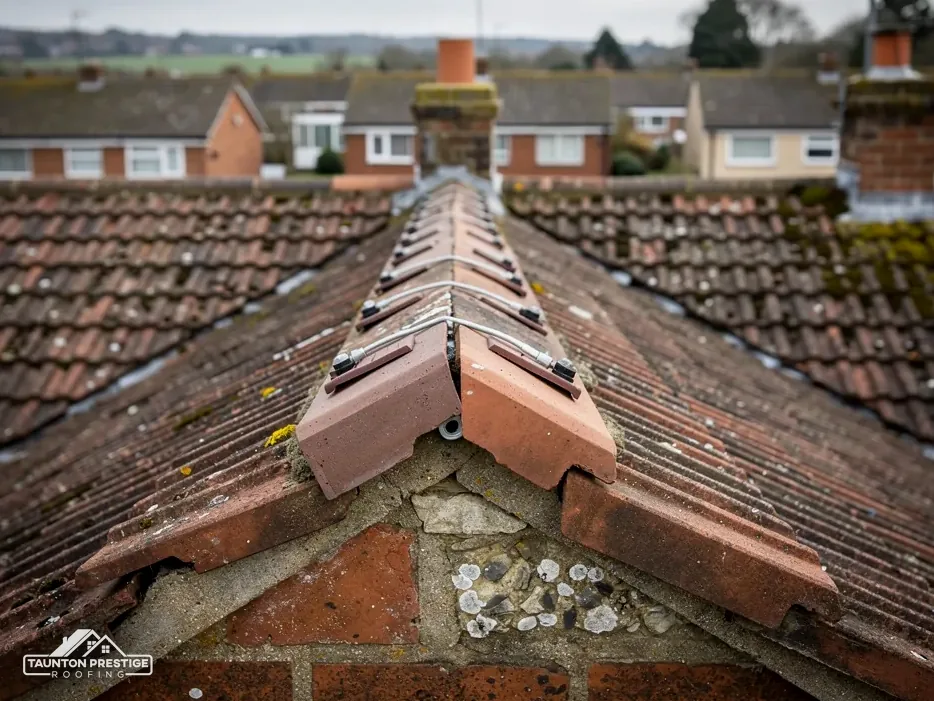
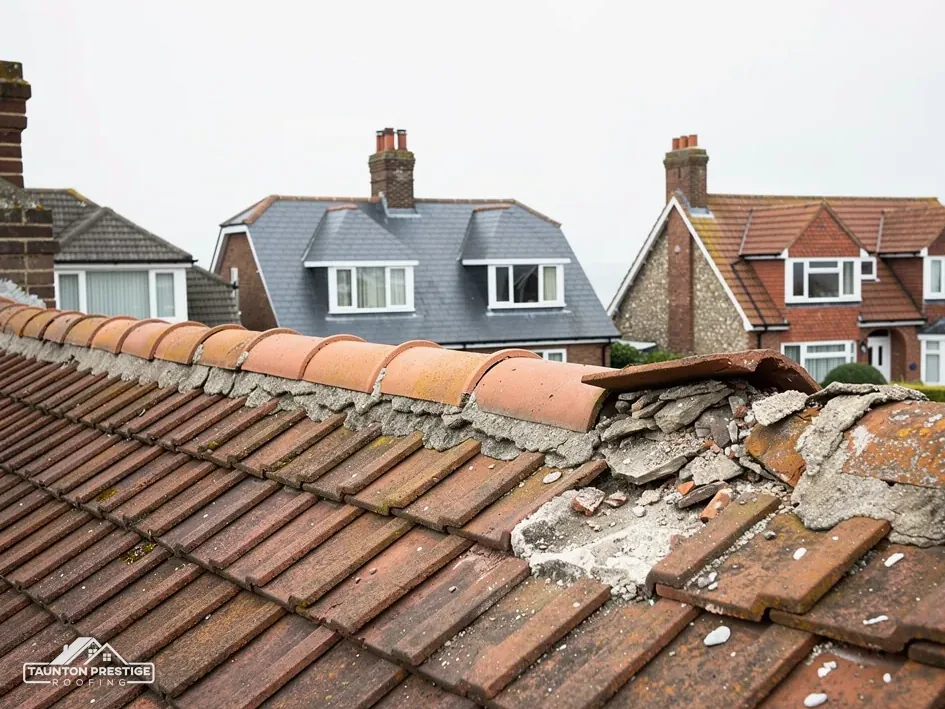
The National Heritage List holds three entries around Cothelstone Manor: the Gatehouse at Grade I (first listed 25 February 1955), the Manor at Grade II*, and the Farmery group of farm buildings, south-east of the manor, at Grade II. Eleven list entries lie within 500 metres of the hamlet's centre. A visitor might guess that the grade decides the paperwork. For the owner of a roof it matters less than that, and the question that counts is whether the work changes the building's character.
What decides the price
The principle is the same for all grades. Under the Planning (Listed Buildings and Conservation Areas) Act 1990 s7, an alteration that touches a listed building's special character needs consent, unless the works are authorised in some other way. Permitted development rights for a house survive listing, but they do not remove the need for consent when the work alters that character. Replacing a few damaged pieces like for like is repair; a different covering, a new opening or a changed ridge is where consent comes in. Our short answer on listed building roof consent takes the steps in order.
Water inside a historic building does more harm every day it is left, and timbers that stay wet for a season can need replacing, which turns a small repair into a large one. Our first step is a temporary covering, one that can be lifted off without harm, to keep the weather out, and then to tell the council what was done before the permanent repair is planned. Photographs taken before and after the make-safe, with dates, keep that conversation short. A listed roof is repaired once, properly, after the weather has been kept out.
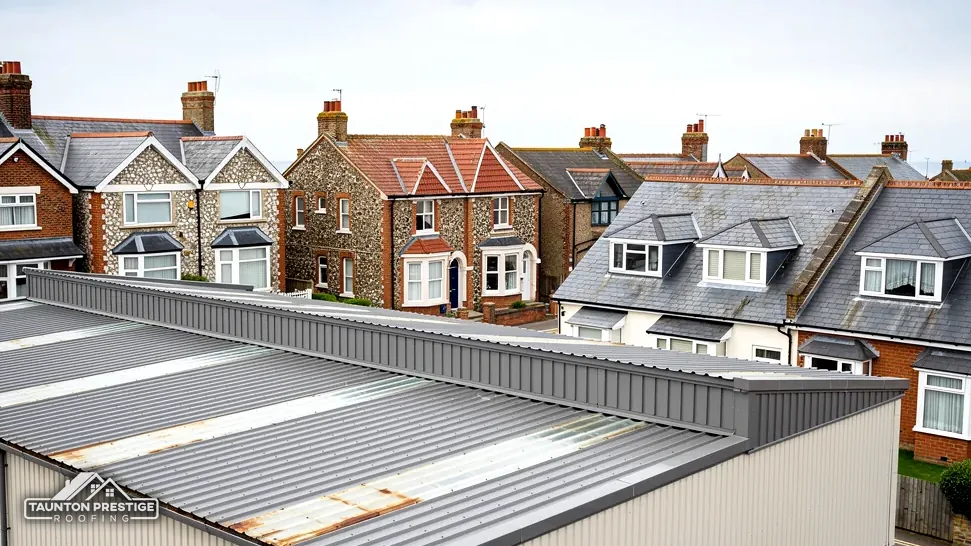
Farm buildings around a manor group collect roof sheeting over many decades, patched here and there as each season demanded, so one roof may carry sheets from several different periods. HSE's advice is blunt: for any building constructed or refurbished before 2000, take it that asbestos is present. Asbestos cement sheeting, the grey corrugated or flat kind, is a material that roofs of that age can carry, and HSE's guidance calls roofs of it always fragile.
On an old shed, test the sheeting first and never step on it.
No. A fragile roof gives way underfoot, and the fall is the greater danger. Surveys from a ladder, a tower or a platform come first, and anyone who has to cross a roof needs proper crawl boards and edge protection set up by people who do it for a living. Treat every old sheeted roof of this kind as unsafe to stand on until someone with the right equipment has said otherwise. A roof that looks sound from the yard can still be a hazard to anyone who steps onto it, which is why we survey from the ladder, tower or platform and photograph what we see from there, and leave the sheets undisturbed.
Under HSE's rules, lifting asbestos cement sheets is non-licensed work provided they come away whole, and weathered sheets that are not otherwise badly damaged are included. Once sheets are to be smashed, or substantially damaged, the job becomes notifiable non-licensed work, and dropping a roof is the standard example. The job does not end at the eaves, because the waste must be wrapped twice, labelled and moved on a consignment note, never in a skip.
MyJobQuote (Sep 2026) gives around £2,750 as an average for asbestos roof removal and about £325 for an asbestos survey, both typical UK figures. Our garage and asbestos roofs page covers smaller buildings, and the commercial roofing page covers larger sheds and barns.
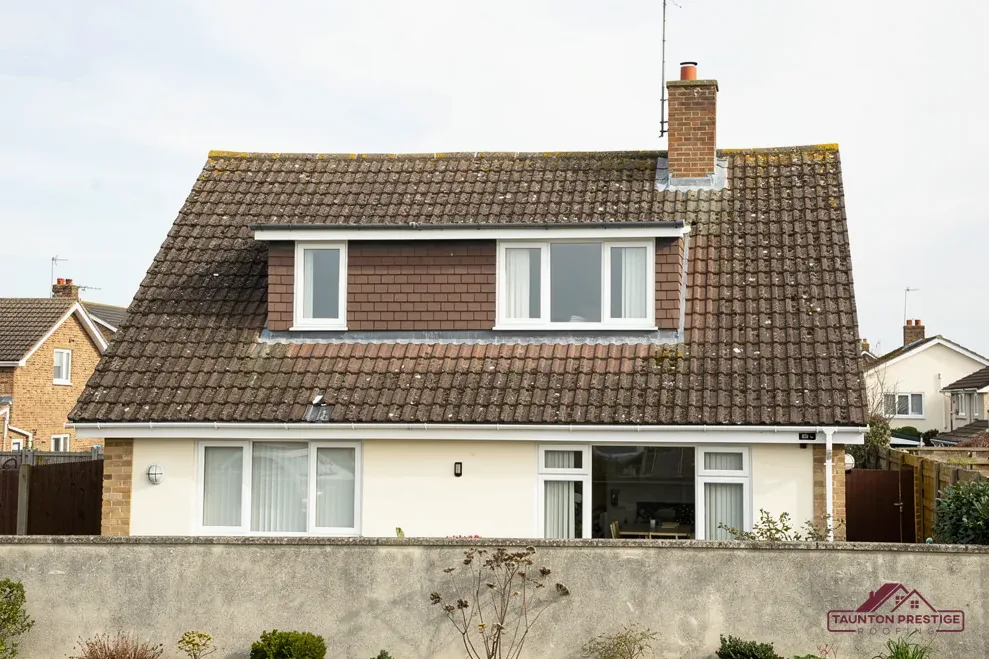
Cothelstone sits inside the Quantock Hills National Landscape, and the Cothelstone conservation area lies within about 0.75 km of the centre. Those are two different protections, each with its own effect on roof work, and a house can be touched by one, by both, or by neither depending on exactly where it stands. The council's boundary map says which side of the line your door is on.
What decides the price
The designation dates from 1956, when the Quantock Hills became an Area of Outstanding Natural Beauty under the 1949 Act. In November 2023 every AONB in England took the title National Landscape, though the name change is not statutory. Its practical effect on a roof is that a new dormer needs a full planning application to Somerset Council.
The same dormer rule applies inside the conservation area, and a change of covering is better discussed with the council first. Somerset Council's table gives the Cothelstone conservation area as designated on 21 April 1993, and the council's appraisal for it describes what the designation sets out to protect. Our planning guide for roof work sets out the main cases.
Having two layers does not mean more form-filling on a straightforward repair. Most of the effort lies in knowing which rules your address falls under. It means the survey notes which layer applies to your address, and the photographs go into your file with the date. If you plan work beyond a repair, put the address to the planning team first. Once the survey is finished, one total price follows in writing. Send the Cothelstone address and the first sign you saw, and the survey gets a date.
Walked the roof?
When you have read the checks, we walk the roof and show you the photos.
Only if it is not listed, and the Farmery group of farm buildings by the manor is, at Grade II. Like-for-like repair of a listed building can go ahead, but work that changes its character needs listed building consent from Somerset Council. Ask the planning team to confirm your building's status before a covering is ordered.
Not through listed building consent. St Thomas of Canterbury still serves an Anglican congregation, so alterations go through the faculty system, which the parish arranges. Somerset Council would take over only if the building stopped being used as a church. A roofer builds to whatever specification the faculty approves, which is why the survey record matters.
You cannot tell by looking. HSE's starting point is to assume asbestos in a pre-2000 building, and its guidance treats asbestos cement roofs as fragile. A sample sent for testing settles the matter. Until then, nobody should walk on the sheets or drill, break or clean them with anything abrasive.
No. Renewing a house roof with the same covering as before is ordinary work. The designation bites when the form of the roof changes, since a dormer there needs a full planning application. A different covering that alters the look of a visible slope is best discussed with the planning team before the order is placed.
Send the Cothelstone address with a photograph of the fault, and a survey date follows.