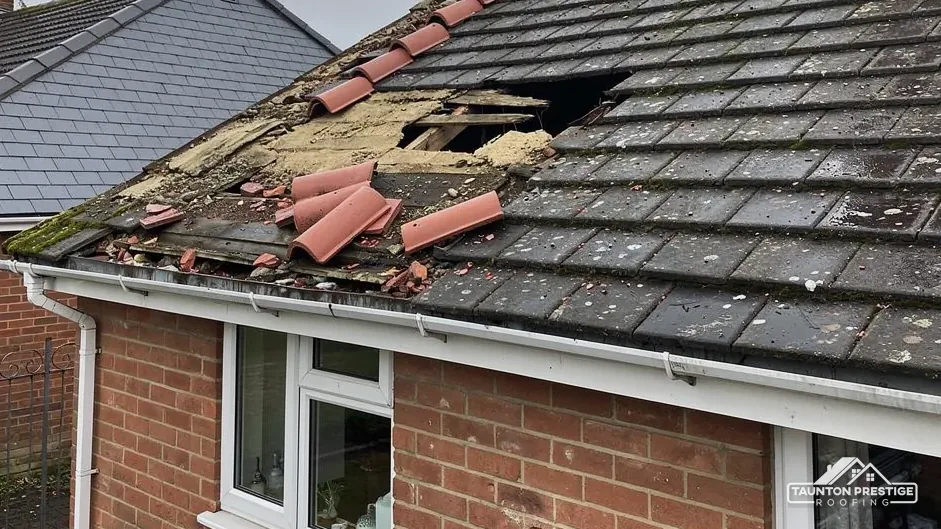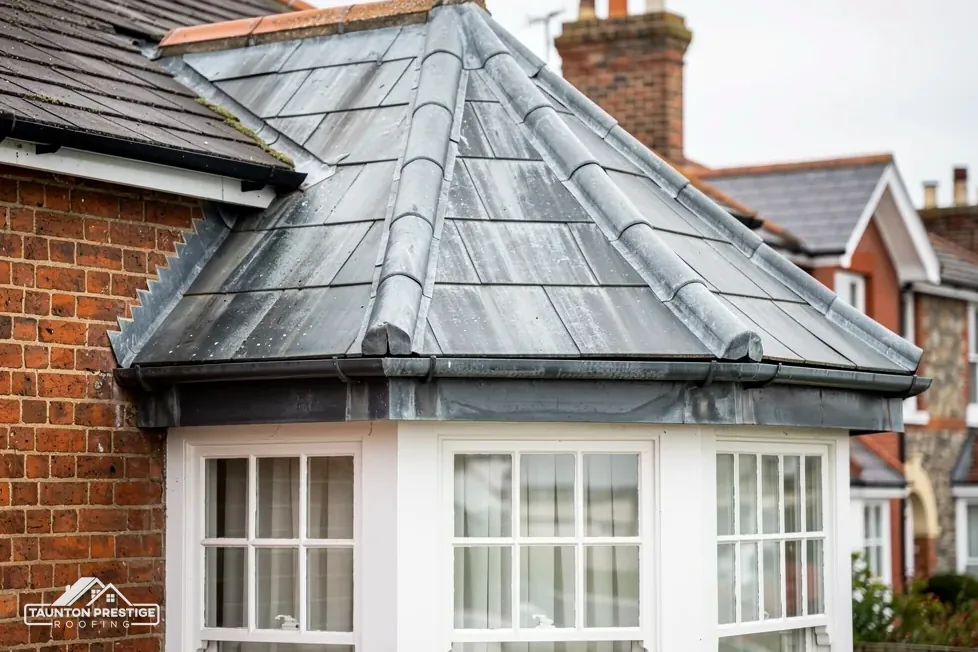
Higher Blindmoor Farm area
The only Blindmoor near Taunton is a farmstead locality, so outbuildings deserve as much attention as the houses.
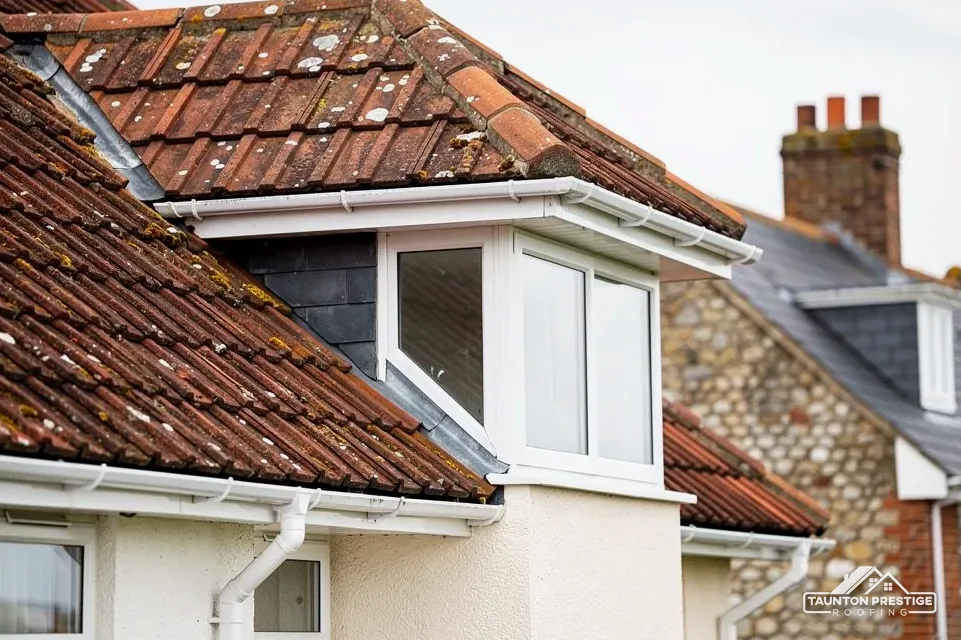
A farmstead locality inside the Blackdown Hills National Landscape
Blindmoor is a farmstead locality in Buckland St Mary parish, wholly inside the Blackdown Hills National Landscape. We survey every roof, house or outbuilding, before naming a price.
The only Blindmoor near Taunton is a farmstead locality, so outbuildings deserve as much attention as the houses.
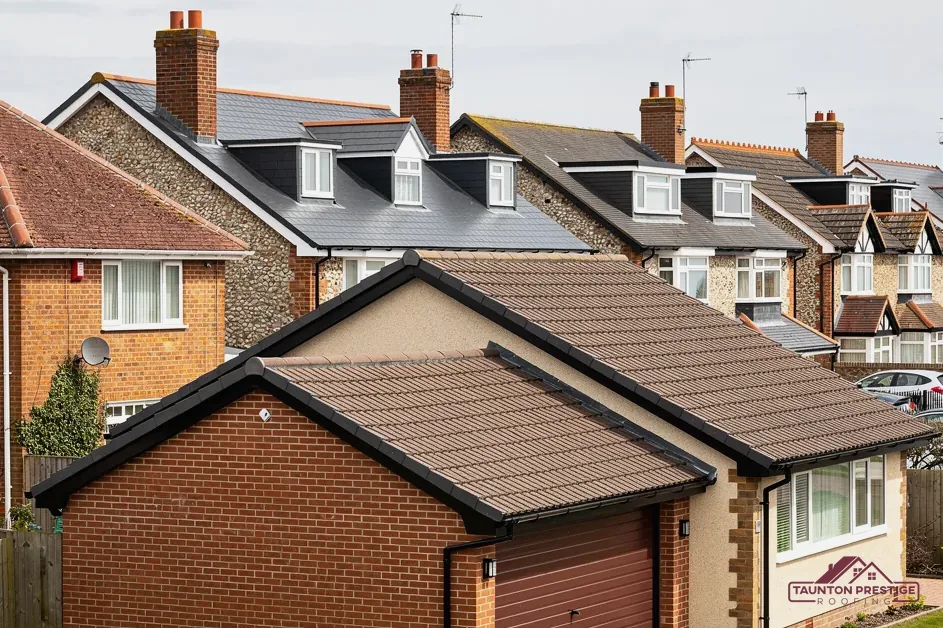
The whole area lies within the National Landscape that was an AONB until the November 2023 rename.
The nearest mapped conservation area is Buckland St Mary, within about 2.5 km, so ask about your address.
Street map of Blindmoor with Curland, Combe St Nicholas, Churchinford, Corfe marked around it, and Taunton.
Curland lies north-east of Blindmoor and Corfe north-west, while Broadway and Horton sit to the east, Combe St Nicholas to the south-east and Churchinford to the south-west.
About 6 miles south of Taunton, Somerset Council (unitary).
Four checks in the hills
Four things to settle on a house or outbuilding here, from the name of the landscape to the first call after a gale.
Blindmoor lies wholly inside the Blackdown Hills National Landscape. The Blackdown Hills partnership says that in November 2023, along with every Area of Outstanding Natural Beauty in England, the Blackdown Hills AONB was renamed. Government guidance is blunt that the new name is not statutory, and the legislation itself keeps the old words. So a planning officer who says AONB and a leaflet that says National Landscape are talking about the same ground, and the same rules still apply to your roof. We use the new name because it is the one on the signs, and we keep the old one in mind because it is the one in the law.
No, but it widens the list of things to ask about. A like-for-like re-roof is the plainest case. The conversation changes when the plan adds something that shows: a dormer, a roof window on the slope facing the lane, a different colour or a different material. Protected landscapes get different treatment in the planning rules, and the detail is not ours to paraphrase, which is why we point you to our guide to planning permission for roof work and to Somerset Council's planning team for the answer at your address.
Somerset Council, which since 1 April 2023 has been the one principal authority for Somerset. Blindmoor used to fall under South Somerset Council, which no longer exists, so older leaflets and websites that send you to it are out of date. The locality sits in Buckland St Mary civil parish, which counted 527 usual residents at the 2021 Census. In a community that size a roofer is known by the work left behind, so we leave the lane clear, the yard swept and the site tidy at the end of every day, and we tell you what comes next.
Look for
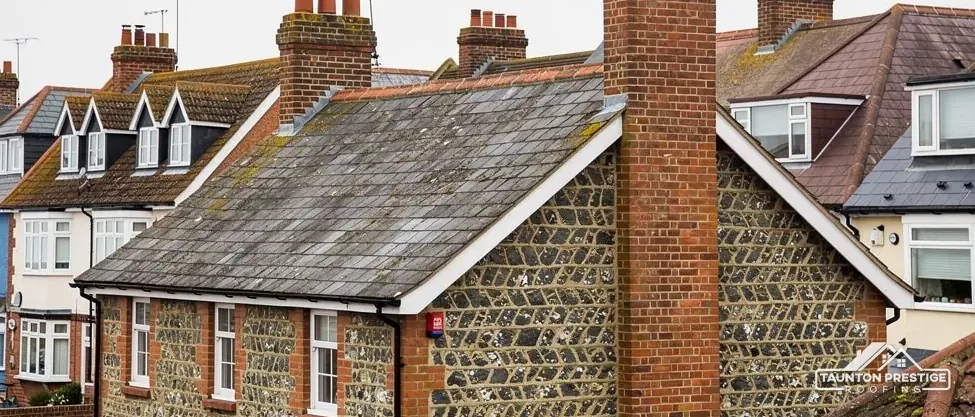
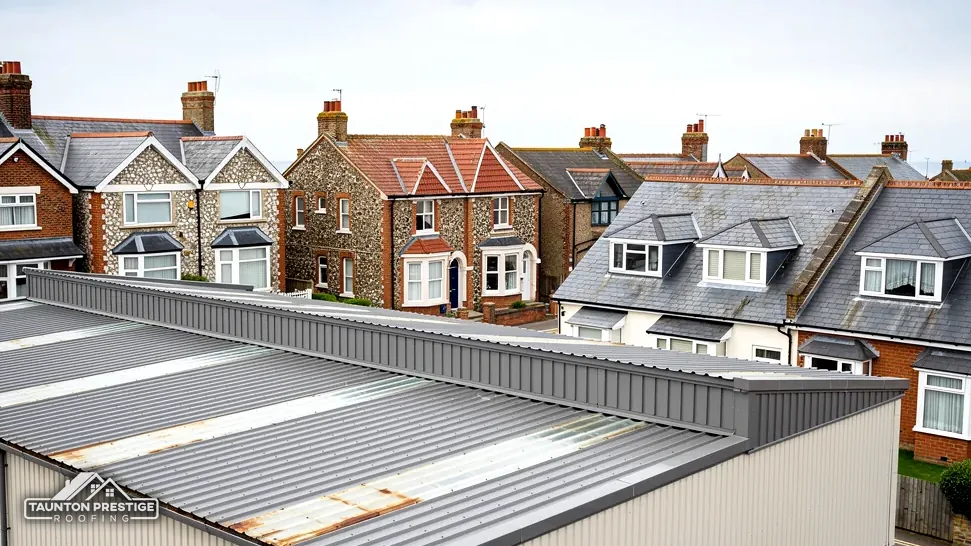
On a farmstead the roofs are not only the house. Barns, workshops, lean-tos and stores sit under their own coverings, and some of them are old. HSE guidance says a building built or refurbished before 2000 should be assumed to contain asbestos, and its leaflet A14 calls asbestos cement roofs always fragile. Nobody can say what covers a given shed until it has been looked at, and nothing here says yours is asbestos. We simply begin from caution, because a person who steps on the wrong sheet does not get a second try. Even a sound-looking sheet can be brittle with age.
Please do not. A fragile sheet gives no warning, and a fall through one is a serious injury. We survey from a platform or with edge protection in place, and we never lean a ladder on a roof sheet. If you want to know what is up there, look from the ground and tell us what you see: grey corrugated sheets with a chalky face, cracked edges, or moss lying thick in the troughs. Photos from a safe spot help us bring the right equipment on the day.
A fragile roof gives no warning, so the surveyor works from a platform.
Under HSE rules, taking asbestos cement sheets off carefully, without breaking them, is non-licensed work. Breaking them up substantially makes it notifiable non-licensed work, so sheets are lifted whole and never dropped to the ground. The waste is wrapped twice, labelled, and taken away on a consignment note, never put in an ordinary skip. A lean-to or a store with an old sheeted roof may be small, but it follows the same steps as a large barn, and we plan the day so the sheets are never left lying about. The page on garage and asbestos roofs covers the steps in order, and commercial roofing covers larger farm buildings.
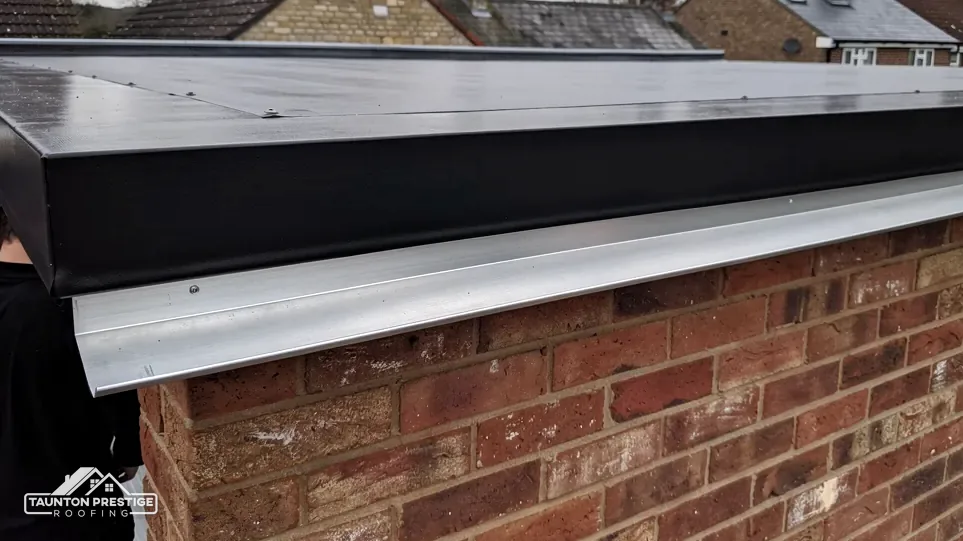
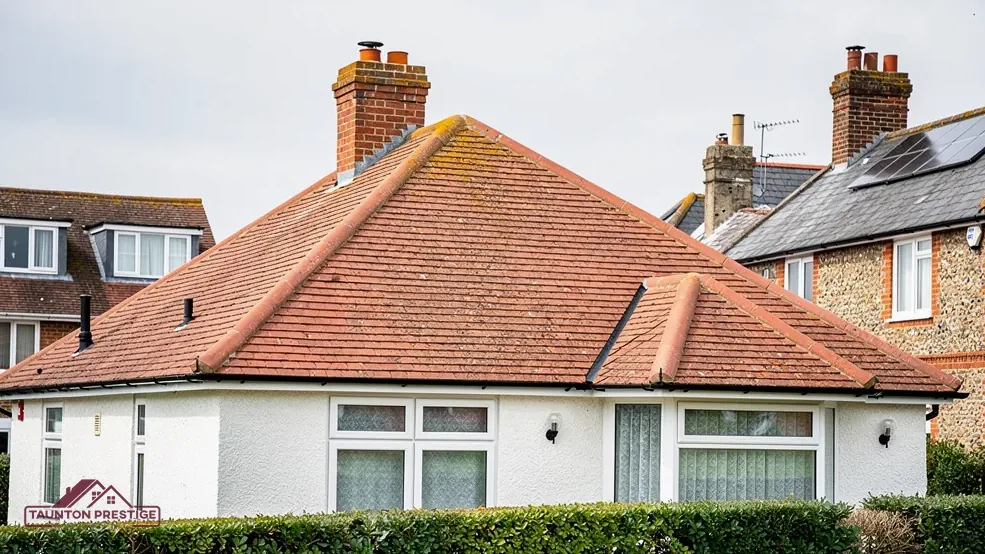
A ridge caps the crest of the roof, where two slopes meet. The verge is the sloping edge where the roof stops at a gable wall. Both are traditionally finished in mortar, and both take the brunt when wind drives against a gable. Marley explains that a revision of BS 5534 in 2014 made it plain that mortar by itself could no longer be relied on for ridge and hip tiles, so bedded work now needs mechanical fixings too. Installing to BS 5534 is not required by law, so this is a matter of good practice and not of regulation.
What decides the price
It holds the ridge or verge tiles on with clips, screws and a ventilated strip, and not with a bed of mortar alone. BS 8612:2018 is the test specification for dry verge, hip and ridge systems. MyJobQuote puts a typical UK range for a dry verge system at £500 to £2,000, with an average of around £1,000 (Oct 2026), and a ridge tile replacement at £225 to £550 (Oct 2026). Both depend on length and access. Our dry ridge and verge page sets out the options. Colour matters on older tiles, and we hold a tile back from the work to show you a match before any are ordered, since a bright new ridge against weathered tiles looks odd for a few seasons.
A loose cap is a loose cap whatever the month. Once one tile lifts, its neighbours carry its share of the wind, and water finds a way into the roof space where nobody looks. We would sooner refix three tiles now than rebuild a whole run after a gale. If a cap has already come off, we close the gap first and then agree the lasting repair with you. Timber that stays wet in a roof space does not dry out by itself, so waiting costs more than it saves.
Sound or needs work
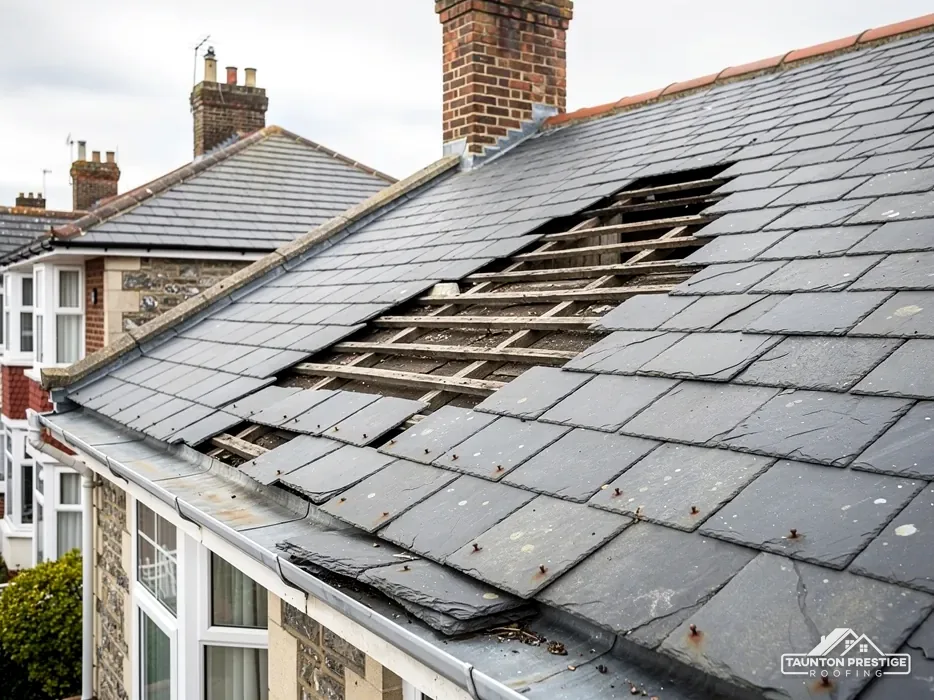
When wind takes slates or sheets off a hillside roof, the order of the first steps matters. Ring your insurer before anything else. Get a temporary repair over the hole, and hold on to every photo and receipt. The Institution of Structural Engineers adds that photographs are vital evidence of damage when a claim is made. For our part, a leaking roof is made safe first and mended properly afterwards, and you are welcome to send pictures before we arrive.
What decides the price
Your insurer does, and its view may differ from yours. The Financial Ombudsman Service has its own working idea of a storm, and it centres on violent wind. If you are unhappy with an insurer's answer, the Ombudsman can look at the complaint at no charge, once the insurer has issued a final response or eight weeks have passed, and the limit for bringing it is six months from that final response. We cannot say whether any claim will succeed, and the claim itself rests between you and the insurer.
Often it makes the proper work easier, because a tarpaulin or board holds the roof until the weather settles and a full survey can take place. It is not the finished job, though, and the loose pieces still need refixing or replacing. Where a dormer, a roof window or a different covering is planned, speak to Somerset Council's planning team before ordering, since the hills carry their own protection.
Once the roof is safe we survey it, send pictures of each slope and give one written price for the whole repair. Send us your Blindmoor address with a line about what blew off, and we will book the visit.
Walked the roof?
When you have read the checks, we walk the roof and show you the photos.
It depends on the house and the roof slope, and the protected landscape is part of the answer. Roof windows and dormers are the changes most likely to need a conversation. Read our planning guide, then put the exact question to the council planning team in writing, with the address, before anything is ordered.
The nearest mapped one is Buckland St Mary, within about 2.5 km, but the national map data can be incomplete, so a missing boundary is not proof of anything. Ask Somerset Council about your address. If your house or barn is listed, listed building consent may apply on top of any planning step.
Somerset Council. The 2022 Structural Changes Order made it the sole principal authority for Somerset from 1 April 2023, and the four district councils, South Somerset among them, were abolished. Building control for the area is Somerset Building Control, on 0300 303 7790, and it covers the old district boundaries too, so one number serves the whole parish.
No. HSE guidance A14 treats every asbestos cement roof as fragile, and the same caution suits any old sheeted roof until it has been checked. Do not walk on it, drill it or break it. Look from the ground, take pictures, and send them to us so the survey can be planned from a platform.
Tell us whether the worry is the house, the barn or the ridge, and we will plan the visit.