The Blackdown Hills edge
About 16 per cent of the 1.5 km square around Curland lies in the designation; the hamlet point does not.
A hamlet on the edge of the Blackdown Hills
Curland is a small hamlet of 126 residents, partly within reach of the Blackdown Hills National Landscape and two nearby conservation areas. Each roof is checked before it is priced.
About 16 per cent of the 1.5 km square around Curland lies in the designation; the hamlet point does not.
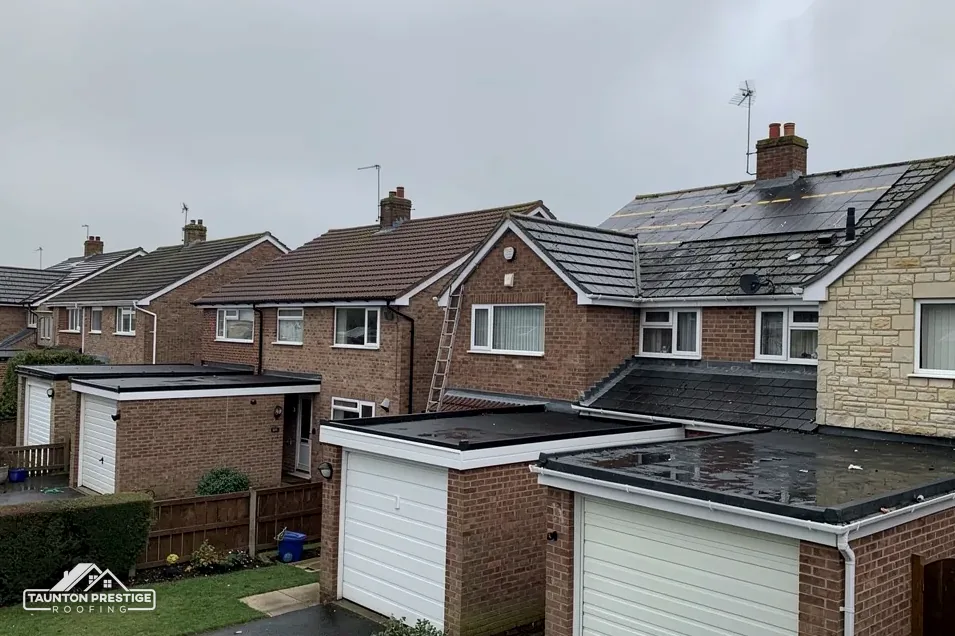
Hatch Beauchamp and Staple Fitzpaine both lie within about 2.5 km, though neither reaches the immediate square.
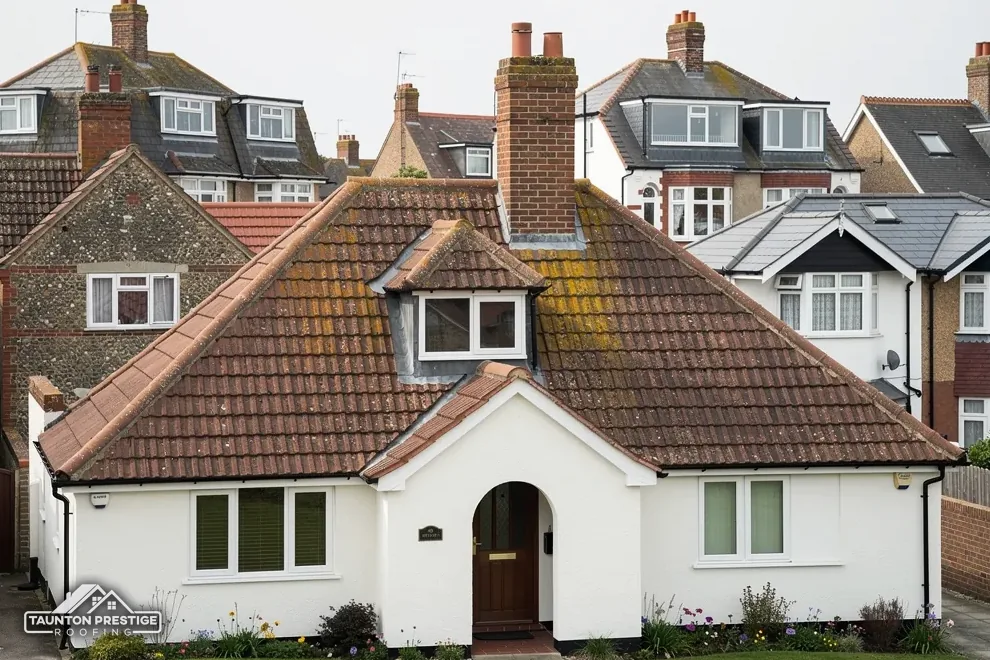
The 2021 Census counted 126 usual residents in Curland civil parish, so each job here is a single household.
Street map of Curland with West Hatch, Thurlbear, Blindmoor, Hatch Beauchamp marked around it, and Taunton.
West Hatch and Thurlbear lie to the north, Hatch Beauchamp to the north-east, Stewley and Ashill to the east, Blindmoor to the south-west and Corfe to the west.
About 5 miles south-east of Taunton, Somerset Council (unitary).
Four checks at the hills' edge
A boundary that part-fits, two conservation areas down the road, what moss tells you and why cost guides disagree.
Planning data answers questions about a place with a single point, and a hamlet is not a point; it is a scatter of houses and farm buildings with fields between them. The Curland place point sits outside the Blackdown Hills National Landscape, yet the data also shows that about 16 per cent of the 1.5 km square around it lies inside. In plain terms, a Curland house might be in the designation, or it might be a field's width outside it, and only a look at the boundary against your own address can say which.
Inside a National Landscape, an owner who wants a dormer applies to Somerset Council in full, without the quick route used elsewhere. Putting back the same covering is a different question, and a change of covering that alters the look is where care is needed. A hamlet roof seen across a field gets noticed more than one hidden in a terrace. The Blackdown Hills National Landscape has carried that name since November 2023, when the old AONB title was dropped. The new name left the legal tests where they were. Our guide to planning permission for roof work explains where they fall.
The boundary is held on the national planning data, and the planning officers at Somerset Council can read it against a single house. Ask in writing and file the answer. We copy the answer into the survey so that the roofer, the owner and any later buyer are all looking at the same fact. It also saves a sales chain from stalling because a solicitor asks about a roof window nobody checked. An edge position cuts both ways: it may bring a rule you did not expect, or lift one you feared. Either way it is better settled before an order is placed for slates, tiles or a roof window.
Look for
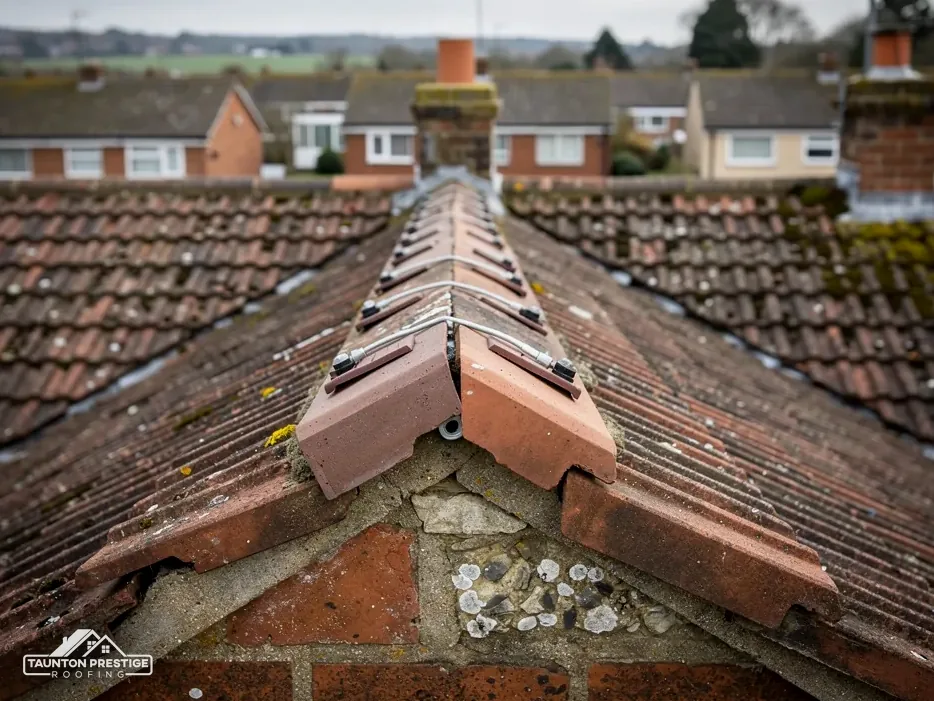
Hatch Beauchamp and Staple Fitzpaine, both within about 2.5 km of Curland, are the closest conservation areas on the national map. Neither intersected the smaller 1.5 km square around the hamlet, so being near them does not put a Curland house inside. Somerset Council's table gives Hatch Beauchamp as designated on 14 September 1997 and revised on 12 November 1998, and Staple Fitzpaine as designated on 2 March 1988.
What decides the price
Somerset Council's list of Article 4 directions includes Hatch Beauchamp, confirmed in 1978. An Article 4 direction withdraws some permitted development rights within a marked area, and a planning application can then be required for work that would otherwise go ahead. What is withdrawn, and for which streets, sits in the direction document, so the right person to ask is the planning team. If your Curland house is anywhere near the village, put the question to them before you commit to a design.
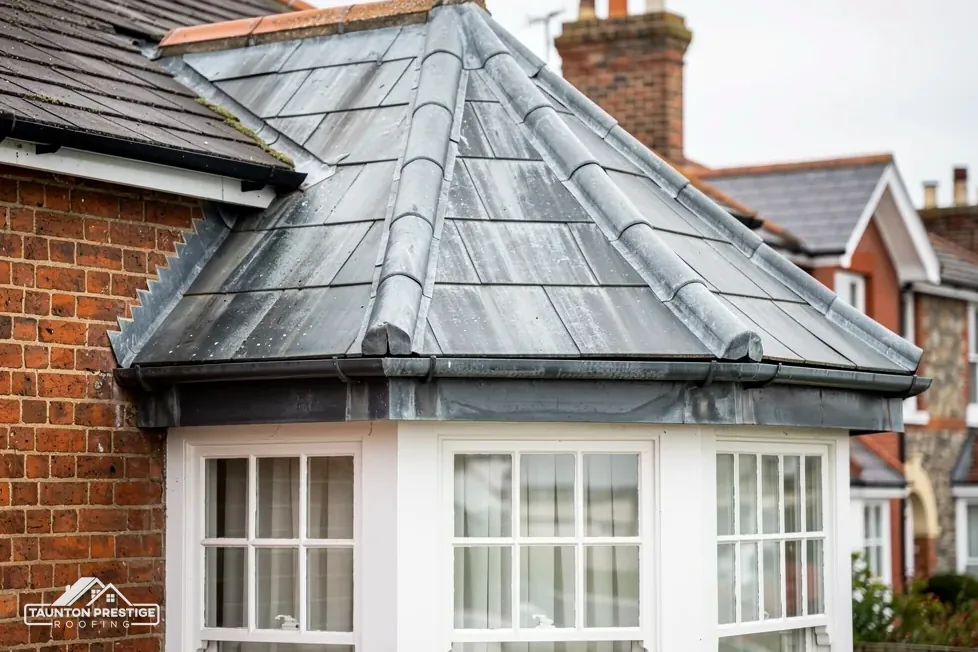
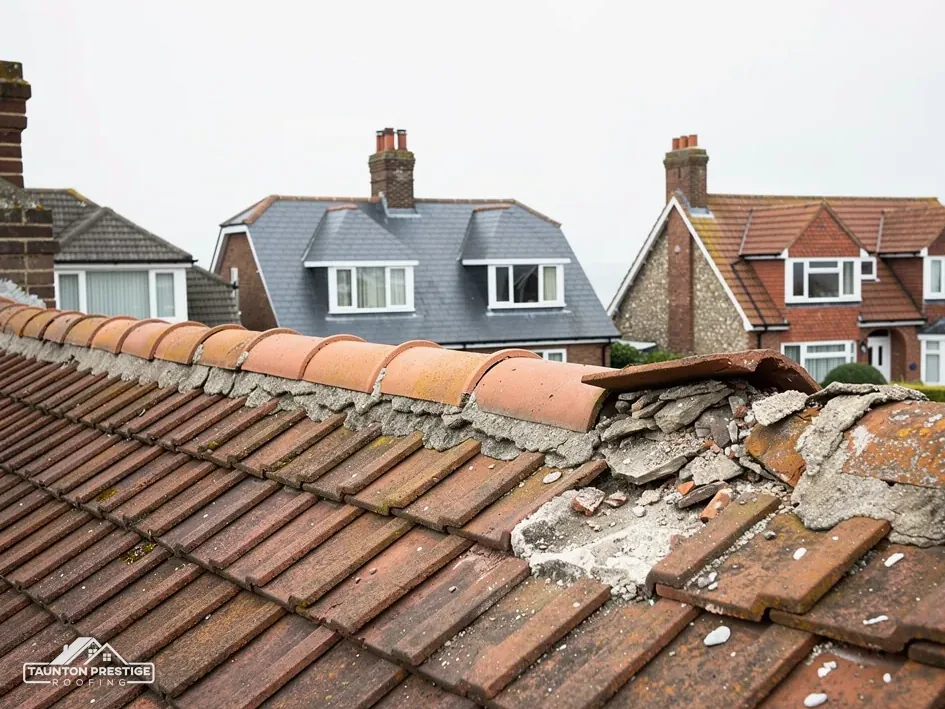
The ridge is the first line the eye meets from a lane. A repair that re-bedded it in a different shade, or replaced a clay finish with a flat one, can read as a visible change from the road, which is the sort of detail a conservation officer notices. We photograph the ridge, hips and verges before anything is lifted, so the same pieces can be laid back in the same order, with sound ones salvaged and a few new ones blended in. Replacing a few damaged pieces is a repair; changing the whole look is a design decision with consent attached.
Old clay peg tiles are a case in point: the 60-year BRE minimum for clay tile is a poor guide to them, as Building Conservation points out. A roof that old can have a good deal of life left, or hide a few weak points that only a close look reveals.
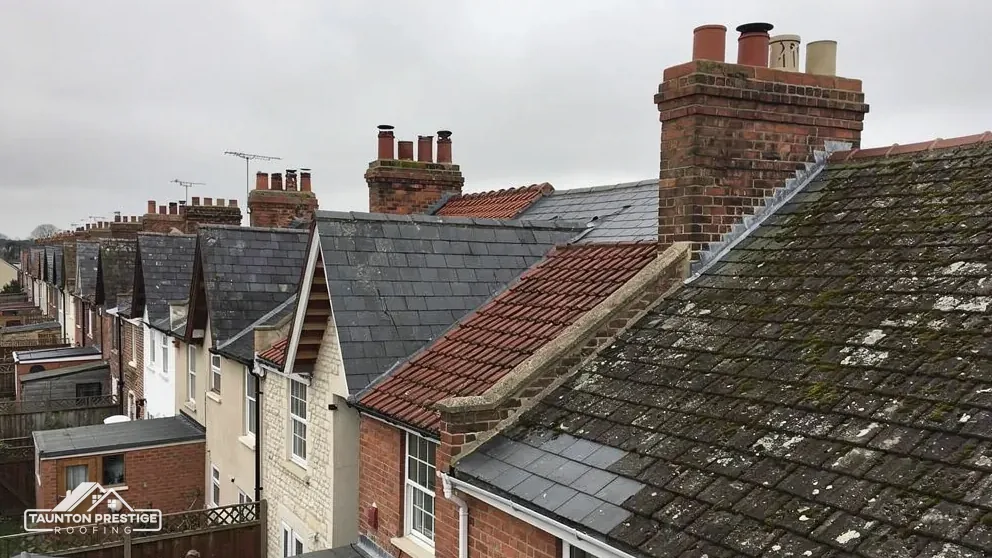
Moss and lichen on a Curland roof are a reason to look, and not a verdict. They show which slopes stay damp, and they can hide slipped or cracked tiles beneath. What matters is how the roof is cleaned, because the two popular routes both carry risks, and a hamlet house with a long, shaded slope is exactly where owners are tempted to try one.
Clean a roof and you can finally see what the moss was covering.
Marley advises against it. Its guidance is that a high-powered jet can strip the surface of a slate or tile and cut short the life the covering might otherwise reach, so a roof that looks pale and clean may have a shorter future. Roofs with a thin glaze of lichen often look worse than they are, and scrubbing them hard does more harm than the lichen ever did. Hand scraping and an approved treatment are gentler on the surface.
Read the label first. The Biocidal Products Regulation requires a product to be used as its authorisation allows. HSE's line is that the public should leave alone any biocide meant for professionals, and that selling, storing or using an unapproved product is an offence. A treatment sold for home use and applied exactly as the label directs is a different matter from a trade product bought on the side.
A cleaned roof is an inspected roof. With the growth gone, slipped slates, cracked tiles and crumbling ridge mortar show up, so the clean and the repair list belong in the same visit, and you get the findings in pictures. Our roof cleaning and moss removal page explains the methods we use. Gutters and valleys full of debris get cleared at the same time, because moss that falls into them can block the outlets that drain the slope.
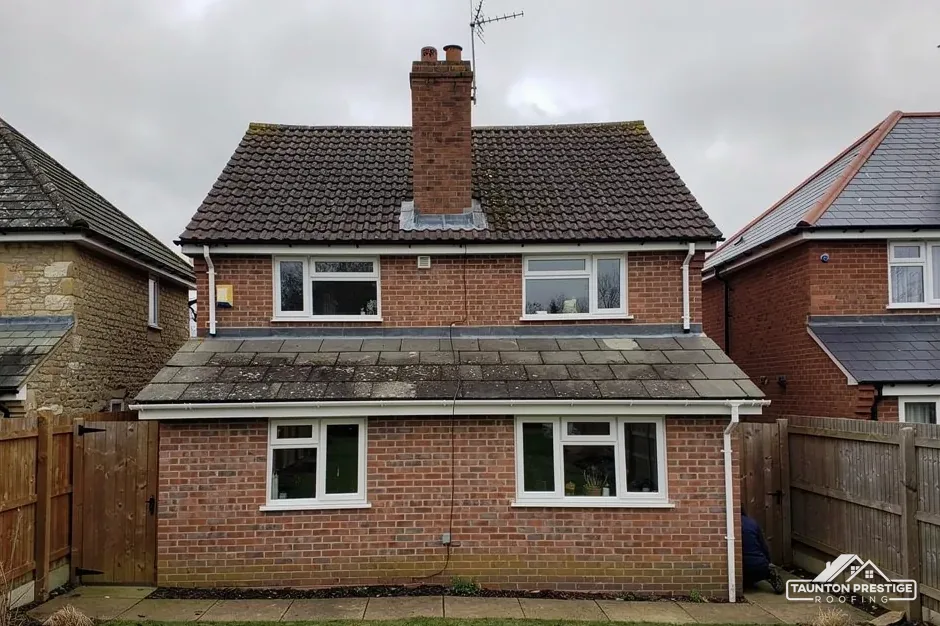
National cost guides are a fair way to get your bearings, so long as you remember that none of them is a quote for your house, and that a figure from last year may already be out of date. Two sources on a new roof show how wide the spread can be. MyJobQuote (Oct 2026) gives an average of around £5,250 for a new roof, while HomeBuilding (Sep 2025) puts a three-bed semi of 65 square metres in plain concrete tiles at £10,000 to £15,000, including labour, scaffolding and insulation. The gap is not an error. The guides measure different things in different ways.
What decides the price
MyJobQuote (Oct 2026) gives a typical UK range of £150 to £200 to replace five tiles and £200 to £275 for ten to twenty. A full re-tile of 80 square metres is £3,000 to £8,000 on the same page, and a new slate roof averages around £7,800 (Oct 2026). A hamlet house can land anywhere in those ranges, because the covering, the access and the condition of the timbers underneath do most of the deciding.
Where a new covering makes the roof 15 per cent or more heavier, Building Regulations approval comes into play, and the Planning Portal wants an engineer or surveyor consulted on the extra load before anyone starts. Somerset Building Control can be reached on 0300 303 7790. The weight question is easy to overlook when someone proposes concrete tiles in place of a lighter slate, so it comes up at the survey. Our roof replacement page sets out how a full re-roof proceeds.
When the visit is over, one total price follows in writing, set beside pictures of your own roof. Send the Curland address with a note of what you have spotted, and the visit gets a date.
Walked the roof?
When you have read the checks, we walk the roof and show you the photos.
It may be. The hamlet's own point is outside, but about 16 per cent of the surrounding 1.5 km square lies inside the designation. The boundary decides, and Somerset Council's planning officers can read the line against your address. Ask before you plan a dormer or a different covering, and file the reply with your survey papers.
Not by being near it. The conservation area lies within about 2.5 km of Curland, but it did not touch the smaller 1.5 km square around the hamlet's place point. A direction under Article 4 is listed for Hatch Beauchamp itself, so owners in that village should find out from the planners what it removes before any roof alteration.
It can be, as long as the method suits the covering. Jet washing is not recommended by Marley, and professional-only biocides are not for the public. We lift the growth by hand or apply an approved product, then check the tiles beneath. Cleaning also shows which pieces have slipped or cracked.
Because they measure different jobs. One guide averages across many roofs, another prices a specific three-bed semi with scaffolding and insulation included, and a Curland cottage is neither of those. A roof's size, pitch, covering and access change the figure far more than the village does. The only number that applies to you is the one written after your own roof has been surveyed.
Give us the Curland address and the first sign you spotted, and we will book your roof survey.