Every's Almshouses
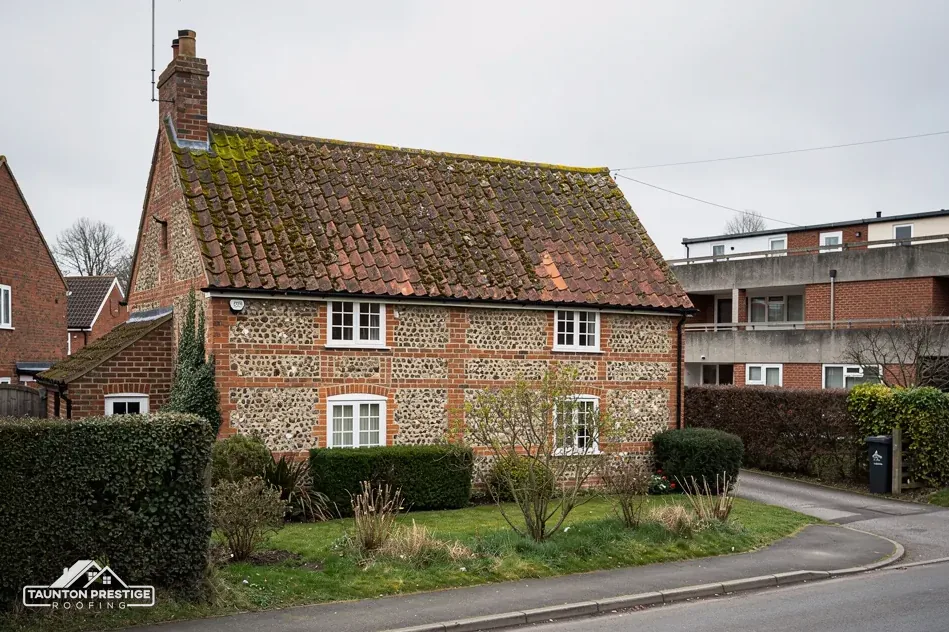
A row of seven, founded under a will of 1588, with original mullioned windows and cambered door heads.
Almshouses from 1588, a Grade II* cottage and roofs west of Ilminster
Broadway has 830 residents, a row of seven almshouses founded under a will of 1588 and a Grade II* cottage. Every roof here is read before it is priced.
A row of seven, founded under a will of 1588, with original mullioned windows and cambered door heads.
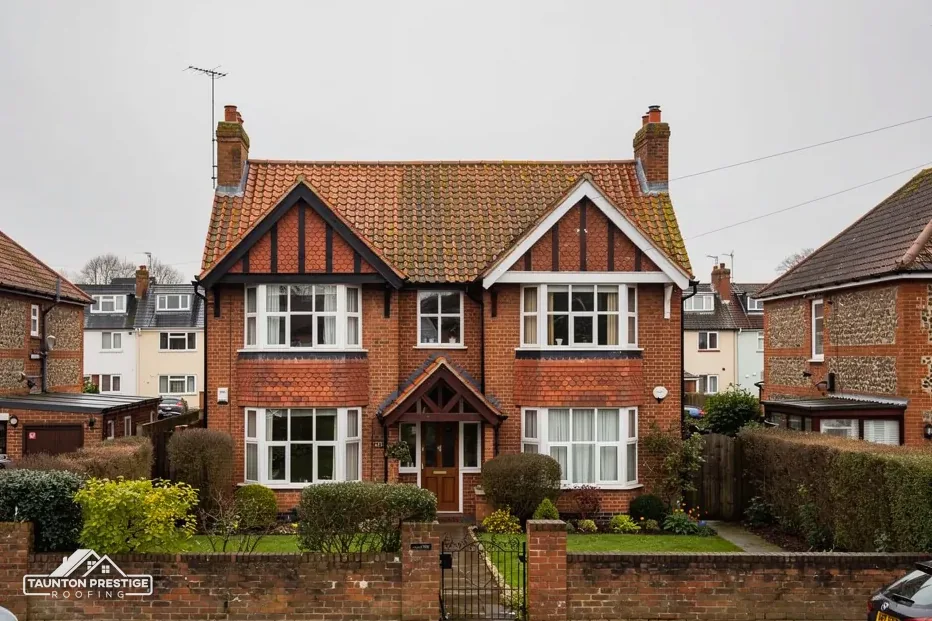
Listed Grade II* on 4 February 1958, so work that changes its character needs listed building consent.
The National Heritage List holds eleven entries within 500 metres of the centre, among them the almshouses.
Street map of Broadway with Horton, Ashill, Stewley, Ilton marked around it, and Taunton.
Horton is just south of Broadway, Ashill lies north and Stewley further north, while Ilton sits north-east, Ilminster east and Combe St Nicholas south-west.
About 8 miles south-east of Taunton, Somerset Council (unitary).
Four checks in a 1588 village
Listing, ridge fixings, chimney lead and the scaffold: four checks that shape a job on an older Broadway house.
Broadway is a village of 830 people, and the national list shows how much of its older fabric is protected. Every's Almshouses were founded under a will of 1588 and keep their mullioned windows and cambered door heads. Tudor Cottage is Grade II*, first listed on 4 February 1958. Eleven list entries sit within 500 metres of the centre. So the first question on any Broadway survey is plain: is this house on the list, and if not, does it stand beside one?
Listing adds a second layer of control on top of the planning rules. Under section 7 of the Planning (Listed Buildings and Conservation Areas) Act 1990, nobody may alter or extend a listed building in a way that affects its character unless the works are authorised. A new covering, a different ridge detail or a rebuilt chimney can all cross that line, so we ask before anything is ordered. Our guide to planning permission for roof work explains how the routes fit together.
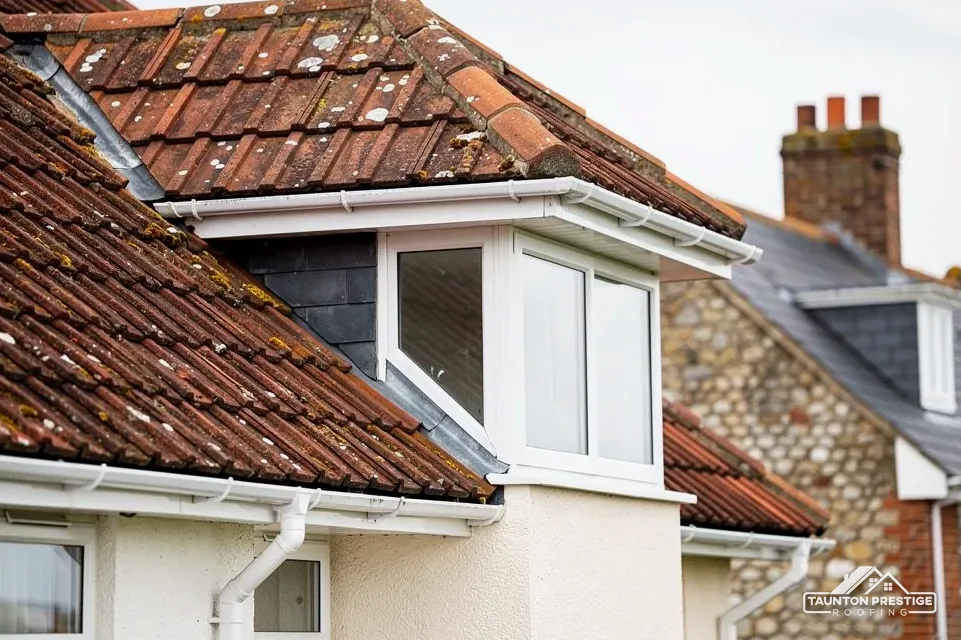
It gives you a record. Each slope's covering goes into our notes, each fault is photographed, and whatever shows beneath the surface is written down, so you and the council start from the same facts. Matching is the other half. A replacement slate cut to the wrong size, or a tile in a different colour, stands out against windows as old as these, and a like-for-like repair keeps the building reading as it always has. Where the old covering must be stripped, we also tell you what we found beneath it, with photos, before anything new goes on.
The nearest conservation area in the national dataset, within about 2.5 km, is Donyatt. Somerset Council can say whether your own address lies inside one, and that is worth asking before a job that changes how the roof looks from the road. Asking first avoids a stop-work letter later.
Look for
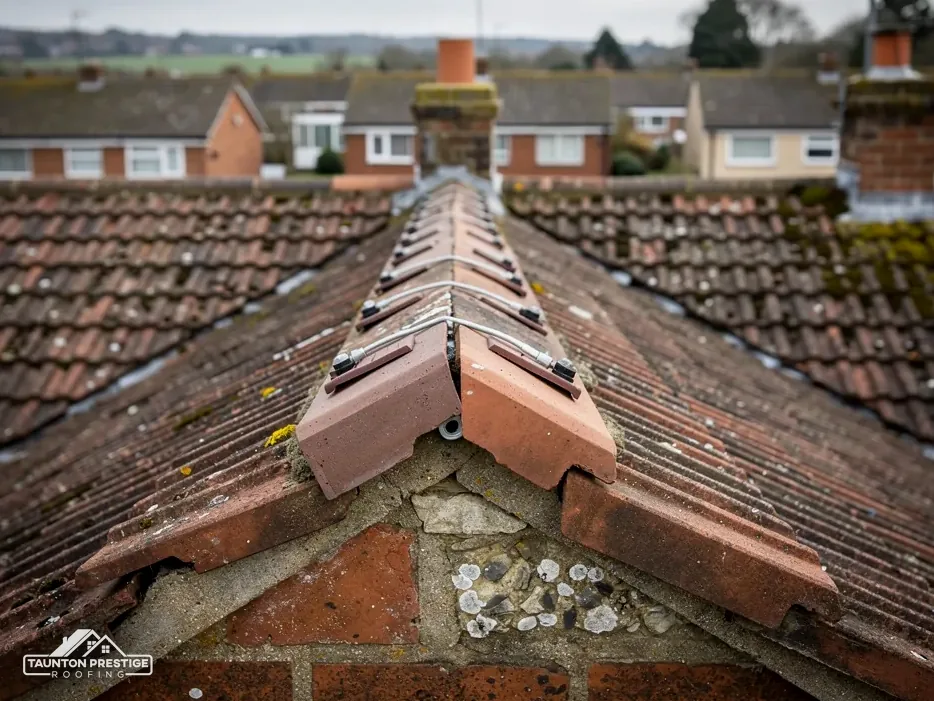
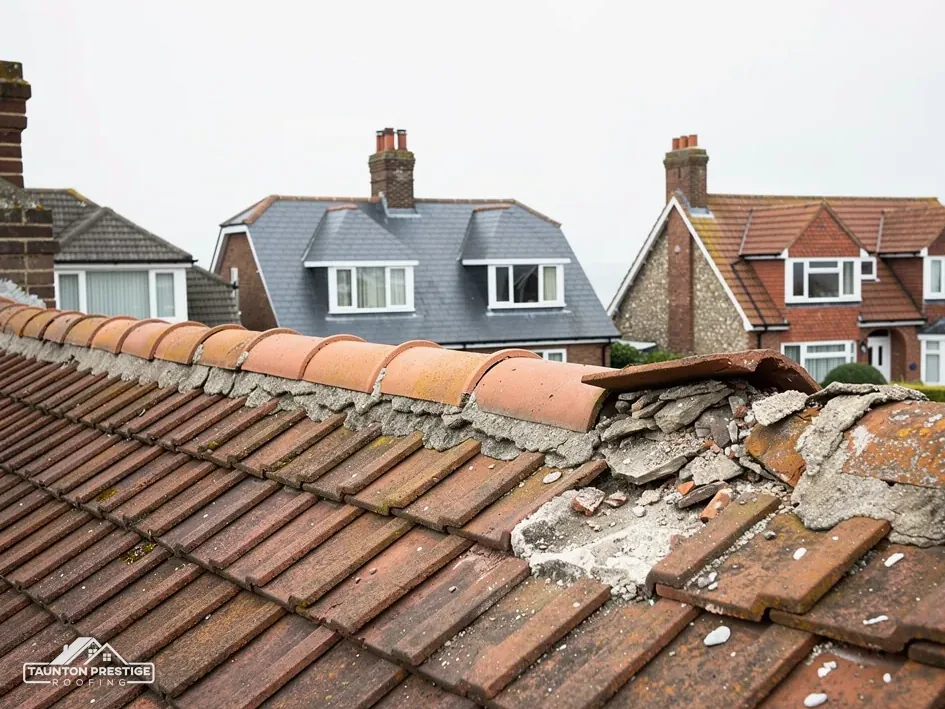
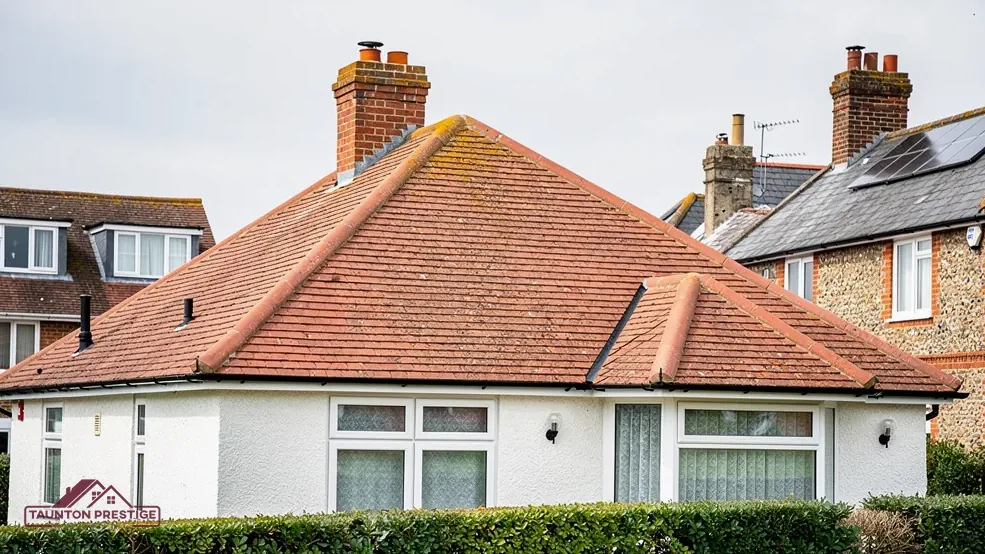
Along the top of a pitched roof, the ridge is where the two slopes meet and the capping tiles sit. The verge is the sloping edge of a gable end, where the roof stops at the wall. Both take the worst of the wind, and on an old house both may be bedded in mortar that has cracked and let go. From the road the signs are a tile sitting crooked, a dark line where mortar has fallen out, or green growth along the joint. Inside the loft, daylight at the ridge or a trail of grit on the insulation points the same way.
What decides the price
Not always. A single cap can be lifted, re-bedded and held mechanically. But when several caps have cracked bedding, or the tiles shift under a hand, the honest answer is to price the whole run. Patching one tile at a time leaves the rest to drop later, often in the next gale.
Yes. Marley's explanation is that since the 2014 revision of BS 5534, a mortar bed on its own is no longer trusted on ridge and hip work, so a bedded cap now gets a clip or screw too. Marley also notes that installing to BS 5534 is not required by law, so we explain what we propose to fit and why. BS 8612 is the test specification for dry-fix systems, which hold ridge, hip and verge tiles with clips and screws, with no mortar to crack.
MyJobQuote (Oct 2026) gives a typical UK range of £225 to £550 for ridge tile replacement, and £500 to £2,000 for a dry verge system. Length, height and access move a job around inside those ranges, and so does whether the old bedding comes off cleanly. Our dry ridge and verge page covers the systems in more detail.
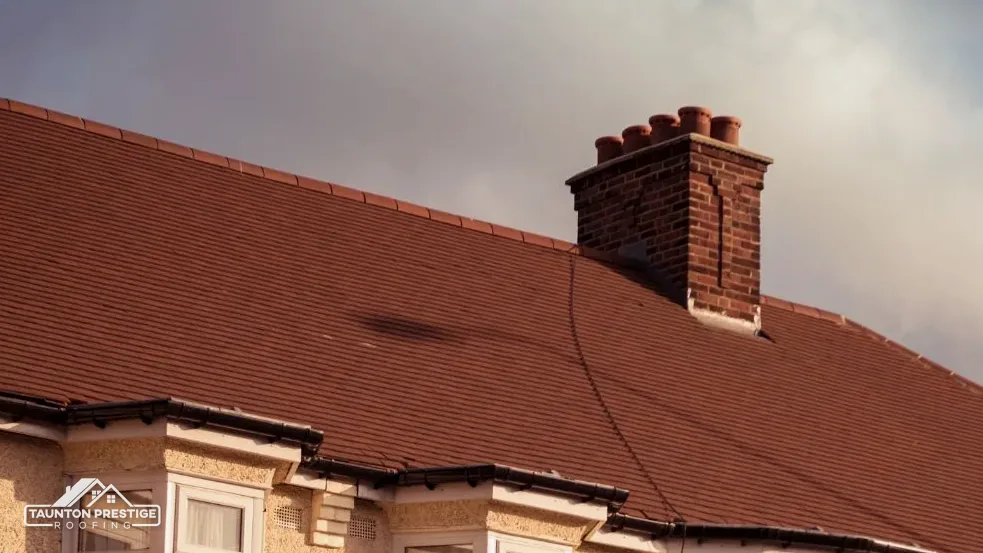
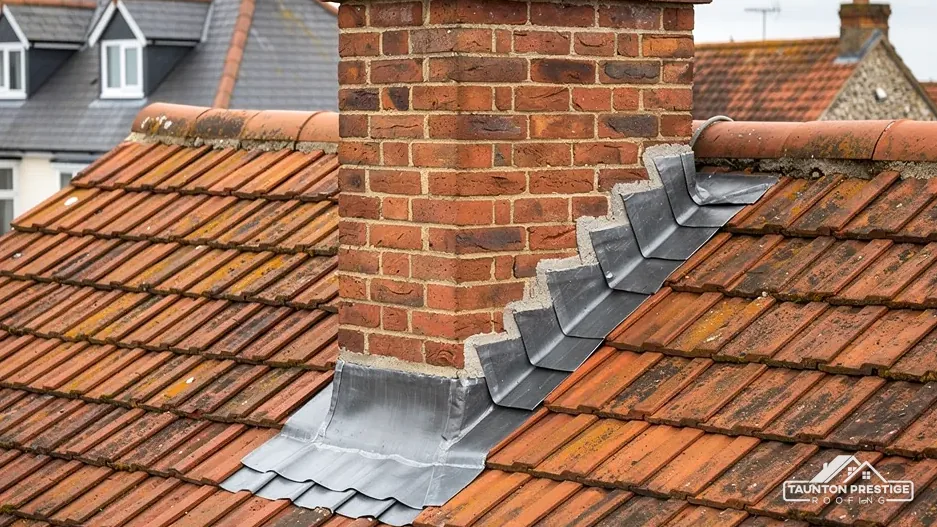
A chimney is where a roof is most often let down by its details. The stack stands proud of the slope, and every joint around it relies on lead flashing, the strips of sheet metal that bridge the gap between brickwork and covering, and on flaunching, the sloped mortar bed in which each pot is seated. In a row of cottages the stack may sit on a wall that two houses share, which brings another set of rules into a roofing job.
A stack on a shared wall can bring a neighbour into your roofing job.
MyJobQuote says it can last for over 80 years, which is a floor and not a pledge. Each lead code stands for a sheet thickness, and Royston's brochure for cast lead lists code 4 for flashings and soakers, and codes 5 and 6 for flashings and heavier work such as valley gutters. Sound lead is often kept, and only failed edges or fixings are renewed. For lead repairs see our lead work page.
Not without a conversation with your neighbour. The Party Wall etc. Act 1996, section 2(2)(g), lets an owner remove a chimney breast that projects from a party wall, and section 3 sets a minimum gap of two months between serving the notice and starting. On GOV.UK, taking a chimney off a party wall sits among the notifiable works, and a neighbour's silence does not count as agreement. Party wall questions go to a party wall surveyor, not to building control, though the Planning Portal says approval under the Building Regulations will always apply when a breast is removed. Raise it early, because the notice period can decide the start date.
Chimney leadwork is priced by MyJobQuote (Sep 2026) at £150 to £250 for a patch and £350 to £920 for a full job, with scaffold the swing factor. Our chimney repairs page explains the steps.
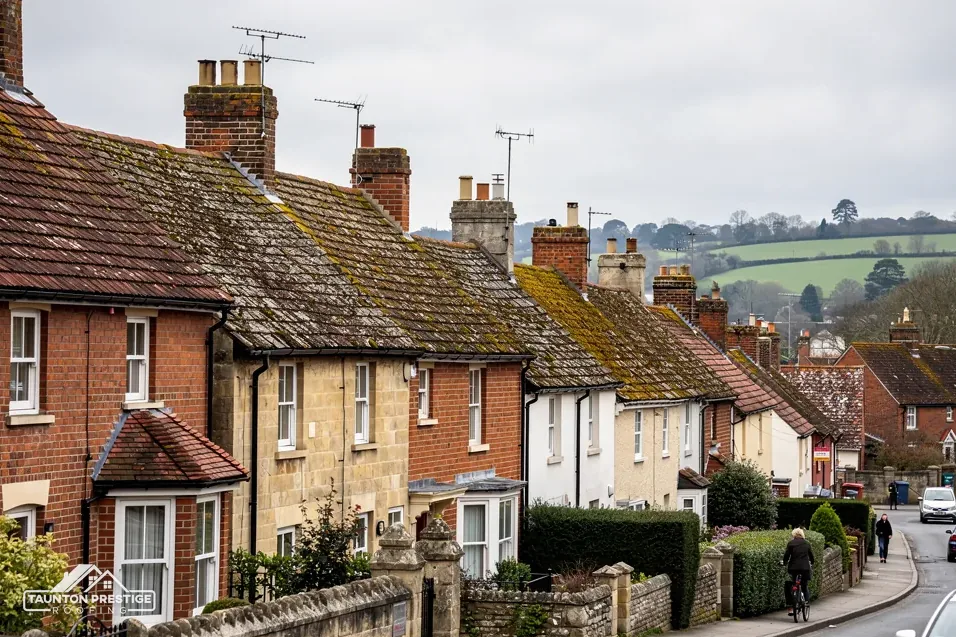
Price is the question every owner asks first, so here is what moves it. Roof area, the covering, how high and how tight the access is, and the condition of the timbers once the old covering is lifted all count. Cost guides give only national ranges. HomeBuilding (Sep 2025) puts scaffolding at approximately £1,000, permits included, for a three-bed semi, while MyJobQuote (Oct 2026) gives £550 to £750 for a week-long front elevation. When you compare quotes, check whether each includes VAT and the scaffold. Extra days on the poles, whatever the reason, add to that bill.
What decides the price
Where scaffold has to stand over the pavement or road, section 169 of the Highways Act 1980 means the highway authority must license it first. Here that is Somerset Council, and its page says licences go only to accredited contractors, with the appointed contractor making the application. It wants at least 10 working days' notice and charges £124.60 for each 28-day period (April 2026). Scaffold wholly inside your own garden or drive is not on the highway.
The Planning Portal's test says no application is normally needed when the work touches under 25 per cent of the building envelope and under 50 per cent of the roof. Building Regulations approval does apply to a covering that weighs 15 per cent more, or more, and the Planning Portal advises a word with a structural engineer or surveyor first. Somerset Building Control answers on 0300 303 7790, and a patch repair rarely comes near these limits.
Once we have seen the roof, you receive photos of your own slopes and a single written total, and we cart away the waste. Write to us with your Broadway address and say which slope or stack is bothering you, and a visit gets booked.
Walked the roof?
When you have read the checks, we walk the roof and show you the photos.
That depends on the building, not the windows. Every's Almshouses and Tudor Cottage are on the National Heritage List, but a neighbouring house may not be. If a house is listed, work affecting its character needs listed building consent as well as other approvals. Somerset Council's planning team can confirm the status of your address.
Somerset Council is the planning authority and the council behind Somerset Building Control, on 0300 303 7790. Broadway lies outside Exmoor, so the Park Authority has no say here. Since 1 April 2023 Somerset Council has replaced the old county council and the four district councils, including the former South Somerset area.
No. On the Environment Agency's planning map, Flood Zone 3 lies within about 250 metres of the centre, but that zone describes the land, and a roof is built the same way whatever the zone. It can prompt a closer look at gutters and downpipes. To check one particular house, use the GOV.UK long-term flood risk service.
The owner doing the work serves the notice, and the Party Wall etc. Act 1996 asks for it no later than two months ahead of the start. Silence from a neighbour is not consent, and disputes go to an appointed surveyor. We point out a shared stack at the survey so the notice can go out in good time.
Tell us your Broadway address and which slope, ridge or stack worries you, and a survey date follows.