Grade I parish church
St John the Baptist, listed 20 May 1985 and still Church of England, so roof work follows a faculty.
A Grade I church, Marker's Cottage and Grade II rows
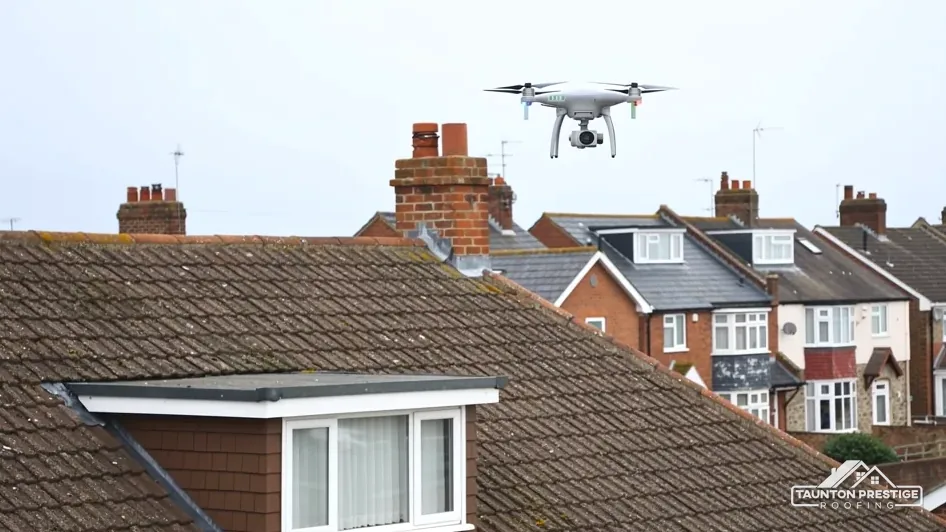
Broadclyst's 6,204 residents live around a Grade I church, a Grade II* cottage and a conservation area. Every roof here is surveyed, with photographs, before a price is written.
St John the Baptist, listed 20 May 1985 and still Church of England, so roof work follows a faculty.
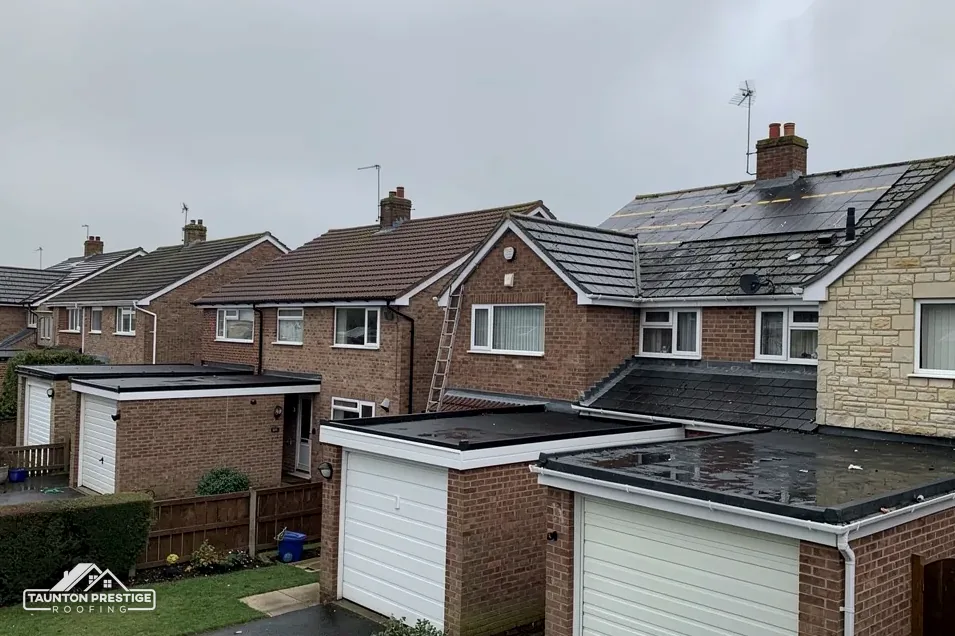
Listed on the same date as the church, so listed building consent applies to roof changes there.
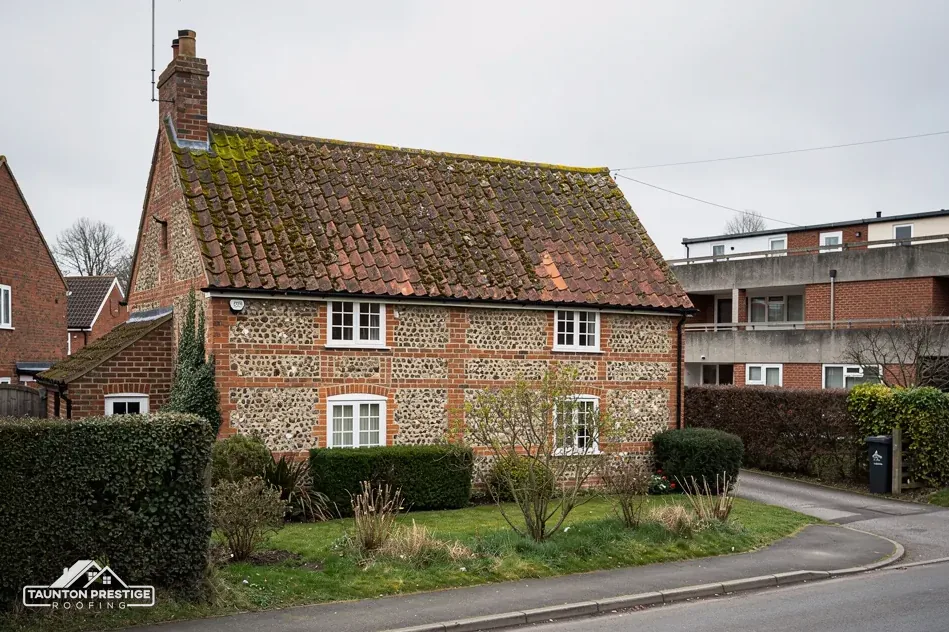
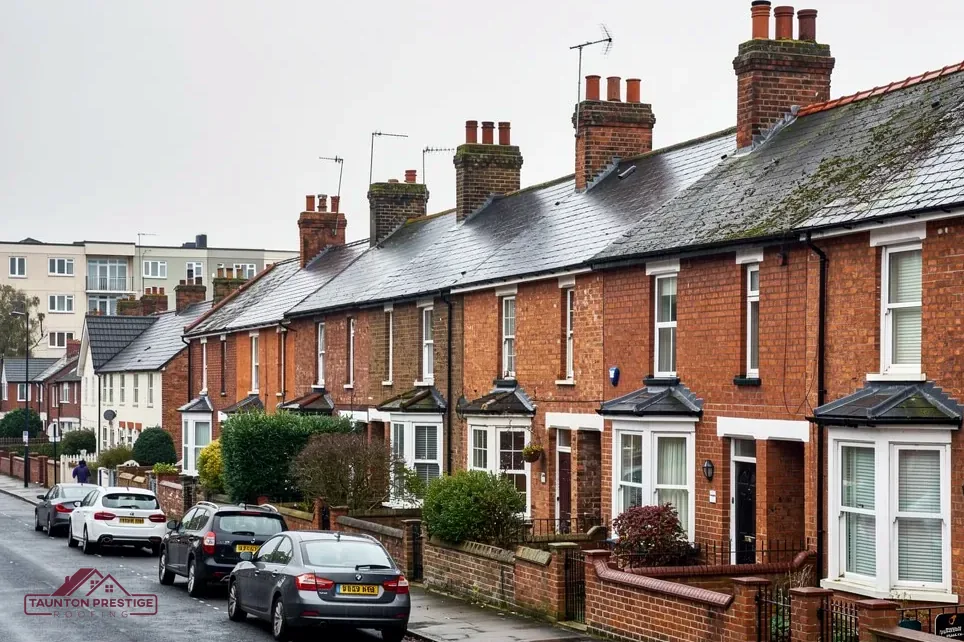
Numbered Grade II houses where one roof may meet the next, so neighbours can matter as much as consent.
Street map of Broadclyst with Cranbrook, Rockbeare, Whimple, Silverton marked around it, and Taunton.
Cranbrook lies south-east of Broadclyst and Rockbeare a little beyond it, while Silverton and Thorverton sit to the north-west, Whimple to the east and Bradninch to the north.
About 23 miles south-west of Taunton, East Devon District Council and Devon County Council.
Four checks for a village of 6,204
What to check on a Broadclyst house: consent, daylight, chimneys, and the paperwork that surrounds a quote.
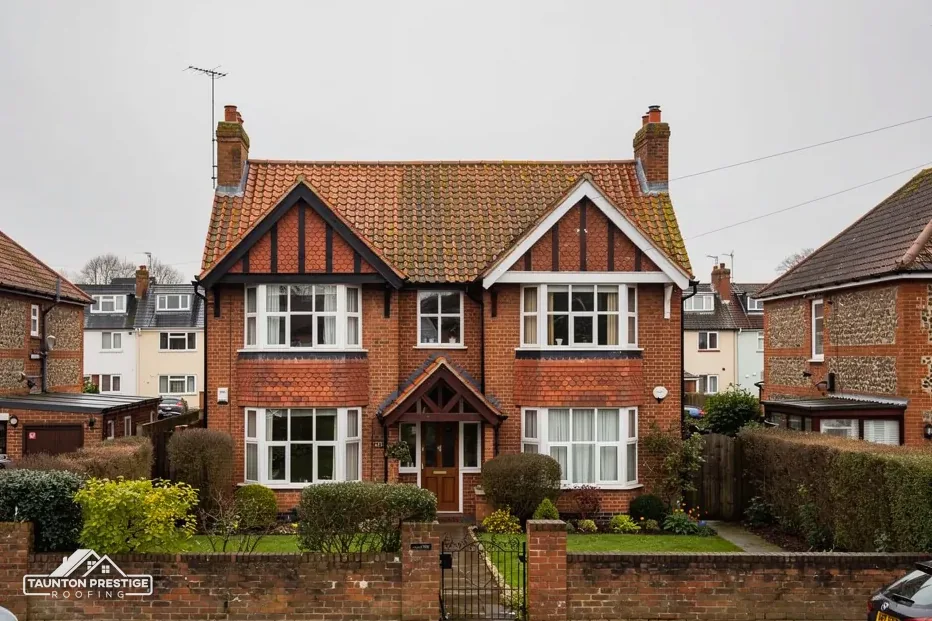
Broadclyst's listed buildings come in different sizes. The Parish Church of St John the Baptist has been Grade I since 20 May 1985. Marker's Cottage is Grade II* from the same date. Then there are the numbered addresses: 1 and 2 Queen's Square, and 1, 2 and 3 Newbuildings, each Grade II. A conservation area reaches to within about 0.75 km of the village centre. Put together, that means a roofer working here needs to know which label a house carries before suggesting a single repair. At the survey we write the status of your address at the top of our notes: listed, in the conservation area, both, or neither. Every later decision hangs off that line.
St John the Baptist is an Anglican parish church that still holds services. For a church of that kind, roof work follows the faculty system, which the parish runs, and the council's listed building consent plays no part. A roofer quoting there keeps to the specification the faculty allows. Houses are different: for a listed house the council's listed building consent covers work that alters its special interest, and East Devon District Council's planners are the people to ask. Our guide to planning permission for roof work sets out when an application is needed.
Not through listing, because each building is listed in its own right, so a neighbour's status never passes to your house. But numbered terraces and pairs share walls and sometimes roof edges, so a repair at the join can touch the neighbour's side. We look at those joints from your roof and photograph them, so that if a conversation with next door is needed, you have the pictures to hand.
Look for
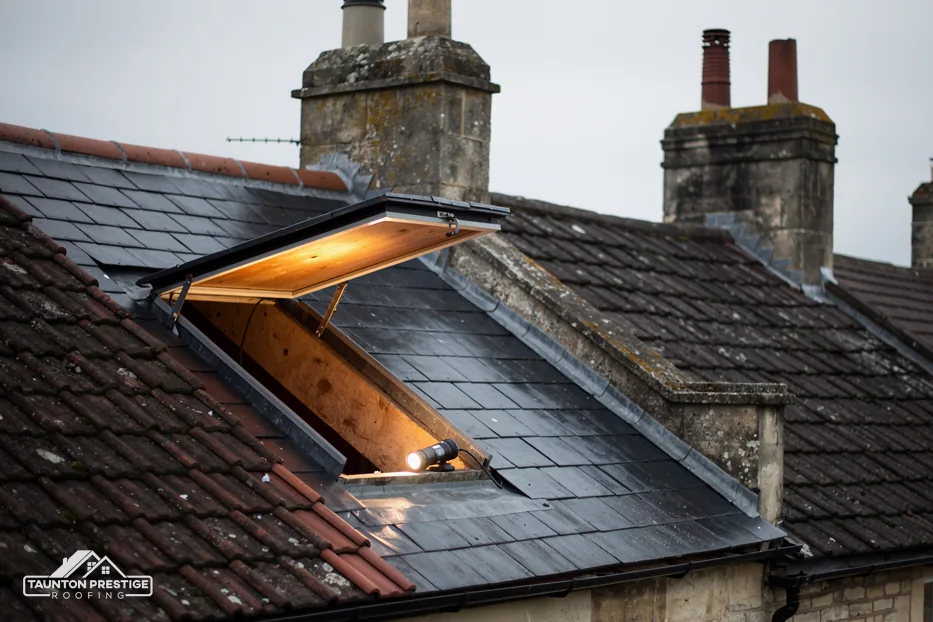
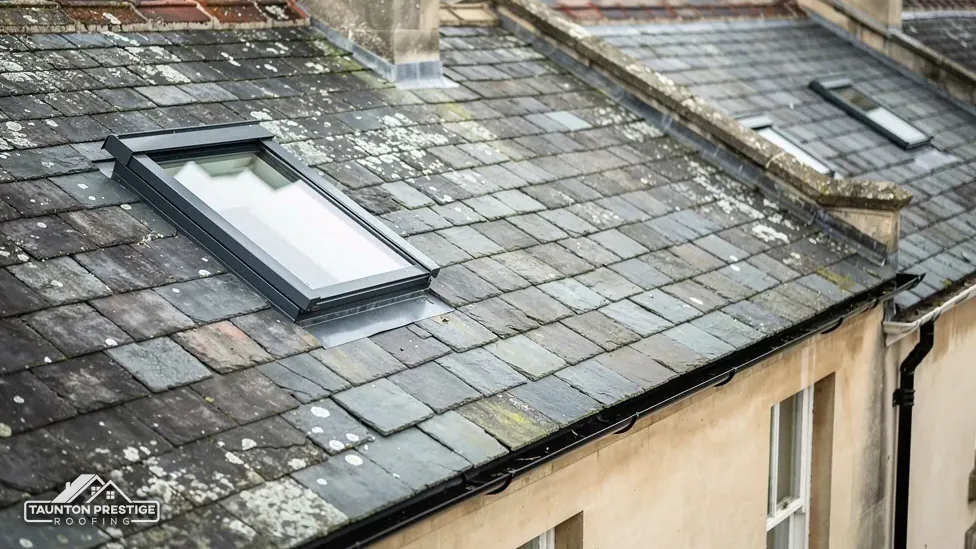
A roof window brings daylight into a loft room, and it is a hole cut in a waterproof surface, so the quality of the work around it matters as much as the window. The glazing must meet the energy rules, and the rules treat the two products differently. Under Approved Document L a new roof window counts as a window, at 1.4 W/m²K or at WER Band B on the Window Energy Rating scale. A rooflight, the flat or domed kind, gets the looser limit of 2.2. The 2021 edition applies until 24 March 2027, when the 2026 edition takes over.
What decides the price
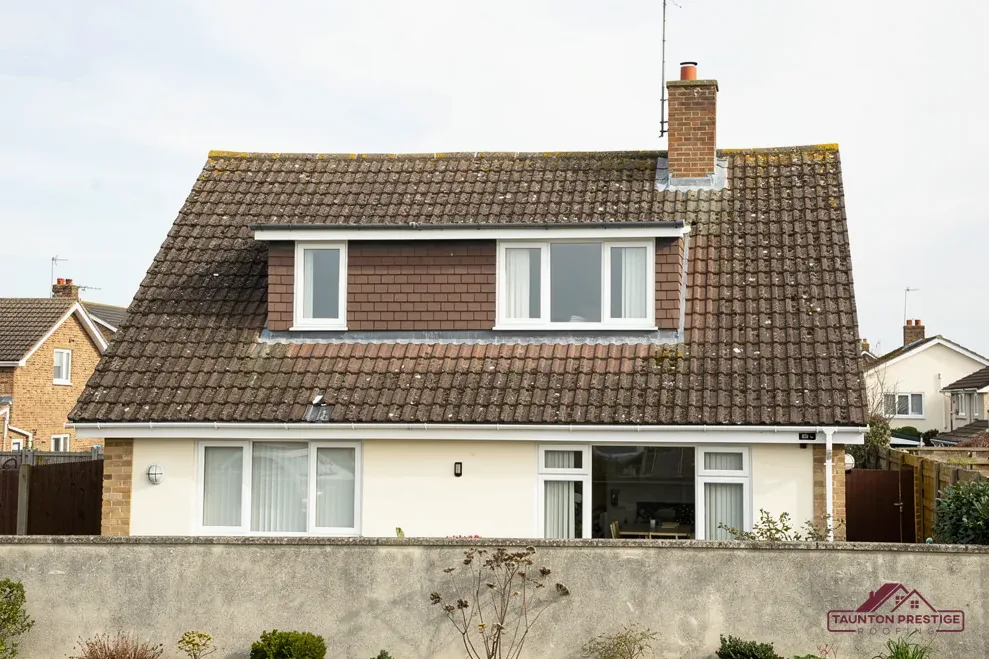
In a conservation area, or on a listed house, the slope that faces the street is where the question gets sharp. The window changes how the roof reads from the road, and that is what planners look at. The quickest answer comes from East Devon District Council's planners, before anything is ordered, and for a listed house listed building consent comes first. A slope at the back, out of public view, is an easier conversation but it is not an automatic yes. We note which slopes are visible from the road when we survey, so that the conversation with the planners starts from the right elevation.
The frame is set between the rafters, with battens and tiles cut back around it and a flashing kit dressed to shed water past all four sides. MyJobQuote (Sep 2026) gives £1,100 as a standard mid-range Velux and says a straightforward swap comes in around £100 less, as typical UK figures. Our price depends on the slope, access and what is behind the plasterboard. If the window belongs to a loft conversion, the roof around it also has to meet the renovation figures, a 0.35 threshold upgraded to 0.16 where that is feasible, and Approved Document B usually calls for a protected stair in a two-storey house, with alternatives allowed. Read our roof window page for the steps in full.
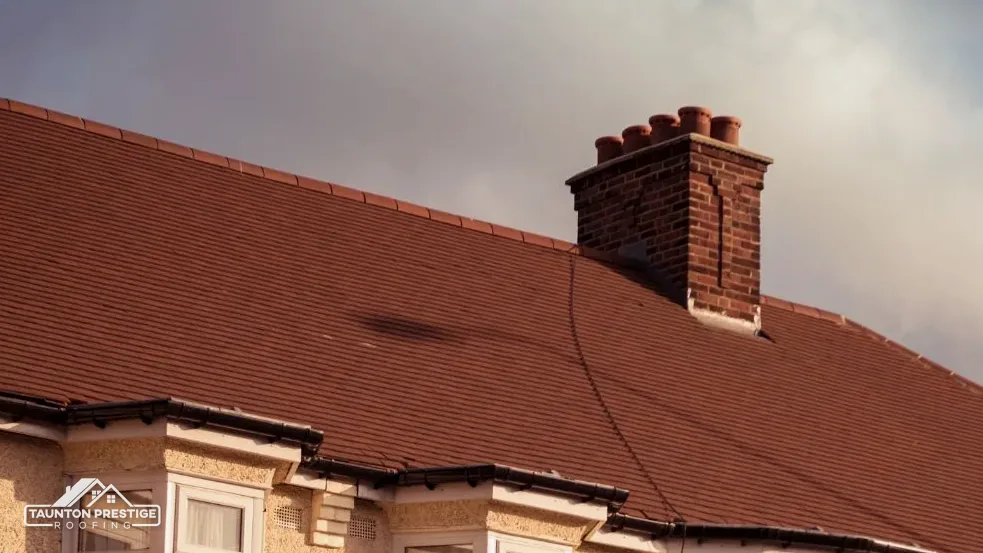
On a joined-up row, the chimney stack often sits on the wall between two houses, so it belongs partly to the neighbour. That changes the sequence of any repair. Flaunching, the mortar collar around the pots, and the lead flashing where the stack meets the slope are your concern from your own roof, and a good repair there is often all a stack needs. Taking the stack down, or removing the chimney breast below it, is a shared matter, and the law treats it that way.
A chimney on a joined row is shared property, so the first repair is a conversation.
Under the Party Wall etc. Act 1996, section 2(2)(g), an owner has the right to cut away a projecting chimney breast or flue from a party wall, and section 3 says the notice must be served two months ahead. GOV.UK includes taking a chimney out of a party wall among notifiable work, and warns that no reply cannot be treated as agreement. Disputes go to an appointed surveyor. Building control is a separate matter: the Planning Portal says Building Regulations approval always applies when a chimney breast is removed.
MyJobQuote (Sep and Oct 2026) gives a typical UK range of £450 to £1,200 for repointing a chimney, and for chimney leadwork £150 to £250 for a patch and £350 to £920 for the full job, where scaffold is the swing factor. Lead flashing can last for over 80 years, so the mortar is usually the weaker link. Our chimney repairs page covers the choices. Before a stack comes down we photograph it from the roof and from the loft, so you can see what lies behind the plaster.
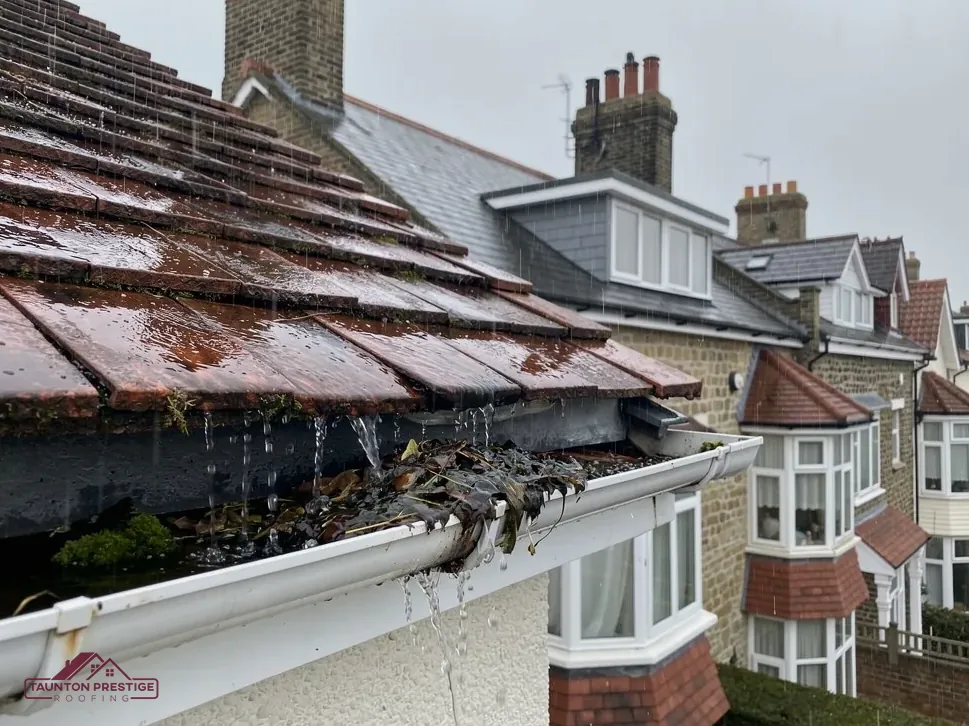
Citizens Advice advises collecting three or more written quotes before you choose, and we welcome that. When you compare, check that each treats VAT and scaffold alike. As a guide to scaffold, HomeBuilding (Sep 2025) says approximately £1,000, permits included, for a three-bedroom semi, and MyJobQuote (Oct 2026) at £550 to £750 for a week on the front elevation. Both are national guides and not our prices.
What decides the price
A contract signed at your own table after our survey counts as an off-premises contract, and the cancellation period ends 14 days after the day you entered into it. We put that in writing for you. Starting work earlier is possible, but only if your request is made on a durable medium, an email being the usual one, and it is your choice, not ours.
Section 49 of the Consumer Rights Act 2015 expects a trader to use reasonable care and skill in providing a service. If a dispute arises, the DMCC Act 2024, section 308, requires a trader to tell you about any alternative dispute resolution arrangement. Citizens Advice runs a consumer helpline on 0808 223 1133.
Where scaffold has to stand in the road or on the pavement, section 169 of the Highways Act 1980 brings in a licence from the highway authority. In Broadclyst that is Devon County Council, which deals with the scaffolding company applying for its customer. Once you agree the work, you hear the start date, what each day involves and when the scaffold goes up and comes down, and the waste leaves with us. Send your Broadclyst address and a note of the symptoms, and the survey is booked; the single written price follows it.
Walked the roof?
When you have read the checks, we walk the roof and show you the photos.
St John the Baptist is still used for worship by the Church of England, so the faculty system applies in place of the council's listed building consent, and it is the parish that applies for one. A roofer then works strictly to the approved specification, and any variation goes back to the parish before it is carried out.
The answer depends on the slope and on the house. A conservation area changes how planners view a window facing the street, and a listed house also needs listed building consent. East Devon District Council's planners can advise. The window itself must reach 1.4 W/m²K or WER Band B under Approved Document L.
No, if the stack sits on a party wall. Removing chimneys from a party wall is notifiable work under the Party Wall etc. Act 1996, with notice due two months ahead, and silence does not count as agreement. A party wall surveyor settles any dispute. Building control is a separate step.
If you sign at home once the survey is done, the cancellation period ends 14 days after the day you entered into the contract. You can cancel without giving a reason. Work can start sooner only if you request it in a lasting form, for example a letter. An urgent repair you ask us to visit for is treated differently.
Tell us your Broadclyst address and which part of the roof worries you, and we will arrange to look.