Bradninch Manor, Grade I
Listed Grade I in September 1977, so altering its roof's character needs listed building consent.
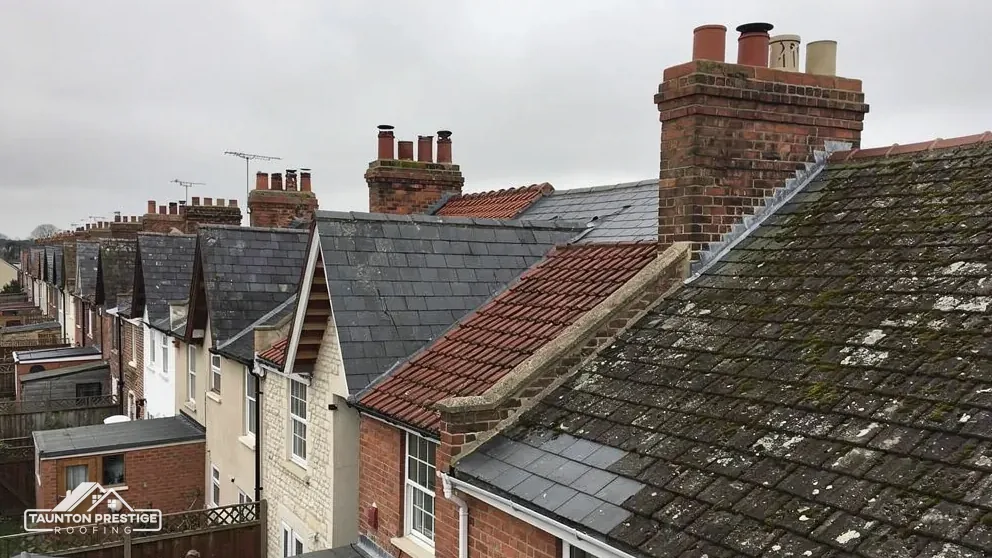
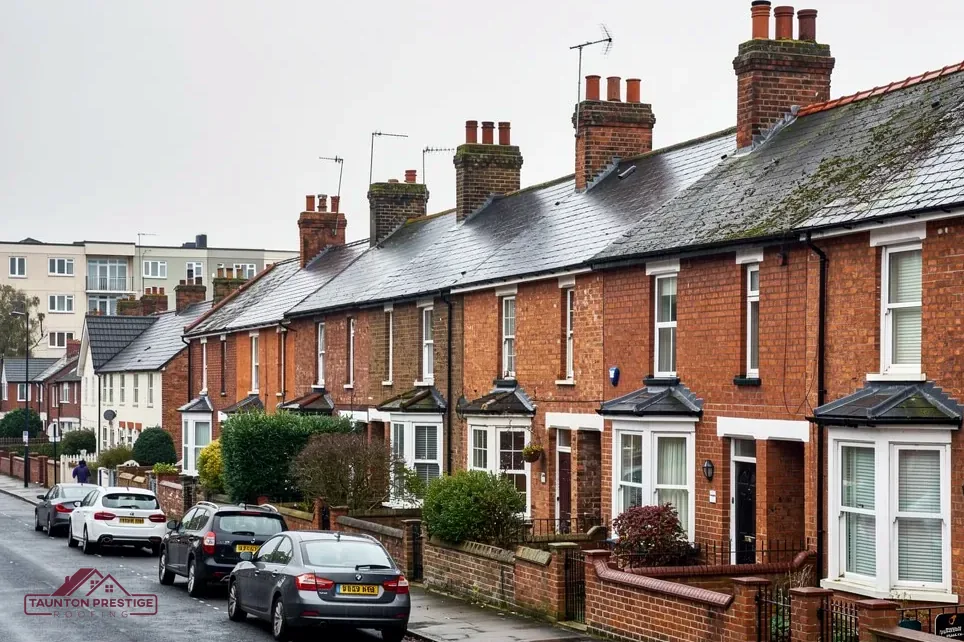
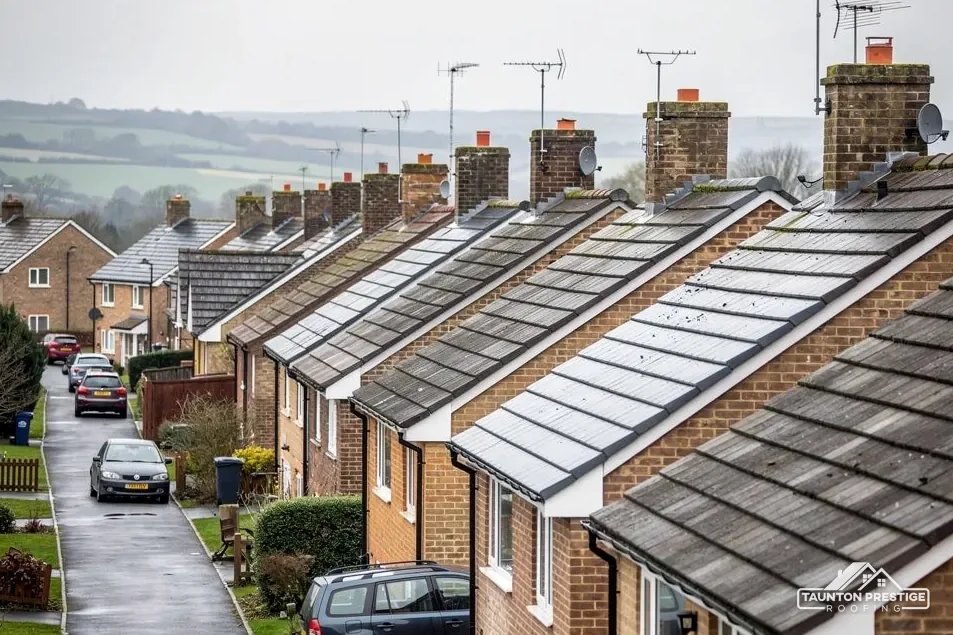
Slate and red pantile roofs in a town rebuilt after repeated fires
Bradninch burned in 1666 and again in 1685, 1832 and 1873, and slate took over from thatch in the rebuilding. We read each roof before we price it.
Listed Grade I in September 1977, so altering its roof's character needs listed building consent.
A 15th-century cob house remodelled in 1681, which the appraisal records under wheat reed, a thatcher's job, not a slater's.
The council's appraisal names these three coverings, adds a few thatched roofs, and notes decorative ridge tiles on slate roofs.
Street map of Bradninch with Cullompton, Silverton, Broadclyst, Thorverton marked around it, and Taunton.
Cullompton lies north-east of Bradninch and Willand beyond it, with Silverton and Thorverton to the west, Broadclyst to the south and Whimple to the south-east.
About 19 miles south-west of Taunton, Mid Devon District Council and Devon County Council.
Four checks after the fires
Four things to check on a house in the old burgage streets, and how each finding changes who must agree, what we do and what the job costs.
Bradninch has a conservation area, and the appraisal Mid Devon District Council wrote for it explains much of what you see along Fore Street. Two questions come before any price. Is your house inside that boundary? Is it, or a neighbour, on the National Heritage List? Between them, those answers settle who has to say yes. Bradninch Manor is Grade I, Comfort House is Grade II*, 1 High Street is Grade II, and a roof beside them is judged on how it looks as well as how well it keeps water out.
Putting back what was there is one thing; changing the look is another. Inside the conservation area, a new covering, roof windows on the street side or a different ridge (the capping tiles that run along the highest line of the roof) are the changes that draw questions. Ring the district council's planning team before any materials are ordered. A phone call is cheaper than a refused job, and our guide to listed building roof consent shows what the council will want to see.
Listing does not remove the usual permitted development rights on a house, yet listed building consent is also needed for any work that alters what makes the building worth listing. That can catch alterations that look tiny from the pavement, such as trading a mortar-bedded ridge for a clip-fixed one. The parish church of St Dionysius is listed Grade II. Which consent system covers it depends on its denomination and whether it is in use for worship, so the parish or the council confirms that before any scaffold is booked.
Our survey records the covering on every slope, which means an application starts from what is truly on the roof, not from memory.
Look for
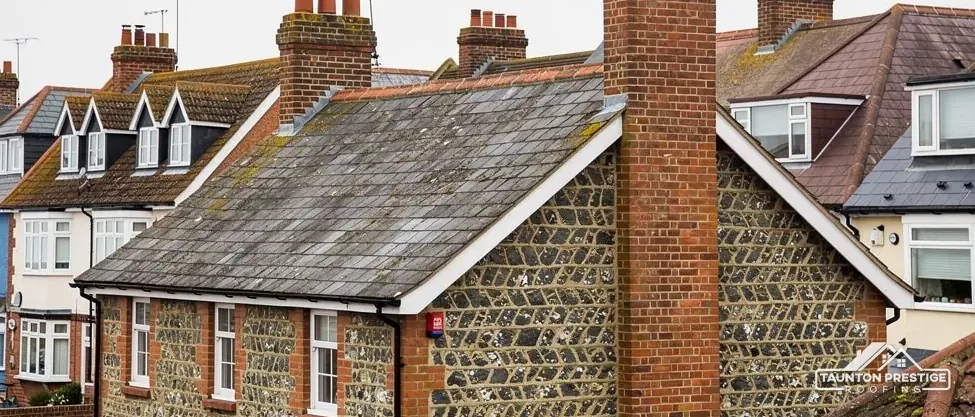
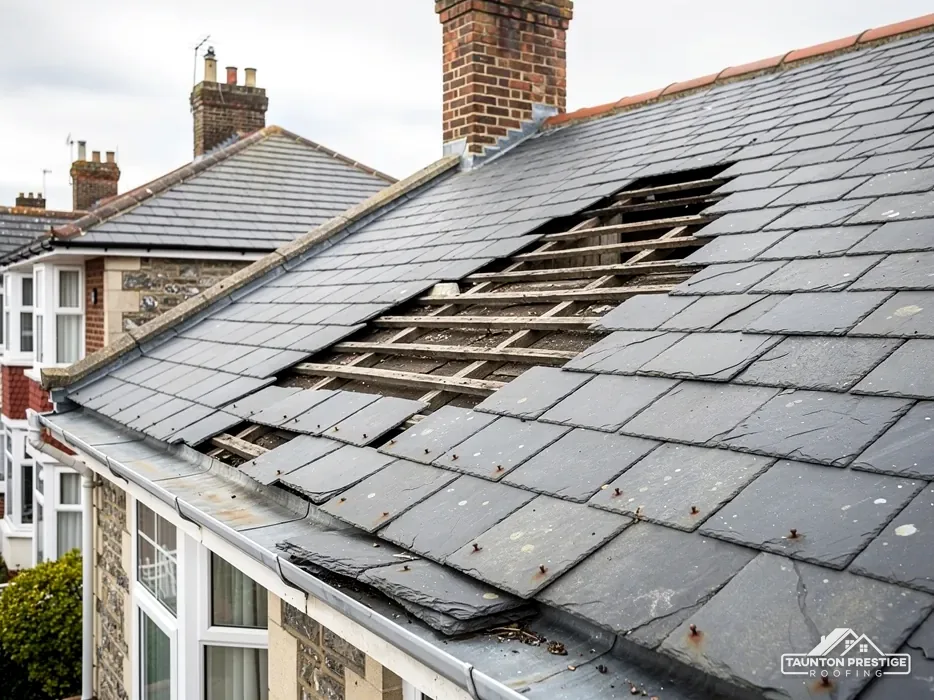
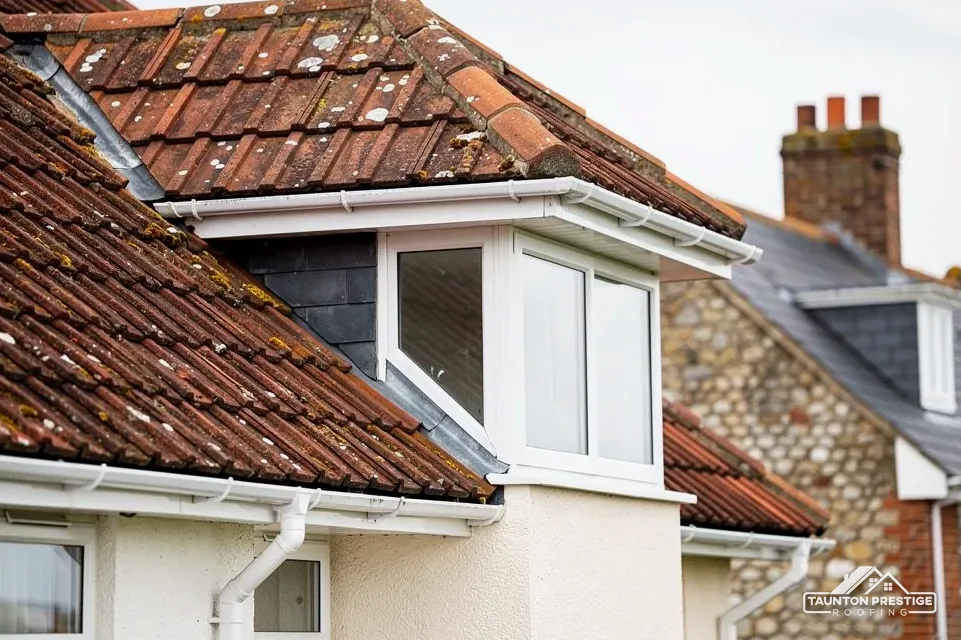
The 1666 fire destroyed the town apart from the church and a few outlying houses, and three more fires followed. The appraisal records that slate came to be preferred over thatch when buildings went up again. It describes today's roofs as natural slate, artificial slate or red pantiles, with a few thatched ones. A pantile is a clay tile with a gentle S-shaped curve that locks sideways into its neighbour. Slates and pantiles both hang from battens, thin timber laths nailed over the rafters, with an underlay below them, the sheet that catches whatever gets past the covering.
What decides the price
Usually, if a sound match exists. Reclaimed pantiles often blend with an old roof better than new ones, so we compare colour and curve before choosing. Where several neighbours are cracked, or the battens beneath have gone soft, a patch buys only a few months, and the survey will tell you which case you have.
It matters, because the two age differently and do not always mix. Slate that is looked after can run past 100 years, according to the Confederation of Roofing Contractors. BS 5534 indicates a minimum pitch of 20 degrees for natural slate, with hook fixings kept off pitches below 25 degrees. For clay pantiles, Marley gives 15 degrees as the minimum pitch for its Lincoln profile and says to check the data sheet for the tile actually on your roof. We identify the covering at the survey and show you close photographs, so the price rests on what is up there. Our slate roofing page goes further.
Decorative ridge tiles are worth keeping. When one is rebuilt, the new tiles should be held mechanically as well as bedded, since mortar alone is no longer relied on to keep them up.
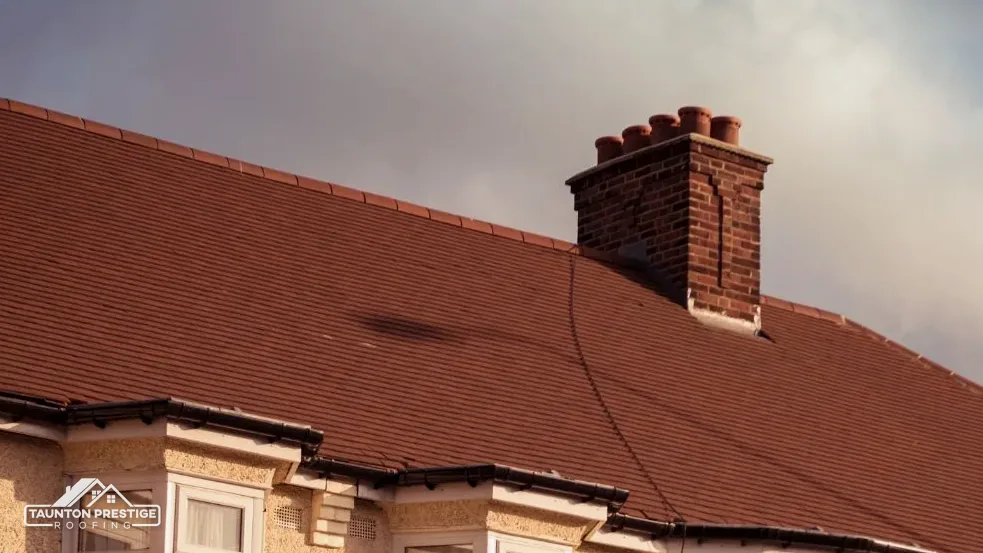
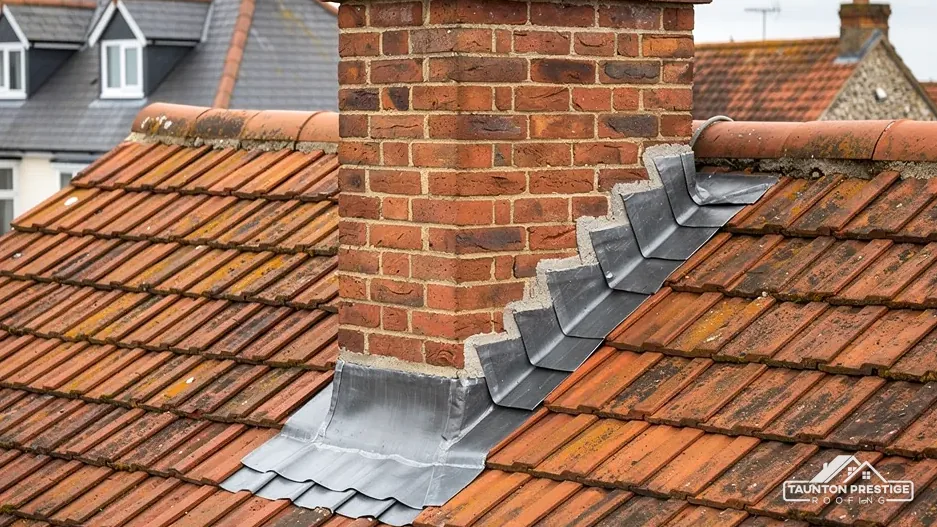
The appraisal describes the town's chimneys as brick, often tall, with raised or projecting bands. Those bands shed water, but they also catch it, and the joints around them are the first to suffer. A stack has three weak points. The flaunching is the mortar bed that seats the pots at the summit. The flashing is lead dressed into the brickwork to shut out water where the stack leaves the slope. The brickwork between the two is what gets repointed.
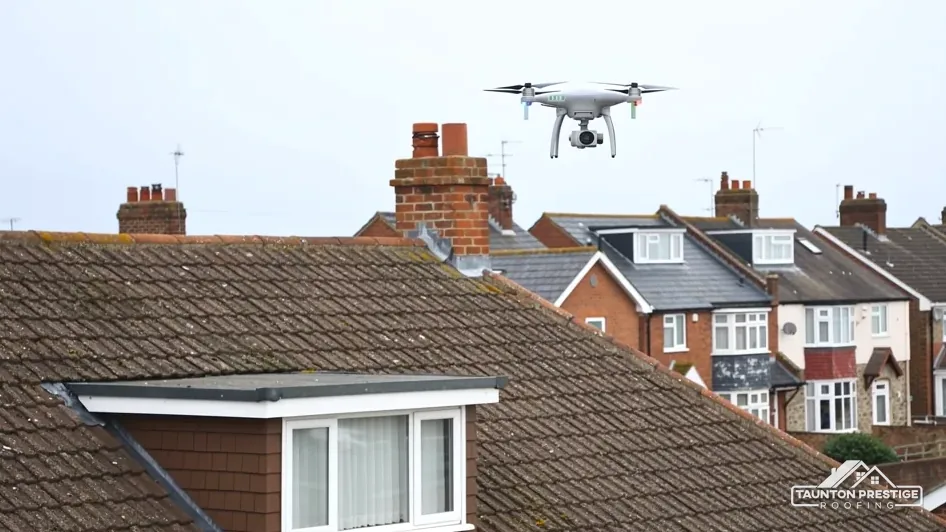
Brown marks around the chimney breast, which is the part inside the house, point to water getting in at the flashing, the flaunching or a cracked pot. Lead flashing can last for over 80 years, so a failed one is more often a lifted edge or an open joint than worn-out metal. We look from the roof with a camera and show you the photographs before anything is priced. Our chimney repairs page sets out the choices, and the flashing itself falls under lead work.
Building Regulations approval is always needed to remove a chimney breast, because the breast belongs to the structure. A breast shared with a neighbour also brings in the Party Wall etc. Act 1996, with notice served two months ahead, and that question goes to a party wall surveyor rather than building control. On a listed house in the centre, rebuilding a stack can need listed building consent too.
For many stacks the right job is smaller than owners fear: fresh flaunching, repointing the weathered joints and a flashing that is properly fitted into the brick. A stack that leans, or has bands loosened by years of weather, is a different conversation, and the photographs will show which of the two yours is. Either way you see the evidence before you agree to anything, and we explain why a smaller repair is the right one when it is.
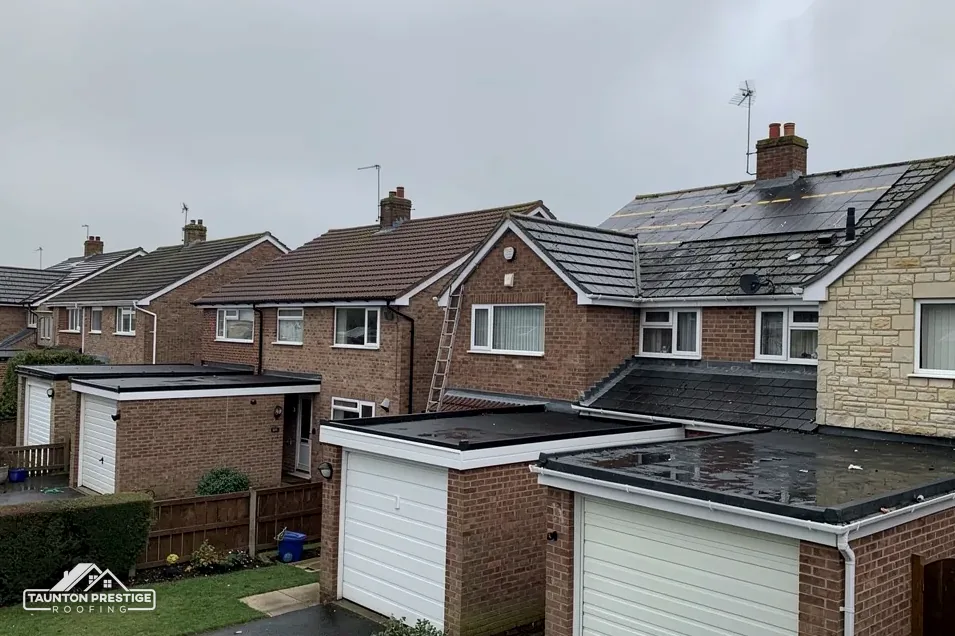
Section 169 of the Highways Act 1980 requires a licence from the highway authority before scaffold that obstructs the road or pavement goes up. For Bradninch that authority is Devon County Council, whose rule is that the scaffolding company makes the application for its customer. So the paperwork is the scaffolder's job, and we arrange it with them. The licence costs £158.00 and the council wants a minimum of 10 working days' notice. A scaffold set up in a garden or on a private drive never touches the highway, and a small repair can sometimes be done from a ladder or a tower instead. We tell you which access your roof needs once we have seen it, and we build the licence lead time into the start date so nobody is left waiting for a permit while the roof is half stripped.
What decides the price
Many re-roofs sit outside it. The Planning Portal's test looks at two measures: under 25 per cent of the building envelope and under 50 per cent of the roof. Fitting a heavier covering, 15 per cent or more, brings in Building Regulations approval, and the Planning Portal advises a structural check first. In Bradninch the service is NMD Building Control, which North Devon Council and Mid Devon District Council run together.
Under the Wildlife and Countryside Act 1981, destroying a nest that birds are using, or still building, is an offence when it is done intentionally. Roof repair and replacement appear on GOV.UK's list of work that can disturb bats, so we look for signs of a roost before any slates come off and time the work around what we find.
From the survey you take away close photographs showing the roof as it stands, followed by one total in writing that says whether scaffold and VAT are in it. To begin, send us your Bradninch address and tell us whether the roof is slate, pantile or something older.
Walked the roof?
When you have read the checks, we walk the roof and show you the photos.
Often, yes. We compare the colour, curve and thickness of the broken tile with sound reclaimed pantiles and with new ones, and show you the options in photographs. Where a whole slope has cracked, relaying it on fresh battens is the better buy than patching, and the survey tells you which of the two you have.
Start with Mid Devon District Council's planning team, which can tell you whether the house is listed and whether it lies in the conservation area. Work that alters the character of a listed house needs listed building consent. We note the covering slope by slope so that any application is built on facts.
Leave the nest alone while the birds are using it. Under the Wildlife and Countryside Act 1981, intentionally taking or wrecking an occupied nest, or one under construction, is an offence. We check the eaves during the survey and fit the work around any nest that is active, which can mean a short wait before the first slate is lifted.
NMD Building Control, run jointly by North Devon Council and Mid Devon District Council. By the Planning Portal's yardstick, an application is not usually needed while under 25 per cent of the building envelope and under 50 per cent of the roof is touched. Choosing a heavier covering changes that, so weight is something we raise at the survey.
Tell us what you have seen on your Bradninch roof, and we will arrange the survey visit.