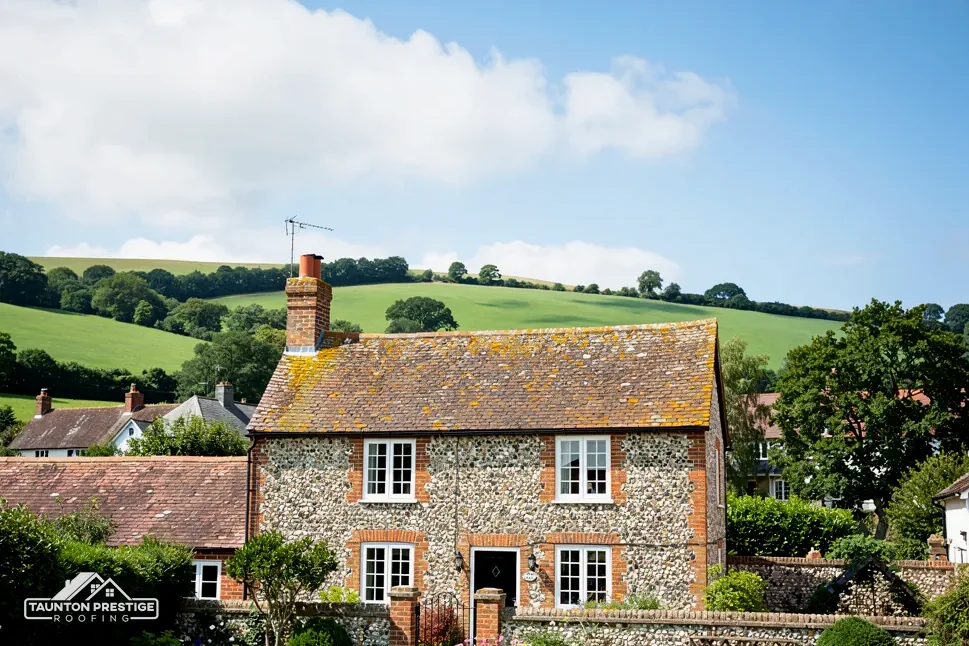
White Lodge
Listed Grade II* (first listed 11 November 1952), so roof work needs listed building consent from East Devon District Council.
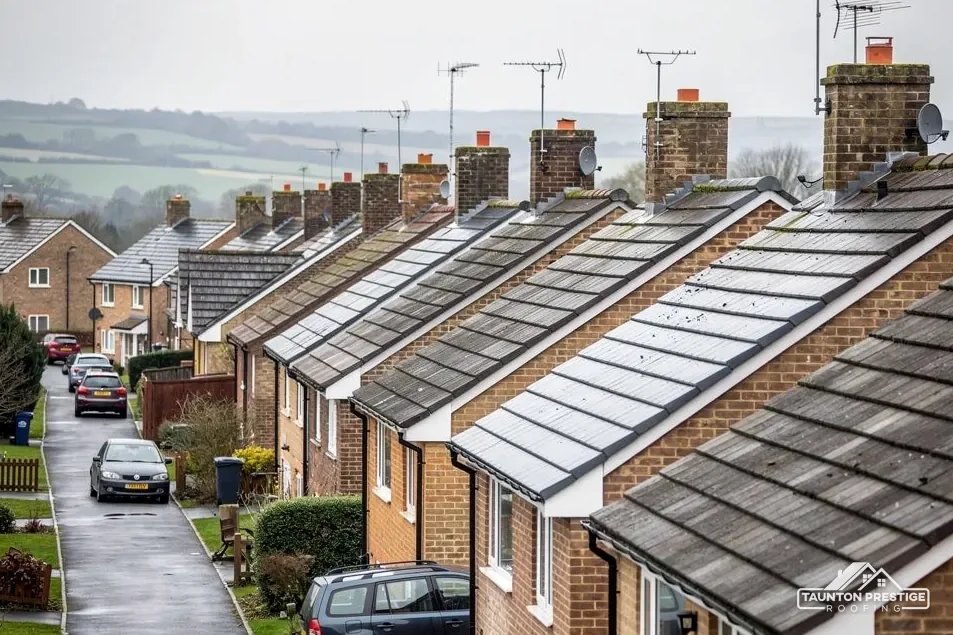
Grade II* White Lodge, Craig's Cottages and listed homes near Sowton
Clyst St Mary is in East Devon, in Sowton parish, with six National Heritage List entries within 500 metres, led by Grade II* White Lodge.
Listed Grade II* (first listed 11 November 1952), so roof work needs listed building consent from East Devon District Council.
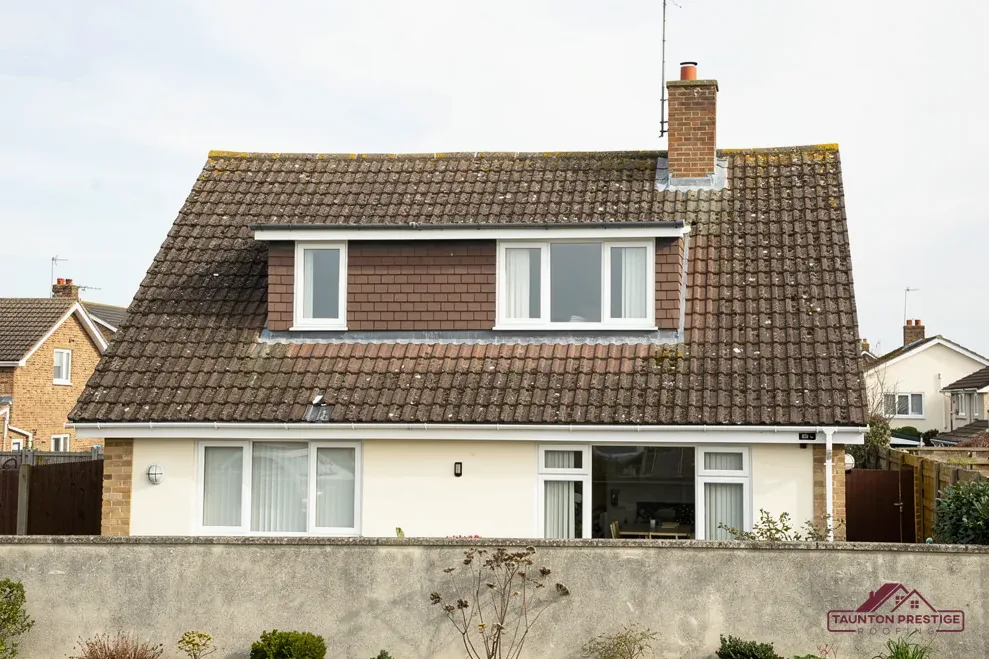
Listed Grade II, so a roof change that alters their character needs listed building consent.
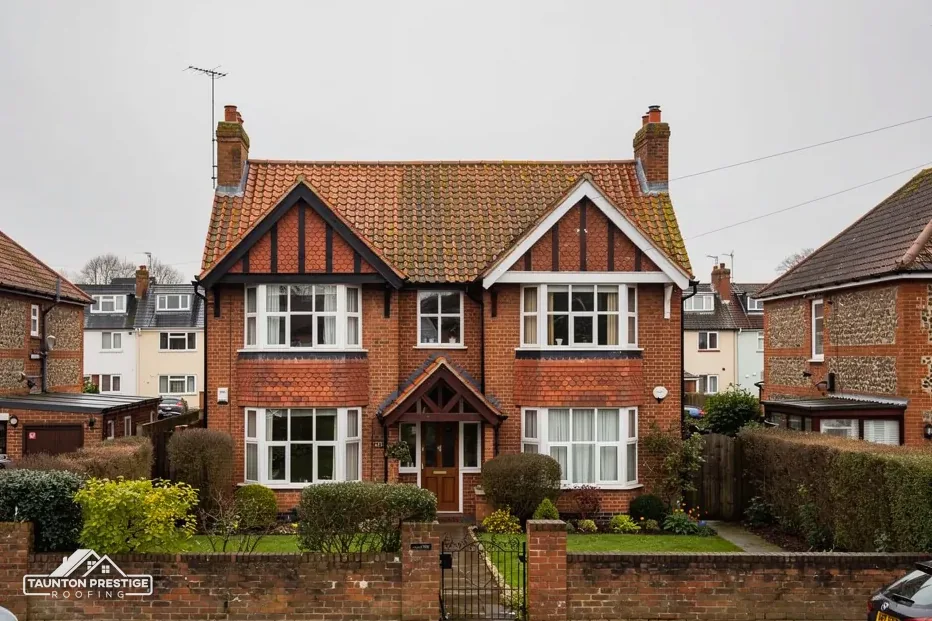
Six list entries lie within 500 metres of the centre, including a Grade II house numbered 28.
Street map of Clyst St Mary with Rockbeare, Cranbrook, Broadclyst, Whimple marked around it, and Taunton.
West Hill lies east of the village, Rockbeare and Cranbrook north-east, Whimple further north-east, and Broadclyst and Silverton to the north.
About 26 miles south-west of Taunton, East Devon District Council and Devon County Council.
Four checks in Sowton parish
Four checks for a roof in East Devon: the listing question, the lead, the flat roof and the paperwork, each with its effect on the price.
Clyst St Mary sits in Sowton civil parish, which had 849 usual residents at the 2021 Census, and the council that decides planning here is East Devon District Council. Devon County Council looks after the highway. The first thing we establish on a survey is whether your house is listed, because that single answer decides whose permission the work needs.
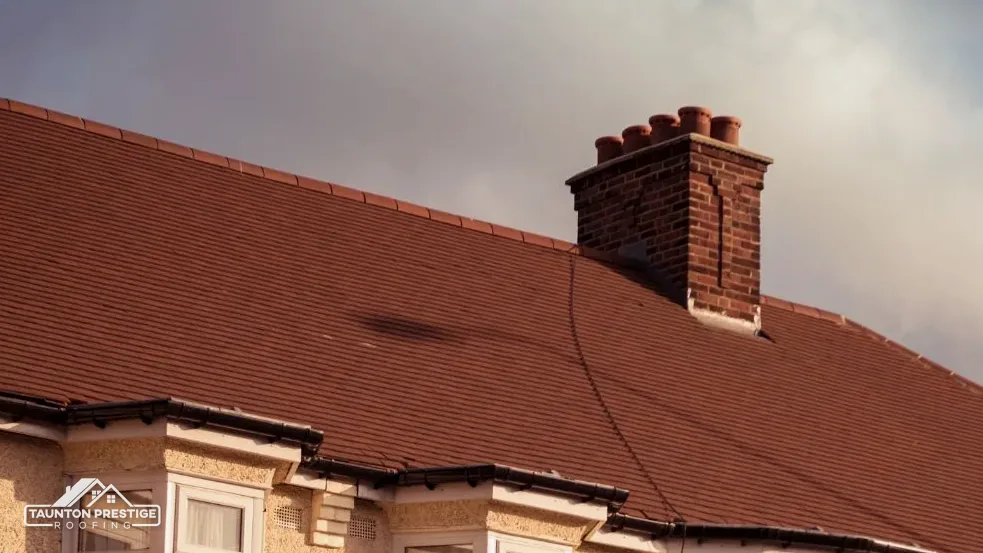
The National Heritage List has six entries within 500 metres of the centre of the village. White Lodge is listed Grade II*, Craig's Cottages are Grade II, and so is a house numbered 28. On a listed building, anything that would change its character needs listed building consent from East Devon District Council. That applies to a new covering, a new rooflight or a rebuilt chimney alike, while a like-for-like repair is handled differently from a change. Listed building consent is a separate application from planning permission, made to the same council, and a roof job can need both.
The national dataset lists Sowton and Topsham as the nearest conservation areas, within about 2.5 km of the village. Whether a particular address is covered is for East Devon District Council to confirm, and it is worth asking before you order a different covering. A lodge, a row of cottages and a village house can each carry a different listing, so we check the entry for your own address rather than assuming a neighbour's applies.
You can search the National Heritage List for England by address, and the council will confirm what you find. At the survey we note what covers each slope and record the pitch, the eaves and the chimneys, so any question you put to the council rests on what is actually there. For building control, ask the district council's team or a registered building control approver.
Look for
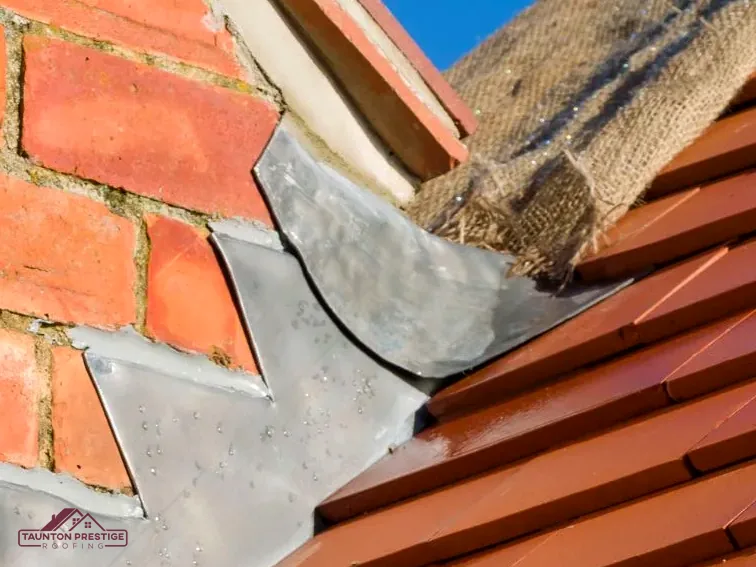
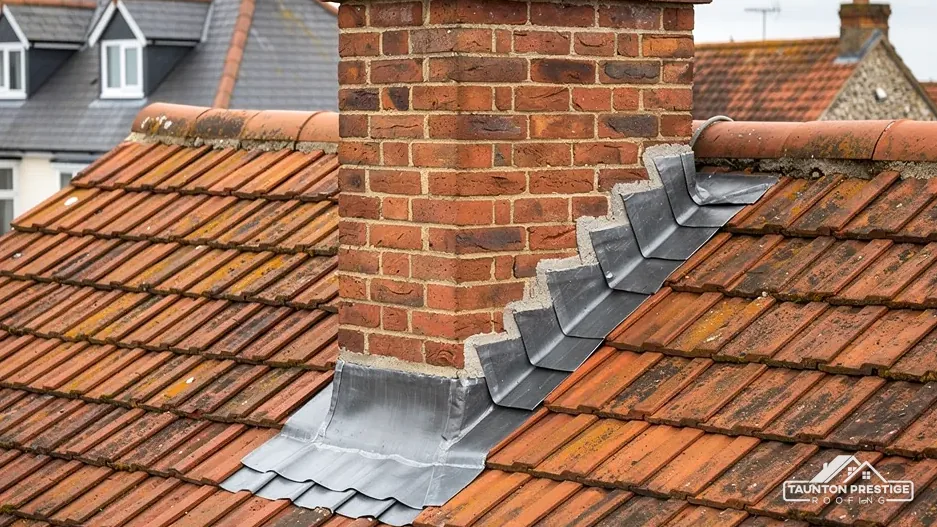
Water gets into a roof where one surface meets another, so lead is used at those junctions. Strips of lead called flashings close the angle between roof and masonry. Soakers are small folded pieces of lead interleaved with the tiles or slates beside a wall. A valley is the internal angle where two slopes meet and drain together. Each of the three can look sound from the ground and still let water in, and they fail in different ways: a soaker hides beneath the covering, so we lift a few tiles beside the wall to see it, while a flashing can be checked in place.
Sound or needs work
What decides the price
The trade grades lead sheet by code, a number that gives its thickness and a colour for the roll. Royston Lead's brochure puts Code 3 (1.32 mm) at soakers only, Code 4 (1.80 mm) on soakers, flashings, dormers and pitched valleys, and Code 5 (2.24 mm) on flashings, valley gutters and parapet or box gutters. Thicker is not automatically better. The right code depends on the position and the span, which is why we name the code we intend to use.
MyJobQuote (Sep 2026) gives over 80 years as the life lead flashing can reach, so an early failure deserves investigation. Flashings are held in a raked-out joint in the masonry, and if that joint has crumbled the lead has nothing to grip, so we look at the wall as well. A split or a lifted edge usually points to how the sheet was dressed and fixed, so we look at the fixings and the junction as well as the lead itself. Where a chimney is involved, our chimney repairs page deals with the stack, and our lead work page explains the range of flashings, valleys and gutters formed in lead.
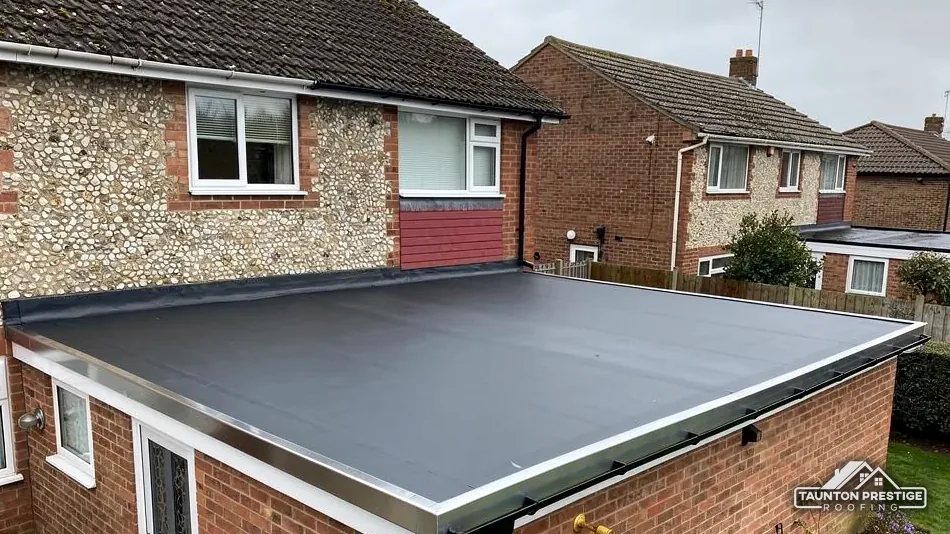
The Environment Agency's Flood Map for Planning places Clyst St Mary's mapped centre within about 250 metres of Flood Zone 3. The map describes the land and says nothing about any single roof, so use GOV.UK's flood-risk checker for your own address. For a roof the more practical question is drainage, and a flat roof on an extension or garage depends on a few millimetres of fall to shed its water, with no steep slope to help it. A flat roof over a kitchen or garage shows a leak quickly inside, so we test the deck for soft spots before quoting a new membrane.
A flat roof earns its name from the look of it, but its job depends on its fall.
Not flat at all. BS 6229:2025 covers roofs with a pitch not greater than 10 degrees, and its minimum finished fall is 1:80, while IKO advises designing for 1:40 so the finished roof still clears its water. Water standing for days points to a lost fall, a blocked outlet or a sagging deck. Less puts torch-on felt at 10 to 20 years, GRP, a glass-fibre and resin finish, at 25 to 40, and EPDM, a rubber sheet, at 30 to 50, while GreenSpec gives EPDM 20 to 30. These are published typical lives and never promises, and the edges and outlets often fail before the middle of the roof does.
They can. In Approved Document L, a new waterproof layer laid over a flat roof deck is treated as renovation of the roof, which carries a threshold of 0.35 W/m2K and an improved figure of 0.16. An upstand built on site, the short vertical edge where the roof meets a wall, should have a maximum U-value of 0.35 W/m2K. Our answer on flat roof Building Regulations goes through it, and our flat roofing page compares the coverings.
Not every Clyst St Mary job needs scaffold, and a ladder or rolling tower does for many repairs. Poles and boards over the footway or carriageway require a section 169 licence (Highways Act 1980) from the highway authority, and in Devon that is Devon County Council. It wants the application to come from the scaffolding company on the customer's behalf, so the licence comes through whoever erects the scaffold and you are not left with the form.
What decides the price
Devon County Council needs a minimum of 10 working days' notice, charges £158 for a licence, and sets a maximum length of 12 weeks, with an extension or amendment at £100. If a job overruns, the extension is requested in the same way, and we tell you before the dates slip. We plan your start date around the wait.
Often, yes. Agreeing the work at your own front door, after we have surveyed the roof, gives you a 14-day cancellation period under the consumer rules, and the firm has to give you the cancellation information. A visit you specifically ask for to carry out an urgent repair is excluded. If a dispute arises, the Citizens Advice consumer helpline is 0808 223 1133.
It is one total, set after the survey, for the job as described. Ask whether the total takes in VAT and scaffold, because those two items move a total by more than people expect. It is also fair to ask how the access will be set up, who will check it and how the waste will come down, since a tidy, safe site is part of the job.
The survey comes with pictures of your own roof. To begin on a Clyst St Mary roof, send us the address and whether you know the house to be listed.
Walked the roof?
When you have read the checks, we walk the roof and show you the photos.
White Lodge is listed Grade II*, and work that would affect its character needs listed building consent from East Devon District Council. A repair in matching material and pattern is treated differently from a change. Ask the council before work starts, and our survey notes will show it exactly what covers each slope.
The national dataset places the nearest conservation areas, Sowton and Topsham, within about 2.5 km of the village. Whether a particular address is covered is for East Devon District Council to confirm. Ask before you order a new covering, because inside a conservation area a change of look can need more than a like-for-like repair.
Under Devon County Council's rules the scaffolding company applies for its customer, so the scaffolder applies and the cost reaches you through the job. A licence costs £158 and needs at least 10 working days' notice. A scaffold within your own plot never touches the road, so no highway licence arises.
A contract made at your home normally carries a 14-day cancellation period, and you should be given the cancellation information. A visit you specifically request for an urgent repair is excluded. For advice, the Citizens Advice consumer helpline is 0808 223 1133, and our survey photos give you a record of what was found.
Send us the Clyst St Mary address and any listing you know of, and we will book your visit.