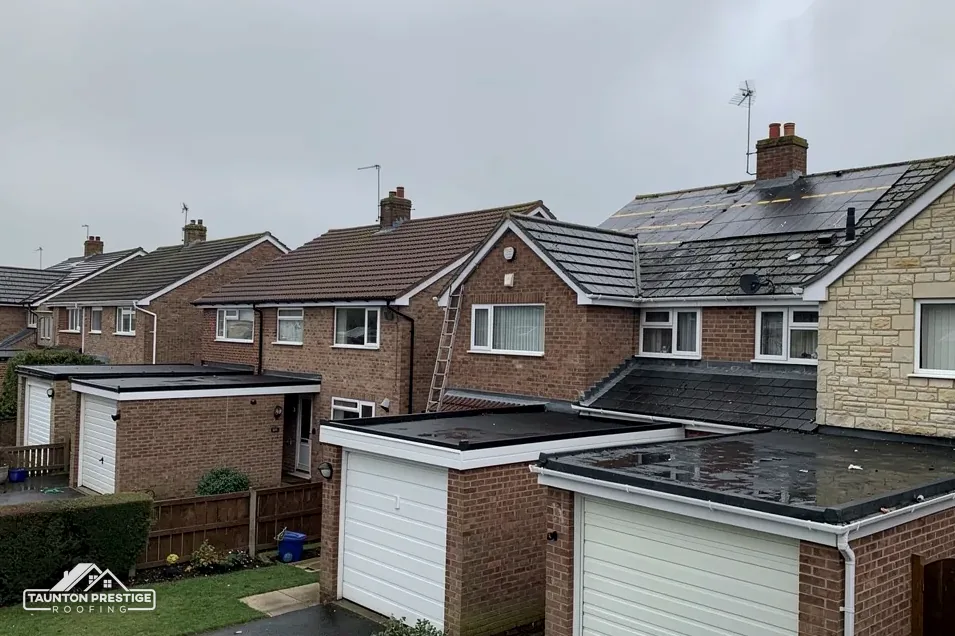
Stewley Farmhouse
Listed Grade II since October 1987, so repairs to its roof follow the listed building consent rules.
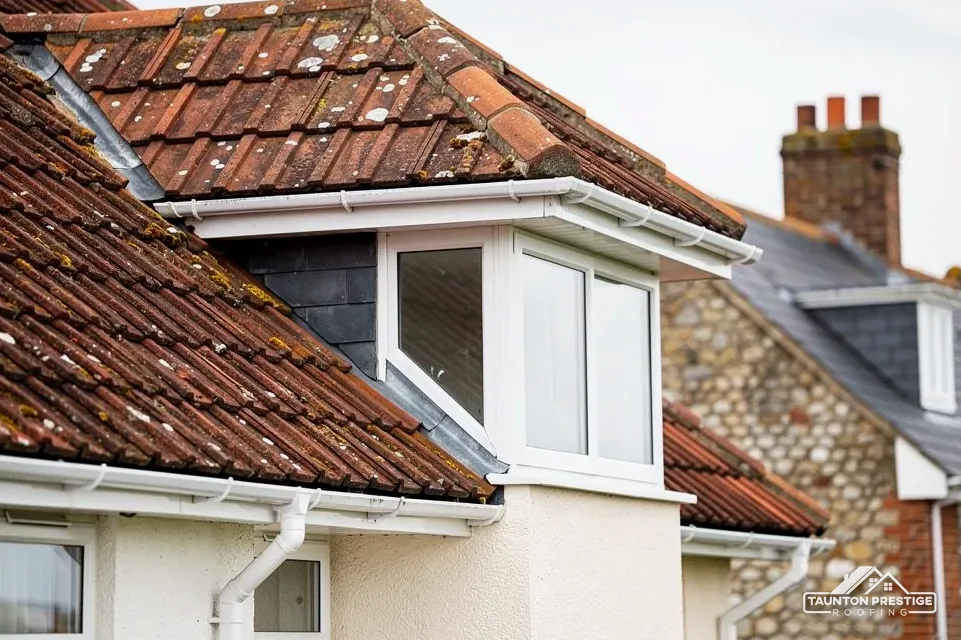
A listed farmhouse and the lanes of Ashill parish
Stewley is a hamlet in Ashill parish, with one listed farmhouse within 500 metres of its centre. Nothing is priced here until the roof has been surveyed and photographed.
Listed Grade II since October 1987, so repairs to its roof follow the listed building consent rules.
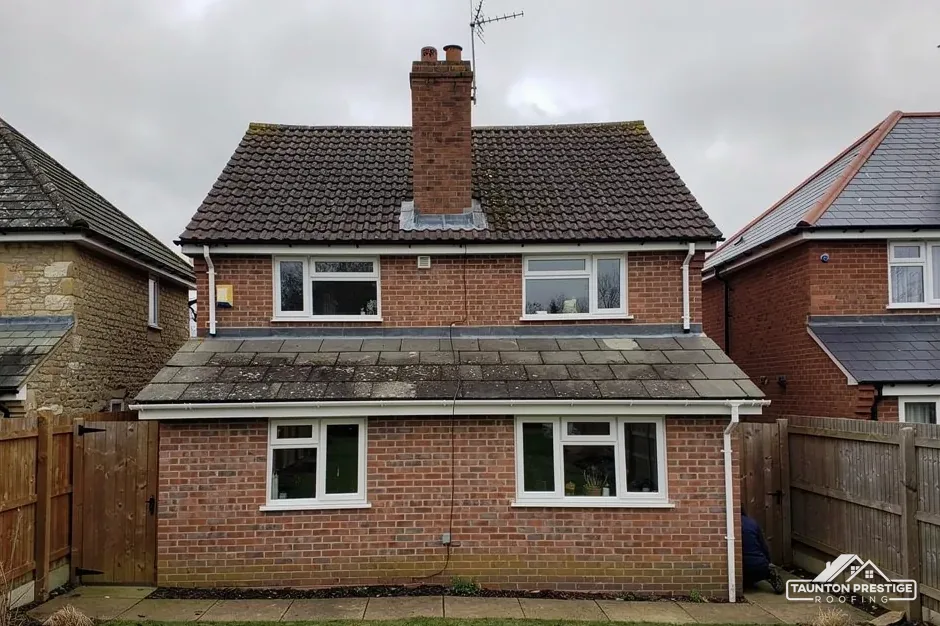
Stewley sits within Ashill civil parish, which had 561 usual residents at the 2021 Census.
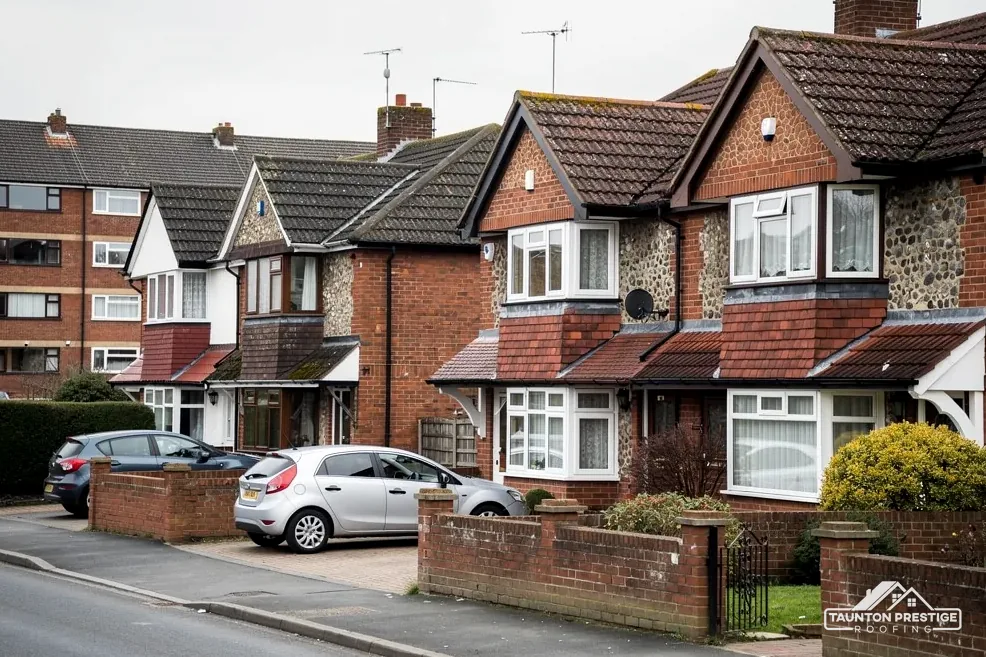
The nearest conservation area in the national dataset, about 2.5 km away, is Hatch Beauchamp.
Street map of Stewley with Ashill, Hatch Beauchamp, Broadway, Horton marked around it, and Taunton.
Ashill lies to the south-east and Hatch Beauchamp to the north-west, with Broadway and Horton to the south, and Ilton lying east.
About 7 miles south-east of Taunton, Somerset Council (unitary).
Hamlet roofs, checked one by one
Four checks for a house, farm building or outbuilding in this corner of Ashill parish, and the difference each makes to the job.
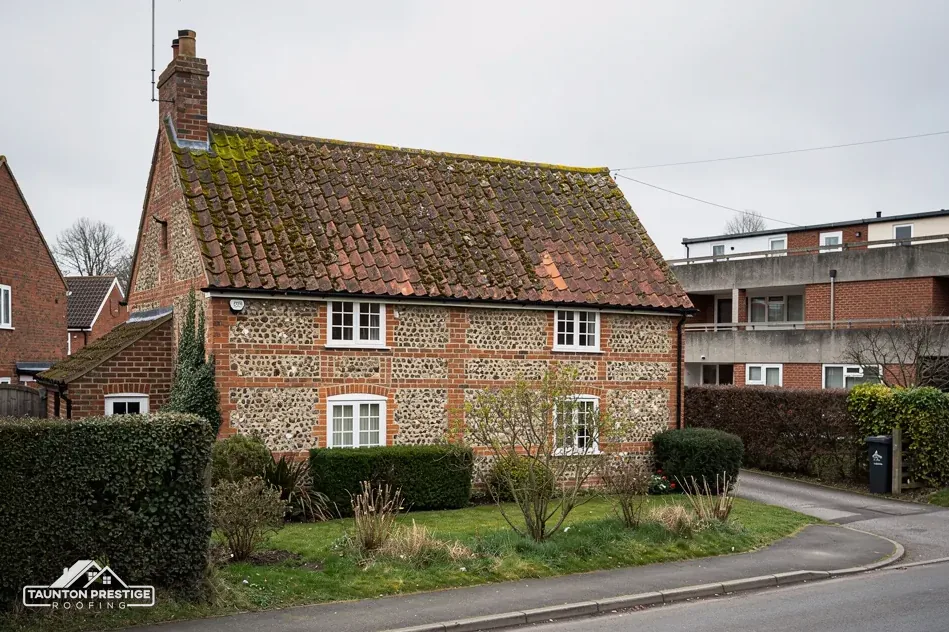
Stewley Farmhouse is listed Grade II. Historic England first listed it on 29 October 1987, and the National Heritage List shows no other entry within 500 metres of the middle of the hamlet. A place with a single listed building makes the position easy to explain. If your house is the farmhouse, listed building consent from Somerset Council comes into play for any work that alters its character. If it is not, the list does not apply to you, though a quick search of the online heritage list confirms it either way.
The difference is in the preparation. Before a slate is lifted we write down what each slope is covered with and photograph the ridge, the verges and the chimney, so there is a clear picture of what the building looks like today. A verge is the sloping end of the roof above a gable wall. If a repair needs new material, we look for a match in size, colour and texture, reclaimed pieces included, and samples reach you for approval before any order is placed. Swapping the material, altering the ridge or adding roof windows is a matter for the planners before it reaches the roofer.
The nearest conservation area in the national dataset is Hatch Beauchamp, within about 2.5 km, and the dataset does not place Stewley inside it. Somerset Council lists an Article 4 direction for Hatch Beauchamp, confirmed in 1978, so put the question of what it covers to the council's planners. Our guide to listed building roof consent explains which questions are worth asking.
The aim is that your roof survey and the council's decision both rest on the same set of photographs, taken before work begins.
Look for
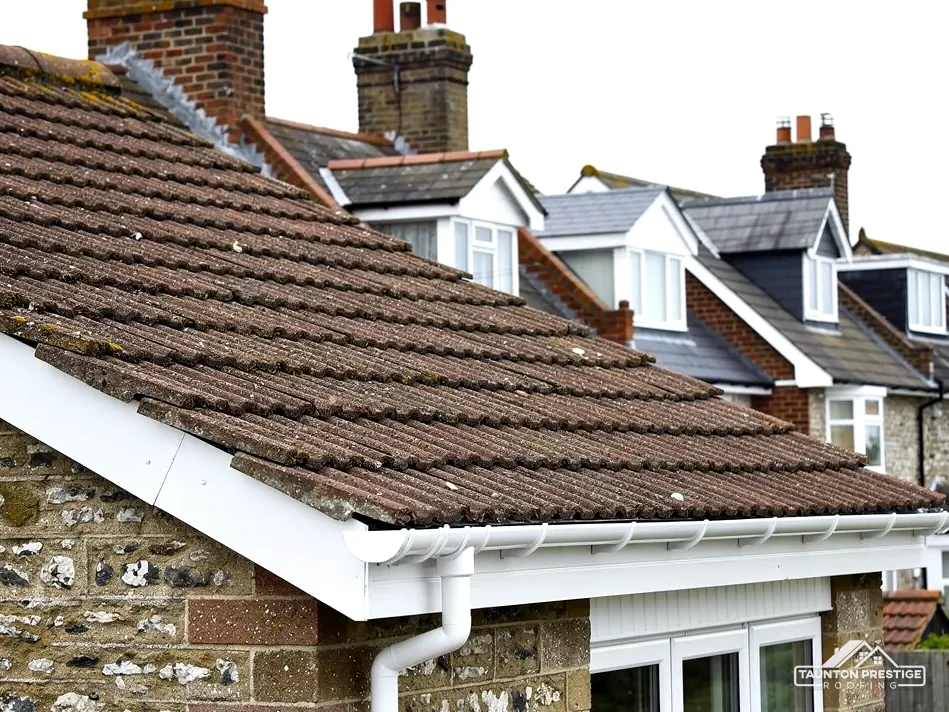
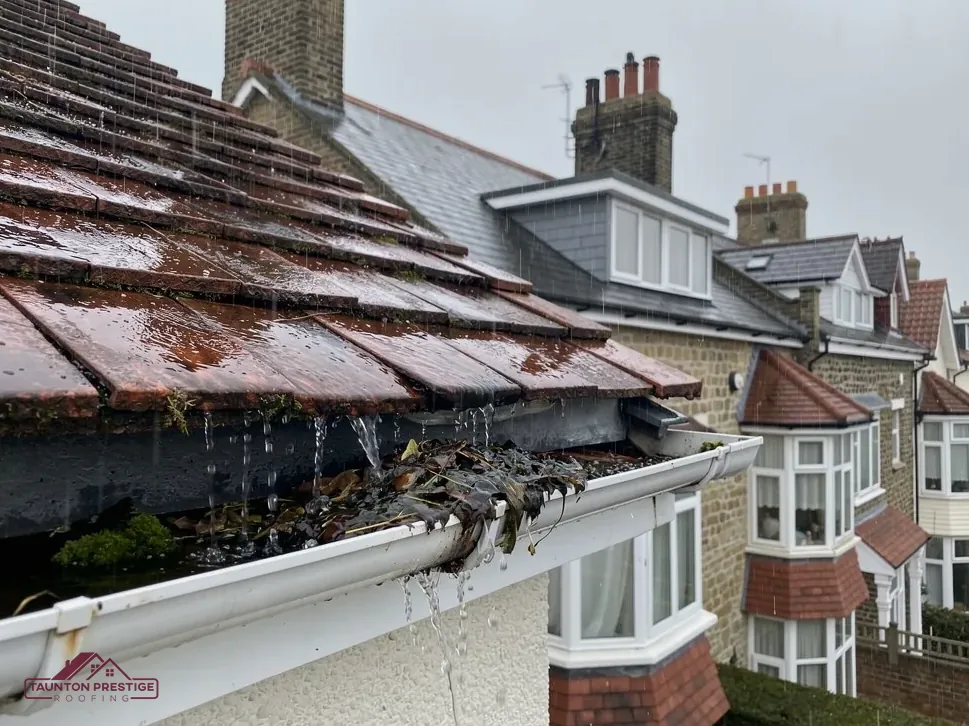
The Environment Agency's mapping puts Flood Zone 3 within about 250 metres of Stewley's centre. That is a planning map of low ground. It is not a statement about your roof, and it does not mean your property floods. GOV.UK's tool for long-term flood risk gives the answer for one address. What a roof can do about wet ground is to get its own rain away quickly and tidily, and a farmhouse or barn has plenty of rain to move.
What decides the price
No. A leak comes from a failed covering, a lifted flashing, a cracked valley or a blocked gutter, wherever the house stands. A valley is the trough formed where two slopes meet, carrying both slopes' water in one channel. A farmhouse or barn has a large roof area, though, so more rain arrives at the gutter than on a small cottage, and one blocked length can pour a surprising volume down the wall. If you can see a damp patch under the eaves, start there.
Look at the fascia, the board under the lowest row of tiles, to which the gutter brackets are screwed. Beneath the overhang runs the soffit, which shuts the gap to the wall. If gutters overflow for a few winters, the fascia softens and the brackets pull loose. Brett Martin's guidance gives 1mm of fall for every 600mm of gutter, so a sagging run holds water instead of shifting it. Our gutters, soffits and fascias page explains when we replace rather than patch.
Photographs of the joints and brackets go with the quote, so you can see for yourself what the gutter is doing before you decide. A gutter that looks tired from the ground is sometimes sound, and one that looks fine can be rusting at the back.
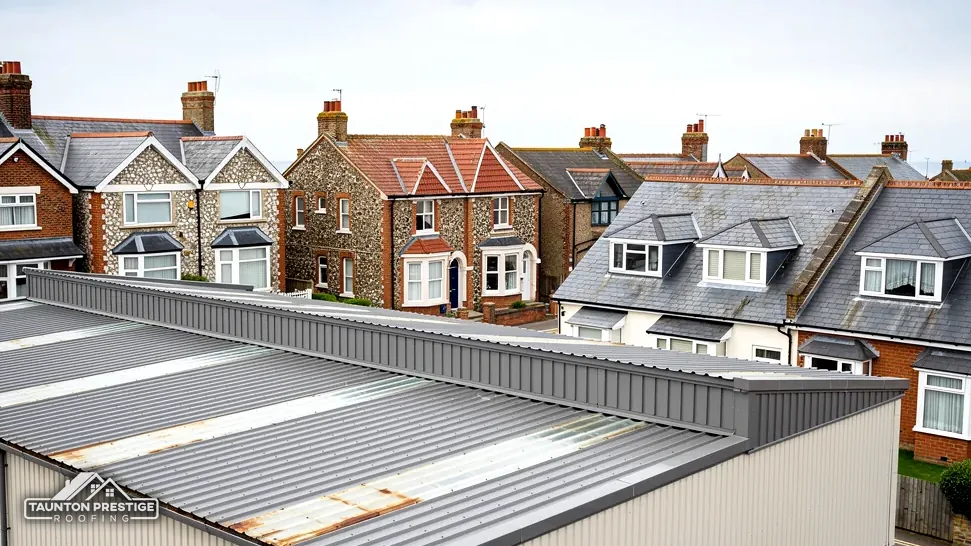
Corrugated sheets laid over a barn, garage or lean-to may be asbestos cement, particularly on an older building: HSE says to presume asbestos is present where a structure dates from before 2000 or was refurbished before then. Nobody can tell from a lane which sort of sheet is on a roof. A survey, and where it is needed a laboratory test, settles it, and nothing is drilled, broken or lifted until it does.
Nobody can tell what a sheet is made of from the lane, so we find out first.
HSE does not ask for a licence when asbestos cement is lifted off with care. Once the sheets are broken up substantially, the job has to be notified before it starts, though still without a licence. Asbestos insulating board, which is sometimes found in soffits, is a different material. Taking it out is often licensed work, depending on HSE's risk assessment rules, so the board is checked before any quote is given. The waste travels on a consignment note and never goes into an ordinary skip. Our part is to identify the material, explain which route applies and name the specialist when one is needed.
Sometimes a sealed repair is a safe holding measure. A roof of cracked and flaking sheets, though, goes on shedding fragments, and a new covering over a sound deck is then the better buy. Sheets that are whole and well supported can stay as they are for now. A new roof on a farm building also has to fit the structure beneath it: the purlins, the horizontal timbers or steel that carry the sheets, have to be sound and properly spaced for whatever goes on top. Our garage and asbestos-cement roofs page covers the options.
Photographs show you the surface, the fixings and any damage before you decide what to do with the roof. If the sheets prove to be fibre-cement or metal, the same survey says so, and the repair route changes accordingly.
Stewley was part of South Somerset district until 2023, and Somerset Council is now the single authority. If scaffold has to stand on a public road, section 169 of the Highways Act 1980 calls for a highway-authority licence. Somerset Council grants those to accredited contractors alone, which means the firm appointed to the job is the one that applies. A farmyard or garden counts as private ground, and plenty of farm roofs can be worked from there.
What decides the price
The fee is £124.60 per 28-day period (April 2026), and Somerset Council asks for at least 10 working days' notice. That waiting time is built into the start date we propose, so you are never left with a stripped roof and no scaffold. When the whole job is reachable from private ground, the question never comes up.
Use the Planning Portal's test: building control normally wants no application when under 25 per cent of the building envelope and under 50 per cent of the roof is being changed. If the new covering adds 15 per cent or more to the weight, approval is needed, and Somerset Building Control, on 0300 303 7790, covers the former South Somerset area. A heavier covering on an old farm roof needs the timbers checked before it goes on.
Old barns and farmhouses suit both. Section 9(4) of the Wildlife and Countryside Act 1981 makes it an offence, done intentionally or recklessly, to disturb a roosting bat or block the way into its roost. Section 1 of the same Act covers the person who intentionally harms a nest that is in use. We check eaves and gables before stripping begins.
Once the survey is complete, a single written price follows, with the photographs taken on the day. Tell us the address, describe what is wrong, and the visit can be arranged.
Walked the roof?
When you have read the checks, we walk the roof and show you the photos.
Small repairs often can. A slipped tile or a failed flashing can be reached from firm ground with a tower or a roof ladder. Re-laying a whole slope needs proper edge protection, and that normally means scaffold. The survey settles which your job needs, and the highway authority must issue a licence first if the poles would stand on a public road.
The national dataset names Hatch Beauchamp as the nearest conservation area, within about 2.5 km, and does not place Stewley inside it. Somerset Council confirms the position for an address. It also lists an Article 4 direction for Hatch Beauchamp, so ask the planning team what that covers before changing a roof covering.
No. The Environment Agency's zone describes the land, and rain gets in through failed coverings, flashings and gutters. If you want to know your own address, GOV.UK's long-term flood risk tool covers an individual address. For the roof itself, a survey looks at the covering, the valleys and the drainage that serve it.
You do if the sheets are asbestos cement and they are being broken up, or if asbestos insulating board is involved. HSE needs no licence for careful removal of whole sheets, but substantial breaking-up must be notified first. Leave the sheets alone and send us photographs, and the survey identifies the material first.
Tell us where you are and attach a picture of the worst corner, and the survey follows.