St Mary's parish church
Listed Grade I in September 1950; as an Anglican church in use, its roof repairs need a faculty.
St Mary's Grade I church, Court Barton listings and a conservation area
St Mary's at Ilminster is Grade I, the town has a conservation area, and 142 list entries stand within 900 metres of the centre. We inspect first and price afterwards.
Listed Grade I in September 1950; as an Anglican church in use, its roof repairs need a faculty.
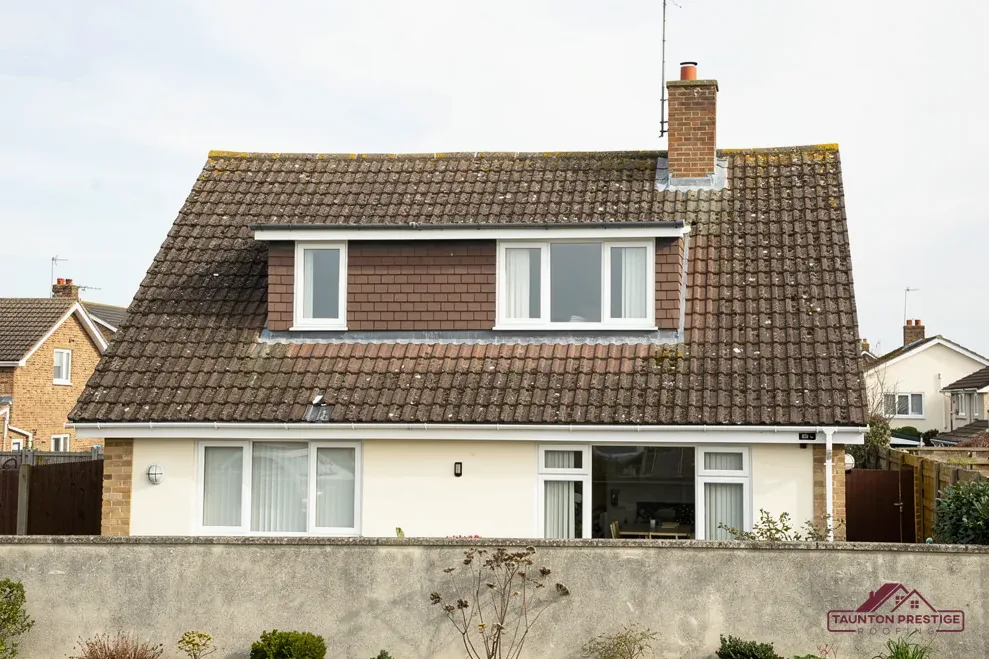
Numbers 28 and 29 Court Barton are both Grade II*, so roof work there starts with listed building consent.
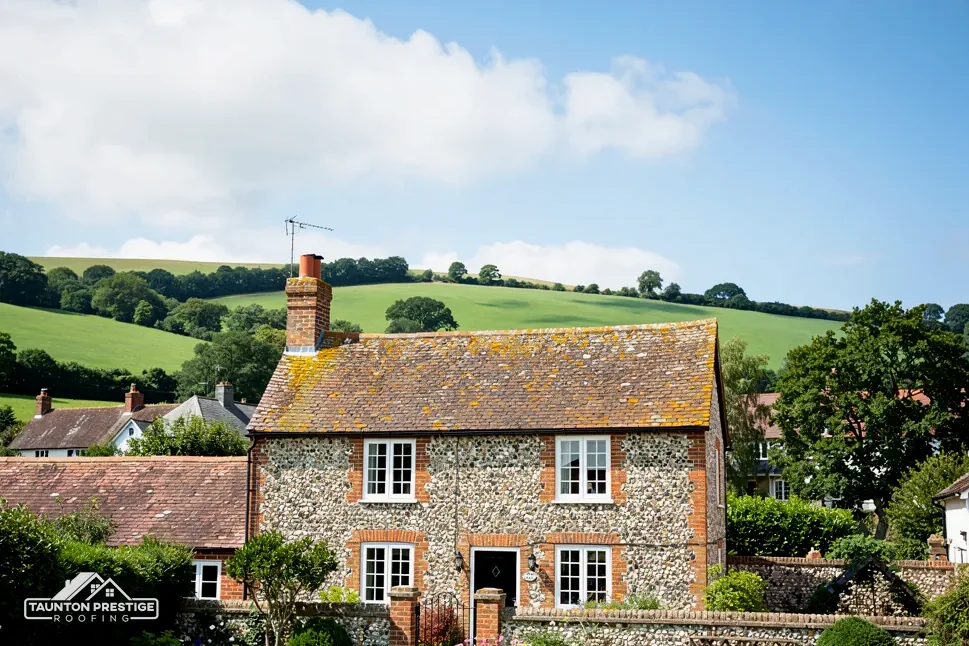
Listed Grade II* and one of 142 entries within 900 metres of the centre, so consent matters here.
Street map of Ilminster with Ilton, Horton, Broadway, Ashill marked around it, and Taunton.
Ilton lies just north of Ilminster, Shepton Beauchamp to the north-east, Horton and Broadway to the west, and Chard a few miles to the south-west.
About 10 miles south-east of Taunton, Somerset Council (unitary).
Four checks for a town-centre roof
A dense historic centre brings its own questions. Here are four to settle before work begins, and what each does to the job.
In Ilminster the heritage list does not thin out as you leave the church. It holds 142 entries within 900 metres of the centre, and the Ilminster conservation area comes within about 0.75 km of it. St Mary's is Grade I, Numbers 28 and 29 Court Barton are Grade II*, and so is the George Hotel. A roofer who prices a job here without asking where your house sits on that map is guessing, so asking is the first thing we do. It takes minutes with the address, and the answer can save weeks later.
It depends on what you want done. Our planning permission for roof work page covers the national position. What is particular to a town like this is visibility: the streets are close, the roofs are seen from the pavement and from windows opposite, and a covering that shifts the colour or the texture of a roofline will be noticed. Matching what is there is the easy route. A change of material is the one to talk through with Somerset Council's planning team before you buy anything, because a refusal after the slates have arrived is expensive for everyone.
Yes. Listing brings a second set of rules: listed building consent is also required where work touches the building's special architectural or historic interest, and a roof is a large part of that. St Mary's, still in Anglican use, is handled by the Church's own faculty procedure instead. In every case the survey comes first. It records each slope with photos, so an application, if one is needed, describes the roof as it stands and does not rely on anyone's memory of it.
Look for
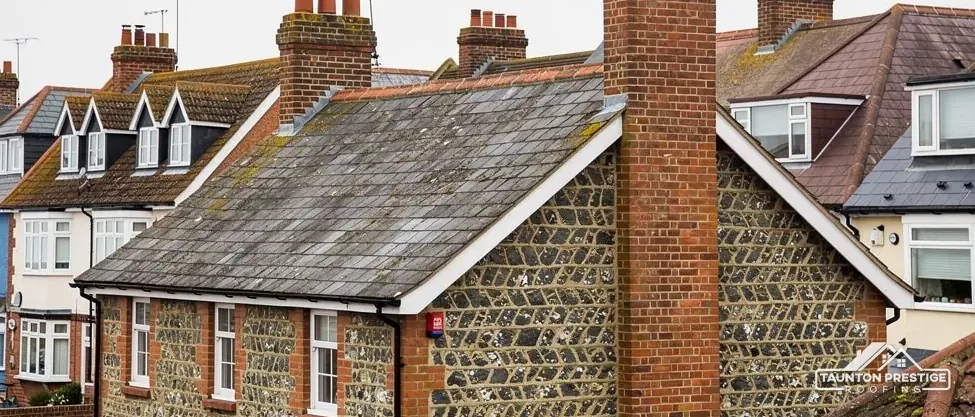
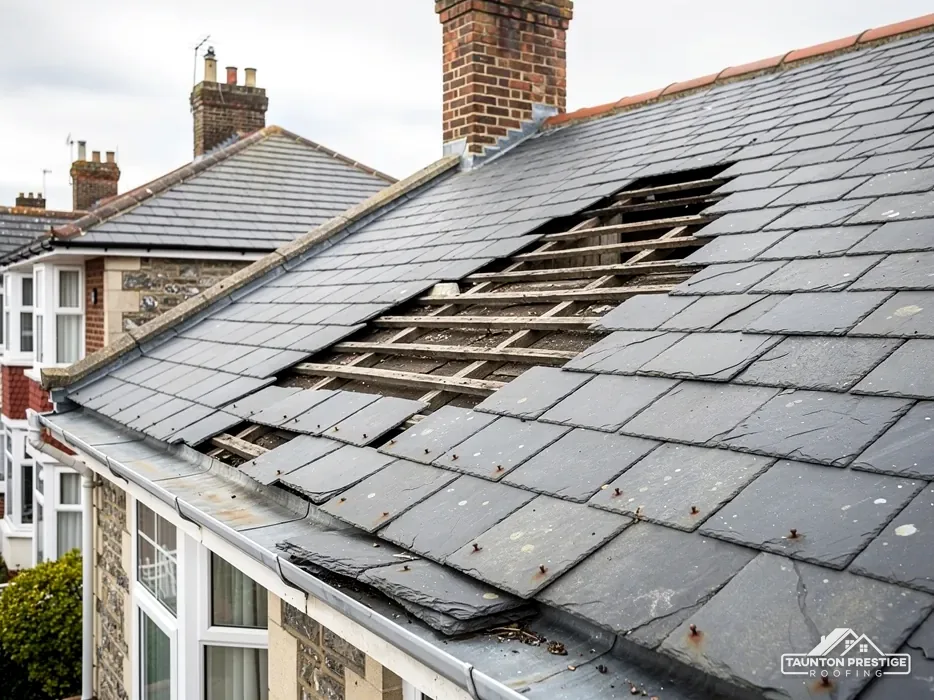
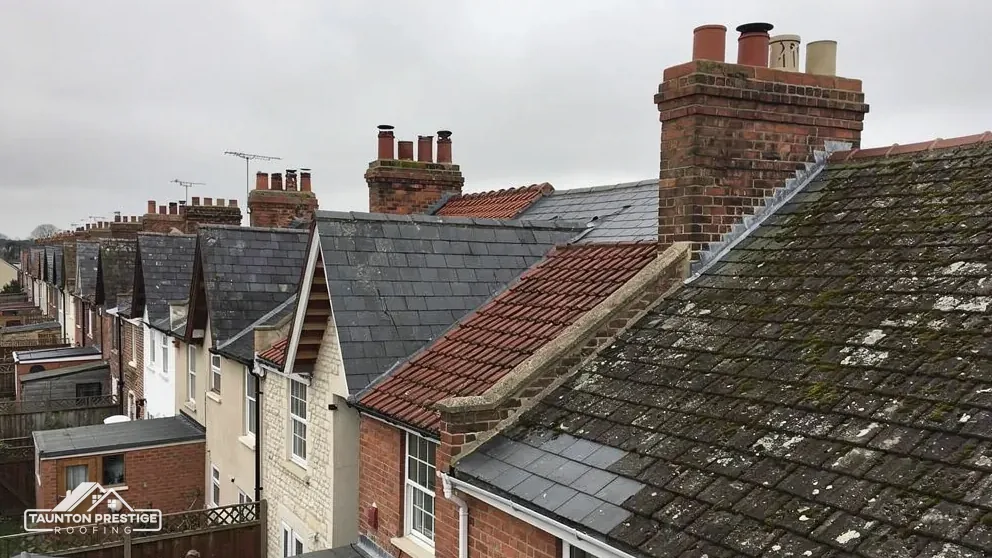
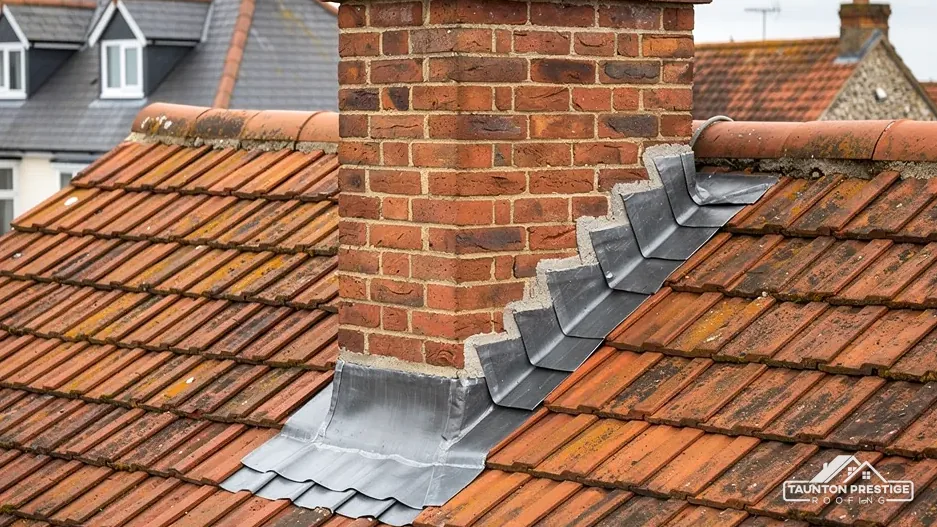
A natural slate roof is laid in overlapping rows called courses, each slate hung from a timber batten by a nail or a hook. When the fixing rusts or the batten rots, the slate drops, and the lap above it stops doing its job. Slate that is looked after can last 100+ years, in the words of the Confederation of Roofing Contractors, and the weight of that sentence sits on the word maintained. Stone is rarely the weak point, and a roof that looks tired from the road may need only a few slates touched; the nails behind it, the battens and the metal at the junctions usually fail long before the slates do.
What decides the price
A valley is the V-shaped channel formed in the crook between two slopes, and it carries the water from two roofs down one narrow line. Leaves, moss and a stray slate fragment will back that water up under the slates beside it. A stain that returns to the same corner of a ceiling whenever the rain comes from the same direction points to a valley, a chimney junction or a failed lead gutter. A full valley replacement comes to around £540 in MyJobQuote's guide (Sep 2026), a typical UK figure that moves with length and access.
Often, yes. Where the slates are sound and only the fixings have gone, we can strip the slope, renew the battens and the underlay (the waterproof sheet beneath them) and relay the same slates. That keeps the look and saves the cost of new stone. Cupa's guidance is that slates hung on hooks should not go on pitches under 25 degrees, and BS 5534 indicates a minimum pitch of 20 degrees for natural slate, so the pitch of your roof shapes the plan and the fixing we choose. Our slate roofing page goes into more detail.
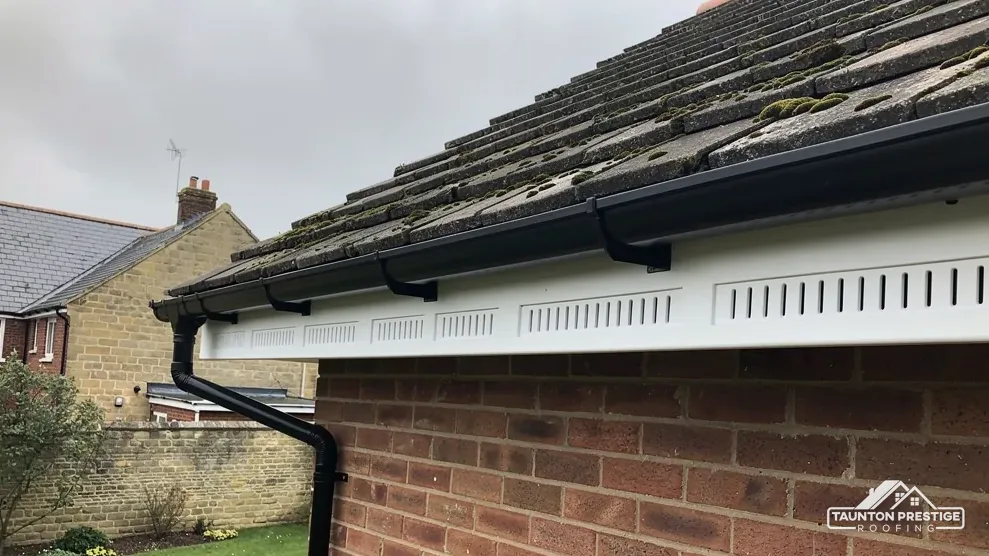
On a street of closely set buildings, a gutter that spills does not just wet one wall. It can soak a neighbour's brickwork, turn a doorstep green and send damp into the base of an old stone house that was built to breathe. The gutter has one job: carry water from the roof edge to a downpipe and away. Brett Martin's installation advice is to drop a gutter 1mm for each 600mm of its length, so one sagging bracket can leave a run holding water that ought to be moving.
A spilling gutter in a narrow street wets more than your own wall.
Look at where it pours over. Choked outlets, parted joints and slipped brackets each cause an overflow at their own point, and the streak on the wall shows which one you have. Fascia is the eaves-level board that carries the gutter, and soffit is the cladding under the overhang. Wet timber that stays wet through a winter or two goes soft, and soft timber will not hold a bracket, so new gutters on a rotten board would not last. At the survey we prod the fascia with a screwdriver tip, and any soft patch gets a close-up photo for you.
Replacing guttering has a typical UK range of around £1,000 to £1,600 (MyJobQuote, Oct 2026), while new capping over fascias and soffits averages around £800 (MyJobQuote, Sep 2026). A house with several roof levels, a long run or a high wall costs more than a bungalow, because reaching the eaves is a big share of the labour. Our gutters, soffits and fascias page sets out the materials, and says when mending beats starting again.
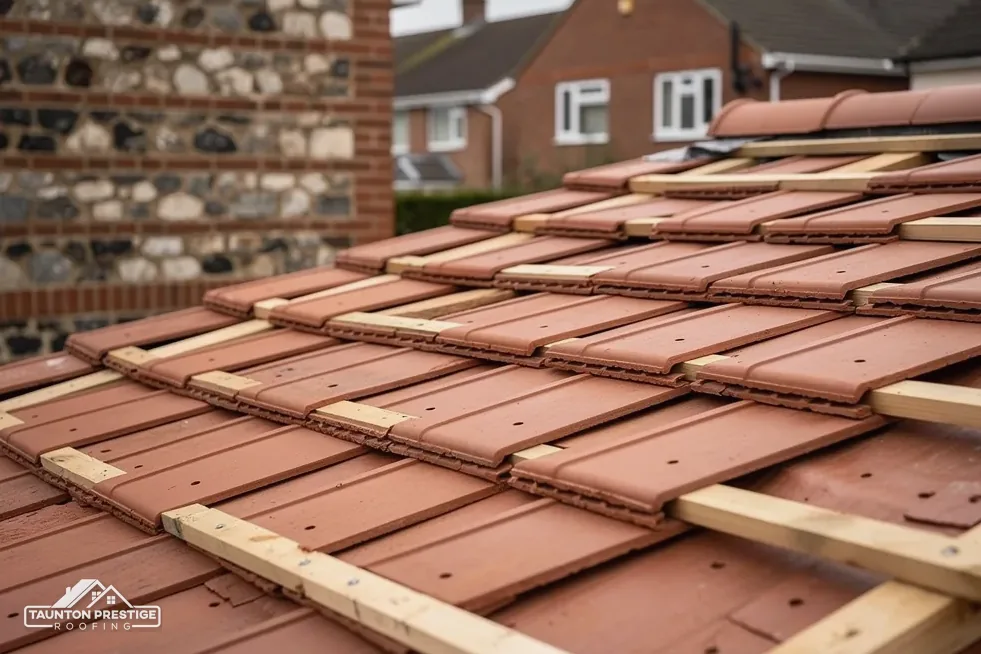
Replacing the covering over a large part of a roof can bring Building Regulations into play. Under the Planning Portal's test, a new roof covering is usually exempt from a building control application when under 25 per cent of the building envelope and under 50 per cent of the roof. Somerset Building Control states no percentage for re-roofs, so that national test is the one we work to, and a full re-roof will usually go past the roof half of it.
What decides the price
It can. A covering 15 per cent heavier or more than the one it replaces needs Building Regulations approval, and the Planning Portal advises having the roof's capacity looked at by an engineer or a surveyor before work begins. Swapping concrete tiles for natural slate, or the other way round, is the kind of change that shifts the weight. Somerset Building Control is on 0300 303 7790 for Ilminster addresses, and we raise the question at the survey so you are not caught by it later.
The area and pitch, the covering you choose, what lies beneath the old one and how the roof is reached. National guides differ widely: MyJobQuote puts an average new roof at around £5,250, while HomeBuilding gives £10,000 to £15,000 for a three-bedroom semi in plain concrete tiles including scaffold and insulation (HomeBuilding, Sep 2025). The gap shows how much depends on the house, its size, its pitch and the way in. Our roof replacement page explains what a re-roof involves from the first strip to the last ridge tile.
Send us your Ilminster street and what you have noticed, and the survey comes first; one written total covering everything follows it.
Walked the roof?
When you have read the checks, we walk the roof and show you the photos.
Usually. One slate that has dropped can be pushed back up and secured with a clip, or replaced with a matching piece, while the rest is left alone. We check the slope around it first, because several loose slates together mean the fixings are failing. In a conservation area the replacement should match the original in size and colour.
Listed Grade I, St Mary's is still used for Church of England worship. Its roof work needs a faculty under the Church's own procedure, which stands in for listed building consent from Somerset Council. The parish takes the faculty forward, and the contractor builds to whatever is approved. Other buildings in the town do not share that route.
Renewing a flat roof in the same material and look is a repair, but a listed house is covered by listed building consent too, wherever the work changes its special character. Under Part L of the Building Regulations, renewing that membrane is classed as renovating a thermal element, so insulation may need upgrading. Ring Somerset Building Control on 0300 303 7790 before starting.
Possibly, but not yet. GOV.UK says bats and their roosts are fully protected and that roof work can affect them. The law punishes reckless as well as deliberate disturbance, and harm to a roost needs no intent at all, so we ask about bats at the survey, and if you have seen one you should take advice before any work begins.
Give us your street and the trouble you are having, and a survey day gets pencilled in.