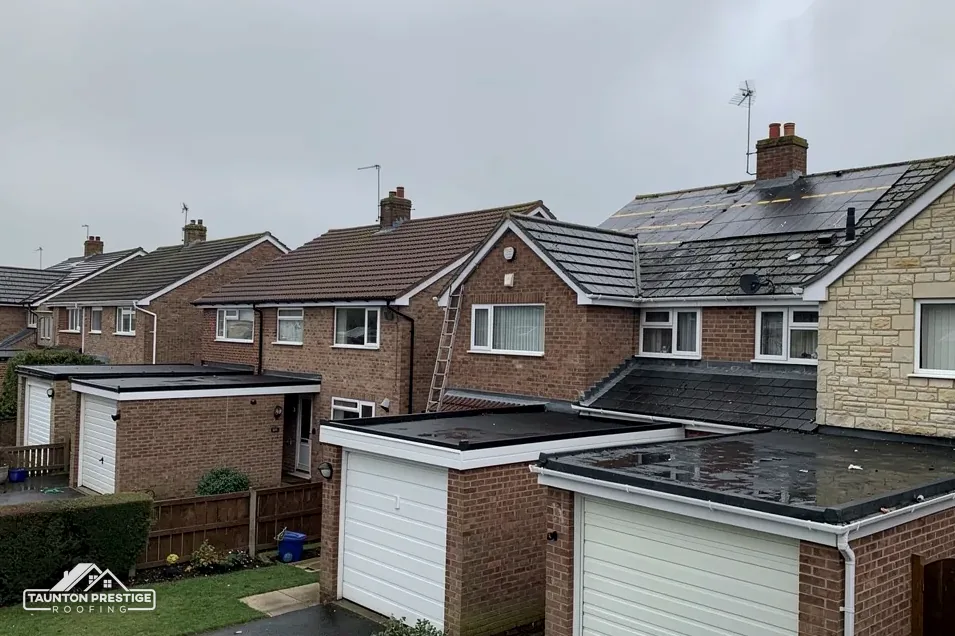
Cottages rebuilt after 1839
After a catastrophic fire in 1839, workers' cottages in New Street and Crow Green were rebuilt with slate replacing thatch.
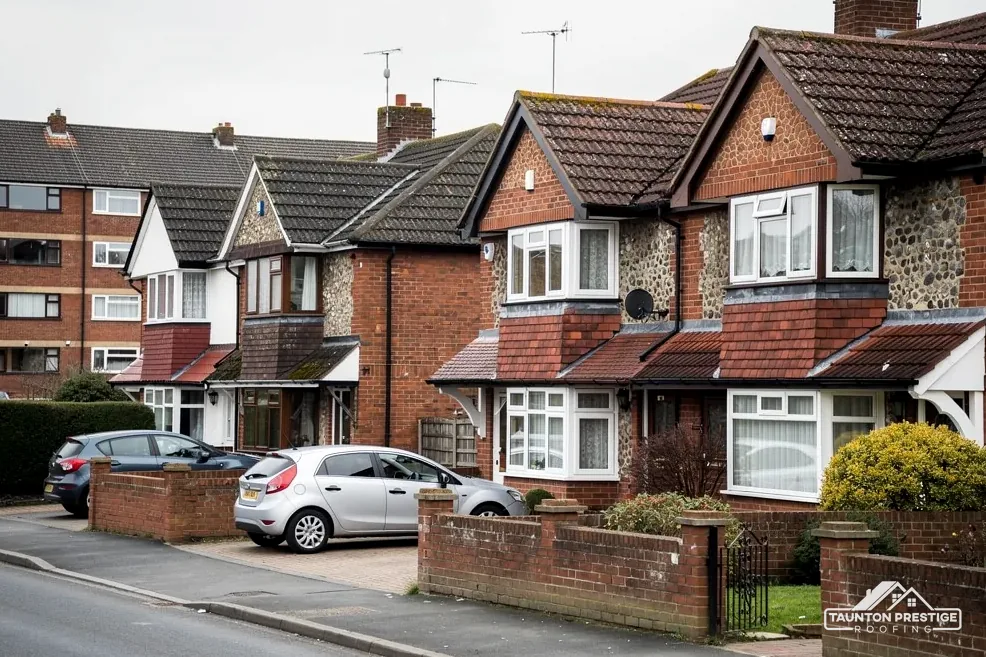
A Grade I church, the 1605 Walronds and streets rebuilt after fire
Cullompton rebuilt whole streets after a fire in 1839, and it has two Grade I buildings in St Andrew's and the Walronds. We read each roof before pricing it.
After a catastrophic fire in 1839, workers' cottages in New Street and Crow Green were rebuilt with slate replacing thatch.
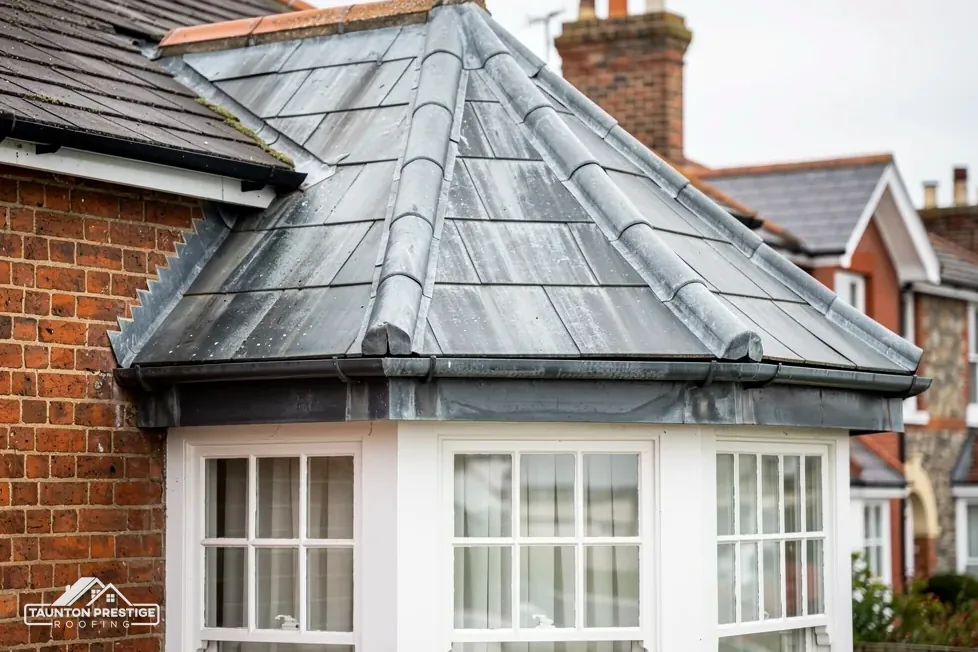
Completed in 1605 on Fore Street, in red sandstone and volcanic trap with Beerstone dressings.
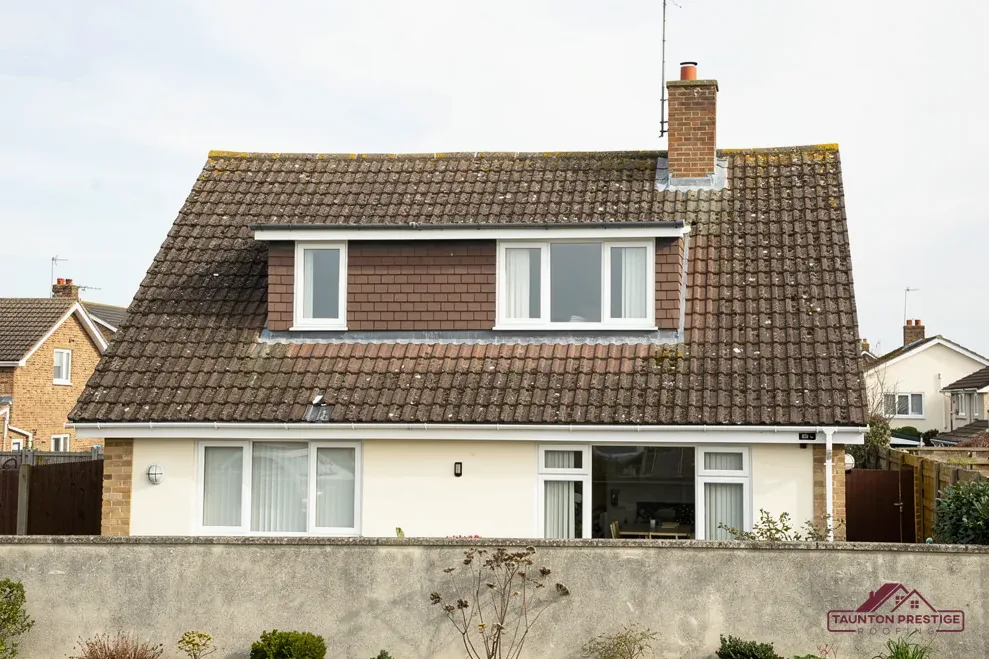
A 15th-century church with a 16th-century tower and a Lane aisle decorated with symbols of the wool trade.
Street map of Cullompton with Willand, Bradninch, Kentisbeare, Halberton marked around it, and Taunton.
Willand lies north-east and Bradninch south-west, with Kentisbeare to the east, Halberton to the north, Uffculme to the north-east and Silverton to the south-west.
About 16 miles south-west of Taunton, Mid Devon District Council and Devon County Council.
Four checks in a wool-merchant town
Four checks for a Cullompton house, and how each answer changes the choice of material, the consent route and the price.
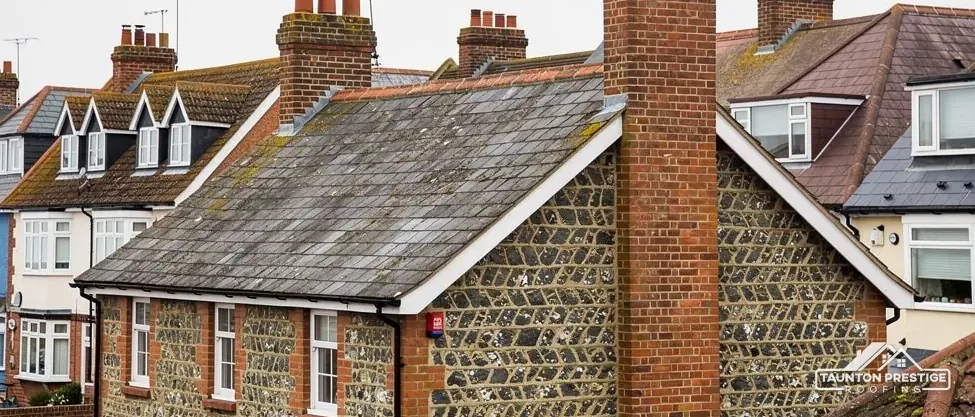
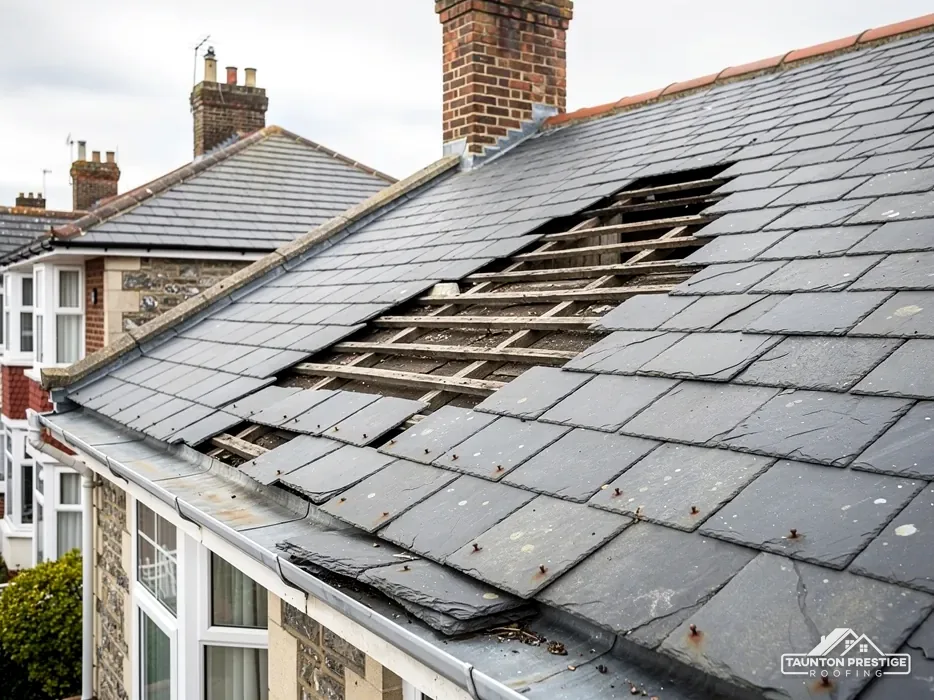
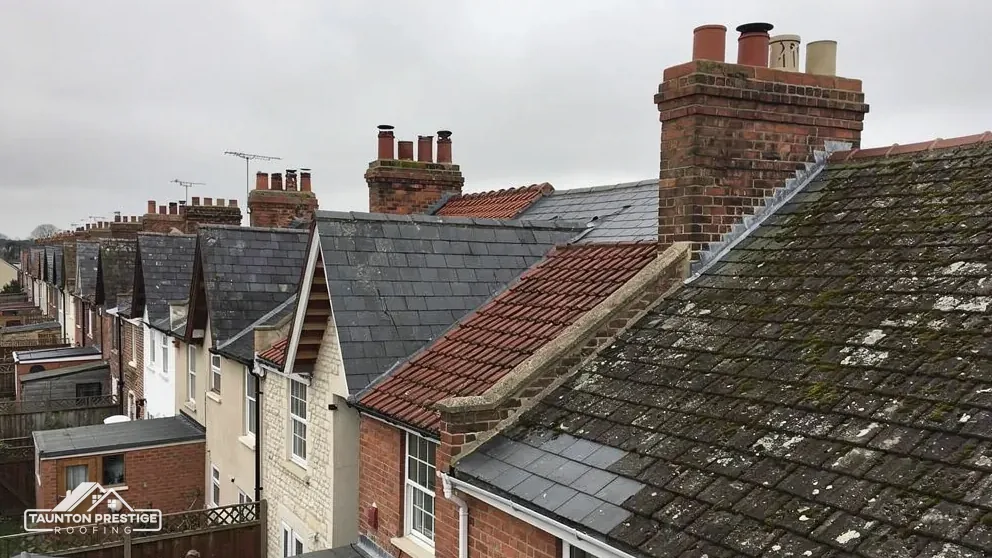
In 1839 a catastrophic fire destroyed much of Cullompton's housing. Most of the workers' cottages in New Street and Crow Green, and many houses in Lower Bull Ring, were rebuilt, and thatched roofs and cob walls were replaced by slate and rendered stone and brick. Mid Devon District Council's 2022 conservation area appraisal records that, and it also records artificial slate, a few red clay tiles and a couple of thatched roofs in the area. The point for you is that a slate roof in Cullompton may be natural, artificial or a mixture of the two, and the difference matters for the repair.
What decides the price
Natural slate splits into thin leaves with a slightly uneven face and a cut edge you can see. Artificial slate is made from a moulded or pressed material and tends to look very even, and it can fade or craze in the sun. A slate lifted at the survey tells us at once. HSE's advice for anything built or refurbished before 2000 is to assume asbestos is present, so any cement-based sheet of that age is sampled and identified before anyone cuts or breaks it.
Usually, with a repair clip or a matching slate. Artificial slates on their original clips can sometimes be reused. We lay out what the survey finds so that you can see whether you have one tired slate or a worn slope, and the roof decides the method, not the other way round.
The Confederation of Roofing Contractors credits natural slate that is kept in repair with 100+ years. Our slate roofing page explains how repair and renewal compare, and what a re-slate involves from battens upwards.
Cullompton has a conservation area with an adopted appraisal and management plan (February 2022). Mid Devon District Council also lists Cullompton Conservation Area Article 4(1) Directions, made in 2011 and reviewed in 2015, which cover parts of the conservation area only. Under an Article 4 direction, the council takes certain permitted development rights away within a set area, so a job that would normally need nothing may need an application. What a direction covers for your address is the planning team's to confirm, and we never guess at it.
Ask Mid Devon District Council's planning team, quoting your full address. The directions apply to parts of the conservation area, so a house in one street may be caught while a house in the next is not. Do that before you order materials, and keep the reply. If the answer is that a direction applies, the planning team will say what to submit. Our guide to planning permission for roof work explains the permitted development position that a direction can alter.
Not as permitted development. A dormer is excluded inside a conservation area, so it needs a planning application. Roof windows are a different matter, because their class has no such exclusion, but a direction can take their rights away, which is one more reason to ask.
The Walronds and St Andrew's, the parish church, both hold Grade I listings. The Walronds, completed in 1605, needs listed building consent for works touching its character. St Andrew's, a 15th-century church with a 16th-century tower, is handled under the faculty system if the Church of England is using it. The Lane aisle, added by the wool merchant John Lane, carries decoration in symbols of the wool trade, the kind of detail a repair has to protect.
Look for
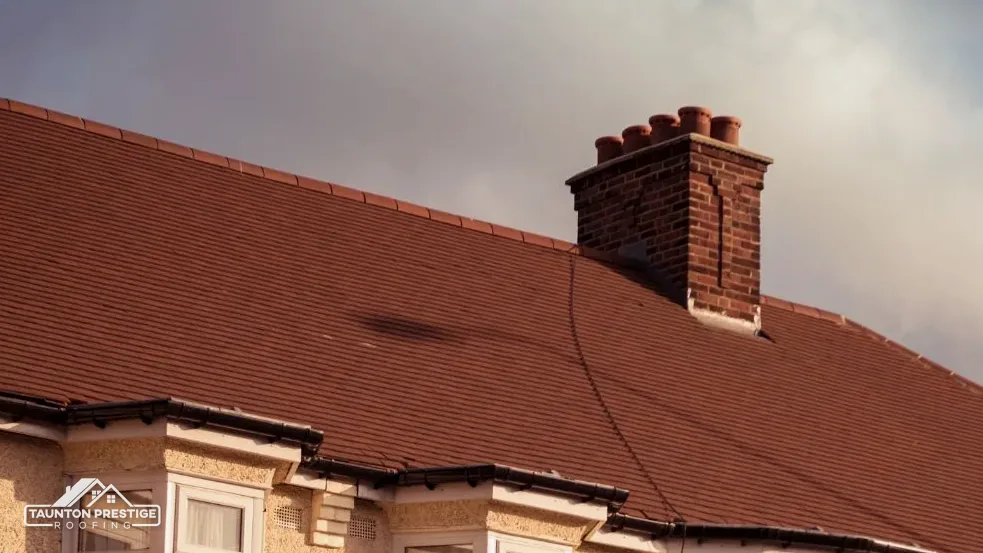
Many leaks begin with something small: a gutter that spills onto the wall, a flashing that has lifted at a stack, a board behind the gutter that has gone soft. Fixing these early is often the best value in roofing, and most of them can be done in a day. The flaunching, the mortar collar around the chimney pots, belongs on that list too, because cracks there let water down the flue.
Most roof leaks start small, which is why a gutter or a flashing is worth a look early.
MyJobQuote (Oct 2026) gives around £1,000 to £1,600 as the typical UK range for replacing guttering, and an average of around £800 for capping fascias and soffits (Sep 2026). Chimney repointing is given as £450 to £1,200, and chimney leadwork as £150 to £250 for a patch and £350 to £920 for the full job, depending on scaffold. If your house has concrete gutters built into the eaves, MyJobQuote puts replacement at an average of £2,400. Our chimney repairs page covers the stack.
It can. The Planning Portal says a new covering that weighs at least 15 per cent more than the old one needs Building Regulations approval, and its guidance is to speak to a structural engineer or surveyor before starting. Approved Document A puts a significant change in loading at more than 15%. Changing from one covering to another, in either direction, is the moment to ask.
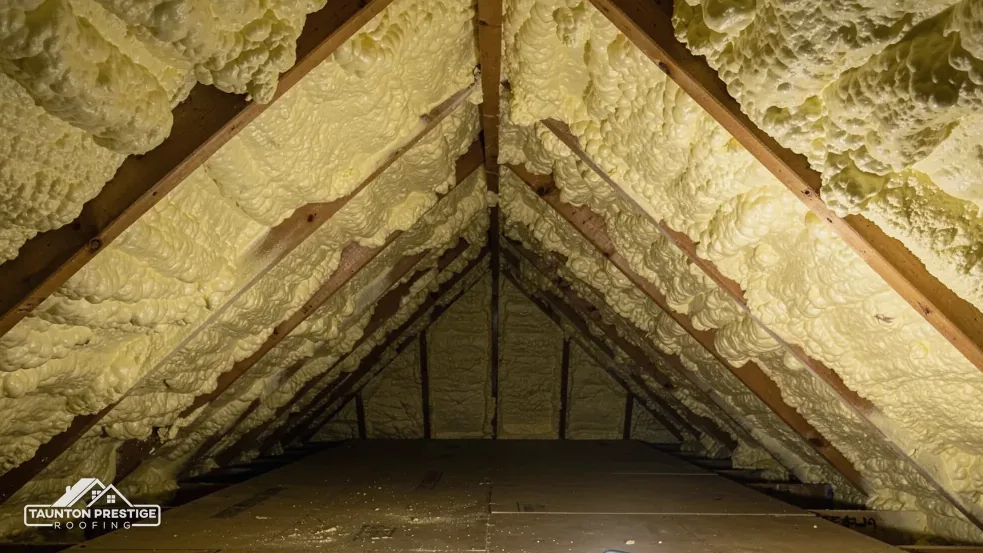
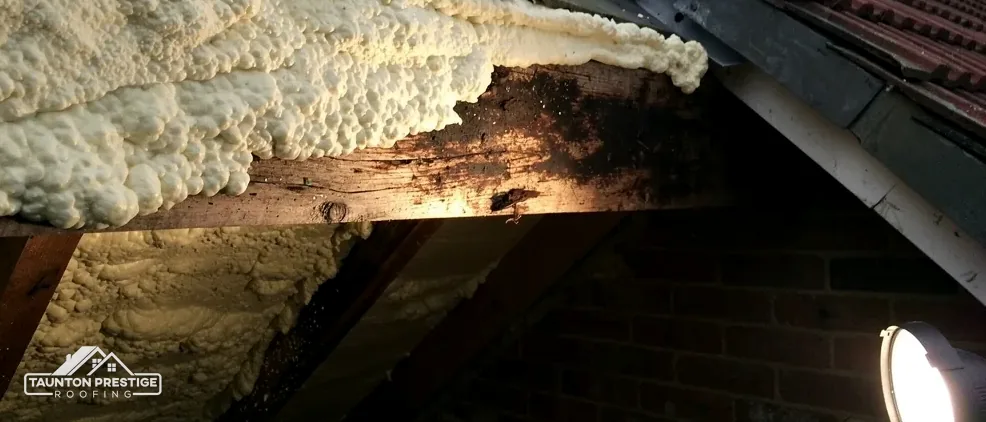
Foam sprayed to the underside of a roof can hide the timbers and affect a sale. The RICS consumer guide says to check with your mortgage provider whether its policy allows such products, and the Energy Saving Trust, on spraying foam onto a leaking roof, answers plainly: "We don't recommend doing this." Our spray foam removal page explains what taking it out involves.
Scaffold that would block the footway or carriageway needs the highway authority's licence under section 169 of the Highways Act 1980. In Cullompton that is Devon County Council, and Devon County Council says the scaffolding firm applies for the customer. It wants a minimum of 10 working days' notice, and a licence costs £158 for dates of up to 12 weeks, with £100 to extend or amend.
What decides the price
Mid Devon District Council's business pages link to a joint building control service run in partnership with North Devon. By the Planning Portal's yardstick, work on under 25 per cent of the building envelope and under 50 per cent of the roof does not usually call for an application. A new covering 15 per cent or more heavier needs Building Regulations approval and a structural check.
Check the terms before any work. NHBC describes Buildmark as a builder warranty and NHBC guarantee for two years after completion, then eight years of insurance cover against defects to certain parts of the home. Years 3 to 10 are the insurance years. Ask the scheme what it expects before a roof is altered.
Ask. The standard rate is 20%, and the total should also allow for the scaffold. A quote that leaves VAT or scaffolding out can look cheaper than one that includes them, and the difference only appears when the bill arrives, so put the question in writing and keep the answer.
Weather matters on any strip-and-relay job. A stripped slope is covered before we leave site each day, and you are told what has been done and what comes next. If the forecast is poor, we advise whether it is better to wait.
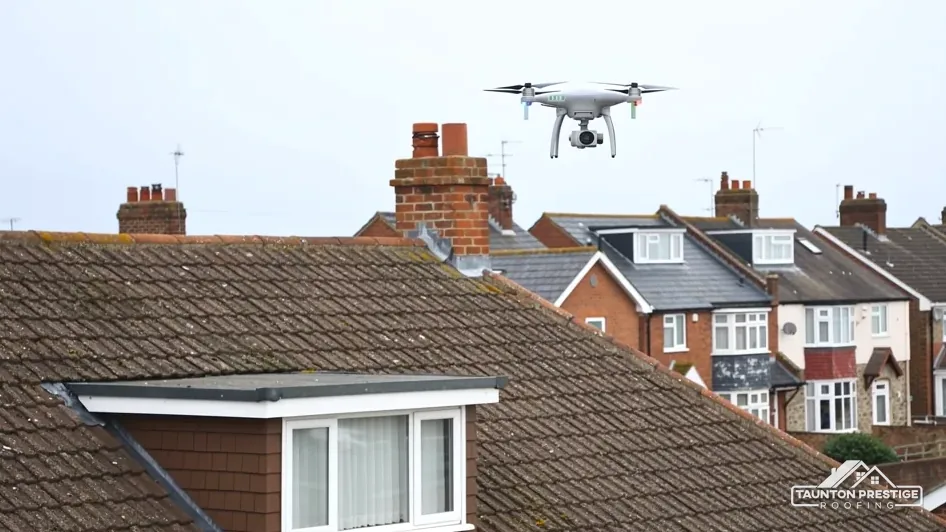
The survey comes first, then one price in writing. Tell us your Cullompton address and the trouble you can see, and we will suggest a day.
Walked the roof?
When you have read the checks, we walk the roof and show you the photos.
On an unlisted house, re-roofing in the same material is normally permitted development, but a different covering is worth checking with Mid Devon District Council, especially inside the conservation area. A listed house needs listed building consent for a change of material. Natural and artificial slate also behave differently, so we explain the choice at the survey.
No. The directions listed by Mid Devon cover parts of the conservation area only, dated 2011 and reviewed in 2015. Mid Devon's planners will confirm whether your house is caught, so quote the address in full. Ask before you order anything, and keep the written reply with the house papers.
The Walronds, listed Grade I, needs listed building consent from the council for works that affect its character. St Andrew's, also Grade I, follows the faculty system while the Church of England uses it. We do not decide either route. Each application describes the existing roof and the proposed repair.
Usually, yes. A weeping joint or a sagging bracket wets the wall and the board behind the gutter, and the cost grows once the timber is soft. A short visit to clear, re-align and re-seal can prevent that. If the fascia is already soft, we tell you before quoting and show you the evidence.
Give us your Cullompton address and the fault you can see, and we will offer survey dates.