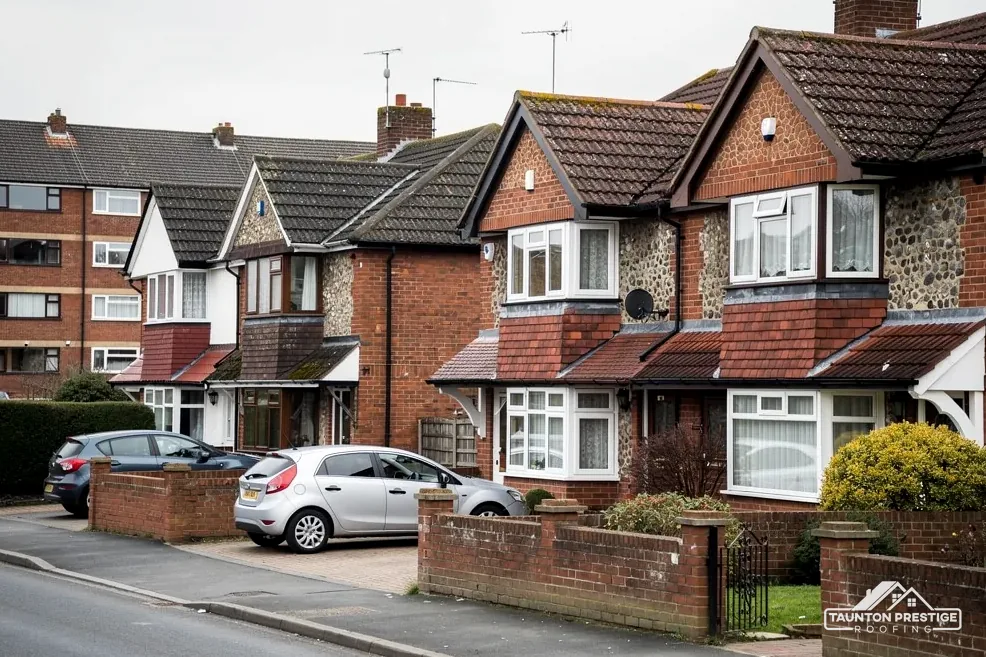
Exmoor House, built 1855
A Union Workhouse of local rubble with a slate roof and a central wooden lantern, now the National Park headquarters.
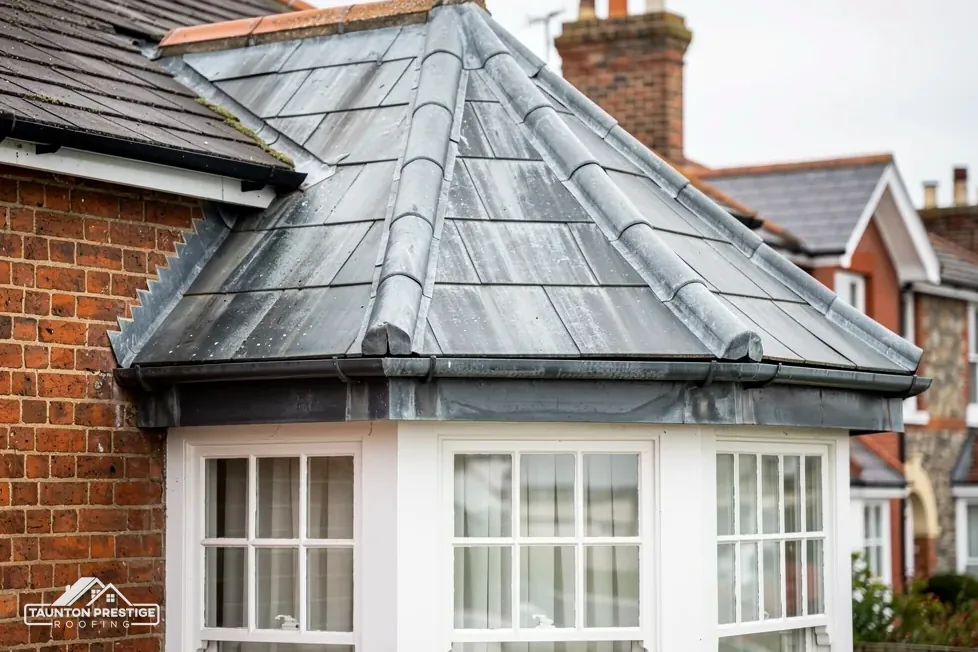
Welsh slate, Bridgwater clay tiles and rubble walls in the Barle valley
Dulverton lies in the Barle valley at the southern gateway to Exmoor, so Exmoor National Park Authority decides planning here, not Somerset Council. A survey comes first here, then a written price.
A Union Workhouse of local rubble with a slate roof and a central wooden lantern, now the National Park headquarters.
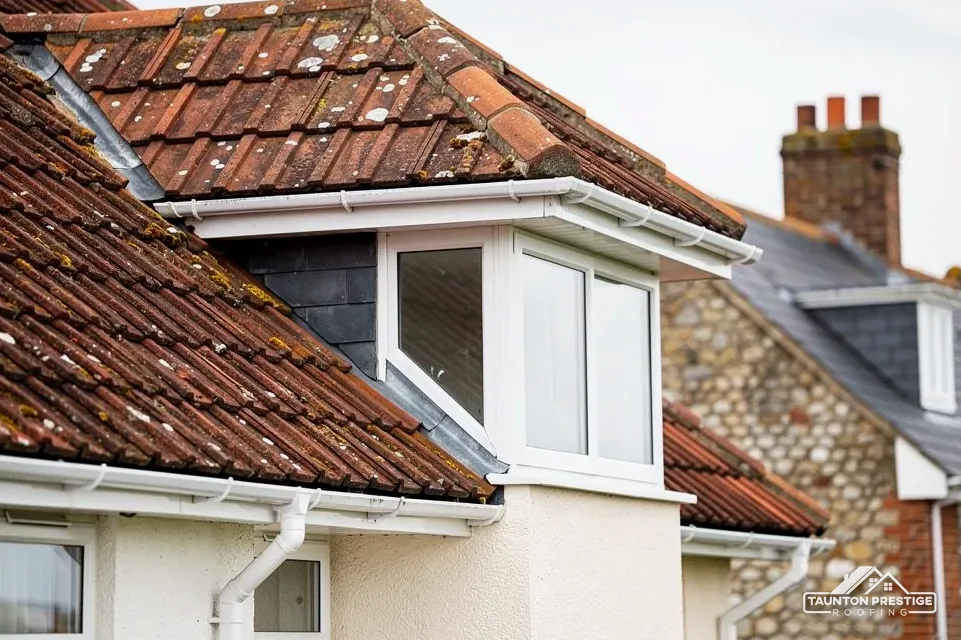
Listed in April 1959 and an Anglican parish church in use, so roof repairs there are authorised by faculty.
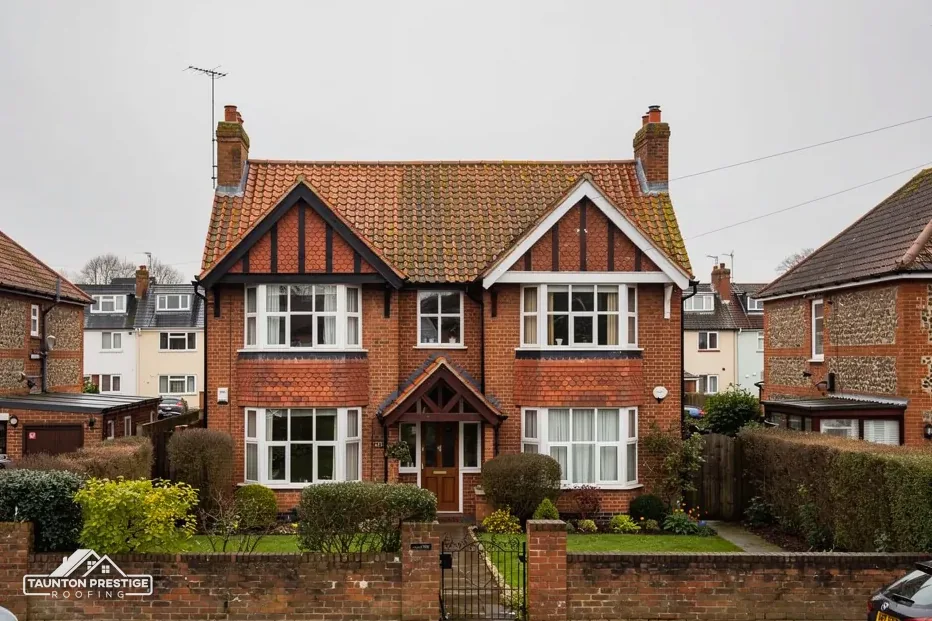
Also Grade II*, so roof changes touching its character are for Exmoor National Park Authority to approve.
Street map of Dulverton with Bampton, Tiverton, Wiveliscombe, Carhampton marked around it, and Taunton.
Bampton lies south-east of Dulverton, Tiverton to the south and Wiveliscombe to the east, while Dunster and Carhampton sit to the north-east across Exmoor.
About 19 miles west of Taunton, Somerset Council (unitary).
Four checks in the National Park
These four checks for a Dulverton roof show who has to agree, how the covering behaves and what moves the price.
Most Somerset addresses answer to Somerset Council for planning. Dulverton does not. Under section 4A of the Town and Country Planning Act 1990, a National Park has one planning body of its own, and for this Park that is Exmoor National Park Authority. Planning questions, and listed building consent for a protected building, therefore go to the Park, and a call to Somerset Council's planning team will only send you on to the Park.
That stays with Somerset Building Control, which covers the area through Somerset Council. The Park authority does planning, not building control, and the two are separate. A re-roof that needs no planning application may still need Building Regulations approval if the new covering is much heavier. The Planning Portal draws that line at 15 per cent or more, and recommends consulting a structural engineer or surveyor first. We raise weight at the survey, since a heavier tile means a different roof frame question.
A like-for-like repair to the covering normally does not. The questions begin when the look changes: a different material, roof windows, a new style of ridge, or any work touching a listed building such as All Saints church or Wood Tenament, both Grade II*. Dulverton also has a conservation area, with an appraisal published by the Park authority. Our guide to roof planning in Exmoor sets out the route in more detail.
Our survey photographs every slope and records what is original and what has been patched, slate by slate where the roof is small enough. That record goes straight into any enquiry to the Park authority, which saves time on both sides and keeps materials from being ordered before the answer is known. If your house is listed, or you are not sure whether it is, say so when you first contact us. We will check the position before the survey, so the visit can concentrate on the roof.
Look for
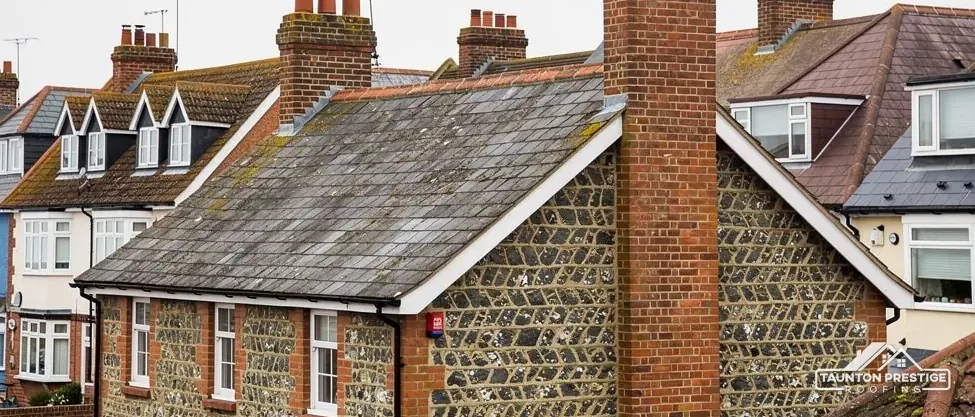
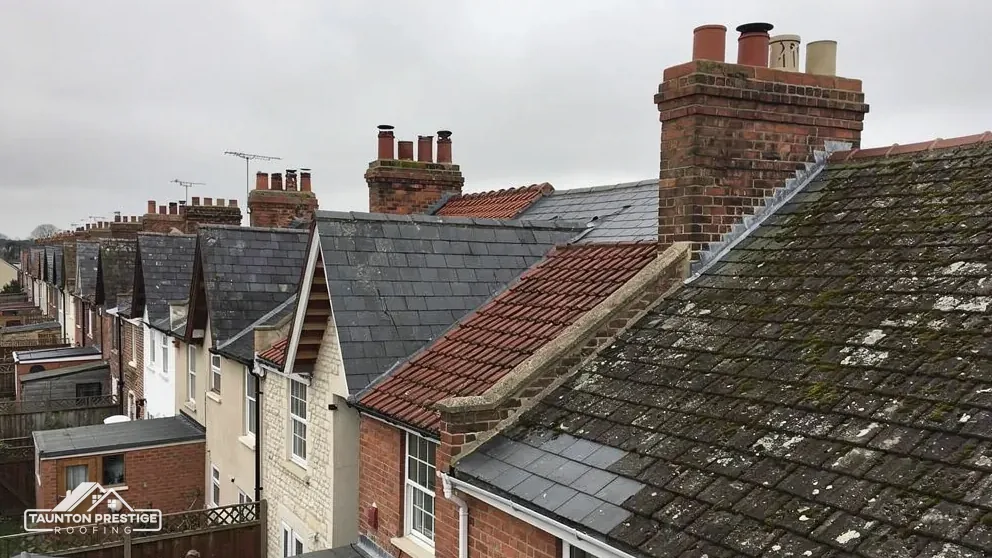
The Park authority's appraisal of Dulverton says thatch was once the more usual covering, and that from the late 18th century slate took over, particularly where fire might spread between buildings. It adds that Welsh slate is now common in the town, and that local slate from the Brendon Hills quarries, which worked until the early 20th century, is scarce in the town. That scarcity is the practical problem for repairs. A replacement has to be matched by size, colour and texture, and a mismatch on a street frontage shows from the pavement. Reclaimed slate of the right size is often worth the wait, because a slate of a different thickness will not lie flat in old courses.
What decides the price
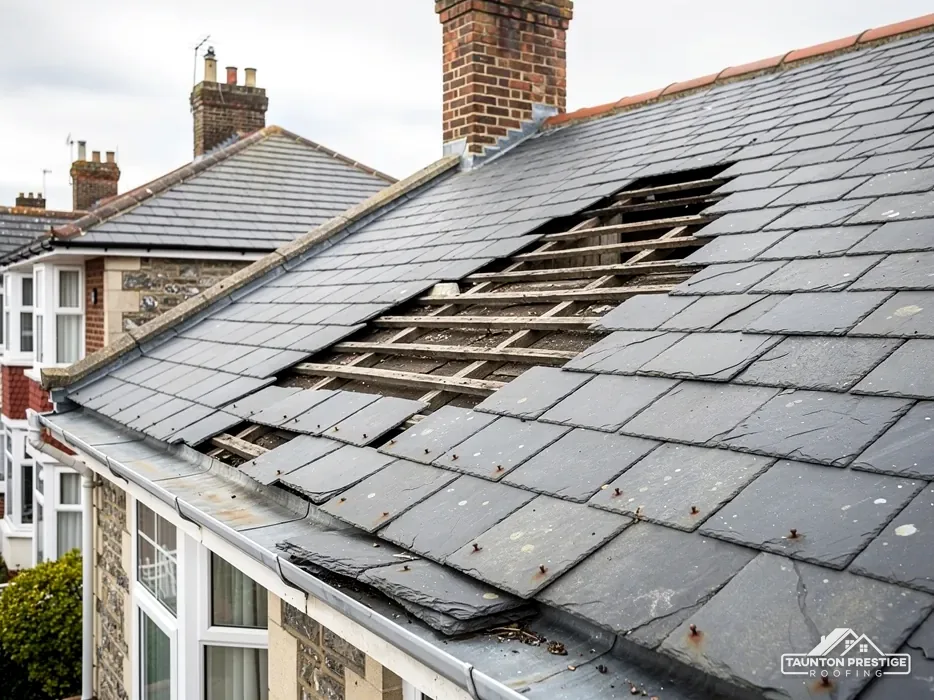
Slates hang from battens, thin laths of timber fixed across the rafters, held by nails or hooks, and a fixing that rusts through lets the slate slide. Watch for a slate hanging below the line, a hole in the pattern or broken corners collected in the gutter. If the wall below is rendered or limewashed, as many Dulverton walls are, a long damp streak under the eaves is another clue. Limewash is a lime-based paint that lets masonry breathe, and it stains easily where water runs.
Slate in good order can last 100+ years, per the Confederation of Roofing Contractors, though a fixing can fail much sooner. BS 5534 indicates a minimum roof pitch of 20 degrees, and Cupa advises against hook fixings on any pitch below 25 degrees. Our slate roofing page goes into repair against relaying. Once fixings are failing across a slope, patching means repeat call-outs, and stripping that slope is the better buy. Where one slate has slipped, it can usually be slid back and clipped, or swapped for a match, without disturbing the rest.
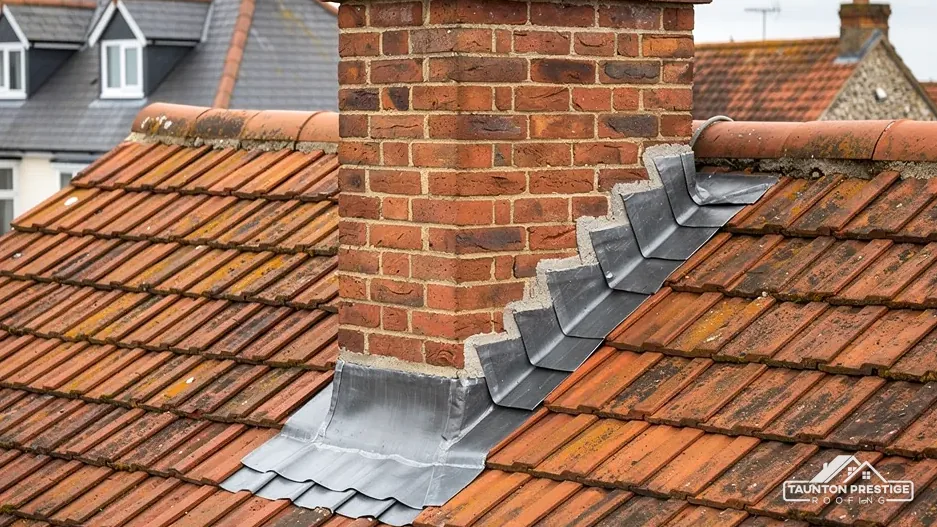
From the late 19th century the main alternative to slate in Dulverton was red clay double-Roman tiles from the Bridgwater area, according to the Park authority's appraisal. Plain tiles also began to be used on new buildings from then, but are less common. Bricks, the appraisal adds, were not made locally and most likely came in by rail, while the walls of almost all the historic buildings are local sandstone and shale rubble. The Double Roman is a broad tile with a large roll beside a flat pan, so each tile covers a wide strip of roof.
Yes, if a sound match is found. South West Heritage Trust credits the Bridgwater yards with the bricks, tiles and terracotta behind the look of many Somerset towns, so reclaimed tiles from the area are one route to a good match. Modern concrete Double Roman tiles exist as well, and Marley gives a minimum pitch of 22.5 degrees for its smooth version, with a note to check the data sheet for any product. On an older roof clay stays clay where it matters, because a concrete tile weighs more and weathers to a different colour.
A covering that is 15 per cent heavier or more needs Building Regulations approval, so switching clay for concrete is not a casual change, and in the Park it may need the Park authority's consent too. Our pitched roofing page covers repair, partial relaying and full replacement, and the survey photographs show which of the three your roof actually needs.
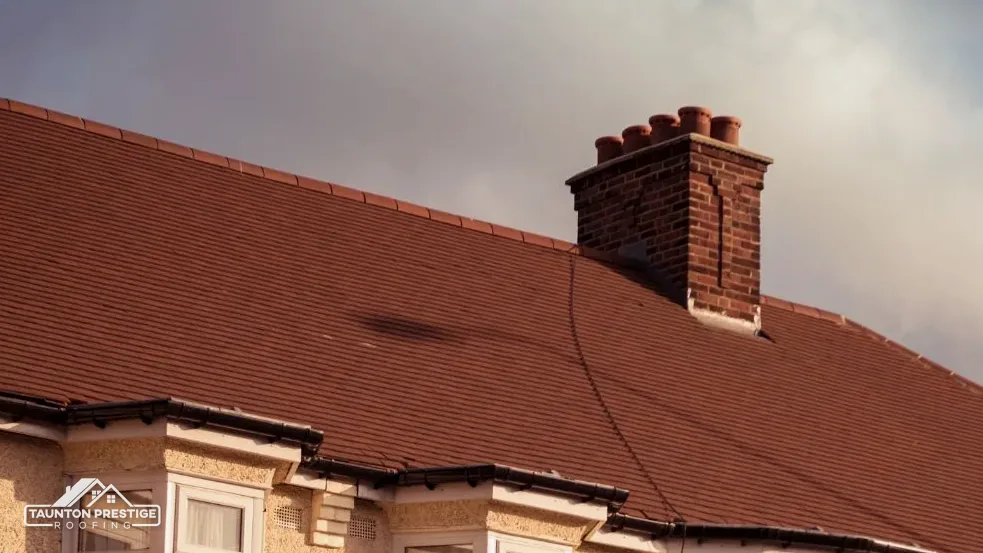
A cracked tile on a clay roof is often the visible end of a larger story, since a tile that has been walked on or struck by a branch can break its neighbours without showing it. That is why we look along the whole run before suggesting a single swap, and why the photographs matter more than a quick glance from the garden.
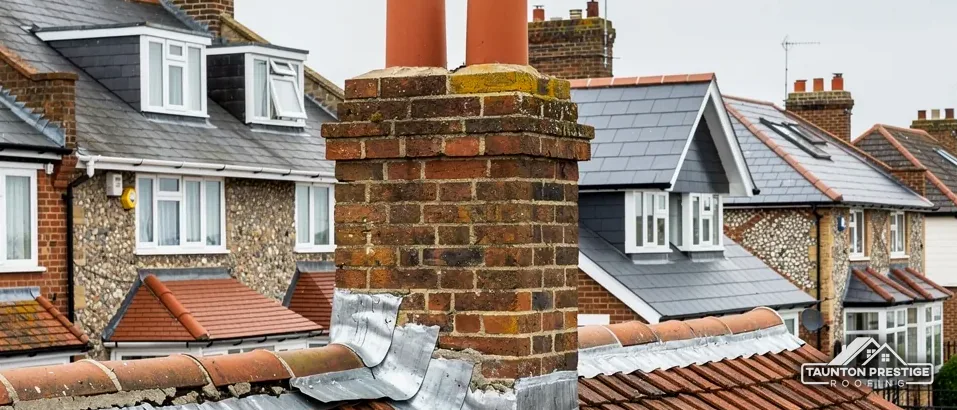
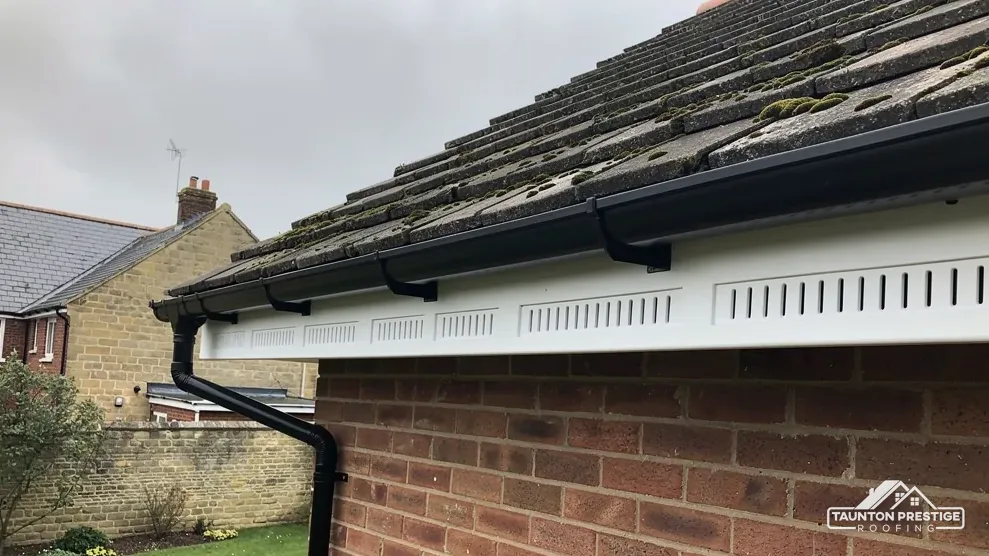
The Environment Agency's planning map puts the mapped centre of Dulverton in Flood Zone 3, which describes land and not any single roof. GOV.UK's flood risk checker for the long term will tell you about your own address. Roofs in a deep valley still need good drainage, wherever the map line falls. Brett Martin's guidance sets a fall of 1mm for every 600mm of gutter, and one dropped bracket is enough to leave water sitting in a run, and it can rot the fascia, which is the board the gutter hangs on, and the soffit under the overhang. We check both on every survey.
What decides the price
Where scaffold obstructs the pavement or road, section 169 of the Highways Act 1980 requires a licence before it goes up. For Dulverton the highway authority is Somerset Council, which issues these permits to accredited contractors and wants the application from the contractor on the job. The charge is £124.60 for each 28-day period (April 2026), with 10 working days' notice. Narrow streets and steep ground can make access the hardest part of a Dulverton job, so we plan it at the survey and allow for the licence wait when we name a start date.
Old houses beside a river valley suit bats, and their roosts have legal protection. We look at the eaves and gables first, note any droppings or worn gaps where bats could get in, and plan the work around anything we find.
After the survey you receive photographs of the roof as it is and one total in writing, which states whether scaffold and VAT are inside the figure. To start, send your Dulverton address, and tell us whether the building is listed, so we can settle the Park authority question at the first visit.
Walked the roof?
When you have read the checks, we walk the roof and show you the photos.
Not as a casual change. Concrete tiles are heavier, and a covering 15 per cent heavier or more needs Building Regulations approval. In the National Park, a different material may also need consent from Exmoor National Park Authority. Slate stays slate where it matters, and we talk through the options at the survey with photographs of your own roof.
The quarries that supplied it stopped work in the early 20th century, and the Park authority's appraisal says local slate is scarce in the town, where Welsh slate is now common. We match size, colour and texture from sound reclaimed slate or new, and show you the choices in photographs before anything is ordered.
All Saints holds a Grade II* listing and is used for Anglican worship, so repairs need a faculty, which the parish applies for. That is the Church's own permission system and it replaces listed building consent from the planning body. Whoever roofs it builds to the terms the faculty sets, and the parish keeps the paperwork.
Building control stays with Somerset Building Control, on 0300 303 7790, because the Park authority handles planning and not building control. Whether your job needs an application turns on the Planning Portal's two tests, under 25 per cent of the envelope and under 50 per cent of the roof, plus any added weight.
Send your Dulverton address, and tell us if the building is listed, so the survey can begin there.