St John the Baptist church
Listed Grade II in February 1955, with Anglican worship continuing, so roof work follows the faculty route.
A Grade II church, Blake's Cottage and Manor Farmhouse in Oake parish
Heathfield is the small hamlet in Oake parish near Hillfarrance, with eight list entries within 500 metres, including a Grade II church. Each roof is surveyed first.
Listed Grade II in February 1955, with Anglican worship continuing, so roof work follows the faculty route.
Listed in May 1985, one of eight list entries within 500 metres of the hamlet's centre.
Manor Farmhouse and Heathfield Lodge are both listed Grade II, so each roof follows the listed building route.
Street map of Heathfield with Oake, Hillcommon, Cotford St Luke, Hillfarrance marked around it, and Taunton.
Oake lies south-west of Heathfield and Hillcommon to the west, while Cotford St Luke is to the north-east, Hillfarrance to the south and Halse to the north-west.
About 4 miles west of Taunton, Somerset Council (unitary).
A roof walk near Hillfarrance
Four checks for the hamlet's cottages, farmhouses and porches, with what each can change in the work and in the quote.
There is more than one Heathfield in Somerset, and online maps and search results mix them up. The Heathfield we mean is the hamlet in Oake parish, close to Hillfarrance. It is not Monkton Heathfield on the Taunton edge, and not Creech Heathfield. Giving us your postcode at the start avoids a wasted trip and lets us check the right boundaries and the right list entries.
The National Heritage List has eight entries within 500 metres of the hamlet's centre. Among them are three Grade II houses: Blake's Cottage, first listed on 17 May 1985, Heathfield Lodge and Manor Farmhouse. St John the Baptist's church holds the same grade. A listed roof can be repaired like for like, but work that alters the special character of a listed building needs listed building consent. Read the list entry for the house, not its age, to see where a job falls.
Ash Priors, Halse and Hillfarrance are the closest areas in the dataset, each within about 2.5 km. Boundaries are worth checking by address, and Somerset Council lists an Article 4 direction for Halse, confirmed in 1977. Its planning team can tell you what that covers and whether anything applies at your door. Our slate roofing page explains how we approach older coverings.
The survey records which of these questions applies to your roof, so you know before any price is agreed. Should nothing special apply, that is useful too, because it leaves the choice of covering with you. If something does apply, we tell you which body to approach, how long it tends to take and what it will want to see, so the dates can go into the programme from the start. Either way, nothing is ordered until you have seen the photos and agreed the plan.
Look for
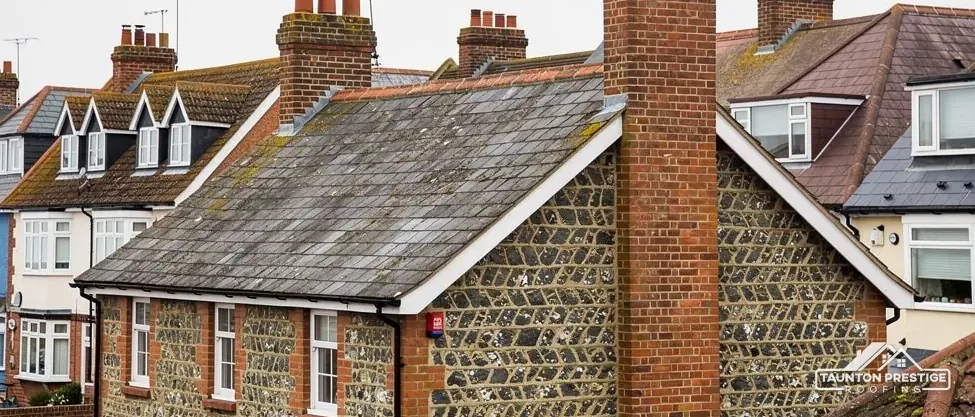
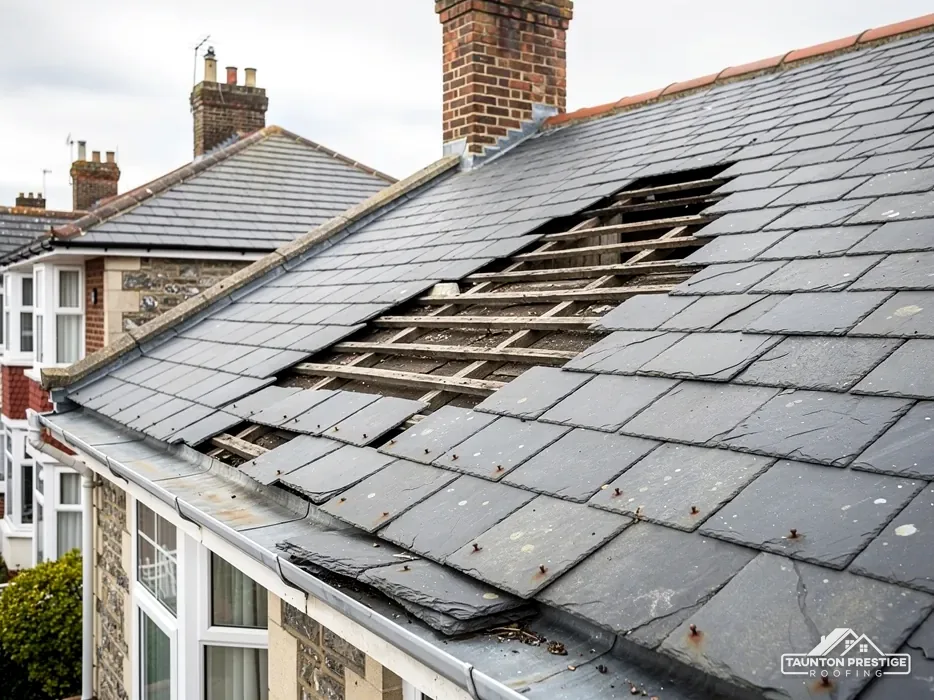
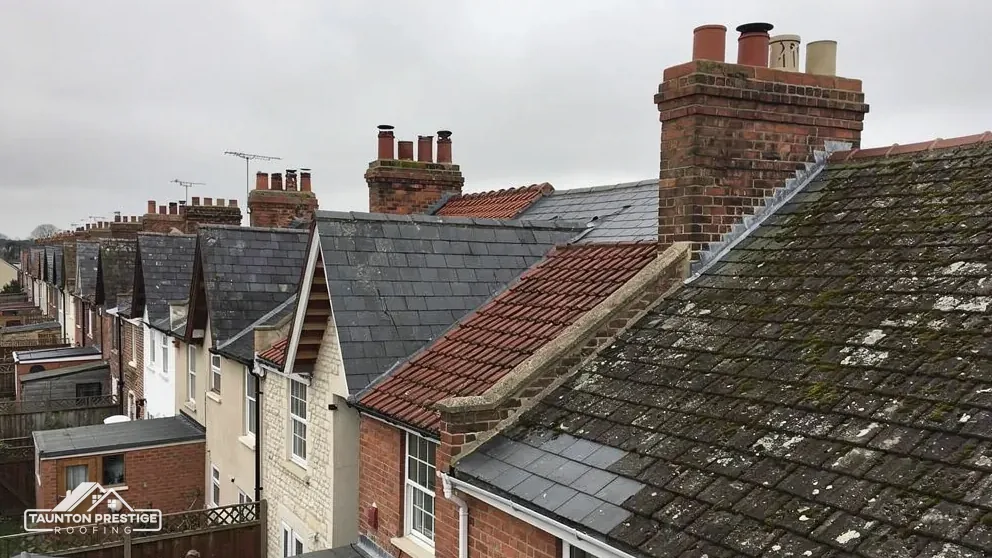
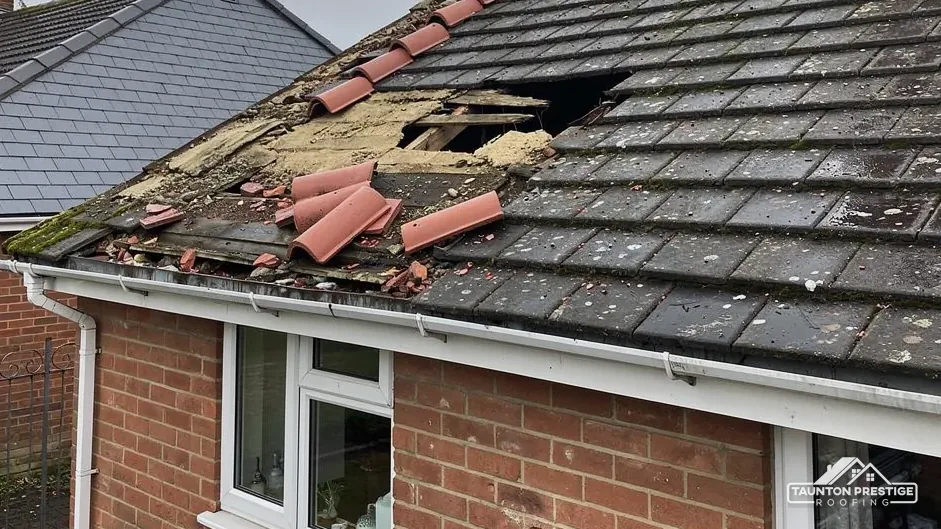
A cottage or farmhouse roof tells half its story from inside. On a sunny afternoon, go up through the hatch with a torch and look up. Daylight between the slates or tiles means the covering has a gap. Dark staining on a rafter marks where water has run. A ridge that dips between the gables, or rafters that bow, mean the structure is moving, and no new covering will cure that.
What decides the price
A rafter is one of the sloping timbers that support the battens and the covering; a purlin is a horizontal beam that props the rafters midway along a long slope. In an older house the timbers may be hand-cut and irregular, and sometimes slim by modern standards, so no two roofs are alike. We look at their ends where they sit on the wall plate, as that is where water collects, and at any joint that has opened.
Sometimes. A roof that has settled slightly and is stable may be fine to re-cover as it stands. One that is still moving needs a structural opinion first. The Planning Portal advises a view from a structural engineer or a surveyor ahead of fitting anything heavier, and once a new covering adds 15 per cent or more to the weight, Building Regulations approval follows. We tell you what we see, and what we cannot judge from the loft, before we recommend anything.
A torch photo taken from the hatch, sent with your enquiry, helps us plan the first visit and bring the right access equipment. Ladders do not suit every roof, and a low pitch or a fragile area may call for a tower or a crawl board. Telling us early what the loft is like, whether it is boarded or has a stair, means the visit goes smoothly and the survey is complete. We take care not to disturb stored belongings, and we leave the loft as we found it.
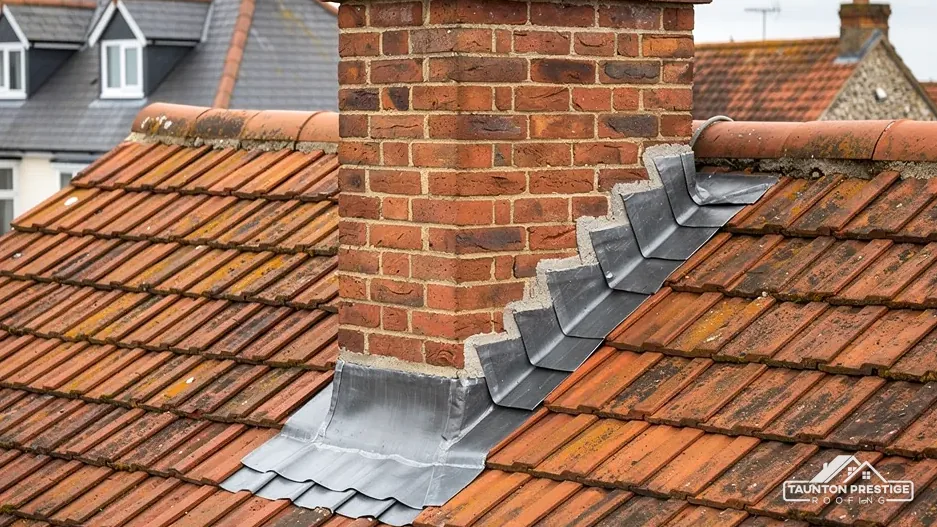
Porches, bay windows and the cheeks of old dormers are small roofs with big consequences. They are often too shallow for slate or tile, so they are covered in sheet metal, most often lead or zinc, or in a flat membrane. The sheet is formed to the shape, joined with rolls, seams or welts, and sealed at the wall. Its weak points are the joints and the wall junction, not the sheet itself.
A porch roof gets the same rain as a barn, so its joints must be better.
MyJobQuote's lower bound for lead flashing is over 80 years. VM Zinc cites the BRE Environmental Product Declaration for a figure of 100 years for zinc, which is a manufacturer's claim and should be read with that in mind. Your porch is bound by neither figure. The joints, the fixings and the wall behind decide what you get.
Many porches have lived with a slow leak for years, hidden by a ceiling and a bit of paint. Brown tide marks round a light fitting, a damp corner where the porch meets the house wall, and a musty smell after rain are the usual clues. The cure is rarely a new roof straight away. A close look often finds a lifted flashing, a split seam or a blocked outlet, and a repair to the joint costs far less than renewing the whole sheet, so we check those first and tell you plainly what we find.
Royston Lead's brochure lists code 4 sheet for soakers, flashings, pitched valleys and dormers, and heavier codes up to 8 for gutters and parapets. A code is a weight, so a higher code means thicker lead. A soaker is the small folded piece slipped under each course of slates beside a wall. Zinc is fixed differently, with seams that allow it to expand and contract without splitting. Our lead work page explains how we choose.
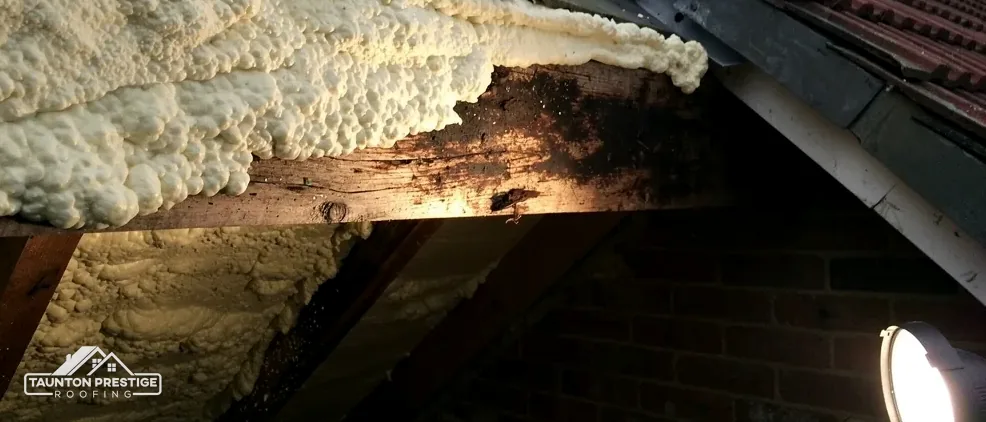
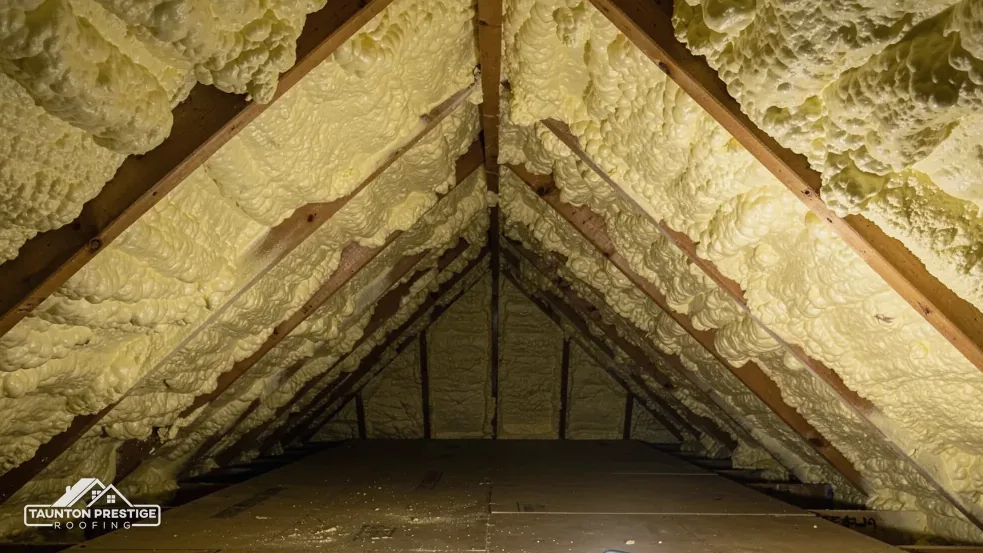
Some older roofs have had spray foam sprayed beneath the slates or tiles. The idea is to insulate and seal in one step, though the effect on an old roof can be hard to reverse. The Energy Saving Trust, whose roof insulation advice was revised in May 2026, says of spraying foam on a roof with an existing leak, we don't recommend doing this. Foam can hide leaks, stain timbers and make a later repair harder.
What decides the price
RICS publishes a consumer guide to spray foam, and it tells owners to put the question to their mortgage provider before installation. Policies differ from one lender to the next, so the answer that counts is the one your own provider gives you. Ask before the foam goes on, and ask again if you are buying a house that already has it. A buyer's solicitor may raise the question during a purchase, and the answer is easier to give with a survey report and photos to hand, whether the foam stays or comes out.
Yes, though it is painstaking, and the work depends on the type of foam and how it was applied. We survey the roof from inside and outside, record the timbers behind the foam where they can be seen, and give you one written price. If the foam is hiding damp or rot, you see the photos before anything is decided, so the next step is yours. Our spray foam insulation removal page explains the process.
If you have foam under a Heathfield roof, or are buying a house that has, send us the postcode and a note of the surface you see from the hatch, and we will arrange the survey and take photos of the loft.
Walked the roof?
When you have read the checks, we walk the roof and show you the photos.
With services held there under the Church of England, the faculty system applies, and listed building consent from Somerset Council does not. The parish applies, and whoever does the roof follows the specification once it is approved. Its Grade II listing dates from February 1955. An outside change may still raise a planning question.
Each has its own entry on the National Heritage List, and the entry defines what is covered. All three are Grade II. Blake's Cottage was first listed on 17 May 1985. If your house stands near one of them, ask Somerset Council, or check the list, before you assume either way.
Not by itself. Somerset Council lists an Article 4 direction for Halse, dated 1977, and for other named places. A direction applies to its own area only, and Halse is a separate village to the north-west. Ask the planning team what the Halse direction covers and whether anything applies at your Heathfield address, and keep their reply with the deeds.
Yes. We survey from outside and from the loft, take photos of the roof and write up what we find in plain language, which you can pass to your solicitor or your lender. It tells you whether a flagged roof needs a repair, a re-cover or just watching, and it gives one written price for the work.
Send your postcode, so we know which Heathfield, plus a line on the roof, and we will propose a day.