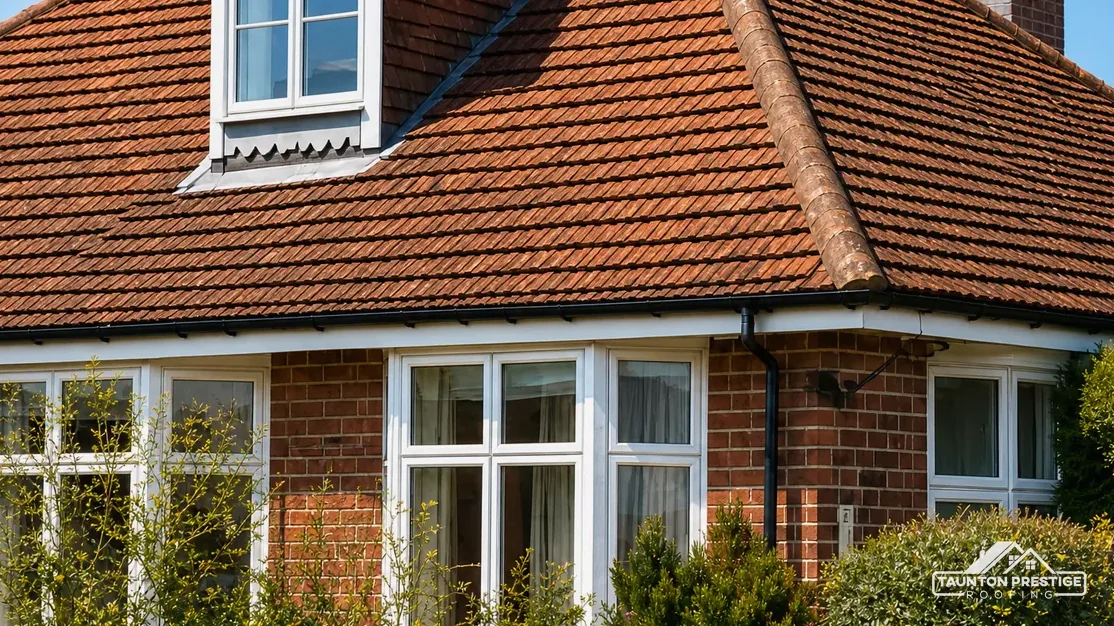
St Bartholomew's Grade I tower
The ornate tower, added about 1500, is lias with Ham stone dressings, and the church is listed Grade I.
A ridge village by Athelney with a Grade I church tower
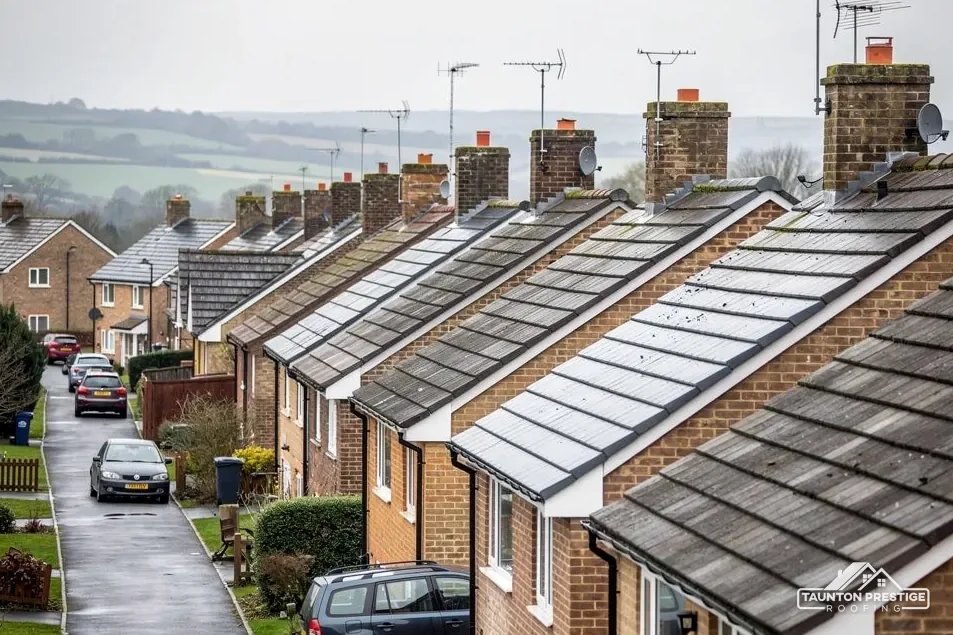
Lyng stands on a low ridge running out from the Quantocks into the Parrett moors, beside Athelney, with a Grade I church and early 19th-century brick houses.
The ornate tower, added about 1500, is lias with Ham stone dressings, and the church is listed Grade I.
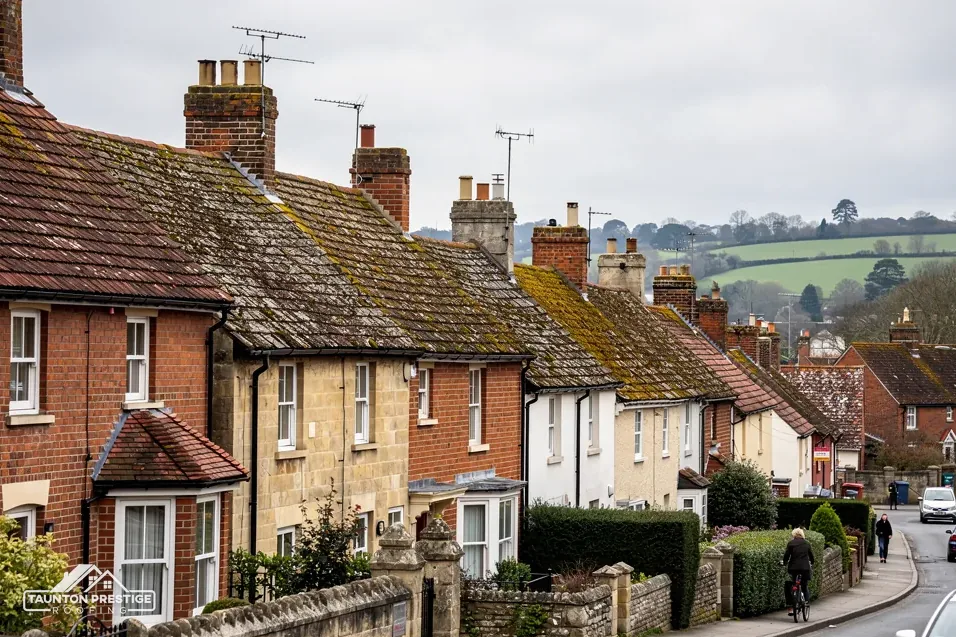
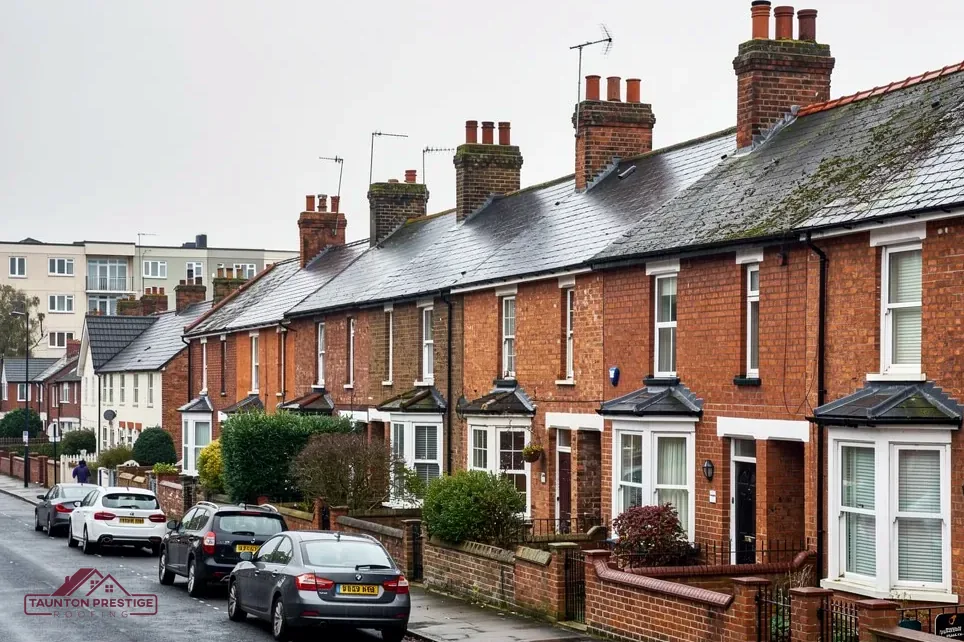
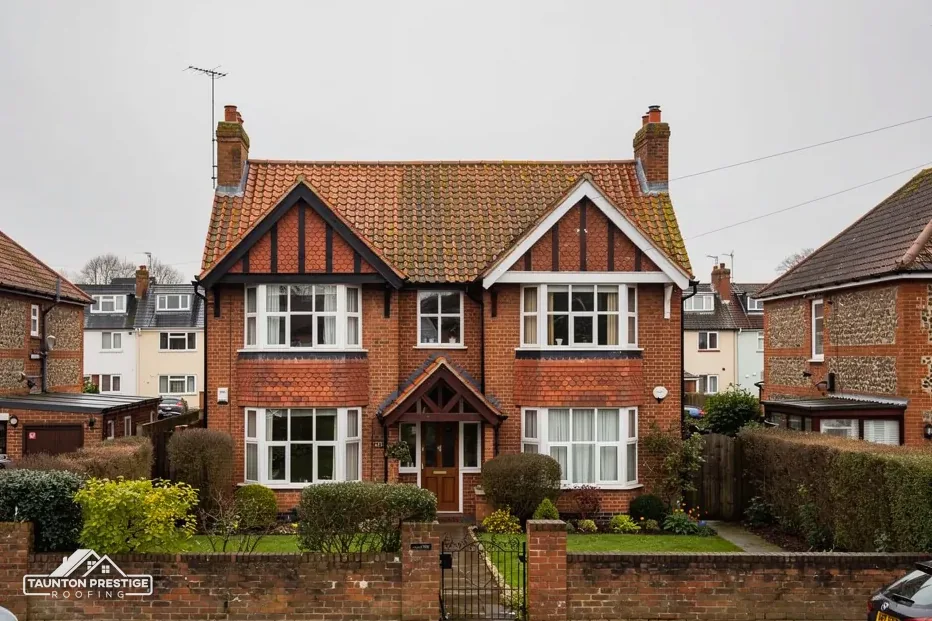
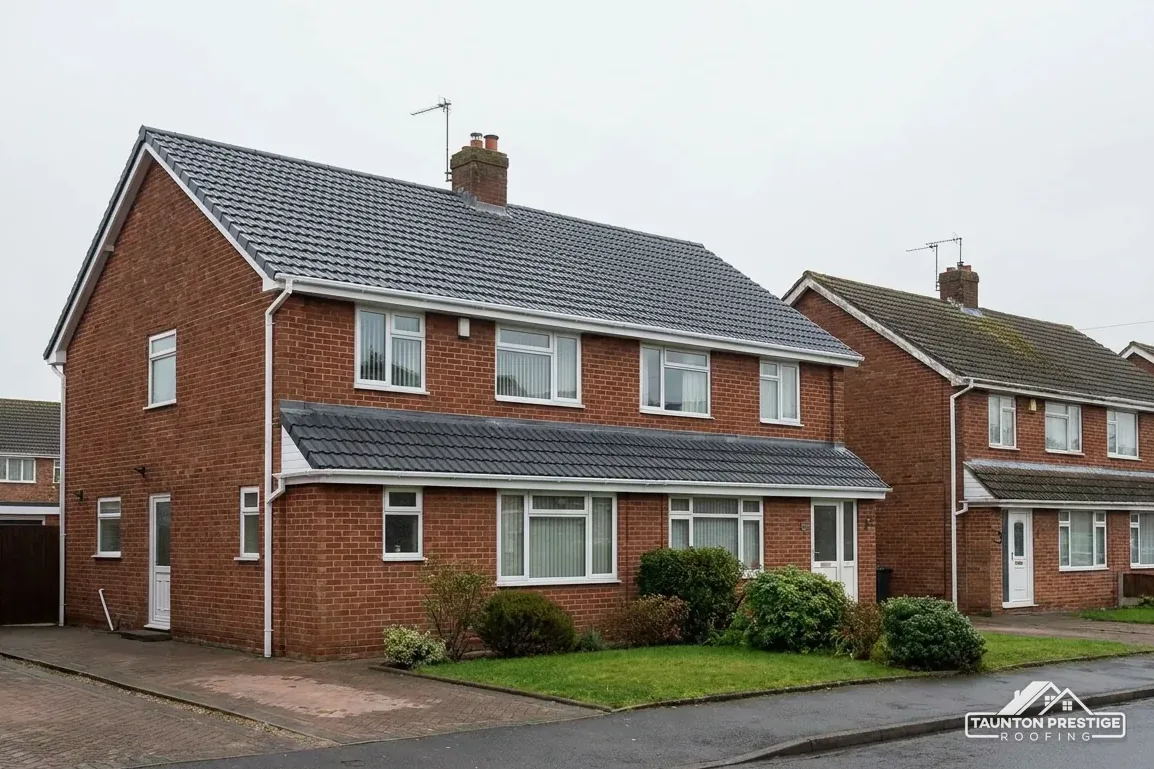
Built in brick in the early 19th century and now listed Grade II as east and west halves.
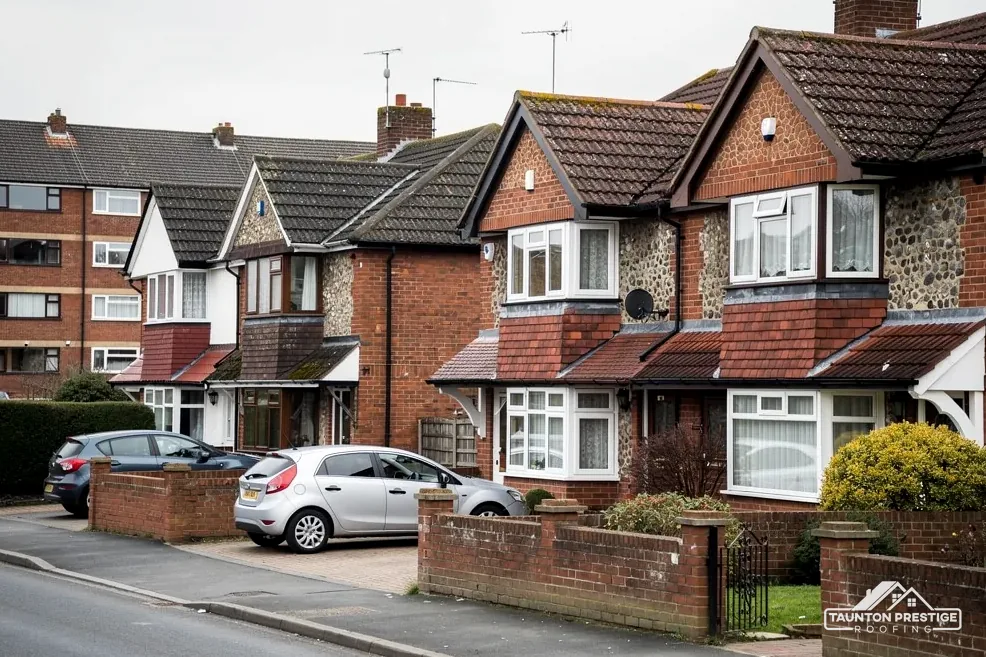
A Grade II listed building since 24 June 1987, so work to its roof needs listed building consent.
Street map of Lyng with West Lyng, Stoke St Gregory, St Michael Church, North Curry marked around it, and Taunton.
West Lyng is south-west along the ridge, with Stoke St Gregory to the south-east, North Curry to the south, North Newton to the north-west and Durston to the west.
About 7 miles north-east of Taunton, Somerset Council (unitary).
Along the ridge, in four checks
A tower, brick houses, flat roofs and the quote itself: four things worth knowing before anyone climbs a ladder on the ridge.
The tower of St Bartholomew's was added about 1500 and is built of lias with Ham stone dressings, according to the Victoria County History. The church has been listed Grade I since 29 March 1963 and is an Anglican parish church in use. For a roofer that second fact matters most. A church in this position follows the faculty system, a diocesan process arranged through the parish, and does not apply to the council for listed building consent.
Work waits for approval. The parish applies, the approved specification fixes the lead, stone, slate or tile to be used, and our price is built on that document and not on our own opinion. If a gutter, a lead valley or a stretch of pointing on the tower needs urgent attention, the area can be made safe first, with the permanent repair following the approval. A tower roof is also a long way up, so access is planned early.
The Rose and Crown Hotel has been listed Grade II since 24 June 1987, and Winchester House, in its east and west halves, is also Grade II. For those buildings the route is the council's: listed building consent from Somerset Council for work that changes the character of the building. Three listed entries lie within 500 metres of the centre of Lyng, so the question is worth asking at every address. Somerset Council's planning team will confirm whether a particular house is listed.
Our survey photographs every slope and every stack, so whichever route applies, the paperwork begins with a true record of the roof. We also record how each roof meets its neighbour's wall, because those junctions are where listed and unlisted buildings so often depend on each other.
Look for
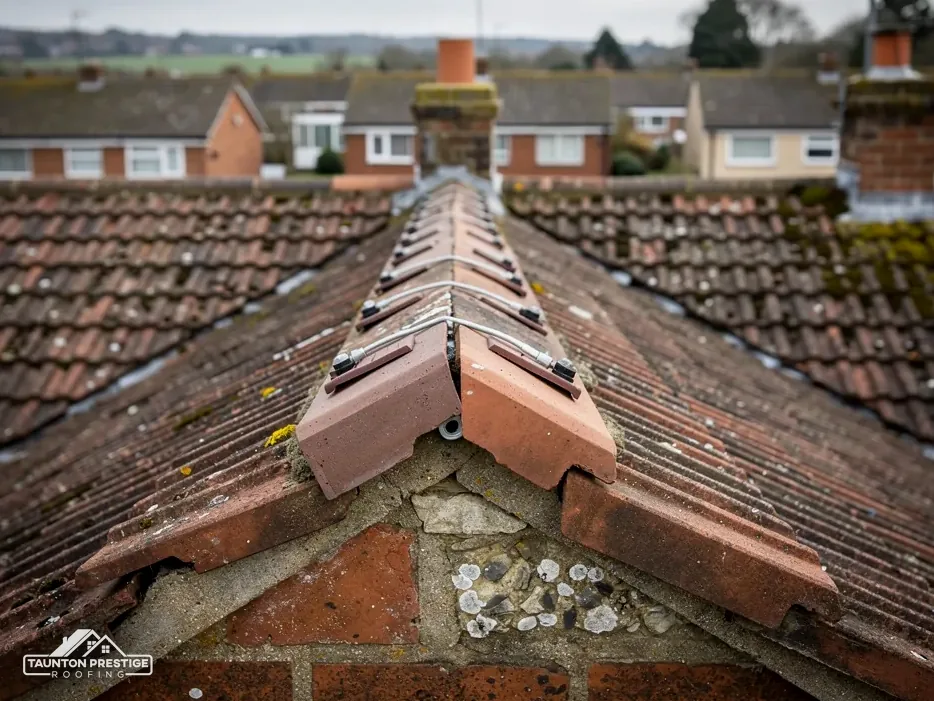
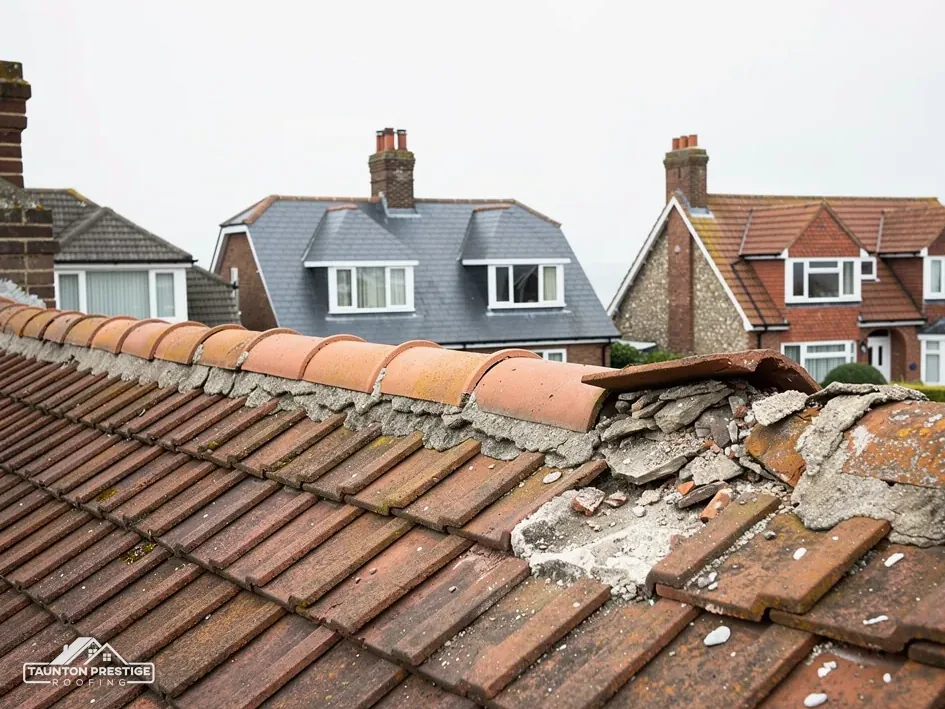
The Victoria County History records that several substantial houses in East Lyng, Winchester House among them, were built in brick early in the 19th century, and that clay was dug for brickmaking at the western end of the ridge in the same century. That is a fact about walls and workings, not about what covers any roof today. So the first step on a Lyng survey is to identify what you have: slate, clay or concrete. Our guide to identifying your roof covering shows how it is done.
What decides the price
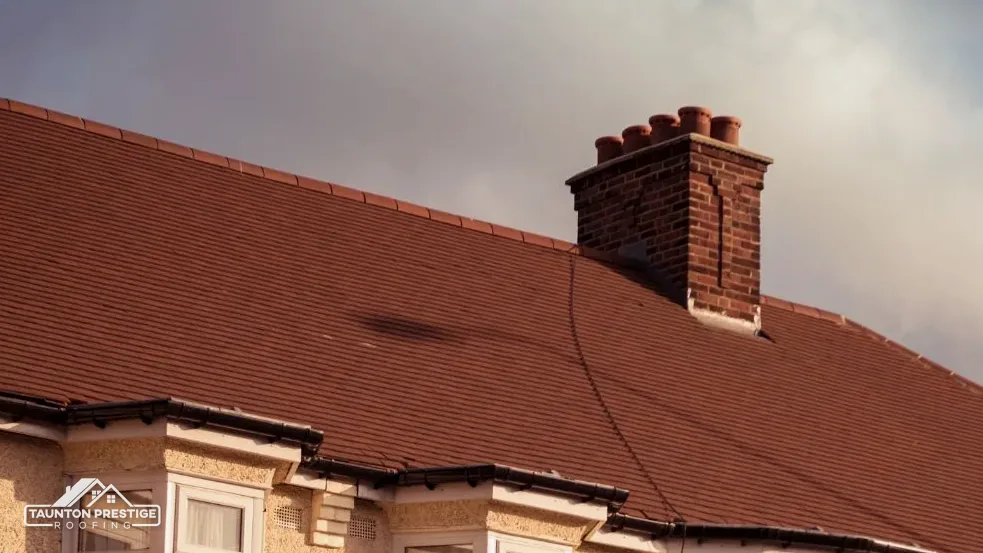
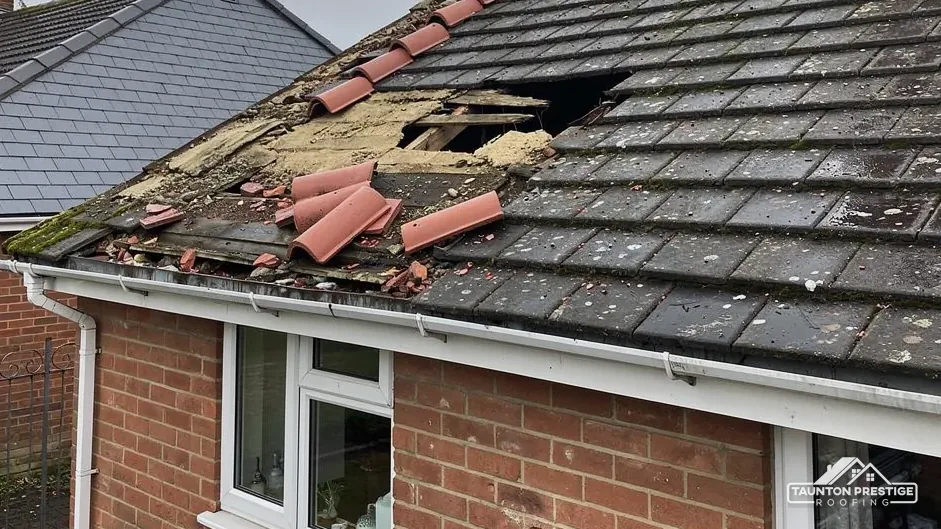
Marley cites a BRE minimum life expectancy of 60 years for clay tiles. That figure is for clay only and is no promise. Building Conservation's clay tile article says the 60-year figure is a poor guide for old peg tiles. A roof's age counts for less than the state of its fixings and its tiles, and the survey looks at both before anyone talks about replacement. Where a few tiles have failed and the rest are sound, we tell you that and price only the repair.
The Double Roman is a tile profile, a pattern in the tile's shape, and a Bridgwater heritage leaflet lists the popular Bridgwater Double Roman among the products of the town's brick and tile works. The South West Heritage Trust credits Bridgwater's yards with shaping how many Somerset towns look. Marley's data gives 22.5° (smooth) as the lowest pitch for its concrete Double Roman, so a low slope can rule a profile out, and we check your pitch against the maker's data sheet before suggesting a covering. Our pitched roofing page covers re-roofing in more detail.
If a clay roof is sound apart from a few tiles, repair usually beats replacement, and salvaged tiles keep the old look.
The Victoria County History describes the Lyng ridge as about 3 km long, running north-east from the Quantocks into the moors of the Parrett basin, with settlement kept from the earliest times to ground above the flood plain. The Environment Agency's flood map for planning shows Lyng's centre point in Flood Zone 2. A map like that describes the land, never one roof. To look up your own property, GOV.UK offers a checker named Check your long term flood risk. GOV.UK also says that 18% of Somerset sits below average tide level, which is why drainage is taken so seriously across the Levels and Moors.
A flood map describes the ground, while the gutters decide where your roof's rain ends up.
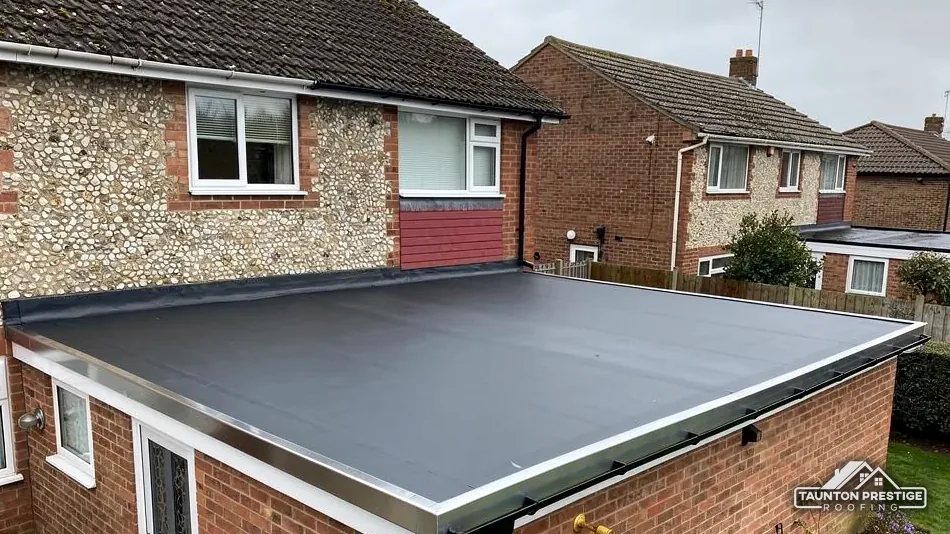
BS 6229:2025 keeps a minimum finished fall of 1:80 for flexible-membrane flat roofs. IKO's advice is to design for 1:40, which leaves a margin once the roof is finished. Ponding has three usual suspects: a deck that has settled, an outlet full of debris, or a fall that was never enough. A garage or extension roof is the usual place for it.
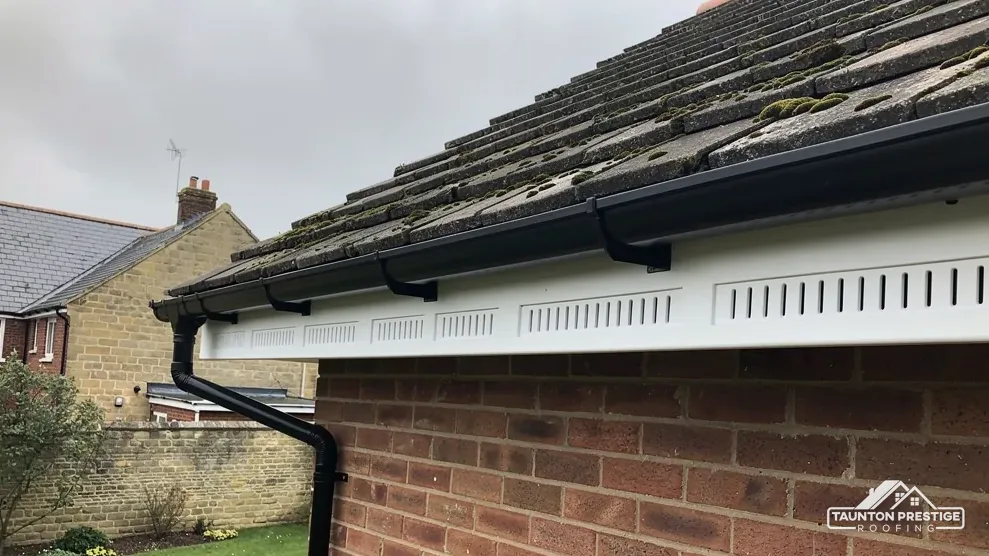
The gutter hangs from the fascia, the timber at the foot of the slope, and Brett Martin's installation advice puts its fall at 1mm in every 600mm. A sagging bracket leaves a section holding water, which rots the board behind it and spills over in the next downpour. Our gutters, soffits and fascias page lists the options.
Sources differ, so we name them. GreenSpec gives EPDM, which is synthetic rubber laid as one sheet, an expected service life of 20 to 30 years, while Less says 30 to 50. Less puts GRP, glass-reinforced plastic laid over a deck, at 25 to 40 years and torch-on felt at 10 to 20. Our flat roofing page explains which suits which roof.
The standard rate of VAT is 20% according to GOV.UK, and it covers repairs and re-roofs of existing homes. The domestic reverse charge works between VAT-registered businesses that report under the Construction Industry Scheme; a homeowner paying for a roof is outside it. When you set quotes side by side, the first question for each is whether VAT is in the figure.
What decides the price
Ask the same about scaffolding, which can take a big bite out of a small job. HomeBuilding (Sep 2025) gives approximately £1,000 for a three-bed semi, with permits inside that figure, and MyJobQuote (Oct 2026) gives £550 to £750 for a week's hire on a front elevation, both as typical UK figures. Where scaffold has to occupy the highway, the highway authority licenses it, so ask the scaffolder who applies.
Citizens Advice says to try for written quotes from at least 3 traders before deciding. Compare what each one covers: the same slopes, the same ridge and hips, the same gutters and the same waste removal. A figure that looks cheaper but leaves out scaffold or VAT is not cheaper.
With an urgent leak, the first job is to keep the water out, and the lasting repair is planned afterwards. MyJobQuote's emergency roofer guide (Oct 2026) gives call-out charges of typically £150 to £300 and storm repairs of £1,200 or more, as typical UK figures. Contracts agreed at your front door after the survey normally carry a 14-day cancellation right, but a visit you request specifically for an urgent repair is excluded under regulation 28(1)(e) of the 2013 consumer contracts regulations.
We survey the roof first, show you photos of it, and then give one total price in writing. Post us the Lyng address with a few words on the trouble; the survey is booked first, and the written price comes out of it.
Walked the roof?
When you have read the checks, we walk the roof and show you the photos.
Start with the edges and the surface. A roofer can usually tell at a glance, and the photos taken at the survey show the profile, the thickness and the fixings. Because slate, clay and concrete are repaired in different ways and last for different lengths of time, we identify the covering before we suggest any repair.
The church's own faculty system, run through the parish, not Somerset Council. St Bartholomew's holds Anglican services, which takes council listed building consent out of the picture. The approved specification then governs the materials and method, and a roofer prices and carries out that specification. A closed church would follow a different route.
Water that dries within a day is one thing, but a pool that lingers points to a flattened slope, a clogged outlet or a dipping deck. BS 6229:2025 keeps a minimum finished fall of 1:80. We check outlets, trims and the deck, and tell you whether cleaning or a new covering is the sensible fix.
No. The flood map describes the land around a property, not the roof on it, and it does not restrict slate, clay or concrete. For your own address, try the GOV.UK flood-risk checker. Sound gutters and clear outlets matter far more to the roof than the zone does, and we check both at every survey.
Tell us where in Lyng the roof is and how it is misbehaving, and we will book a visit.