St Mary's Grade I church
Sandstone with limestone dressings; its chancel walls and roof were painted in a William Morris style by vicar Edward Jones.
St Mary's painted chancel roof and homes on a village slope
Stogumber has a Grade I church, a Grade II* former vicarage and a conservation area, on a slope between the Quantocks and the Brendon Hills.
Sandstone with limestone dressings; its chancel walls and roof were painted in a William Morris style by vicar Edward Jones.
Listed Grade II*, with 4 and 6 High Street both Grade II on the same street.
Three roads converge on a slope to cross a stream, so each house needs its own access plan.
Street map of Stogumber with Williton, Rich's Holford, Washford, Watchet marked around it, and Taunton.
Williton lies north of Stogumber with Watchet beyond it, Washford and Old Cleeve to the north-west, West Bagborough and Rich's Holford to the south-east, and Holford to the north-east.
About 11 miles north-west of Taunton, Somerset Council (unitary).
Four checks for roofs on a slope
Consent in a village full of listings, moss on old coverings, access on sloping ground and the creatures that share the roof space.
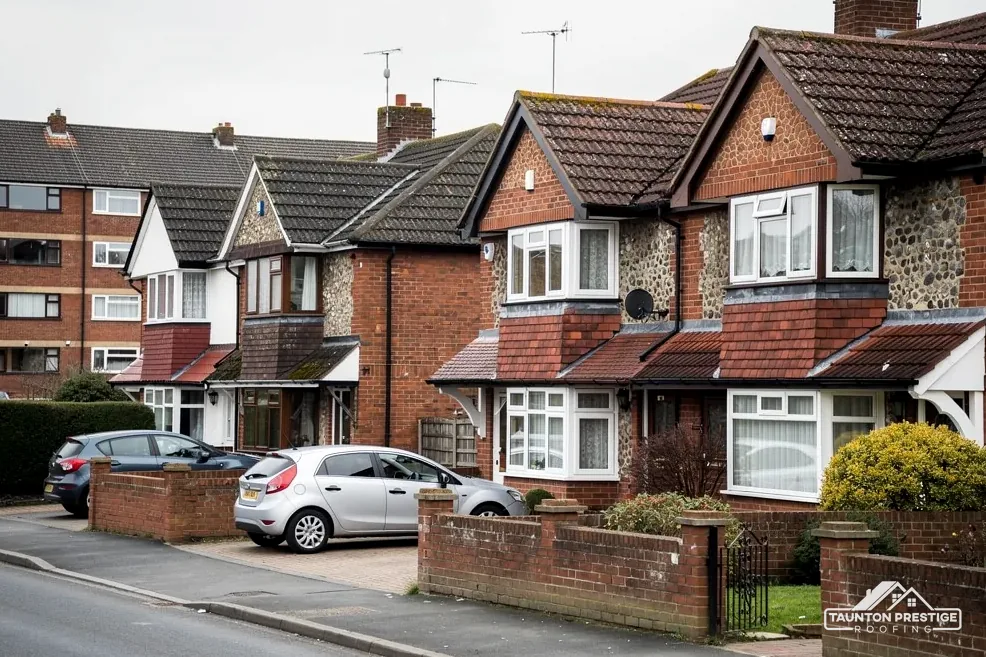
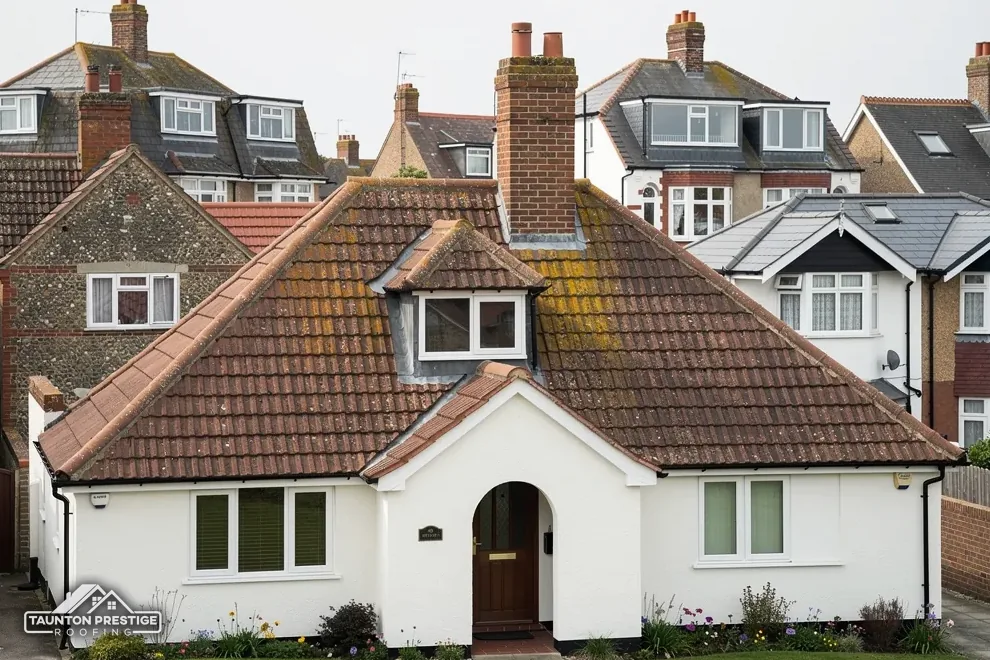
Stogumber carries a good deal of heritage for a village of its size, with listed buildings along its streets and a conservation area laid over the top. St Mary's church is Grade I, the Old Vicarage is Grade II*, and 4 and 6 High Street are Grade II. Our first questions on any job here are whether the house is one of those entries, whether it sits inside the conservation area, and what kind of covering it carries now. The three answers shape everything from the choice of tile or slate to the paperwork, and they are far easier to settle before the materials are ordered than after.
It can, the moment a roofline changes appearance from the road. Our planning permission for roof work page covers the national picture. Locally, the safest rule is to match what is on the roof in material, size and colour, and to bring any change of covering, new roof windows or a different ridge to Somerset Council's planning team before ordering. That conversation is short, and it can prevent an expensive mistake. Repairing in kind, with matching pieces, is the simple route, and our slate roofing page explains how we match what is there.
St Mary's still serves the Church of England parish, which means a faculty governs any roof work. The village history records that the chancel walls and roof were painted in the style of William Morris by Edward Jones, vicar from 1871 to 1907, which is exactly the kind of detail a specification for any repair has to respect. For houses, the survey logs every slope in photos and notes, and an application, if one is needed, is written from that log.
Look for
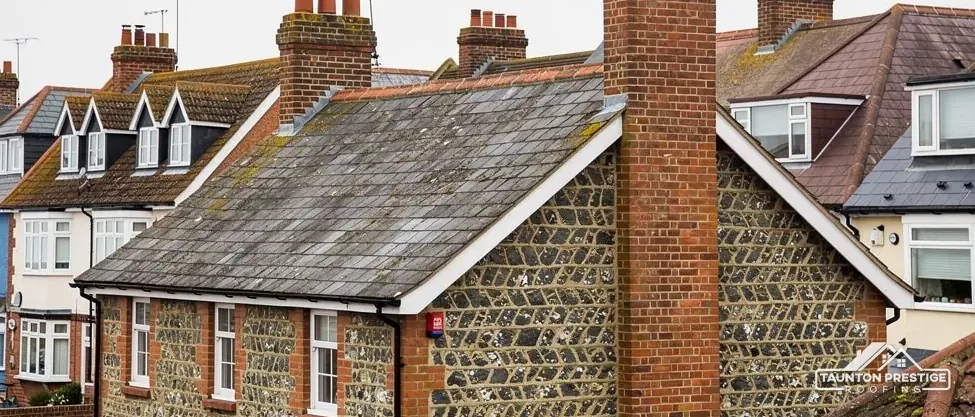
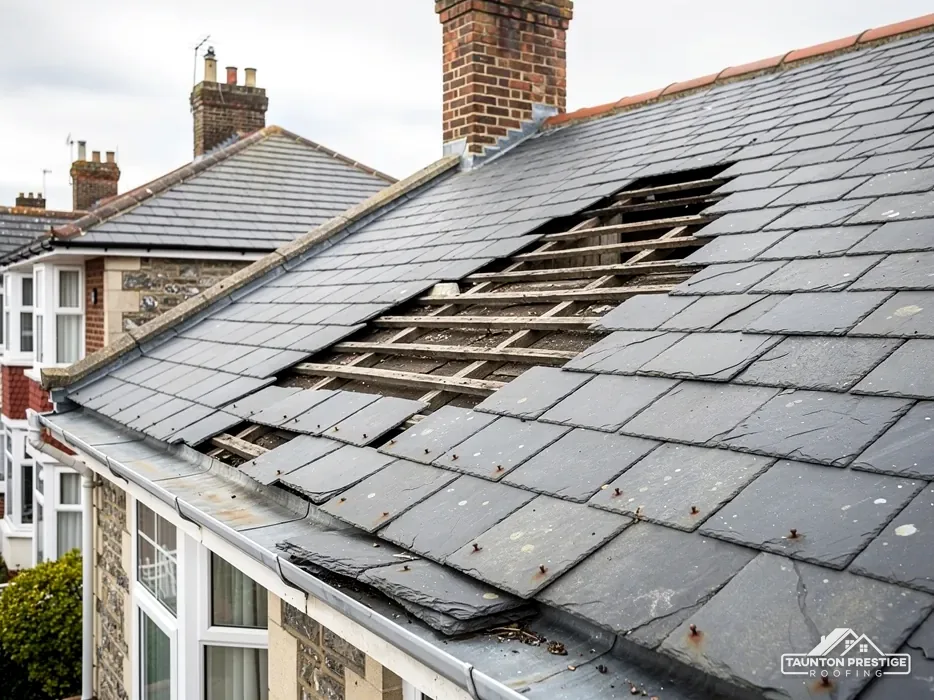
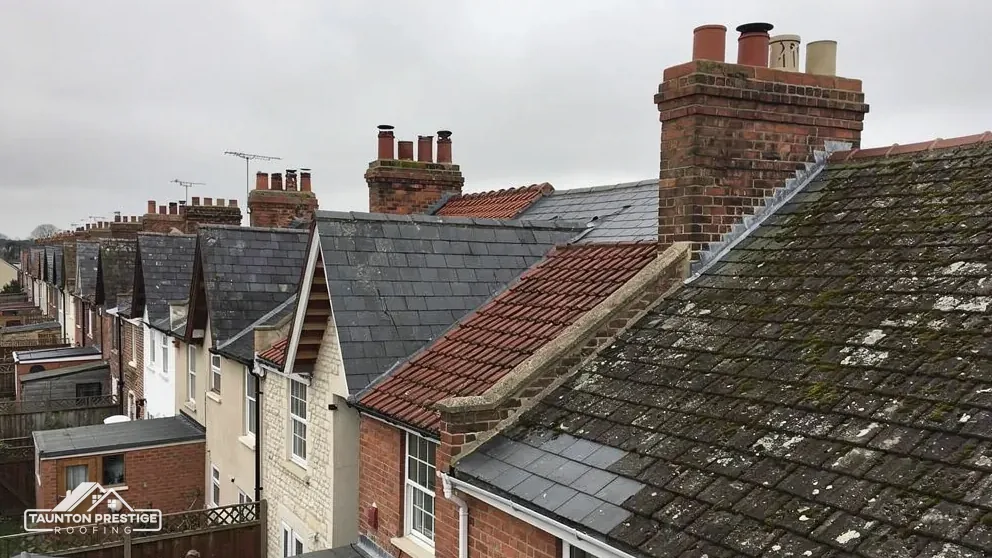
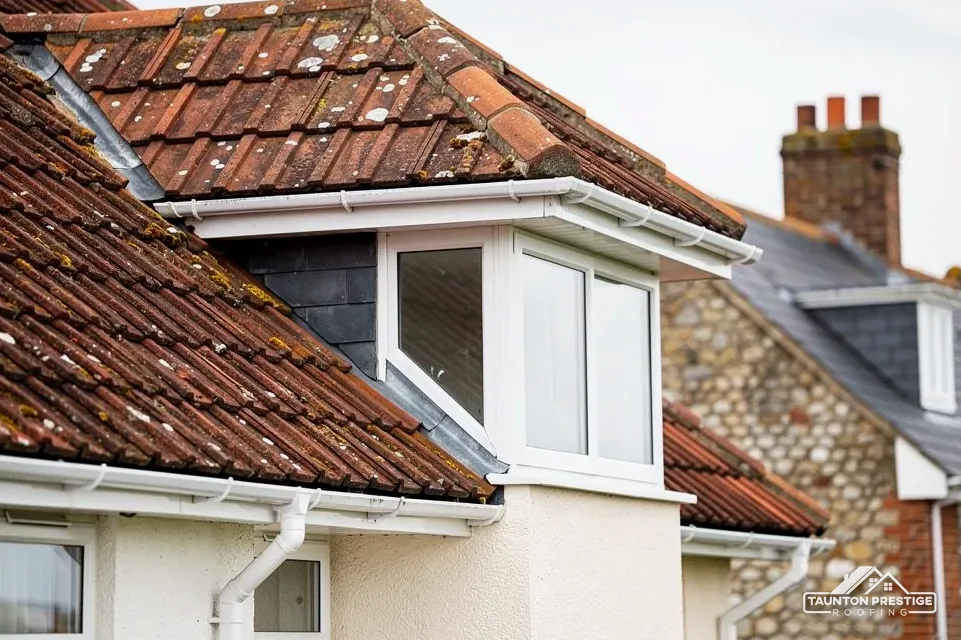
Green growth on a roof is not always a problem in itself, but it keeps damp pressed against the covering and can lift the edges of slates and tiles over time. It shows first on the slopes that dry slowest. A moss mat shows where the water is being held, and it often hides cracked or slipped pieces that you can only spot once it has gone. Heavy growth also blocks gutters when it falls, so a clear roof and a clear gutter go together, and the debris has to be taken away and not left on the lawn or in the downpipe.
What decides the price
We would advise against it. Marley's guidance is to avoid blasting a roof with a powerful jet, because a jet strips the weathered face from slate or tile and brings forward the day it needs replacing. Treatments are a second issue. HSE's line is that biocides sold for trade use only are not for householders, and using a product that has not been approved is an offence under the biocides rules. A roof that has been blasted is cleaner for a season and weaker for good.
Gentle removal by hand and soft brush, an approved treatment where it is needed, and a look at the roof underneath once it is clear. We note slipped, cracked or porous pieces as we go and report them with photos, because cleaning without repair only shows you the next job. Sometimes the roof turns out to be sound and the answer is a clean and nothing more; sometimes several pieces need replacing; and sometimes a whole slope is simply worn out. Knowing which before any money is spent is the reason for looking first. Our roof cleaning and moss removal page explains the approach.
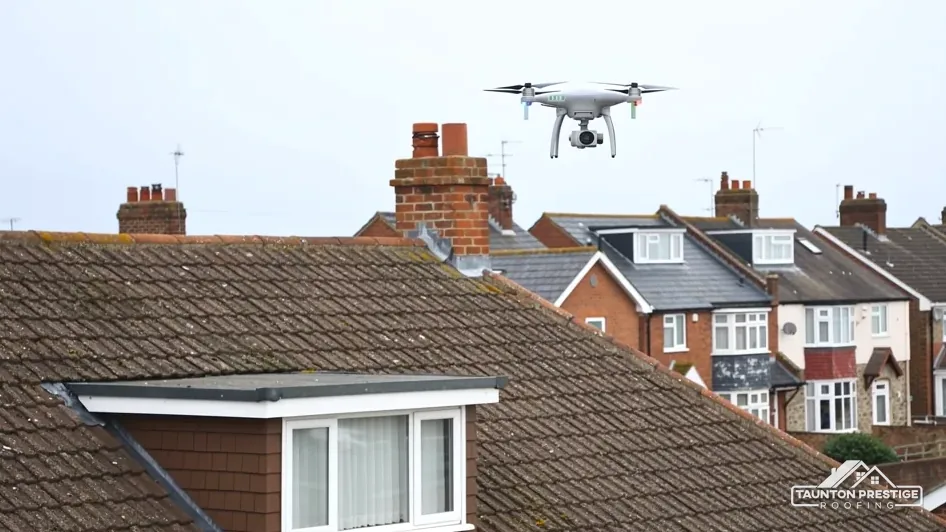
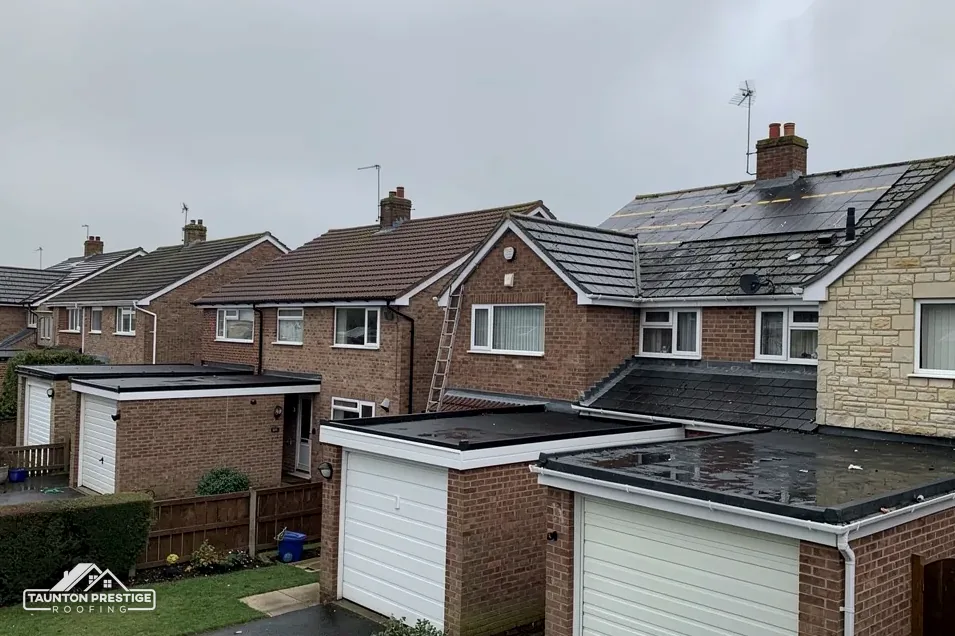
Stogumber lies principally on a slope where three roads converge to cross a stream, with the church on a prominent site south of the market place. That is a fine setting and an awkward one for access, since a house that is easy to see from the road may be hard to reach at the back. A ladder needs firm, level footing, and a scaffold tower or frame needs ground it can stand on without shifting. Where a garden falls away from the road, or steps and narrow plots limit the room, that changes what we can use, and the answer is different for each house. We assess it at the survey, with the ground in front of us, not from a map.
A hillside roof is only as safe as the ground its scaffold stands on.
Only if there is nowhere else for it. If it must, section 169 of the Highways Act 1980 means applying to the highway authority, and in Stogumber that is Somerset Council. Somerset Council licenses only accredited contractors for this, and the application has to come from the contractor named for the job, giving at least 10 working days' notice. A frame wholly on your own land is a different matter, and a minor repair may only need a ladder.
Because more time goes on getting people and materials to the roof safely. Carrying slates up steps by hand takes longer than lifting a pallet to a flat drive, and a scaffold on sloping ground takes longer to build and needs more levelling under each leg. Waste has to come down the same way, so the route out matters as much as the route up, and a skip placed far from the house adds to the labour. We tell you which method we expect to use, and why, before the price is set, and where a tower will do, we will tell you, because a scaffold you do not need is money spent on nothing.
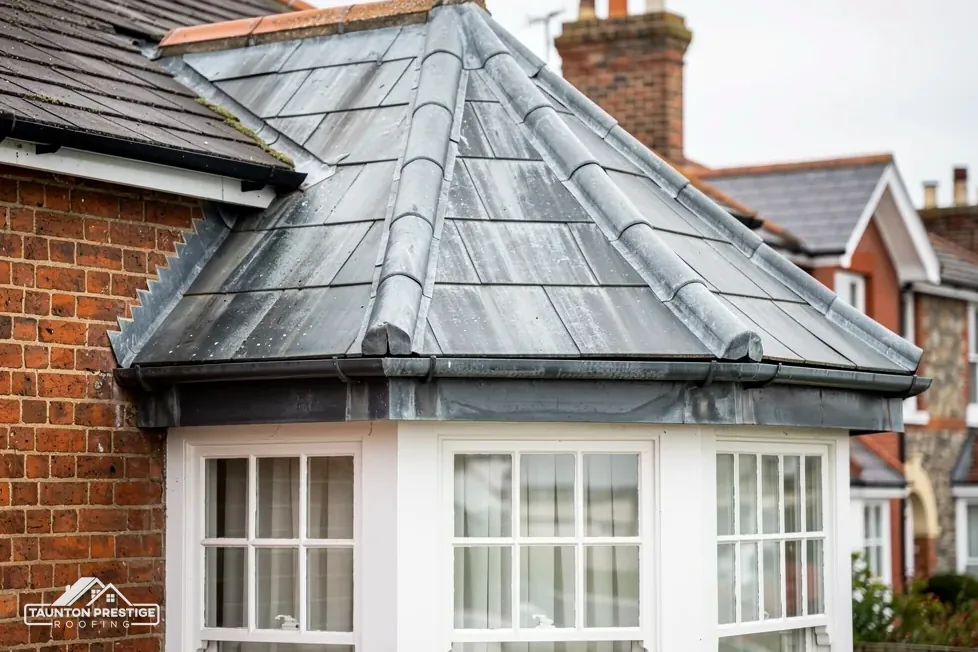
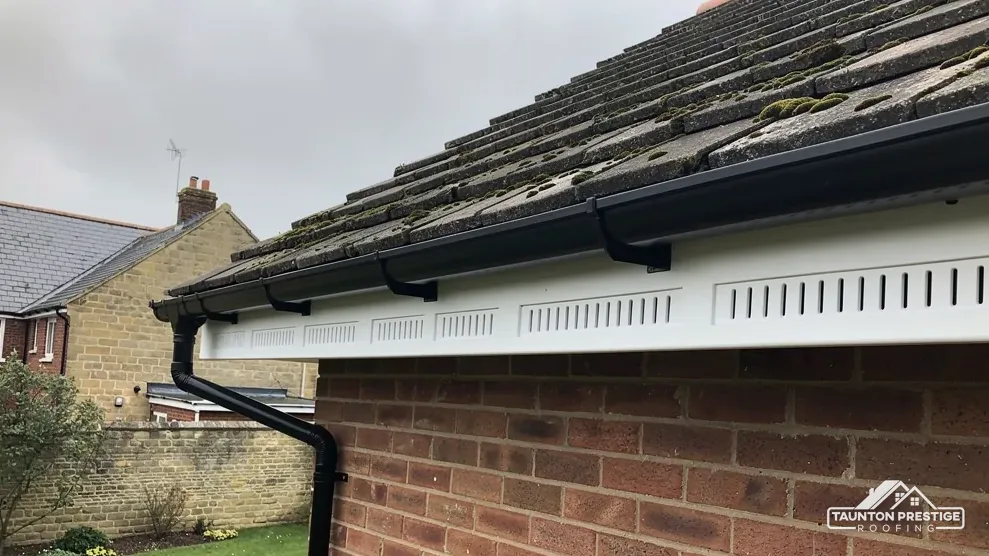
Eaves, gable ends and the gaps under old tiles suit birds, and some roofs shelter bats. Neither is a reason to leave a roof alone, but both can decide the start date, and a roofer who ignores them risks stopping work with half a roof open to the weather. At the survey we look for droppings, staining, nest material and gaps at the eaves, and we ask what you have seen in the evenings and in spring. What we find goes into the plan alongside the weather and the access, and you hear about it before any price is agreed.
What decides the price
Section 1 of the Wildlife and Countryside Act 1981 is aimed at anyone who intentionally interferes with a wild bird's nest in use or still under construction. GOV.UK adds that no licence is available for the purpose of development or construction. So the nest sets the timetable and the roofer works around it, which in practice means moving the start date by weeks and not days.
GOV.UK's bat guidance names roof repairs and re-roofing as work that can affect them, and it describes every species, plus its breeding and resting places, as fully protected. Two laws apply. The Wildlife and Countryside Act covers intentional or reckless disturbance, and blocking a way in, while the Habitats Regulations separately make damaging or destroying a roost or breeding site an offence. If signs point to bats we pause, and you take specialist advice before work goes ahead.
Usually time more than money, and it is far better settled at the survey than halfway through a strip. Scaffold bookings and weather windows are easier to move before they are fixed. Send your Stogumber address with a note of any nesting you have seen, and the survey date follows.
Walked the roof?
When you have read the checks, we walk the roof and show you the photos.
No. Grade I St Mary's remains in Anglican use, so its repairs are approved by faculty, and the approved specification governs the work. The village history records the chancel walls and roof painted in a William Morris style, so any repair has to respect it, and the parish takes that forward.
Gently. Marley advises against powerful jets, which can mark slate and tile, and HSE says trade-only biocides are not for householders. Removal by hand and soft brush, with an approved treatment where one is needed, protects the covering and exposes any damage the moss was hiding, so the repairs can be priced properly.
Possibly, and the answer depends on the house and its position. A roof window on the slope seen from the road changes how the roofline looks, which is what a conservation area cares about. Ask Somerset Council's planning team with your address first, and if the house is listed, listed building consent is a separate step.
We inspect the roof from the ground, a ladder or a tower as the house allows, and from the loft hatch, and we photograph every slope. Those photos come back to you with a plain account of what needs doing and one total written price. The survey comes first, and nothing starts until you agree.
Point us to the slope or the stain that bothers you and we will put a survey in the diary.