The Dunball tile works
Owned from 1886 by Colthurst Symons, it made up to 20,000 tiles a week early on and closed in 1970.
Dunball tile works, a Grade I church and the Polden slope
Puriton lies on the northern slope of the Polden ridge, with the Dunball tile works in its history and a Grade I church. We survey first and price second.
Owned from 1886 by Colthurst Symons, it made up to 20,000 tiles a week early on and closed in 1970.
The west tower has a pyramid roof and the chancel was rebuilt in 1489. Listed on 29 March 1963.
The gateway to Puriton Manor and Manor Farmhouse are both Grade II, among four listed entries within 500 metres.
Street map of Puriton with Pawlett, Woolavington, West Huntspill, East Huntspill marked around it, and Taunton.
Pawlett lies north-west of Puriton, with Woolavington to the east, West Huntspill to the north, Bridgwater to the south-west and Cannington further west.
About 12 miles north-east of Taunton, Somerset Council (unitary).
Four checks beside the Polden ridge
Tile matching, pitch, water and licences, taken in four stops, with what each does to the quote.
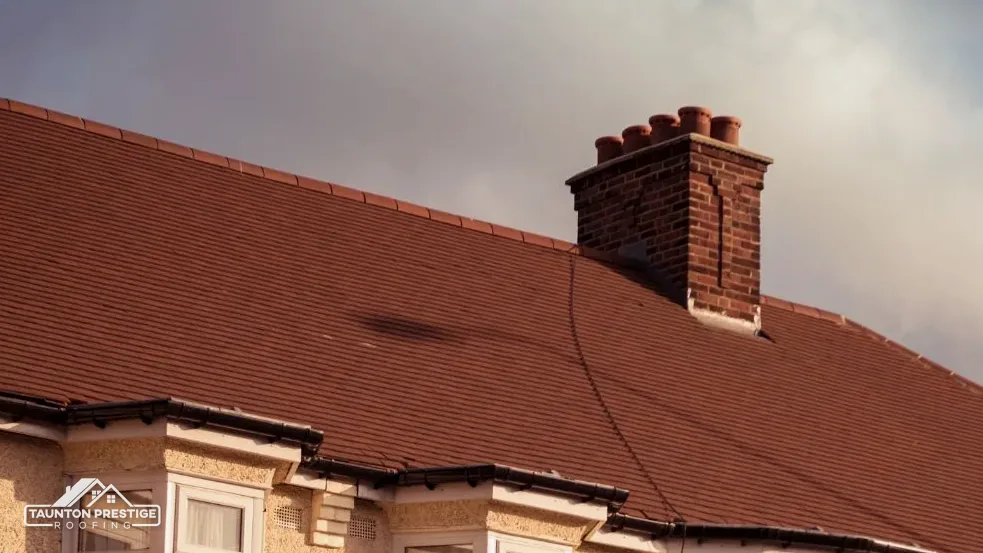
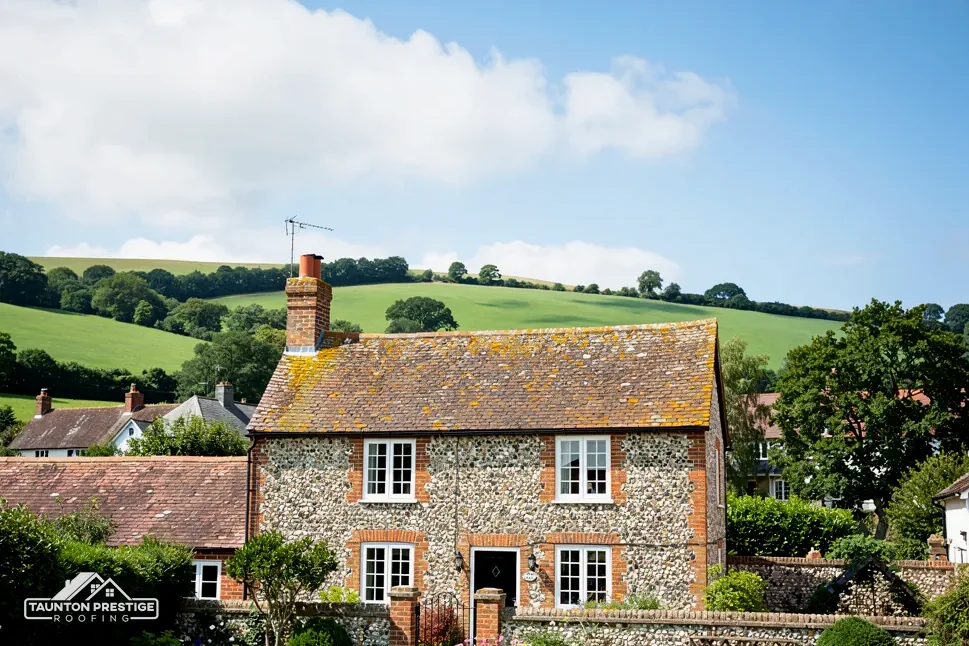
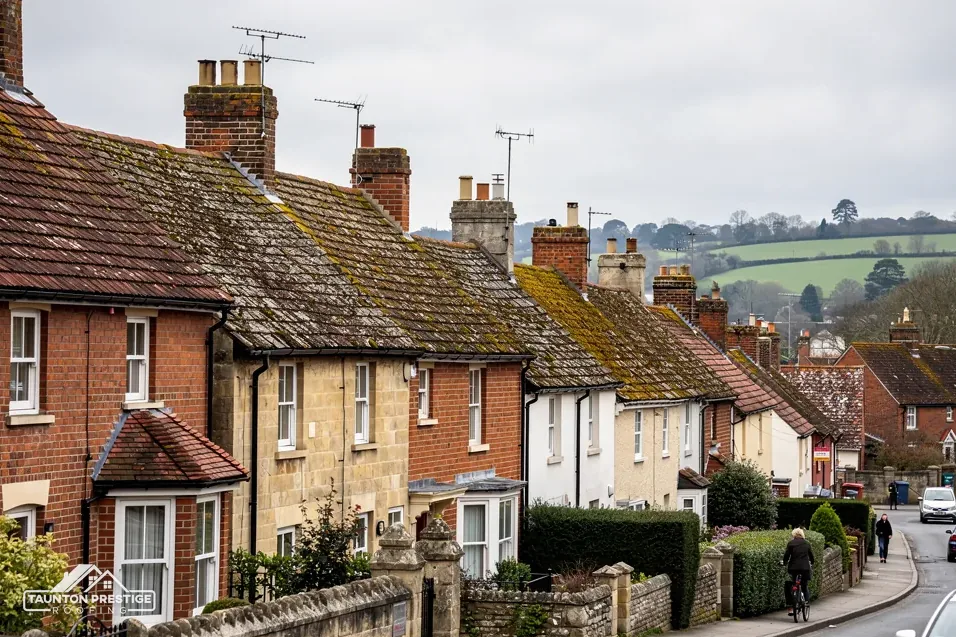
Roof tiles have local roots here. Stone for roof tiles was quarried in Puriton in the early 16th century, and quarrying went on in the south of the parish until the 19th. The Dunball Steam Pottery and Brick and Tiles Works, owned from 1886 by Colthurst Symons, produced as many as 20,000 tiles a week in its early years, and was the last works of its kind in the area when it closed in 1970. None of that tells us what is on your roof until we look at it. A survey here treats the tile as something to identify, never to assume.
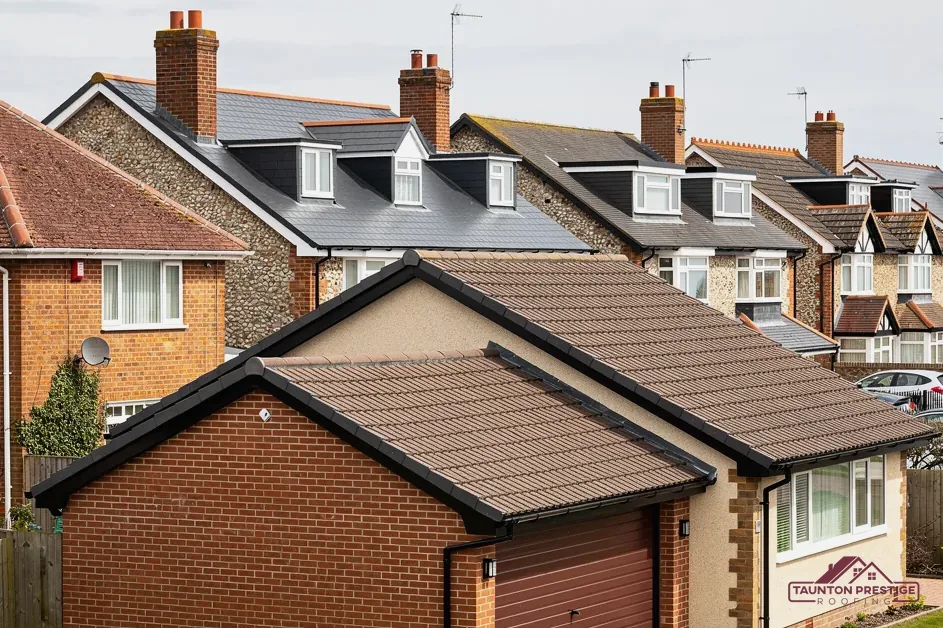
By the profile, the thickness, the colour right through the tile and the nail holes, checked against the pitch of the slope. Plain tiles are small and flat, pantiles are S-shaped, and a Double Roman has two rolls and a flat panel. Marley says the BRE minimum life of 60 years is a figure for clay only, and for old hand-made peg tile one conservation source calls it clearly not a reliable guide. Concrete tiles are quoted at around 60 years, with no guarantee attached.
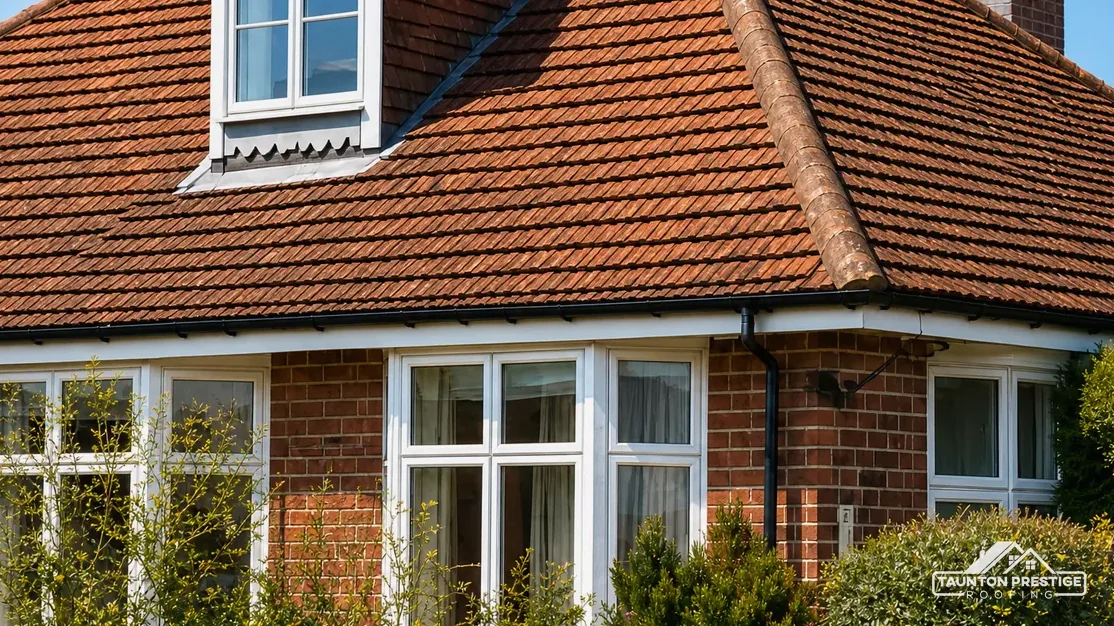
Sometimes with a reclaimed tile, sometimes with a new clay one close in colour and profile. The South West Heritage Trust notes that Bridgwater made a wide range of bricks, tiles and terracotta wares, and that those products gave many Somerset towns their look, so matching is a real craft here. A tile that looks right from the ground can be a different thickness underneath, and a thicker one lifts the course above it and lets the wind in. If the house is listed, ask Somerset Council before anything is swapped. Our page on pitched roofing covers the options.
Look for
Every tile has a minimum pitch, the slope angle below which rain can be driven back up beneath it. Marley's table gives some examples. Its concrete Double Roman needs 22.5 degrees (smooth), its Mendip 15 and its Ludlow Plus 22.5. Its clay Canterbury needs 40, Ashdowne 35 and the Lincoln pantile 15. The data sheet for the actual product always governs, so these are examples, not a rule for your roof. The top of the slope has its own rule too. Marley says that after the 2014 revision of BS 5534 mortar's tensile strength by itself can no longer be relied on, so bedded ridge and hip tiles are also fixed mechanically. MyJobQuote (Oct 2026) gives £225 to £550 for replacing ridge tiles, a typical UK range.
A tile can suit the colour of a roof and still be wrong for its slope.
What decides the price
A replacement tile has to suit the slope it goes on. One with a higher minimum pitch than the roof will let in water in a driving wind. Where an old roof has been altered, such as a low-pitched extension joined to a steeper main roof, the lower slope may need a different covering from the rest. We measure the slope at the survey and say what the product sheet allows. A tile that is only a shade out of line with its neighbours is a cosmetic matter; a tile that is wrong for the pitch is a leak waiting for a south-westerly.
MyJobQuote (Oct 2026) gives typical UK ranges of £150 to £200 for 5 tiles, £200 to £275 for 10 to 20 tiles, and £3,000 to £8,000 for a full re-tile of 80 square metres. HomeBuilding (Sep 2025) gives £10,000 to £15,000 for a new roof on a three-bedroom semi tiled in plain concrete, with labour, scaffolding and insulation included. The two guides differ widely, and the gap is mostly scope. Our roof replacement page explains how a re-roof is staged.
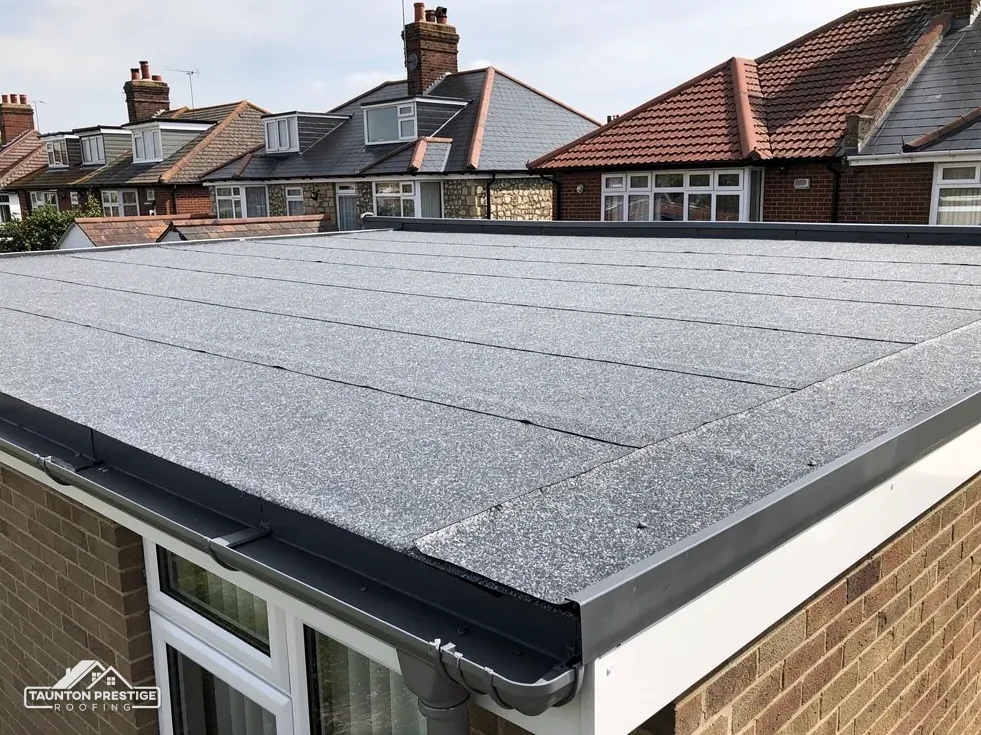
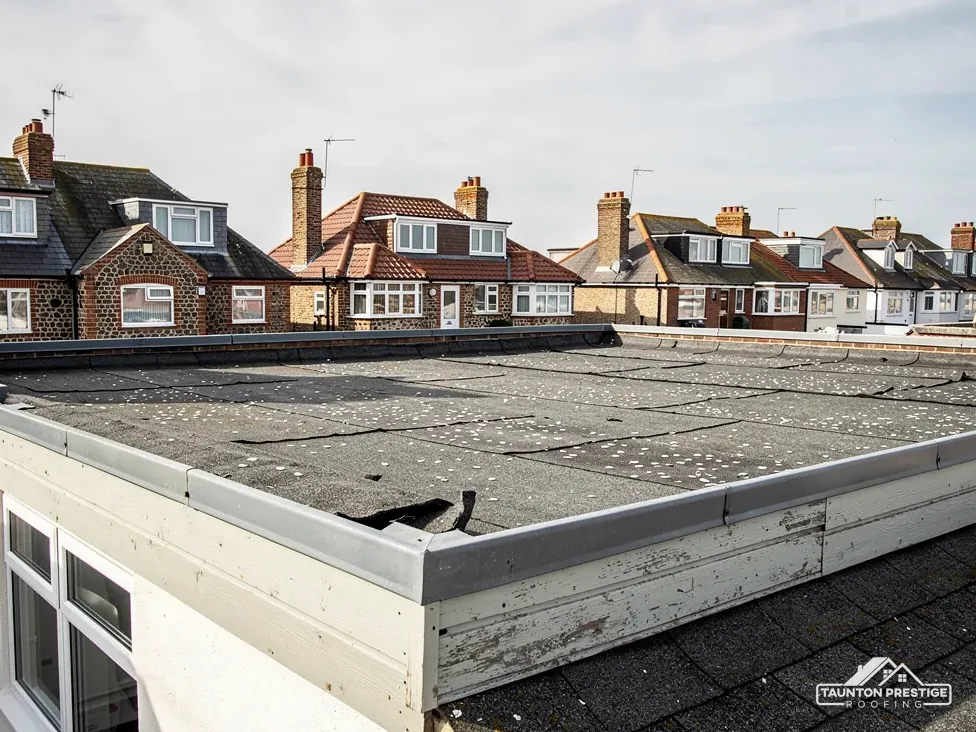
Environment Agency zone data places Flood Zone 3 within about 250 metres of the centre of Puriton. That describes land and is not a verdict on any roof. GOV.UK's Check for flooding shows live warnings, and its Check your long term flood risk covers your own address. A flat roof over a garage or extension has a plainer job, which is to shed rain through a gentle fall to an outlet that stays clear.
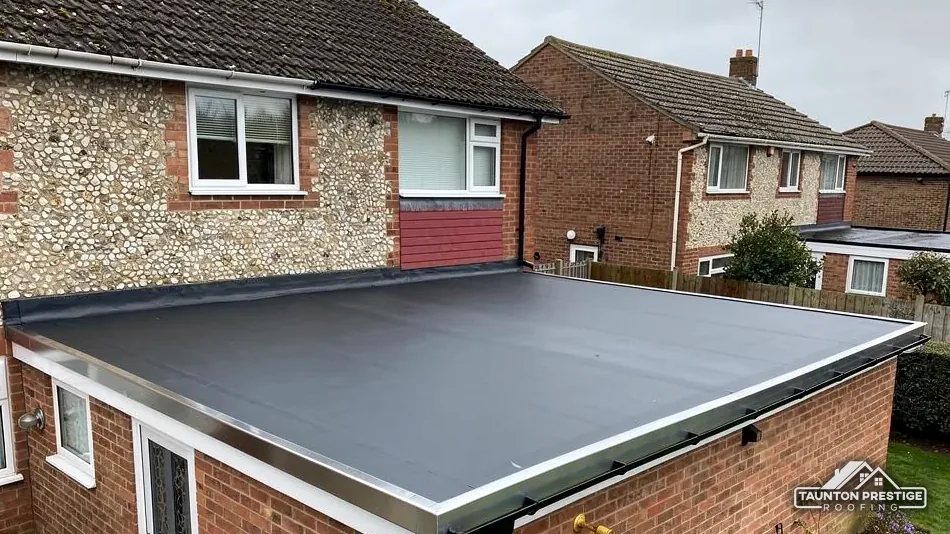
BS 6229:2025 covers flat roofs of up to 10 degrees pitch and keeps a finished fall of 1:80. EPDM, a synthetic rubber sheet, is given 20 to 30 years by GreenSpec and 30 to 50 by Less. Less puts GRP at 25 to 40 years and torch-on felt at 10 to 20, and warns that workmanship decides whether felt reaches 20 years or fails inside 10. Under Approved Document L, relaying a flat roof's waterproof layer is renovation work, so insulation standards may apply.
It can be. MyJobQuote (Oct 2026) gives a typical UK range of £750 to £3,500 for a garage roof, averaging £1,500, and the felt, EPDM or GRP you choose moves it within that. See our flat roofing page for how the coverings compare.
The edge of a flat roof is its roofline, and the gutter there needs a fall of its own: Brett Martin's fitting guide asks for 1mm for every 600mm of run. Fascias and soffits get the same scrutiny. MyJobQuote (Sep 2026) gives around £800 as the average for capping them, a typical UK figure. Soffit boards put up before 2000 may be asbestos insulating board, which HSE says is hard to tell from its non-asbestos lookalikes. Taking it out can be licensed work, depending on HSE's risk assessment rules, so that question comes before any board is touched.
A ladder or tower reaches plenty of repairs here. A re-roof asks for more. Where scaffold must sit on a road or footway, section 169 of the Highways Act 1980 requires a licence. Somerset Council, the highway authority here, gives scaffold permits to accredited contractors, and the appointed one files the application. The fee is £124.60 per 28-day period (April 2026), with at least 10 working days' notice.
What decides the price
Under CDM 2015, a homeowner is a domestic client, and where one contractor does the work the client's duties pass to that contractor. With more than one contractor involved, regulation 5 requires the client to appoint both principal roles, designer and contractor, in writing. Every project, large or small, needs a construction phase plan. Ask your roofer to show you theirs before the first day on site, since it sets out how the job will be run safely.
The standard VAT rate is 20% (GOV.UK), so confirm the figure includes it, and that it includes scaffolding. Nesting needs a look as well: the Wildlife and Countryside Act 1981 protects a nest that is occupied or under construction from intentional destruction, so work at the eaves waits until the birds have finished. By the Planning Portal's test, a re-roof stays outside building control while below 25 per cent of the building envelope and below 50 per cent of the roof is in play. A heavier covering brings in approval, as our answer on heavier roof tiles and Building Regulations explains.
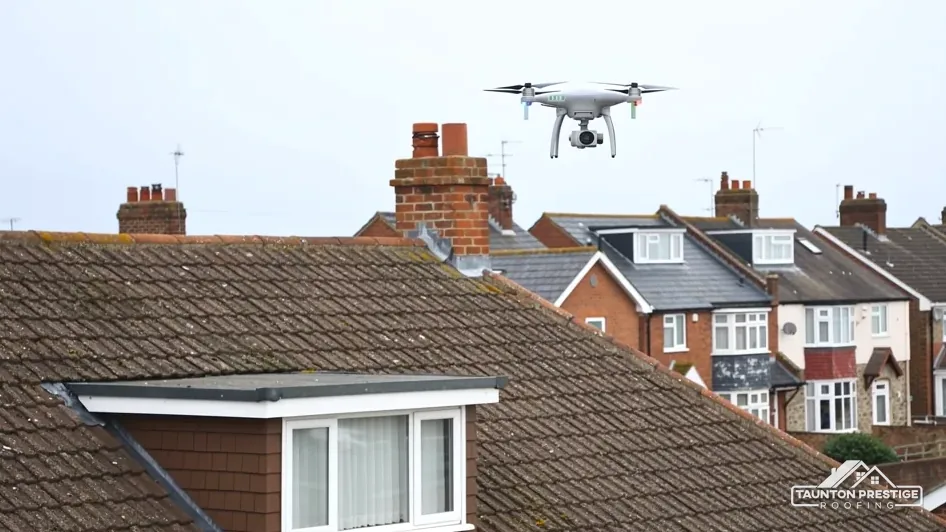
Once surveyed, your roof comes back to you in pictures, with a single price in writing. Tell us what covers your Puriton roof and where the water gets in, and we will arrange a time.
Walked the roof?
When you have read the checks, we walk the roof and show you the photos.
Ask for a survey with photographs. We look at the profile, thickness, colour through the tile and the pitch, then compare them with known types such as plain tile, pantile and Double Roman. The Dunball works made tiles locally, but that history cannot tell you what yours are. Only the roof can.
Because St Michael's is listed Grade I and still a parish church, its tower roof falls under the faculty system, and the council's listed building consent is not involved. The parish applies for the faculty, and the roofer builds to the specification it approves, whether the work is lead, stone slating or something else.
Marley gives its concrete Double Roman a minimum pitch of 22.5 degrees (smooth). Other tiles differ, from 15 degrees for some pantiles to 40 for a clay Canterbury, so always check the product data sheet. A tile laid below its minimum pitch can let rain blow under it, even when the roof looks tidy from the road.
Yes, if it is 15 per cent or more heavier, according to the Planning Portal, which also recommends getting structural advice first. Somerset Building Control, on 0300 303 7790, covers the former Sedgemoor district, so ring it before ordering tiles if the weight will change.
Tell us what covers your Puriton roof and where it worries you, and we will set a date.