Withy and New roads farmhouses
The Victoria County History records brick-and-tile farmhouses with catslide roofs, built on common land edges before 1783.
Catslide farmhouses and listed houses beside the tidal Parrett
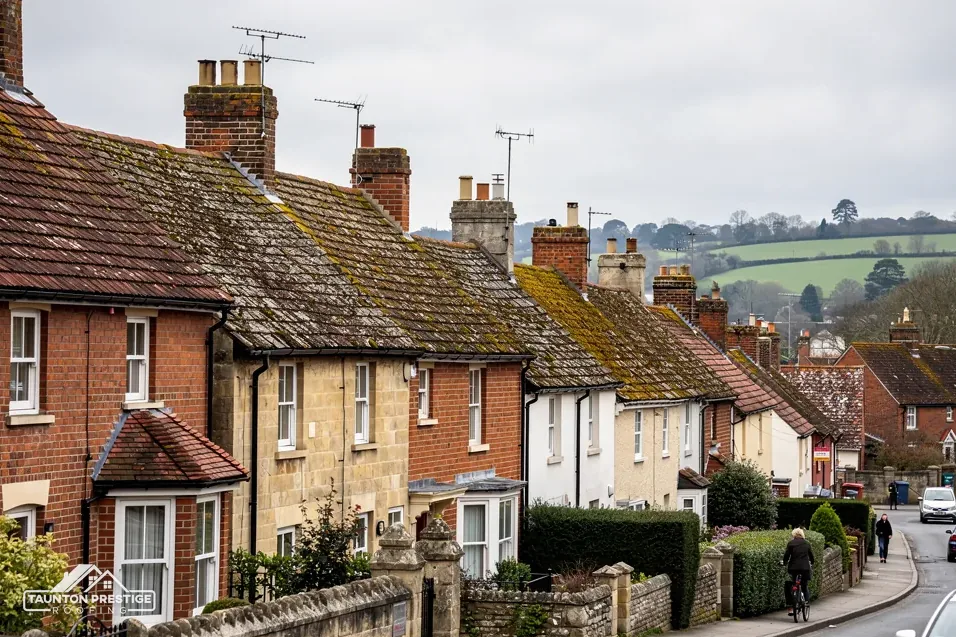
West Huntspill's older farmhouses were built at the edge of common land before inclosure in 1783, and Former Plymor Hill Farmhouse is listed Grade II.
The Victoria County History records brick-and-tile farmhouses with catslide roofs, built on common land edges before 1783.
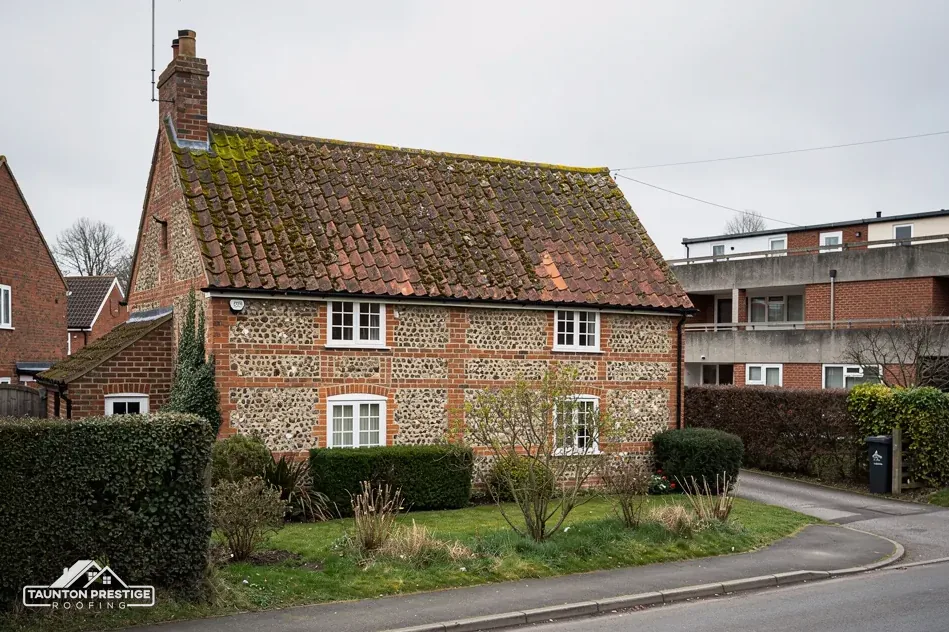
Greenwood House, Huntspill House, Mulberry Farm and Alstone Court appear to have been rebuilt in the earlier 19th century.
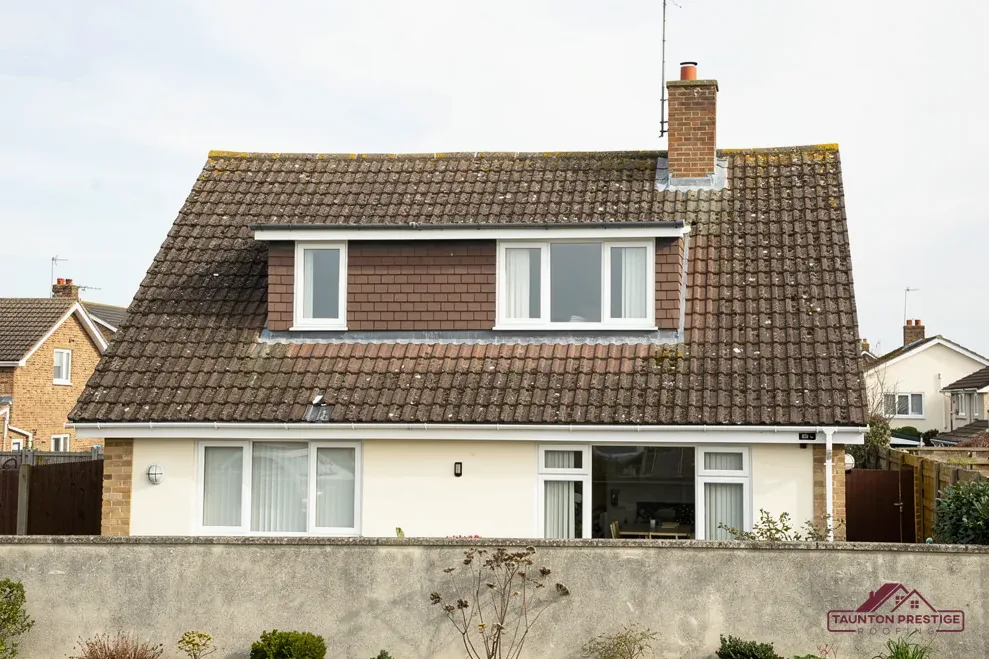
Former Plymor Hill Farmhouse was listed Grade II on 24 February 1987, so changes to its roof need consent.
Street map of West Huntspill with Highbridge, Pawlett, East Huntspill, Burnham-on-Sea marked around it, and Taunton.
Woolavington lies to the south-east, with East Huntspill to the east, Pawlett to the south-west, Puriton to the south and Brent Knoll north-east across the levels.
About 14 miles north of Taunton, Somerset Council (unitary).
Four checks on the levels
Four things we look at on farmhouses, cottages and outbuildings beside the tidal Parrett, and how each one shifts the work.
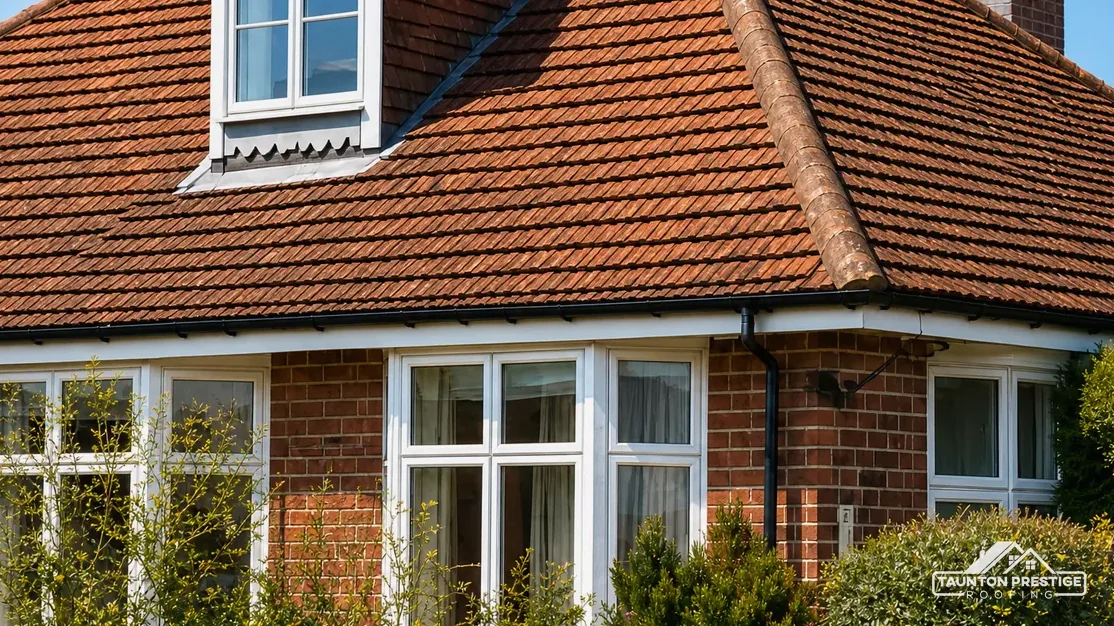
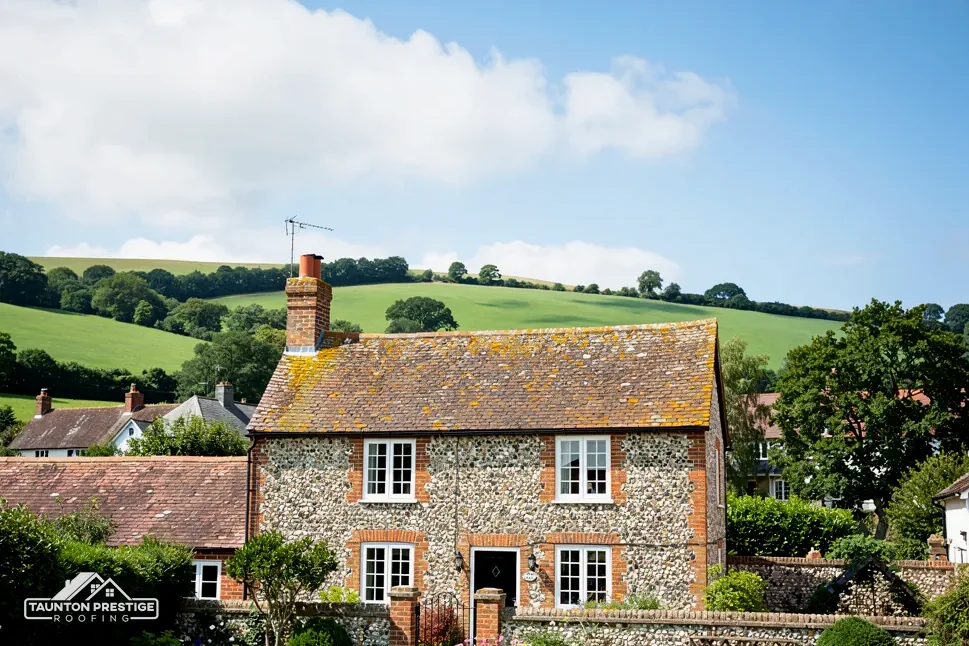
West Huntspill's older farmhouses stand back from the main road and along Withy and New roads, built on the edges of common land before inclosure in 1783. The Somerset volume of the Victoria County History (volume 8, 2004) describes brick-and-tile houses with catslide roofs there. A catslide is a roof whose main slope carries on, unbroken, down over a lower part of the house such as a back kitchen. Farmhouses in the village itself seem to have been rebuilt in the earlier 19th century, among them Greenwood House, Huntspill House, Mulberry Farm and Alstone Court.
Because one long slope has to do the work of two. Where it meets the wall of the main house, that junction gets sealed by flashing, a strip of metal lapped under the covering and up the brickwork, and every such junction is a place water can get in. We walk the slope from ridge to eaves, noting the pitch, the fixings and the battens (the laths the tiles hang from) before anyone suggests a patch or a re-roof. A slope that long also carries a long run of gutter, so the brackets and the fall get checked in the same visit.
MyJobQuote gives £3,000 to £8,000 as a typical UK range for re-tiling 80 m² (Oct 2026), and HomeBuilding puts a new roof for a three-bed semi of 65 m² in plain concrete tiles at £10,000 to £15,000 with labour, scaffolding and insulation (Sep 2025). A farmhouse roof is larger and more broken up than either, so neither figure stands in for a survey. Our roof replacement page explains how the decision to strip or repair gets made.
Former Plymor Hill Farmhouse is listed Grade II, as are Huntspill Court and Ilex House, so any change to their roofs goes to Somerset Council first.
Look for
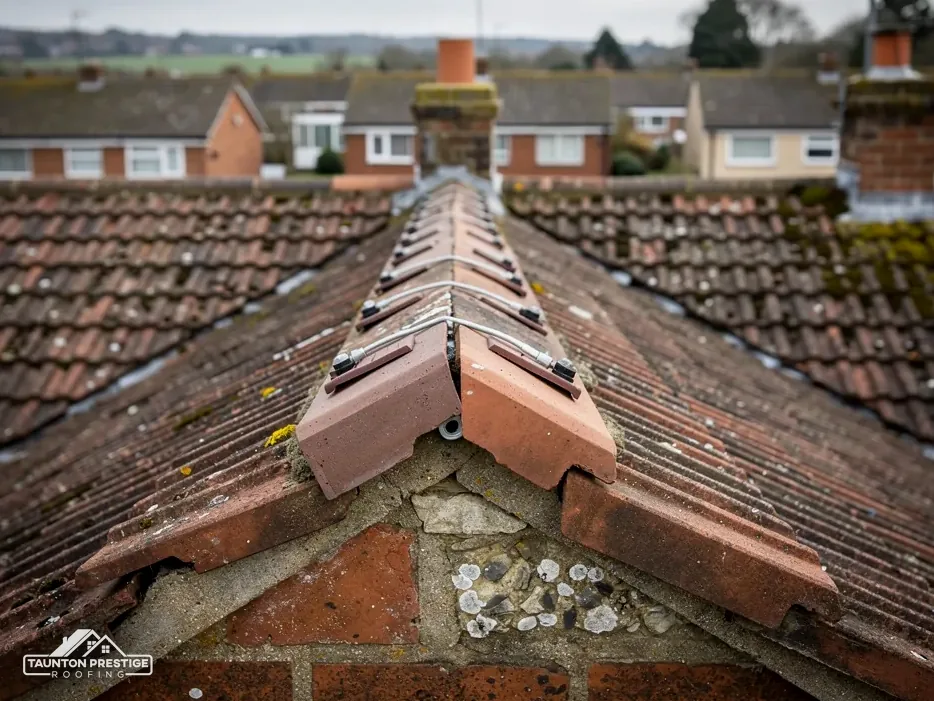
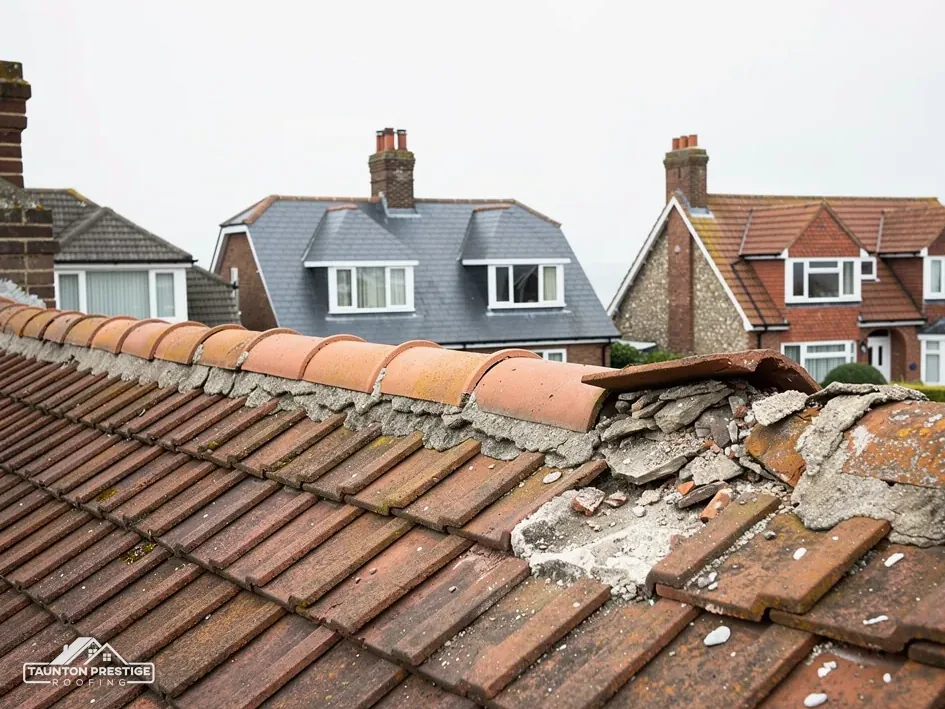
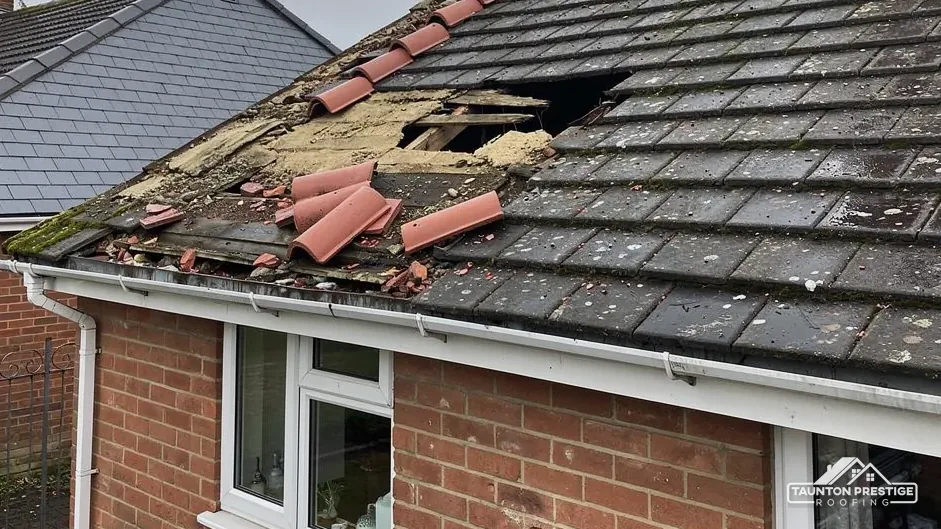
When a storm takes tiles off in the night, the order of events matters more than speed. Water has to be stopped first, and for us that means a temporary make-safe with sheeting or a patched covering so nothing gets worse. The paperwork comes after.
What decides the price
Tell your insurer first, photograph the damage from the ground and keep every receipt. Photos are your evidence, as IStructE's storm advice stresses. For the Financial Ombudsman a storm normally brings violent winds, commonly with rain, hail or snow, which is a useful yardstick against ordinary bad weather. It can take up a complaint once your insurer has gone eight weeks without a final response letter, and when a final response does arrive you have 6 months from its date. The insurer decides the claim. We write down what we find and give you photos to send, and we keep our own notes of any temporary repair so the receipts match.
MyJobQuote's guide shows a typical UK range of £150 to £300 for an emergency call-out, with storm repairs reaching £1,200 or more (Oct 2026). The gap between those figures is the point: a call-out stops the water, and the repair that follows depends on what the storm did. A ridge that rocks, a hip tile that has slid or a line of missing slates each calls for a different fix, and we set them out after the survey.
Ridge tiles, the row that caps the very top of the roof, are among the first pieces a gale loosens. Since BS 5534 changed in 2014, mortar alone no longer counts as enough to hold them, so a ridge bedded again is also fixed mechanically. If it is dark or wet when you call, we say what can wait for daylight and what cannot. Water is stopped first with a temporary cover, and the lasting repair is planned once the timbers can be inspected properly.
On the Environment Agency's planning flood map, the centre of West Huntspill falls in Zone 3. GOV.UK reports that 18% of Somerset sits below the average tide level, and the Environment Agency operates 21 permanent pumping stations on the Somerset Levels and Moors. The Huntspill River is a man-made channel begun in 1940, serving as both drain and reservoir. None of this describes your roof, and GOV.UK offers a postcode-based long-term flood risk check.
A roof cannot change the ground it stands on, but its gutters decide where the rain goes next.
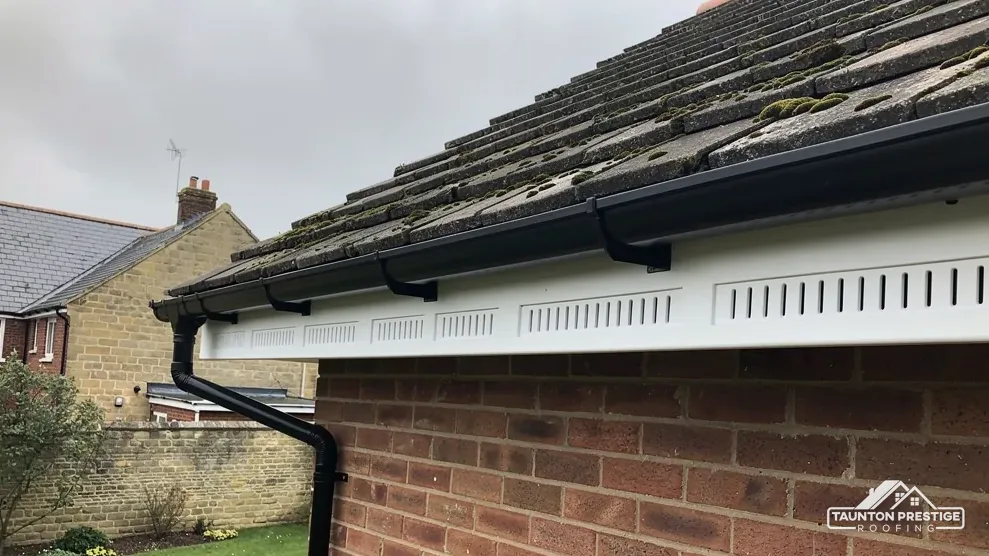
A West Huntspill roof can at least clear its own rain fast, through the gutters, the downpipes and the drain connections beneath them. Brett Martin's guidance for fitting gutters asks for 1mm of fall in each 600mm, slight enough that one sagging bracket upsets it. MyJobQuote puts replacing gutters at £1,000 to £1,600 as a typical UK range (Oct 2026), and capping fascias and soffits comes in around £800 (Sep 2026). The fascia board carries the gutter, and the soffit panel closes the gap beneath the overhang. Both rot when overflow soaks them. Our gutters, soffits and fascias page sets out the choices.
Look at the gutter above it. Silt in an outlet, a cracked joint or a downpipe hanging loose will soak one stretch of West Huntspill wall while the rest stays dry. Ten minutes at the window during a downpour costs nothing and often finds the cause, whether that is a gutter that has dropped or an outlet that has silted up. Soft ground at the foot of a wall changes how we set up, too: ladders and towers need firm footing, and boards go down where the soil is wet.
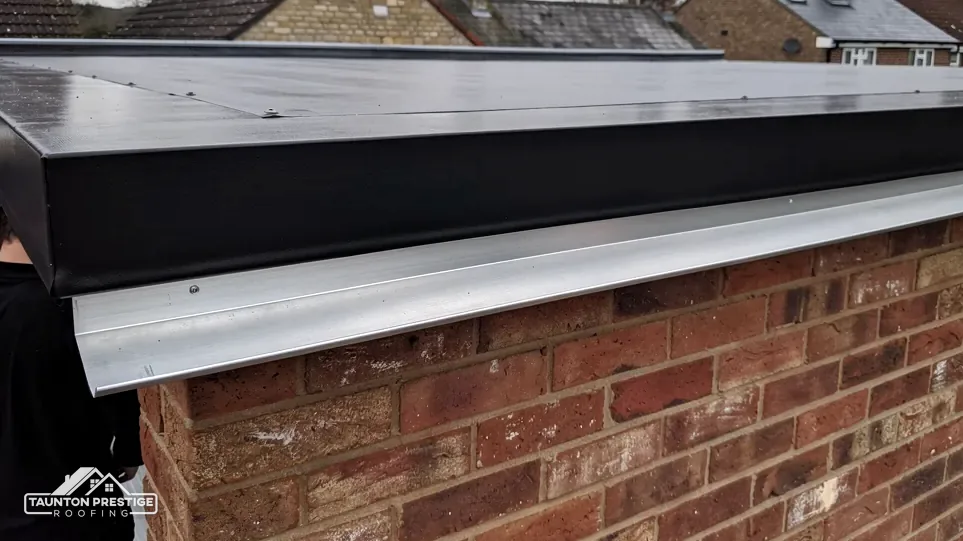
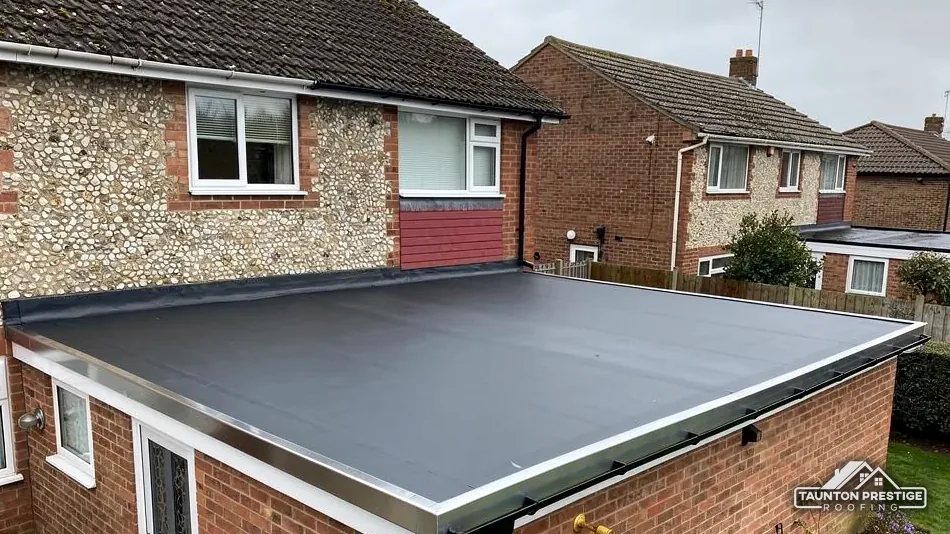
A flat roof over an extension or porch sheds water through outlets of its own, and BS 6229:2025 keeps a finished minimum fall of 1:80 for these.
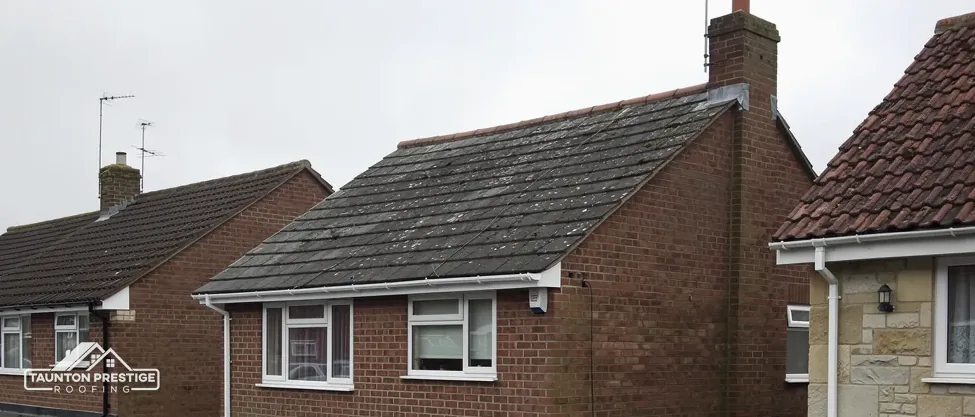
Farms, garages and sheds around West Huntspill may carry cement sheet roofs, and some of that sheeting contains asbestos. For anything built or refurbished before 2000, HSE advises assuming asbestos is there. Careful removal of asbestos cement sheeting, kept whole and not broken up, stays non-licensed work. If the sheets are substantially broken up, HSE classes the job as notifiable non-licensed work, and an asbestos cement roof is always fragile, so nobody should climb onto one. Even where a shed roof is only a few sheets, we look at the purlins, the horizontal timbers that carry the sheets, before saying how the work should go. Waste goes out on a hazardous waste consignment note, never in a skip. MyJobQuote gives an average of around £2,750 for asbestos roof removal (Sep 2026), with a survey at around £325. Our garage and asbestos roofs page covers what the work involves.
What decides the price
Only where the scaffold reaches the public highway. Section 169 of the Highways Act 1980 requires a licence for that, and West Huntspill's highway authority is Somerset Council, which grants permits to accredited firms only, leaving the appointed contractor to apply. The cost is £124.60 for each 28-day period (April 2026), with at least 10 working days' notice. Our guide to the Somerset scaffold licence goes into the process.
Under 50 per cent of the roof, plus under 25 per cent of the building envelope, is the Planning Portal's pair of tests. Fit a covering 15 per cent or more heavier and Building Regulations approval is needed.
Send us the farm lane or road and a note on the outbuilding, and a survey day gets arranged. Photos of your own roof reach you first, and finally one price, in writing.
Walked the roof?
When you have read the checks, we walk the roof and show you the photos.
Often, if the battens and the lower courses are sound. We work along the slope, replacing slipped or cracked pieces and checking where the roof meets the main wall. If fixings are failing along its whole length, relaying that slope is the better buy, and the survey photos will show which case yours is.
Yes, where the work would change the house's character: that needs listed building consent from Somerset Council. Like for like is the straightforward case, while a different covering, ridge or roof window needs asking about first. Somerset Council's planning team can say what a particular change requires, and we record the present covering so they can see it.
Not on a whim. Asbestos cement sheets are fragile and may contain asbestos if the building dates from before 2000, so the roof needs inspecting before anyone walks on it. Careful removal without breaking sheets is non-licensed work, but broken sheets change the rules. We check the material first and plan around it.
At the end of each working day we close the roof with whatever covering or sheeting suits the weather. Where a storm has already opened a slope, we make it safe first. Waste leaves with us, and the plan for each day is explained beforehand, so you know what to expect from the crew and when.
Give us your farm lane and the damage you can see, then we pick a visit date.