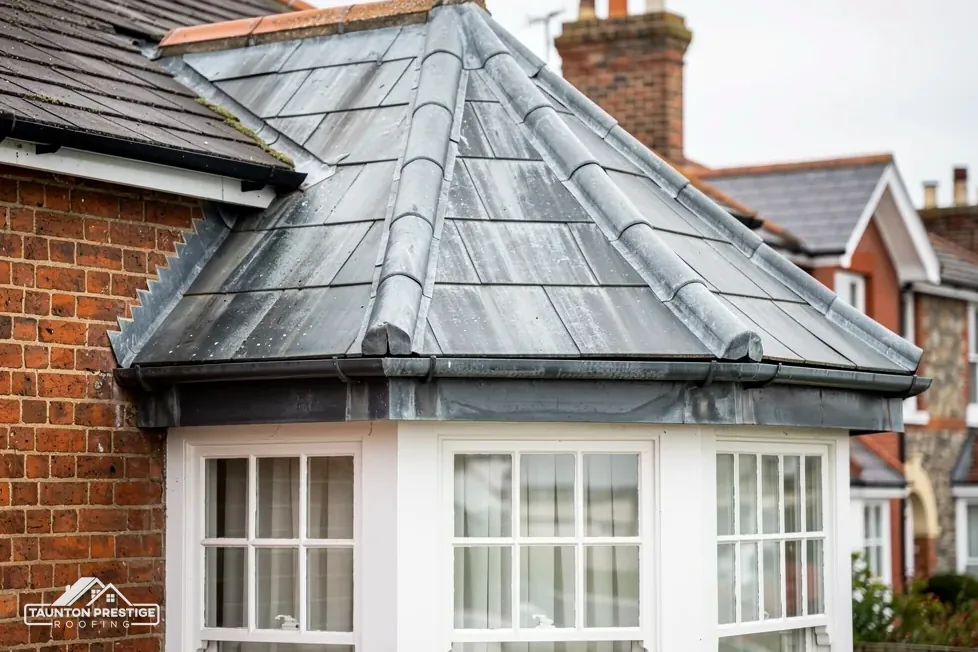
St John's church, Grade I
A 12th-century nave and a roof with decorative lead guttering, probably 19th century. Listed 29 March 1963.
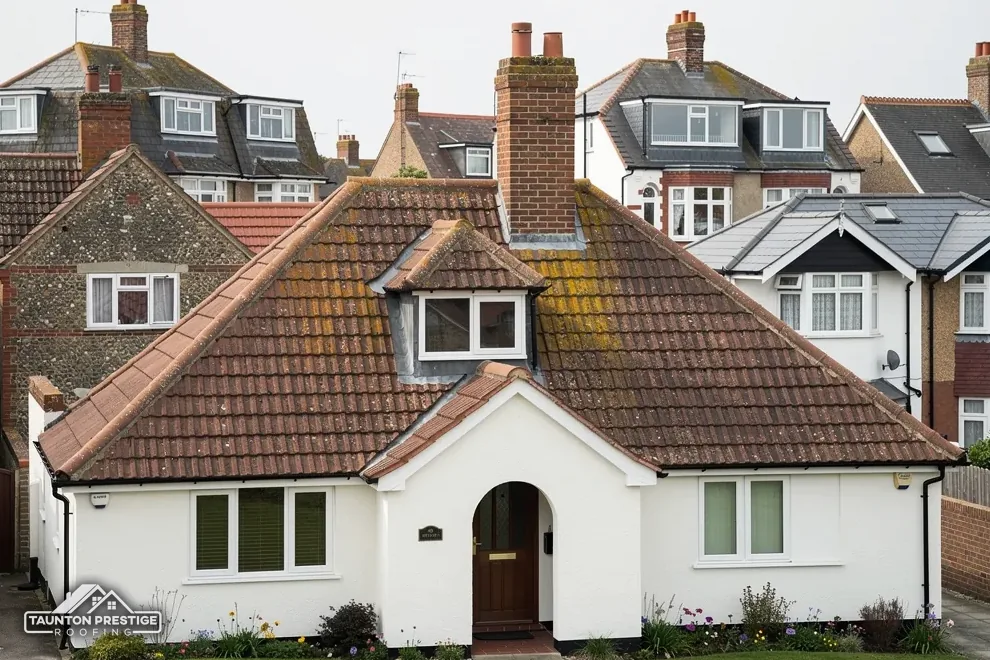
Hill village over the Parrett: Grade I church, brick infill
Pawlett stands on a low lias hill above the Parrett levels, with a Grade I church whose roof has lead guttering. Photos come before any price.
A 12th-century nave and a roof with decorative lead guttering, probably 19th century. Listed 29 March 1963.
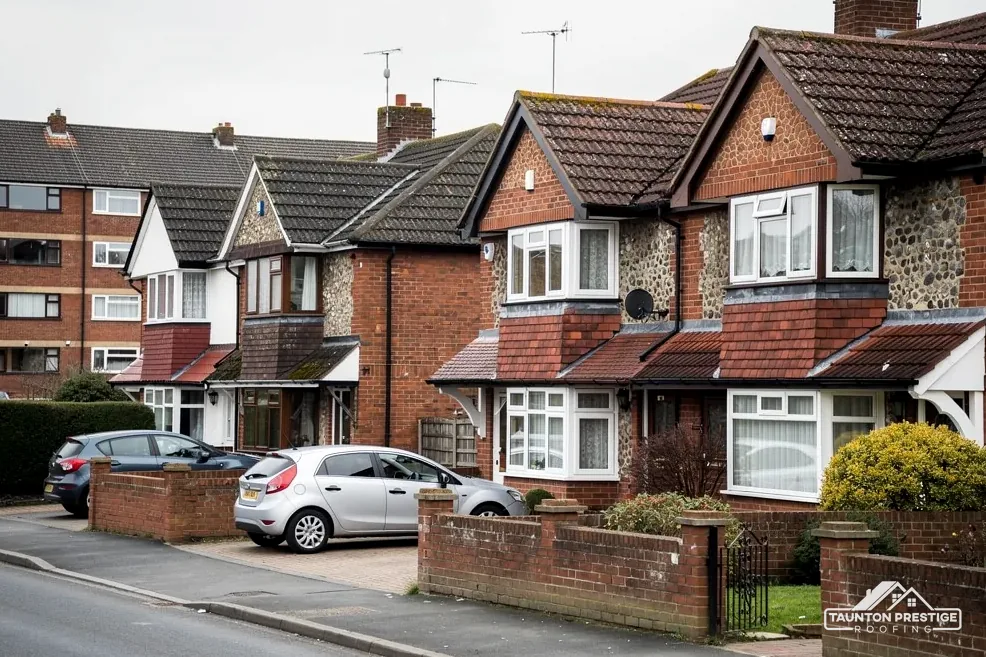
Pawlett Hill is a low outcrop of Lower Lias clay and limestone, ringed by alluvium and marine sands.
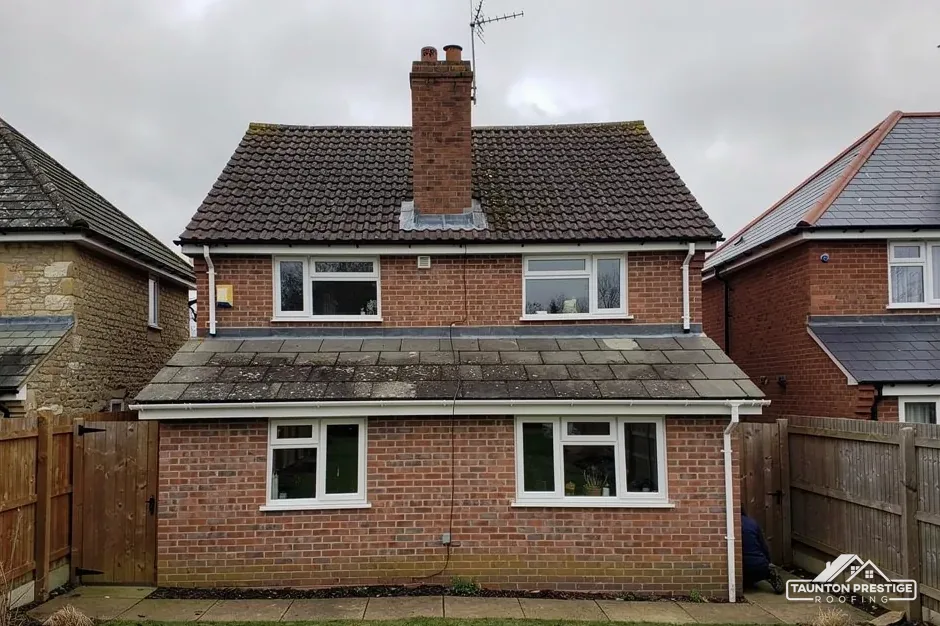
Much of the historic centre was infilled, partly with local authority housing and largely in brick.
Street map of Pawlett with Puriton, West Huntspill, Highbridge, Woolavington marked around it, and Taunton.
Puriton lies south-east of Pawlett, with West Huntspill to the north-east, Woolavington to the east, Cannington to the south-west and Bridgwater to the south.
About 13 miles north of Taunton, Somerset Council (unitary).
Four checks above the Parrett levels
Lead, roofline, storm records and access: four stops on a hill village roof, and what each does to the price.
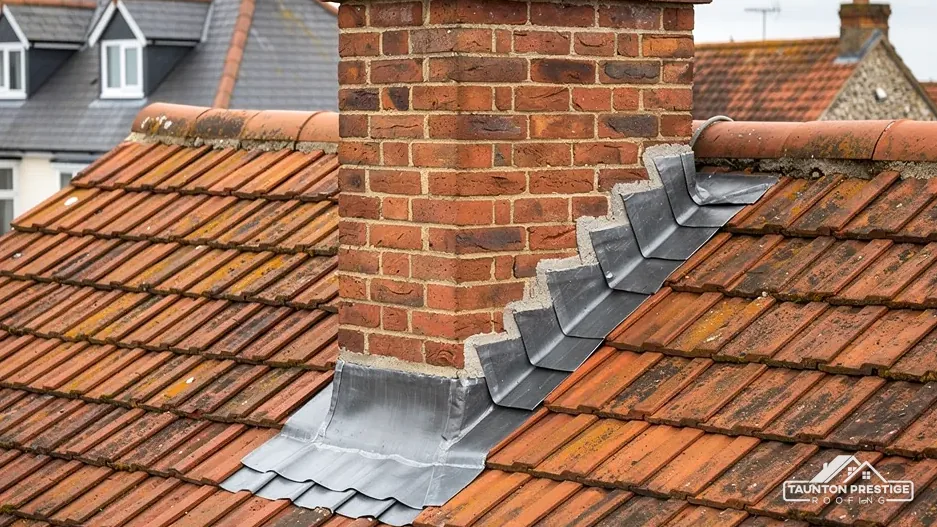
St John the Baptist's church has a 12th-century nave, and its roof carries decorative lead guttering, probably of the 19th century. That detail is a good place to start, because it shows how long the metal can serve when it is laid well. In MyJobQuote's figures, lead flashing lasts over 80 years, and that is a lower bound, not a limit. Lead comes in numbered codes that stand for thickness. Royston Lead's brochure lists code 4 at 1.80 mm, code 5 at 2.24 mm and code 6 at 2.65 mm, with the heavier codes used where the sheet must carry water, as in a gutter or a valley.
St John's is listed Grade I and in regular parish use, so its roof is a faculty matter for the Church of England. Our answer on church roof repair consent explains how the other denominations and closed churches differ. A house is different. 3 Manor Road, listed Grade II on 24 February 1987, follows the council's listed building consent route wherever work would affect its character.
A split at a single fold can often be repaired where it lies. Lead that has gone brittle and cracked in several places is past saving, and new sheet is the lasting answer. MyJobQuote (Sep 2026) gives a typical UK range of £150 to £250 for a patch of chimney leadwork and £350 to £920 for a complete job; scaffold swings the total. A flashing that has aged well but lifted at one edge is a small job, and we would rather tell you that than quote for a new run. Our lead work page shows how we judge it. At the survey we photograph every fold, flashing and gutter outlet close up, so you can see the splits for yourself, and we mark which are repairs and which need relaying. A parish will want a specification, a householder one total, and we can write either.
Look for
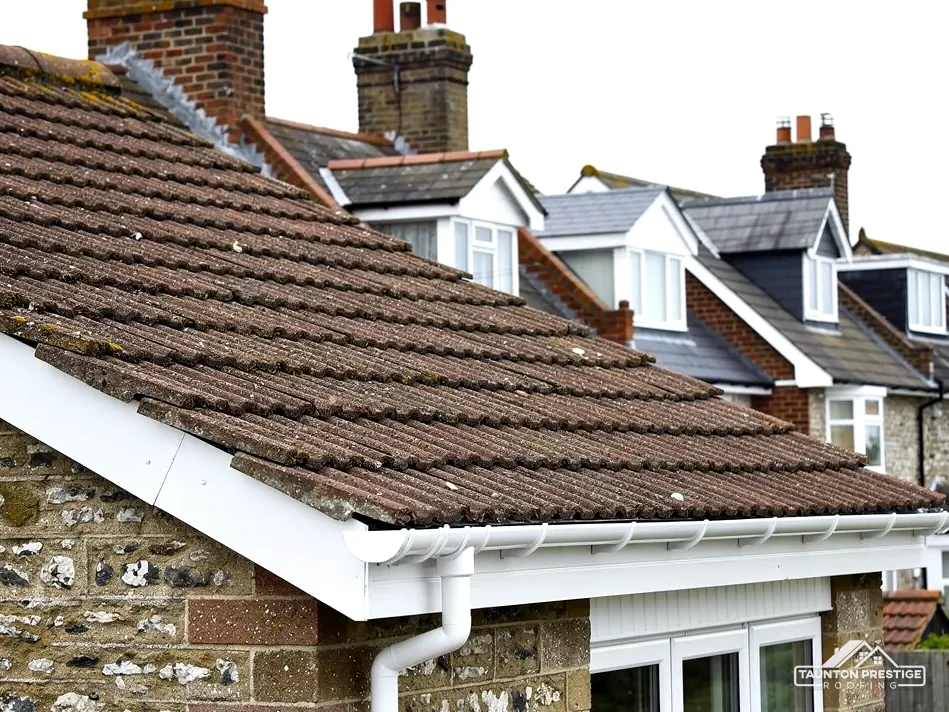
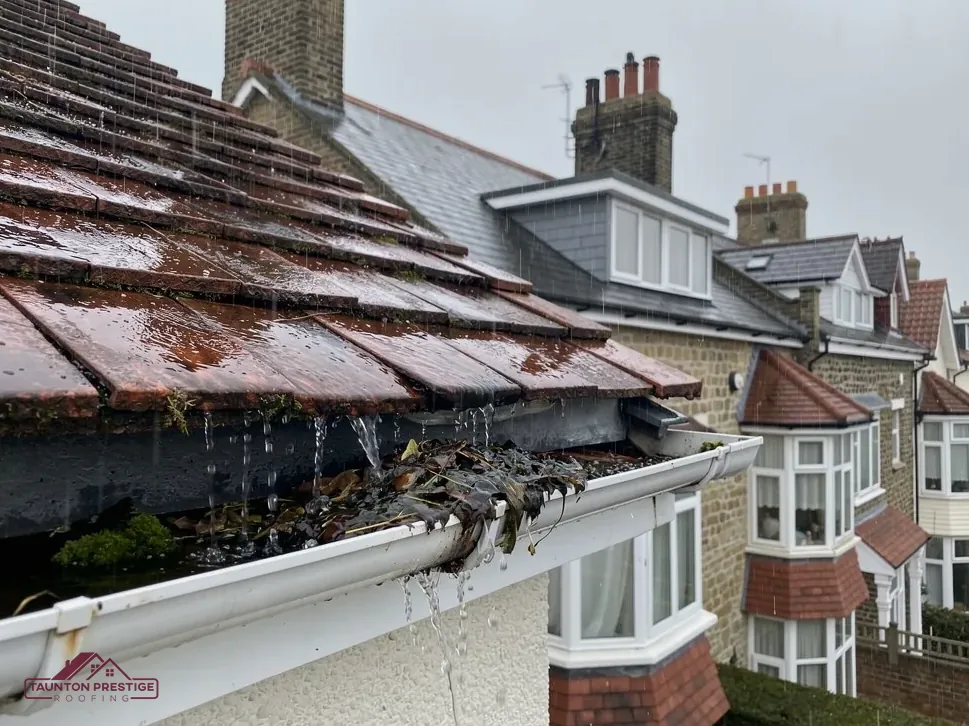
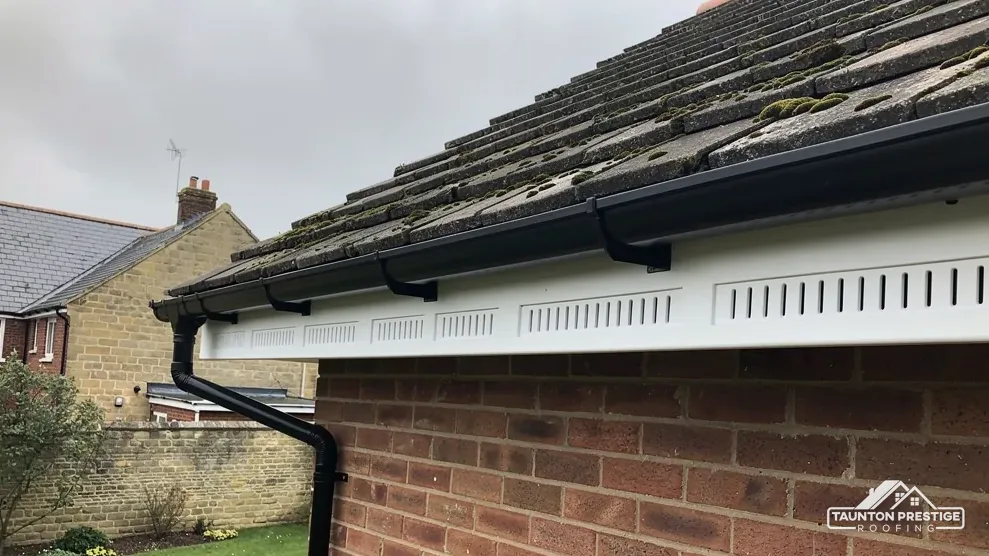
Until the 19th century Pawlett was a few stone farmhouses set in a triangle of roads. It then spread west and north-west along the hilltop, and much of the historic centre was infilled, partly with local authority housing and largely in brick. A street here can therefore hold houses from different decades, each with its own roofline. Hanging from the eaves are the fascia board, the soffit panel beneath the overhang, and the gutters, and they age together.
What decides the price
Soffits fitted before 2000 may contain it. HSE warns that asbestos insulating board, AIB, looks much like safer boards. Asbestos cement handled with care and kept intact counts as non-licensed work, but AIB soffits are another matter, and HSE's risk assessment rules can make removal licensed work. So we establish what the board is before anyone touches it, and any waste is consigned, never skipped. If the board proves to be plain fibre cement or timber, the job carries on as an ordinary roofline repair.
MyJobQuote gives around £1,000 to £1,600 for replacing gutters (Oct 2026) and an average of around £800 for capping fascias and soffits (Sep 2026), both typical UK figures. Gutters need a slight slope, 1mm for every 600mm in Brett Martin's guidance, and one dropped bracket can leave water standing against the board. A retailer, which has an interest in selling it, puts uPVC fascia at 20 to 40 years, so a board of that kind that has outlived its gutter may only need new brackets and a clean. Our gutters, soffits and fascias page sets out the materials.
Because the age of each house differs, we never treat a roofline as a single job. We press the fascia for softness, look for staining and holes in the soffit, check each gutter run for level, and see where every downpipe ends. The board is photographed where we press it, so a soft patch is something you can see for yourself.
Pawlett Hill is a low outcrop surrounded by alluvium and marine sands, and Environment Agency zone data puts Flood Zone 3 within about 250 metres of the centre. On the Somerset Levels and Moors the Environment Agency runs 21 permanent pumping stations, and its estimate for 2014 was 100 million cubic metres of floodwater over 65 square kilometres, with 172 properties flooded. None of that says anything about a particular street, so we name none. Flooding of land and wind damage to a roof are separate matters, and GOV.UK's Check for flooding is the place for live warnings. This check deals with the roof.
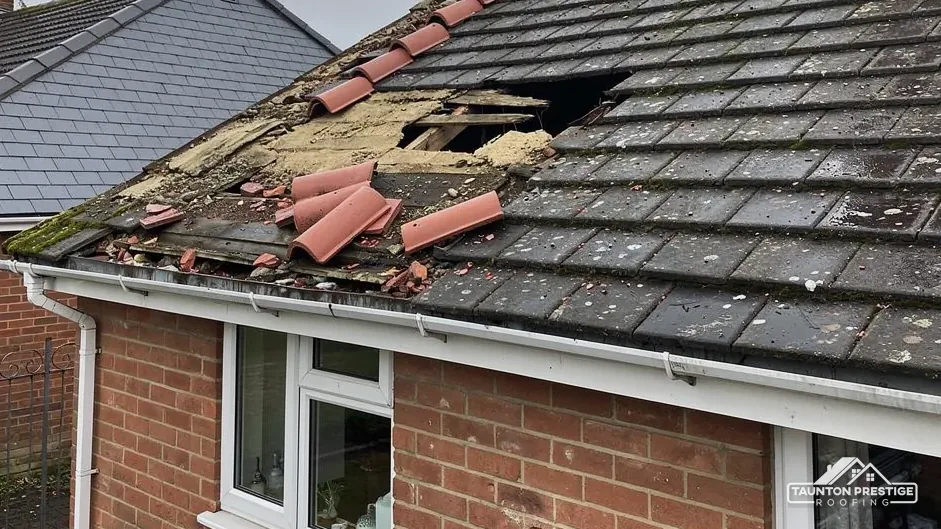
Photographs taken before anything is moved are the best record a damaged roof can leave.
Make the room safe, catch the water, and photograph everything, including water as it comes in. Structural engineers' guidance from IStructE is to take pictures of all of it, because photographs are the best evidence an insurer will see. Your insurer should hear first; then get a temporary repair in place, and keep every receipt. The first visit makes safe; the lasting repair is priced afterwards, once the survey shows what is behind the damage. Dealing with the insurer stays your job.
No. Which? reports that only 32% of storm-related claims made in 2024 resulted in a payout. A leak from long wear and damage from a gale are different things, and which one you have may matter to your insurer, so the survey records the cause. Your 14-day cancellation right does not stretch to an urgent repair visit you requested, though it does cover a contract agreed in your own house once the survey is done. See our emergency and general roof repairs page.
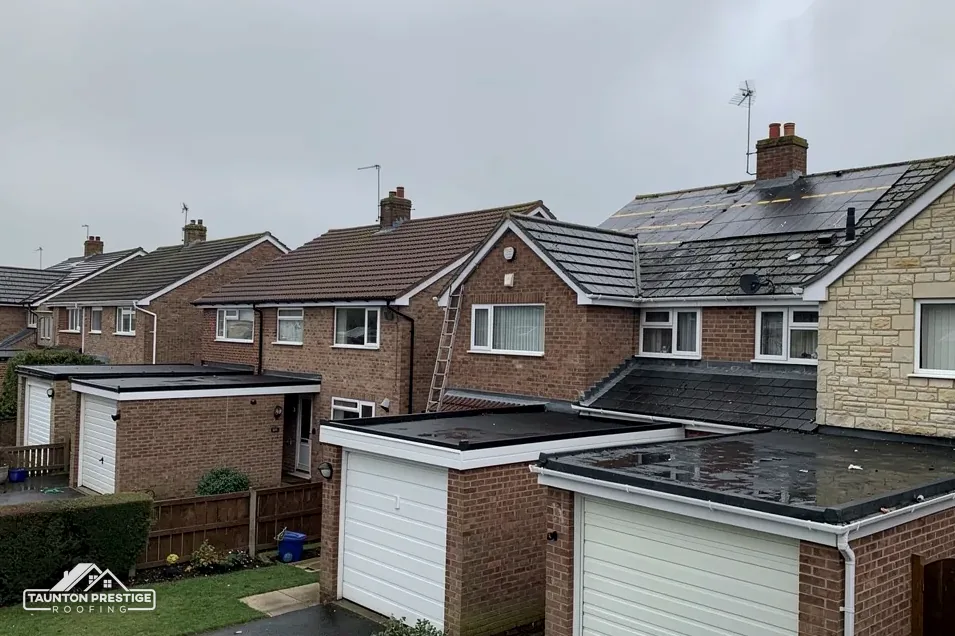
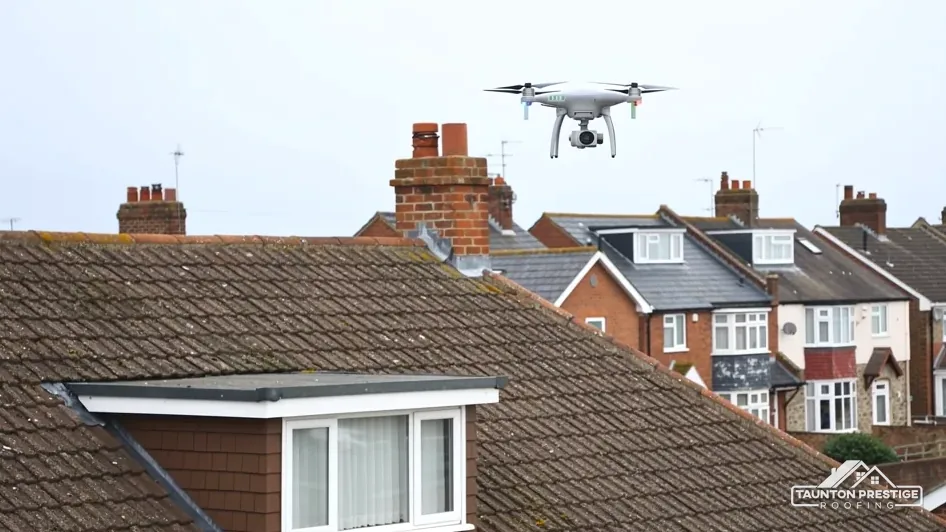
Many repairs in Pawlett are reached from a ladder or tower, and we use the lightest access that is safe. A re-roof is bigger. Where scaffold has to stand on a road or footway, Highways Act 1980 section 169 requires a licence, and Somerset Council is the authority here. Only accredited contractors get a scaffold permit from Somerset Council, and the contractor applies. Allow 10 working days, and £124.60 for each 28-day period (April 2026). Scaffold wholly on your own land needs none. If it has to cross a neighbour's frontage, we ask you to speak to them first, and we agree where materials and waste will be kept before the first day.
What decides the price
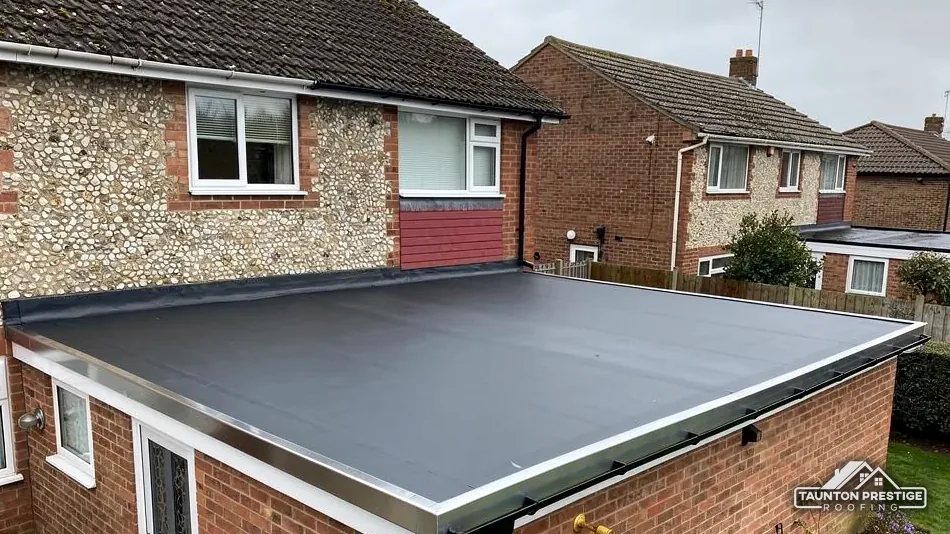
The Planning Portal's test is that a re-roof normally needs no application while less than 25 per cent of the building envelope and less than 50 per cent of the roof is affected. Somerset Building Control (0300 303 7790) can confirm it for a house. A flat is different: the permitted development rights for houses do not cover a flat, so ask Somerset Council before you plan a change.
Citizens Advice recommends getting written quotes from at least 3 different traders. Check that each names the covering, includes VAT at 20% (GOV.UK) and the scaffold, and says when work will start. We say plainly when a repair beats a re-roof, and when the roof has simply had its day. Either way you see the photographs first, and the written total follows. The Citizens Advice consumer helpline is 0808 223 1133.
Once surveyed, your roof's condition is shown in photographs and priced as one total in writing, and each day's plan is explained to you. Tell us the street your Pawlett house is on and how the water is getting in, and we will book a visit.
Walked the roof?
When you have read the checks, we walk the roof and show you the photos.
Lead can be dressed to follow an existing profile, and the thickness chosen follows the lead code. Because St John's is listed Grade I and in use as a parish church, any change goes through the faculty system, not the council, and the approved specification decides how closely the new lead must follow the old.
Not for the roof itself, if you own the house. The same planning and Building Regulations tests apply as for any dwelling. A flat is different, because the permitted development rights for houses do not cover flats. If you rent, ask your landlord first, since the roof is usually theirs to decide.
Shoot the damage from the garden, the wet room and any fallen slates, before moving anything. Add dated pictures of temporary repairs, and keep receipts, since an insurer will want both. Photographs let a roofer see the problem quickly too, and they show you later what changed. A few wide shots of the whole house, taken from the road, help as much as close-ups.
Start with the insurer's own complaints process. If it has not replied finally within 8 weeks, the Financial Ombudsman can take the complaint, and you then have 6 months from the date of its final response letter. Its service is free. We cannot advise on whether a claim will succeed.
Tell us where water gets into your Pawlett house, and we will line up a survey.