All Saints church
Listed Grade II in April 1983, with an Anglican congregation, so its roof follows the faculty route.
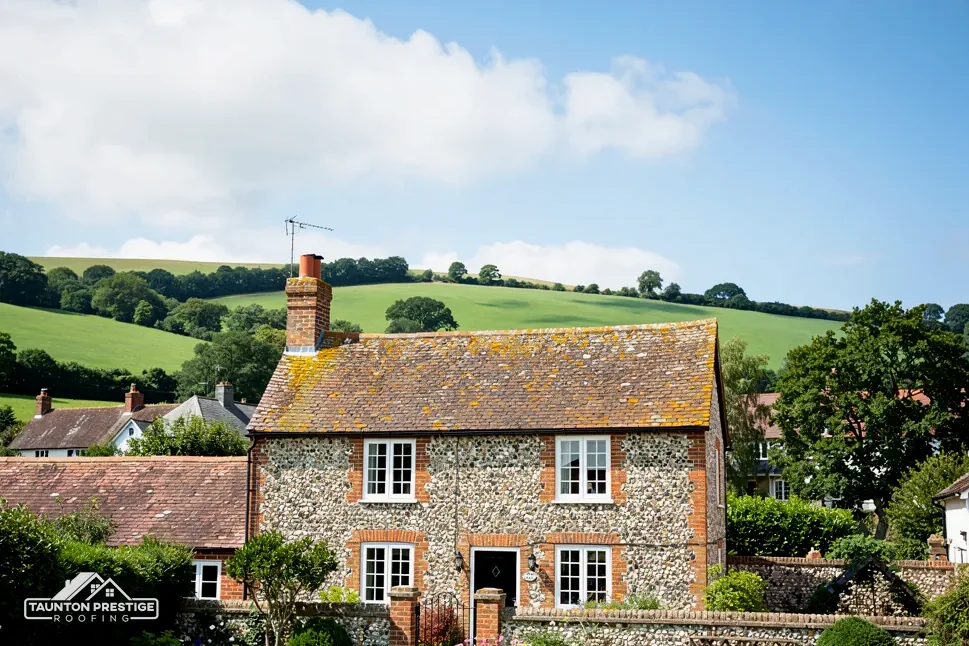
Homes on the Mendip Hills edge, with a Grade II church
Part of the ground around Sandford lies inside the Mendip Hills National Landscape, and the village is in North Somerset, so roof planning questions go to North Somerset Council.
Listed Grade II in April 1983, with an Anglican congregation, so its roof follows the faculty route.
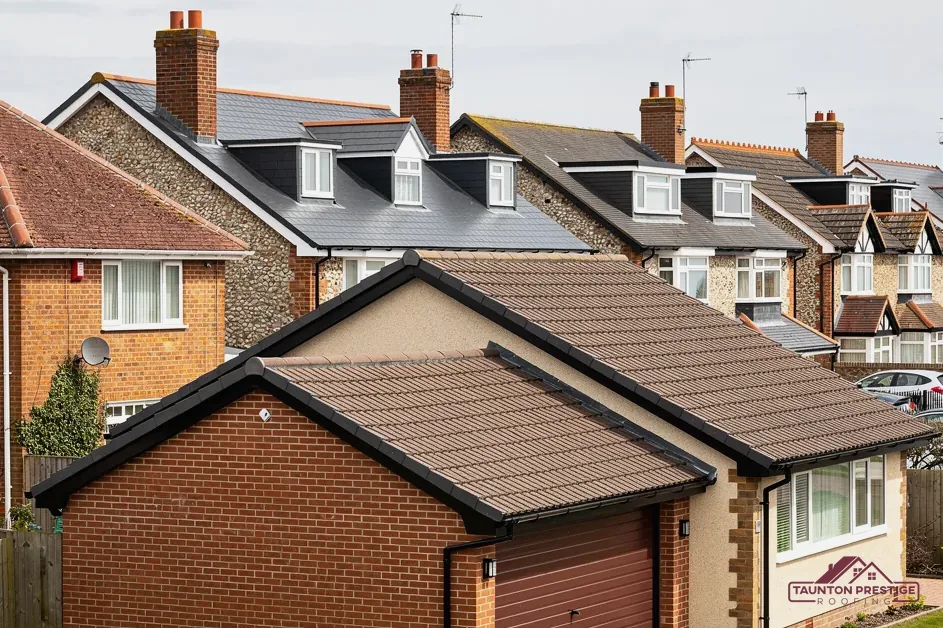
Number 20 Greenhill Road and Hillside Cottage are Grade II, so work affecting their character needs listed building consent.
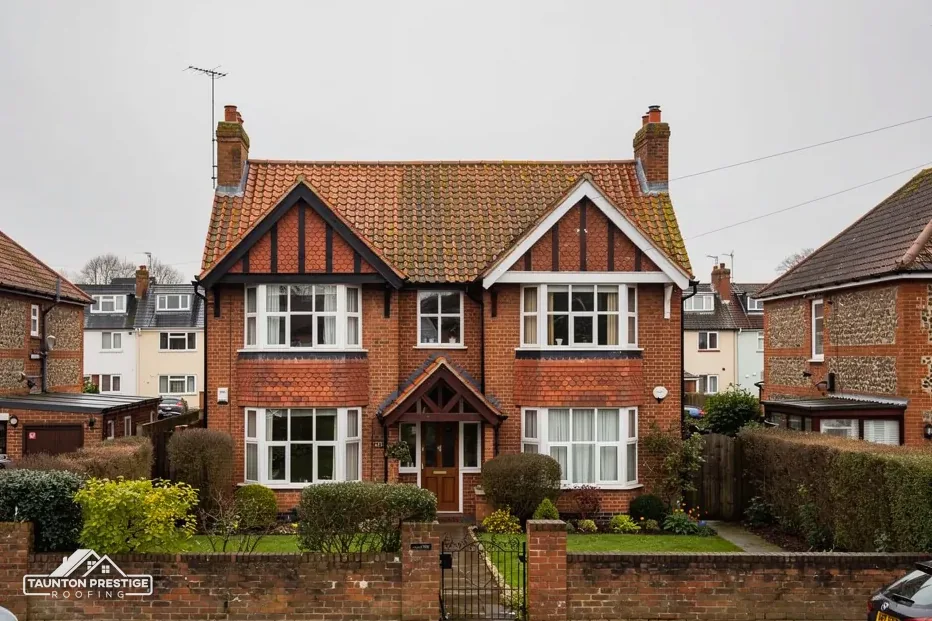
Listed Grade II, among seven National Heritage List entries within 500 metres of the village centre.
Street map of Sandford with Winscombe, Axbridge, Hutton, Cheddar marked around it, and Taunton.
Winscombe is the neighbour to the south, then Axbridge, with Cheddar to the south-east, Hutton to the west and Bleadon and Lympsham to the west and south-west.
About 25 miles north-east of Taunton, North Somerset Council (unitary).
Four checks beneath the Mendips
Four checks for a house in North Somerset at the edge of the Mendip Hills: who decides, what holds the ridge, how to clear moss and how the price is set.
Sandford is in North Somerset, which has its own council, separate from Somerset Council. That one fact changes whom you ring about planning, scaffold licences and building control, and it is why our usual Taunton instructions do not apply here. We start every Sandford survey with three questions: which council, whether the house is inside the Mendip Hills National Landscape, and whether it is listed.
National Landscape is the new label for an Area of Outstanding Natural Beauty. The Mendip Hills were relabelled on 22 November 2023, though the planning rules still refer to the older designation. The point we use for Sandford lies just beyond the boundary, yet about a third of the ground within 1.5 km of it falls inside, so a particular address has to be checked with the council. If yours is inside, raise any dormer or new roof window with the council's planners first, and read our planning guide for the national position.
Banwell and Churchill are the closest conservation areas shown in the national dataset, both within roughly 2.5 km. Whether your house is covered is for North Somerset Council's planning team to confirm, and the answer shows whether a change of appearance needs more than matching repair work. Our survey notes, slope by slope, what the roof is covered in, so the council is shown facts and not guesses.
All Saints has a Grade II listing and Anglican worship, so a roof job there is authorised by faculty, which the parish applies for. The houses follow a separate route: 20 Greenhill Road, Hillside Cottage and Myrtle Farmhouse are listed Grade II, so changing the character of their roofs needs listed building consent from the council.
Look for
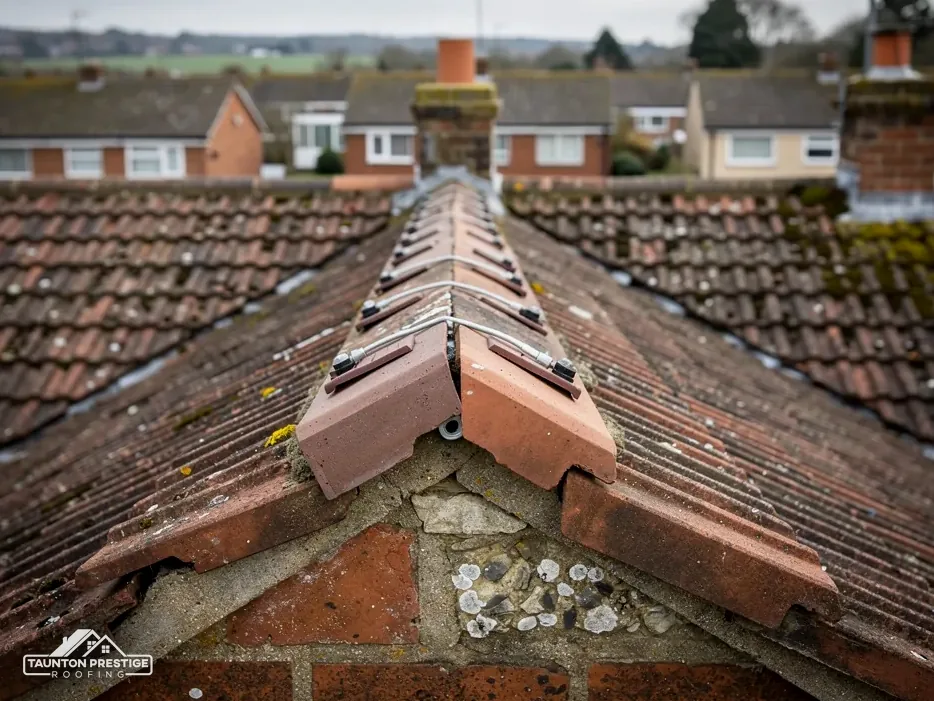
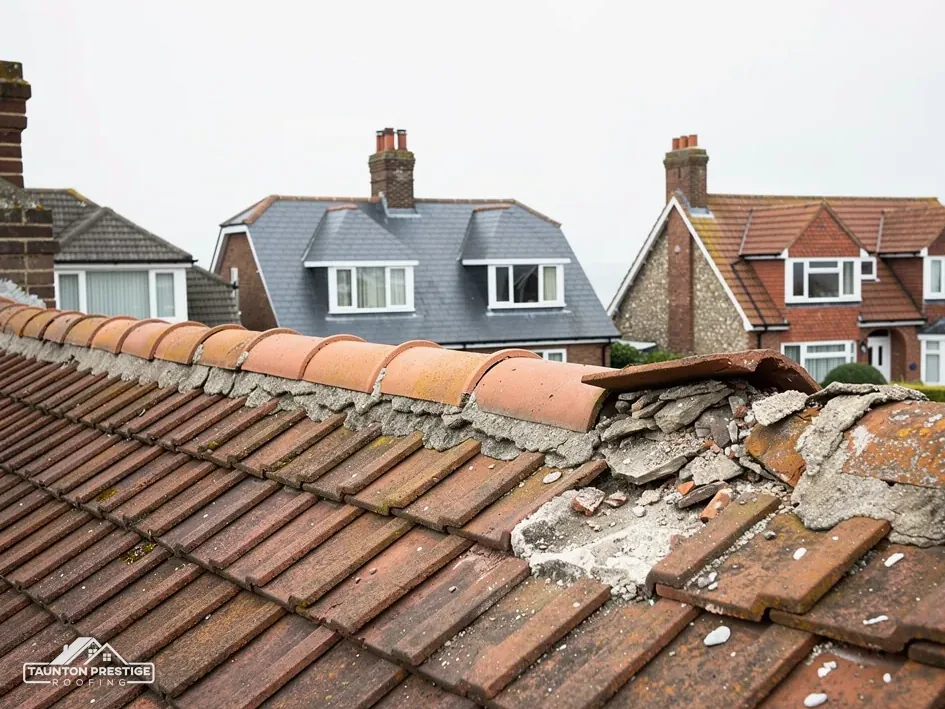
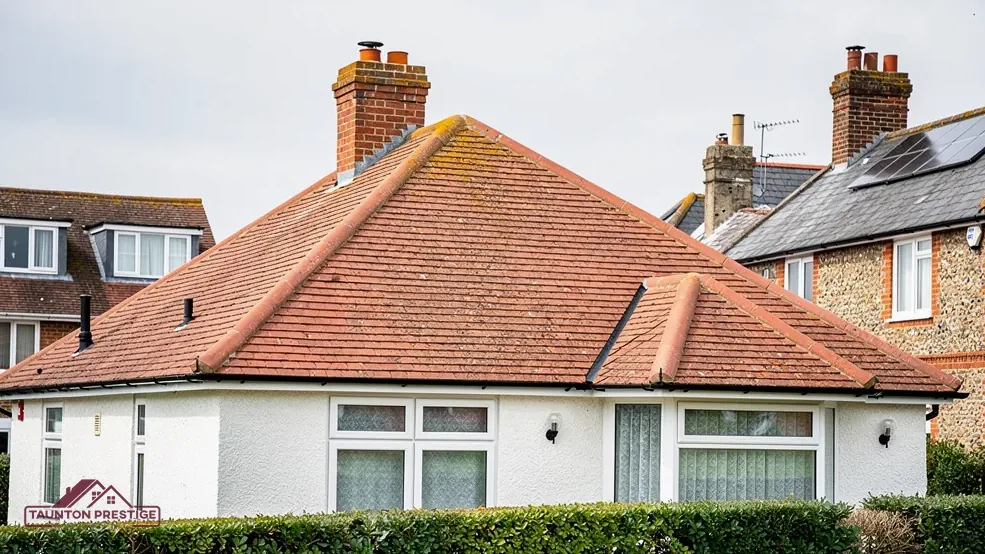
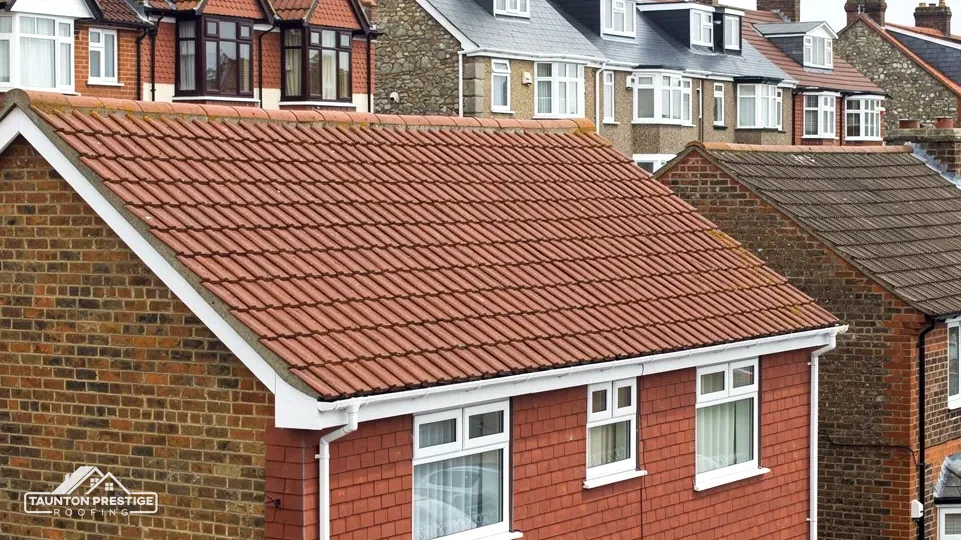
Three lines carry the weather on any pitched roof. The ridge runs along the top where the slopes meet. A hip is a sloping corner on the outside of the building, while the verge trims the roof's edge where a gable wall rises. Each is closed off with special tiles, each is exposed to the wind, and a failure at any of them lets water in at the highest point of the house, where it is hardest to spot.
What decides the price
No. Mortar is not banned, and BS 5534 is not a law. Marley's point is narrower. Its reading of the 2014 revision of BS 5534 is that tiles bedded in mortar should also be held by mechanical fixings, as the tensile strength of the mortar cannot carry the load alone. A cracked mortar line is the sign most often seen from the ground, and the repair is to re-bed the tiles and fix them as well.
In a dry-fix system, clips and screws hold the tiles along the ridge, hip and verge in place of mortar. BS 8612:2018 sets out how such dry systems for the ridge, hip and verge are tested. With no wet joint to crack, the most common failure goes away, though the fixings and the battens behind them still have to be sound. Battens are the timber strips across the rafters that the tiles hang from, and we look at them whenever a ridge is opened up.
Replacing a mortar ridge with a dry-fix one alters the line of the roof slightly, so where a listing or a protected area applies, it is worth asking first. Our answer on dry ridge and planning permission explains when to ask, and our dry ridge and verge page covers the systems and their fixings in full.
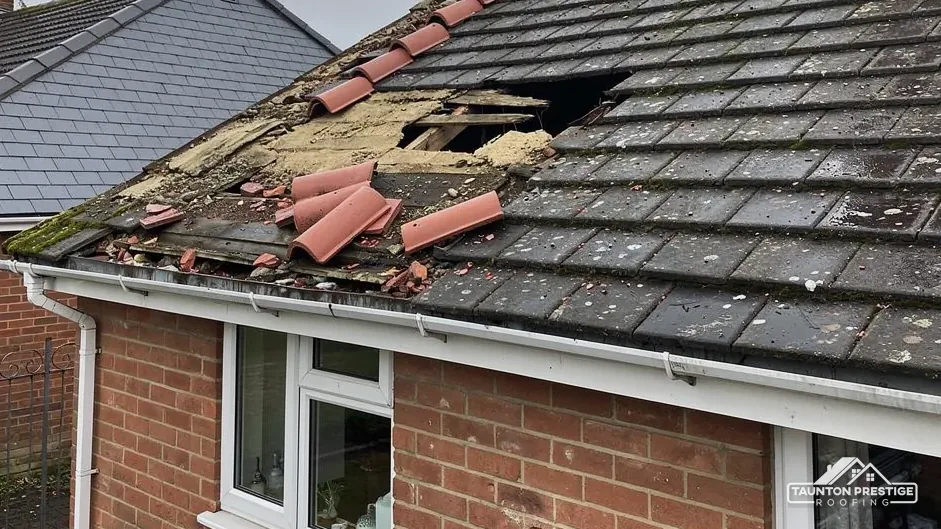
Shaded slopes grow moss, and a thick mat holds damp against the covering and sheds clumps into the gutters below. Moss is not proof that a roof has failed. It calls for a closer look, because a mat can hide slipped tiles and cracked edges, and cleaning without a survey first can wash away the evidence of what was wrong.
A thick mat of moss can hide the damage, so survey first and wash afterwards.
Marley does not recommend pressure washing a roof, because the surface of slate or tile can be scoured away and the life of the covering cut short. Gentle scraping from a safe platform does less harm. Chemical treatments need care too: HSE tells the public never to use biocides made for professionals only, so the label on any product matters. We lift the moss by hand, then check what was underneath.
Moss grows again where light and air stay poor, so a clean on a shaded slope buys time and is not a permanent cure. Trimming back overhanging branches and keeping gutters clear helps, and we say at the survey which slopes are likely to need another visit.
Treat these as published ranges, not guarantees. The Confederation of Roofing Contractors describes well-kept natural slate as lasting 100+ years, while Marley expects concrete tiles to reach around 60 years while stating that this is no guarantee. Whatever the covering, a younger roof can fail at its fixings while an older one stays sound, so we read the fixings as well as the face. Our roof cleaning and moss removal page explains the work, and our pitched roofing page covers repairs and re-roofs when cleaning is not enough.
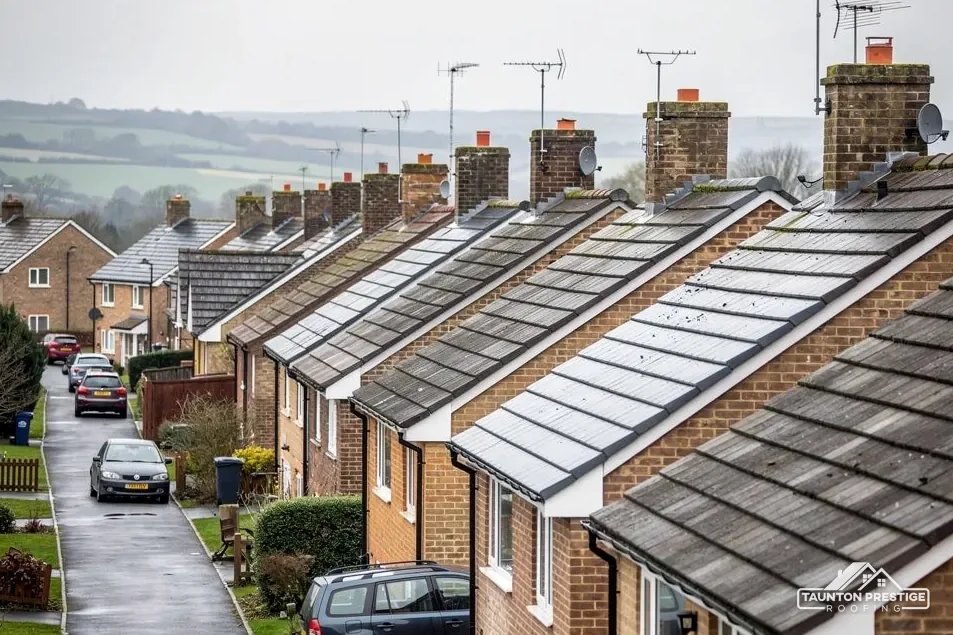
Plenty of work in Sandford is reached by ladder or rolling tower, which the survey will confirm. Poles and boards that occupy a road or footway need a section 169 licence (Highways Act 1980), and for Sandford, North Somerset Council, as highway authority, expects the company undertaking the job to make the application, so the permit is our task and the paperwork never lands on your doormat. Find out which firm applies for the permit and who pays the fee, since the written quote should settle both.
What decides the price
Five working days' notice is the minimum North Somerset Council asks for, and a permit can run from a single day to 28 days. If a job might overrun, we build that into the dates we give you.
The Planning Portal's guidance is that a re-roof does not normally need a building control application unless 25 per cent or more of the building envelope, or 50 per cent or more of the roof, is affected. Separately, Building Regulations approval is needed whenever a new covering is 15 per cent or more heavier than the present one. For a Sandford address, ask your chosen building control body, which can be a registered building control approver.
It should say so plainly. The standard VAT rate is 20% on GOV.UK's figures, and it applies to repairing and re-roofing houses already standing, so check whether your quote includes it. Scaffold is another item that can move a total, and any two quotes you compare should cover the same scope, the same access and the same VAT treatment.
After the survey you receive pictures of the roof and one written total. To begin on a Sandford roof, send the address and how near it is to the Mendip boundary.
Walked the roof?
When you have read the checks, we walk the roof and show you the photos.
Ask North Somerset Council with your address in hand, because the answer turns on the slope, the house and which side of the boundary it sits. The planning guide on our site covers how roof windows and dormers are treated nationally. Part of the ground around Sandford is inside the boundary.
As a Grade II church in Church of England use, All Saints falls under the faculty system, so the parish seeks a faculty rather than listed building consent from North Somerset Council. External changes can still raise planning questions, which the parish settles before work is ordered. The roofer then follows the agreed scheme.
Myrtle Farmhouse is listed Grade II, and a new covering can alter a listed building's character, which brings in listed building consent from North Somerset Council. A repair in matching material is treated differently from a change, so ask before ordering. Our survey records what covers each slope today, which gives the council something exact to read.
Gentle hand removal from a safe platform. Marley advises against high-power washing, which can scour slate and tile surfaces, and HSE says householders should never use biocides sold for professionals only. A survey first shows whether the moss is hiding broken tiles, and that decides whether the roof needs cleaning or repair.
Send your Sandford address and how near it is to the Mendip boundary, and we will arrange a visit.