St Christopher's Grade I church
Perpendicular in style and restored in three main phases between 1820 and 1909, while a faculty covers roof work.
Abbey land, a Grade I church and a Flood Zone 3 centre
Lympsham was given to the Abbot of Glastonbury in 690 AD, and its Perpendicular church is listed Grade I. We survey each roof here before naming a price.
Perpendicular in style and restored in three main phases between 1820 and 1909, while a faculty covers roof work.
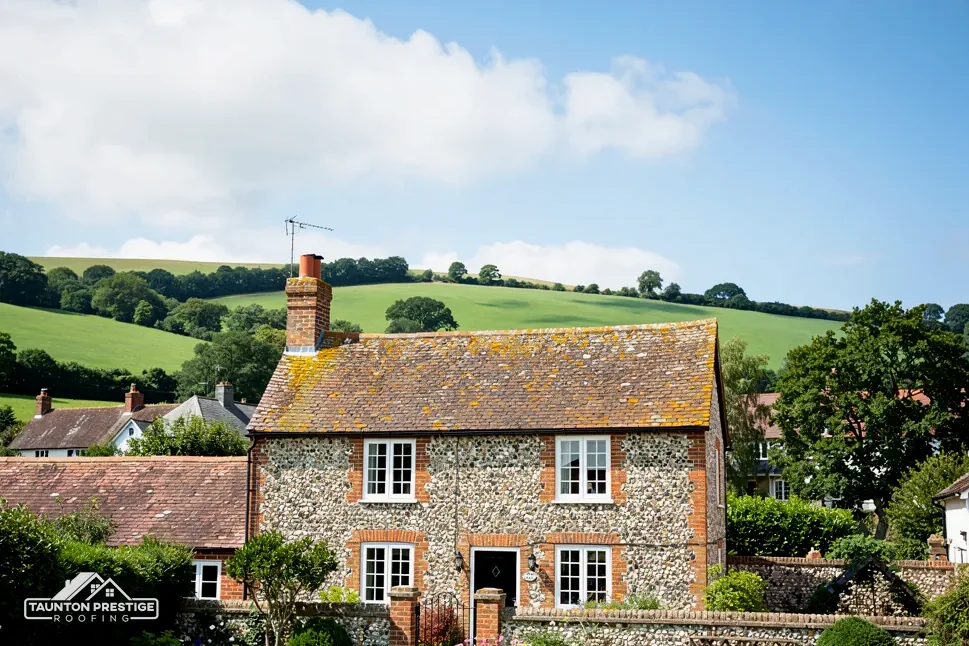
Granted Grade II* status in February 1961, so a change of roof covering needs listed building consent first.
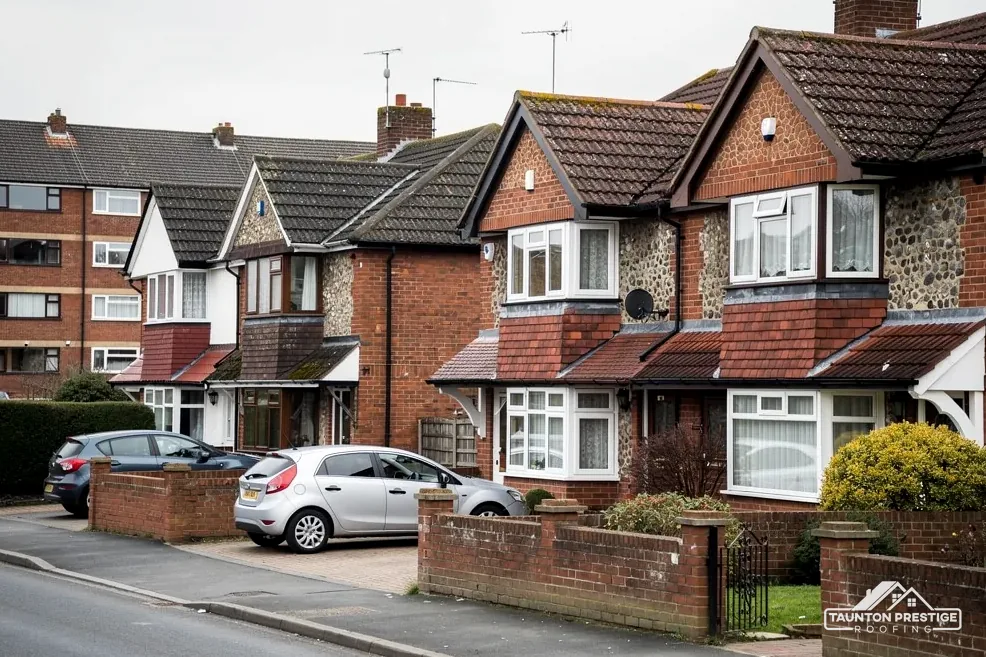
4 and 5 South Road and Becks Farmhouse are Grade II, so look up the listing before any roof work.
Street map of Lympsham with East Brent, Bleadon, Brent Knoll, Berrow marked around it, and Taunton.
Bleadon lies a short way north of Lympsham. East Brent is to the south-east and Brent Knoll to the south, with Berrow west of the village and Burnham-on-Sea further out.
About 20 miles north of Taunton, Somerset Council (unitary).
Abbey parish, four checks
Four checks that suit a house inside or beside the conservation area, taking you from consent to scaffold.
Lympsham's conservation area reaches within about 0.75 km of the centre. Separately, the National Heritage List names 19 entries inside a 500 metre radius of that point. Those two facts frame our first conversation with any Lympsham owner. The parish itself is old: Somerset's Historic Environment Record says it was given to the Abbot of Glastonbury in 690 AD and stayed in abbey hands until 1539. Old ownership does not decide today's rules, but a roof in a village this old can carry centuries of repair laid over one another.
The church is listed Grade I, built in the Perpendicular style and restored in three main phases between 1820 and 1909. Anglican worship continues there, so the faculty system, and not the council, approves its roof work. The parish applies, and our part as roofers is to record the covering, the fixings and the state of the timbers accurately, so that the paperwork describes the roof as it really is and the specification can be priced fairly.
Anything bearing on a building's special character calls for listed building consent. The Manor House is Grade II*, while 4 and 5 South Road and Becks Farmhouse are Grade II. Patching with a matching slate is a repair, and our survey notes list slate size, tile type and chimney detail slope by slope. Swapping the covering, restyling the ridge or altering a chimney is where consent usually comes into play, and our page on planning permission for roof work sets out the routes. Inside the conservation area, a dormer needs a planning application, and Somerset Council's planning team can say what applies to your address.
Look for
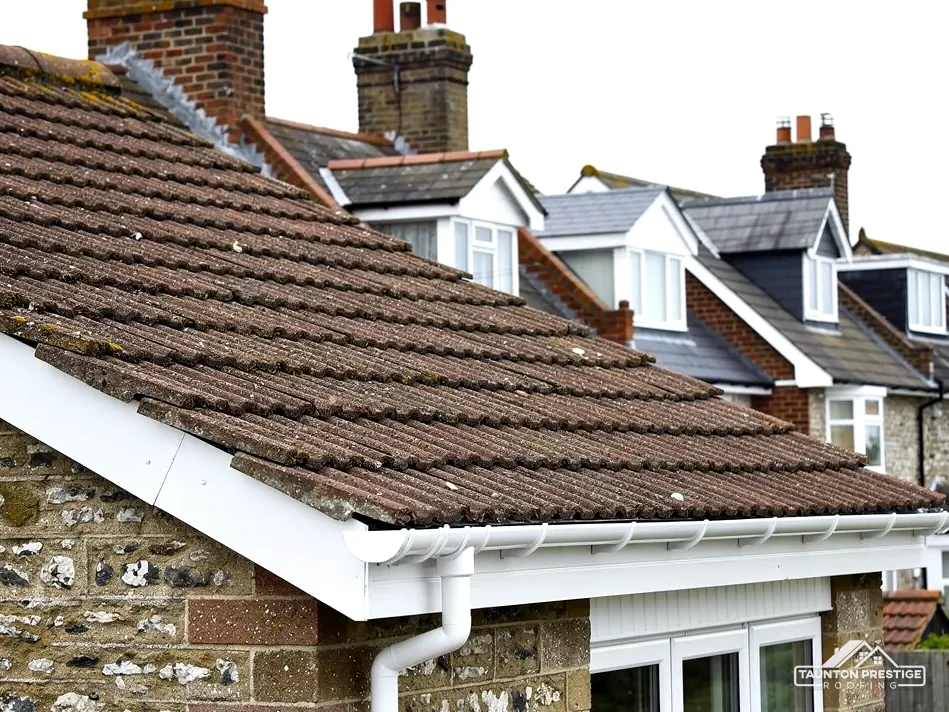
Lympsham's mapped centre falls in Flood Zone 3 on the Environment Agency's planning map. Flood zones are drawn on land, not on individual roofs; GOV.UK's flood risk service will answer for your own postcode. The same government site records that 18% of Somerset sits under average tide height, one reason drainage matters across the whole county. The roof's contribution is modest but real: it should hand rain to the drains without delay, and it can only do that if the gutters and downpipes are sound and clear.
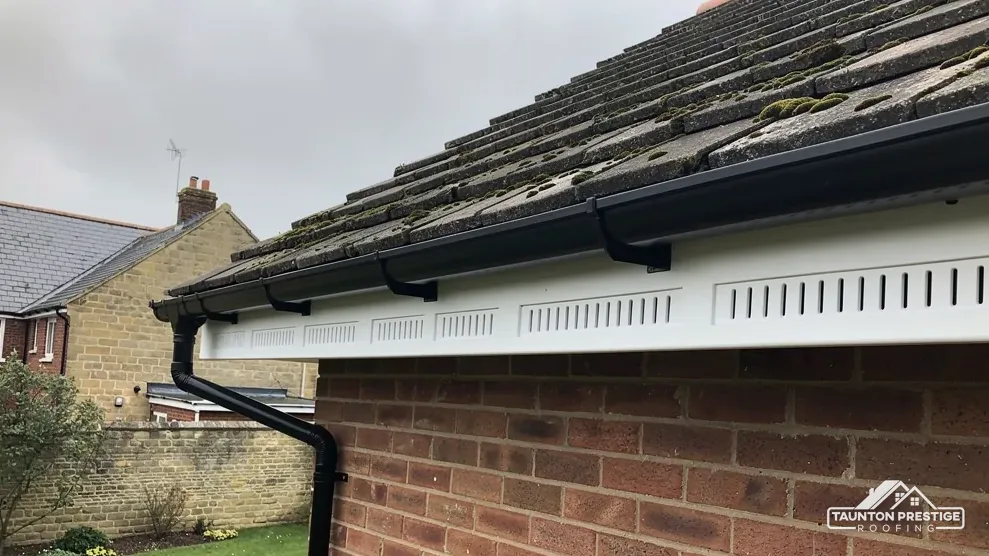
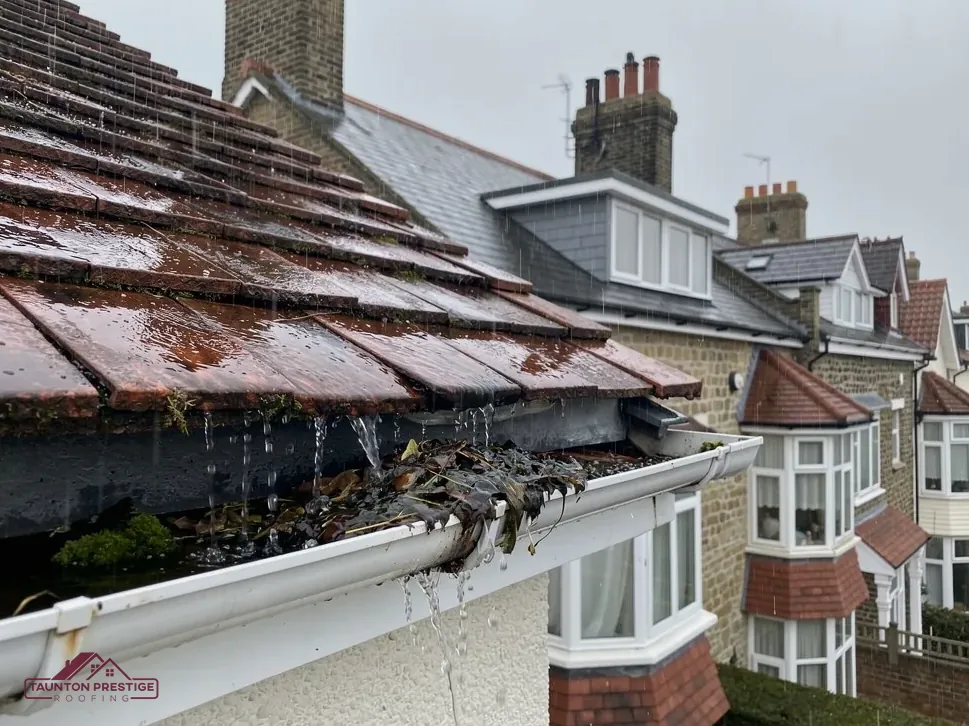
A blocked gutter spills where the debris sits and runs clear when the blockage goes. Short, heavy bursts of rain show weak spots better than a long drizzle, so a downpour is a good moment to look from the doorstep. A failing one leaks at its joints, sags between brackets or has rusted through, and water runs down the wall even in light rain. Brett Martin advises 1mm of fall per 600mm of run, so one sagging bracket is enough to hold a puddle in the channel. The fascia is the long board at the eaves that the brackets bear on, and the soffit, the lining under the overhang, closes the gap to the wall. Both can rot after years of overflow. Our gutters, soffits and fascias page sets out repairs and replacements.
Flood zones are drawn on the land, but the gutter on your wall is yours to keep clear.
Where a building went up, or was refurbished, before 2000, HSE tells owners to presume asbestos is present, and its guidance lists external soffits as a place where asbestos insulating board is found. Nobody can reliably tell it from a harmless board by eye. Lifting asbestos cement sheets carefully, unbroken, is non-licensed work, but insulating board soffits are a different case, often licensed work depending on HSE's risk assessment rules, so that check comes before any screw is turned.
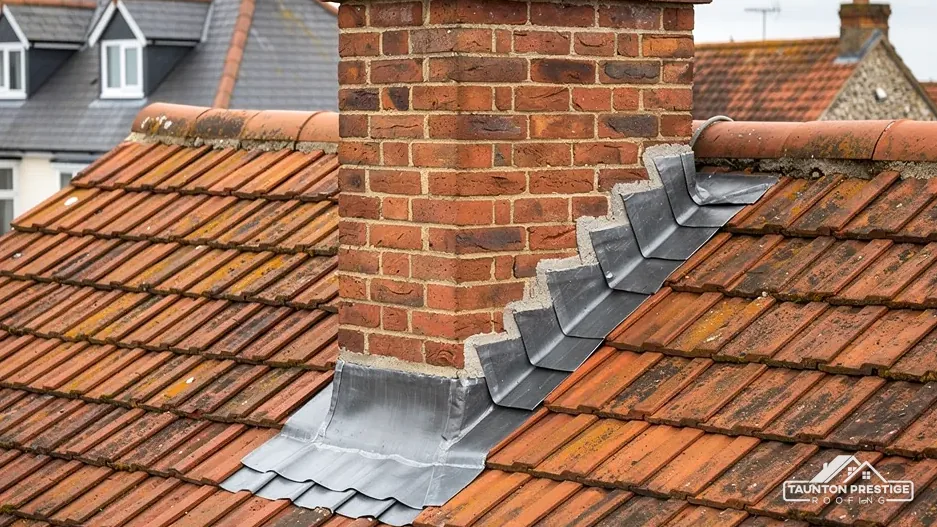
Where a roof meets a chimney stack or a wall, lead stops the rain. A stack stands proud of the slope in wind and weather, so its junction is a place to look early. Lead flashing is sheet lead folded into the wall joint and dressed over the slope, and soakers are small lead sheets bent to sit beneath the slates or tiles beside the stack. MyJobQuote's lead page gives over 80 years as a lower bound for lead, not a promise. Failure shows at the edges, where lead lifts, splits along a fold or gets pulled back when a mortar joint shrinks.
What decides the price
Each grade of lead sheet carries a code number, and the number tells you the thickness. Royston Lead's brochure puts Code 4 at 1.80 mm, which it lists for dormers, pitched valley gutters, flashings and soakers, and Code 5 at 2.24 mm, listed for flashings, valley gutters, parapet gutters and box gutters. The right code is the one that suits the detail, not the highest on offer.
Flaunching is the sloping mortar fillet round the base of each chimney pot, there to throw rain outward from the stack top. When it cracks, water works in beside the pots and a damp patch can appear on the chimney breast, which looks very like a flashing fault. We trace the leak before proposing work, so you are not paying for lead you did not need. On a listed house, ask whether a repair needs consent, because a rebuilt stack may.
Removing a chimney breast is a separate matter. Building Regulations approval always applies, and when the breast is shared with a neighbour, a party wall, the Party Wall etc. Act 1996 requires two months' notice. Our lead work and chimney repairs pages cover both jobs.
Sound or needs work
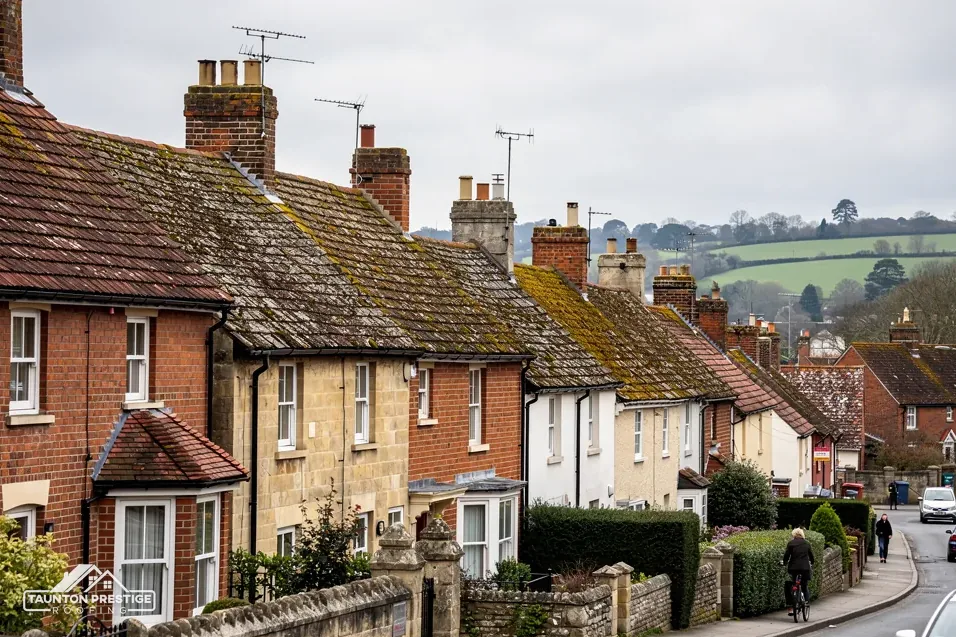
Sometimes a Lympsham job needs scaffold on the highway, in which case section 169 of the Highways Act 1980 applies. Somerset Council's rule is that permits go to accredited contractors, and it is the contractor appointed to the job who completes the form. The fee is £124.60 for each 28-day period (April 2026), with at least 10 working days' notice, and a job that overruns needs its licence extended. Your start date allows for those weeks, so the paperwork never holds up an open roof.
What decides the price
The Planning Portal's two-part test is the national guide: no building control application is normally needed when less than 25 per cent of the building envelope and less than 50 per cent of the roof are affected. If the replacement covering is 15 per cent or more heavier than what came off, the work then needs Building Regulations approval, together with a structural check. Lympsham, formerly in Sedgemoor district, is covered by Somerset Building Control on 0300 303 7790, and its team can explain how an application would run.
A roof read from the lane tells half the story. We also decide how it will be reached: ladders or a tower for a small repair, scaffold for anything bigger, with the choice affecting both the days on site and the price. At the survey we go over the slopes, valleys, flashings and gutters, photograph what we find and write it up. The photographs go with the quote, which arrives as one price in writing, so you can see the reasons behind it. Birds' nests count as well: section 1 of the Wildlife and Countryside Act 1981 bars anyone intentionally damaging an occupied nest, so the start date moves to suit what the survey finds.
Send the Lympsham address and your worry; a survey visit follows.
Walked the roof?
When you have read the checks, we walk the roof and show you the photos.
St Christopher's, listed Grade I, holds Anglican services, and its roof is repaired under a faculty. The parish applies for it, and listed building consent from Somerset Council is not the route. The roofer then follows the approved specification. The Historic Environment Record notes restoration in three main phases between 1820 and 1909, so earlier repair records may exist.
Renewing flashing in matching lead is normally a repair. Rebuilding or altering a stack can affect a listed building's character and then needs listed building consent. The Manor House is Grade II*, and 4 and 5 South Road are Grade II. Lead can last for over 80 years, so a failed flashing may simply be a poor fixing.
The mapped centre of Lympsham is in Flood Zone 3 on the Environment Agency's planning map, but flood zones are drawn on land, not on a particular house or roof. For your address, run GOV.UK's long-term flood risk checker, and use its flooding warnings page when rain is forecast. Before heavy rain, have gutters and downpipes cleared.
Possibly. A covering 15 per cent or more heavier than the existing one brings Building Regulations approval, and the Planning Portal advises taking structural advice before work begins. For a Lympsham address, call Somerset Building Control on 0300 303 7790 to see how an application would run, and ask whether the new covering changes the roof's performance in a fire.
Describe what worries you on your Lympsham roof and we will come and look.