St Andrew's, Grade I
The crossing tower and transepts date from the late 11th century, and the roof was renewed in 1824.
Castle, Grade I church and limestone in a former borough
Stogursey is a former medieval borough with a castle, a conservation area, a Grade I church and listed High Street houses. A survey and photos come before the price.
The crossing tower and transepts date from the late 11th century, and the roof was renewed in 1824.
Standing by 1204 and probably by 1166, it was listed in May 1969. A market place followed by 1225.
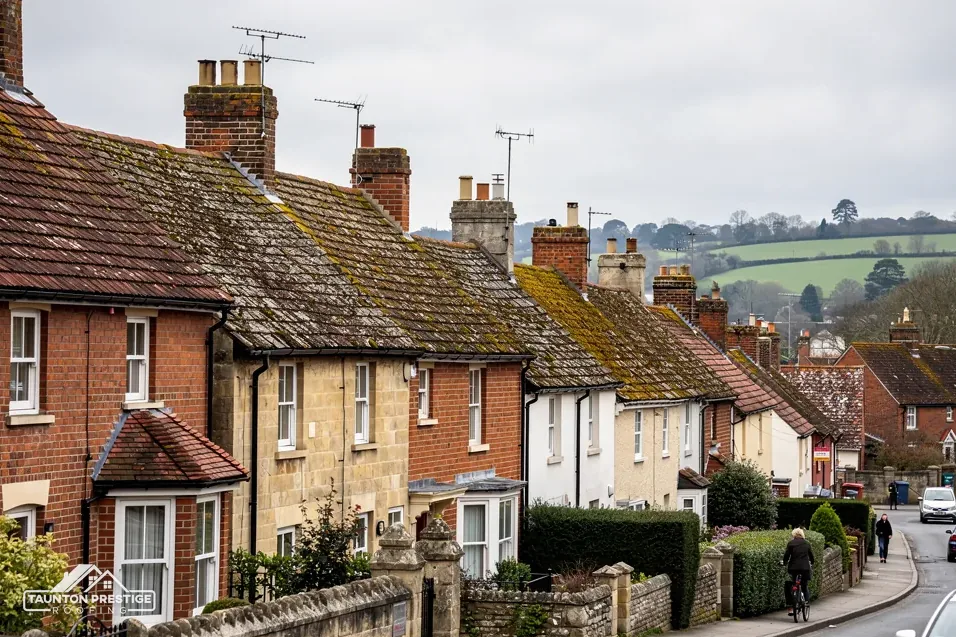
Numbers 2, 12 and 14 High Street carry Grade II listings, so the street frontage needs the right consent.
Street map of Stogursey with Nether Stowey, Holford, Cannington, Spaxton marked around it, and Taunton.
Nether Stowey is the nearest neighbour, just south, with Holford to the west, Spaxton further south and Cannington south-east. Pawlett lies east, towards the Parrett.
About 12 miles north of Taunton, Somerset Council (unitary).
Four checks for a castle borough roof
A walk through the old borough's roofs in four stops, with what each one does to the work and the final price.
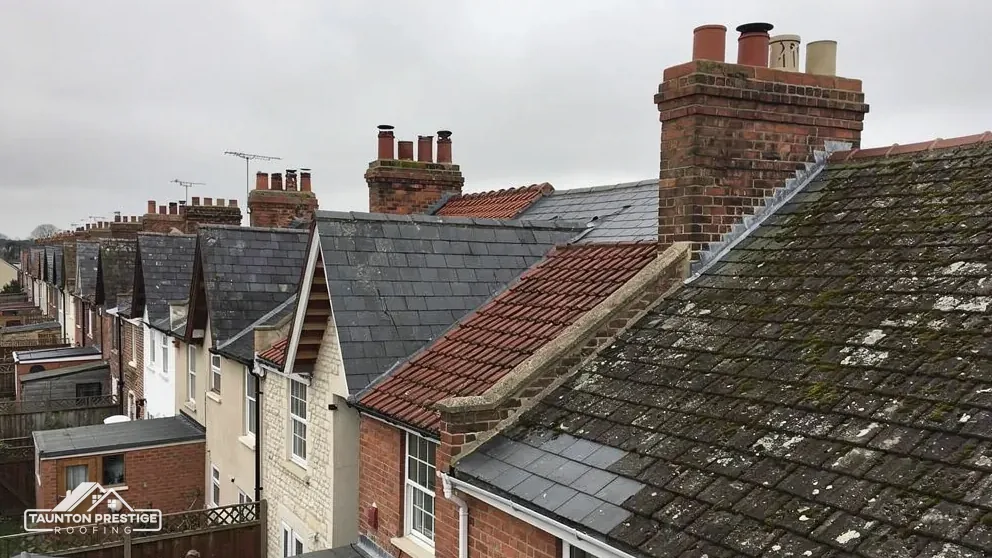
Walk along Stogursey's High Street and you are following a medieval borough plan. The castle was standing by 1204, a market place followed by 1225, and in 1614 the borough was said to hold over 80 burgages, the plots a medieval town was divided into. Somerset Council has drawn a conservation area around the village, and listed buildings run from the castle and the church to houses on the High Street. Paperwork therefore comes first on any Stogursey roof: is the house inside that boundary, and does the house itself carry a listing?
On an ordinary house, putting the same material back in the same pattern is not treated as new development, and our guide to planning permission for roof work walks through the detail. The picture shifts the moment the finished roof will look different. A new material, a ridge finished another way (the line of capping at the very top), or a roof window turned to face the street all deserve a call to Somerset Council's planning team first. The same goes for a dormer, the little window box standing out from a slope: the planning team, or our planning guide, is where that question gets answered, not the roofer's ladder.
Three High Street houses, numbers 2, 12 and 14, hold Grade II listings, and the castle carries a Grade II* listing. For a listed house, work that would alter its special character needs listed building consent from the council. Re-slating in a different size of slate can fall into that net, though it looks trivial from the road. St Andrew's, listed Grade I, is in regular use as a parish church, which routes its roof through the faculty system instead of council consent.
Our survey writes down what covers each slope today, and any application starts from that record.
Look for
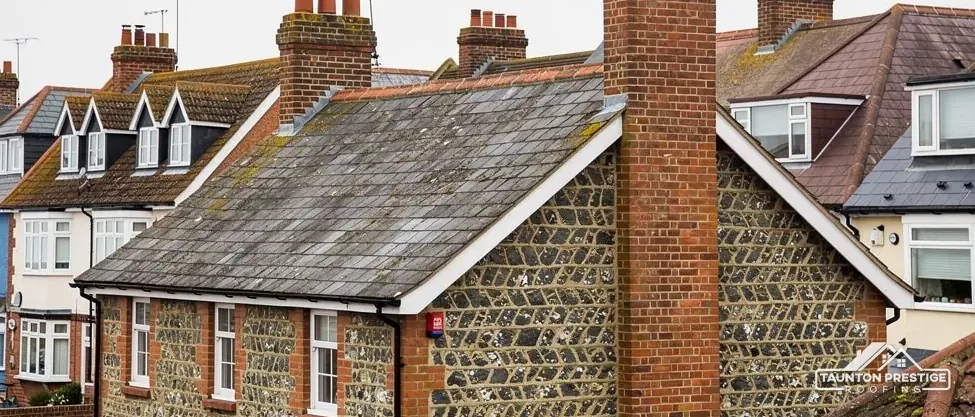
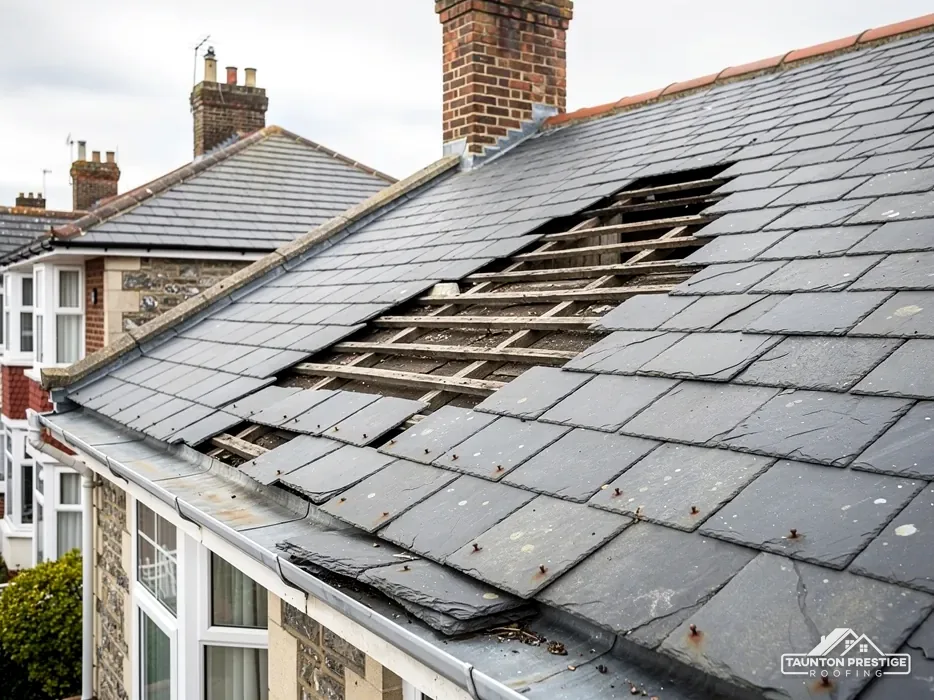
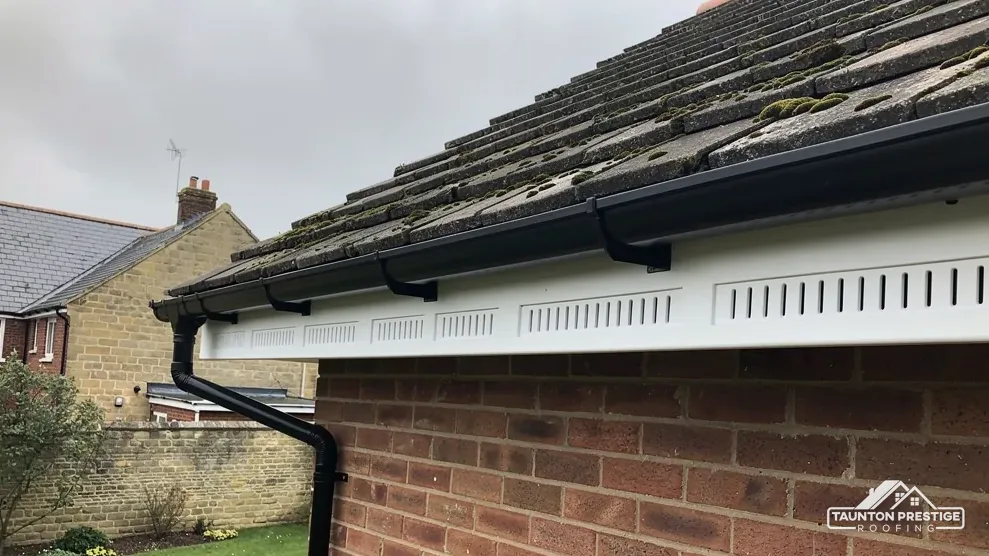
Stogursey's own limestone was quarried for building from the 15th to the 18th century, so stone runs deep in the village story. The covering above it is simpler than it looks. Battens (narrow timbers running across the rafters) carry the slates or tiles, and the underlay sheet below them is the back-up layer. If a nail rusts through or a hook opens, the slate drops a few centimetres and its neighbours begin to lift.
What decides the price
Usually, and it is often a quick job. One slate can often be nudged back and held by a clip, or a close match goes in, while the rest stays untouched. What matters is the pattern around it. One slipped slate between sound neighbours is a small repair. Three or four along a single course say the nails have corroded, and at that point patching buys little more than return trips. Taking that slope off and laying it again on fresh battens is then the better buy. We show you photos of both situations and say which one you have. Our pitched roofing page sets out the repair-or-re-cover decision in more detail.
Published cover lives are ranges, nothing more. Natural slate kept in good order can reach 100+ years, by the reckoning of CORC, the roofing contractors' confederation. The BRE minimum of 60 years is a clay tile figure only. For concrete tiles, Marley gives around 60 years and stresses that this is no guarantee. An old covering can therefore still be sound, and a newer one can fail early at its fixings. On a low pitch the rules tighten: BS 5534 indicates a 20 degree minimum for natural slate, while Cupa warns that hooks should not be used below 25 degrees. On a listed house, a replacement slate should sit alongside its neighbours without standing out.
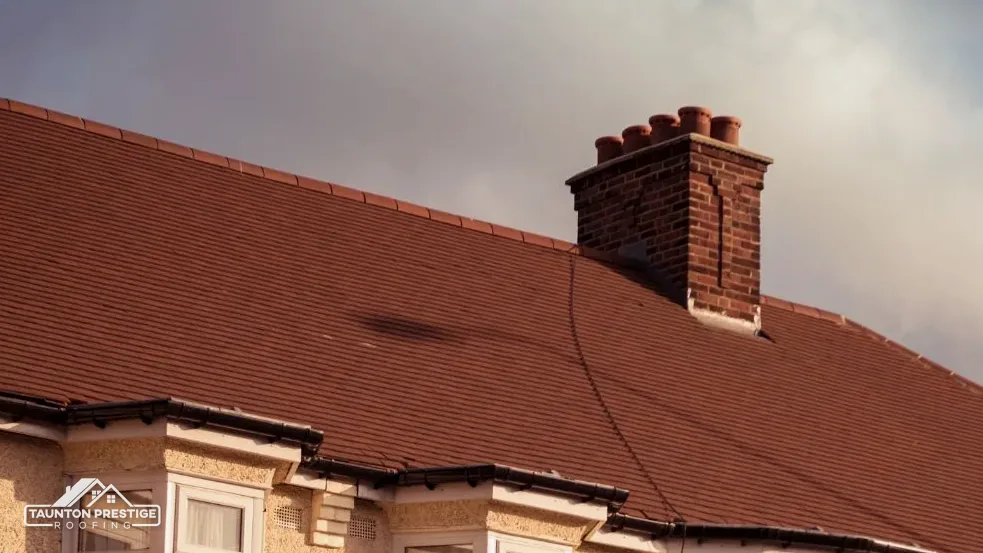
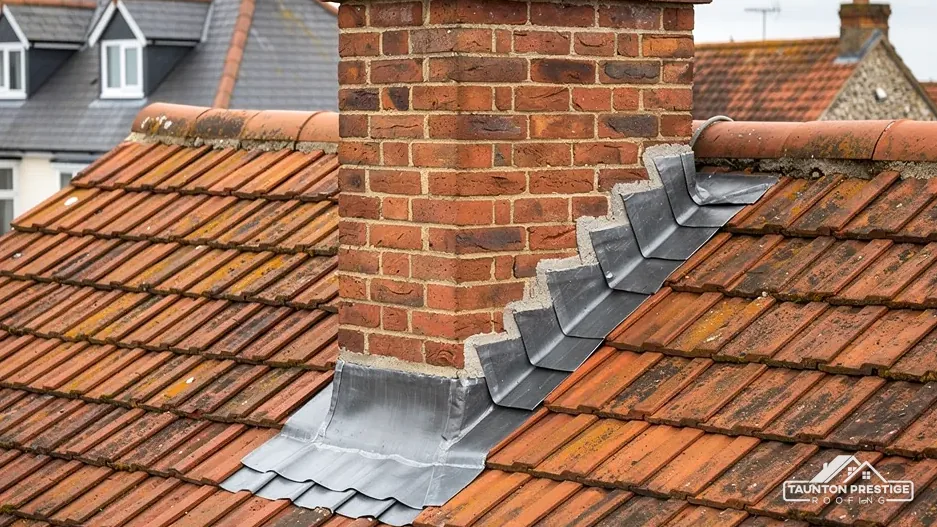
A chimney stack stands proud of the roof on all four sides, which makes it the part of a house that weather attacks first. Three parts do the work. Flaunching is the mortar collar that fixes the pots and throws water off the top. Flashing is the lead dressed between the stack and the slope to keep water out. Pointing is the mortar between the stack's own bricks or stones. On an old house it pays to find out which of the three has failed before anyone proposes a rebuild.
From the lane a stack looks sound, but the flashing on its far side tells the real story.
Frequently. Cracked flaunching can be cut out and renewed, loose pointing raked and redone, and a lifted flashing replaced with new lead. MyJobQuote gives typical UK ranges of £450 to £1,200 for chimney repointing (Oct 2026) and £350 to £920 for full chimney leadwork (Sep 2026), and scaffold accounts for much of the gap. Removing a chimney breast, the brickwork rising through the rooms, always needs Building Regulations approval, according to the Planning Portal, and taking a listed stack down can call for listed building consent. A stack on a shared wall brings the Party Wall etc. Act 1996 into play too.
Old lead is not automatically a problem. MyJobQuote says it can last for over 80 years, so a flashing that has not split may deserve re-dressing instead of replacing. Lead comes in numbered codes that signal thickness: code 4 is 1.80 mm and suits flashings, and code 5 is 2.24 mm. The survey fixes the code, and you see it before the price. Our chimney repairs and lead work pages say more.
Some Stogursey stacks are visible from the lane, yet the real trouble sits on the far side where nobody looks. Our photos of the stack from above show you exactly what we found, and what we would do about it.
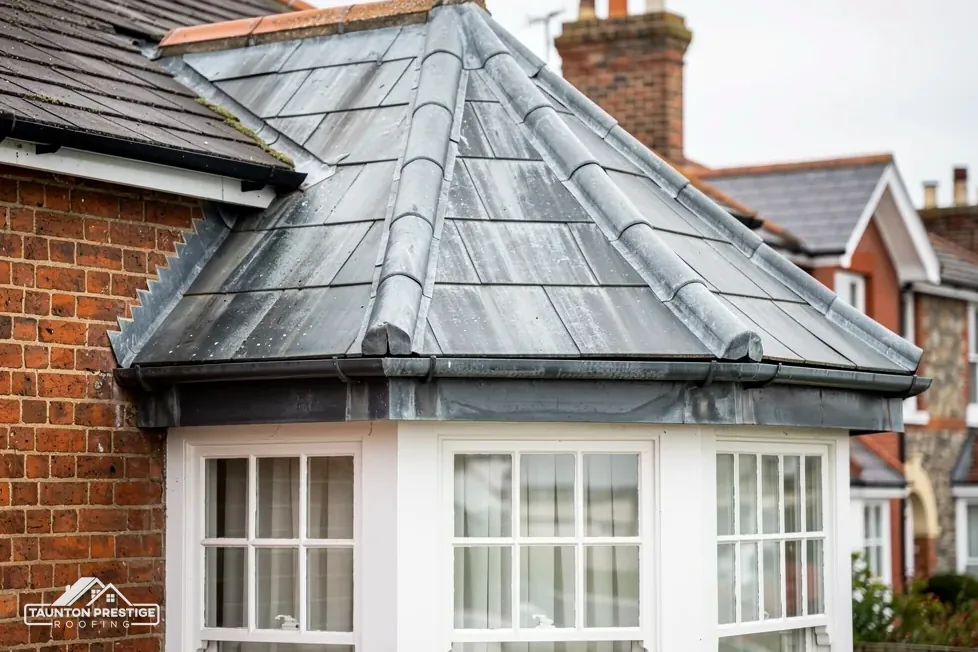
Plenty of Stogursey repairs need no scaffold at all. A ladder or a tower reaches a slipped slate or a loose ridge tile, and we say which access suits your roof once we have seen it. We choose the lightest access that is still safe, because scaffold adds days and cost. A full re-roof is different. Where scaffold has to occupy the road or the footway, section 169 of the Highways Act 1980 means the highway authority must licence it, and in Stogursey that is Somerset Council. Somerset Council restricts those licences to accredited contractors, and the contractor files the application, never the homeowner. Scaffold standing wholly on your own drive or garden is not on the highway.
What decides the price
Applications need 10 working days' notice, and Somerset Council charges £124.60 for each 28-day period (April 2026). If the work overruns, the contractor applies and pays for an extension. Start dates we quote already include that wait. Ask any firm quoting you whether the price includes VAT and the scaffolding.
Sometimes. By the Planning Portal's test, a re-roof is usually outside building control while under 25 per cent of the building envelope and under 50 per cent of the roof are touched. Fitting a covering that is 15 per cent or more heavier, though, does need Building Regulations approval and a structural check. A repair to a few slates or a ridge sits well below those limits, so it stays outside building control. The service for Somerset addresses is Somerset Building Control, on 0300 303 7790.
Following the visit, you receive pictures of the roof itself and one written figure, and when we leave the site is cleared. Send your Stogursey address and the check that worries you most, and we will arrange a time that suits you.
Walked the roof?
When you have read the checks, we walk the roof and show you the photos.
A different covering changes how the roof looks, and that is what a conservation area is there to guard. A close match laid as before is the easy path, while a new material or colour is a question for Somerset Council's planning team, and on a listed house it also needs listed building consent.
St Andrew's stands as a Grade I building and is still worshipped in, so the Church of England's faculty system covers it, not the council's listed building consent. The parish applies, and whoever repairs the roof follows the approved specification. With stonework this old and a tower from the late 11th century, that specification matters a great deal.
Birds with a nest under way or occupied are protected from intentional harm: destroying the nest is an offence under the Wildlife and Countryside Act 1981, and GOV.UK says no licence covers construction work. We look under the eaves on the survey visit, and the start date moves around any nest found.
Check that each price includes VAT and the scaffolding, and that it follows a survey with photos of your own roof. The standard VAT rate is 20% (GOV.UK). Citizens Advice recommends gathering at least 3 written quotes from separate traders before you decide. Its consumer helpline is 0808 223 1133.
Tell us which slope or stack in Stogursey is on your mind, and a visit can be booked.