Church of St Thomas
Grade I listed in 1966; its 15th-century porch has a vaulted roof of Beer stone with carved bosses.
Cob cottages, a Grade I church and cobbles in the Exe Valley
Thorverton lies in a small valley on the edge of the Exe Valley, with a conservation area first designated in 1973 and a Grade I church.
Grade I listed in 1966; its 15th-century porch has a vaulted roof of Beer stone with carved bosses.
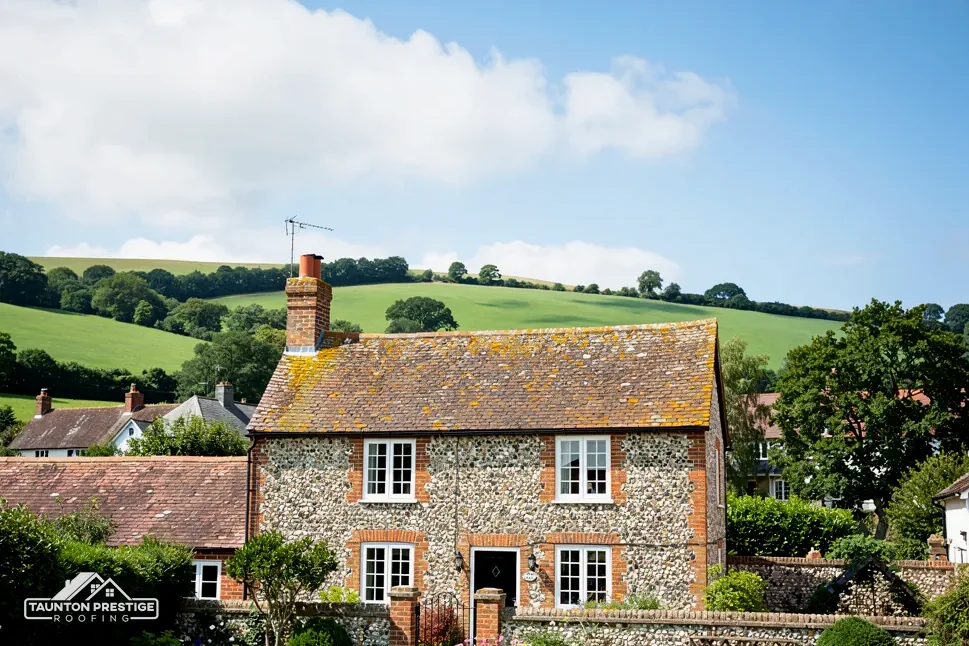
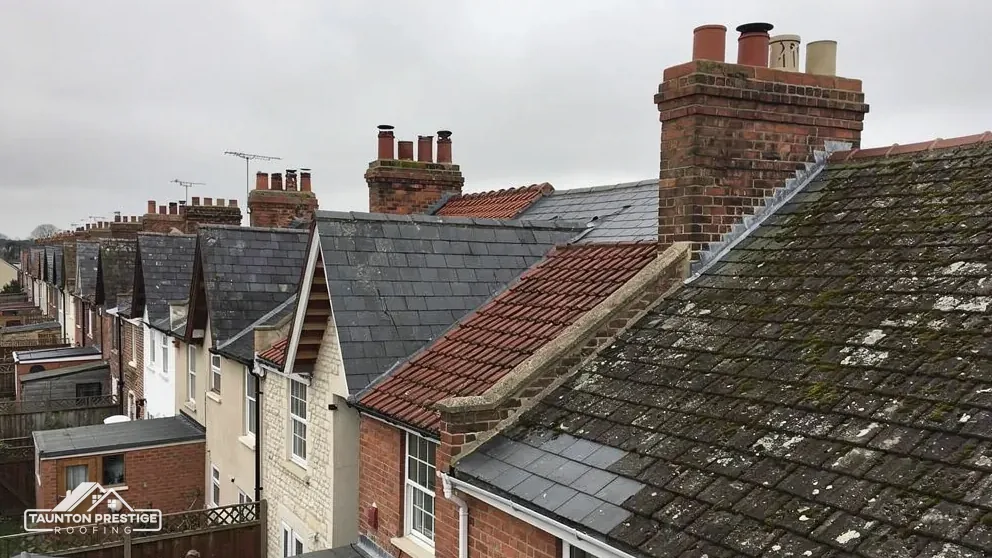
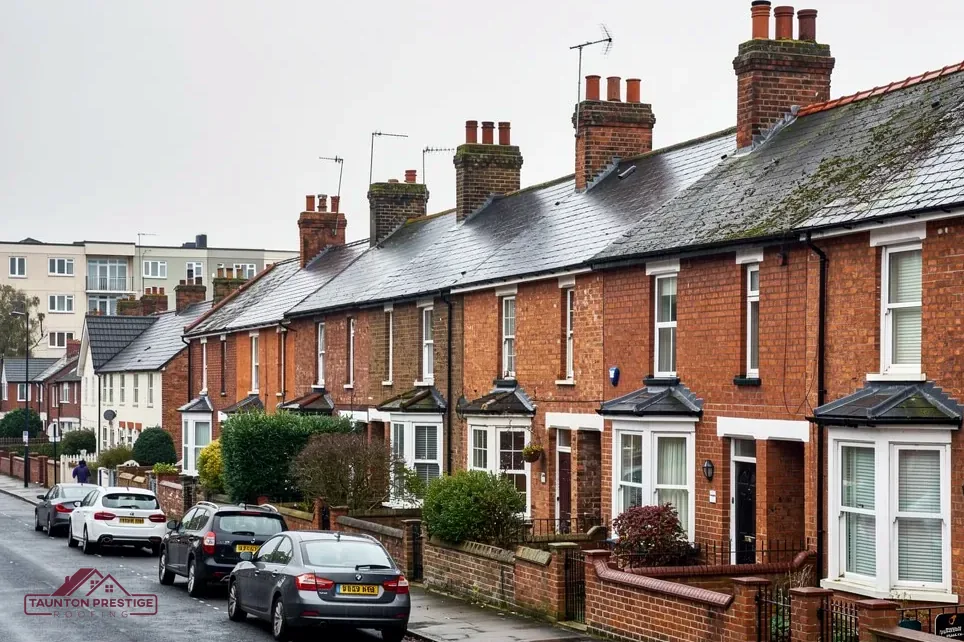
The council's 2015 appraisal describes colour-washed rendered cob or stone rubble walls under thatch or slate.
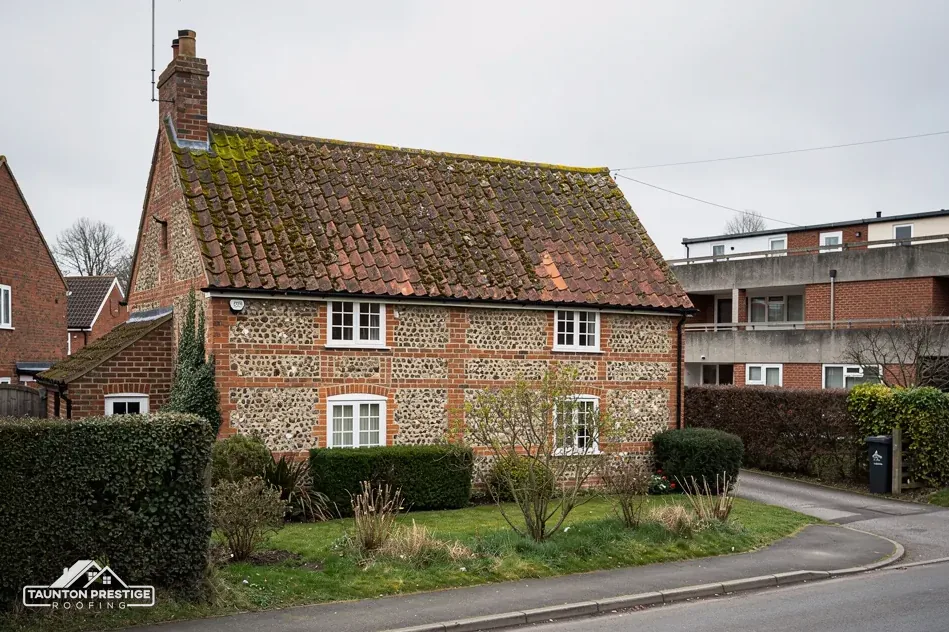
Once one Milford Lane home, built of cob blocks in a stud frame, which the appraisal calls rare in Devon.
Street map of Thorverton with Silverton, Bradninch, Broadclyst, Tiverton marked around it, and Taunton.
Silverton lies just east of Thorverton and Bradninch further east, with Tiverton to the north, Cullompton to the north-east and the Raddon Hills rising about 2 miles north-east.
About 23 miles south-west of Taunton, Mid Devon District Council and Devon County Council.
Four checks in the Exe Valley
Old walls, slate fixings, gutters beside the stream and the scaffold licence: what we check on a Thorverton house, and why it matters to the cost.
Thorverton's conservation area was first designated on 6 February 1973, and Mid Devon District Council's 2015 appraisal of it is unusually detailed about the village. It records that the cobbling here is more intact and more extensive than in any other village in Mid Devon, and it describes listed cottages in colour-washed rendered cob or stone rubble under thatch or slate. A roof in that setting is read as part of the wall beneath it.
Because a roof on old walls has to shed water well clear of them. Acorn House and Acorn Cottage in Milford Lane, once a single dwelling, are built of cob blocks in a stud frame, which the appraisal calls rare in the South West and rarer still in Devon. On a house like that, a slipped slate or a failed gutter joint sends water onto the wall, and we look for the stained patches below the eaves before we look at the slates.
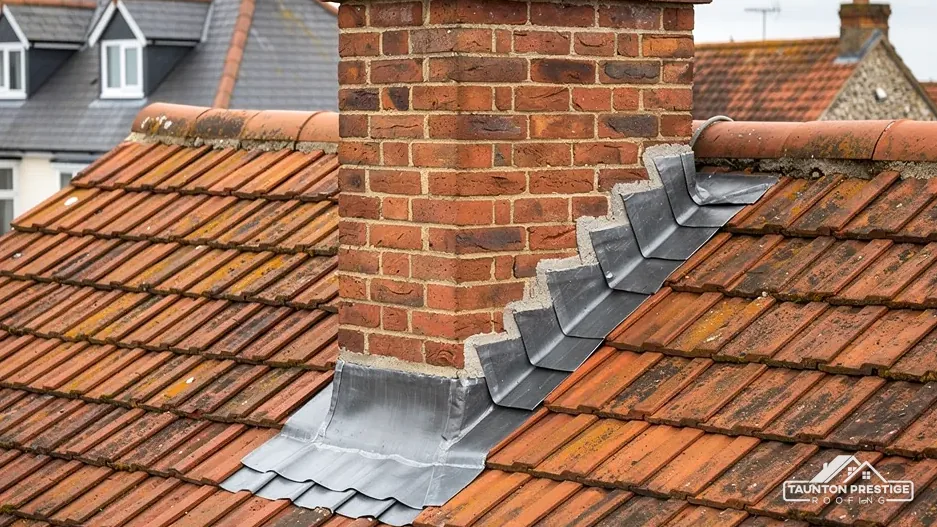
Thatch is a thatcher's trade. Where a cottage has a slate roof, a lead valley, a chimney or a rear extension in a different covering, our survey covers all of that, and we say plainly where a thatcher is the right person to ask. Our planning permission for roof work guide helps you decide who to approach first.
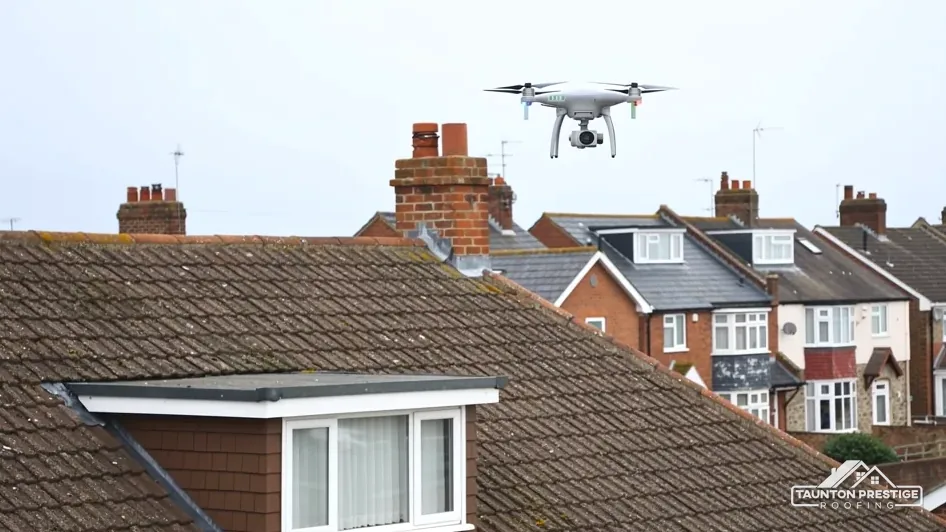
Photographs matter more on a house like this than on a modern one. We record the render, the eaves, the abutments and each slate course, so that if a repair alters the junction between old walls and a new covering, the planning team can see what is there rather than imagine it.
A like-for-like repair to an unlisted house normally goes ahead without an application, but a listed cottage or a change of covering in the conservation area is a question for Mid Devon District Council's planning team. A set of pictures showing the roof today keeps that conversation short, and we take them at the survey.
Look for
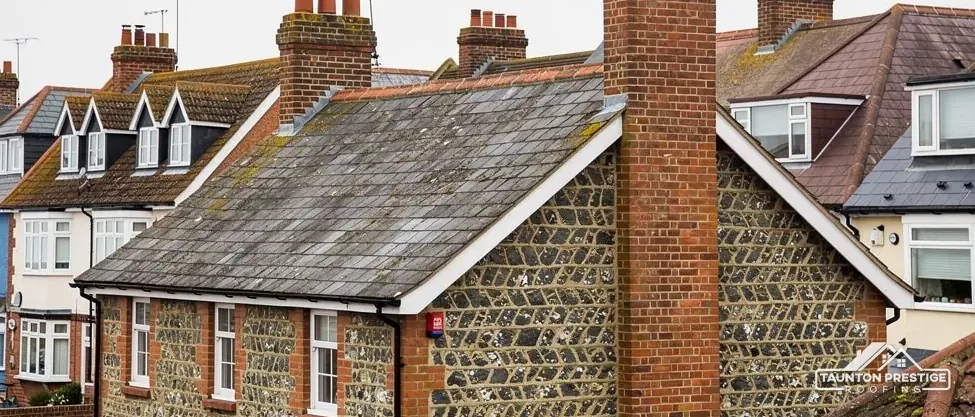
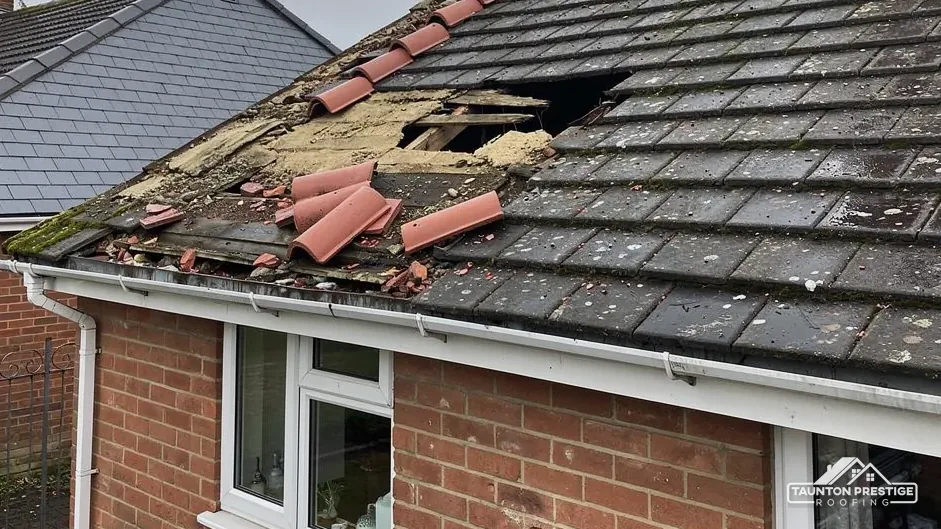
Slate roofs fail at the fixing long before the stone gives out. According to CORC, slate that is well maintained can reach 100+ years, though that figure belongs to the stone, not to the nails or hooks that hold it. When a fixing corrodes, the slate slides and leaves a gap where rain reaches the underlay, the sheet that sits under the battens, and the battens are the timber strips the slates hang from.
What decides the price
Yes. For natural slate, BS 5534 puts the minimum pitch at 20 degrees, while Cupa says hooks should be avoided on any pitch under 25 degrees. A low pitch on an extension or a porch may need nails or a different covering. The survey includes a pitch measurement, photographed so that you can see the number for yourself.
Underlay is the second line of defence. If a slate cracks or slips, the underlay sheds the water that gets past it, and an old, brittle sheet stops doing that. When we strip a slope to relay it, we replace the underlay and the battens together, because the work needed to reach one is the work needed to reach the other.
A handful of loose slates can be refixed or replaced with matching ones. If slipped slates run in lines across a whole slope, or the battens beneath are soft, stripping and relaying on fresh battens pays back better. For a new slate roof MyJobQuote's average is around £7,800 (Oct 2026), and the range is wide because the house, the area and the access all differ.
Reclaimed slate is worth asking about on an old cottage. Sound reclaimed pieces match the weathered look of an old roof and keep a repair from looking like a patch. We check the stock for chips and soft edges before it goes up.
Our slate roofing page goes through the options, including reclaimed slate where a match matters.
Sound or needs work
A small tributary stream flows through the middle of Thorverton, and the Environment Agency's Flood Map for Planning has Flood Zone 3 within about 250 metres of the village's mapped centre. The map covers land, not individual roofs, while GOV.UK's long-term flood risk checker answers the question for one address. What the roof itself has to do is simpler: pass its rain to the gutters and downpipes without wetting the walls on the way.
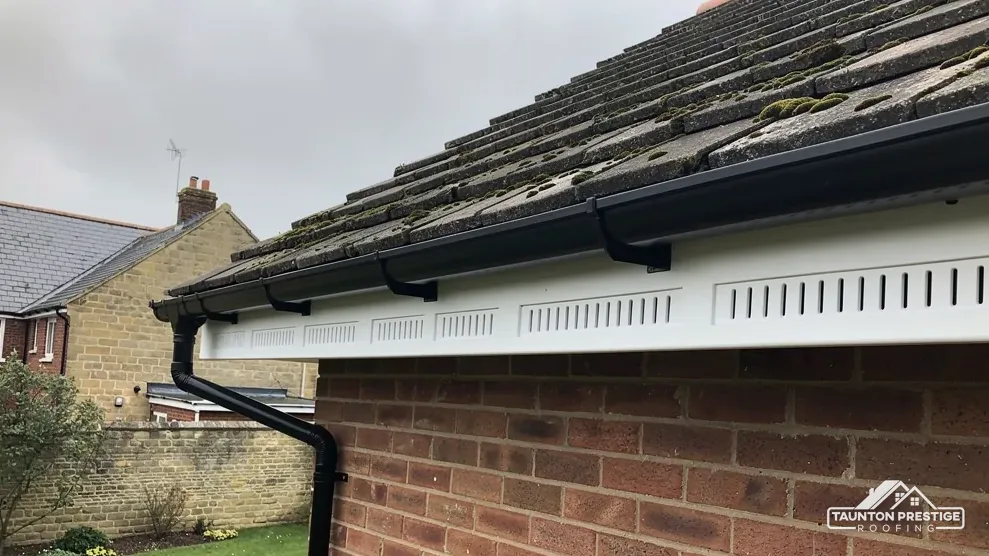
Suspects are a clogged outlet, a leaking joint or a section that no longer falls to the outlet. Brett Martin's figure is 1mm of fall per 600mm of gutter, and a single bracket that has sagged can cancel it out. Gutters hang off the fascia, a timber board along the eaves line, and under the overhang sits the soffit. Overflow that goes on for a few seasons softens the fascia until the brackets lose their hold.
When several lengths have cracked or the fascia is rotten behind them. MyJobQuote's typical UK range for new guttering is £1,000 to £1,600 (Oct 2026), and old-style cast metal on a listed cottage may need matching rather than uPVC. Our gutters, soffits and fascias page has the choices.
If a downpipe has to be replaced, the new one should discharge to the same gully or a better one, never closer to the wall. We photograph the old route first so that the new one can be matched to it.
Downpipes deserve the same attention. A pipe that empties at the foot of an old wall, rather than into a gully, keeps the base of that wall wet. We note where each pipe discharges and whether the gully beneath it is clear, so you can see which fix belongs to a roofer and which to a drainage contractor.
We clear and flush the run at the survey and watch where it spills, so the evidence is on camera and not in anyone's memory.
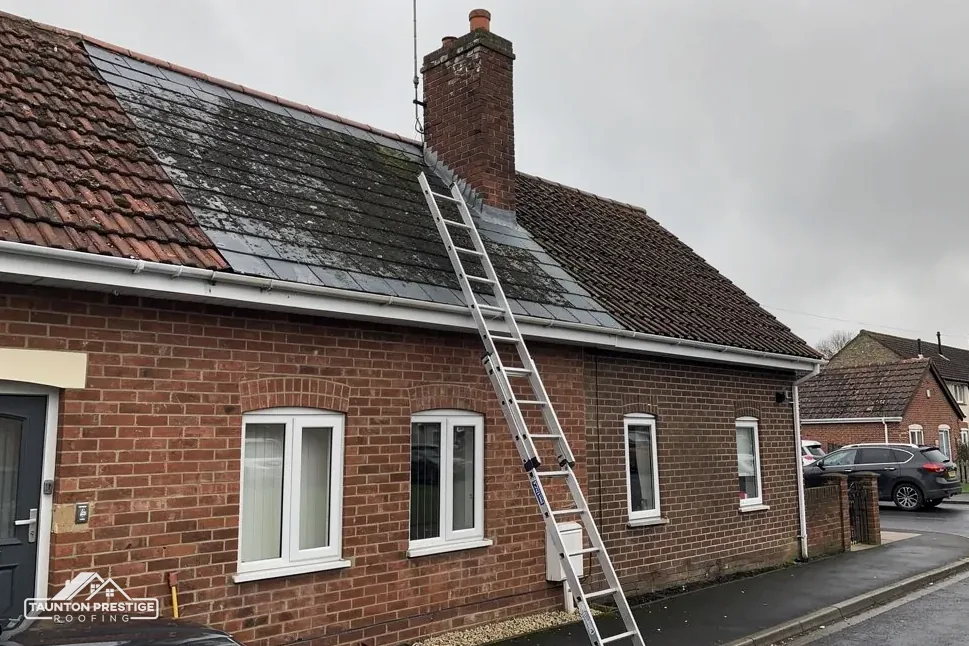
Scaffold that sits on the road or pavement falls under section 169 of the Highways Act 1980, and the highway authority issues the licence. In Thorverton that is Devon County Council, and it takes its applications from scaffolding firms working for their customers. A licence is £158, at least 10 working days' notice is wanted, and a licence can run for no more than 12 weeks.
Through Mid Devon District Council, building control is handled by NMD Building Control, which is shared with North Devon. The Planning Portal's test is the guide for a full re-roof: below 25 per cent of the building envelope and below 50 per cent of the roof, no application is normally required, but a covering 15 per cent or more heavier calls for approval.
Under section 1 of the Wildlife and Countryside Act 1981, intentionally damaging a nest that is in use is an offence, and GOV.UK notes that construction is not a licensable reason. We check the eaves and ridge gaps before fixing a start date, and the date moves to suit the birds.
GOV.UK explains that every bat species is fully protected, along with its roosts, and it counts roof repair among the activities that can affect them. Before work starts we look in the roof space and at the gable ends, and if there are signs of bats the plan changes.
Once surveyed, you hold pictures of your roof and a written total for the entire job. Pass us the Thorverton address and say which area is troubling you, then we will fix a visit.
What decides the price
Walked the roof?
When you have read the checks, we walk the roof and show you the photos.
Yes, in most cases the answer is to match what is there: the same slate size, the same colour, the same ridge detail, and reclaimed pieces where a new one would stand out. For a listed cottage or a change of covering in the conservation area, check with Mid Devon District Council's planning team before ordering materials.
The Baptist church in Thorverton is a Grade II listed building still in use for worship. Whether the ecclesiastical exemption covers it depends on a Schedule 1 trust corporation: if one holds the building, the denomination's own system applies, and if not, the council's listed building consent does. Its trustees can say which, and that answer should come before any roofer quotes.
On Devon County Council's rules the scaffolding company is the applicant, acting for the customer, and at least 10 working days' notice is wanted. The licence is £158. Whoever quotes for your roof should name who is applying and when, so the first day goes ahead as planned. Ask for the answer in writing.
Before a start date is fixed we check the eaves, the gaps behind fascias and the ridge ends. The Wildlife and Countryside Act 1981 makes it an offence to act intentionally against a nest in use, so the work waits until the nest is empty, and bats are looked for on the same visit.
Tell us which wall, slope or gutter is giving trouble, and we will book the survey.