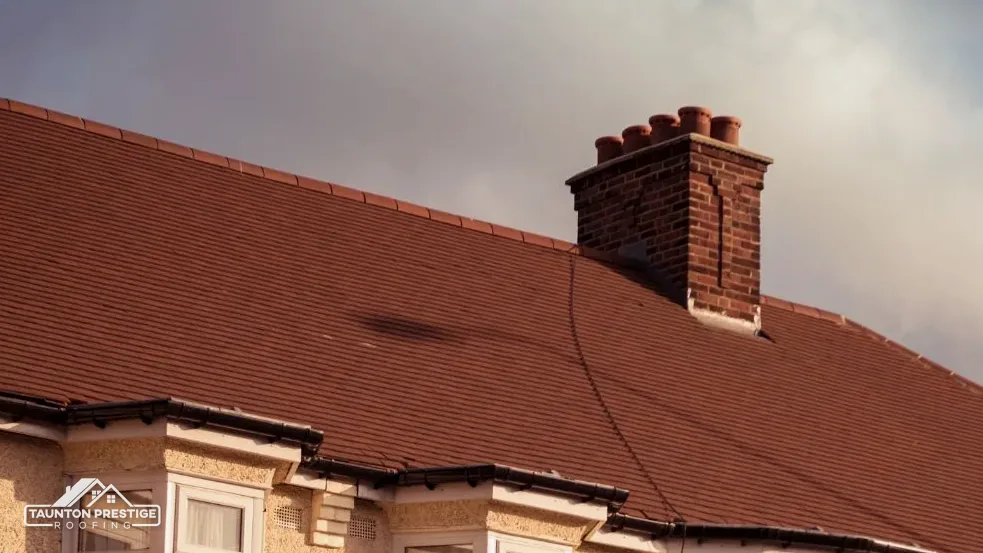
Oldsway Cottage
Listed Grade II since 21 February 1986, so a change to the covering or the ridge needs the right consent.
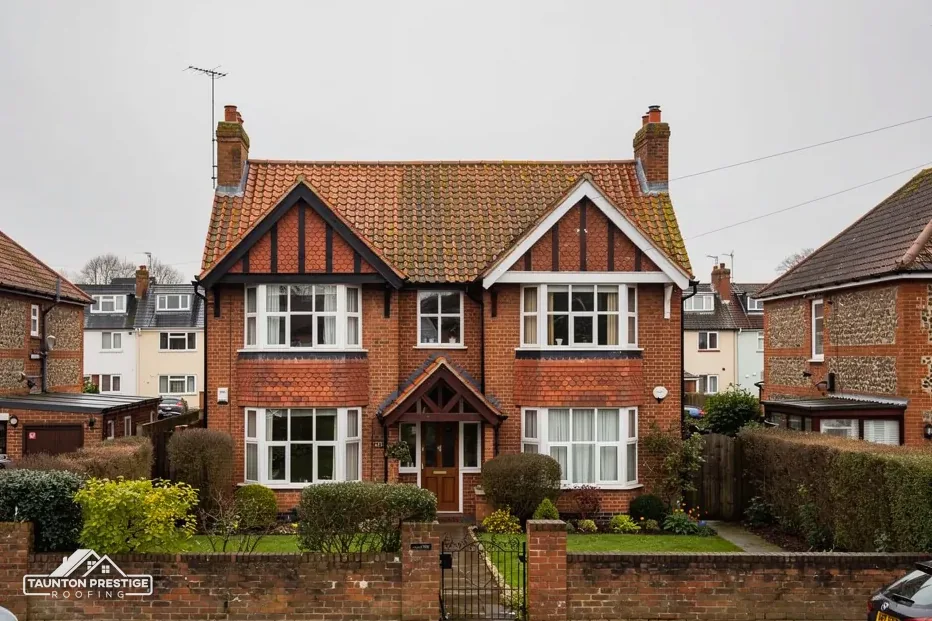
A Grade II cottage and farmhouse in North Curry parish
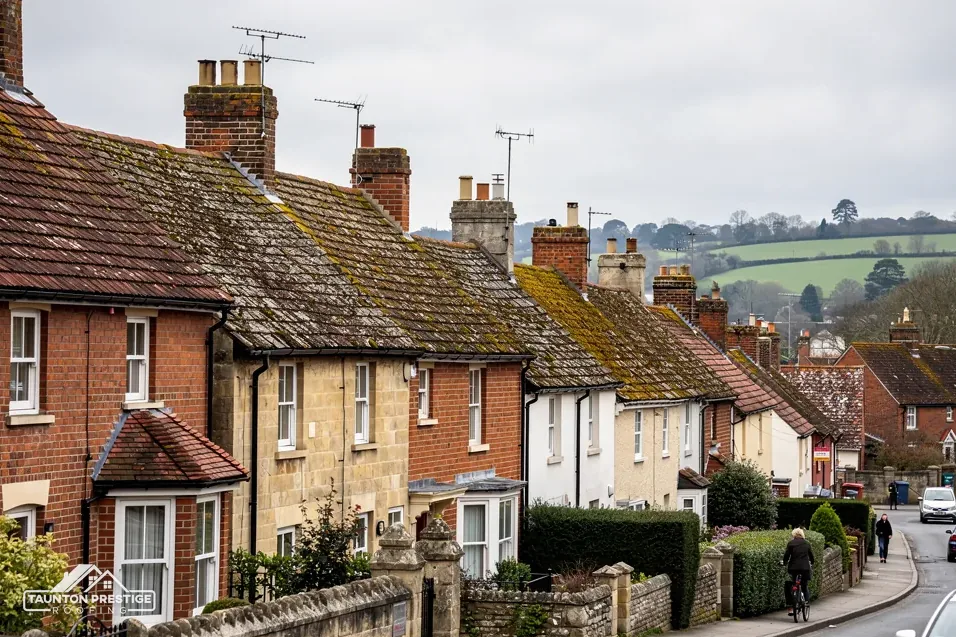
Wrantage is a village in North Curry parish, with two Grade II houses close by and its centre point in Flood Zone 3. We read the roof before pricing it.
Listed Grade II since 21 February 1986, so a change to the covering or the ridge needs the right consent.
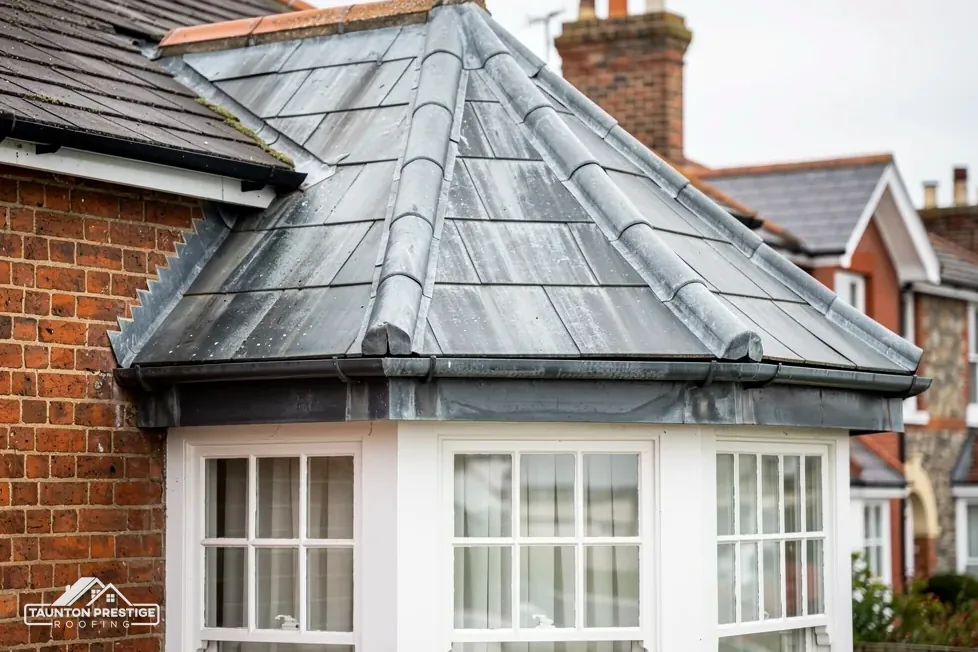
Also Grade II listed, one of two list entries within 500 metres of the village centre.
On the Environment Agency's planning flood map, Wrantage's centre point falls in Flood Zone 3.
Street map of Wrantage with Lillesdon, Hatch Beauchamp, West Hatch, Thornfalcon marked around it, and Taunton.
Lillesdon lies to the north and North Curry to the north-east, with Thornfalcon to the north-west, West Hatch to the south-west and Hatch Beauchamp to the south.
About 5 miles east of Taunton, Somerset Council (unitary).
Four checks on the North Curry side
Two listed houses, a flood map that says nothing about your roof, a conservation boundary nearby and who may be living under the eaves.
Two list entries lie within 500 metres of the middle of Wrantage, and both are Grade II. Oldsway Cottage was first listed on 21 February 1986, and Weavers Farmhouse is on the National Heritage List too. A list entry names a building and records that it matters. It does not dictate what the roof must be made of, and we do not assume it from the name; the roof has to be read from the roof.
Not every one, and owners find that reassuring. Consent hinges on one question: would the work change the house's special architectural or historic character? A new kind of covering, a different ridge or roof windows cut into a slope are the obvious changes that do. Our short answer on listed building roof consent goes through the steps, and the planning officers at Somerset Council will give a view on a doubtful case before you spend a penny.
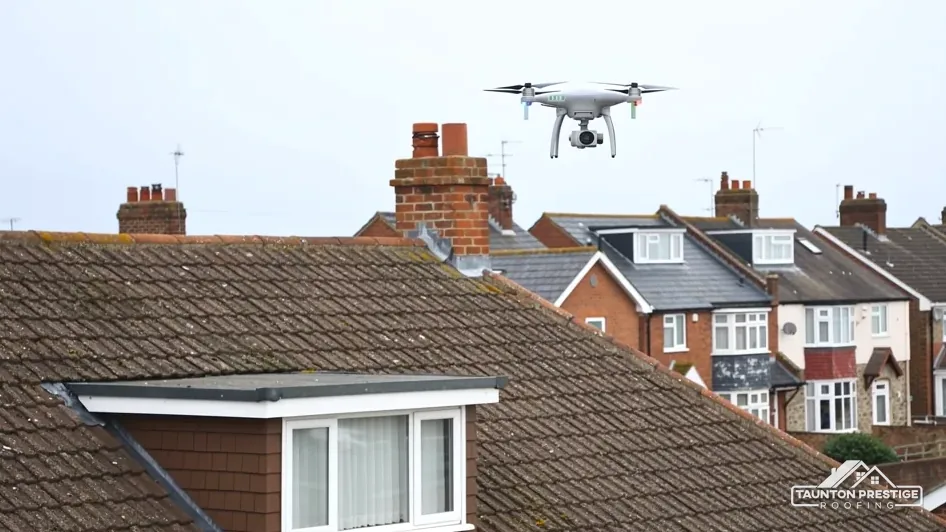
Pictures of every slope, plus the ridge, verge edges, valleys and stack, taken before anything is lifted, serve three readers. You see what is up there. A conservation officer can judge a proposal against it. A later buyer learns what was done and when. A cottage roof mended without a record is a roof with a gap in its story, and gaps are what a buyer's solicitor asks about.
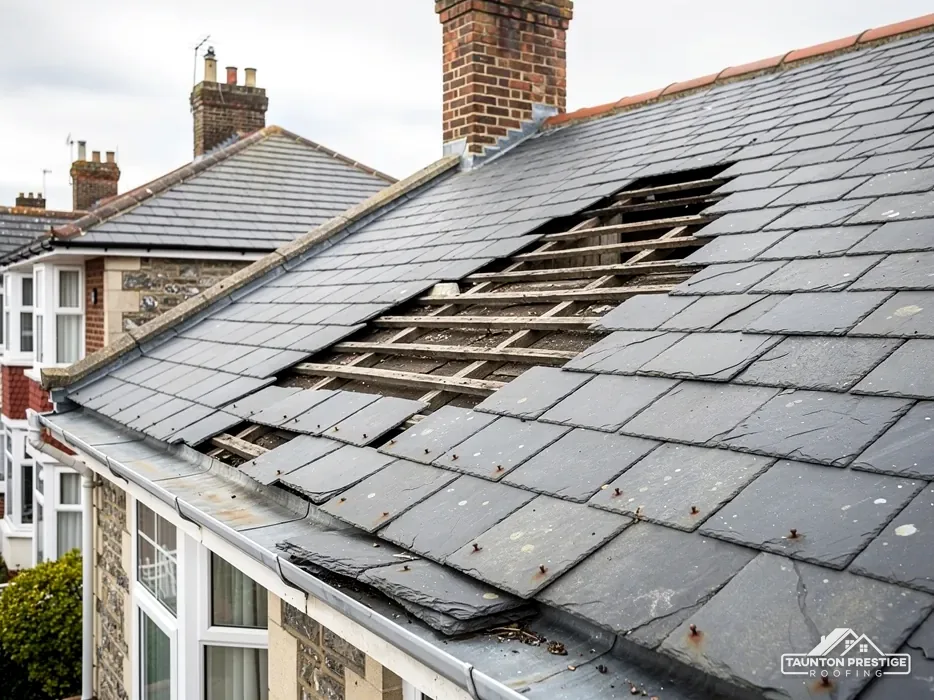
Where a covering has to be renewed piece by piece, matching matters: size, colour and texture should follow the old, and salvaged pieces are sorted before any new ones are ordered. If a stack has been rebuilt or a ridge re-bedded, the council may ask for the old and new details, and a set of earlier photographs turns that request into an hour at a desk.
Look for
A flood zone is a label for land. On the Environment Agency's planning flood map, Wrantage's centre point falls in Flood Zone 3, and that tells you about the ground at that one spot, not about a particular house and certainly not about its roof. For your own address, GOV.UK's tool for checking your long term flood risk gives a proper answer, and its separate check for flooding shows warnings as they are issued. A roofer cannot change either result.
A flood map describes the plot; the gutters decide where the roof's own rain goes.
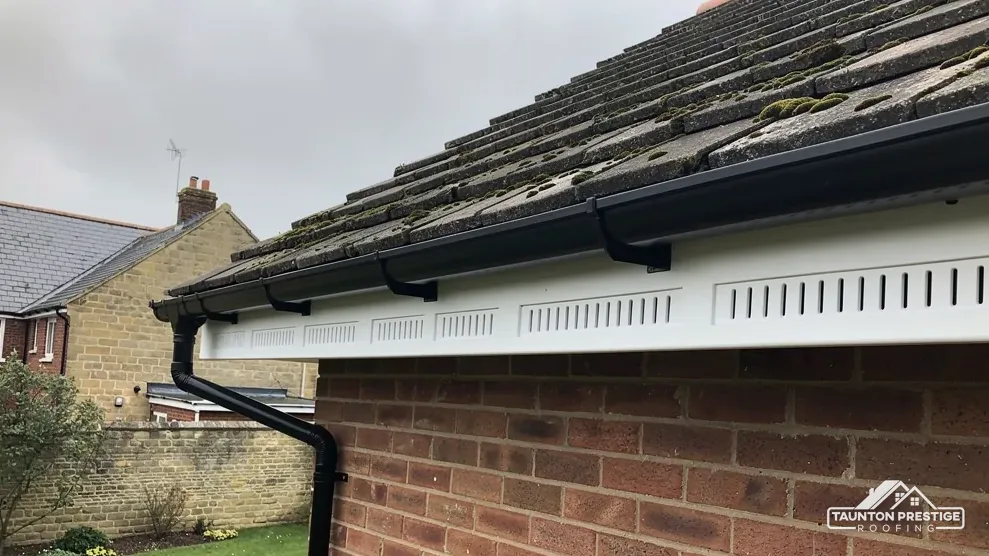
It should not, though it cannot cure one either. A roof can at least deliver its own rain to the drains cleanly and add nothing to a sodden plot, which makes the guttering, the pipes and the gully at the foot of each pipe the parts to get right. Brett Martin gives the fall as 1 mm for every 600 mm of run (fitting guidance), so a bracket that has slipped even slightly leaves water standing in that length, and the spill then streaks the wall below. Cast or plastic, the same arithmetic applies.
Often it is a leaking joint or a blocked pipe above that corner, and the cure costs less than the damage it leaves. We trace the whole path of the water: slope, gutter, run, pipe, drain. If the gully at the bottom is slow to clear, that is a ground matter for a drainage firm, and we tell you that instead of selling you new gutters. Fascias take the worst of an overflow, and a softened board stops holding the brackets. Our gutters, soffits and fascias page explains the choices, and MyJobQuote (Oct 2026) gives around £1,000 to £1,600 as a typical UK range for replacing guttering.
Within about 2.5 km of Wrantage, the national planning dataset finds two conservation areas: Hatch Beauchamp and Thornfalcon. Somerset Council's own table gives Thornfalcon as designated on 12 November 1998. A line on a map a field away puts nothing on your house; the council's own map shows which side of it an address falls.
What decides the price
Send the full postal address to Somerset Council's planners and put three questions: is the house inside a conservation area, is it listed, and is an Article 4 direction in force? An Article 4 direction is listed for Hatch Beauchamp, confirmed in 1978. Before relying on it either way, get the planners to tell you its scope in writing. A yes to any of the three changes the order of work, so ask before materials are bought.
Inside a conservation area, a dormer or a change of covering goes to the council first, and to the roofer second. Outside one, matching the neighbours is still the sensible default. The price effect comes from decisions, not from the line: whether the same covering returns, whether sound slates are reclaimed and re-laid, whether a new ridge copies the old.
Reclaiming slates takes more labour than opening a new pack, yet it keeps the roof's colour and texture even across the slope. Salvaged slates also weather at the same rate as the ones left in place, so a mended slope does not show a patch of brighter stone for years afterwards. We sort and count the salvage at the survey, so the quote reflects what can be reused instead of an optimistic guess. A Wrantage owner who wants to see the effect can ask for the photographs of the salvaged pile before the order for new slates is placed.
Sound or needs work
Old farmhouses and cottages have eaves, lofts and gaps that wildlife finds useful, and a roof job can disturb it. Two sets of rules matter. For nesting birds, section 1 of the Wildlife and Countryside Act 1981 is aimed at whoever, intentionally, takes a nest, damages it or destroys it while birds are using or building it, and GOV.UK adds that construction is no licensed excuse. An occupied nest therefore shapes the start date, and a roof with a nest under its eaves may have to wait.
What decides the price
GOV.UK describes every bat species, and the places where bats breed or rest, as fully protected, and roof repairs and full replacements are on its list of jobs that can touch them. The Habitats Regulations make it an offence to disturb a bat deliberately, and also to damage the places bats breed or rest, even with no intent behind it. The Wildlife and Countryside Act adds one more: intentionally or recklessly disturbing a bat that is sheltering inside a structure, or obstructing its way in.
We check the eave gaps, the ends of the ridge and the loft space for droppings, staining and nesting material, and ask what you have seen at dusk. If there are signs, we leave that section alone until a bat specialist has advised. If water is coming in meanwhile, our emergency and general roof repairs page sets out what happens on a first visit and what follows. We never close a gap or lift a tile that might be a bats' way in on a guess. A short delay costs less than a prosecution or a damaged roost.
Once the survey is done, you get one written total for the job. Send us the Wrantage address and anything you have noticed in the eaves, and that visit goes in the diary.
Walked the roof?
When you have read the checks, we walk the roof and show you the photos.
Re-bedding a ridge in matching material is normally a repair, though work that changes the look of a listed roof needs listed building consent. Mortar alone no longer counts as a safe way to hold ridge tiles, so fixings may be added. Ask Somerset Council's planning team before changing the ridge's appearance.
No. The zone describes the chance of the land flooding and has no bearing on how a roof is built or mended. For your address, run GOV.UK's long term flood risk check. The roof's contribution is rainwater, which gutters, downpipes and gullies must carry off, so we look at those first.
Somerset Council's planning team, from its boundary map, and you should ask for the reply in writing. The government's planning data maps Hatch Beauchamp and Thornfalcon as the nearest areas to Wrantage, but the council's own map is the final word. Keep the answer with the house papers, and pass it to any buyer later on.
The address, a photograph of the stain with the date, and a note of when it appears: after rain, after wind, or all the time. Put a bowl under the drip. Our first step is to make the leak safe, and the cause comes next; it often lies a long way along the rafters from the stain.
Send the Wrantage address and a short note on how the roof is behaving, and a survey date follows.