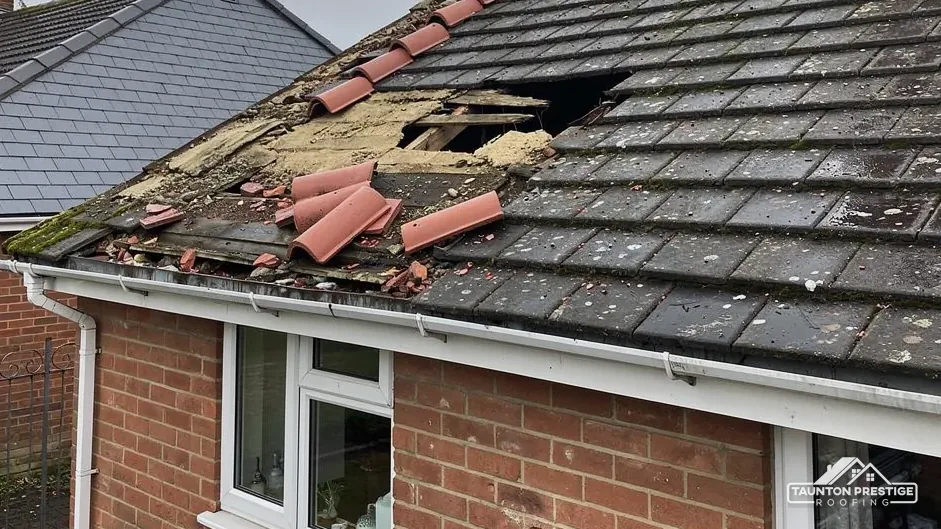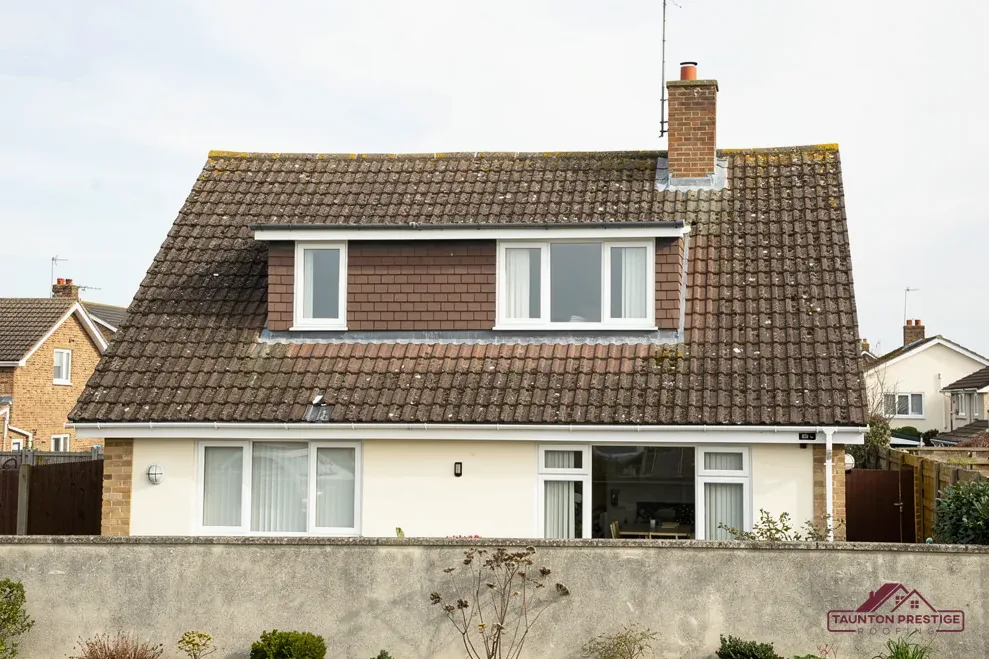
St Andrew's church
Listed since February 1955 and still a parish church, so its roof sits under the faculty route.
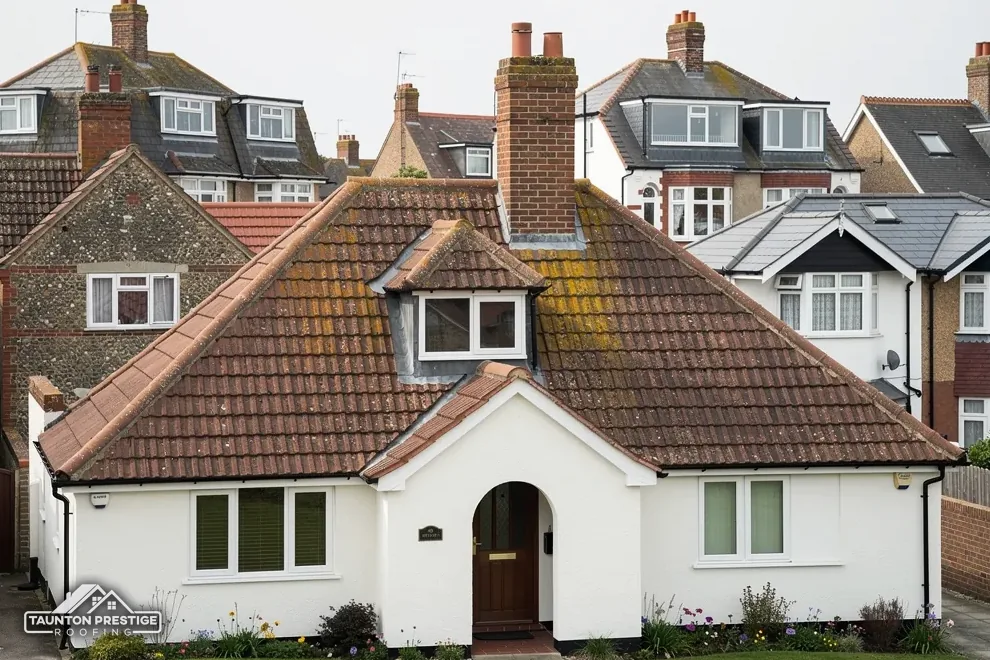
A Grade II church, Virgins and walls of Blue Lias
West Hatch is a parish of 313 residents south-east of Taunton, with St Andrew's church and the house called Virgins both Grade II listed. We survey before we price.
Listed since February 1955 and still a parish church, so its roof sits under the faculty route.
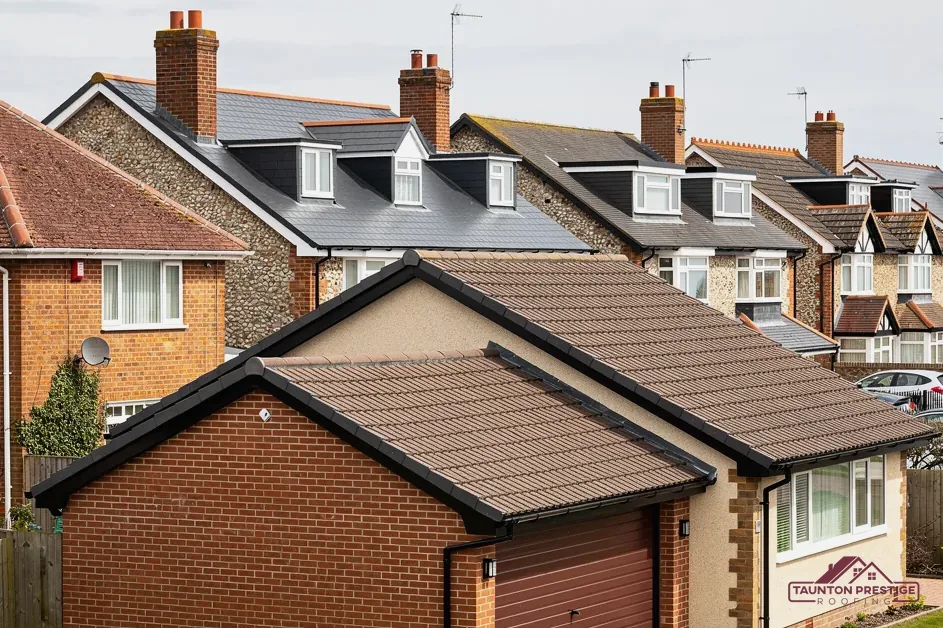
Listed in February 1986; work that alters how the roof looks needs listed building consent on top of ordinary permissions.
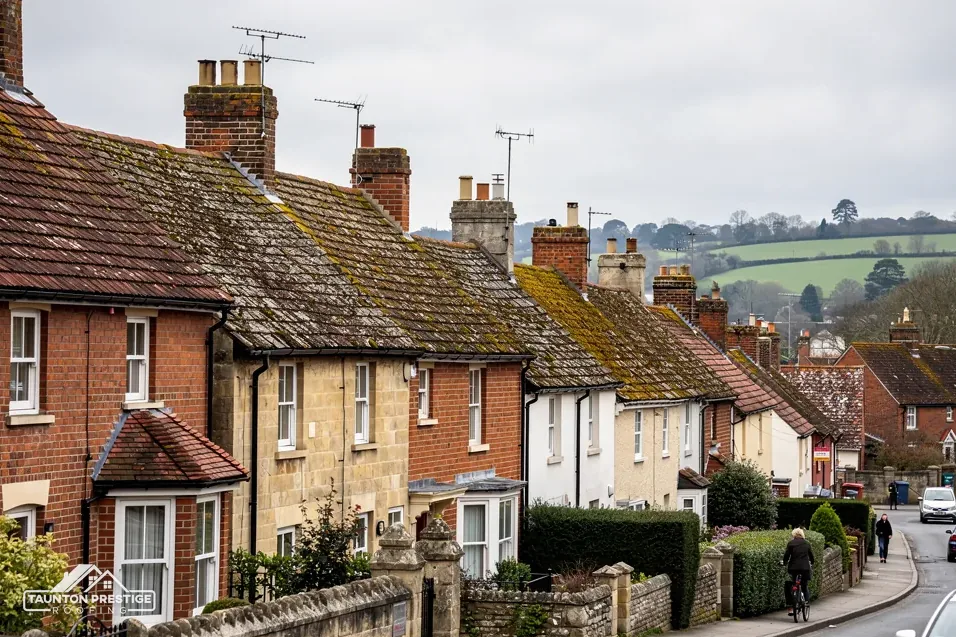
A heritage trust survey of older buildings recorded Blue Lias as 96% of the building stone found in West Hatch.
Street map of West Hatch with Hatch Beauchamp, Thurlbear, Wrantage, Thornfalcon marked around it, and Taunton.
Hatch Beauchamp lies east of West Hatch, Thurlbear lies west, Curland is south and Wrantage lies north-east of the parish.
About 4 miles south-east of Taunton, Somerset Council (unitary).
Four stops around St Andrew's
Four things worth settling before a roof job here, from who has to agree to what the final figure depends on.
St Andrew's has been Grade II listed since 25 February 1955, and it is in use as an Anglican parish church. That answers the consent question before anyone touches a slate. Because West Hatch's Anglican congregation still worships at St Andrew's, its fabric comes under the faculty system, which does for it the work that listed building consent does for a house. The parish lodges the faculty request, and the roofer then builds to whatever that allows.
Yes, in some cases. Somerset Council handles listed building consent for a redundant West Hatch church, a converted chapel, or a listed Unitarian or Quaker meeting house. Methodist, URC and Catholic congregations in active use keep their own approval systems. So the opening question on any West Hatch church job is who owns the building and who uses it today.
A plain written record of what is up there. We photograph each slope, each valley and each gutter, and mark what has worn, split or slipped. If an old church roof has lead, it turns up in valleys, where two roof slopes run into each other; in flashings, the strips that seal a roof against a wall or tower; and in soakers, small folded pieces tucked under the covering beside a wall. MyJobQuote's figure for lead flashing is over 80 years, as a lower bound, so age alone never condemns a sheet. Splits, thin patches and lifted edges do, and each one is marked on the survey photographs so the parish can see exactly where.
A record like that lets a parish ask for the right amount of work, instead of a whole slope re-laid because one valley failed. Our lead work page explains the thicknesses, called codes, used for each job.
A tower can cost more to reach than to repair, and a faculty can shift the start, so we shape the programme around the parish's decisions.
Look for
Virgins, listed Grade II since 21 February 1986, is the house here that the national list singles out. The South West Heritage Trust's survey of older buildings visible from public paths recorded Blue Lias at 96% of the building stone in West Hatch. We read that as a clue about the walls and never about the roofs, because a stone wall decides how a roof has to be finished along its edges.
Sound or needs work
What decides the price
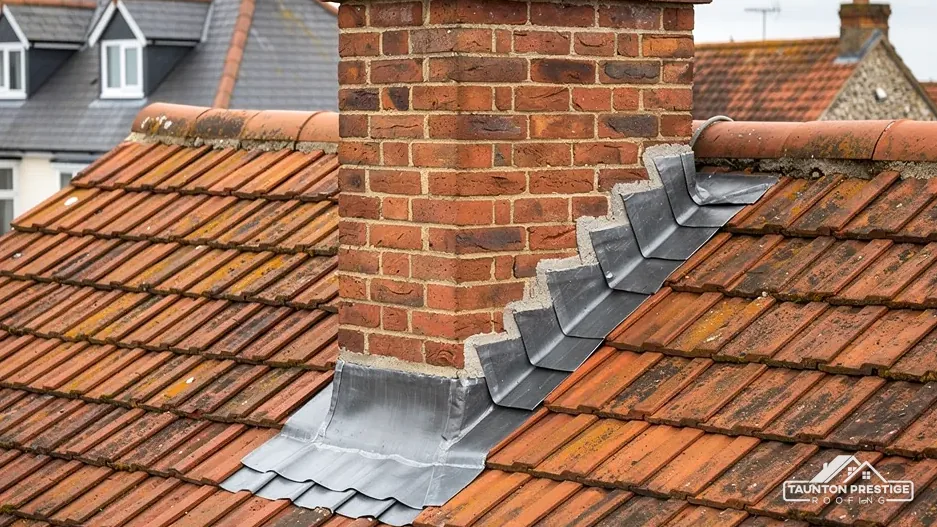
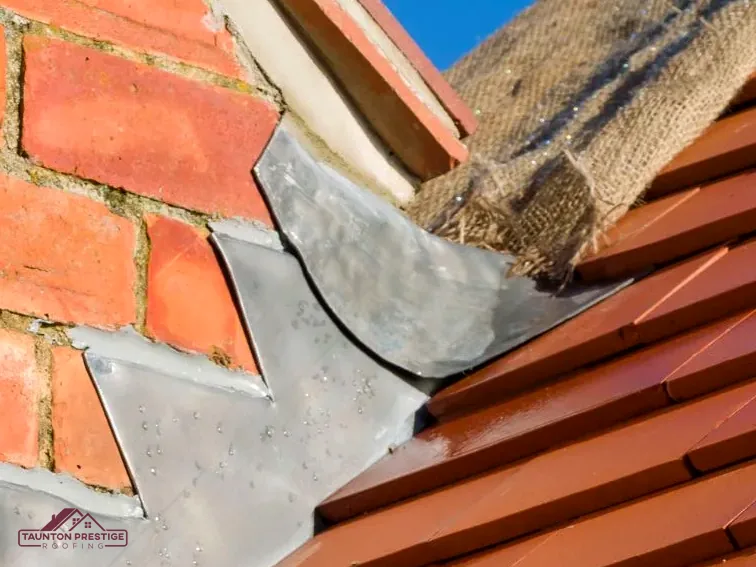
Rubble is uneven, so the junction between roof and wall is cut and fitted by hand. At a gable the verge is the stretch where the roof stops against the wall, and it is tucked in or boarded over. A flashing, lead turned into the lias and wedged where the mortar was raked back, turns rain away from that joint. When the groove has crumbled or the mortar has washed out, water slips behind the lead, and the earliest warning tends to be a tide-mark inside, on an upstairs wall.
It can. A change that bears on the special interest of Virgins needs listed building consent. Putting back a few slipped tiles of the same type is repair. A different covering, ridge or verge finish is a decision for the council, and the planning team at Somerset Council can answer for your address before you order anything.
Our survey photographs every junction, so you see for yourself how the lead and the pointing stand. Where one flashing has failed, its neighbour is often close behind, and we say that before the figure is written. Pointing matters as well: a strong cement mix can split softer stone, so we propose a mortar that suits the wall.
On the Environment Agency's Flood Map for Planning, parts of the land within about 250 metres of the centre of West Hatch fall in Flood Zone 3. The map describes ground, not houses, and it cannot say how a single roof copes in a storm. GOV.UK will look up long-term flood risk for one West Hatch address at a time. A roof can do one useful thing on wet land: pass its water quickly and cleanly to somewhere that can take it.
The flood map covers the ground; the downpipes decide what happens to this roof's rain.
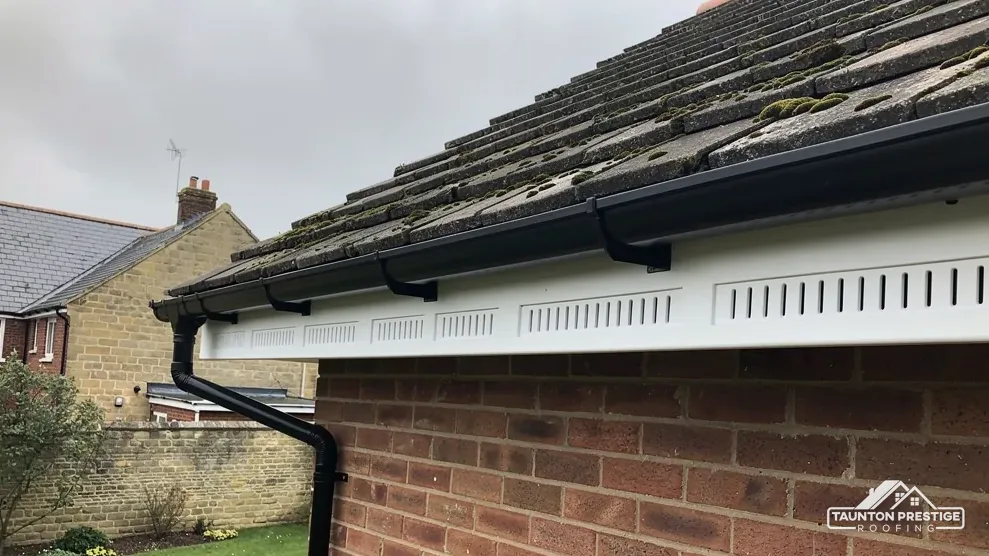
Watch where the spill happens. Water pouring over at a corner or a joint suggests a blockage or an open seam. Water slopping over along a stretch suggests the run has lost its slope. Brett Martin's fitting guidance gives 1mm of fall for every 600mm, so a single sunken bracket can hold a puddle in the run. The gutter sits on brackets fixed to the fascia, which is the board along the eaves, and under it the soffit boxes in the gap. Both live in the splash zone, so rot starts there. Damp boards soften, and then the brackets give way. Our gutters, soffits and fascias page covers the repairs and replacements.
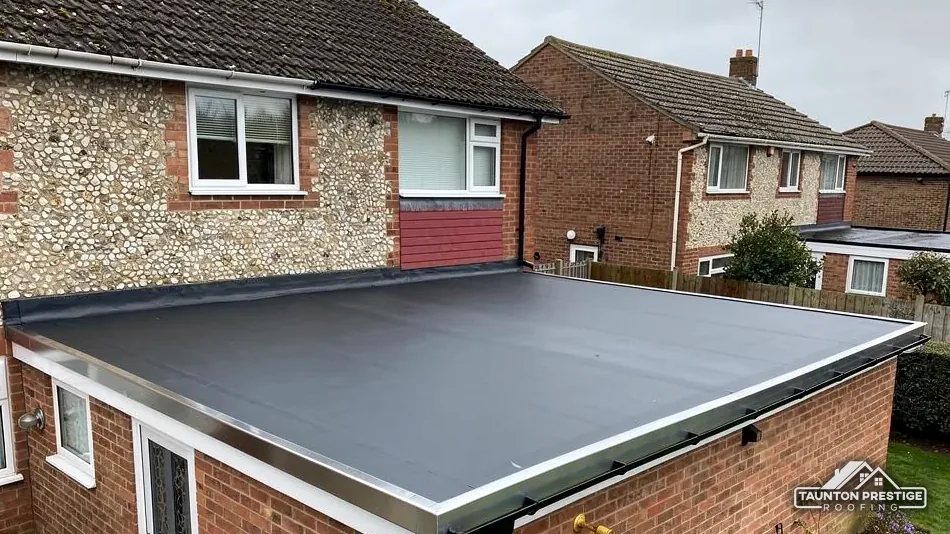
A real one, though it looks level. BS 6229:2025 sets a finished minimum fall of 1:80, and IKO advises designing for 1:40 so that the roof still drains after it settles. Water still lying on a West Hatch flat roof days after the rain means the deck has sunk, the outlet is choked, or the fall was never there. A sound outlet and a dry deck suit a repair. A soft deck points to a new covering, and our flat roofing page sets out the options.
Wet ground is also a reason to trace each downpipe to its outlet. One that finishes against a wall hands the water back to the house.
The nearest conservation area in the national planning dataset, within about 2.5 km of West Hatch, is Hatch Beauchamp, which Somerset Council's table gives as designated on 14 September 1997 and revised on 12 November 1998. Somerset Council also lists an Article 4 direction for Hatch Beauchamp (1978); ask the planning team what it takes in. Before a covering changes, confirm whether your address falls inside either boundary. That single phone call or email to the council is quick, and it avoids ordering slates for a roof that needs consent first.
What decides the price
Poles standing in the lane or on its verge-side path need a Highways Act 1980 section 169 licence. In West Hatch the highway authority is Somerset Council, and Somerset Council's licences are issued to accredited contractors, with the contractor on the West Hatch job making the application, pays £124.60 for each 28-day period (April 2026) and allows at least 10 working days' notice. Scaffold in your garden or on your drive is private land, so no highway licence comes into it, and many small West Hatch repairs are done from a ladder or tower. A narrow lane with passing places is worth describing to us, because it decides where a delivery lorry can stop.
Under the Planning Portal's test, an application is normally unnecessary when less than 25 per cent of the building envelope and less than 50 per cent of the roof is being redone. If the new covering would be 15 per cent or more heavier, Building Regulations approval comes into it. Somerset Building Control answers questions on 0300 303 7790.
After the survey the West Hatch photographs come to you, a single written total follows, and every bag of waste leaves on our van. Send your West Hatch address, with a line on what shows from your garden or the lane, and we will fix a day.
Walked the roof?
When you have read the checks, we walk the roof and show you the photos.
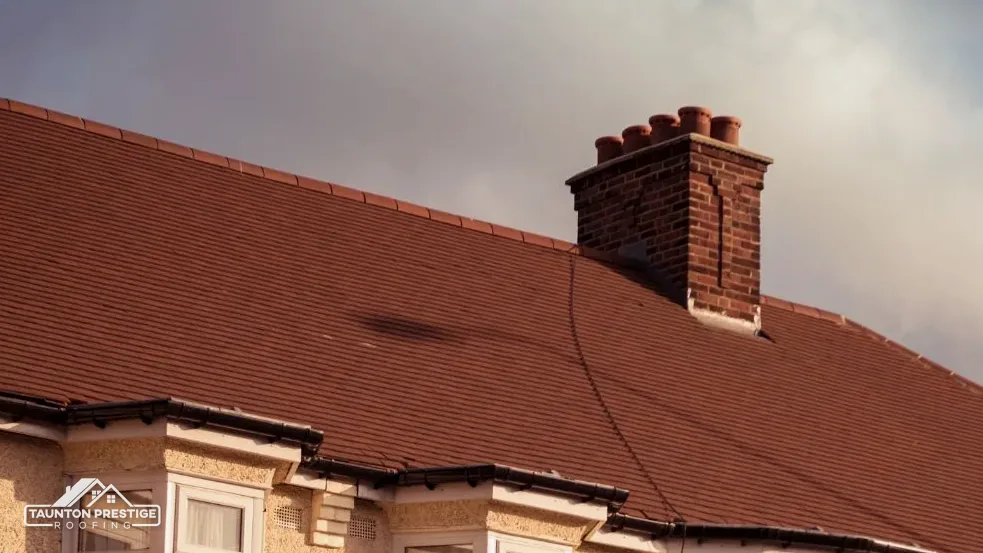
A local patch suits a flashing that has one split with sound lead on either side. Where the lead has lifted all round the stack, or the stone joint behind it has crumbled, patching only repeats the visit. The survey photographs each side of the stack, and you see the lead before choosing between a patch and renewal.
St Andrew's is Grade II listed and still serving as an Anglican parish church, so its works go through the faculty system, not a listed building consent application to the council. The parish arranges the faculty. The roofer then works to what the faculty permits and plans the start date around the decision.
Matching repairs on a listed house count as maintenance. A job that bears on its special interest needs listed building consent. Virgins was listed in February 1986, so check with Somerset Council's planning team before any new West Hatch covering is chosen, and keep any old photographs that show how the roof looked in earlier years.
Yes, for that nest. Under the Wildlife and Countryside Act 1981 a person who intentionally takes, damages or destroys a nest that a wild bird is building or using commits an offence, and GOV.UK says construction is no licensable reason. We look under the eaves at survey and fix the start around any active nest.
Send the address and any damp marks you have noticed indoors, and we will book your West Hatch survey visit.