A roof does not ask for much, but it does ask for a look now and then. A slipped slate, a gutter packed with leaves, a flat-roof outlet clogged with grit: each is a ten-minute fix when it is found early and an expensive repair when it is found through a stained ceiling. The trick is to look at the right things at the right time of year, without taking risks to do it.
The plan below is built around the seasons. Spring and autumn get the longest lists, because winter weather exposes what summer sun and leaf fall hide. Every check is something you can do with your feet on the ground, from the garden, the road or the loft hatch, with binoculars if you have a pair. Anything that needs a ladder on the roof itself is flagged as a job for a roofer. If you want a more specific walk-through before the cold arrives, our guide to preparing your roof for winter picks up where this one ends. The checklist is also a good companion to our homepage overview of how we survey a roof.
Spring: a slow walk round the house
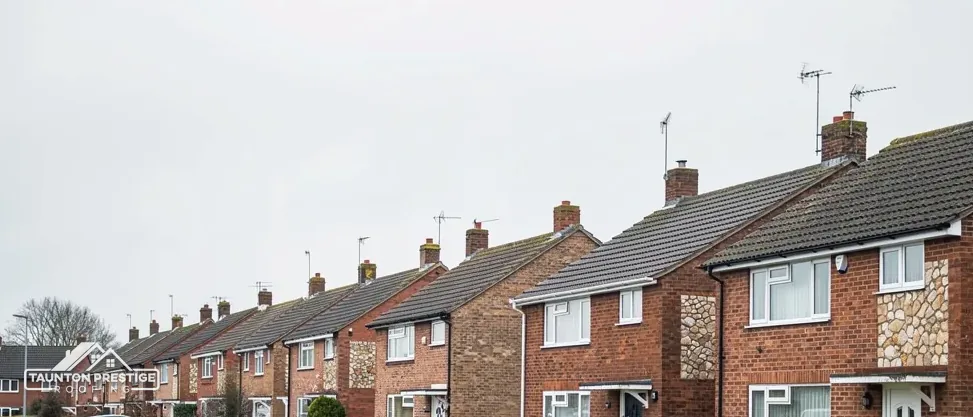
Spring is the time to find out what the winter did. Pick a dry day with decent light, stand back from the house and look along each roof slope in turn instead of straight at it. Binoculars from the garden are a cheap way to see detail without climbing anything.
What should you be looking for from the ground?
- Slates or tiles that sit out of line, or a gap where one has gone.
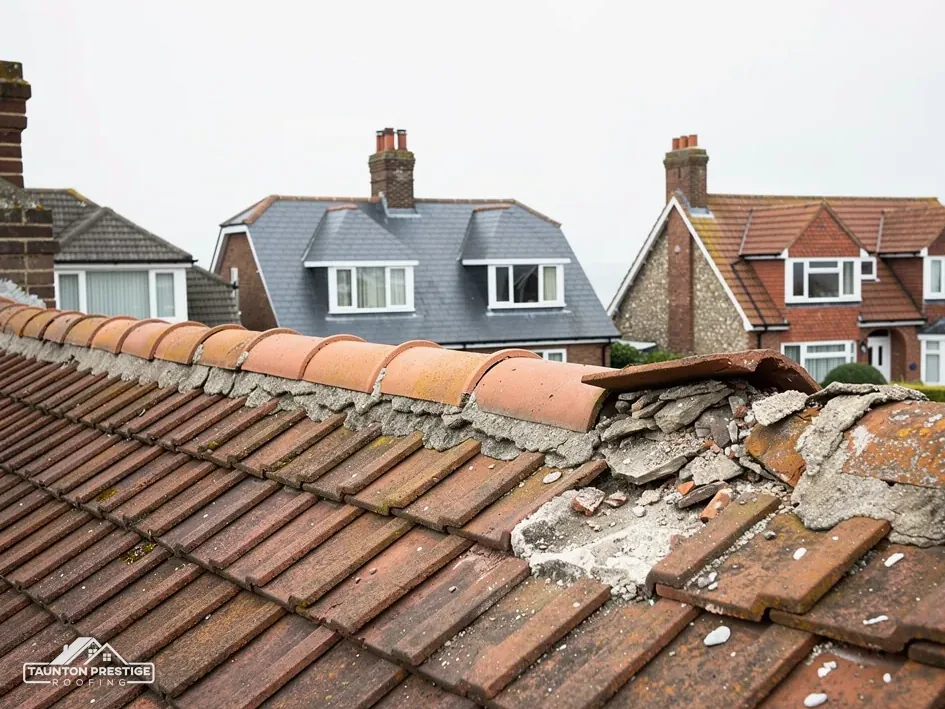
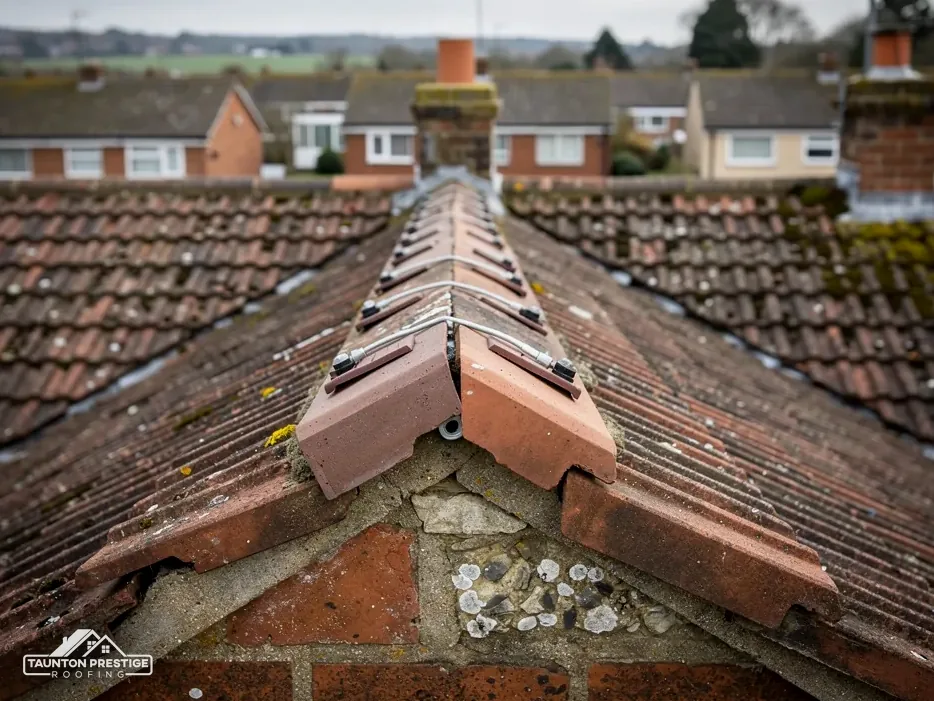
- A ridge, the line of tiles along the top, that looks wavy or has a cracked or missing piece.
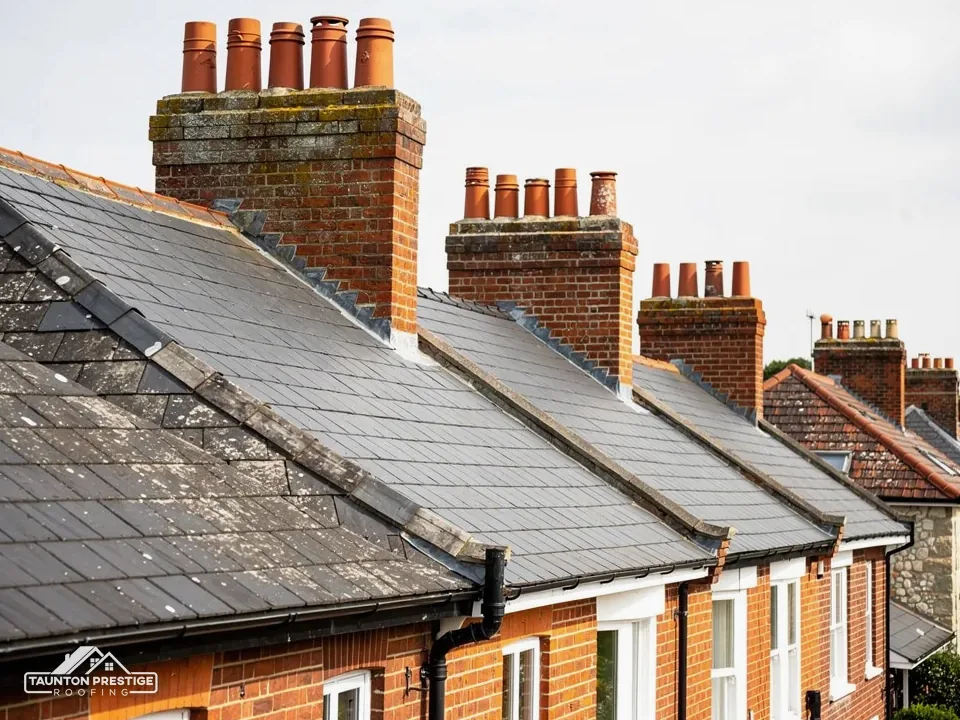
- Cracked or crumbling mortar around the chimney, and a chimney pot that leans.
- Lead flashing, the grey metal strip that keeps water out at a wall or chimney junction, that has lifted or curled.
- Fascia boards and soffits, the timber or plastic boards under the eaves, with flaking paint, splits or dark patches.
- Moss thick enough to hold water against the covering.
Write down what you see, and take photos from the same spot each year. Comparing them tells you more than any single look, because slow changes are hard to notice when you walk past every day.
Which finds need a roofer rather than a repair kit?
Anything on the roof slope, the chimney or the lead. These jobs need safe access, and a ladder against the gutter is not that. Photograph what you can see and send it with the quote form, and we can usually say whether a survey is needed. For loose or cracked pieces, our guide to why roof tiles slip explains the common causes.
This is also a good moment to check the first signs of flat-roof wear, which we cover under summer, because spring rain is the first real test of the repairs you did last year.
Summer: the loft and the flat roof
Long days and dry weather make summer the best season for the loft. A torch is all you need. Step only along the joists, or onto a board laid across two of them, because the plasterboard in between would give way underfoot.
How should a sound loft appear?
Dry timber, daylight only at the ventilation gaps, and insulation that is undisturbed. Look for dark staining on the rafters, damp patches on the underside of the roofing felt, droplets of condensation, or daylight where there should be none. Our guide to checking a roof from the loft lists the warning signs in more detail. Any moisture in summer is worth chasing, because it will be worse in January.
Condensation is a ventilation problem more often than a leak. Moisture control in buildings is covered by BS 5250, which is current and under review, and the eaves gap is part of how a cold roof breathes. If you can see insulation pushed hard against the eaves, move it back from the gap so air can pass.
How do you look after a flat roof in summer?
View it from an upstairs window, or from a ladder with its base held at the edge if the roof is low and a helper can steady it. You are looking for puddles still there a day or two after rain, blisters or splits in the covering, and cracks at the point where the roof abuts a wall. BS 6229:2025 sets a minimum finished fall of 1:80 for general areas, so some shallow ponding after rain is not unusual; water that never drains is. Our page on flat-roof maintenance explains what to do next.
Summer is also nesting time under the eaves. Section 1 of the Wildlife and Countryside Act 1981 catches anyone who intentionally harms an occupied nest, so repairs beside one are put off until the birds have gone.
Autumn: gutters, leaves and outlets
Autumn is when most of the work is done, because falling leaves, twigs and seeds head straight for the gutters and the flat-roof outlets. Water that cannot get away overflows, runs behind the fascia and soaks the wall.
How often should the gutters be cleared?
After the leaves have come down is the minimum, and a second look in late winter catches what the first missed. Houses under mature trees need more attention than houses in open streets. If you clear gutters yourself, use a ladder stay or have someone hold the ladder, wear gloves, and work from the ladder rather than leaning out. The job is not worth a fall. Our guide to how often to clean gutters goes into the timing in detail.
What about the fall of the gutter?
Brett Martin, a guttering manufacturer, advises a fall of "1mm for every 600mm" along the run. If water stands in a clean gutter, or you see a sag between brackets, the fall has gone and the gutter needs adjusting or replacing, not just clearing. If it overflows at one joint, see our page on gutters that overflow.
Where do flat-roof outlets fit in?
Look at every outlet, the drain or spout where a flat roof sheds its water. Pull out leaves and grit by hand, and check that the water leaves the outlet freely. Once an outlet clogs, rainwater backs up across the deck, and the extra load and constant wetting both wear on the covering. If you are not sure it will drain, see blocked flat-roof outlets.
Make a note of any downpipe that spills water onto a wall, because damp patches at low level are often traced back to a gutter at the top.
Winter checks and what to do after a storm
In winter the job is mostly watching. Look at the roof after the first hard frost and again after a thaw, because freezing water in a crack pushes it wider. Heavy snow on a flat or low-pitched roof should be left alone unless you can see it is causing a problem, and you should never go up to clear it.
What should you check after a storm?
Go outside once the wind has dropped, and look at the ground before the roof. Slates, tiles, ridge pieces and scraps of flashing lying on the lawn or the path tell you where to look above. Then walk round and compare the roof with your photographs from spring. A gap in a course, a lifted ridge or a gutter that has come away from its brackets is easy to spot against a record.
- Keep clear of anything hanging that could fall, and put a cone or a chair where people might walk.
- Take photographs from the ground and, from the loft hatch, of any daylight or wet patches.
- Check the ceilings upstairs for new stains.
- If a roofer is needed, ask for a survey with photographs, so the damage is described accurately.
If there is any water coming in, treat it as a make-safe job. Our page on roof inspections after a storm explains what a survey covers, and the roof insurance claim guide sets out what to do about the policy.
Should you worry about a few drips in cold weather?
Yes, but not by climbing up. Mark the stain with a pencil and a date, and see whether it spreads. A stain that grows after dry weather points to condensation or a pipe, and one that grows after rain points to the roof.
Moss, cleaning and what to leave alone
Moss and lichen look untidy, but the question is whether they hold water against the covering or block a gutter. A light dusting on a north slope is cosmetic. Thick moss in a valley, the gutter between two slopes, or tight against the edge of the tiles is worth removing. Our guide on whether moss damages a roof goes through the difference.
Why avoid a jet wash on tiles?
Marley, a tile manufacturer, does not recommend jet washing, as it damages the surface of slates and tiles and cuts their working life. A jet also forces water up under the laps and can strip the surface from concrete tiles. If you want moss taken off, ask a roofer who will use a brush or hand tools, and read our page on pressure washing a roof, which explains the damage it can do, before you agree to anything stronger.
What about moss killers from the shop?
HSE is direct on this point: householders must not use any biocide sold for professional users only. Read the label, use only products sold for household use, and follow it exactly. A killer left to work, with the dead moss brushed off later from a safe position, is the gentler route.
How can bats and birds affect cleaning or repairs?
Bats and their roosts have full legal protection, and the bat guidance on GOV.UK puts "repairing or replacing a roof" on its list of work that could disturb them. If you find droppings or hear squeaking in the eaves, stop and ask a roofer to check before any work starts. We do that on every re-roof and repair.
None of this needs an expensive visit. Our guide to how often to inspect a roof covers when a full survey is worth having.
Checklist queries
How can I prevent future roof problems?
Look at the roof twice a year from the ground, clear gutters and flat-roof outlets after leaf fall, check the loft for damp each summer, and photograph the roof from the same spots so changes show up. Have a roofer survey anything you cannot judge safely yourself.
Do I need a roofer to look at a roof that seems fine?
Not every year. Ground and loft checks catch a lot, and a roofer's survey earns its cost when something looks wrong, after a storm, or before you buy or sell. A survey comes with photographs of your own roof, so you can see what the roofer saw.
Is it safe to climb on a roof to check the tiles?
No. Wet slates and loose tiles slip, and a ladder resting on a gutter can buckle it. Binoculars from the garden and a torch in the loft show a great deal. Leave anything that needs access onto the roof slope to someone with the right edge protection and equipment.
More on this subject: Roofers in Taunton